Washington has a flair for showing off, and honestly, it has earned the right. One minute you are staring at glacier-capped volcanoes, and the next you are wandering through rainforests, desert canyons, or coastlines that look like the edge of the planet.
These natural wonders do not just look beautiful – they feel slightly impossible. If you like landscapes that make you pause mid-sentence, this list is going to keep you busy.
Mount Rainier – Mount Rainier National Park
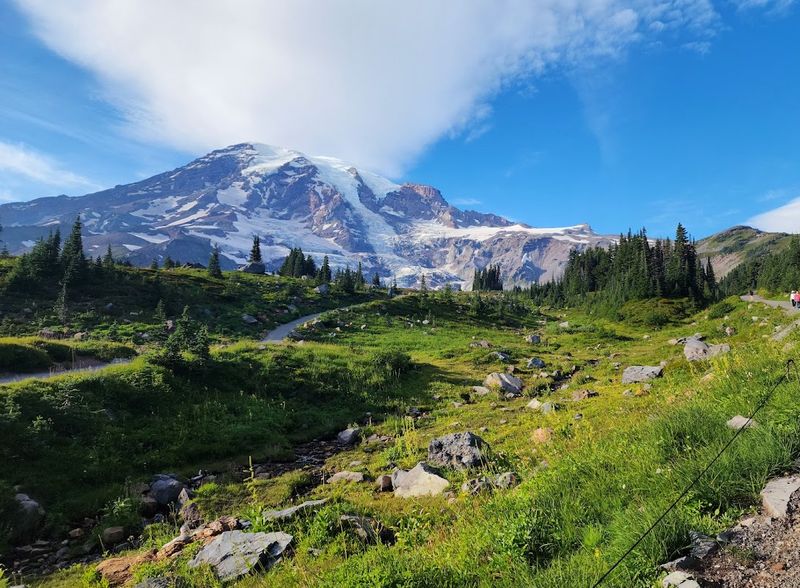
There it is, casually ruling the horizon like it owns the entire state. Mount Rainier rises to 14,410 feet, and even from miles away, it has a way of stopping conversations.
You do not just see this active volcano, you feel its presence before you ever reach the park entrance.
In summer, the meadows around Paradise and Sunrise burst with wildflowers so bright they almost seem staged. Purple lupine, red paintbrush, and yellow avalanche lilies spread beneath glaciers that look crisp enough to touch.
Trails lead through old forests, past rushing rivers, and toward viewpoints that make your camera work overtime.
Winter changes the mood completely, turning Rainier into a snow-loaded giant wrapped in clouds and silence. Snowshoe routes and icy viewpoints show off a colder, moodier side of the mountain, while the lower forests stay calm and hushed.
It feels both peaceful and powerful, which is a tricky combination to pull off.
What makes Mount Rainier unforgettable is its scale, but also its variety. One visit can include waterfalls, wildflowers, glaciers, wildlife, and views that make you forget your snack schedule.
It is Washington at full volume.
Hoh Rain Forest – Olympic National Park
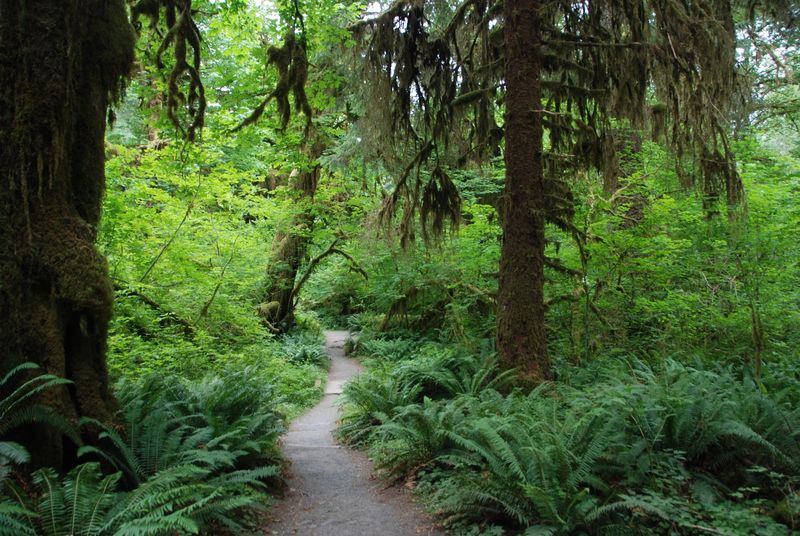
The silence here has texture, and it is almost entirely green. The Hoh Rain Forest is one of the rare temperate rainforests in the United States, and it wastes no time making that feel special.
Step onto the trail, and the outside world seems to lose your forwarding address.
Moss hangs from ancient trees in thick curtains, while ferns crowd the ground like they are attending a very serious forest meeting. The air feels cool, damp, and alive, with every trunk, branch, and fallen log hosting something soft and growing.
Even the light arrives filtered, muted, and mysterious.
The Hall of Mosses Trail is short, but it packs in enough drama to make you walk slower than planned. Huge maples twist above you, nurse logs sprout new trees, and everything feels older than your sense of time.
You may catch yourself whispering, not because anyone asked, but because the forest seems to prefer it.
What makes the Hoh feel unreal is not one big viewpoint or flashy landmark. It is the total immersion, the deep quiet, and the oversized greenery at every turn.
This place does not need to shout. It simply absorbs you.
Diablo Lake – North Cascades
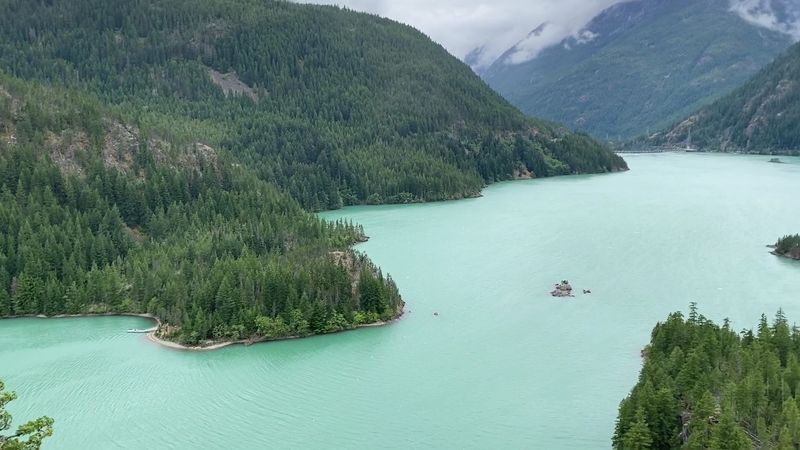
That water color looks suspiciously edited, but Diablo Lake is absolutely in on the joke. Its famous turquoise glow comes from fine glacial sediment called rock flour, which catches the light and turns the lake into something almost electric.
From the overlook, you may wonder if nature has been using saturation settings behind your back.
The lake sits deep in the North Cascades, surrounded by sharp peaks, thick forests, and slopes that plunge straight toward the water. On a clear day, the contrast is wild: icy blue-green water below, rugged mountain ridges above, and evergreens packed into every available space.
It is one of those views that makes people take the same photo eight times, just in case the first seven somehow missed the magic.
Diablo Lake is not only pretty from above. Kayaking or boating across it gives you a closer look at the color, the cliffs, and the scale of the landscape.
The water feels calm in places, but the mountains keep everything feeling dramatic.
Part of the thrill is how suddenly it appears along the North Cascades Highway. One bend, one overlook, and there it is, glowing like it knows exactly what it is doing.
Honestly, it does.
Palouse Falls – Palouse Falls State Park
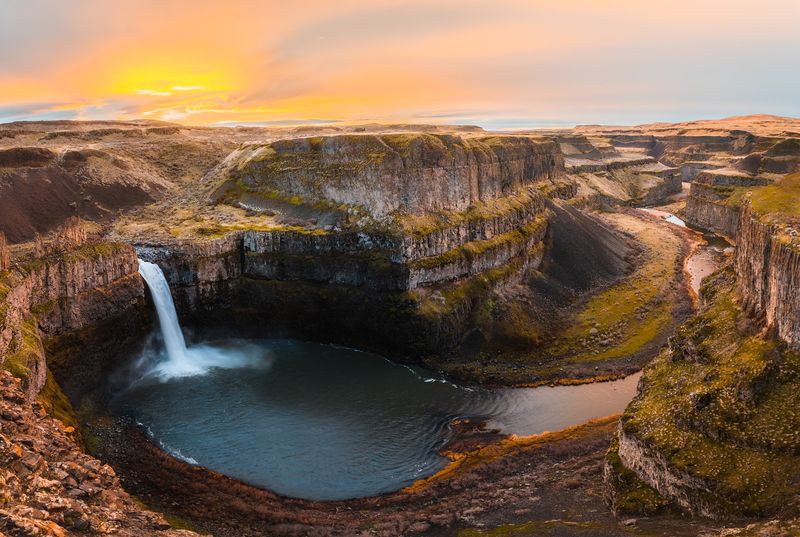
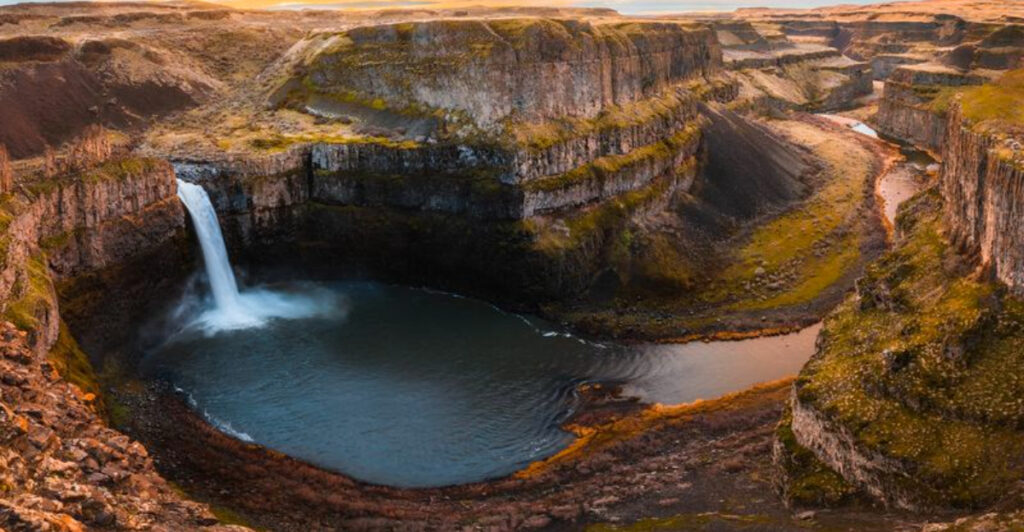
Nothing about Palouse Falls politely eases into the scene. In the middle of eastern Washington’s dry, rolling landscape, a 200-foot waterfall suddenly drops into a rugged basalt canyon with full dramatic commitment.
It feels unexpected, loud, and a little theatrical, which is exactly why it is so memorable.
The surrounding terrain makes the falls even more striking. Instead of lush forest or alpine peaks, you get tawny cliffs, open sky, and carved rock walls shaped by ancient floods.
The waterfall crashes into a round plunge pool below, sending up mist while the canyon holds the sound like a natural amphitheater.
Viewing areas near the state park let you take in the full drop, and sunset can turn the cliffs warm gold and orange. The scene changes quickly as shadows stretch across the canyon, so lingering is not a bad idea.
Just stay behind the barriers, because this landscape is gorgeous but not interested in forgiving bad choices.
Palouse Falls feels powerful because it stands apart from what many visitors expect in Washington. It is not misty rainforest or snow-capped volcano country.
It is raw, open, stark, and wonderfully surprising. That lonely drama gives it serious staying power.
Columbia River Gorge – Southern Washington
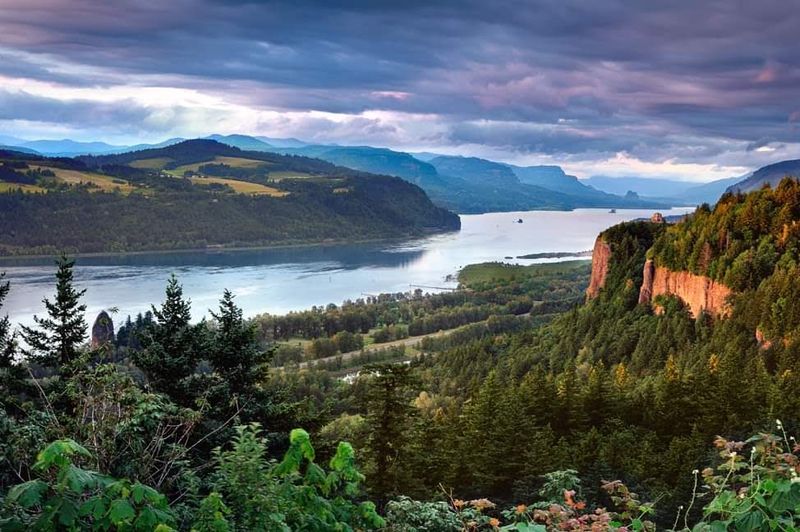
The Columbia River Gorge does not do small scenery. Stretching for more than 80 miles and reaching depths of up to 4,000 feet, this massive canyon turns a simple drive into a highlight reel.
The river slices between Washington and Oregon, while cliffs, bluffs, and wind-shaped ridges keep changing the view.
On the Washington side, the gorge feels open, bold, and constantly in motion. You can find waterfalls tucked into side canyons, sweeping viewpoints above the river, and stretches where the road seems to chase the water around every bend.
Clouds move fast here, and the light can shift from silver to gold before you finish your coffee.
The gorge is also famous for wind, which explains the kiteboarders and windsurfers who treat the river like a playground. Watching bright sails skip across the water adds a burst of color to an already lively scene.
If you prefer solid ground, scenic overlooks and trails offer plenty of reward without requiring a wetsuit.
What makes the Columbia River Gorge feel unreal is its scale and variety. One moment it looks rugged and dry, the next it feels lush and waterfall-filled.
It keeps changing outfits, and every one works.
The Enchantments – Alpine Lakes Wilderness
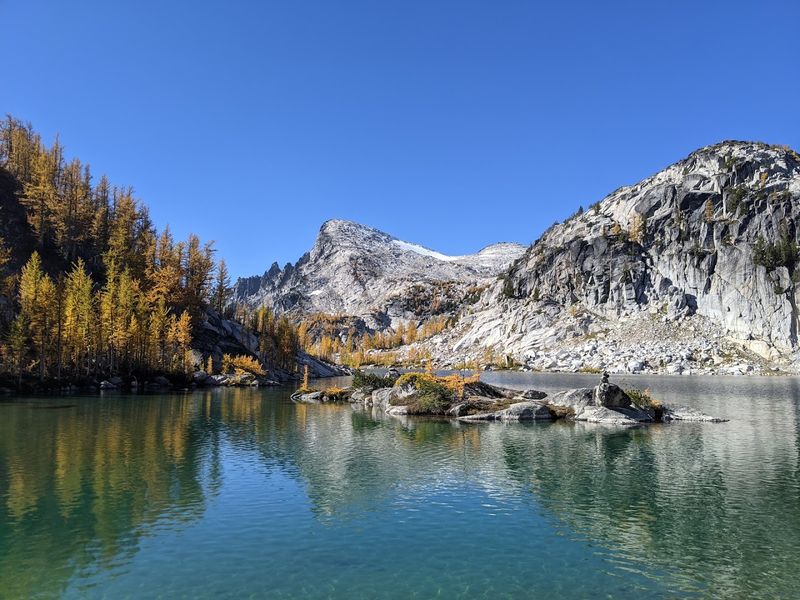
The name sounds bold, but The Enchantments actually back it up. This high-alpine wonderland in the Alpine Lakes Wilderness is packed with clear lakes, granite peaks, mountain goats, and scenery that makes tired hikers briefly forget their knees.
It is famous for a reason, and that reason is visible in every direction.
Getting there takes effort, especially if you attempt the full through-hike or climb into the core zone from the trailheads near Leavenworth. The route can be steep, rocky, and humbling, with Aasgard Pass earning every bit of its reputation.
But once you reach the upper basin, the reward arrives quickly and repeatedly.
Crystal lakes reflect jagged ridges, polished granite slabs warm in the sun, and small streams thread through the basin. In autumn, the larches turn gold, adding a seasonal punch that draws photographers, hikers, and people who suddenly become very serious about permits.
Even on a challenging day, the landscape keeps nudging you forward.
The Enchantments feel unreal because they combine toughness with pure visual payoff. You work for the views, which makes them hit even harder.
It is not casual, but it is unforgettable, and your camera roll may need emotional support afterward.
Mount St. Helens – Southwest Washington
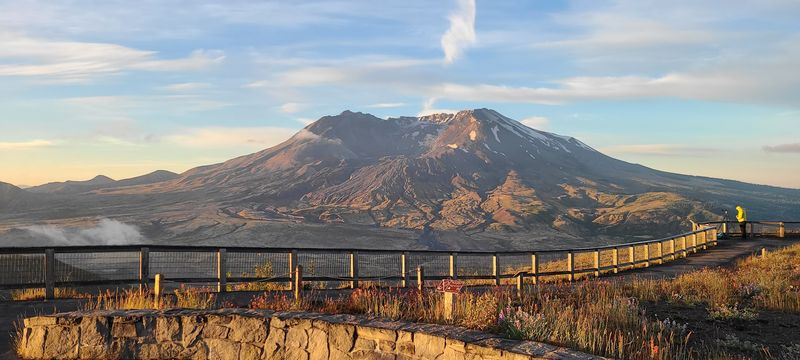
Mount St. Helens carries history right on its face. After the 1980 eruption, the volcano dramatically changed shape, blasting away forests, reshaping valleys, and leaving a crater that still feels startling to see in person.
This is not just a scenic stop, it is a landscape with a visible plot twist.
From viewpoints like Johnston Ridge Observatory, you can look directly into the crater and across the blast zone. Downed trees, hummocky terrain, and recovering vegetation show how intense the eruption was, while new growth proves that nature has been busy rebuilding.
The contrast is eerie, fascinating, and oddly hopeful.
Trails in the area take you through lava flows, young forests, and viewpoints where the volcano dominates the skyline. Wildflowers bloom in places that once looked lifeless, and birds and animals have returned to the recovering habitat.
It is a reminder that destruction and renewal can exist in the same view.
What makes Mount St. Helens feel unreal is the clarity of its story. You do not need a geology degree to understand that something enormous happened here.
The mountain shows its scars openly, and that honesty makes it one of Washington’s most powerful natural wonders.
Snoqualmie Falls – Near Seattle
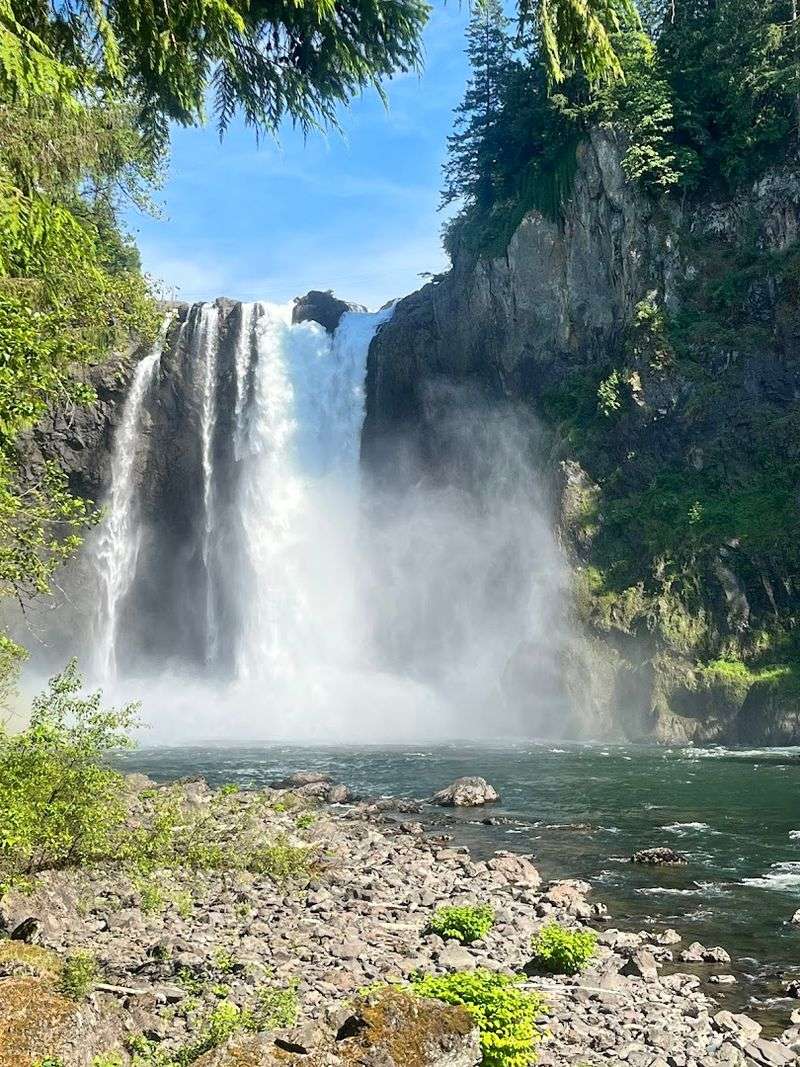
Snoqualmie Falls announces itself before you even see the drop. The roar grows louder as you approach, then the viewpoint opens and the water plunges 270 feet in one clean, thunderous fall.
For a place so easy to reach, it has absolutely no business feeling this epic.
The falls are especially dramatic after heavy rain, when the river swells and the mist rises in thick clouds. You can stand at the upper viewing area and feel the spray drift across the rail, while the water pounds into the pool below.
It is loud, beautiful, and slightly bossy in the best way.
Trails and lower viewpoints offer different angles, making it worth spending more time than a quick photo stop. The surrounding evergreens frame the falls nicely, and the historic lodge nearby adds a classic Washington touch.
You may arrive thinking it will be a simple roadside attraction, then suddenly realize you have taken twenty photos of mist.
Snoqualmie Falls feels unreal because it combines convenience with real drama. It is close to Seattle, easy to visit, and still capable of making you stop talking mid-sentence.
Not every natural wonder requires a rugged expedition. Some simply roar at you from the parking lot.
Cape Flattery – Olympic Peninsula
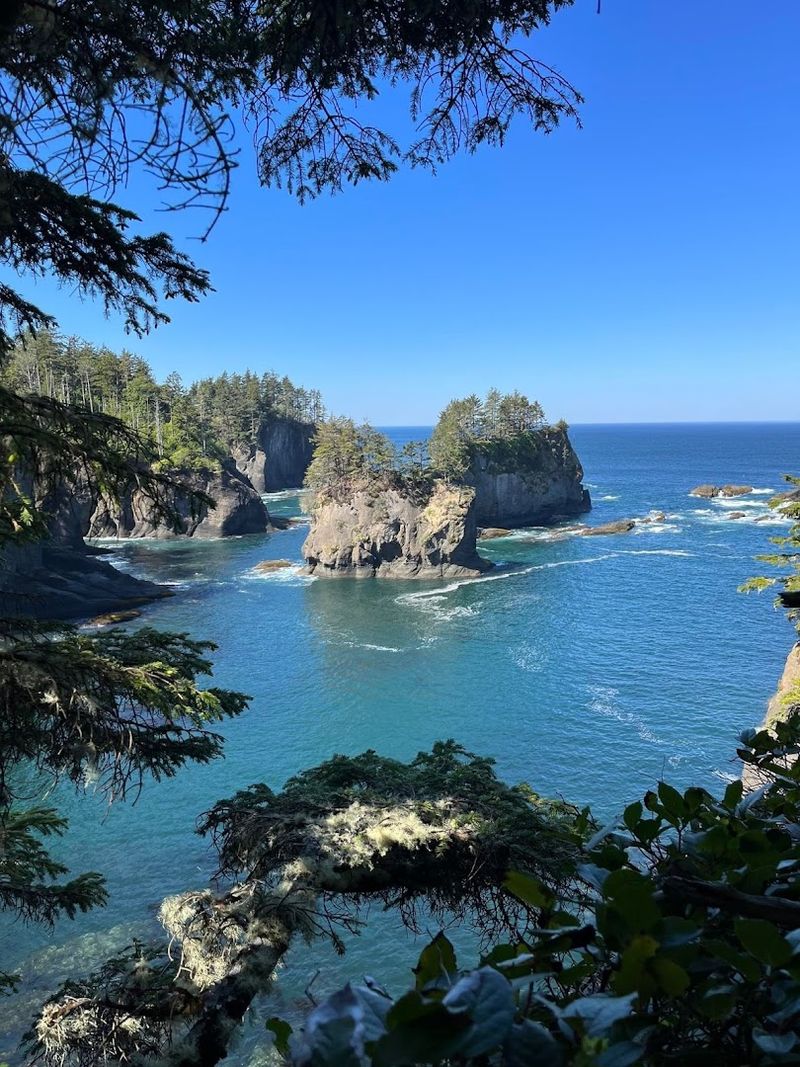
Cape Flattery feels like the continent finally ran out of land and decided to make the ending dramatic. As the northwesternmost point of the contiguous United States, it delivers cliffs, sea stacks, forest, and endless Pacific views with impressive confidence.
The journey there is remote, but that remoteness is part of the thrill.
The short trail winds through coastal forest on boardwalks and earthy paths, with glimpses of water teasing you along the way. Then the trees open, and suddenly there are cliffs, crashing waves, sea caves, and birds circling over the surf.
The ocean does not simply appear here, it takes over the whole scene.
Viewing platforms offer different angles of the rugged shoreline, including Tatoosh Island offshore and waves surging through rock arches below. The sound of the water is constant, and the air carries that unmistakable salt-and-spruce mix.
It feels wild without requiring a brutal hike, which is a rare and welcome combination.
What makes Cape Flattery feel unreal is its edge-of-the-map energy. You are standing where roads nearly end, forests meet ocean, and the coastline breaks into cliffs and caves.
It is cinematic, windy, and completely worth the drive.
Dry Falls – Central Washington
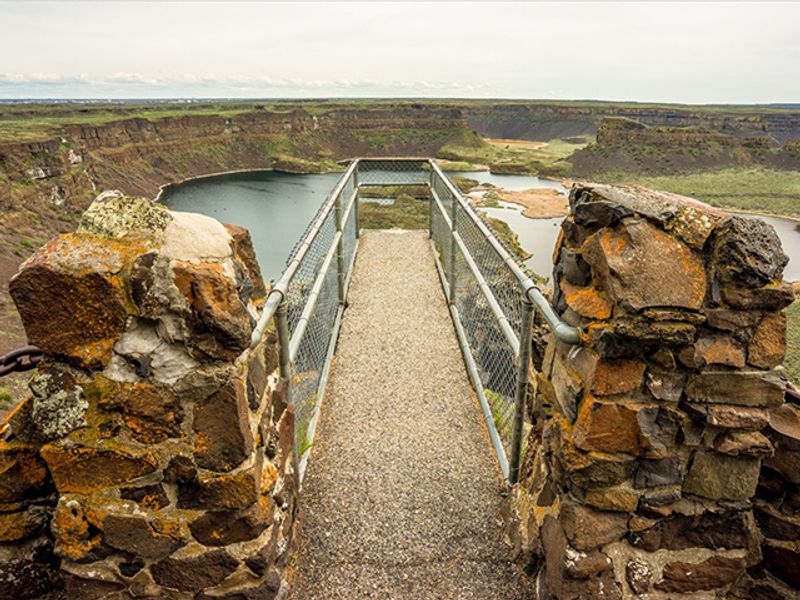
Dry Falls is a waterfall with no water, which sounds like a prank until you see the size of it. During the Ice Age, enormous floods carved this massive cliff, creating what was once one of the largest waterfalls on Earth.
Today, the water is gone, but the scale still does all the talking.
From the overlook, the cliffs stretch wide across the landscape, dropping into a basin dotted with lakes and dry channels. It takes a moment for your brain to process that water once thundered over this entire wall.
The place is quiet now, which somehow makes its ancient violence feel even more impressive.
The surrounding scablands of central Washington add to the otherworldly mood. Basalt cliffs, coulees, pothole lakes, and open desert terrain tell the story of floods powerful enough to reshape a huge region.
Interpretive signs help explain the geology, but the view itself makes the main point pretty clearly.
Dry Falls feels unreal because it asks you to imagine motion on a scale that is hard to grasp. No mist, no roar, no rushing river, just a colossal empty stage left behind by ancient water.
It is stark, strange, and unforgettable.
Share this story