 Unearth The Voyage
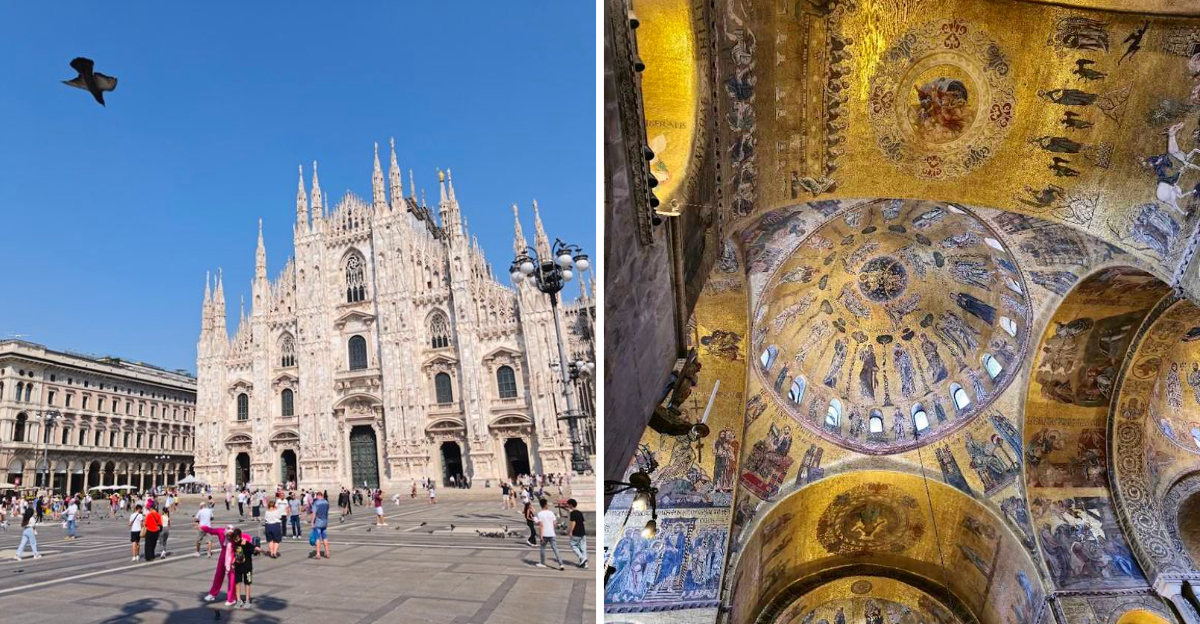
Italy is home to some of the most breathtaking churches and cathedrals ever built. From towering Gothic spires to golden Byzantine mosaics, these sacred spaces are as much about art and history as they are about faith.
Whether you are a traveler, a history lover, or simply someone who appreciates incredible beauty, Italy’s churches will leave you speechless. Get ready to explore ten of the most awe-inspiring religious buildings on the planet.
St. Peter’s Basilica — Vatican City (Rome)
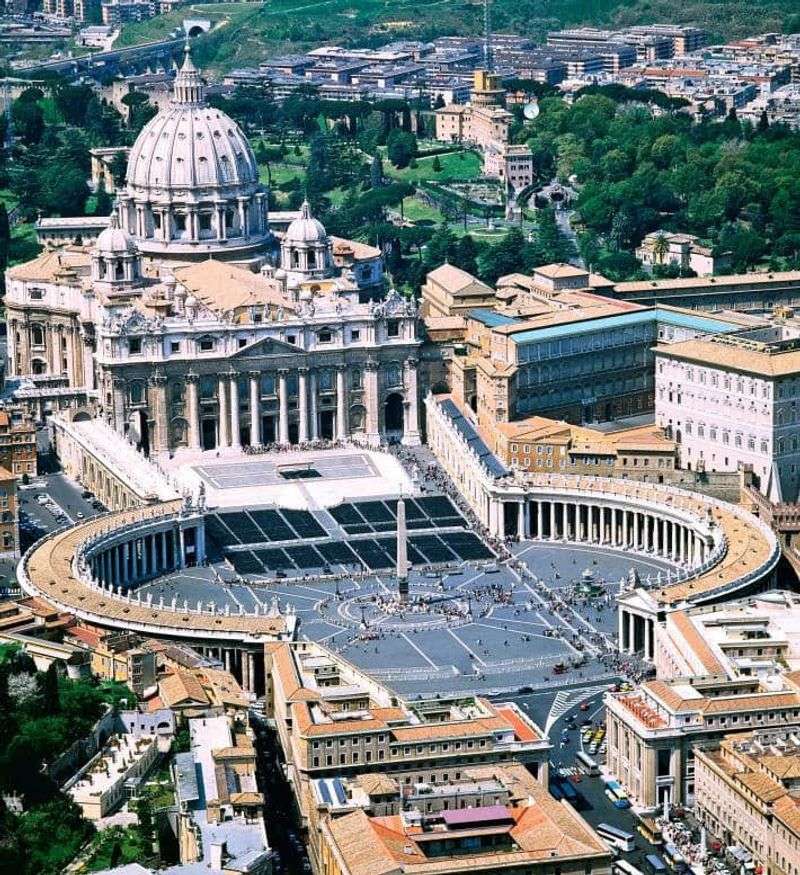
Standing in St. Peter’s Square for the first time, many visitors actually forget to breathe. The sheer scale of this basilica — the largest church in the world — hits you like a wave before you even step inside.
Michelangelo designed the iconic dome that crowns the building, and it remains one of the greatest architectural achievements in human history.
Once you walk through the doors, the interior unfolds in a way that feels almost cinematic. Marble floors, soaring ceilings, and golden light pour over centuries of priceless art.
Michelangelo’s Pietà — a marble sculpture of Mary holding Jesus — sits quietly behind glass and stops nearly every visitor in their tracks.
Climbing to the top of the dome rewards you with panoramic views over Rome that you will remember for the rest of your life. Tickets are affordable, and the climb, though steep, is absolutely worth it.
St. Peter’s Basilica is not just a church — it is a living monument to human creativity, devotion, and ambition that has stood at the center of Western civilization for over 500 years.
Florence Cathedral (Duomo di Firenze) — Florence
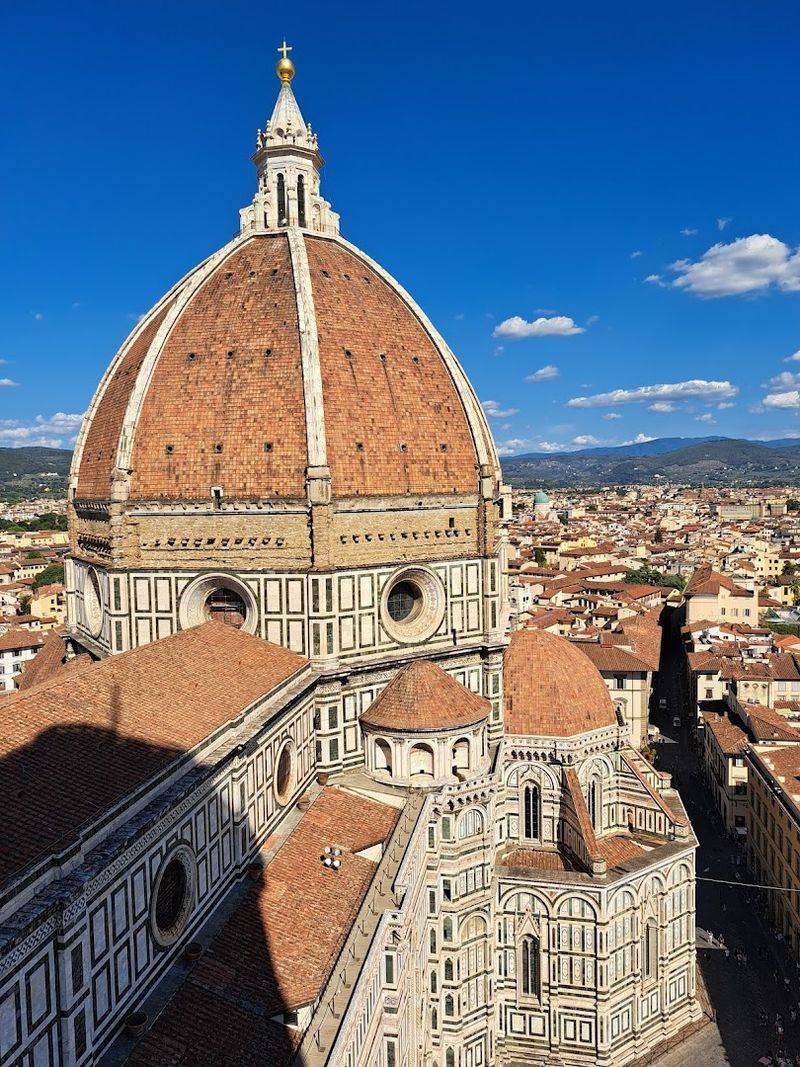
Filippo Brunelleschi pulled off what many engineers of his time said was flat-out impossible. When he completed the dome of Florence’s Cathedral in 1436, he did it without any supporting scaffolding — a trick that still baffles architects today.
That burnt-orange dome rising above the terracotta rooftops of Florence is now one of the most recognizable silhouettes on Earth.
Up close, the cathedral’s exterior is a jaw-dropping patchwork of green, pink, and white marble panels arranged in geometric patterns. The façade looks almost too detailed to be real, like someone carved a giant jewel box and left it in the middle of the city.
Inside, the space is surprisingly austere, which makes the famous fresco on the inside of the dome — a massive Last Judgment — even more dramatic.
Climbing to the top of the dome is a bucket-list experience. The narrow winding staircase takes you up through the double-shell structure, giving you a close-up view of the frescoes before you emerge onto the outdoor viewing platform.
Florence stretches out in every direction, terracotta rooftops rolling toward the Tuscan hills. Few views in Italy match this one.
Milan Cathedral (Duomo di Milano) — Milan
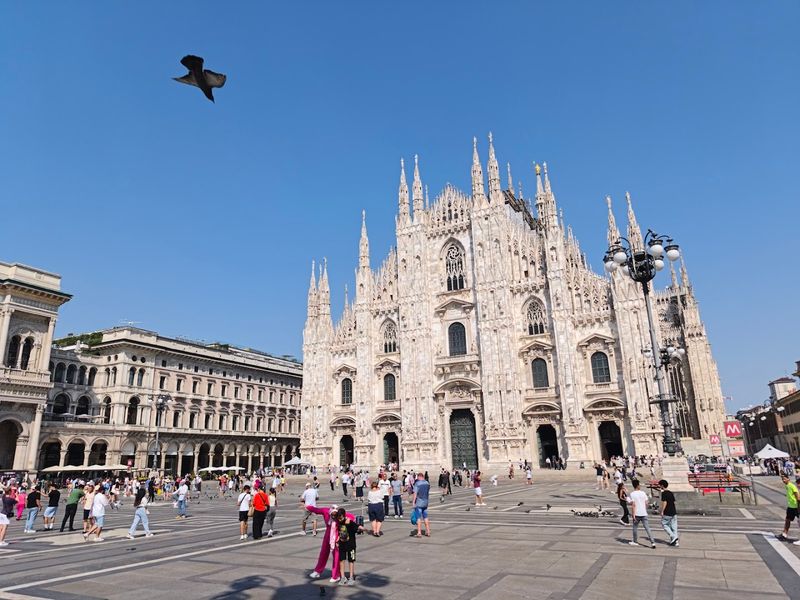
Nearly 3,400 statues decorate the exterior of Milan’s cathedral — more than any other building in the world. Construction began in 1386, and the last details were not finished until 1965.
That is nearly six centuries of stonemasons, sculptors, and architects all contributing to one extraordinary Gothic monument rising from the heart of Milan.
Walking around the outside, the façade feels almost alive. Hundreds of stone spires shoot upward like frozen flames, each one topped with a saint or angel.
The detail is so dense that you could spend an entire afternoon just studying the carvings at eye level before even thinking about going inside.
The rooftop terraces are where things get truly surreal. Elevators and staircases take you up among the spires, where you can wander between marble pinnacles as if strolling through a stone forest suspended above the city.
On clear days, the Alps shimmer on the horizon. Inside, the cathedral holds stunning stained-glass windows, some of the oldest in Italy, casting kaleidoscopic colors across the vast nave.
Milan’s Duomo is not just a church — it is a city unto itself, built one stone at a time across generations.
St. Mark’s Basilica — Venice
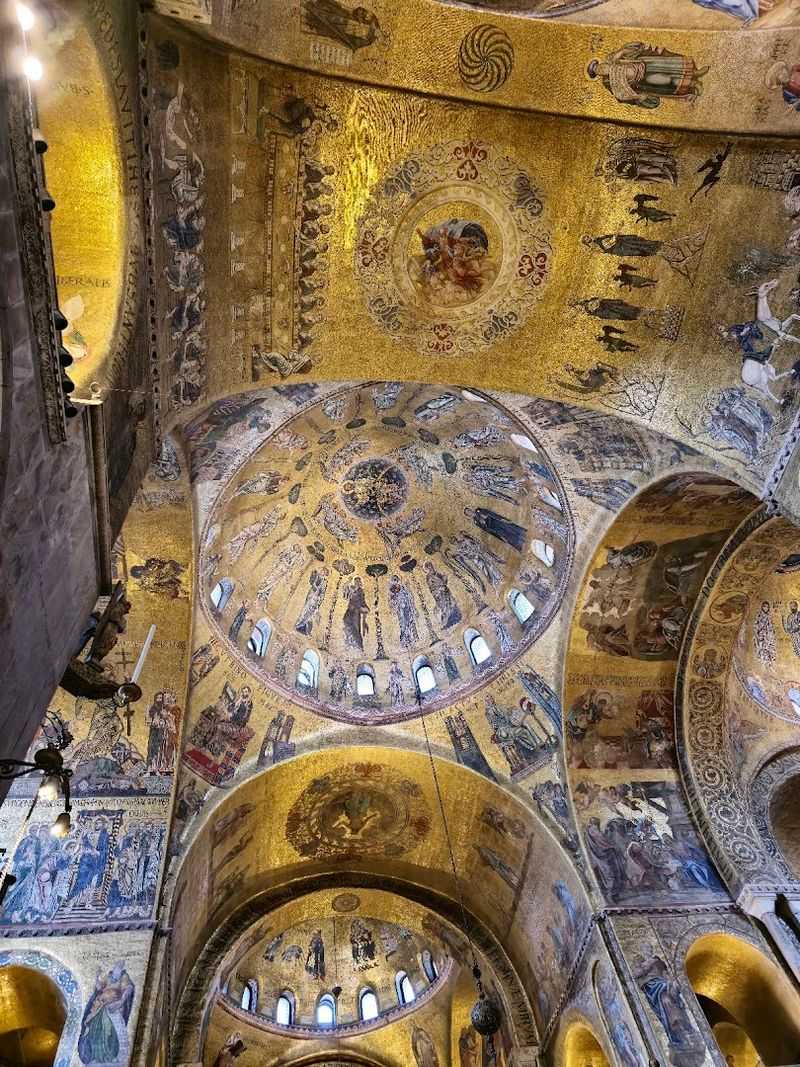
Gold is everywhere in St. Mark’s Basilica — covering the ceilings, lining the walls, shimmering across thousands of tiny mosaic tiles that have been glittering since the 11th century. Venetians nicknamed it the Church of Gold, and the moment you step inside, you understand exactly why.
The effect is less like entering a building and more like stepping inside a jewel.
The basilica blends Byzantine and Western European styles in a way that feels completely unique. Venice was a trading powerhouse, connecting Europe to Constantinople and the East, and St. Mark’s reflects that cultural crossroads in every arch, every column, and every mosaic panel.
Many of the treasures inside were actually looted from Constantinople during the Fourth Crusade in 1204 — history here is complicated and fascinating.
Piazza San Marco, the grand square outside, adds to the drama. Pigeons swirl overhead, tourists mill about, and the four bronze horses above the entrance — replicas of the originals now kept inside — gaze out over the square as they have for centuries.
Arriving early in the morning, before the crowds arrive, gives you a quieter moment to absorb the sheer magnificence of this golden Byzantine masterpiece sitting at the edge of the lagoon.
Siena Cathedral (Duomo di Siena) — Siena
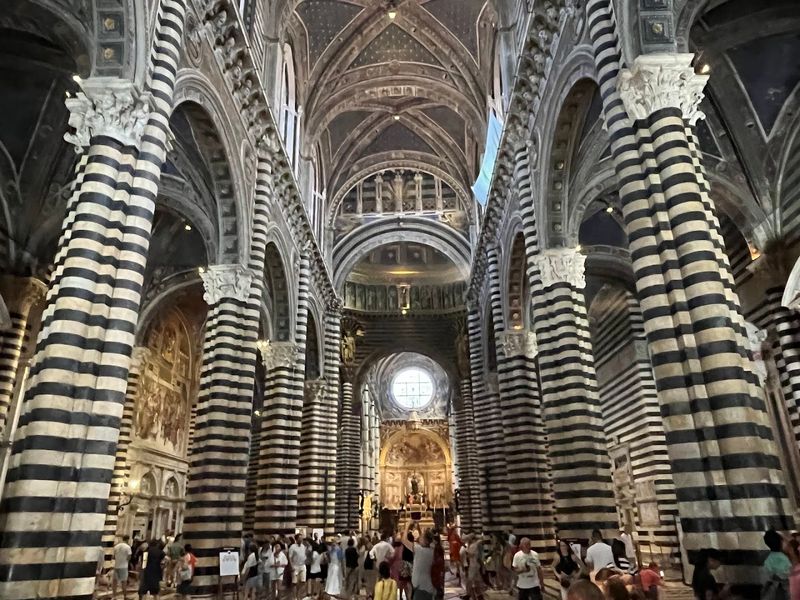
Black and white marble stripes wrap around Siena’s cathedral like a giant piece of Gothic candy, and that bold visual choice carries all the way through the interior. The effect is striking, almost hypnotic, as your eye follows the horizontal bands up columns, across walls, and along the arched ceiling.
No other cathedral in Italy looks quite like this one.
The floor alone deserves its own museum. Fifty-six marble panels cover the entire surface of the nave, each one inlaid with intricate scenes from the Bible and mythology.
For centuries, the most delicate panels were protected by wooden boards and only uncovered during special periods. Walking across them feels like treading on a giant illustrated manuscript.
Siena’s cathedral also houses a breathtaking library called the Piccolomini Library, its walls entirely covered in vivid frescoes painted by Pinturicchio in the early 1500s. The colors are so bright they look freshly painted.
Outside, the unfinished expansion — work halted by the Black Death in 1348 — leaves a ghostly shell of walls beside the main building, a haunting reminder of the ambition that the plague cut short. Siena’s Duomo rewards every visitor who wanders off Florence’s more well-trodden path.
Basilica of San Vitale — Ravenna
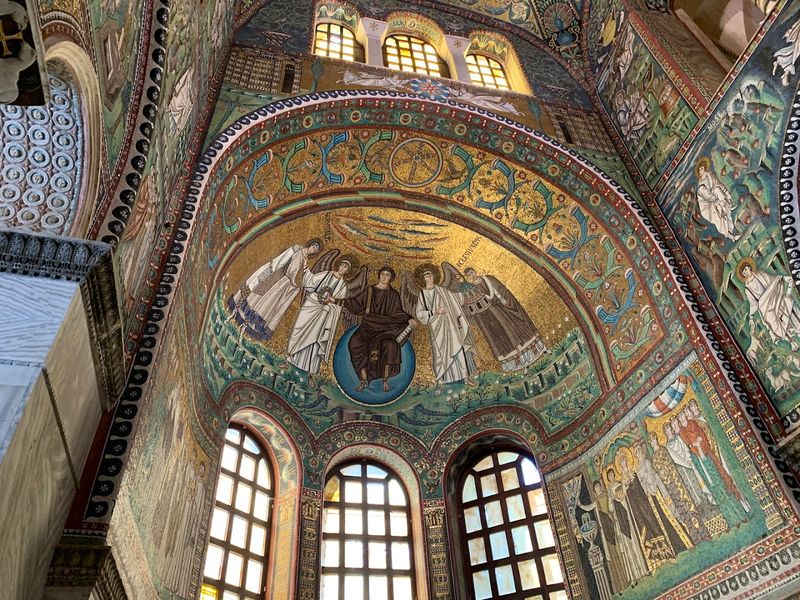
From the outside, the Basilica of San Vitale looks almost plain — a brick octagon sitting quietly in a garden in Ravenna. Step through the door, however, and the interior detonates in a blaze of gold, turquoise, purple, and green mosaic that covers nearly every surface.
Built in the 6th century, it is one of the best-preserved examples of Byzantine art anywhere in the world.
The apse mosaics are the showstopper. Emperor Justinian and Empress Theodora appear in full imperial regalia, surrounded by courtiers and clergy, their flat, stylized figures staring out with an intensity that feels both ancient and oddly modern.
These images were political statements as much as religious ones — a way of projecting power across an empire from the walls of a church.
Ravenna itself often gets overlooked by travelers rushing between Venice and Florence, which makes visiting feel like finding a secret. The city holds eight UNESCO World Heritage Sites, and San Vitale anchors them all.
Admission covers several nearby monuments, making it excellent value. Spend a full day in Ravenna and you will leave wondering why this mosaic-covered city is not on every Italy itinerary.
It absolutely should be.
Santa Maria Novella — Florence
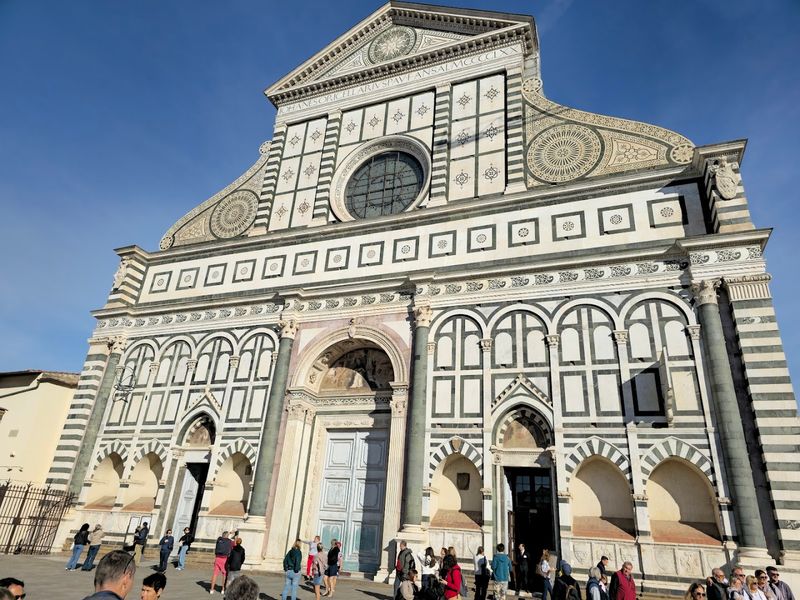
Right across from Florence’s main train station sits one of the city’s most underrated masterpieces, and most tourists walk straight past it without a second glance. Santa Maria Novella’s marble façade is a Renaissance geometry lesson brought to life — circles, squares, and inlaid patterns in green and white marble arranged with mathematical precision by architect Leon Battista Alberti in the 15th century.
Inside, the church holds a remarkable collection of art that would be the pride of any museum. Masaccio’s Trinity fresco — painted around 1427 — is considered one of the first works to use accurate linear perspective, making it a landmark moment in Western art history.
Ghirlandaio’s frescoes of the life of Mary and John the Baptist line the main chapel with vivid, colorful scenes packed with portraits of real Florentine families.
Unlike the Duomo a few blocks away, Santa Maria Novella rarely has crushing crowds, which makes it far easier to actually appreciate what you are seeing. The attached cloister gardens are a peaceful surprise — green lawns and stone arcades where you can sit and decompress after the sensory overload of central Florence.
For anyone serious about Renaissance art, skipping this church would be a genuine mistake.
Basilica of Saint Francis — Assisi
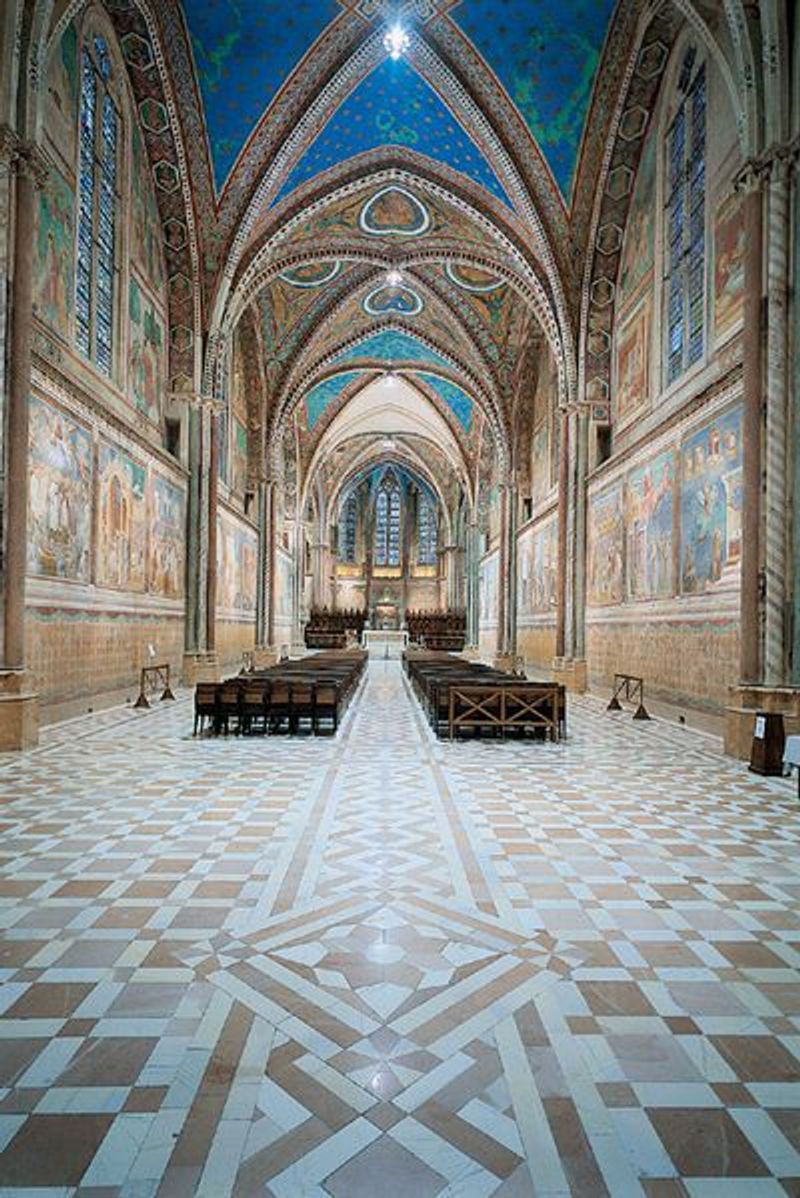
Perched on a hillside above the green Umbrian valley, the Basilica of Saint Francis looks like it grew out of the pink limestone of Assisi itself. Built in honor of Italy’s beloved patron saint, it is actually two churches stacked on top of each other — the Upper Basilica and the Lower Basilica — each with a completely different atmosphere and artistic character.
Giotto’s famous fresco cycle in the Upper Basilica tells the story of Saint Francis’s life across 28 scenes that wrap around the nave. Painted in the late 13th century, these frescoes are considered a turning point in Western art — Giotto moved away from flat, symbolic figures toward real human emotion and three-dimensional space.
Standing beneath them, you are witnessing the moment art began to look at the world differently.
The Lower Basilica is darker, more intimate, and holds the crypt where Saint Francis is buried. The atmosphere down there is genuinely moving, regardless of your religious background.
Assisi itself is a beautifully preserved medieval hill town worth an entire day of wandering. The combination of the basilica’s artistic importance and its spiritual weight makes this one of the most memorable stops anywhere on the Italian peninsula.
Palermo Cathedral — Sicily
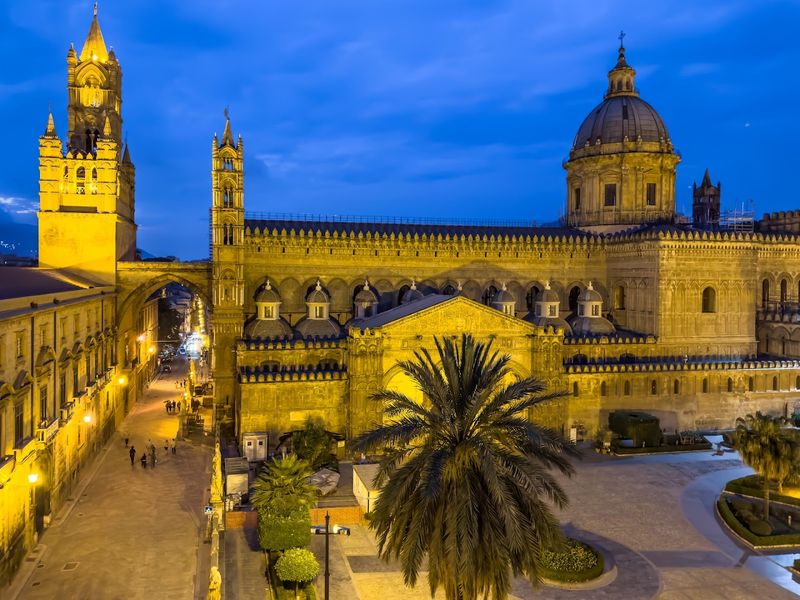
Palermo Cathedral is the architectural equivalent of a history textbook — except wildly more entertaining. Built on the site of a former mosque, which itself replaced a Byzantine church, this cathedral has been added to, altered, and redecorated by so many different rulers over the centuries that it now blends Norman towers, Arabic geometric decoration, Gothic arches, and a Baroque dome into one gloriously chaotic whole.
Somehow, it works. Walking around the exterior, you can spot Arabic inscriptions carved into columns, Norman battlements along the roofline, and a neoclassical porch tacked on in the 18th century.
Sicily’s entire history as a crossroads of Mediterranean civilizations is written in stone right here on one building. It is genuinely unlike anything else in Italy.
Inside, the cathedral holds the royal tombs of Norman kings, including Roger II and Holy Roman Emperor Frederick II — two of the most powerful rulers of medieval Europe. The treasury displays jeweled crowns and a famous tiara encrusted with over 40 gemstones.
Palermo’s street food scene, chaotic markets, and baroque piazzas surround the cathedral, making the whole neighborhood an experience. Sicily rewards travelers who take the time to explore beyond the mainland, and Palermo Cathedral is a perfect reason to make the trip.
Basilica of Saint Nicholas — Bari
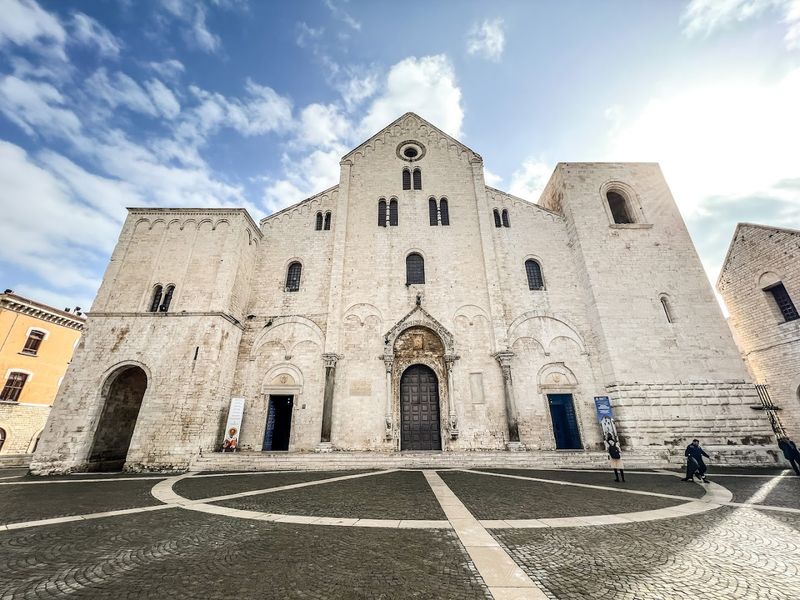
Every December 6th, thousands of pilgrims from across the world crowd into the old city of Bari to honor Saint Nicholas — yes, the same figure who inspired the legend of Santa Claus. The Basilica of Saint Nicholas, built between 1087 and 1197, holds the saint’s relics in a crypt below the main church, and it draws devoted visitors from both the Catholic and Orthodox Christian traditions, making it one of the rare places where the two churches truly meet.
The Romanesque exterior is deliberately restrained — thick stone walls, rounded arches, two square bell towers, and very little ornamental fuss. After the mosaic overload of Venice or the Gothic drama of Milan, that simplicity feels almost radical.
The building communicates strength and permanence rather than spectacle, and there is something deeply satisfying about that honesty.
The crypt beneath the main floor is the emotional heart of the basilica. Candles flicker around the silver altar that covers the saint’s tomb, and the low stone ceiling and ancient columns create an atmosphere of concentrated reverence.
Bari’s old town, the Citta Vecchia, wraps around the basilica in a tangle of narrow whitewashed alleyways where local women still make fresh orecchiette pasta on their doorsteps. It is southern Italy at its most authentic and irresistible.



