Hopping on a train in Germany and waking up in a completely different country is one of travel’s best-kept secrets. Germany sits right in the heart of Europe, making it the perfect launch pad for incredible rail adventures.
From fairy-tale cities to alpine towns and canal-lined streets, the continent’s best destinations are just a few hours away by rail. Pack light, grab a window seat, and get ready to discover some seriously underrated European gems.
Prague, Czech Republic
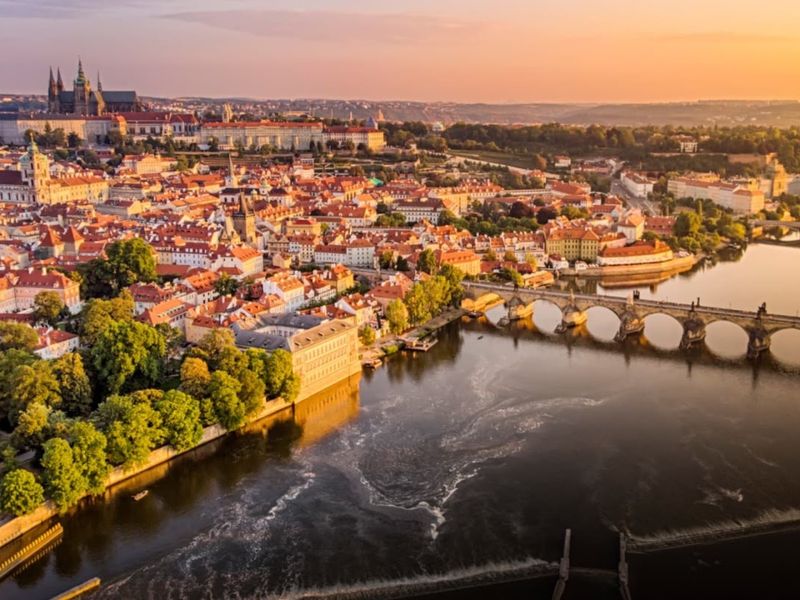
Stepping off the train in Prague feels like walking onto a film set nobody told you about. The Czech capital rewards visitors with jaw-dropping Gothic architecture, winding cobbled lanes, and a skyline that seems almost too good to be real.
Direct trains from Berlin, Dresden, and Munich glide through the scenic Elbe Valley before delivering you straight into the heart of this stunning city.
Prague Castle looms magnificently over the rooftops, while Charles Bridge connects the old and new towns across the shimmering Vltava River. Medieval squares buzz with street musicians, market stalls, and outdoor cafes that stay lively well into the evening.
The Old Town Astronomical Clock draws crowds every hour when its mechanical figures come to life.
One of Prague’s biggest surprises is how affordable it remains compared to other European capitals. A hearty Czech meal with a cold local beer costs a fraction of what you’d pay in Paris or Amsterdam.
The city blends history, culture, and budget-friendly charm in a way that keeps travelers coming back year after year.
Salzburg, Austria
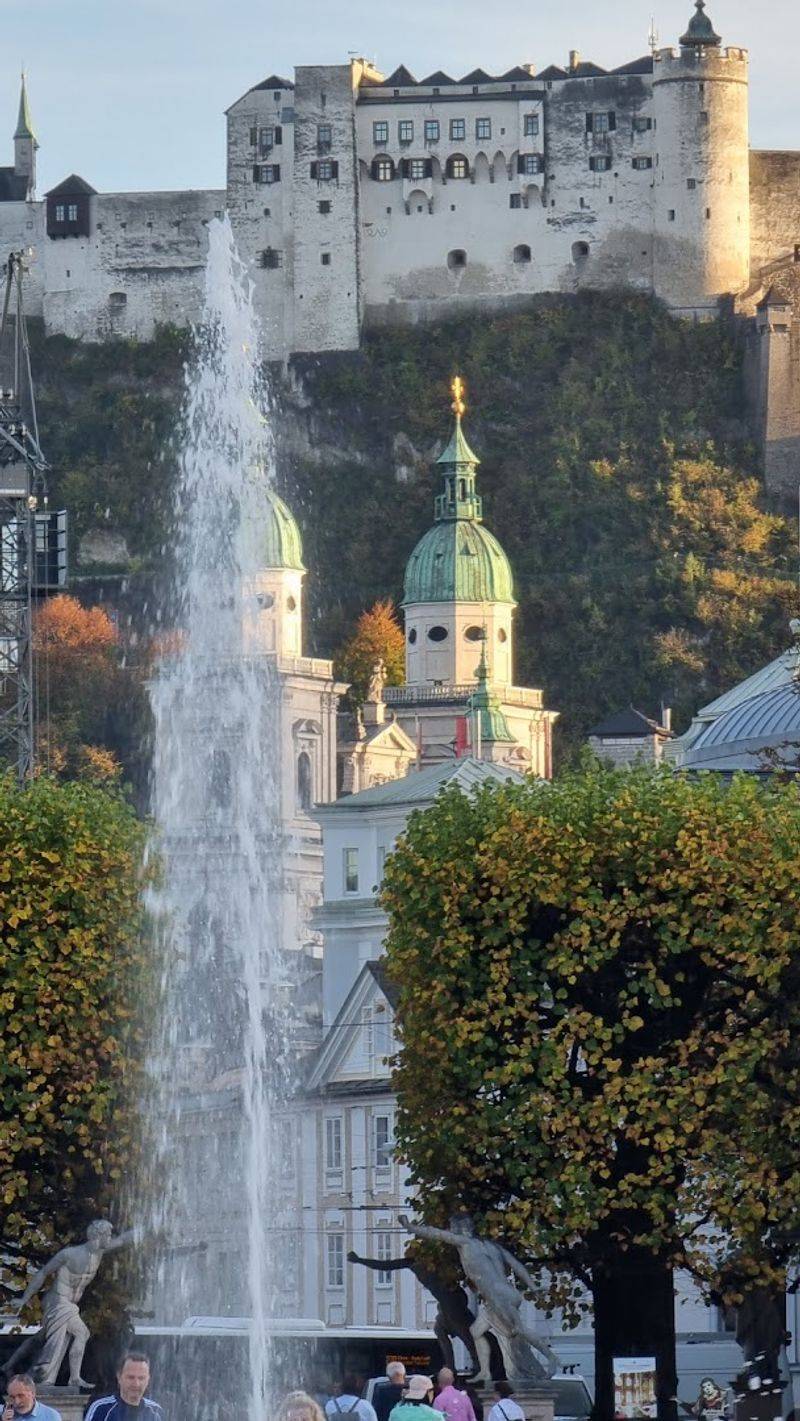
Mozart was born here, and Salzburg has been showing off ever since. Reachable from Munich in under two hours by Railjet, this Austrian gem sits tucked between dramatic Alpine peaks and the Salzach River.
Few European cities pack so much beauty into such a compact and walkable space.
The old town’s baroque domes and honey-colored buildings earned it a UNESCO World Heritage listing, and it absolutely deserves every bit of that recognition. Hohensalzburg Fortress watches over the city from its hilltop perch, offering sweeping views of the surrounding mountains and terracotta rooftops below.
Wandering through Getreidegasse, the city’s famous shopping lane, is a genuine pleasure even on a rainy afternoon.
Music lovers will appreciate the world-class Salzburg Festival held each summer, drawing performers and audiences from across the globe. Beyond the cultural highlights, the surrounding Alpine landscape invites day trips to mountain lakes, forest trails, and scenic viewpoints.
Salzburg manages to feel both grand and intimate at the same time, which is a rare quality in any city. It is one of those places that genuinely exceeds expectations.
Strasbourg, France
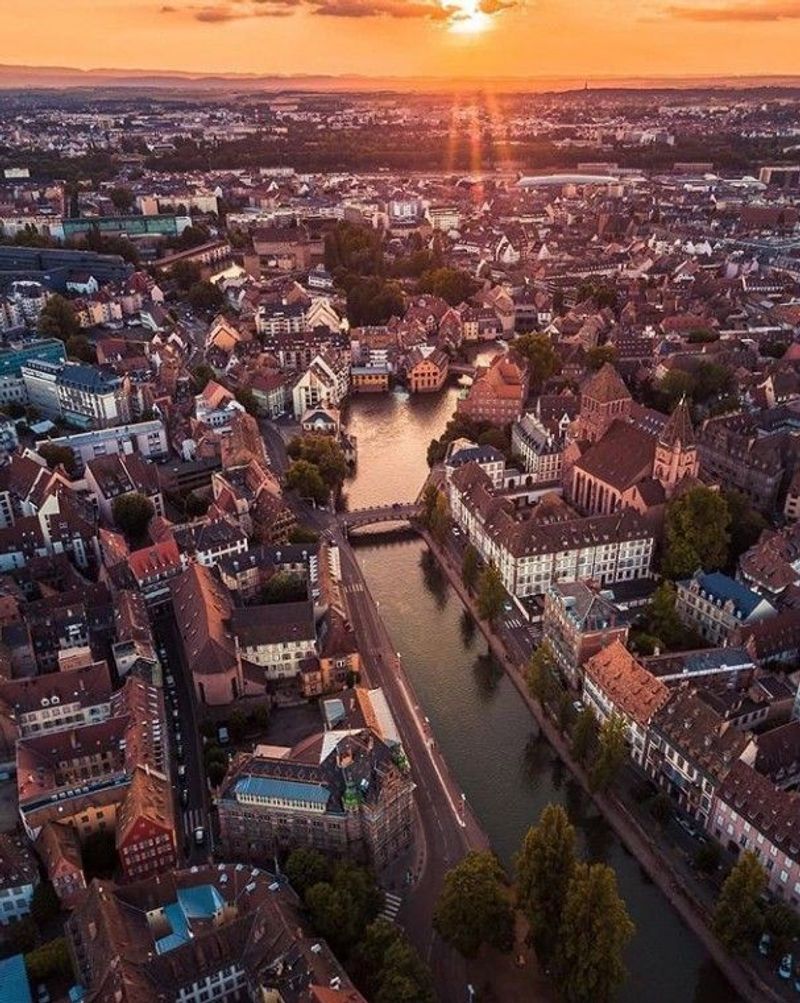
Strasbourg is basically two countries having the best possible argument, and the result is delicious in every sense. Sitting right on the French-German border, this Alsatian capital is directly connected by high-speed rail from Stuttgart and Frankfurt, making it one of the most effortless cross-border escapes on this list.
You can be sipping a glass of Riesling in a canal-side cafe before lunchtime.
La Petite France is the neighborhood everyone photographs first, and for good reason. Its tightly packed half-timbered houses, flower-draped balconies, and narrow waterways create a setting that feels almost impossibly charming.
The towering Notre-Dame Cathedral looms above the old town, its pink sandstone facade glowing warmly in the afternoon light.
Strasbourg also serves as the official seat of the European Parliament, giving it a cosmopolitan energy that balances nicely with its historic character. Local food is a serious highlight here.
Tarte flambee, choucroute, and warm pretzels appear on nearly every menu, blending French finesse with hearty German flavors. Weekend Christmas markets in December transform the entire city into a glowing wonderland that draws visitors from across Europe.
Zurich, Switzerland
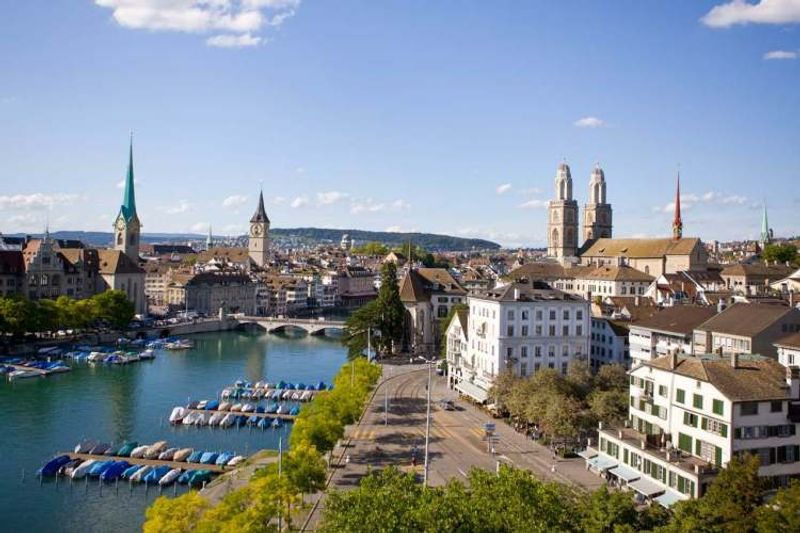
Switzerland’s largest city runs like clockwork, which should surprise nobody given the country’s reputation. EuroCity trains connect Zurich directly with Munich and other southern German cities, making the journey smooth, scenic, and genuinely enjoyable.
The route passes through rolling Bavarian countryside and across the Swiss border before the lake comes into view.
Zurich’s old town, known as the Altstadt, sits along the Limmat River and offers a pleasing mix of medieval churches, guild houses, and boutique shops. The famous Bahnhofstrasse is one of the world’s most prestigious shopping streets, though window-shopping is entirely free.
Lake Zurich stretches out beyond the city center, offering boat rides, swimming spots, and stunning Alpine panoramas on clear days.
Foodies will find Zurich surprisingly rewarding, with everything from traditional Swiss fondue restaurants to vibrant international food markets. The city also acts as a brilliant gateway to the broader Swiss Alps, with Lucerne, Interlaken, and the Jungfrau region all reachable within an hour or two by rail.
Zurich is polished, efficient, and genuinely beautiful, a combination that makes it hard to leave without planning a return visit.
Budapest, Hungary
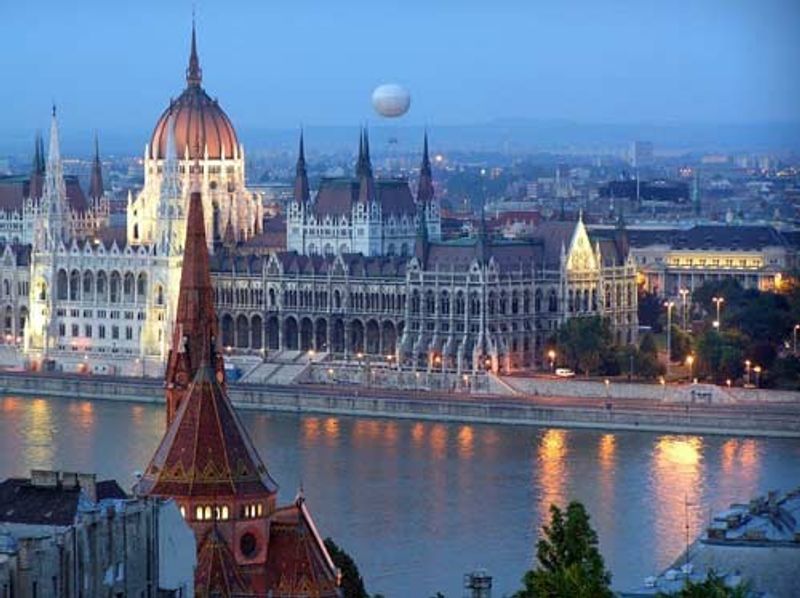
Budapest at night looks like someone draped the entire city in fairy lights and forgot to take them down. The Hungarian capital can be reached comfortably by Railjet services from Munich and Vienna, whether you choose a daytime journey or an overnight sleeper train.
Either way, arriving in Budapest feels like a genuine event.
The city is split dramatically by the Danube River, with hilly Buda on one side and flat, buzzing Pest on the other. The Hungarian Parliament Building is widely considered one of the most beautiful legislative buildings on the planet, and seeing it lit up from across the river at dusk is genuinely breathtaking.
Szechenyi Thermal Bath offers a completely different kind of experience, letting visitors soak in steaming outdoor pools regardless of the season.
Budapest is also one of Europe’s most affordable major capitals, meaning your budget stretches further here than almost anywhere else on this list. Ruin bars, open-air markets, and lively street food scenes give the city an infectious energy that is hard to match.
The grand boulevards, ornate synagogues, and hilltop castle district ensure there is always something new to discover around every corner.
Innsbruck, Austria
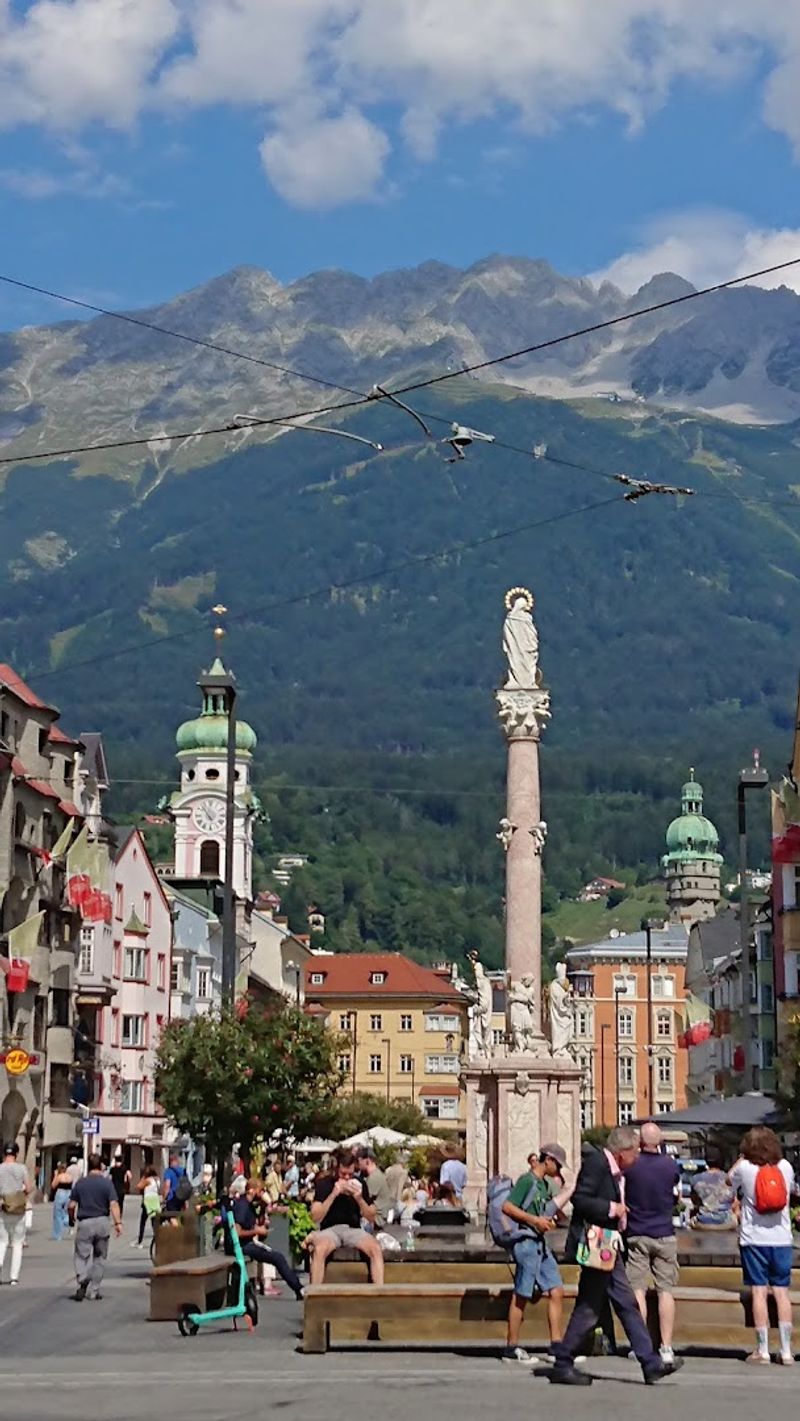
Nowhere else in Europe can you admire a medieval old town and a ski slope at the same time, and Innsbruck knows exactly how lucky it is. Just a short train ride from Munich, this Tyrolean capital sits in a valley completely surrounded by towering Alpine peaks.
The train journey itself through Bavaria and into the Austrian Alps is worth the trip on its own.
The old town is compact and full of character, centered around the famous Golden Roof, a late Gothic balcony covered in 2,657 gilded copper tiles commissioned by Emperor Maximilian I. Colorful baroque facades line the main street, and mountain views peek dramatically between every gap in the buildings.
It is one of those rare cities where the backdrop upstages even the architecture.
Outdoor enthusiasts hit the jackpot here. Summer brings hiking, mountain biking, and cable car rides to breathtaking ridgeline viewpoints, while winter transforms the surrounding slopes into some of Austria’s finest ski terrain.
Innsbruck has hosted the Winter Olympics twice, in 1964 and 1976, which tells you everything about the quality of its mountain infrastructure. For a city that fits so much into such a small footprint, Innsbruck consistently over-delivers.
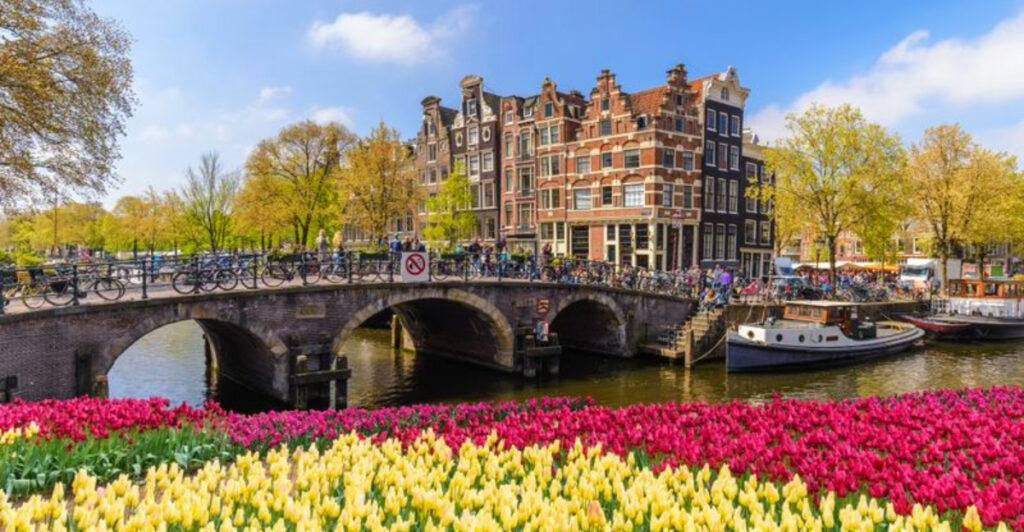
Amsterdam, Netherlands
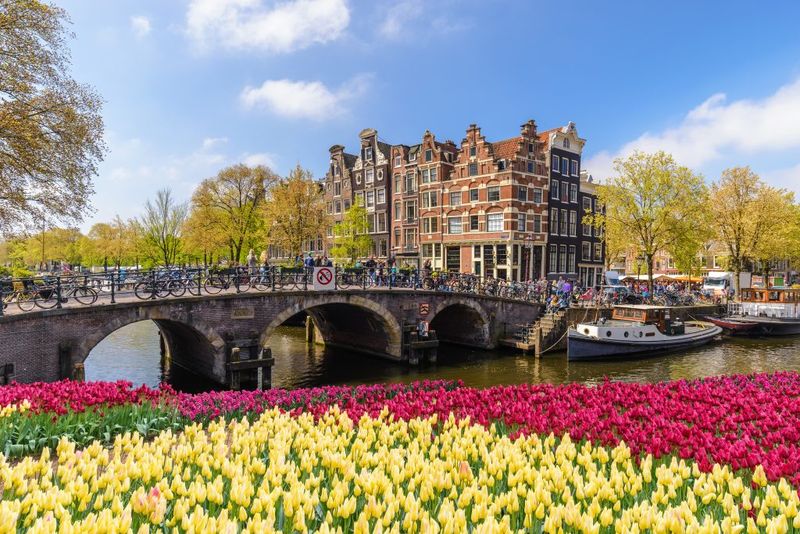
Amsterdam has a way of making every visitor feel like they discovered it themselves, even though millions of people visit every year. Direct ICE trains connect the Dutch capital with Frankfurt, Cologne, and other German cities in just a few hours, making it one of the most popular and well-connected train destinations on this list.
Rolling into Amsterdam Centraal station is already part of the experience.
Canals weave through the entire city like a liquid road network, lined with narrow townhouses that lean at gently improbable angles. The Jordaan neighborhood offers a quieter, more local side of Amsterdam, with independent bookshops, cozy brown cafes, and Saturday markets that feel nothing like a tourist attraction.
The Rijksmuseum and Van Gogh Museum are world-class, but even a long afternoon of aimless canal-side wandering feels deeply satisfying.
Amsterdam’s cycling culture is legendary, and renting a bike for a few hours gives you an entirely different perspective on the city. Markets like Albert Cuyp offer fresh stroopwafels, local cheese, and street food that will make any food lover very happy.
The city rewards slow exploration, rewarding those who wander off the main tourist trail with unexpected courtyards, hidden gardens, and genuinely excellent coffee.
Copenhagen, Denmark
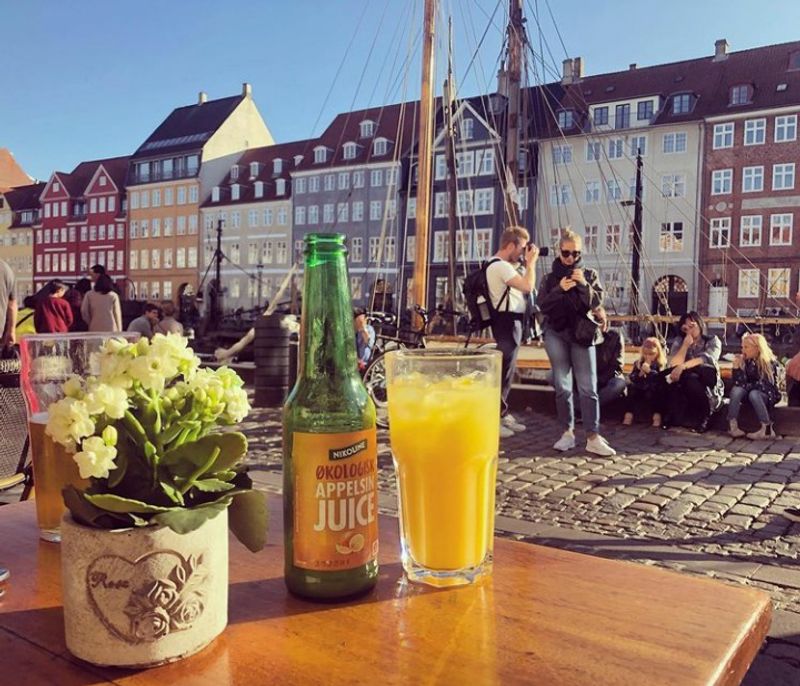
Nyhavn’s candy-colored harbor buildings have appeared on so many postcards that seeing them in person feels oddly familiar, yet completely wonderful. From Hamburg, trains connect northward through Denmark and into Copenhagen, making the Danish capital one of the more adventurous rail journeys on this list.
The route crosses the impressive Oresund Bridge, which is a dramatic engineering achievement worth watching from the window.
Copenhagen has a relaxed confidence that sets it apart from most major European capitals. Streets are clean, cycling infrastructure is world-class, and the locals have an effortless sense of style that seems entirely natural rather than curated.
Tivoli Gardens, the world’s second-oldest amusement park, sits right in the city center and remains genuinely magical for visitors of all ages.
The food scene here is extraordinary. Copenhagen has produced some of the world’s most innovative restaurants, but street food markets like Reffen offer equally exciting flavors at much friendlier prices.
The Louisiana Museum of Modern Art, located just north of the city along the coast, combines stunning contemporary art with seaside views in a setting that feels almost unfairly beautiful. Copenhagen is the kind of city that quietly resets your expectations of what urban life can look like.
Ljubljana, Slovenia
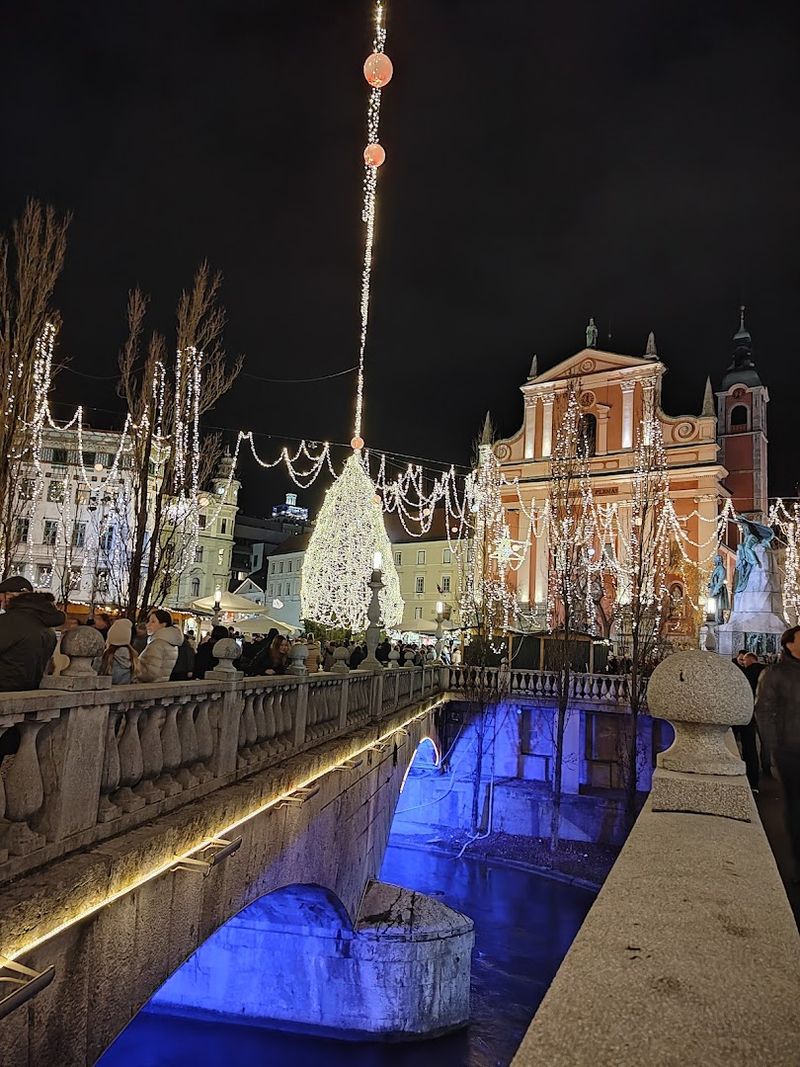
Ljubljana might just be Europe’s best-kept secret, and frequent visitors are in absolutely no hurry to share it. Rail connections from Munich through Austria make the Slovenian capital surprisingly accessible, yet it remains blissfully uncrowded compared to its more famous neighbors.
Arriving here feels like finding a city that tourism forgot, in the most wonderful possible way.
The old town clusters around the Ljubljanica River, where cafe terraces spill out along the water and locals actually use the riverside for their daily routines rather than just for tourist photos. Ljubljana Castle sits on a forested hill directly above the city center, reached by funicular or a short walk through the woods.
The view from the top reveals a compact, green, and genuinely lovely city spread across the valley below.
Ljubljana is also one of Europe’s greenest capitals in the most literal sense. The city center is largely car-free, the markets overflow with local produce, and the surrounding countryside offers lakes, gorges, and forests within a short drive.
Lake Bled, one of Europe’s most photographed landscapes, is only about an hour away. For travelers who love discovering places before they become overcrowded, Ljubljana is a rare and genuinely exciting find.
Bruges, Belgium
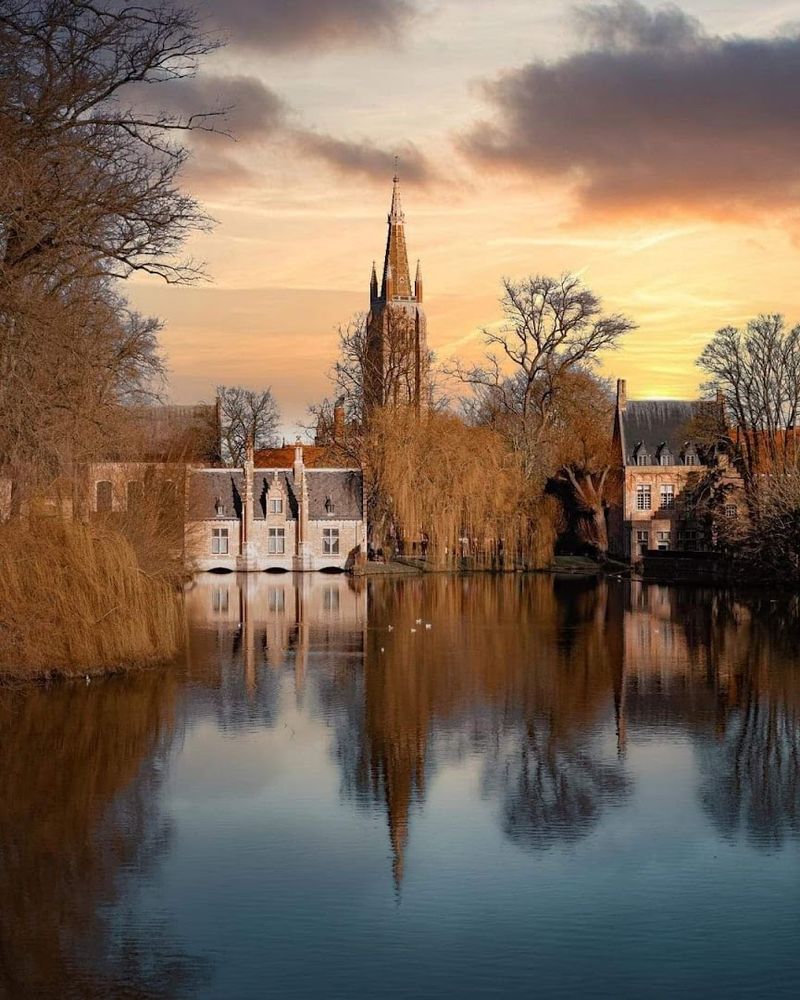
Bruges looks like a medieval city that simply refused to update its wardrobe, and the result is absolutely spectacular. Reachable from western Germany via high-speed rail connections through Brussels, this Belgian gem rewards visitors with one of the best-preserved medieval city centers anywhere in Europe.
The moment you step off the train and walk toward the old town, the 21st century quietly disappears behind you.
Canals crisscross the city in every direction, earning Bruges its well-worn nickname as the Venice of the North. Horse-drawn carriages clip-clop over cobblestones while swans glide beneath arched stone bridges, creating scenes that photographers and painters have been obsessing over for centuries.
The Markt square, dominated by the famous Belfry tower, is the perfect place to sit with a Belgian waffle and simply watch the city go about its business.
Belgian chocolate and beer are serious matters here, and Bruges takes both with enormous pride. Dozens of artisan chocolate shops line the old town streets, and local breweries produce some of the most celebrated ales in the world.
The city is compact enough to explore entirely on foot in a single day, making it a perfect destination for a relaxed and thoroughly satisfying train getaway from Germany.
Share this story