 Unearth The Voyage
The 19th century was a transformative period for Italy, marked by unification, industrial progress, and evolving architectural styles. Buildings from this era often reflect Neoclassical influences, early modern engineering, and eclectic revival styles, blending ancient Roman inspiration with new materials like iron and glass.
From grand opera houses to monumental galleries and innovative public works, these structures capture a fascinating moment when Italy began shaping its modern identity. Here are 10 incredible 19th-century buildings across Italy that are absolutely worth visiting.
Galleria Vittorio Emanuele II – Milan
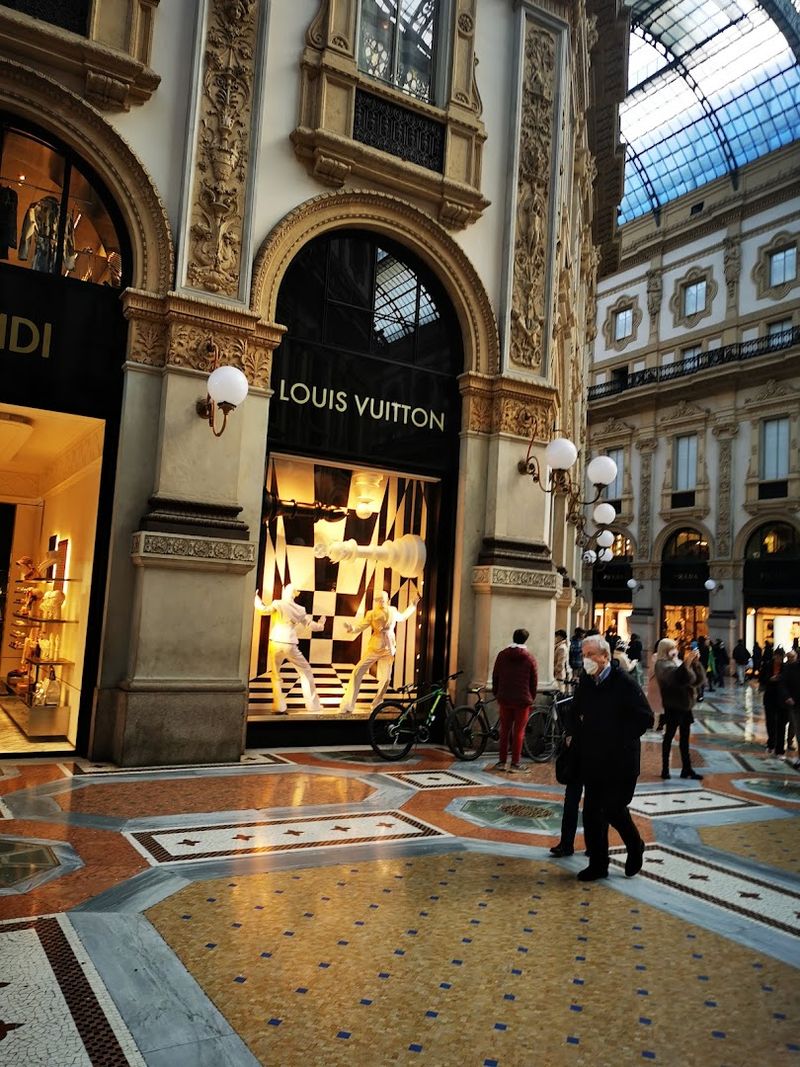
Step inside Milan’s most glamorous covered street and you might forget you are technically indoors. Completed in 1865, the Galleria Vittorio Emanuele II is one of the world’s oldest shopping arcades, and it still dazzles every visitor who walks through its arched entrance.
The soaring glass-and-iron dome was a bold engineering feat for its time.
Named after the first king of unified Italy, the gallery was designed by architect Giuseppe Mengoni, who tragically fell to his death from the scaffolding just days before the official opening. That bittersweet history adds a layer of depth to what is otherwise a breathtakingly beautiful space.
The mosaic floors beneath your feet are works of art in themselves.
Today, high-end boutiques and historic cafes line the gallery’s corridors, making it a favorite haunt for both fashionistas and history lovers. There is a popular local tradition of spinning on the bull mosaic near the center for good luck.
Whether you are shopping, sipping espresso, or simply gawking upward, this gallery delivers an experience that feels genuinely timeless.
Teatro di San Carlo (Rebuilt, Naples, 1810)
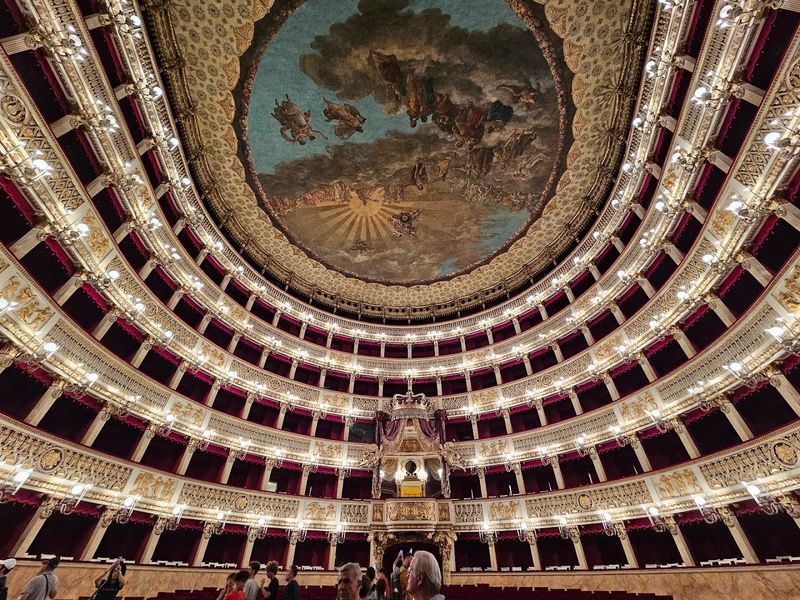
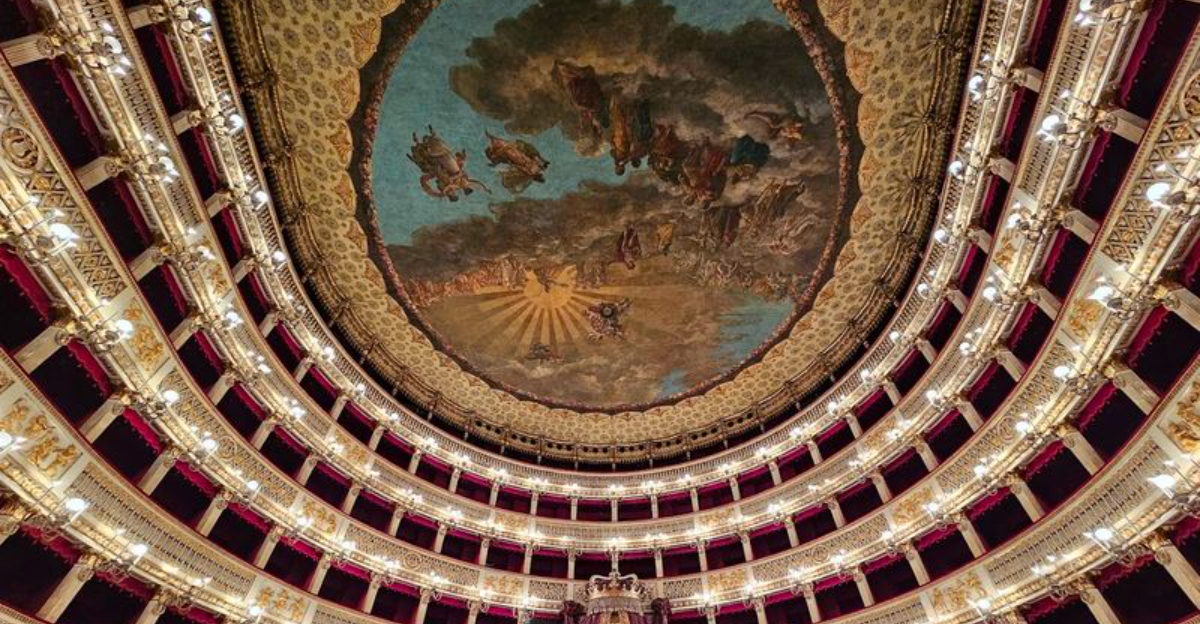
Older than Milan’s La Scala and more lavish than many rival opera houses across Europe, the Teatro di San Carlo carries its prestige with effortless elegance. Rebuilt in 1810 following a devastating fire, the theater was redesigned in a Neoclassical style that emphasized grandeur, symmetry, and acoustic perfection.
Walking into the auditorium for the first time genuinely takes your breath away.
The interior features six tiers of red-and-gold balconies wrapping around a stage that has hosted some of history’s greatest operatic performances. Composers like Donizetti and Rossini premiered major works here, cementing the theater’s legendary status in the world of classical music.
The royal box, reserved for the Bourbon kings of Naples, is particularly spectacular.
Even if opera is not your thing, a daytime guided tour of the building is more than worth the visit. The backstage areas, the painted ceilings, and the sheer scale of the stage machinery will impress anyone with even a passing interest in architecture or performance history.
San Carlo is not just a theater — it is a monument to human creativity at its most ambitious.
Basilica of San Francesco di Paola – Naples
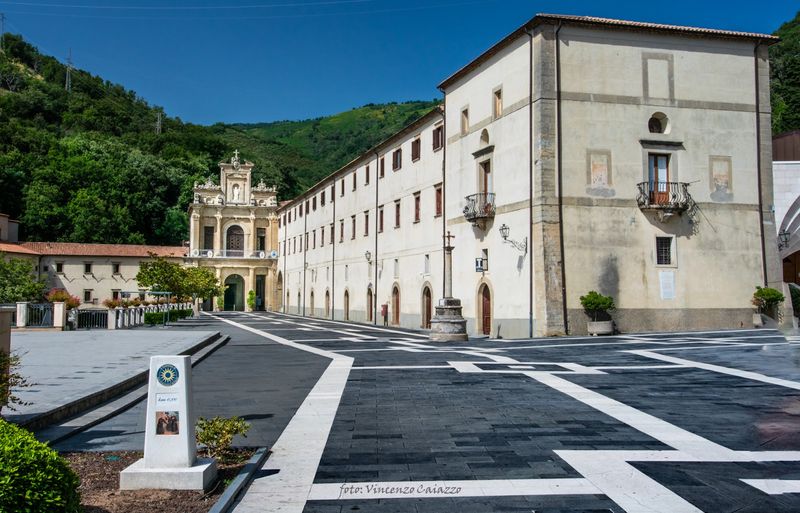
Framing one end of Naples’ enormous Piazza del Plebiscito like a Roman emperor’s favorite backdrop, the Basilica of San Francesco di Paola is a church that knows how to make an entrance. Completed in 1817, it was commissioned by King Ferdinand I of the Two Sicilies as a vow of gratitude for his return to power.
The result is one of southern Italy’s most visually commanding religious buildings.
Architect Pietro Bianchi drew heavily from the Pantheon in Rome, giving the basilica its iconic circular interior, coffered dome, and dramatic columned portico. Standing inside, you feel the full weight of Neoclassical ambition — everything is calculated to inspire awe.
The proportions are so precise that the building almost seems too perfect to be real.
Visiting the piazza at dusk, when the basilica glows golden in the fading light and the equestrian statues of the Bourbon kings stand silhouetted in front, is one of Naples’ great free pleasures. The church itself is open to visitors and admission is free.
It is a reminder that some of the finest architecture in Italy was built not for commerce, but for devotion and political theater in equal measure.
Cisternone of Livorno – Livorno
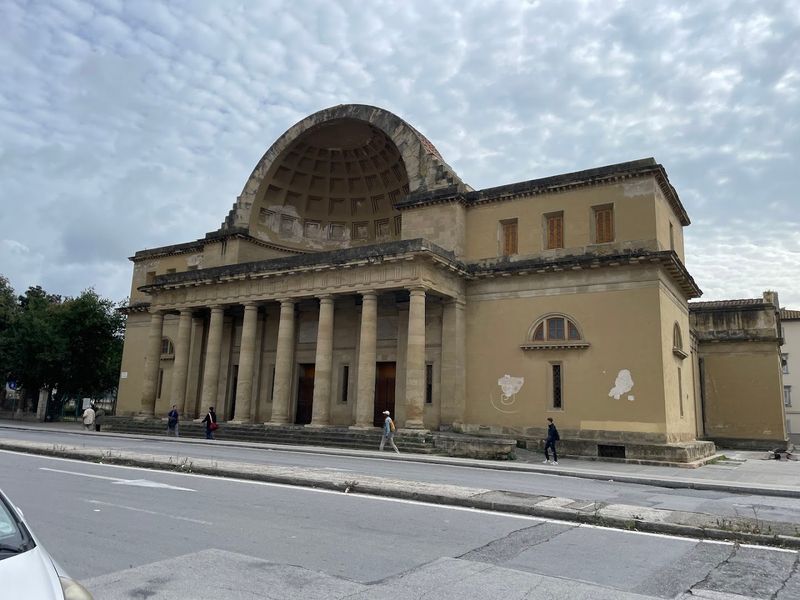
Not many water tanks make it onto architectural must-see lists, but the Cisternone of Livorno is not your average piece of plumbing. Built between 1829 and 1848, this monumental reservoir was designed by Pasquale Poccianti to solve Livorno’s chronic water shortage — and he decided to do it in jaw-dropping Neoclassical style.
The result looks more like a Roman temple than a municipal utility project.
The building’s massive cylindrical dome, supported by a colonnade of sturdy pillars, is a genuinely rare example of functional infrastructure elevated to the level of fine architecture. Poccianti even incorporated an aqueduct system that was considered cutting-edge engineering for the period.
It is the kind of building that makes you wonder why modern water treatment plants cannot look this good.
Livorno is often skipped by tourists rushing between Pisa and the Cinque Terre, which makes finding this gem feel like a small personal victory. The exterior can be admired freely, and the surrounding area is pleasant for a stroll.
Architecture enthusiasts and engineering history buffs will find the Cisternone particularly rewarding — it proves that the 19th century treated even its most practical projects as opportunities for lasting artistic expression.
Teatro Carlo Felice – Genoa
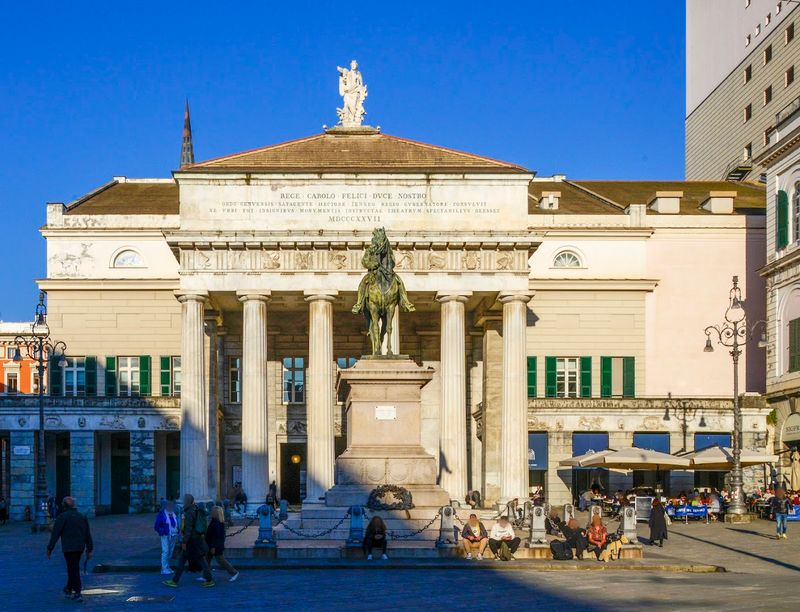
Genoa’s answer to the great opera houses of Italy, the Teatro Carlo Felice has had a dramatic life story that mirrors the turbulent history of the 19th and 20th centuries. First opened in 1827 and named after King Carlo Felice of Sardinia, the theater quickly established itself as a premier destination for operatic performance in northern Italy.
Its original Neoclassical design by Carlo Barabino was widely admired for its elegant restraint.
The theater suffered severe bomb damage during World War II and was left in ruins for decades, a sobering reminder of how fragile cultural heritage can be. It was eventually rebuilt and reopened in 1991, with architects Aldo Rossi and Ignazio Gardella blending modern elements into the historic shell.
The result is a fascinating architectural hybrid that sparks debate among purists and modernists alike.
What has not changed is the quality of the performances held inside. The theater remains one of Italy’s most active opera and concert venues, with a packed annual calendar that draws music lovers from across Europe.
Visiting Genoa without at least walking past the Carlo Felice — or better yet, catching a performance — would be a genuine missed opportunity. The city’s operatic soul lives here.
Pedrocchi Café – Padua
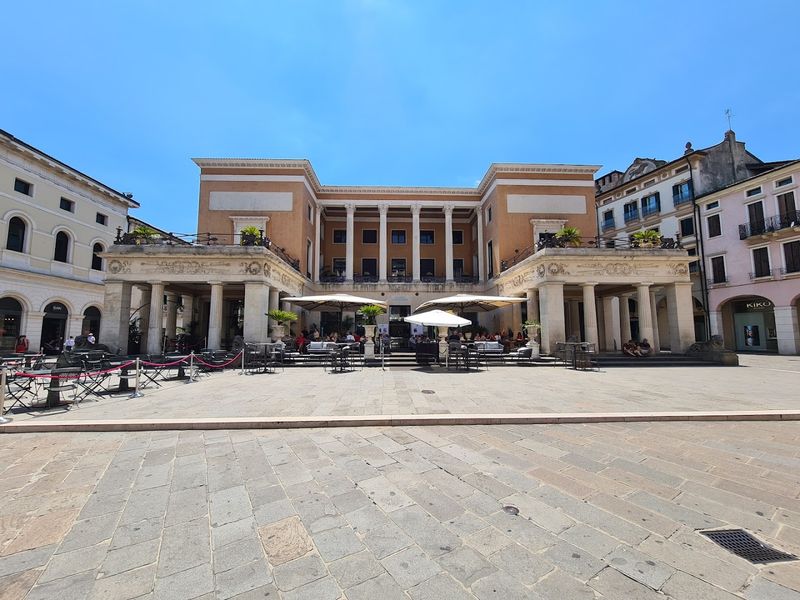
There is a café in Padua that locals once called the “café without doors” — not because it had no entrance, but because it never closed. The Pedrocchi Café, completed in 1816, was designed by architect Giuseppe Jappelli as a grand public gathering place, and it quickly became the intellectual heartbeat of the city.
Students from the nearby University of Padua, one of Europe’s oldest, made it their unofficial headquarters.
The building’s Neoclassical exterior, with its crisp white columns and symmetrical facade, gives it the air of a government building rather than a place to enjoy a coffee. Inside, however, the rooms shift dramatically in style — there is a Gothic room, an Egyptian room, and a Moorish room, each decorated with remarkable attention to period detail.
Jappelli clearly had a taste for the theatrical.
History seeped into these walls in 1848, when students used the café as a gathering point during uprisings against Austrian rule. A bullet hole in one of the rooms is still preserved as a small, pointed reminder of those events.
Today, the Pedrocchi remains a fully functioning café and a cultural landmark — the kind of place where a single espresso comes loaded with centuries of stories.
Tempio Canoviano – Possagno
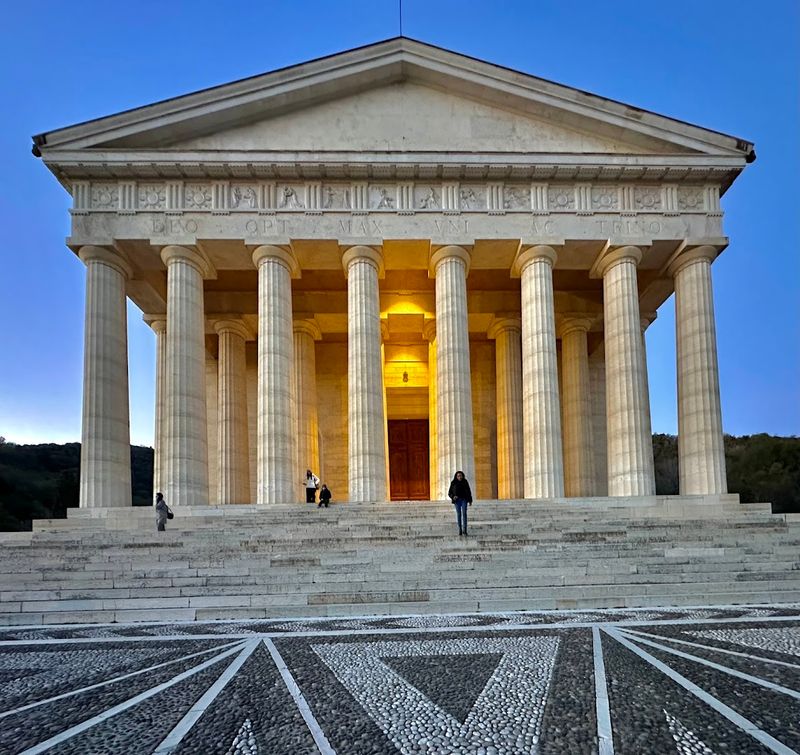
Antonio Canova was Italy’s most celebrated sculptor of the Neoclassical era, so it makes perfect sense that the temple he designed for his hometown of Possagno would be anything but ordinary. Built in 1819 and completed after his death in 1830, the Tempio Canoviano sits on a hill overlooking the small Veneto village like a benevolent guardian from antiquity.
Canova personally oversaw the early stages of construction before his passing.
The design is a bold architectural mashup — the front colonnade is modeled on the Parthenon in Athens, while the rear features a dome inspired by the Pantheon in Rome. The combination sounds like it should not work, but somehow it does, resulting in a building that feels both ancient and deeply personal.
Canova is buried inside, which adds a quietly moving dimension to any visit.
The Gypsotheca, a museum adjoining the temple, houses an extraordinary collection of Canova’s plaster models and sculptures, making the entire site a must-visit for art lovers. Possagno itself is a tiny, unhurried village — the kind of place where you can wander slowly, eat well, and feel completely off the tourist radar.
Few places in the Veneto reward a detour quite so generously as this one does.
Galleria Umberto I – Naples
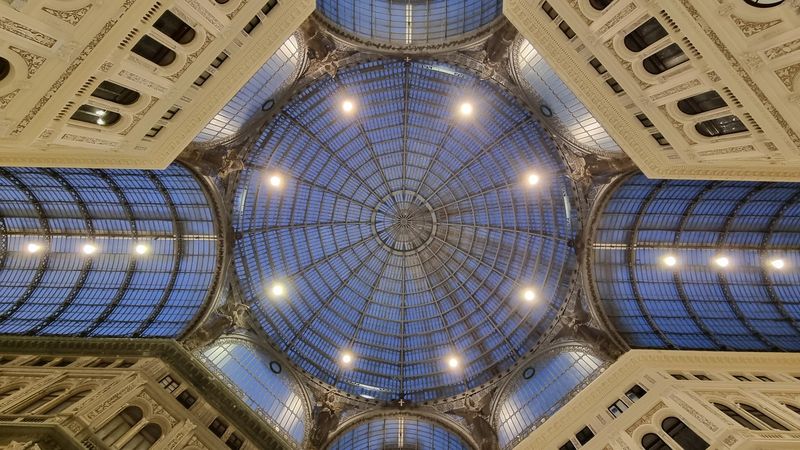
Built just two decades after Milan’s famous gallery, the Galleria Umberto I in Naples arrived with something to prove — and largely delivered. Completed in 1891, it was part of a massive urban renewal project aimed at modernizing Naples after a devastating cholera epidemic had exposed the city’s cramped, unsanitary neighborhoods.
Architecture here was literally a public health strategy.
The gallery’s soaring glass dome, intricate iron framework, and decorative tilework reflect the Umbertine style — a distinctly late 19th-century Italian aesthetic that leaned into eclecticism and ornamental richness. Standing at the central crossing point and looking up at the dome is one of those genuinely free pleasures that Naples offers in abundance.
The acoustics inside are surprisingly wonderful, and street musicians occasionally take full advantage of that fact.
Unlike its Milanese counterpart, the Galleria Umberto I has a slightly rougher-around-the-edges charm that feels authentically Neapolitan. Some of the shops are tourist-facing, others are local businesses that have been there for generations.
Visiting in the morning, before the crowds arrive, gives you the best chance to appreciate the architecture without distraction. It is a building that rewards those who slow down and actually look upward.
Teatro Regio – Parma
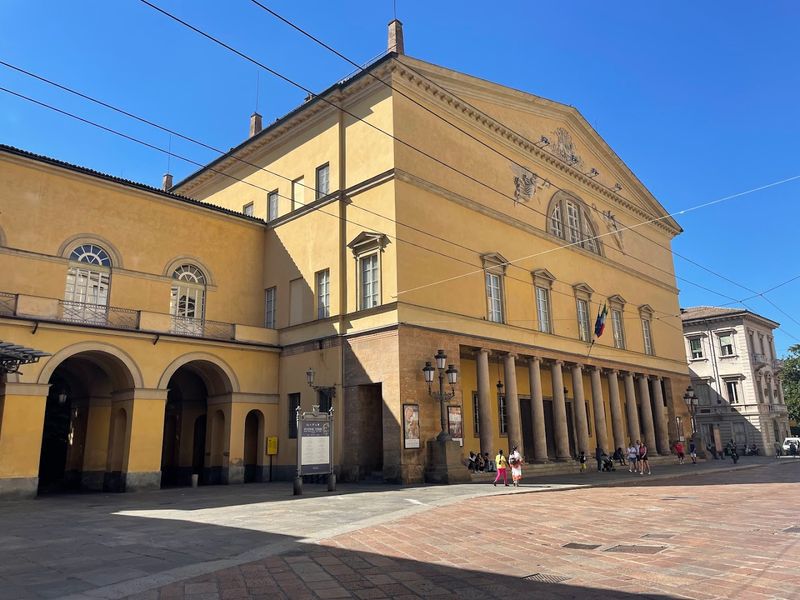
Parma takes opera seriously — perhaps more seriously than anywhere else in Italy, which is saying something. The Teatro Regio, inaugurated in 1829 under the patronage of Duchess Marie Louise of Austria, has been the city’s cultural crown jewel ever since.
Parma’s opera-going audience is famously demanding, and performers who win their approval have truly earned it.
The theater was designed by Nicola Bettoli in a clean, restrained Neoclassical style that prioritizes acoustic quality and sightlines above decorative excess. The result is an auditorium that feels both intimate and grand — a tricky balance that many larger opera houses fail to achieve.
The warm color palette of cream, blue, and gold gives the interior a sense of refined elegance without tipping into ostentation.
Verdi, who was born just outside Parma in the village of Le Roncole, is the city’s patron saint of music, and the Teatro Regio frequently celebrates his legacy through dedicated festival programming. Catching a Verdi opera in Parma is the kind of experience that opera lovers plan entire trips around.
Even if you visit only for a tour, the theater’s history, beauty, and cultural significance make it one of northern Italy’s most rewarding architectural stops.
Arco della Pace – Milan
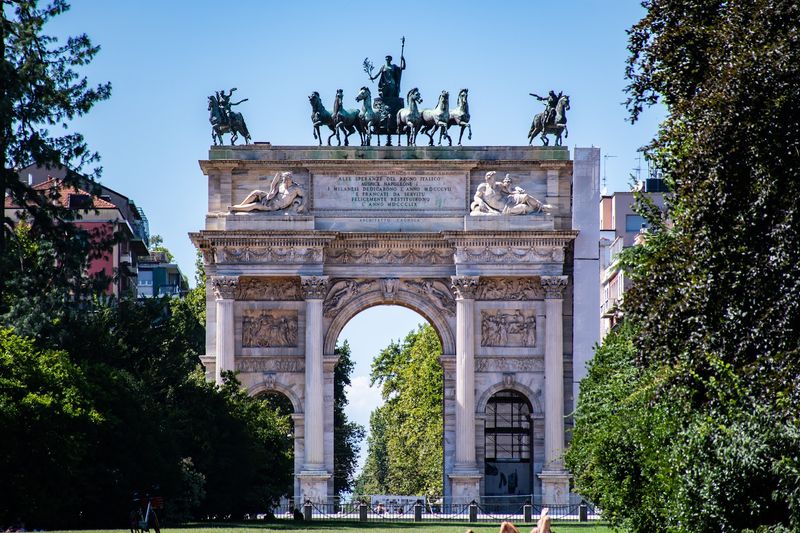
Milan’s northwestern edge is marked by one of the most ambitious Neoclassical monuments in all of Italy — a triumphal arch so grand that Napoleon himself commissioned it, though he never lived to see it finished. The Arco della Pace, or Arch of Peace, was completed in 1838, decades after construction began in 1807, and the political winds had shifted dramatically in the meantime.
What started as a monument to Napoleonic glory was quietly rebranded as a symbol of peace and European unity.
Architect Luigi Cagnola designed the arch with six Corinthian columns on each face and a rich program of sculptural reliefs celebrating historical and allegorical themes. The crowning bronze chariot, pulled by six horses and driven by the goddess of Peace, is particularly striking from a distance.
The whole structure sits at the head of Corso Sempione, one of Milan’s most pleasant tree-lined boulevards.
Visiting the arch is free and accessible at any hour, making it an easy addition to any Milan itinerary. The adjacent Parco Sempione offers a relaxed green space where locals jog, picnic, and escape the city buzz.
Together, the arch and the park form one of Milan’s most satisfying outdoor experiences — monumental history paired with everyday city life.



