Missouri does not always get credit for its natural beauty, but the state is hiding some serious waterfall secrets. Tucked into the Ozark hills, volcanic rock formations, and dense national forests are cascades that would make any nature lover do a double take. From a 132-foot drop that earns the title of the state’s tallest waterfall to a broad curtain of rushing water wide enough to make your jaw drop, Missouri’s waterfalls cover a surprisingly impressive range. Some require a hearty hike through rugged terrain, while others are practically steps from the parking lot.
A few only appear after heavy rains, making them rare and rewarding finds for those who time their visits right. Whether you are a seasoned trail hiker or someone who just wants a good photo without breaking a sweat, this list has something for you. Get ready to be genuinely surprised by what Missouri has been quietly keeping to itself.
1. Mina Sauk Falls, Taum Sauk Mountain State Park, Missouri
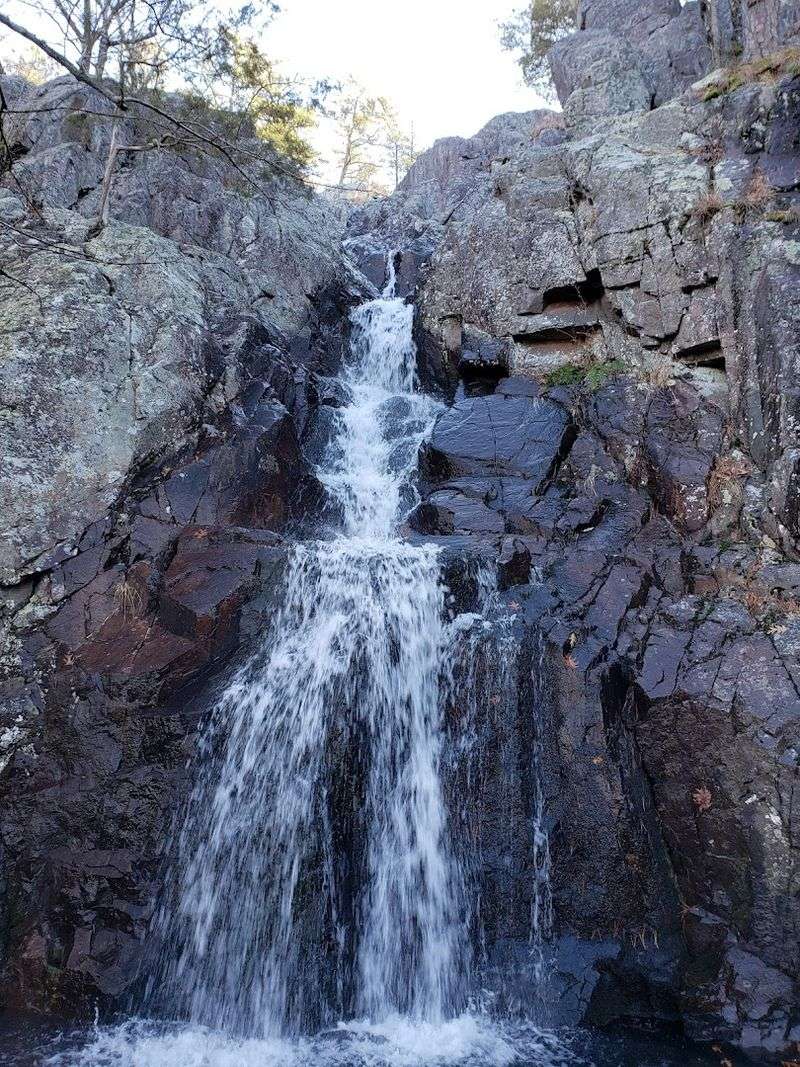
Missouri’s tallest waterfall earns that title honestly, dropping a dramatic 132 feet down a series of ancient volcanic ledges into Taum Sauk Creek below.
The falls sit inside Taum Sauk Mountain State Park near Ironton, and getting there means tackling a rocky, rugged 3-mile loop trail that winds through some of the most remote-feeling terrain in the entire state.
After a good rain, the cascade transforms into something truly jaw-dropping, with water rushing over every ledge in a way that makes the hike feel more than worth the effort.
The St. Francois Mountains surrounding the falls are made of ancient rhyolite rock, some of the oldest exposed geology in the Midwest, which gives the whole area a prehistoric, almost otherworldly character.
Hikers should wear sturdy footwear since the trail involves uneven rock surfaces throughout. Pack water, bring a camera, and plan to arrive early on weekends because this trail earns its popularity the hard way.
2. Grand Falls, Joplin, Missouri
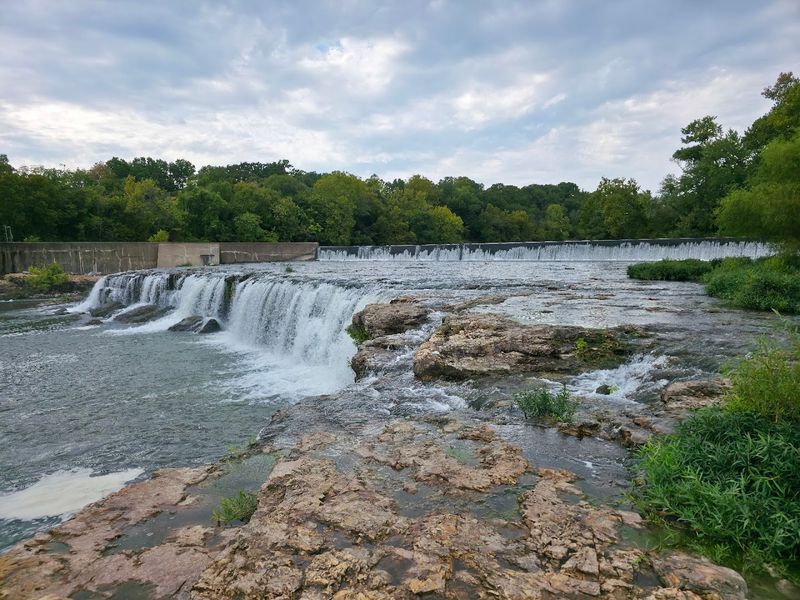
Missouri’s largest continuously flowing natural waterfall does not mess around when it comes to showing off. Grand Falls stretches an impressive 163 feet wide across Shoal Creek, plunging 12 feet over a solid chert ledge in a broad, powerful curtain of rushing water.
Unlike many waterfalls that require a serious hike just to catch a glimpse, Grand Falls delivers its full spectacle directly from the parking lot, making it one of the most accessible natural attractions in the state.
Photographers absolutely love this spot, and it is easy to understand why. The combination of wide rushing water, layered rocky ledges, and surrounding greenery creates a naturally photogenic scene that works in almost any season.
Visitors can also wade in the nearby creek pools during warmer months, and fishing is a popular activity along Shoal Creek. The falls are located within the city of Joplin, making it an effortless stop for anyone passing through southwest Missouri on a road trip.
3. Rocky Falls, Winona, Missouri
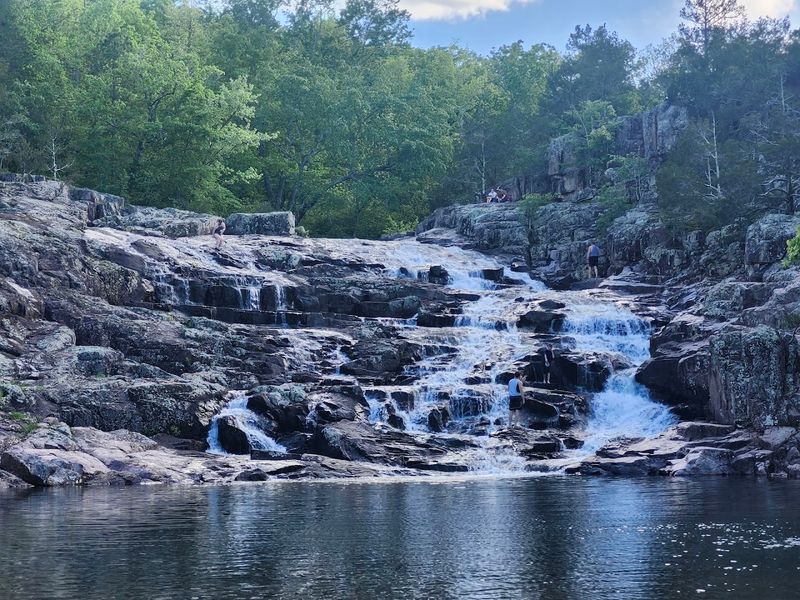
Ancient rock does not get much more impressive than the reddish-brown rhyolite porphyry that Rocky Falls tumbles over. This volcanic rock formed roughly 1.5 billion years ago, which means every photo you take here is basically a snapshot of deep geological history.
Rocky Falls is located within the Ozarks National Scenic Riverways near Winona, and the short walk from the parking area makes it one of the most beginner-friendly waterfall destinations in Missouri. Despite being easy to reach, the falls feel genuinely wild and far removed from any urban setting.
The site comes equipped with bathrooms, picnic tables, and fire grills, making it a practical choice for families who want a full outdoor day rather than just a quick photo stop.
After rainfall, the water flow increases significantly, turning the cascade into a more dramatic display across the colorful rock face. Summer weekends draw crowds, so a weekday visit rewards you with a quieter and more relaxed experience at this striking natural landmark.
4. Hickory Canyons Falls, Farmington, Missouri
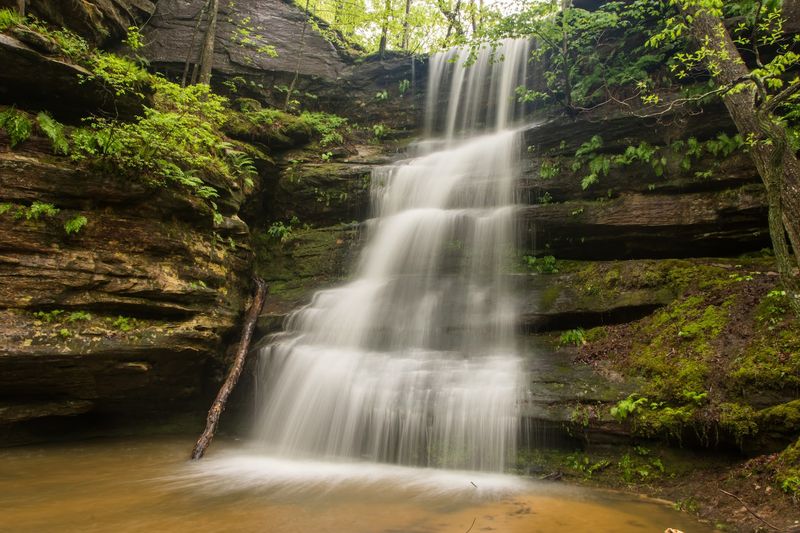
Hidden in plain sight near Farmington, Hickory Canyons Natural Area is one of those places that makes you wonder how it stayed off your radar for so long. When spring rains arrive, water begins spilling from steep sandstone bluffs in a way that feels completely out of place for a Missouri park, yet here it is.
The waterfall here flows gently down tiered rocky cliffs inside a dramatic box canyon, creating a scene that photographers and hikers consistently describe as one of the more surprising natural finds in the region.
The trail leading to the falls is short and relatively even, making it accessible for hikers of most ability levels. The canyon walls rise on both sides, giving the whole area a sheltered, secluded quality that sets it apart from more open waterfall sites.
Timing matters at Hickory Canyons. The falls are most powerful and impressive after significant rainfall, so checking recent weather before your visit can make the difference between a trickle and a genuinely stunning cascade worth the drive.
5. Falling Spring Falls, Winona, Missouri
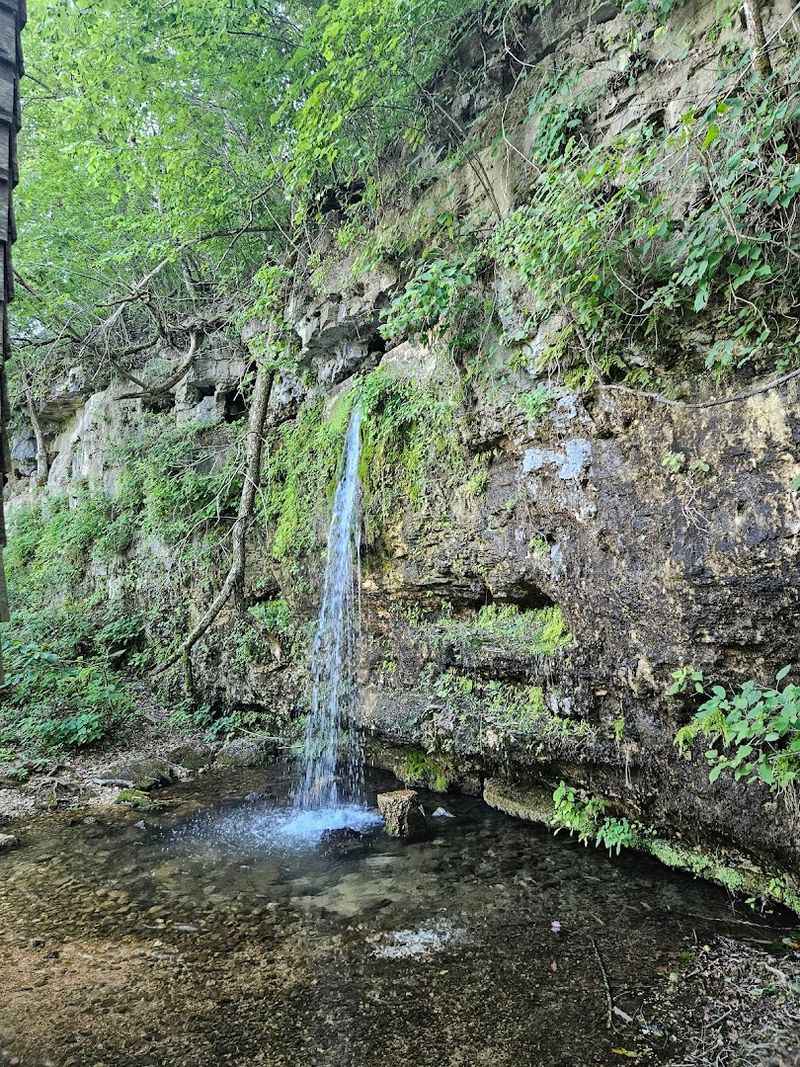
Among dedicated Ozark waterfall hunters, Falling Spring Falls holds a special place on the checklist. This one has a quirky origin story: the water does not come from a creek running along the surface but instead emerges directly from a hillside, making it a spring-fed waterfall with a genuinely unusual source.
After periods of heavy rain, the water fans across the rock face in multiple ribbons, spreading out in a wide, dramatic display before cascading into the valley below. The effect is particularly striking and gives the falls a character that differs from a typical single-stream cascade.
The surrounding Ozark landscape adds context to the visit. Dense forest, rocky terrain, and the quiet isolation of the area combine to create a destination that rewards those willing to seek it out rather than sticking to the most obvious tourist routes.
Falling Spring Falls is located near Winona in the Mark Twain National Forest region. The access road can be rough depending on conditions, so checking trail and road conditions before heading out is always a practical step worth taking.
6. Klepzig Mill Falls, Ozark National Scenic Riverways, Missouri
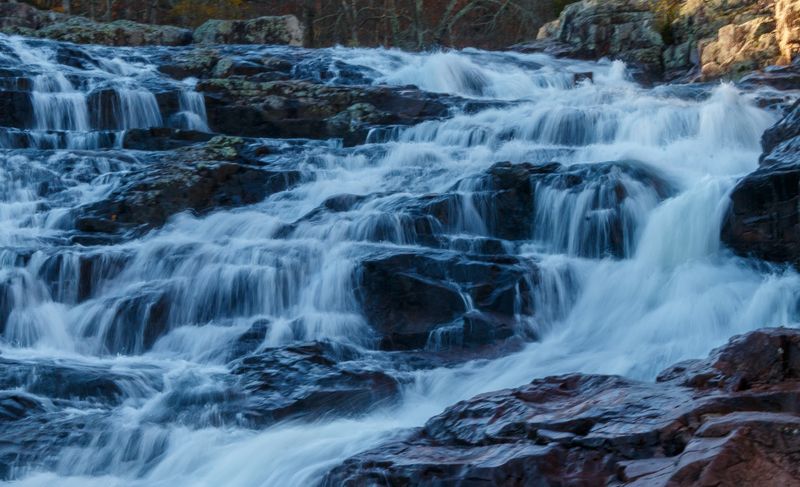
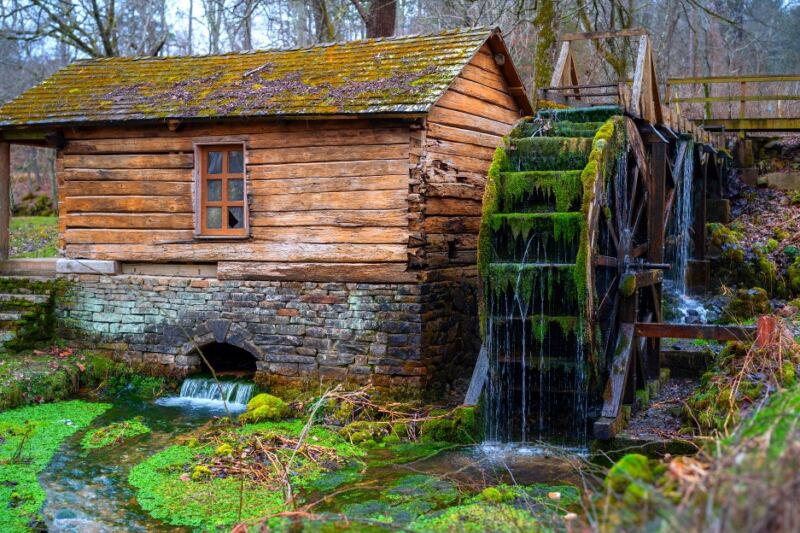
History and natural beauty come together in a way that few Missouri waterfalls can match. Klepzig Mill Falls flows from a crystal-clear spring beside the historic Klepzig Mill, one of the last remaining water-powered mills in the Ozarks, creating a picturesque cascade that has become a favorite stop within Ozark National Scenic Riverways.
Unlike waterfalls that require long hikes, this one is reached by a short walk from the nearby parking area, making it an easy destination for visitors of all ages. The spring-fed water spills over a rocky ledge before winding past the restored mill, with towering hardwoods and limestone bluffs completing the peaceful setting.
The waterfall flows year-round thanks to the constant output of the spring, though it is especially photogenic in spring and after rainy periods when the surrounding forest is at its greenest. Many visitors combine the stop with nearby Alley Spring, Rocky Falls, or the Current River, making Klepzig Mill Falls a rewarding addition to any Ozark road trip.
7. LaBarque Creek Waterfalls, Pacific, Missouri
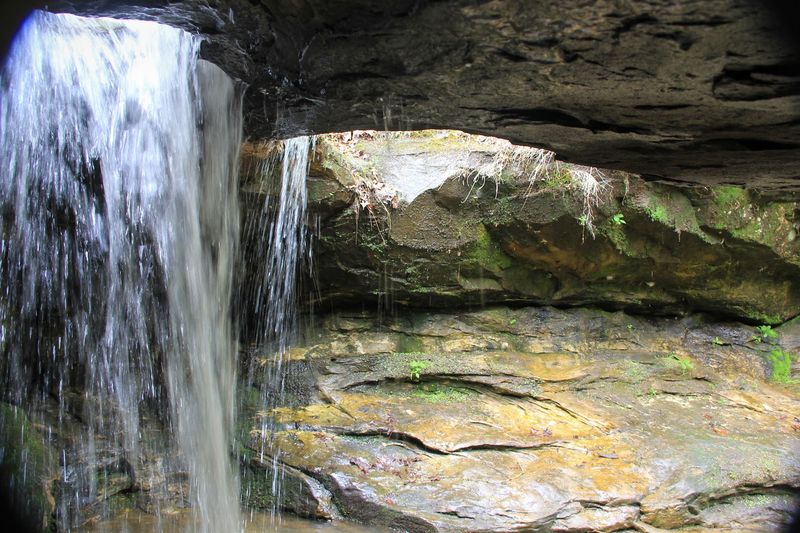
Not every waterfall destination hands you a guaranteed cascade on arrival, and LaBarque Creek Conservation Area near Pacific is upfront about that. The waterfalls here are seasonal, appearing along sandstone formations after significant rainfall and rewarding patient, well-timed visitors with a genuinely beautiful payoff.
The conservation area combines wooded hiking trails, scenic overlooks, and those rain-dependent cascades into an experience that feels more layered than a simple waterfall visit. Even on dry days, the sandstone geology and forested terrain make the trails worth walking.
LaBarque Creek sits close enough to the St. Louis metro area to serve as a practical day trip destination, yet the landscape feels removed enough from suburban surroundings to provide a genuine change of pace.
Hikers who visit after a period of steady rain are often rewarded with multiple cascades appearing simultaneously along the creek’s sandstone banks, creating a scene that justifies the timing effort. Checking recent rainfall totals before heading out is the single most useful piece of planning advice for this destination.
8. Sandstone Canyon Waterfalls, Don Robinson State Park, Missouri
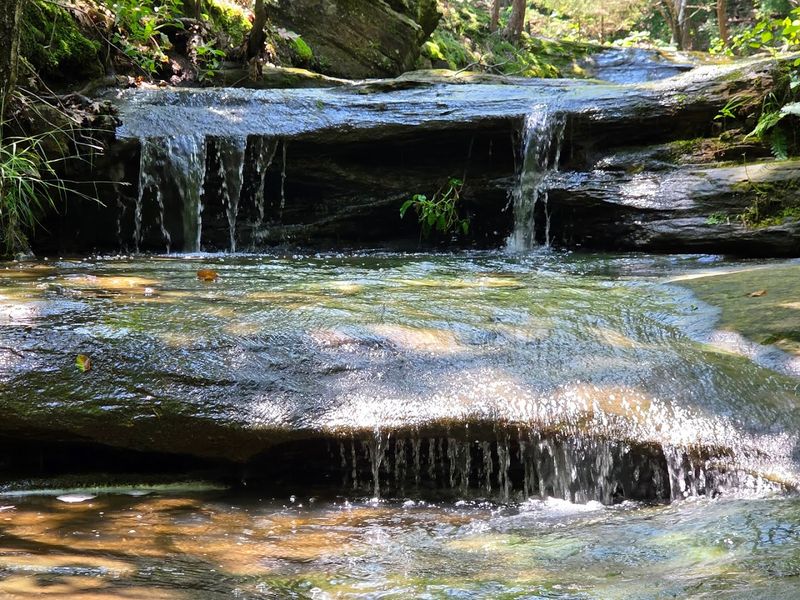
Don Robinson State Park is not exactly a household name, but hikers who have walked the Sandstone Canyon Trail tend to talk about it with a certain quiet enthusiasm that makes curious newcomers take notice.
The trail winds through one of Missouri’s most visually distinctive state parks, where layered sandstone formations rise alongside the path and seasonal waterfalls spill over the rock in a way that looks almost architectural in its neatness.
The canyon itself gives the park a rugged, enclosed quality that sets it apart from Missouri’s more open outdoor destinations. Narrow passages between rock walls, mossy ledges, and the occasional cascade create a landscape that feels unexpectedly dramatic for a state park within reasonable driving distance of St. Louis.
Don Robinson State Park is located in Jefferson County and is open year-round for day use. The Sandstone Canyon Trail is the park’s main attraction and covers a manageable distance suitable for most hikers. Visiting after rain guarantees the most impressive waterfall activity along the canyon route.
9. Marble Creek Falls, Mark Twain National Forest, Missouri
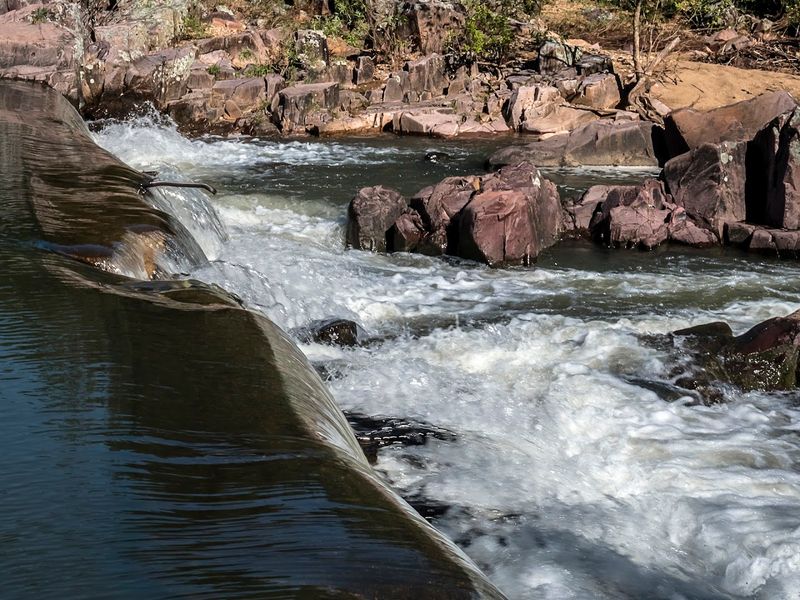
Hidden within the Mark Twain National Forest, Marble Creek Falls is one of those places that rewards visitors willing to venture a little farther off the beaten path. Water tumbles over a series of smooth granite and rhyolite ledges, creating several small cascades instead of one dramatic plunge. The surrounding forest and clear creek give the area a peaceful, secluded feel that is especially appealing in spring when water levels are highest.
The falls are part of the Marble Creek Recreation Area near Arcadia, where visitors can also enjoy hiking, camping, and fishing. While the cascades are modest compared to Missouri’s largest waterfalls, the combination of rugged scenery and relatively light crowds makes this a favorite among locals looking for a quieter outdoor escape.
10. The Cascades, Forest Park, St. Louis, Missouri
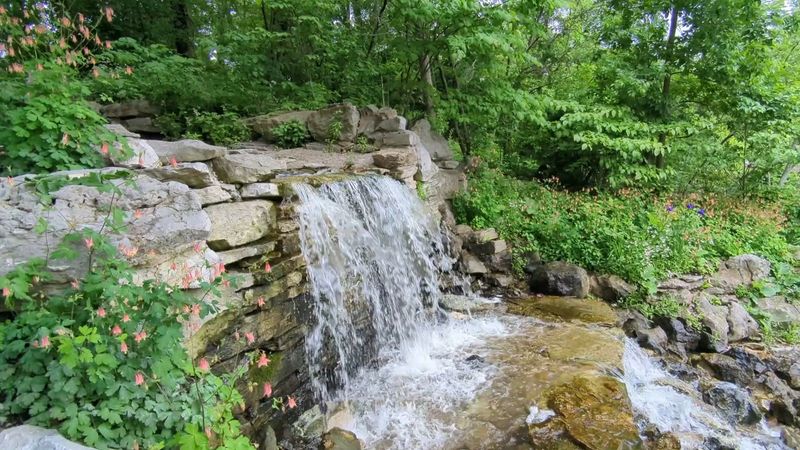
Not every impressive waterfall in Missouri was carved by nature. Tucked into Forest Park in the heart of St. Louis, The Cascades is a striking 75-foot man-made waterfall inspired by the dramatic water features that flowed down Art Hill during the 1904 World’s Fair. The current version was built in 1937 and remains one of the park’s most photographed landmarks.
Water tumbles down a series of broad stone terraces before feeding the park’s interconnected lakes and streams, creating a peaceful setting just steps from the Saint Louis Art Museum. The surrounding paths, bridges, and mature trees make it a favorite spot for leisurely walks, photography, and quiet breaks from the city’s busy attractions.
Unlike many of Missouri’s natural waterfalls, no hike is required to enjoy The Cascades. Its easy accessibility and historic setting make it one of the state’s most recognizable water features, proving that even an urban park can deliver a surprisingly scenic waterfall experience.
Share this story