 Unearth The Voyage
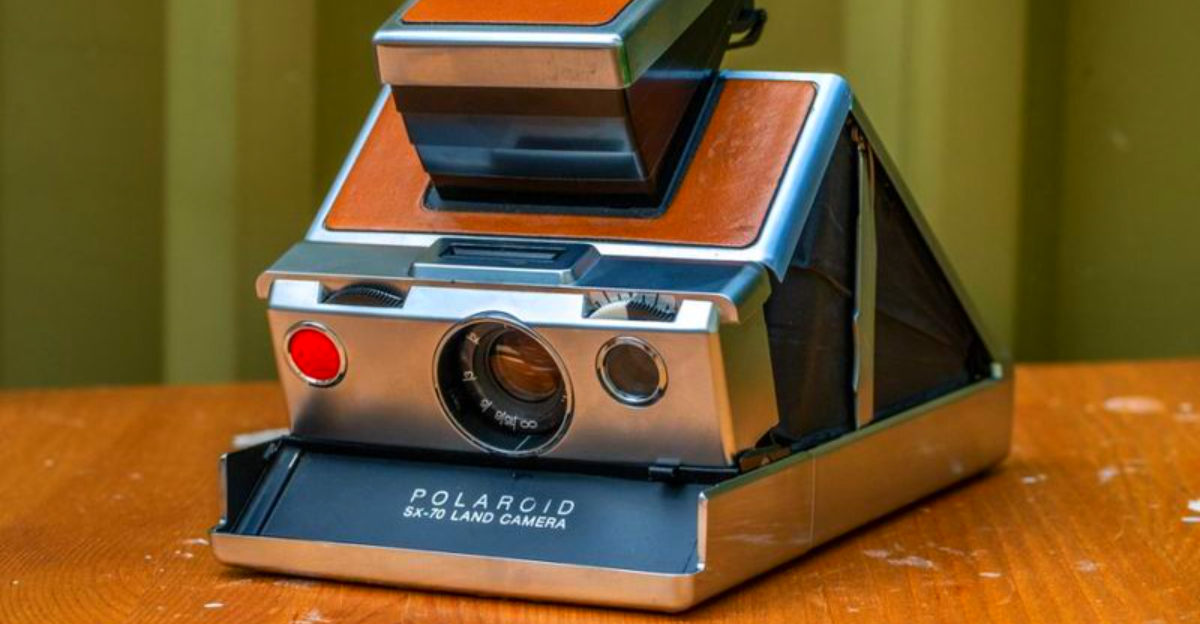
Some cameras do more than capture light, they make you stare before you even press the shutter. If design sparks joy, these beauties will have you reaching for them like jewelry you can actually use. You will feel the weight, the click, the intention in every dial and curve. Keep reading and you might find your next heirloom hiding in plain sight.
1. Leica M3 (1954)
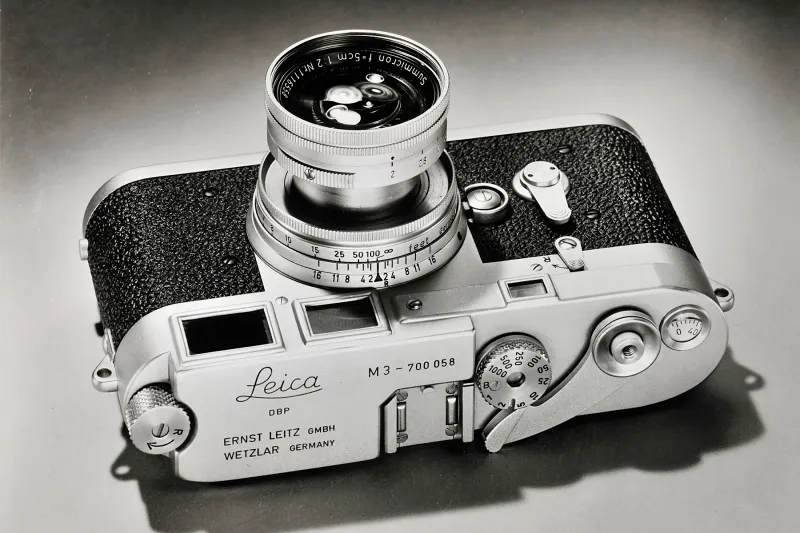
You notice the Leica M3 before you hear its whisper-quiet shutter. The chrome and leather wrap around a body that feels inevitable, like form and function shook hands and promised to behave. View through the rangefinder, and the framelines float like a gentle promise that your photo will land exactly where you intend.
The controls are spare and perfectly placed, teaching your fingers to move without thinking. Nothing screams for attention, yet everything feels considered, from the film advance to the engraved top plate. Hold it and you understand why designers still study its proportions and restraint.
This camera does not beg, it invites. You slow down, breathe, and align. Beauty here is calm confidence, and you can sense it in every frame you take.
2. Hasselblad 500C/M (1957)
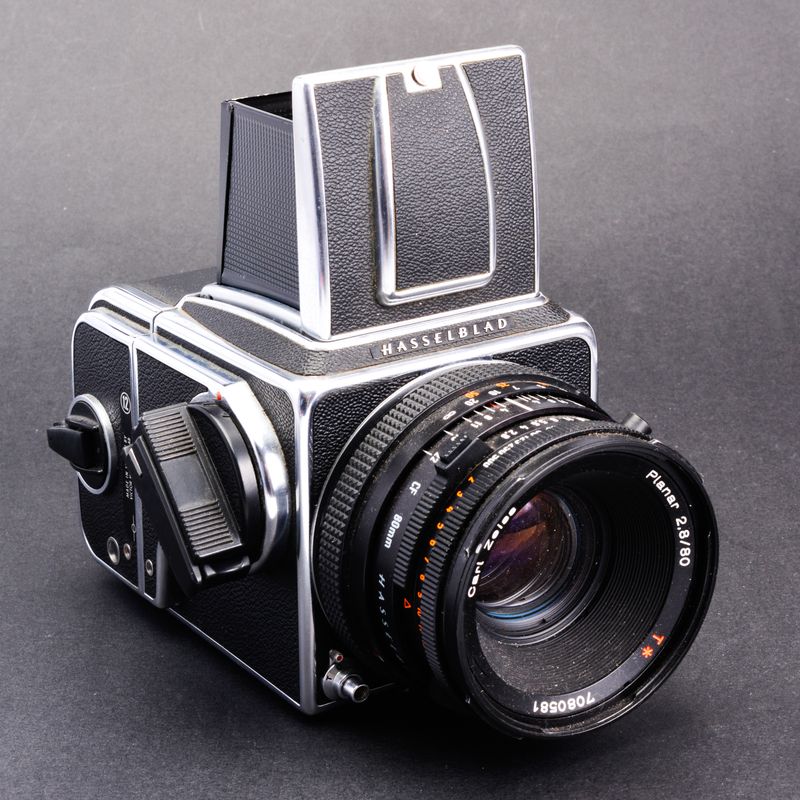
The Hasselblad 500C/M looks like a precision instrument sculpted into a cube, each edge crisp and assured. You flip open the waist-level finder and a luminous ground glass springs to life, a square world waiting with poise. Its chrome and black surfaces feel like a tailored suit that never ages.
Modularity becomes elegance here: backs swap, finders change, lenses click on with satisfying certainty. You sense engineering discipline, but also a quiet swagger in the way it stands on a table. This camera turns composition into ceremony.
Shoot it and the square teaches balance. You slow your breathing as the mirror thwacks and time leaves a soft fingerprint. It is beautiful because it believes in purpose, and it shows you how to believe too.
3. Rolleiflex 2.8F (1958)
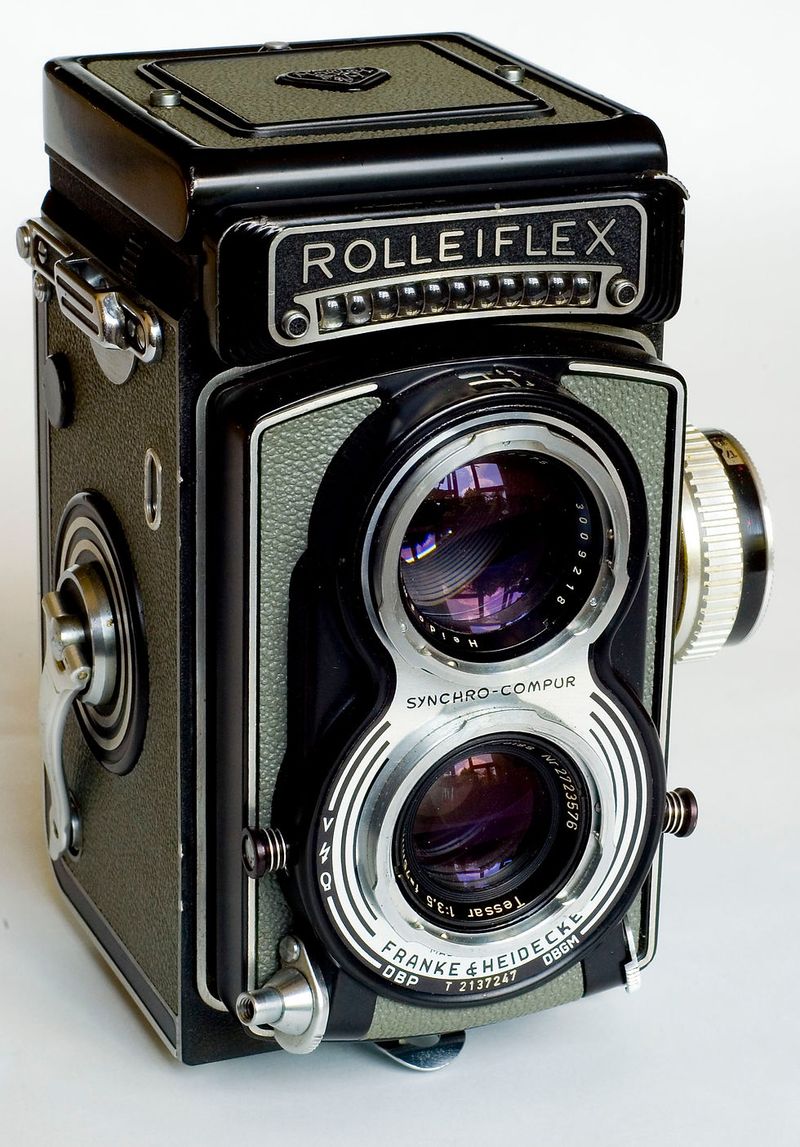
The Rolleiflex 2.8F is all about symmetry and charm, two lenses stacked like eyes that never blink. You cradle it at chest level and watch life float on a bright screen, images forming like memories you have yet to make. Every knob feels jewel-like, purposeful, and smooth.
Its silhouette reads instantly, an icon recognized across decades of street and portrait work. Leather and chrome meet in confident lines, dripping with mid-century grace. You feel stylish just carrying it, which is perfectly fine because it shines without trying.
Working with a TLR changes your posture and your pace. People relax because you are not hiding behind a wall of metal. Beauty here is empathy, rendered in glass and gears.
4. Contax T2 (1990)
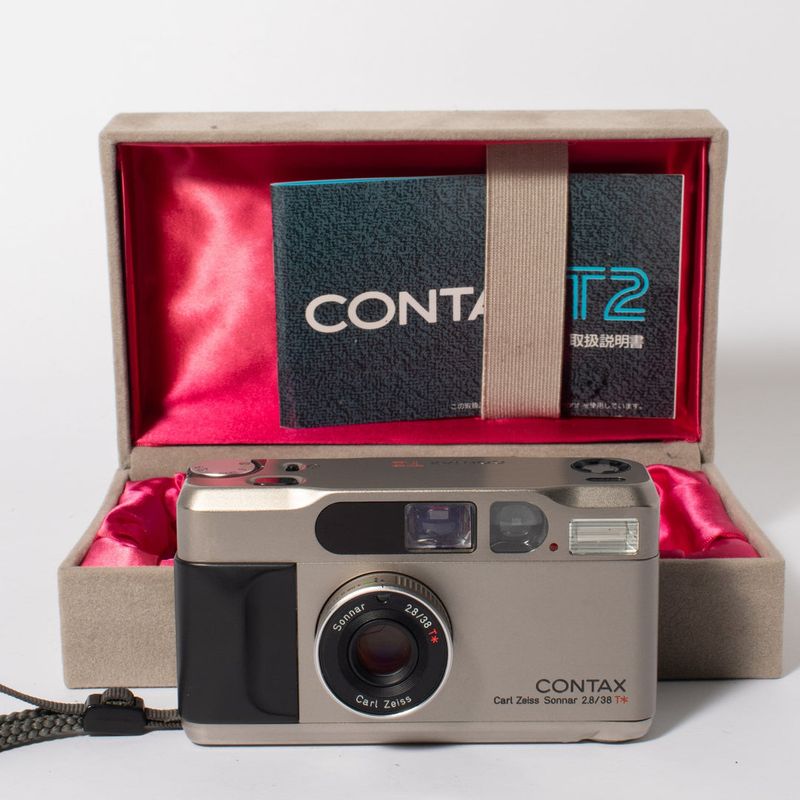
The Contax T2 wears titanium like casual eveningwear, understated yet obviously premium. Slip it into a pocket and you carry a small statement, a cool rectangle that never tries too hard. The Zeiss lens peeks out with quiet confidence, ready to turn moments into souvenirs.
Its controls distill choice into essentials, letting you focus on noticing. Edges feel crisp, tolerances tight, and the overall vibe is luxury without gloss. You get the sense that celebrities loved it because it felt effortless, not because it screamed attention.
Raise it, frame, and you are done. Beauty here is efficiency made tactile, a compact that makes you look twice. It is the kind of design that disappears when you shoot and reappears in your pocket with a grin.
5. Nikon F (1959)
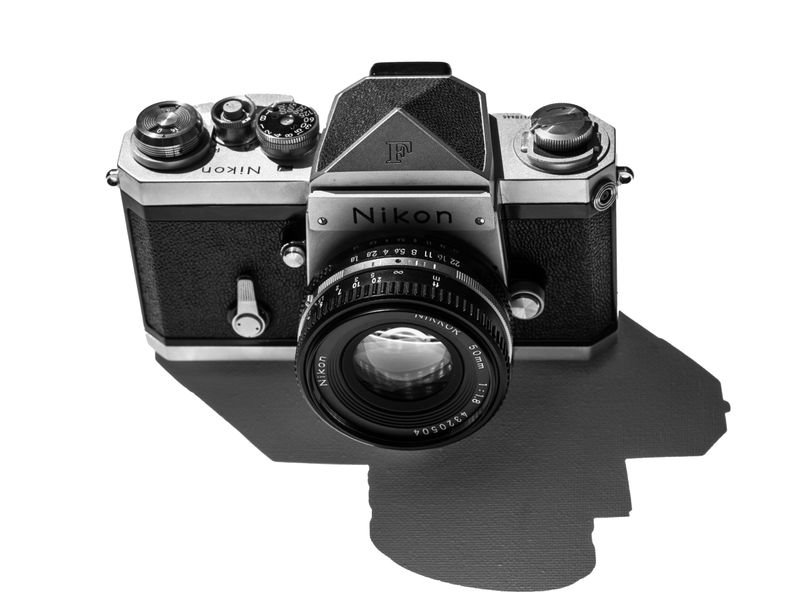
The Nikon F looks ready for assignment the second you see it. The pentaprism gives a purposeful crown, and the body lines feel muscular without being loud. You grip it and sense momentum, like you are joining a long lineage of photojournalists.
Everything clicks with authority. The shutter speed dial, the film advance, the lens mount all feel like they could survive a decade in the field. You are not coddled, you are empowered to go make pictures that matter.
Design here equals intent. Modern SLRs trace their posture back to this machine, and you can feel that heritage in your hands. It is beautiful in a no-nonsense way, and somehow that honesty makes it glow.
6. Polaroid SX-70 (1972)
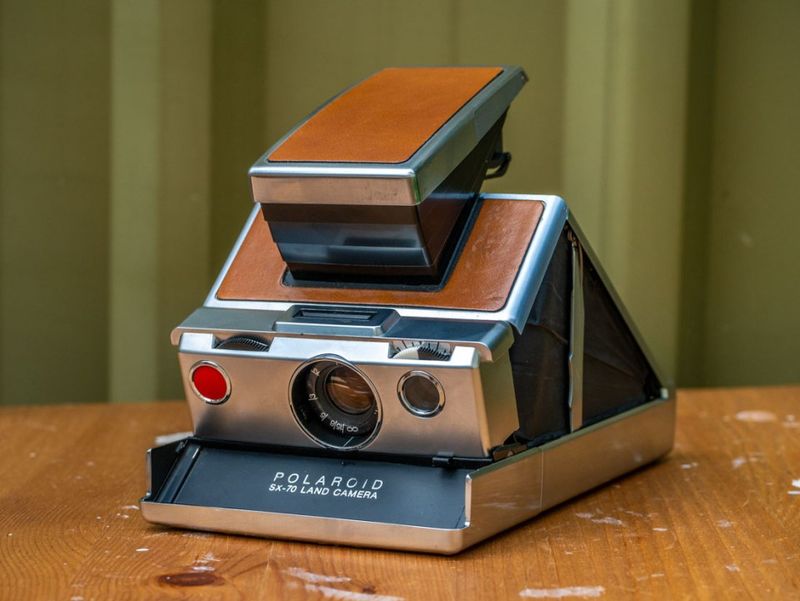
The Polaroid SX-70 unfolds like a magic trick, chrome and leather telescoping into a sleek sculpture. You press the red shutter and a print slides out, hope developing in the air between you and your subject. It feels futuristic and classic at once, a paradox you want to repeat.
The proportions are razor-clean, every hinge an invitation to play. Folded, it slips into a jacket pocket like a notebook. Open, it commands attention without raising its voice.
This camera turns sharing into the design language itself. People gather, wait, and then gasp as the image reveals. Beauty lives in that ritual, where engineering, material, and instant feedback meet in a small, shining theater.
7. Canon AE-1 (1976)
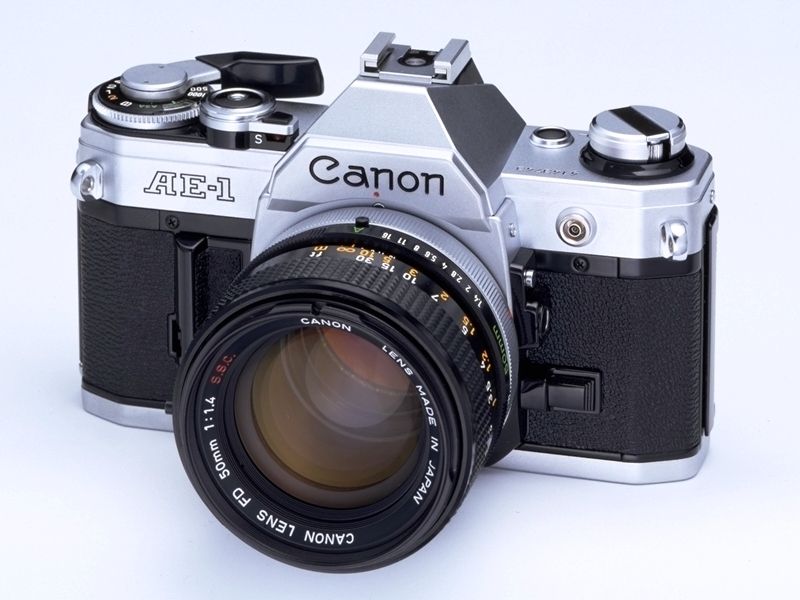
The Canon AE-1 is approachable elegance, the friend who always photographs well. Black and chrome intersect in clean planes, and the typography lands with confident clarity. You pick it up and feel like you already know how to use it, which is part of its charm.
It brought accessible automation without dulling the silhouette. The shutter hums, the meter nods, and you get on with seeing. In photoshoots, it still plays the role of photogenic prop while remaining a real tool.
Design here welcomes rather than intimidates. You feel encouraged to learn, to try, to keep a roll in your bag just in case. It is beautiful because it makes the craft feel possible, and that glow reads on camera.
8. Olympus OM-1 (1972)

The Olympus OM-1 shrinks the SLR to human scale, a study in proportion and restraint. You notice the thin top plate, the tidy dials, and how the shutter speed ring hugs the lens. It feels like the camera disappeared everything not essential.
In your hands, the weight is right where you want it. The viewfinder is bright, the mechanics precise, and the design quietly persuasive. Industrial designers still point to it when elegance means doing less with intent.
Using it, you move more, notice more, and carry it longer without fatigue. Beauty here is empathy for the photographer. It is a minimal object that amplifies your attention, which might be the most attractive trick of all.
9. Leica M6 (1984)
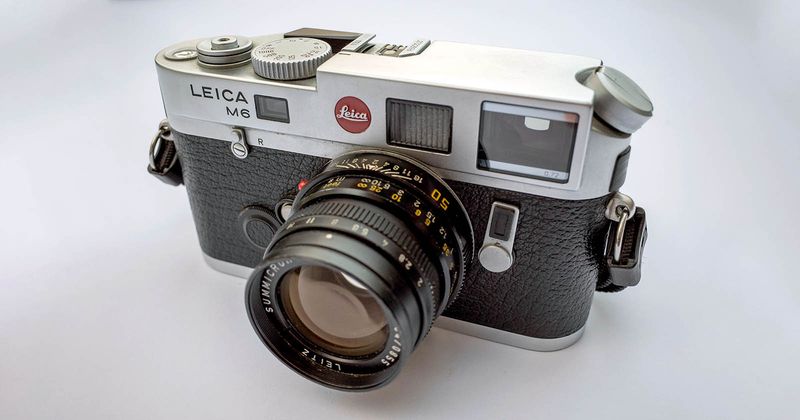
The Leica M6 takes the M3’s poise and adds modern smarts, wrapping them in matte understatement. The red dot pops like a cufflink, restrained but unmistakable. You bring it to your eye and the framelines glow, promising precision without distraction.
Everything is symmetrical and calmly tuned. Metering slips in without clutter, and the body feels carved rather than assembled. It is the kind of object that makes time slow down as you handle it.
Shoot a few frames and you realize the design encourages intention. Nothing shouts, yet everything invites. Beauty here is the quiet confidence of a tool designed to vanish as soon as you start paying attention to the world.
10. Fujifilm X100 Series (2011–present)
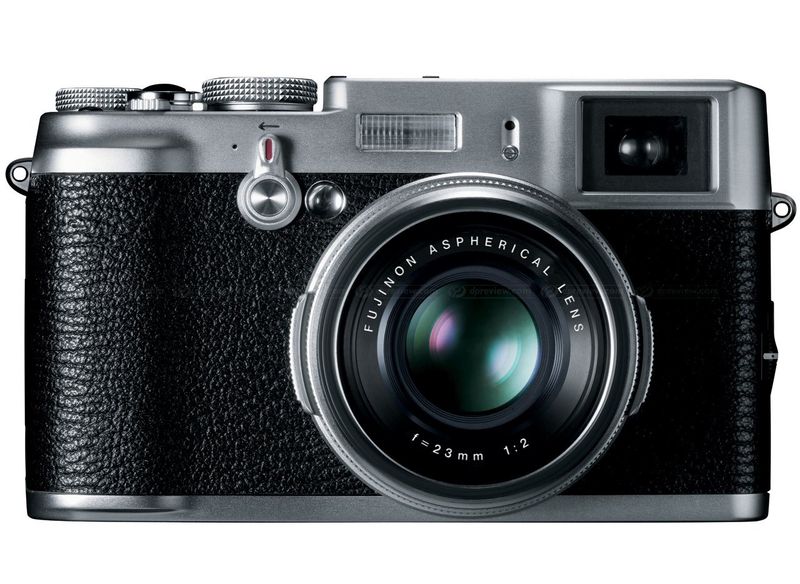
The Fujifilm X100 series blends vintage rangefinder charm with smart, modern craft. You get aperture clicks on the lens, a leaf shutter’s hush, and a hybrid finder that flips between optical and electronic. It looks classic yet feels brilliantly current in your hands.
Materials are tactile and honest, from knurled dials to textured coverings. The proportions sit just right, making it effortlessly wearable for daily carry. Photographers love how it becomes part of the routine, like a watch you forget to take off.
The design invites you to wander and be curious. It flatters scenes with restraint rather than spectacle, and that humility reads as elegance. Beauty here is continuity, bridging film era aesthetics with today’s thoughtful technology.



