 Unearth The Voyage
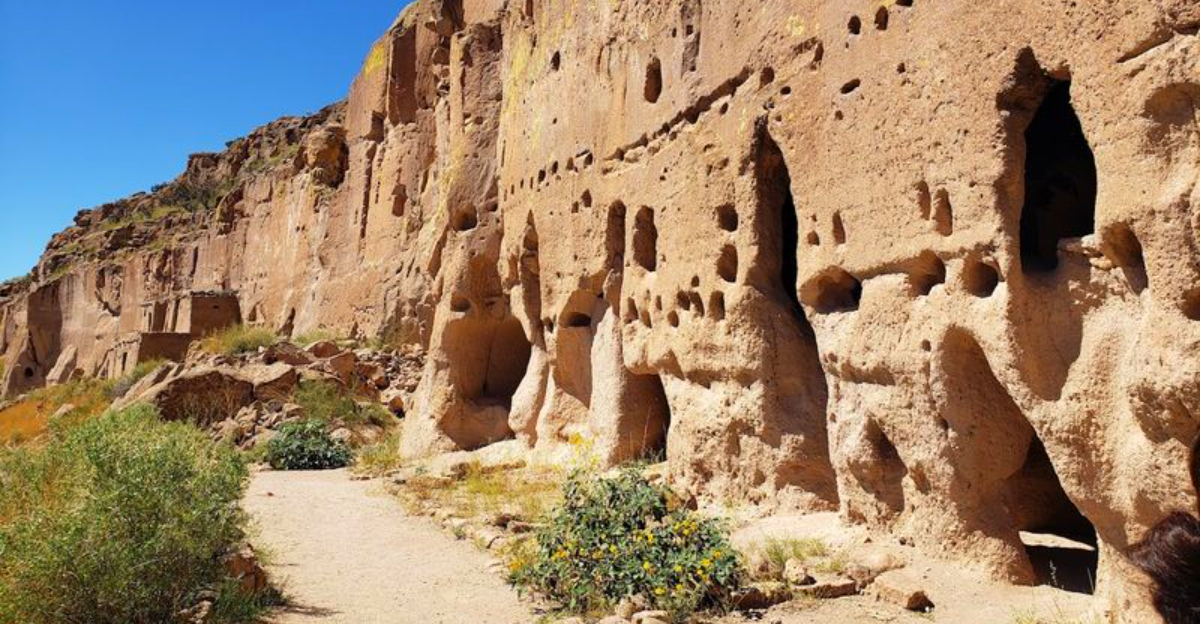
New Mexico is home to some of the most remarkable Native American heritage sites in the entire country. From ancient cliff dwellings carved into volcanic rock to sacred landscapes used for centuries, these places tell stories that go far beyond textbooks.
They connect visitors to living cultures, deep traditions, and communities that have shaped the Southwest for thousands of years. Whether you are a history lover or just curious about the world, these destinations will leave you genuinely amazed.
Chaco Culture National Historical Park
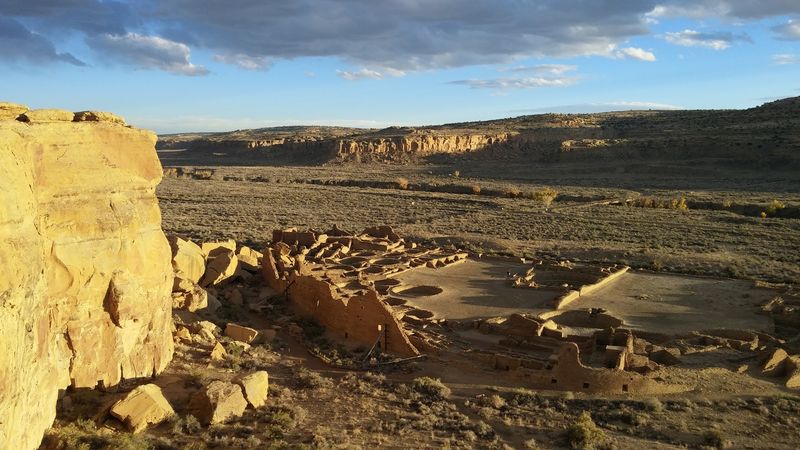
Standing inside Chaco Canyon feels like stepping into a different world entirely. Between AD 850 and 1250, this remote canyon was the beating heart of Ancestral Puebloan civilization.
Massive stone buildings rose multiple stories high, and thousands of people gathered here for trade, ceremony, and community life.
What makes Chaco truly jaw-dropping is the engineering. Ancient roads stretched for miles in perfectly straight lines across the desert — without modern tools, without GPS, without any of the things we rely on today.
Astronomers believe the buildings were precisely aligned with solar and lunar events, showing a sophisticated understanding of the sky.
Many Native nations, including the Navajo and Hopi, still consider Chaco deeply sacred. Visiting here is not just a history lesson — it is an act of respect.
The site is remote and dark enough at night for incredible stargazing, which feels fitting given how much the original builders valued the stars.
Plan ahead because the roads to Chaco can be rough. Bring water, comfortable shoes, and an open mind.
Rangers offer guided tours that bring the canyon’s complex story to life in ways that a sign or brochure simply cannot match.
Taos Pueblo
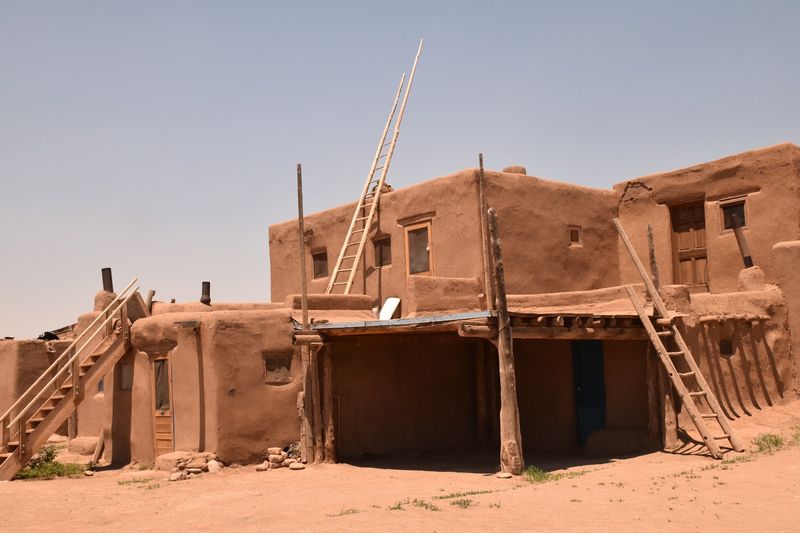
Imagine living in the same building your ancestors built over a thousand years ago. That is everyday reality for the people of Taos Pueblo.
This multi-story adobe community is not a museum or a replica — real families live here, continuing traditions that stretch back well beyond any written American history.
Taos Pueblo holds two UNESCO World Heritage Site designations, which puts it in the same company as the Great Wall of China and the Pyramids of Giza. The towering adobe walls, constructed without nails or steel, have stood through centuries of wind, rain, and political upheaval.
The structures are repaired using traditional methods passed down through generations.
Visitors are welcome, but respect is the price of admission. Photography rules are strictly enforced, and certain areas remain off-limits to outsiders.
That boundary is not unfriendly — it is a reminder that this is a living, breathing community, not a theme park attraction.
The nearby San Geronimo Feast Day celebration in late September brings drumming, dancing, and incredible food. Visiting during a cultural event gives you a chance to witness traditions in full, vibrant expression.
Few experiences in the American Southwest compare to an afternoon at Taos Pueblo.
Bandelier National Monument
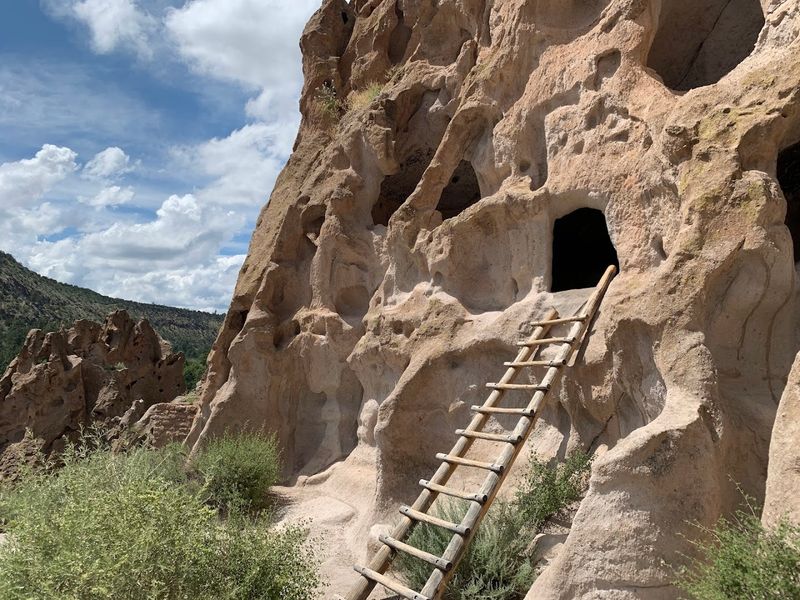
Climbing a wooden ladder into a cave home carved directly into volcanic rock is not something most people expect to do on a Tuesday afternoon. At Bandelier National Monument, that is a perfectly normal part of the visit.
Ancestral Pueblo people carved and built these remarkable homes into the soft volcanic tuff walls of Frijoles Canyon around 1150 CE.
The canyon itself is stunning — lush cottonwood trees line the creek below while ancient cave rooms dot the cliffs above. Walking the main trail feels like flipping through pages of a living history book, except you can actually touch the walls and peer into the spaces where families cooked, slept, and raised children centuries ago.
Bandelier covers over 33,000 acres, and most visitors only explore the canyon floor. The backcountry hides additional ruins, petroglyphs, and mesa-top sites that reward adventurous hikers with almost complete solitude.
A permit is required for some areas, so check the park website before heading out.
The visitor center has excellent exhibits that explain daily Pueblo life without dumbing it down. Kids especially love the hands-on elements.
Spring and fall are the best seasons to visit — summer brings heat and afternoon thunderstorms, while winter turns trails icy but beautifully quiet.
Acoma Pueblo (Sky City)
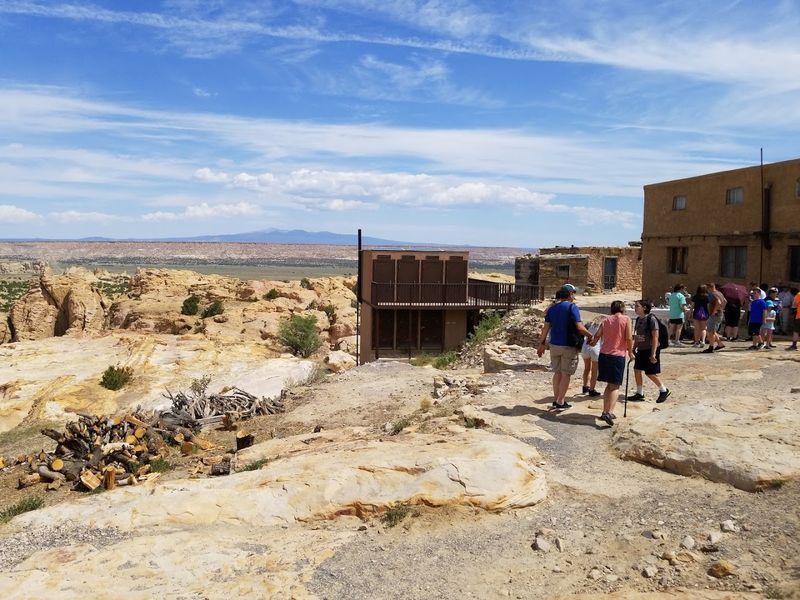
Perched 367 feet above the desert floor on a sandstone mesa, Acoma Pueblo has been looking down at the world — quite literally — for over a thousand years. Known as Sky City, this is widely considered one of the oldest continuously inhabited communities in all of North America.
The views from the top are breathtaking, but the history is what really hits you.
Access to Sky City is by guided tour only, which is actually a great thing. Acoma guides share stories about architecture, pottery traditions, the brutal Spanish conquest, and the community’s fierce survival.
The famous Acoma pottery, recognized by its intricate geometric designs, has been crafted here for generations and remains one of the most celebrated art forms in the Southwest.
The tour includes a visit to the San Esteban del Rey Mission, a massive Spanish colonial church built using forced Indigenous labor in the 1600s. Standing inside it creates complicated feelings on purpose.
The Acoma people have chosen to preserve it as part of their full, unfiltered story.
After the tour, browse the vendors selling handmade pottery, jewelry, and bread baked in traditional outdoor ovens. Buying directly from artisans here supports the community in a real, meaningful way that no souvenir shop can replicate.
Puye Cliff Dwellings
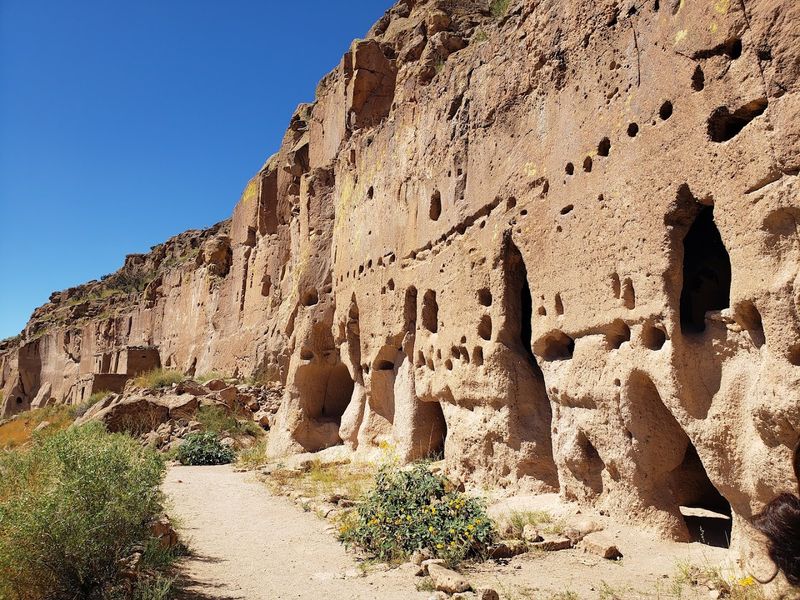
Not many people have heard of Puye Cliff Dwellings, and that relative obscurity is honestly part of its charm. Located on the land of the Santa Clara Pueblo, Puye is a National Historic Landmark that tells the story of a community that thrived here from around 1200 CE until the late 1500s.
At its peak, the site may have housed as many as 1,500 people.
What sets Puye apart from similar sites is that tours are led exclusively by Santa Clara Pueblo members. That means every story, every detail, and every explanation comes directly from the descendants of the people who actually built and lived in these cliff rooms.
That is a level of authenticity you simply cannot find at a standard national park.
The site includes two main sections — the cliff dwellings themselves and a large mesa-top community above. Climbing between levels gives visitors a real sense of how residents moved through their daily lives.
The volcanic tuff is soft enough that hand and footholds were carved directly into the rock, and you can still use some of them today.
Tours must be booked through the Santa Clara Pueblo tribal office. Fees go directly back to the community.
Visiting here is one of the most direct ways a traveler can support Indigenous-led cultural preservation in New Mexico.
Salinas Pueblo Missions National Monument (Gran Quivira)
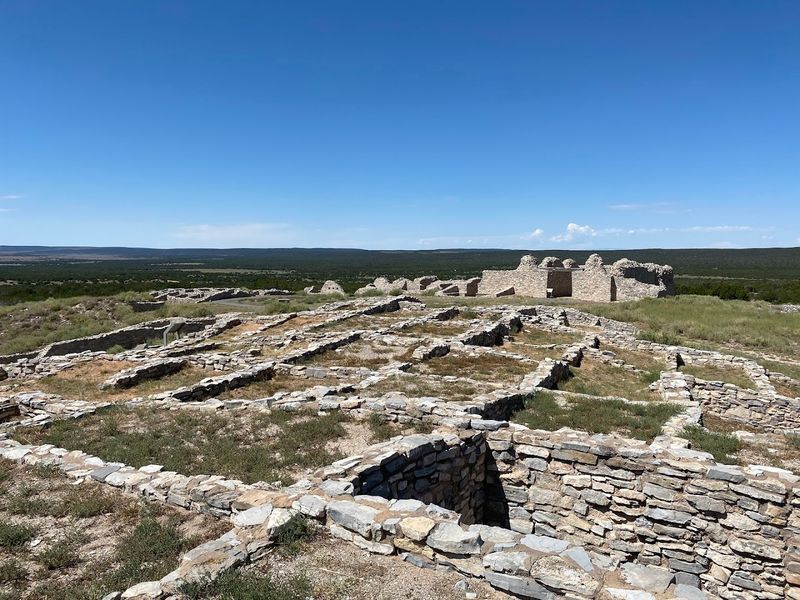
Gran Quivira does not shout for attention — it earns it slowly, through layers of history that unfold the longer you look. Known to its original inhabitants as Las Humanas, this site was a major trade hub for Pueblo peoples for centuries before Spanish missionaries arrived in the 1600s.
The result of that collision is written in stone — literally.
The ruins here include both ancient Pueblo structures and the crumbling remains of two Spanish mission churches. Walking between them tells a story of cultural encounter that was far from peaceful.
The Pueblo people of Las Humanas faced forced labor, religious suppression, and eventually drought and Apache raids that led to the site’s abandonment in the 1670s.
Despite its difficult history, Gran Quivira carries a quiet dignity. The masonry work of the original Pueblo buildings is genuinely impressive — carefully fitted limestone blocks that have survived over 700 years of New Mexico weather.
Archaeologists have found evidence of long-distance trade goods here, including shells from the Gulf of Mexico and macaw feathers from Central America.
The monument is part of a three-site unit that also includes Abo and Quarai ruins. Visiting all three in a single day is very doable and gives a fuller picture of how Indigenous communities navigated an era of massive, often violent, change.
Gila Cliff Dwellings National Monument
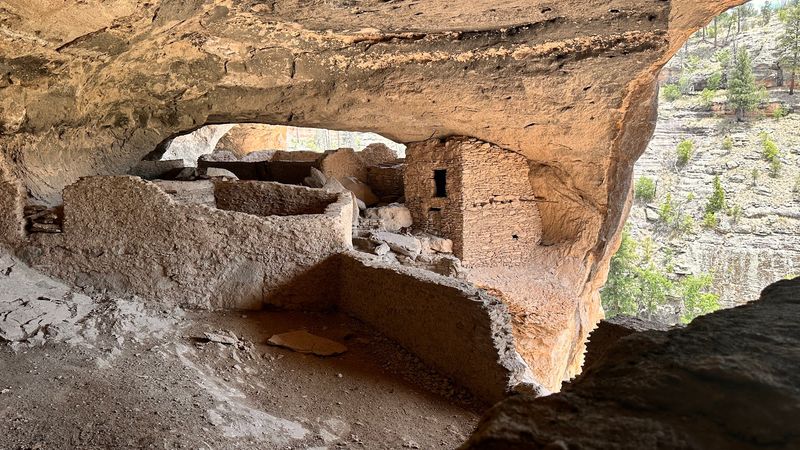
Getting to Gila Cliff Dwellings requires effort — and that effort is absolutely worth it. Tucked deep into the Gila Wilderness of southwestern New Mexico, this site is accessed via a winding mountain road that takes about two hours from Silver City.
The journey itself sets the mood perfectly for what waits at the end.
The Mogollon people built these remarkable cave rooms sometime in the 1280s CE and occupied them for only about a generation before moving on. No one knows exactly why they left, which adds a layer of mystery that lingers as you walk through the caves.
The rooms are remarkably well-preserved — wooden beams, plaster walls, and even soot stains from ancient cooking fires are still visible.
The trail to the dwellings is a one-mile loop that crosses a creek and climbs into the caves themselves. Rangers are stationed nearby and are happy to answer questions.
The small scale of this site compared to places like Chaco means you can take your time without feeling rushed by crowds.
Surrounding the monument is the Gila National Forest, one of the largest wilderness areas in the United States. Combine the cliff dwelling visit with a hike along the Gila River for a full day that balances cultural history with genuine natural beauty.
Few sites in the Southwest feel this wild and this untouched.
Salmon Ruins (Near Farmington)
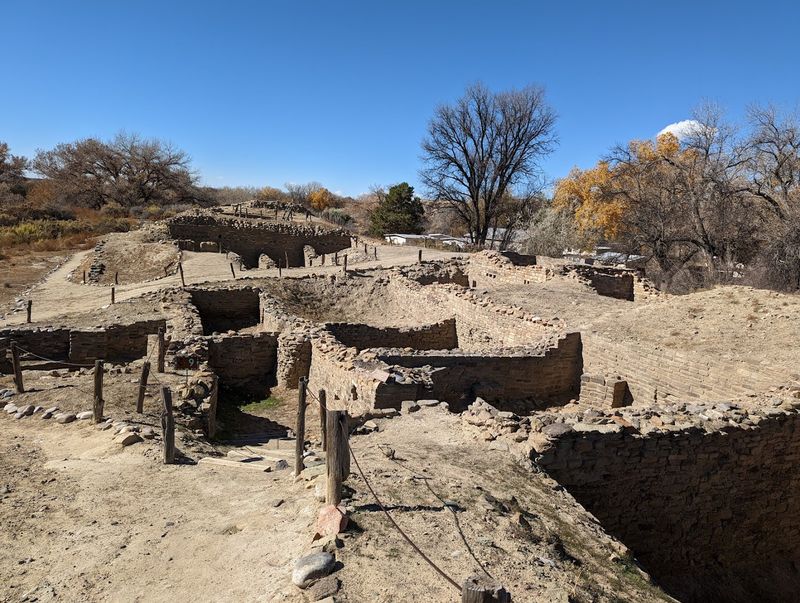
Salmon Ruins does not get nearly enough credit, and that is a genuine shame. Built around 1090 CE by people connected to the great Chacoan network, this site once held up to 300 rooms arranged in a C-shaped layout around a massive central plaza.
For its time, it was the equivalent of a major regional hub — busy, organized, and architecturally ambitious.
What makes Salmon particularly fascinating is its layered history. After the original Chacoan builders left, a second group of Pueblo people moved in and adapted the structure for their own use.
Archaeologists have found evidence of both occupations side by side, making the site a remarkable record of cultural continuity and change within a single location.
The on-site Heritage Center Museum is genuinely excellent and often overlooked by visitors focused only on the outdoor ruins. Inside, you will find thousands of artifacts recovered from the site, including pottery, tools, jewelry, and the haunting remains of a tower kiva that was deliberately burned — the reasons for which are still debated.
Salmon Ruins is managed by San Juan County and the local archaeological society, giving it a community-focused feel. Admission is affordable, staff are knowledgeable, and the site never feels overcrowded.
If you are already visiting Chaco, adding Salmon Ruins to the itinerary adds important regional context that deepens the whole experience.
Petroglyph National Monument
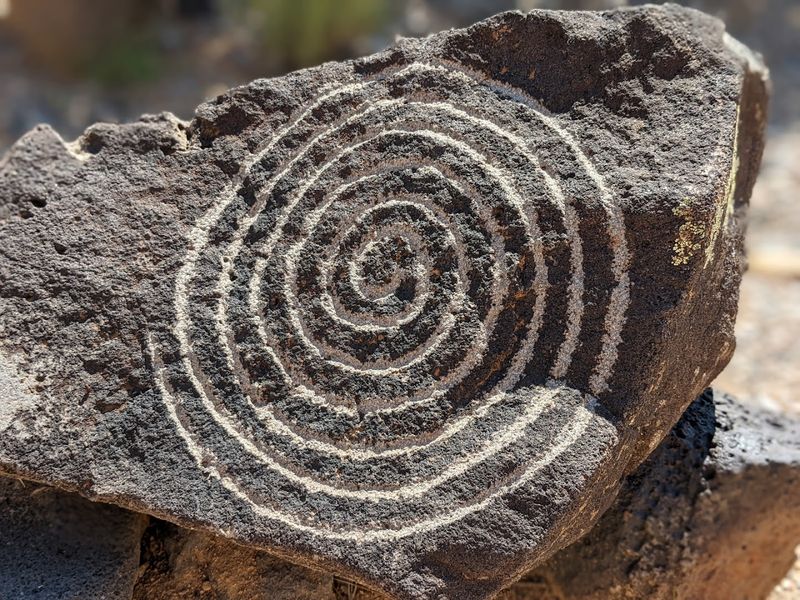
Somewhere between 400 and 700 years ago, a person stood on a dark volcanic boulder on the edge of what is now Albuquerque and carved a symbol into the rock. Today, over 24,000 of those carvings remain at Petroglyph National Monument, stretching along a 17-mile escarpment of black basalt.
Each one is a message from the past, and the range of images is staggering.
Spirals, animals, human figures, hands, masks, and abstract geometric forms cover the boulders in stunning variety. Most were created by the ancestors of today’s Pueblo peoples, though some may have been made by Spanish settlers in later centuries.
Researchers and tribal members continue to debate the meaning of individual symbols, which keeps the conversation alive and honest.
Three main trail areas — Boca Negra Canyon, Rinconada Canyon, and Piedras Marcadas Canyon — offer different hiking experiences. Boca Negra has paved paths and is accessible for most visitors.
Rinconada Canyon is longer and wilder, rewarding those who walk the full two-mile loop with a quieter, more contemplative experience.
The monument is free to enter at most trailheads, with a small parking fee at Boca Negra. Because it sits within Albuquerque city limits, it is one of the most accessible heritage sites on this entire list.
Still, it never feels like a tourist trap — the rocks and their stories keep things grounded and genuinely moving.
Valles Caldera (Sacred Landscape)
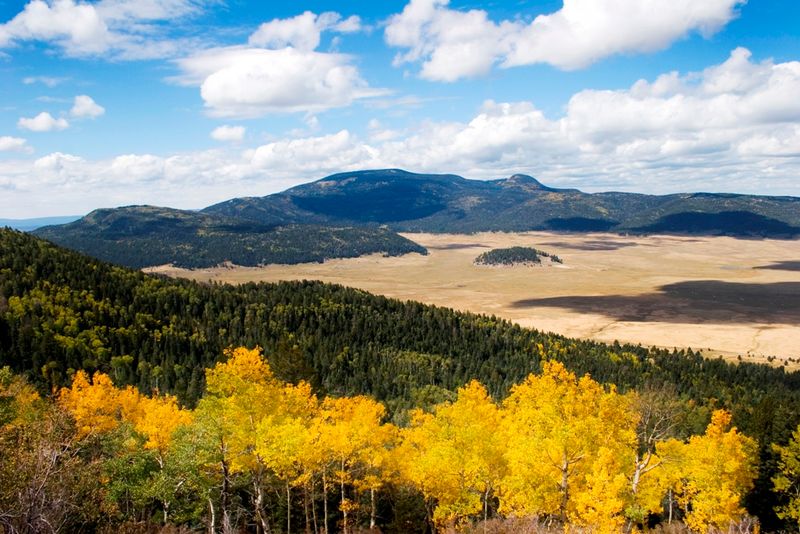
Some places do not need ruins to feel ancient — they carry their history in the land itself. Valles Caldera is one of those rare places.
This massive volcanic crater in northern New Mexico stretches nearly 13 miles across and has been a gathering place for Native communities for over 10,000 years. That number is almost impossible to wrap your head around.
Archaeological evidence shows that people hunted, camped, and conducted ceremonies here long before any written record existed in North America. Obsidian from the caldera — a sharp volcanic glass used to make tools — has been found at sites hundreds of miles away, proving that this landscape was part of vast ancient trade networks.
The Jemez, Santa Clara, and other Pueblo nations still regard Valles Caldera as a deeply sacred place.
Today it is a National Preserve managed for both conservation and public access. Visitors can hike, fish, and in winter, cross-country ski across the enormous meadow.
Elk herds graze in the open grasslands, and the scenery is genuinely extraordinary in every season. The scale of the caldera feels humbling in the best possible way.
Unlike ruins-based sites, Valles Caldera asks visitors to think about sacredness differently. The land itself is the artifact.
Walking here with that awareness transforms an ordinary outdoor trip into something far more meaningful and memorable than most people expect.



