 Unearth The Voyage
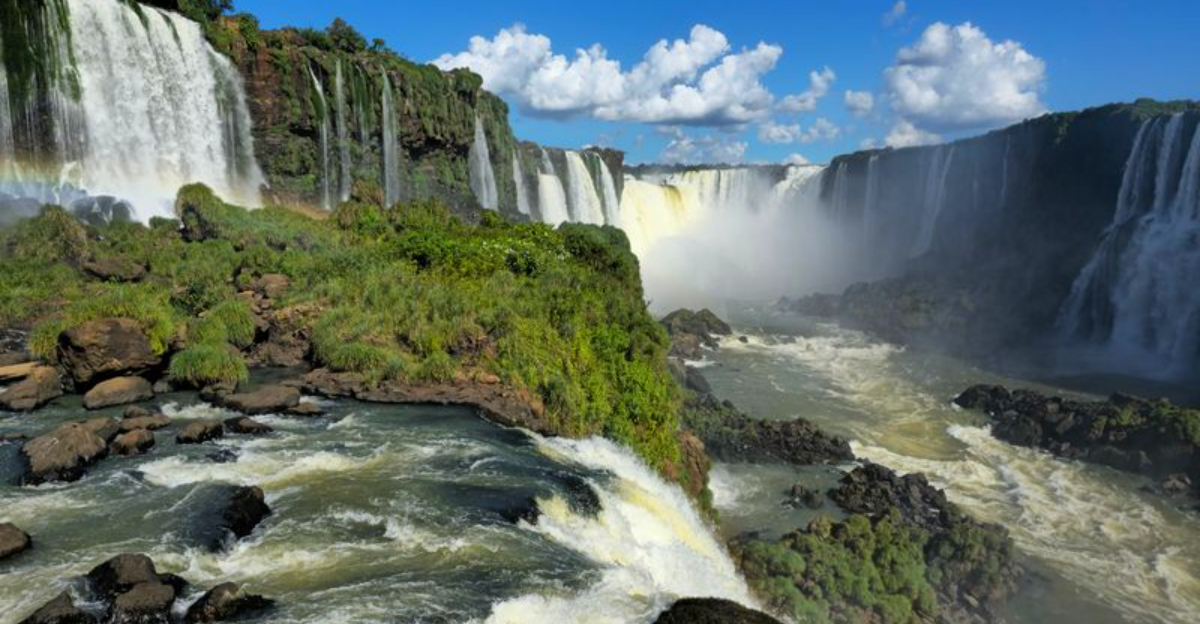
Some places on Earth leave such a powerful impression that travelers never forget them. These aren’t just tourist stops—they’re living pieces of history, natural wonders, and cultural treasures that have earned UNESCO World Heritage status.
From ancient ruins perched high in misty mountains to thundering waterfalls that split continents, these destinations prove why certain spots deserve global protection and admiration.
Machu Picchu — Cusco Region, Peru
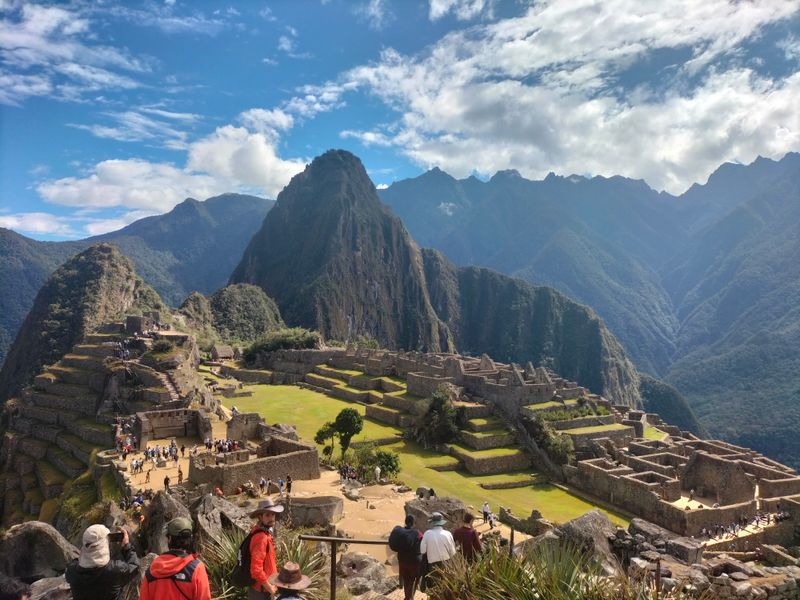
Clouds cling to the mountaintops as you approach this legendary Inca city, built around 1450 and mysteriously abandoned a century later. The stone structures fit together so perfectly that not even a blade of grass can slip between them.
Walking through the terraces and temples feels like stepping into a time machine, especially when morning fog rolls through the ruins.
Getting there requires planning, whether you hike the famous Inca Trail or take the train from Cusco. The altitude sits at 7,970 feet, so take it slow and drink plenty of water.
Most visitors spend at least three hours exploring the site, marveling at how the Incas engineered drainage systems and astronomical observatories without modern tools.
Early morning visits offer the best lighting and fewer crowds, plus you might spot llamas grazing among the ancient walls. The surrounding peaks create a natural amphitheater that makes every photo look like a postcard.
Travelers consistently rank this as a bucket-list destination because it combines stunning natural beauty with incredible human achievement.
Book permits months ahead since daily visitor numbers are capped to protect the site. Hiring a guide helps decode the purpose of different structures and brings the history alive in ways a guidebook cannot.
Great Wall of China — China
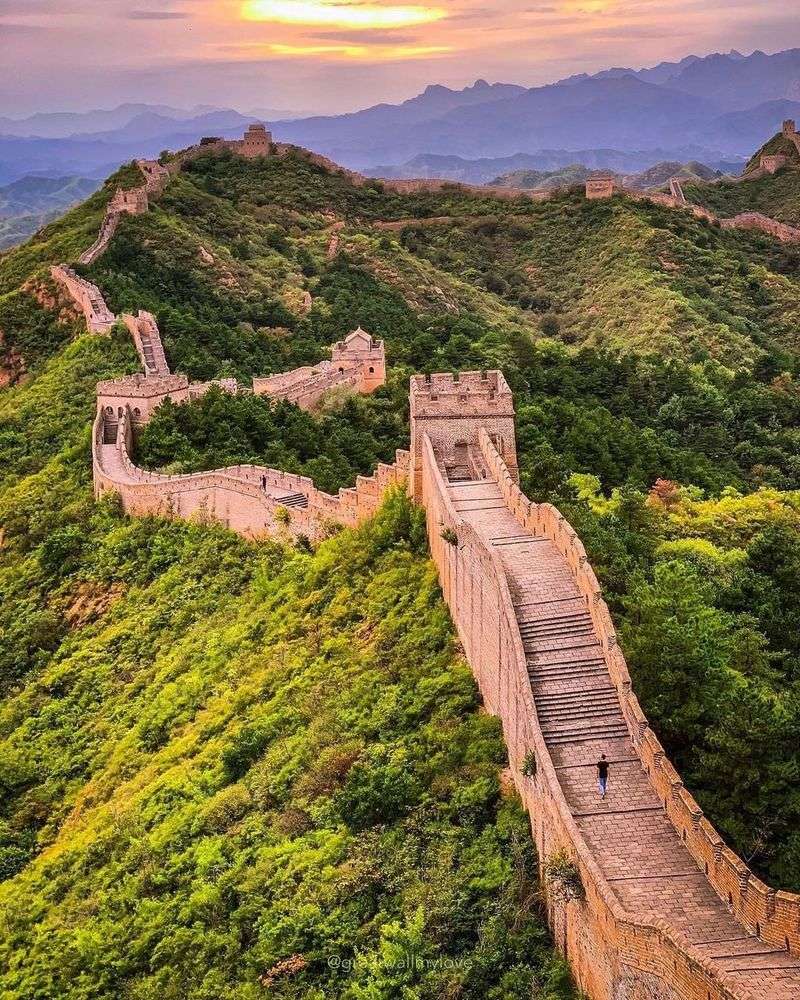
Stretching over 13,000 miles across deserts, mountains, and grasslands, this ancient fortification took more than 2,000 years to complete. Different dynasties added sections, creating a patchwork of building styles and materials.
Standing on the wall and looking at it snake endlessly across ridgelines makes you realize the sheer determination of the workers who built it stone by stone.
The Mutianyu and Badaling sections near Beijing offer restored pathways with guardrails, perfect for families and first-time visitors. For adventure seekers, wilder sections like Jiankou feature crumbling towers and steep climbs with no safety nets.
Each section tells a different story about Chinese military strategy and engineering prowess.
Spring and autumn bring the most comfortable weather and spectacular views, with cherry blossoms or golden leaves framing the ancient stones. Summer crowds can be overwhelming, especially near Beijing, so arrive early or choose less-visited sections.
Winter offers solitude and dramatic snow-dusted scenery, though icy steps require careful footing.
Wear sturdy shoes because some sections involve steep stairs and uneven surfaces. Bring water and snacks since facilities are limited along remote stretches.
The experience of walking where soldiers once kept watch is both humbling and exhilarating.
Taj Mahal — Agra, India
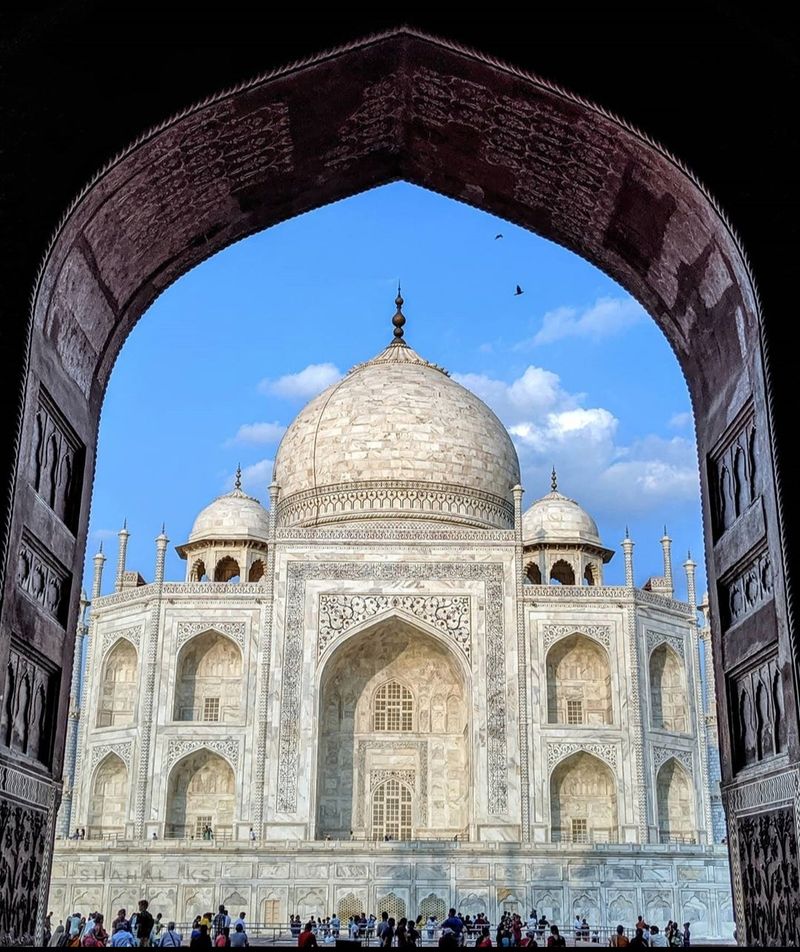
Emperor Shah Jahan built this masterpiece of white marble as a tomb for his beloved wife Mumtaz Mahal, who died in 1631. Twenty thousand artisans spent 22 years creating the intricate inlay work, using precious stones imported from across Asia.
The building changes color throughout the day—soft pink at dawn, brilliant white at noon, and golden at sunset—making every visit feel different.
Sunrise visits reward early risers with cooler temperatures and magical lighting as the sun illuminates the dome. The symmetry is so precise that the four minarets tilt slightly outward, designed to fall away from the main structure during earthquakes.
Up close, you can see tiny flowers and calligraphy carved into the marble, each petal a testament to Mughal craftsmanship.
Fridays close the site to tourists since the mosque remains active for prayers. Security is tight, so leave large bags at your hotel and expect airport-style screening.
The reflecting pool creates mirror images perfect for photos, though crowds mean you’ll need patience to capture an unobstructed shot.
Agra gets scorching hot in summer, making October through March the ideal visiting window. Combine your trip with nearby Agra Fort to understand the broader Mughal legacy.
This monument to eternal love continues to inspire millions of visitors annually.
Acropolis of Athens — Athens, Greece
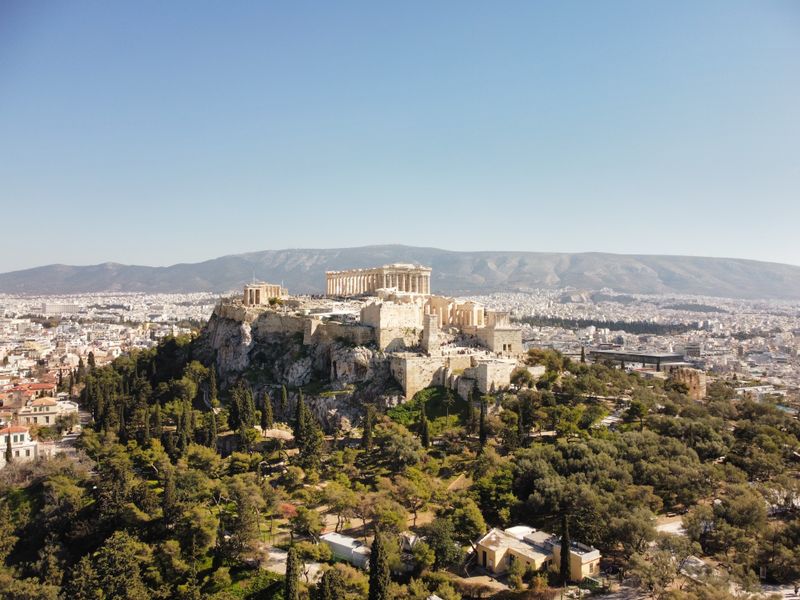
Perched 490 feet above Athens, this rocky outcrop has watched over the city for nearly 2,500 years. The Parthenon, dedicated to goddess Athena, dominates the site with its massive Doric columns and controversial history—much of its sculpture now sits in London’s British Museum.
Despite ongoing restoration work, the complex still radiates the power and sophistication of ancient Greek civilization.
Marble pathways can get slippery, especially after rain, so wear shoes with good grip. The site opens at 8 a.m., and beating the tour buses means cooler temperatures and better photos.
Beyond the Parthenon, explore the Erechtheion with its famous Caryatid columns shaped like women, and the small Temple of Athena Nike perched on a bastion.
Summer heat turns the exposed hilltop into an oven, so bring sunscreen, a hat, and plenty of water. Combination tickets include other ancient sites like the Ancient Agora and Roman Forum, offering better value than single-entry passes.
The view over modern Athens provides striking contrast between ancient and contemporary worlds.
Evening visits during extended summer hours let you watch the monuments glow golden in late afternoon light. The nearby Acropolis Museum houses original sculptures and artifacts, providing context that deepens appreciation for what you see on the hill.
Every Western democracy owes something to the ideas born in this remarkable place.
Angkor Wat — Siem Reap, Cambodia
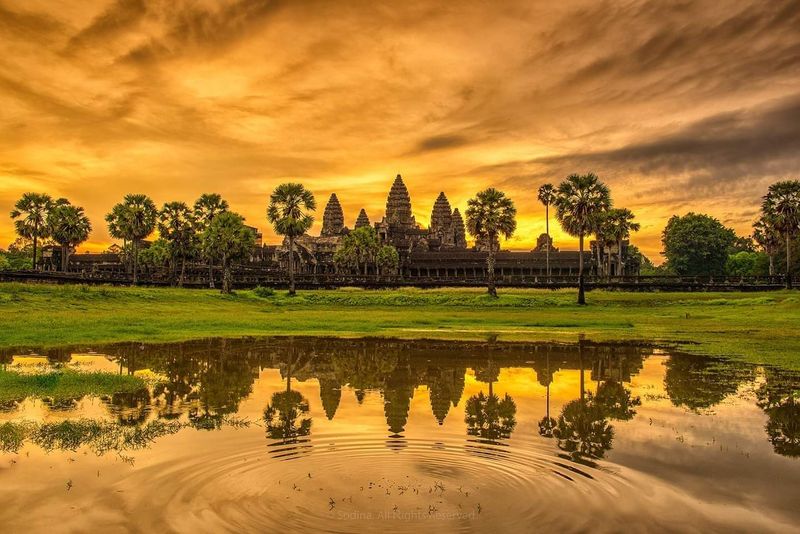
Built in the 12th century as a Hindu temple dedicated to Vishnu, this sprawling complex later transformed into a Buddhist site. The central towers represent Mount Meru, home of the gods in Hindu mythology, while nearly 2,000 carved apsaras (celestial dancers) decorate the walls.
Covering over 400 acres, it’s the largest religious monument on the planet, yet it was hidden from the Western world until French explorers stumbled upon it in the 1860s.
Sunrise draws massive crowds to the reflecting pools, where photographers jostle for the perfect shot of the towers silhouetted against colorful skies. The less-crowded sunset offers equally beautiful lighting with more breathing room.
Inside the galleries, bas-relief carvings tell epic stories from Hindu mythology, including the famous Churning of the Ocean of Milk scene stretching over 160 feet.
The surrounding Angkor Archaeological Park contains hundreds of other temples, including the jungle-swallowed Ta Prohm where massive tree roots embrace ancient stones. Multi-day passes let you explore at a comfortable pace rather than rushing through in a single exhausting day.
Hiring a local guide brings the carvings and history to life with stories you won’t find in guidebooks.
Cambodia’s dry season (November to March) offers the most pleasant weather, though everything stays green during the rainy months. Dress modestly with covered shoulders and knees to respect the sacred site.
Galápagos Islands — Ecuador
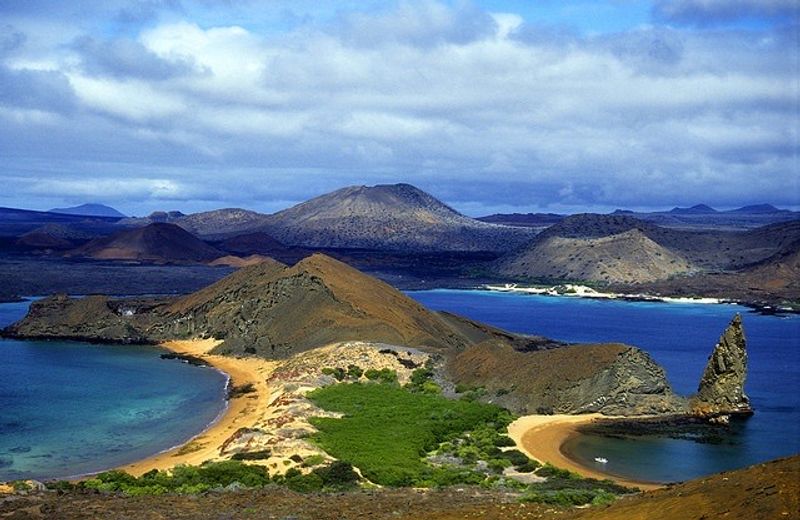
Six hundred miles off Ecuador’s coast, this volcanic archipelago changed science forever when Charles Darwin visited in 1835. The islands host species found nowhere else on Earth—giant tortoises that can live over 100 years, marine iguanas that swim in the ocean, and blue-footed boobies with feet so bright they look painted.
Animals here show no fear of humans since they evolved without natural predators, letting you observe wildlife behavior up close.
Strict regulations protect this fragile ecosystem, limiting visitor numbers and requiring certified guides for all excursions. Most travelers explore via live-aboard boats that cruise between islands overnight, waking up at different sites each morning.
Snorkeling brings you face-to-face with sea turtles, penguins (yes, penguins near the equator!), and playful sea lions that might nibble your fins.
Each island offers unique landscapes and species—Isabela has volcanic craters and flamingo lagoons, while Española hosts waved albatrosses during breeding season. The water stays warm year-round, though June through November brings cooler currents that attract more marine life.
Pack reef-safe sunscreen since regular sunscreen damages the delicate marine environment.
Flights from mainland Ecuador reach the islands in about two hours, landing at either Baltra or San Cristóbal. Book well in advance since park permits and boat cabins fill up months ahead.
This living laboratory of evolution offers wildlife encounters that feel more like National Geographic than a typical vacation.
Pyramids of Giza — Giza, Egypt
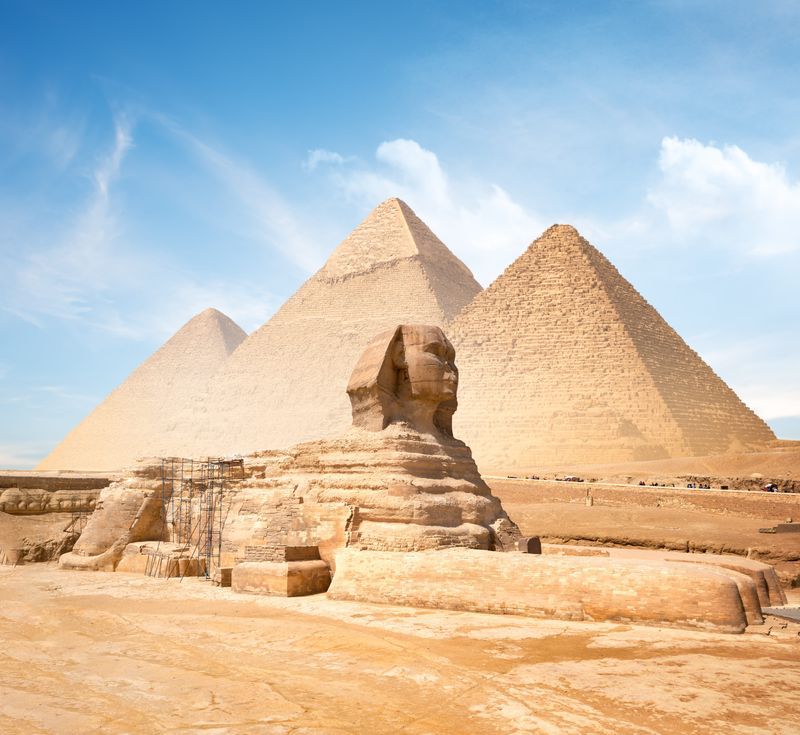
Standing before the Great Pyramid of Khufu, built around 2560 BCE, you’re looking at the last surviving Wonder of the Ancient World. This massive structure used over 2 million limestone blocks, some weighing 15 tons, fitted together with such precision that a credit card won’t fit between many stones.
For 3,800 years it held the record as the world’s tallest human-made structure, and modern engineers still debate exactly how ancient Egyptians accomplished this feat.
The Sphinx guards the complex with its lion body and human head, weathered by millennia of desert winds but still imposing. You can enter the pyramids, though the narrow passages and stuffy air aren’t for the claustrophobic.
The Solar Boat Museum displays a reconstructed cedar ship buried near Khufu’s pyramid, intended to carry the pharaoh through the afterlife.
Camel and horse rides around the site are popular but negotiate prices firmly before mounting. Persistent vendors selling souvenirs require polite but firm refusals.
Evening sound and light shows illuminate the pyramids while narrating Egyptian history, though reviews are mixed on the production quality.
Cairo’s urban sprawl now reaches the pyramid plateau, with Pizza Hut and KFC visible from the monuments—jarring but real. Morning visits beat the afternoon heat and tour bus crowds.
Hiring a licensed guide helps navigate the site and provides historical context beyond what you’ll read on plaques.
Yellowstone National Park — USA
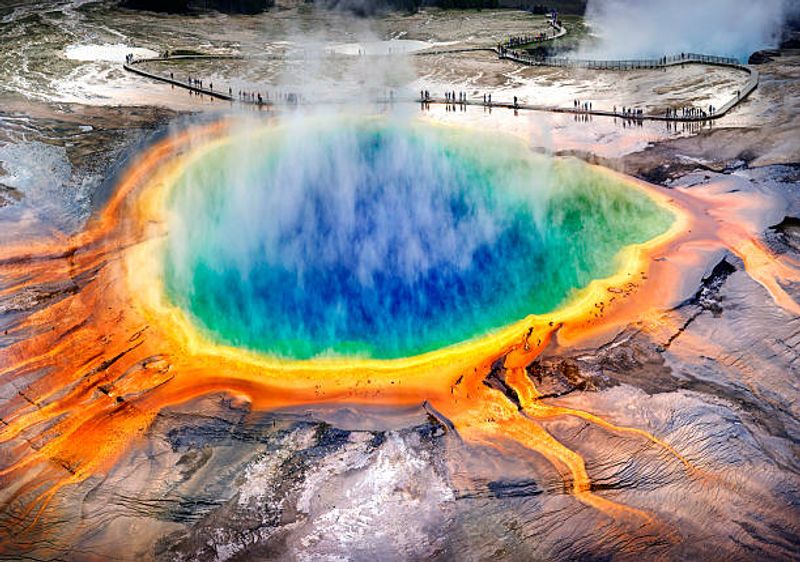
America’s first national park, established in 1872, sits atop a supervolcano that powers over 10,000 geothermal features. Old Faithful erupts roughly every 90 minutes, shooting boiling water up to 180 feet high, but lesser-known geysers like Steamboat can blast even higher when they decide to perform.
The Grand Prismatic Spring looks like a rainbow melted into the earth, with bacteria creating rings of orange, yellow, and green around brilliant blue water.
Bison roam freely throughout the park, causing traffic jams when herds cross roads. Keep at least 25 yards away—these animals can sprint 35 mph and injure dozens of tourists each year who ignore safety warnings.
Grizzly bears and wolves have been successfully reintroduced, making Yellowstone one of the few places in the Lower 48 where you can see a complete predator-prey ecosystem.
The park spans 2.2 million acres across three states, so planning your route prevents exhausting backtracking. Summer brings crowds and full campgrounds, while spring offers baby animals and fewer people despite unpredictable weather.
Fall transforms the landscape with golden aspens, and winter turns the park into a snowy wonderland accessible mainly by snowcoach or snowmobile.
Yellowstone Lake, Mammoth Hot Springs, and the Grand Canyon of the Yellowstone each deserve half-day visits minimum. Download offline maps since cell service is spotty.
The park’s unique geology and wildlife make it unlike anywhere else on the planet.
Historic Centre of Rome (including the Colosseum) — Italy
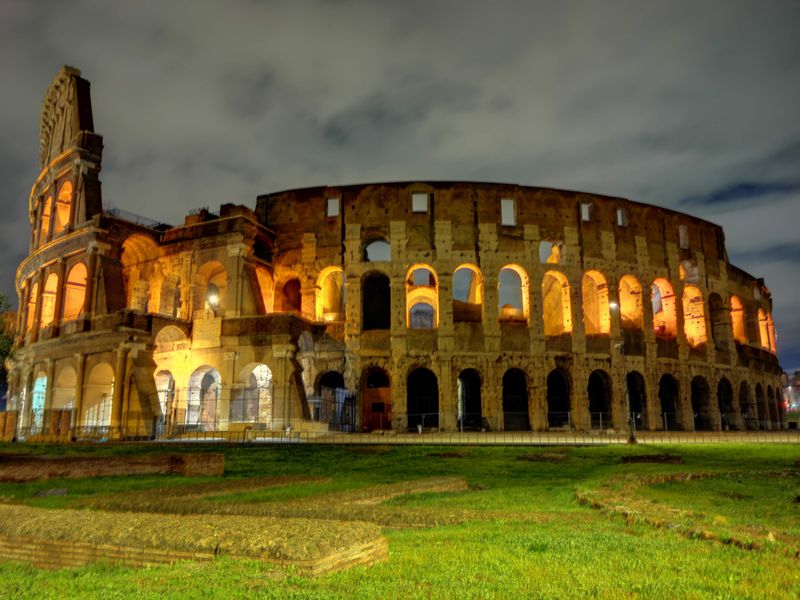
Rome isn’t just a city—it’s an open-air museum where you can eat gelato while standing on stones walked by Julius Caesar. The Colosseum, completed in 80 CE, once hosted gladiator battles and mock naval fights for 50,000 screaming spectators.
Today it stands partially ruined but still magnificent, its underground chambers now exposed to show where animals and fighters waited before entering the arena.
The Roman Forum sprawls nearby, a jumble of columns, arches, and temples that formed the heart of ancient civic life. The Pantheon, with its perfect dome and oculus open to the sky, has survived nearly 2,000 years and still functions as a church.
Toss a coin in the Trevi Fountain to ensure your return to Rome—tradition says it works, and the fountain collects about 3,000 euros daily.
Vatican City technically isn’t part of the historic center designation but sits just across the Tiber River. Rome’s layers span millennia, with medieval churches built atop pagan temples and Renaissance palaces incorporating ancient Roman walls.
Walking is the best way to discover hidden piazzas and stumble upon monuments around every corner.
Skip-the-line tickets for major sites save hours of waiting, especially during summer peak season. Rome’s historic center is compact enough to cover on foot, though comfortable shoes are essential for cobblestone streets.
Every visit reveals something new, whether it’s a Baroque fountain or a fragment of ancient aqueduct built into a modern building.
Iguazu National Park — Argentina/Brazil
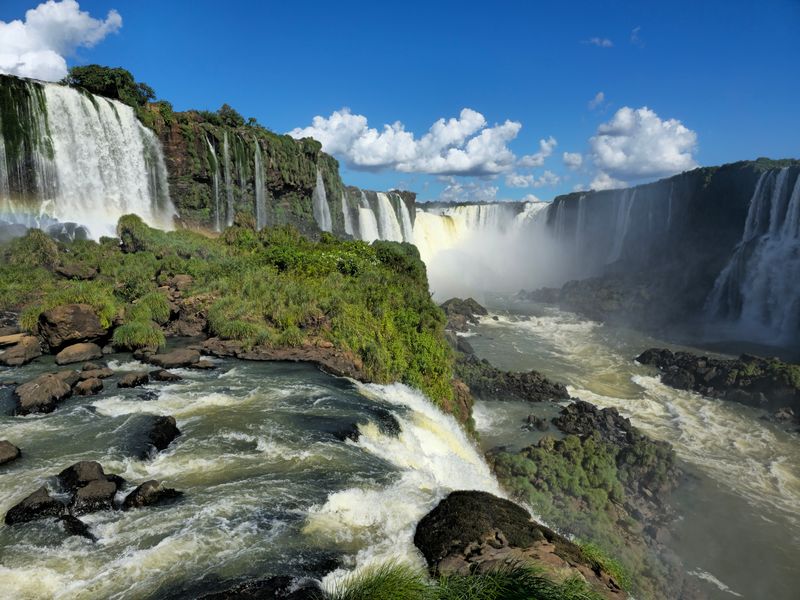
First Lady Eleanor Roosevelt supposedly said upon seeing Iguazu Falls, “Poor Niagara,” and once you witness 275 individual waterfalls roaring across nearly two miles, you’ll understand why. The Garganta del Diablo (Devil’s Throat) forms the centerpiece, where water plunges 269 feet into a churning cauldron that creates permanent rainbows in the mist.
The sound is deafening, the spray soaks everything, and the sheer power of all that falling water makes your chest vibrate.
The falls straddle the Argentina-Brazil border, and both sides offer different perspectives worth experiencing. Argentina’s side provides up-close walkways that take you right to the edge of cascades, sometimes getting you completely drenched.
Brazil’s side offers panoramic views that let you grasp the falls’ full scale, perfect for those sweeping photos that capture the entire scene.
The surrounding subtropical rainforest teams with wildlife—toucans, coatis (raccoon-like creatures that beg for food), and colorful butterflies. Boat rides under the falls provide adrenaline-pumping experiences as captains deliberately steer into the cascades, guaranteeing you’ll get soaked.
Raincoats help but won’t keep you completely dry.
The falls flow year-round, though water volume peaks during the rainy season (December through March) when the spectacle becomes even more dramatic. Both countries require separate park entries, so budget accordingly.
The nearest airports are in Puerto Iguazú (Argentina) and Foz do Iguaçu (Brazil), both about 30 minutes from the parks.



