The Dune Climb at Sleeping Bear Dunes National Lakeshore draws thousands of visitors each year, all aiming to tackle one of Michigan’s most recognizable natural landmarks. The steep, open sand slope challenges even experienced hikers, with many attempting the full climb toward Lake Michigan.
Located along the northwest Michigan shoreline, it is easy to access and clearly marked, making it one of the most popular stops in the park. Some visitors reach the top and continue across the dunes, while others turn back partway.
What makes it stand out is the experience itself. It is not just a scenic stop, but a physical challenge that people of all ages attempt and remember.
Where Exactly You Are Standing
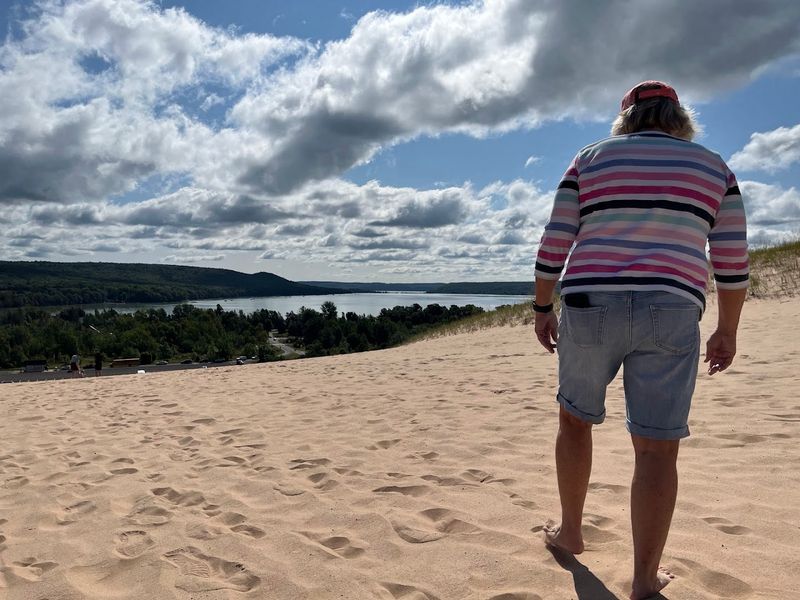
The Dune Climb sits within Sleeping Bear Dunes National Lakeshore, officially addressed at Glen Arbor Township, MI 49636, tucked into the northwest corner of Michigan’s Lower Peninsula along the shores of Lake Michigan.
The park itself spans over 71,000 acres of dunes, forests, lakes, and shoreline, and the Dune Climb is one of its most visited and most talked-about features. The climb starts right off M-109, so parking and access are straightforward, and the trailhead is impossible to miss once you see that massive wall of sand looming ahead of you.
The park is managed by the National Park Service, and a vehicle pass is required to enter. As of recent years, the cost runs about $25 per car, which covers seven consecutive days of access to the entire national lakeshore.
For a full day of outdoor adventure in one of the most scenic corners of the Midwest, that price is genuinely hard to argue with.
The Dune That Earned Its Reputation
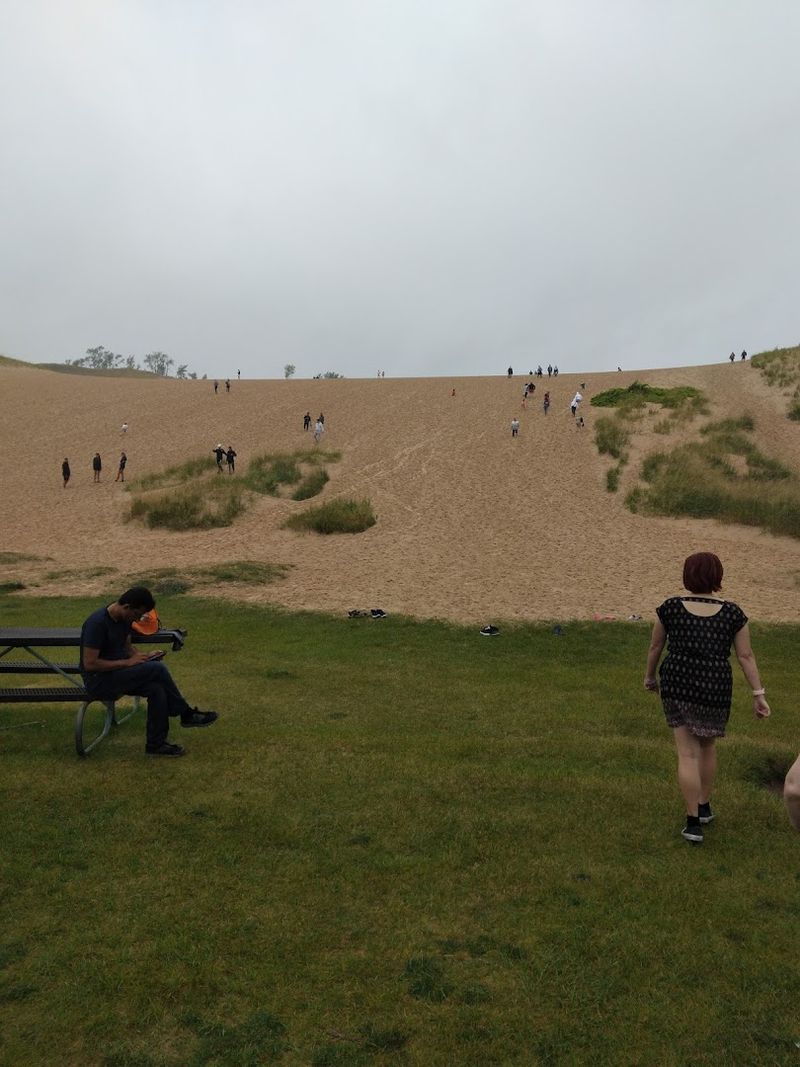
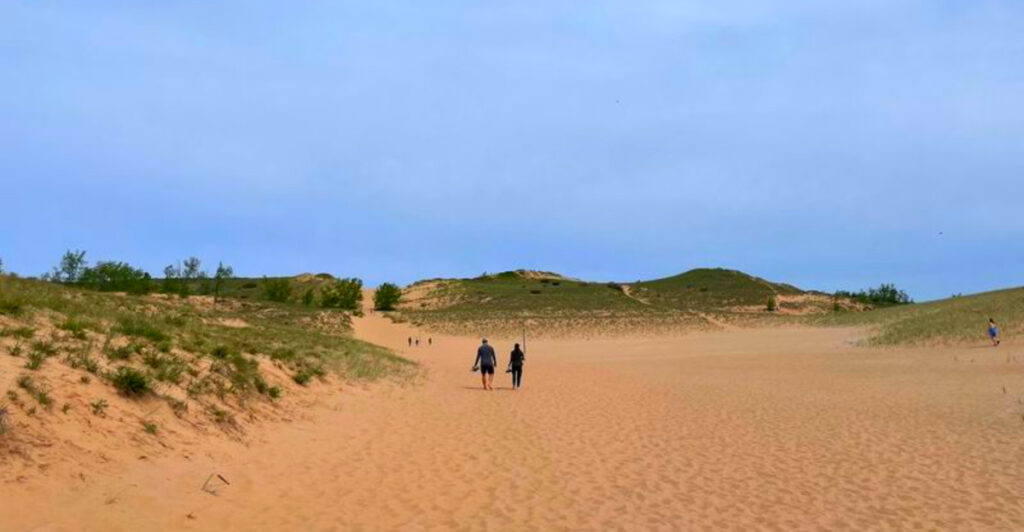
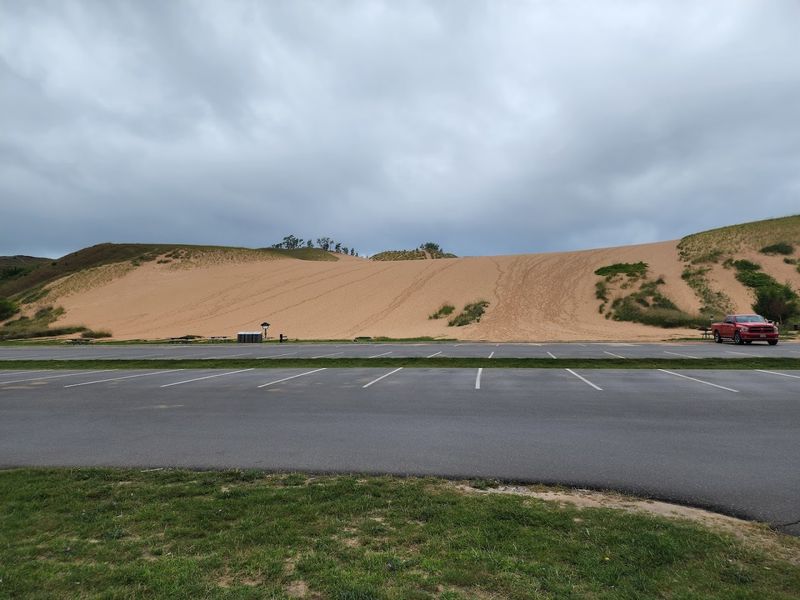
The Dune Climb is a 284-foot wall of glistening white sand that rises almost vertically from the flat ground at its base, and the moment you see it up close, your brain does a quick recalculation of what you thought you were getting into.
The dunes in this area are part of a larger perched dune system that formed over thousands of years as glaciers retreated and left behind massive deposits of sand. The broader dune system includes formations reaching heights of over 450 feet above the surrounding landscape, making this one of the most impressive coastal dune systems in the entire country.
What makes the Dune Climb so magnetic is that it does not hide what it is. There are no trees softening the view, no gradual slope easing you in.
It is just an enormous, open face of sand daring you to take the first step upward, and that raw honesty is exactly what keeps people coming back year after year.
What the Climb Actually Feels Like

Every single step up that dune is a negotiation. You push off with one foot, gain maybe six inches of real progress, and the sand shifts just enough under your heel to remind you who is in charge here.
The first quarter of the climb feels manageable, even fun, especially if you are moving at a good pace and the morning air is still cool. By the halfway point, your calves are sending very direct messages to your brain, and the people who were laughing at the base have gone noticeably quiet.
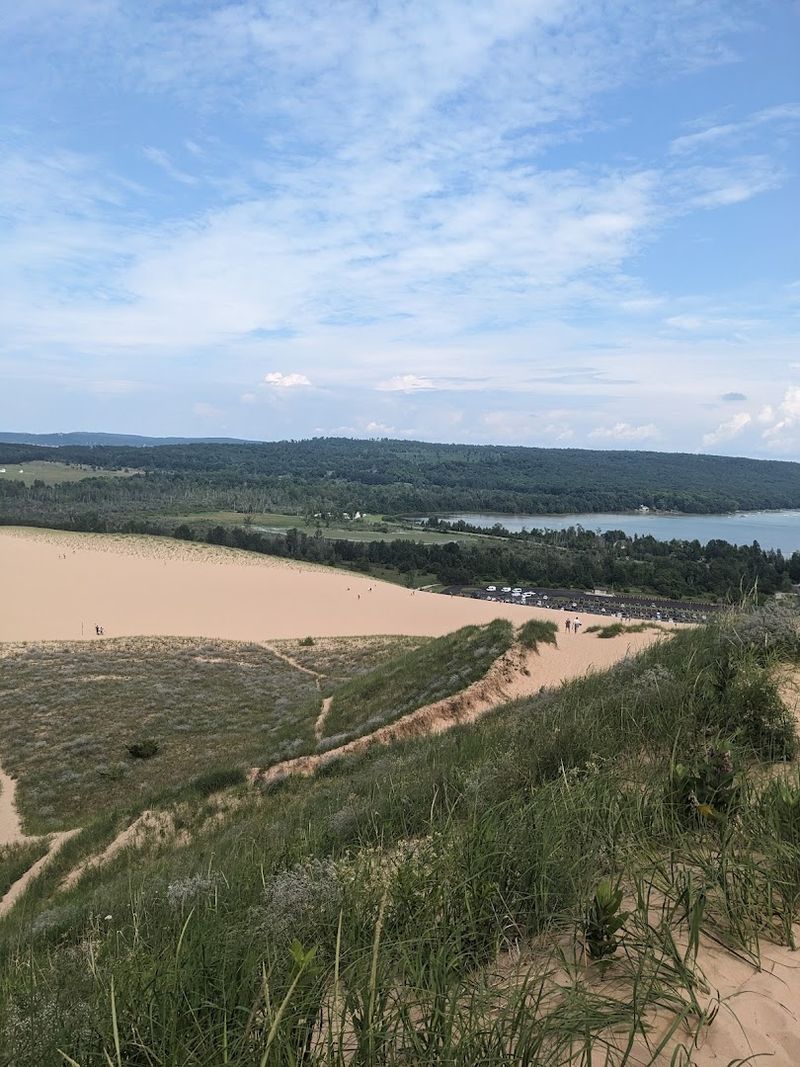
That said, reaching the top of the initial climb delivers an immediate reward. The view opens up over Glen Lake below, the forest stretches out in every direction, and the breeze that greets you feels like the dune’s way of saying well done.
Most people stop here to catch their breath and take photos, and honestly, that moment alone is worth every labored step of the ascent.
The Full Trail to Lake Michigan
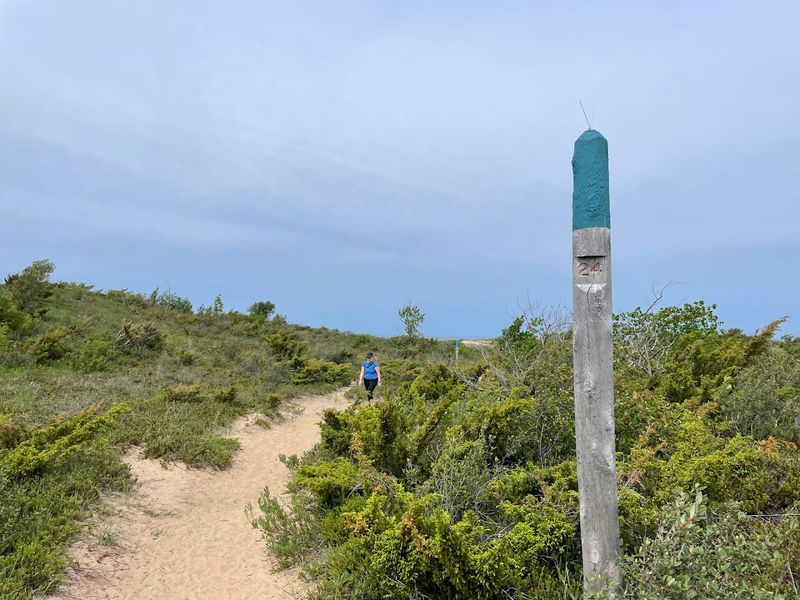
Beyond the initial climb, a trail continues for roughly 3.5 miles round trip all the way to the shore of Lake Michigan, and this is where the experience transforms from a quick challenge into a genuine backcountry adventure.
The trail rolls through a series of dune ridges and valleys, with very little shade and almost no flat ground. The sand is deep and loose in places, the sun reflects intensely off the white surface, and the distance to the lake always seems to stay just a little further than expected.
Bringing plenty of water is not optional on this stretch; it is mandatory.
When the lake finally comes into view, the payoff is spectacular. Lake Michigan stretches out in every direction with water so clear and blue it looks almost unreal.
The beach at the end of the trail is rocky in spots but absolutely beautiful, and many visitors spend a couple of hours there before making the return hike back across the dunes. Plan for the return trip to take longer than you expect.
What to Pack Before You Even Think About Starting
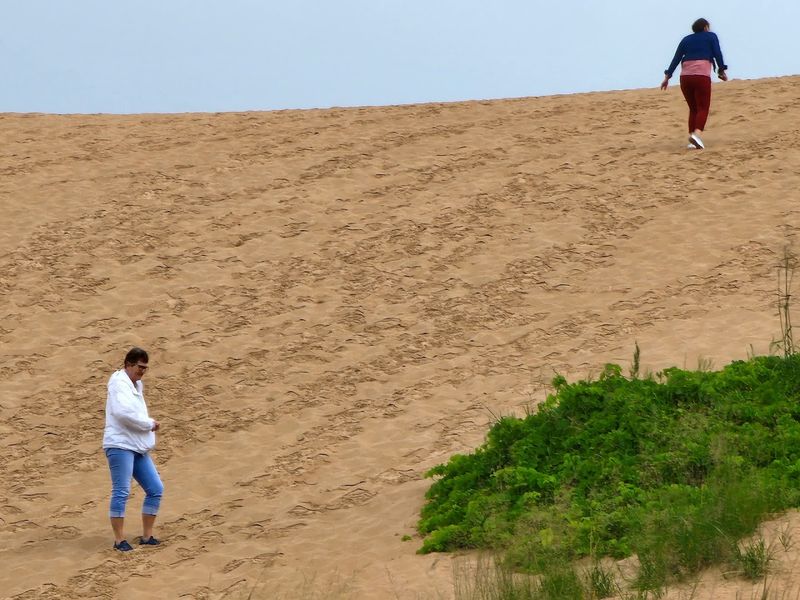
Preparation is not optional at the Dune Climb, and the difference between a great experience and a miserable one often comes down to what you brought with you.
Water is the most critical item. The entire trail is exposed with almost no shade, and the sand radiates heat in summer temperatures.
A good rule of thumb is to bring more water than you think you need, then add another bottle. High-energy snacks like protein bars, trail mix, or yes, peanut butter, are genuinely useful because the energy drain on the sand is significant and sneaks up on you faster than expected.
A wide-brimmed hat and sunscreen are equally important, especially for the midday hours when the sun is directly overhead and the white sand amplifies everything. Wear comfortable shoes that can handle deep sand, and leave anything heavy behind at the car.
The lighter you travel, the more enjoyable the climb becomes. And if you have little ones in tow, even the first quarter mile offers a genuinely rewarding outing for kids.
A Family Tradition That Spans Generations
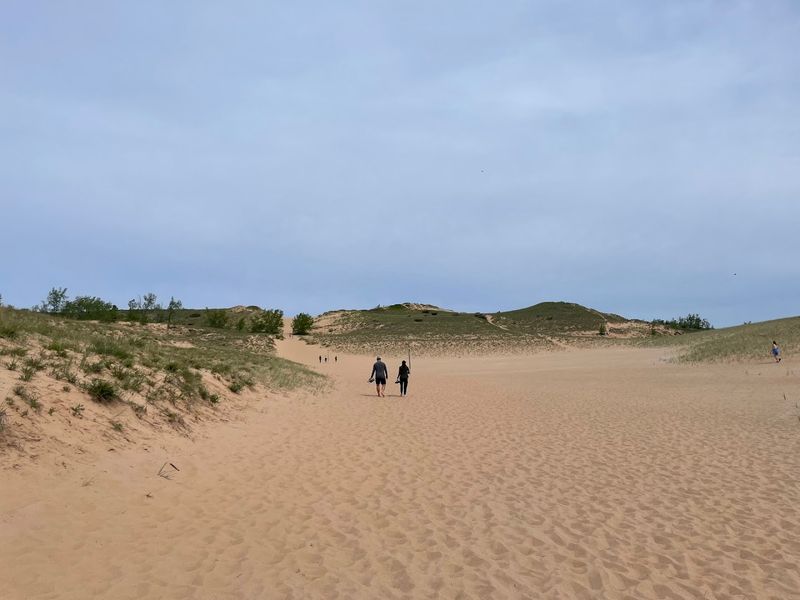
There is something about the Dune Climb that turns it into a family ritual. Talk to enough visitors and you will hear stories of parents who climbed it as kids, now bringing their own children to experience the same sandy scramble for the first time.
The beauty of the climb is that it scales naturally to whoever is doing it. Young kids can charge up the lower section, tumble back down, and repeat the process until their legs give out, treating the whole thing like the world’s most exhausting playground.
Older visitors can take their time, pause to enjoy the views, and appreciate the landscape at a slower pace.
Running back down is universally beloved across every age group. The descent that seemed so punishing on the way up becomes pure, giddy fun on the way down, with sand flying and gravity doing all the work.
It is one of those rare activities where the return trip is just as satisfying as the journey up, if not more so.
The View That Stops You Mid-Sentence
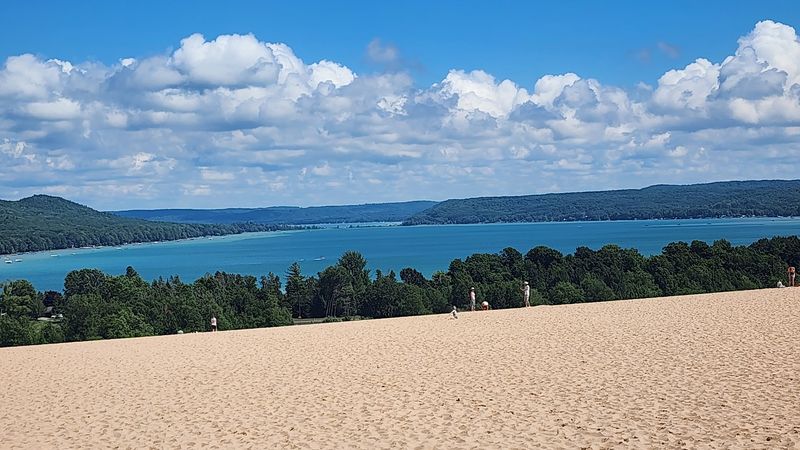
At the top of the initial 284-foot climb, the view hits you all at once. Glen Lake spreads out below in a deep, vivid blue that contrasts sharply against the surrounding green forest, and on clear days the scene looks almost too perfect to be real.
The Great Lakes dune system is the largest freshwater coastal dune system in the world, and standing at the top of the Dune Climb gives you a genuine sense of that scale. The landscape rolls in every direction without interruption, a mix of sand, forest, and water that feels genuinely wild and unhurried.
For photographers, the light in the late afternoon is particularly dramatic, casting long shadows across the dune face and turning the sand a warm golden color. Morning light offers its own rewards, with softer tones and fewer crowds filling the frame.
Either way, the view from the top earns every bit of effort it takes to get there, and most people stand quietly for a moment just taking it in before reaching for their phone.
The Best Time of Year to Make the Trip
Summer is the peak season at the Dune Climb, and for good reason. Warm temperatures, long days, and the promise of a Lake Michigan swim at the end of the trail make July and August the most popular months by a wide margin.
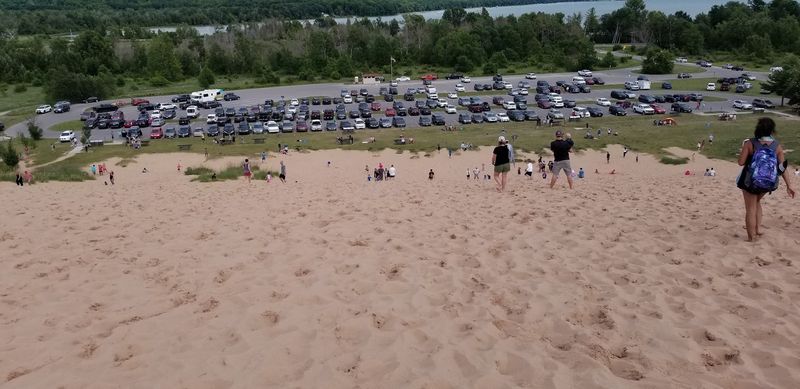
That popularity comes with crowds, though. Weekend mornings in July can get genuinely busy at the trailhead, and parking fills up faster than most people expect.
Arriving early, ideally before 9 a.m., makes a noticeable difference in the experience. Weekdays are significantly quieter and offer a more relaxed pace overall.
Late spring and early fall are genuinely underrated for this climb. Temperatures are cooler, which makes the physical effort much more manageable, and the crowds thin out considerably after Labor Day.
Fall in particular brings stunning color to the surrounding forest, and the contrast of orange and red foliage against the white sand is a combination that summer visitors simply never get to see. Shoulder season here rewards those willing to plan around it.
Pierce Stocking Scenic Drive and the Bigger Picture
The Dune Climb is the main event, but the surrounding park offers enough additional experiences to fill an entire weekend without any overlap.
Pierce Stocking Scenic Drive is the most accessible alternative for those who want to experience the dune landscape without the physical intensity of the climb. The 7.4-mile loop road winds through the park and includes several pullouts with spectacular views, particularly at stops nine and ten, where the overlook above Lake Michigan delivers one of the most dramatic coastal views in the entire Midwest.
No hiking required, just park and look out at the world below.
The combination of the Dune Climb in the morning followed by the scenic drive in the afternoon makes for a full and satisfying day that covers the park from multiple angles. The drive also passes through forest and meadow sections that offer a completely different character from the open dune landscape, giving visitors a more rounded sense of just how varied and beautiful this national lakeshore really is.
The Surprising Wildlife Along the Way
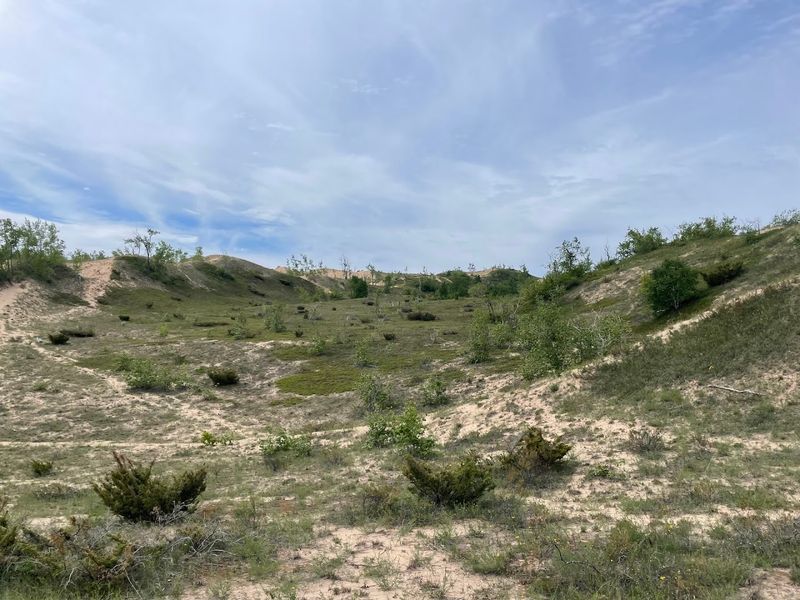
The Dune Climb gets all the attention, but the broader trail system running through Sleeping Bear Dunes National Lakeshore is quietly teeming with wildlife that most visitors walk right past without noticing.
White-tailed deer are common throughout the park and are often spotted near the treeline at the edges of the dune system, particularly in the early morning hours. Bald eagles nest in the area and are regularly seen soaring above the dunes and along the Lake Michigan shoreline.
Smaller moments are just as memorable, like spotting wild berries along the trail, which more than one visitor has turned into an unexpected foraging adventure for their kids.
The midges, which are small non-biting insects, can be a nuisance near the lake and beach areas during certain times of year, particularly in late spring. A lightweight bug net is a surprisingly useful thing to have along, especially if you plan to spend time near the water.
The natural setting rewards those who pay attention to the smaller details.
Why This Place Keeps Pulling People Back
Very few outdoor experiences in the Midwest manage to combine physical challenge, natural beauty, and pure fun in the way that the Dune Climb does, and that combination is exactly why people return to it year after year.
There is a particular satisfaction in earning a view rather than simply driving up to it, and the Dune Climb delivers that satisfaction in full. The effort required makes the reward feel personal, and the landscape at the top feels like something you have genuinely discovered rather than just arrived at.
The national lakeshore around it adds depth to the experience, offering forests, inland lakes, historic sites, and miles of Lake Michigan shoreline that can fill multiple visits without ever feeling repetitive. Whether you are making the trip for the first time or returning for the tenth, the Dune Climb has a way of feeling both familiar and fresh, which is a rare quality in any destination.
Michigan’s northwest coast has a hold on people, and this sandy giant is a big part of why.
Share this story