Pennsylvania’s most remarkable attractions aren’t all above ground. Beneath its hills and mountains lies a fascinating world of limestone caverns, historic coal mines, and underground waterways waiting to be explored.
From scenic cave tours to former mining sites led by experienced guides, these 11 underground destinations offer unforgettable experiences for visitors of all ages. Whether you’re planning a family outing or looking for an off-the-beaten-path adventure, these hidden gems reveal a different side of the Keystone State.
1. Penn’s Cave & Wildlife Park
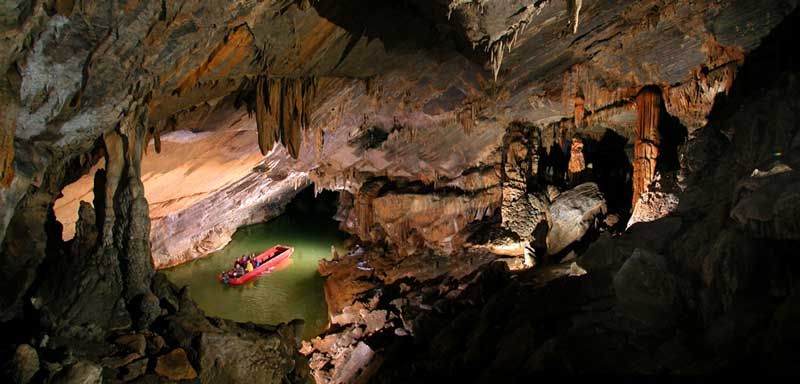
There is exactly one all-water cavern tour in America, and it is right here in Centre Hall, Pennsylvania. At Penn’s Cave, visitors board flat-bottom motorboats that carry up to 22 passengers through 1,300 feet of limestone passageways, with a guide narrating the whole journey from the front of the boat.
The cave maintains a steady 52-degree Fahrenheit temperature year-round. The underground river running through it is reportedly clear enough to drink, though its source and final destination have never been fully traced, which gives the whole experience a genuinely mysterious quality that a regular walking tour simply cannot match.
Formations inside the cave have been given nicknames ranging from the Statue of Liberty to Santa Claus, which keeps younger visitors engaged throughout. Above ground, a separate bus tour covers 1,400 to 1,500 acres of preserved land where bison, elk, wolves, and mountain lions roam. Gemstone panning and the Miners Maze round out the visit. The site has been commercially operating since 1885 and earned a spot on the National Register of Historic Places in 1978.
2. Crystal Cave
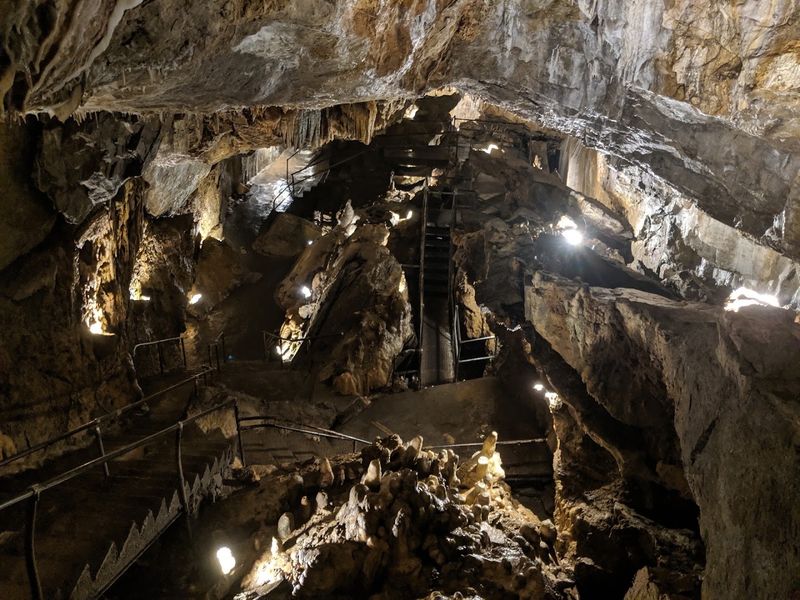
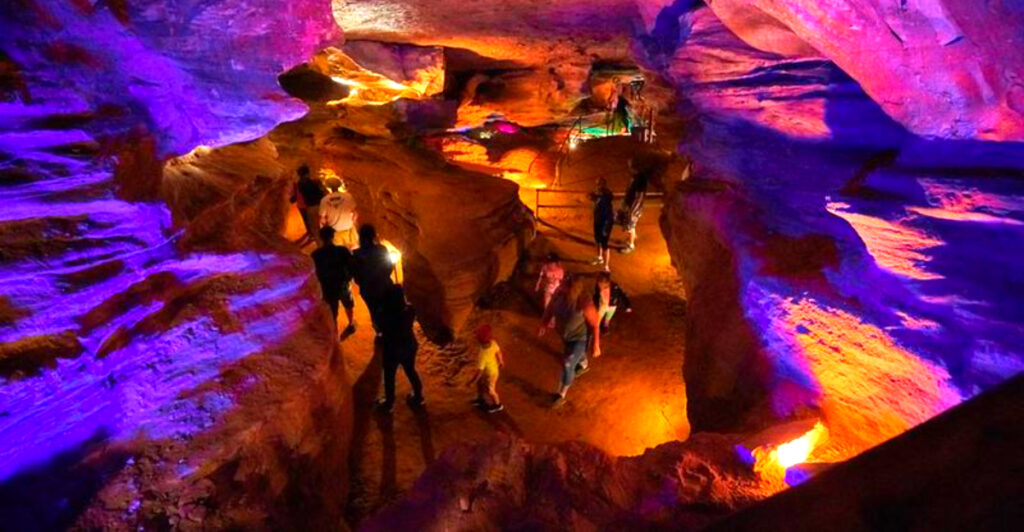
Pennsylvania’s oldest commercially operated cave has been open to the public since 1872, making it a genuine piece of the state’s tourism history. Crystal Cave near Kutztown in Berks County was accidentally discovered in 1871 when limestone blasters William Merkel and John Gehret cracked open the ground and found something far more interesting than rock.
Entrepreneur Samuel Kohler quickly recognized the potential, secured the property, and launched what he called the “Grand Illumination of the Crystal Cave” as its formal debut. The cavern formed in limestone and dolomite bedrock over 450 million years ago, runs approximately 500 feet long, and sits 125 feet below the surface. A comfortable 54-degree Fahrenheit temperature greets visitors inside.
Highlights on the guided tour include the 14-foot Totem Pole column, the Cathedral Chamber, the Natural Bridge, and formations half a million years old. Above ground, 150 acres of property host miniature golf, gemstone panning, a rock and mineral shop, a nature trail, and a historic museum. Crystal Cave genuinely delivers a full day of activity without requiring visitors to pick just one thing to do.
3. Lost River Caverns
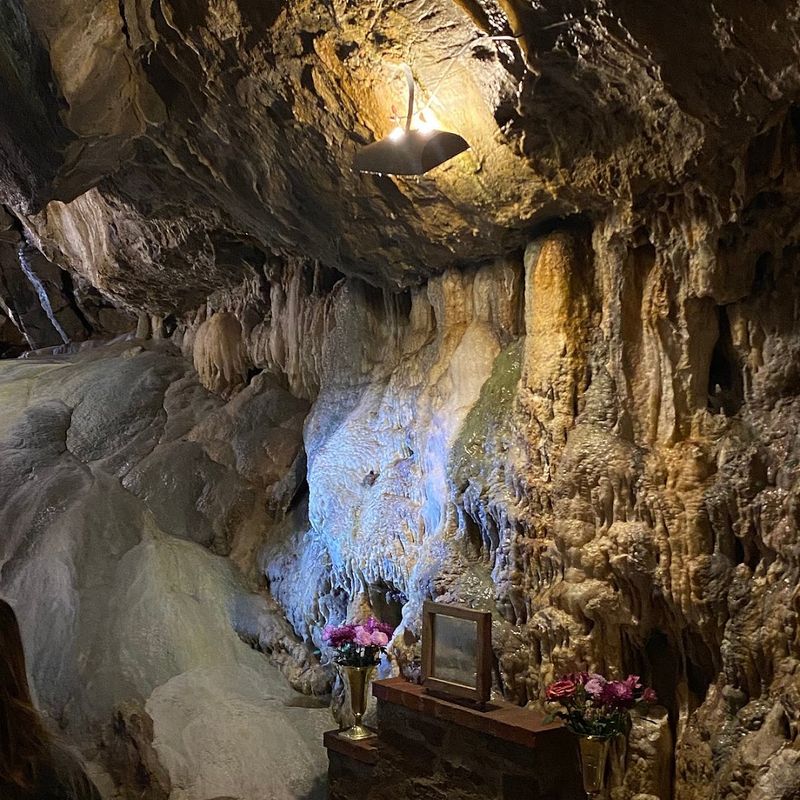
Quarry workers in Hellertown discovered this cave in 1883 when a limestone blast opened a passage into something far more interesting than the rock they were after. The mystery starts with the name: the underground river running through Lost River Caverns has no confirmed source and no known destination, which is a genuinely unresolved geological puzzle.
The cave formed over roughly 250,000 years through the slow dissolution of dolomite limestone and holds a constant 52-degree Fahrenheit temperature throughout its five chambers. Guided tours last 30 to 45 minutes and follow paved walkways through passages decorated with stalactites, stalagmites, flowstone, and even fluorescent rocks that add an unexpected visual element to the underground scenery.
The history here is colorful. The Crystal Chapel once hosted over 100 weddings and doubled as a storage spot for bootleggers during Prohibition. Fraternity initiation ceremonies were also held here in the early 20th century. The Gilman Museum above ground houses minerals, fossils, and antique weaponry, while the Gem Mill lets visitors pan for their own gemstones.
A nature trail and picnic grove complete the experience.
4. Lincoln Caverns & Whisper Rocks
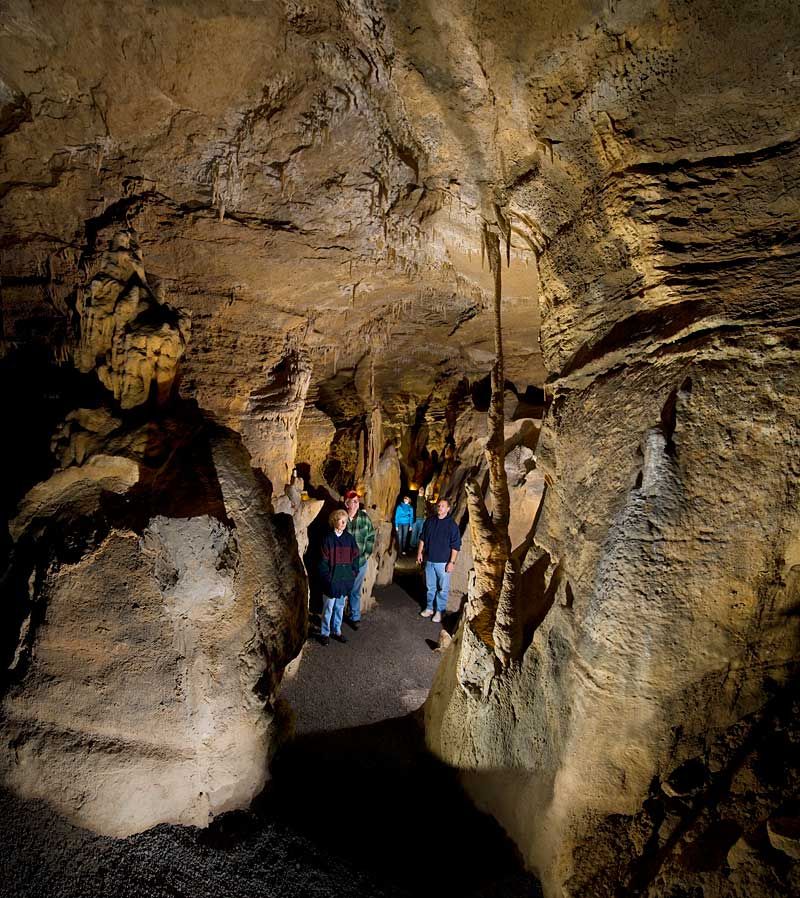
Two caves for the price of one is already a solid deal, but Lincoln Caverns and Whisper Rocks in Huntingdon sweeten it further with a combined guided tour running 75 minutes through some of Pennsylvania’s most crystal-rich underground scenery. Lincoln Caverns was discovered in May 1930 when a drill bit vanished during Route 22 construction, which is one of the more dramatic accidental cave discoveries on record.
Whisper Rocks came along eleven years later in 1941 after Myron Dunlavy Jr. spent three years digging toward it before literally falling into the opening. The Dunlavy family has operated both caverns for three generations, which gives the site a personal, well-maintained character that many larger attractions lack.
Tour highlights include Frozen Niagara, a formation measuring 90 feet long and 110 feet high, the Cathedral room in Whisper Rocks where weddings were once held, and formations nicknamed cave popcorn and cave bacon. The Blacklight Adventure tour transforms the calcite crystals into a fluorescent display. Both caverns stay at a steady 52 degrees Fahrenheit. Gemstone panning and a well-stocked rock and mineral shop are available above ground.
5. Laurel Caverns State Park
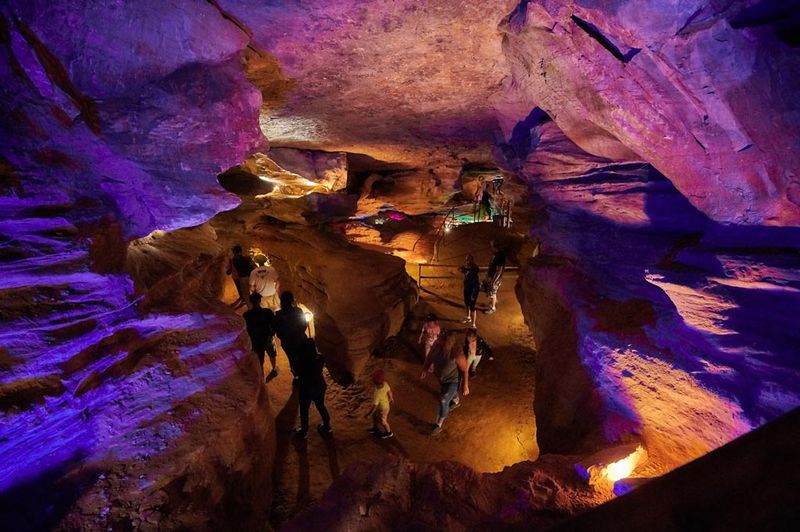
Pennsylvania’s largest cave by volume and area just got an official upgrade. In April 2026, Laurel Caverns became the commonwealth’s 125th state park and its first underground park, cementing its status as a genuinely one-of-a-kind destination tucked inside Chestnut Ridge in Fayette County.
The cave system stretches over four miles of passages and descends 476 feet below the surface. Unlike most Pennsylvania caves, Laurel Caverns formed in Loyalhanna limestone that is roughly half sand, which explains the dramatic cross-bedded geometric patterns carved into its walls rather than the typical stalactite-heavy scenery.
Tour options range from a 35-minute Maze Tour with a sound and light show to a full lighted tour featuring a recreated miniature waterfall and an optical illusion “gravity hill” passage. Adventurous visitors can book Upper or Lower Caving trips to crawl through undeveloped sections of the cave. The caverns close from late October through mid-April each year to protect their status as the largest natural bat hibernaculum in the entire northeastern United States.
6. Indian Echo Caverns
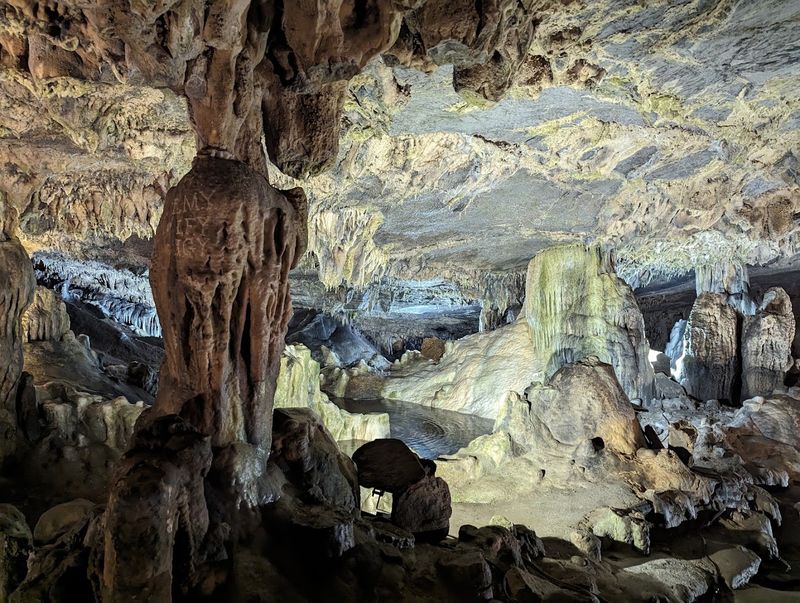
Long before the cavern had a name on a map, the Susquehannock people used this limestone system near Hummelstown as shelter and storage, drawn by its reliable 52-degree Fahrenheit temperature. The cave’s limestone formations are over 440 million years old, which puts its geological timeline in a category that makes human history feel extremely recent by comparison.
The site also holds the story of William Wilson, known as the Pennsylvania Hermit, who lived inside the cave for 19 years in the early 1800s before it opened commercially in 1929. Today’s 45-minute guided tour covers the Indian Ballroom, a large chamber formed where two passages intersect, and Crystal Lake, a six-foot-deep pool that has become one of the most photographed spots in the cave.
Guides point out formations that visitors have compared to Hershey’s Kisses and various animals, keeping the tour lively for all ages. The 71-step route through spacious passages avoids any feeling of being cramped. Above ground, a free petting zoo, a playground, and the Gem Mill Junction gemstone panning area extend the visit. The gift shop displays a Mystery Box found in 1919 containing ancient coins and instructions for making diamonds.
7. Woodward Cave
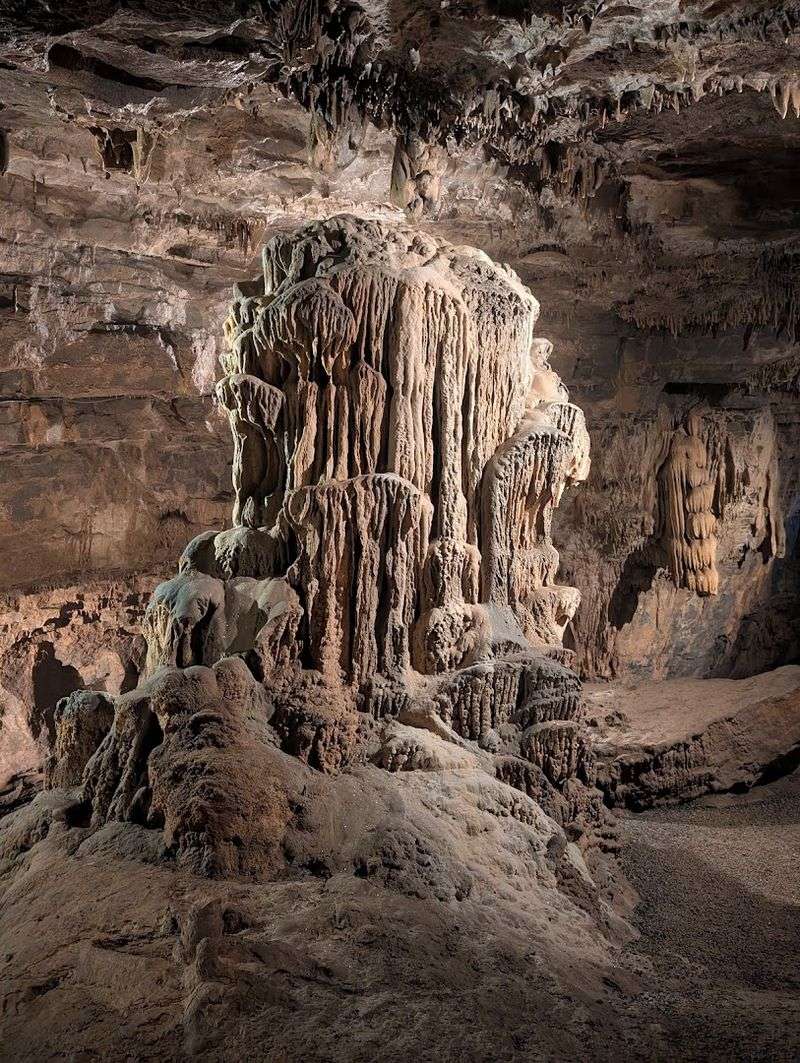
Known locally as “The Big One,” Woodward Cave in Penns Valley earns that nickname by delivering five enormous rooms, some running hundreds of feet long with ceilings that soar over 50 feet high. The cave’s bedrock is over 400 million years old, and the Seneca Indians knew it as Red Panther Cave, a place tied to a legend about a chief’s son turned to stone by dripping water.
Commercial tours launched in 1926 after Ollie Hosterman diverted Pine Creek, which once flowed directly through the cave, making the space accessible for visitors. The 50-minute guided tour covers stalactites, flowstones, helictites, cave bacon, soda straws, and sea fossils including trilobites embedded in the limestone walls. The undisputed centerpiece is the Tower of Babel, Pennsylvania’s tallest stalagmite at an impressive 14 feet.
The cave holds a brisk 48-degree Fahrenheit temperature, the coolest on this list, so a jacket is a practical choice rather than an optional one. Woodward Cave closes seasonally from October to May to protect its role as one of Pennsylvania’s largest winter bat habitats. Above ground, a full campground, cabins, and access to over 200 miles of trails in Bald Eagle Forest make this a strong multi-day destination.
8. Pioneer Tunnel Coal Mine & Steam Train
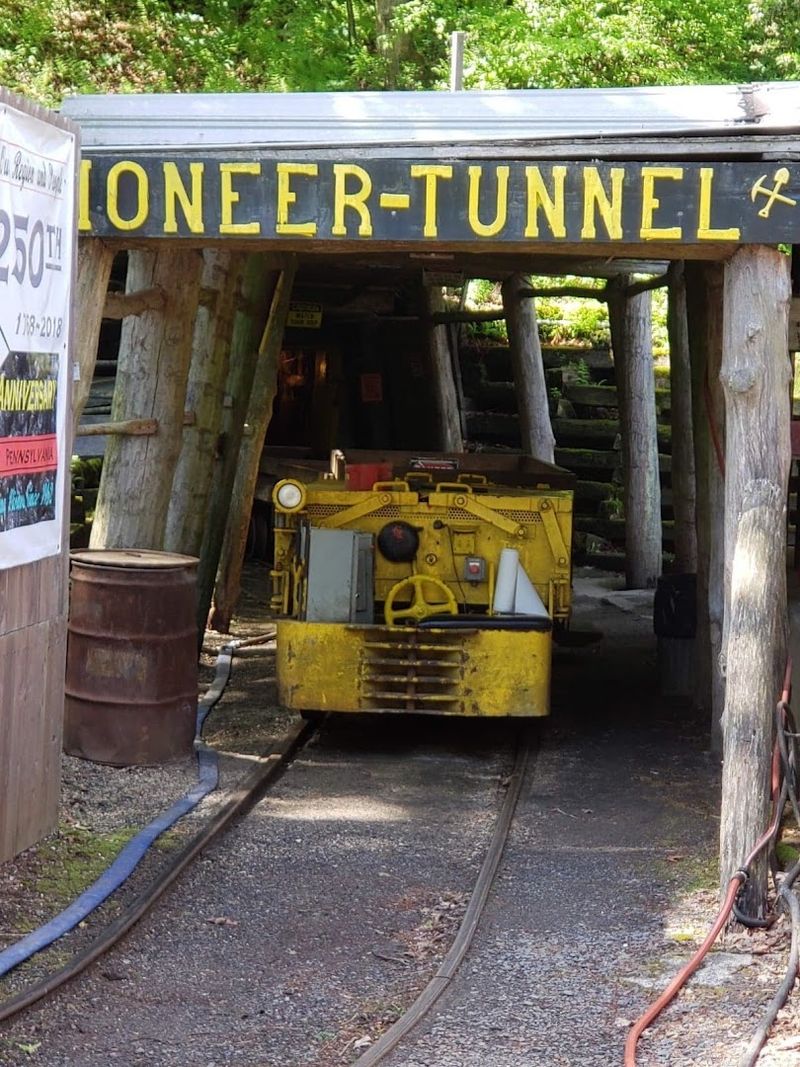
A horizontal drift mine and a working narrow-gauge steam locomotive in the same ticket price is a combination that is hard to argue with. Pioneer Tunnel Coal Mine in Ashland operated as an active anthracite colliery from 1911 to 1931 under the Philadelphia and Reading Coal and Iron Company before the Great Depression shut it down. The Ashland community revived it as a tourist attraction in the early 1960s.
The underground portion of the tour sends visitors 1,800 feet into Mahanoy Mountain aboard an open-air mine car pulled by a battery-operated mine motor. Inside, a guide walks the group through coal seams, passageway configurations, and the timbering systems that kept the mine structurally sound. The constant 52-degree Fahrenheit temperature makes a jacket a smart addition to any visit.
Above ground, the Henry Clay, a restored 1927 narrow-gauge steam locomotive, runs a three-quarter-mile scenic route that passes strip mining operations and provides views toward the Centralia mine fire site.
9. Lackawanna Coal Mine Tour
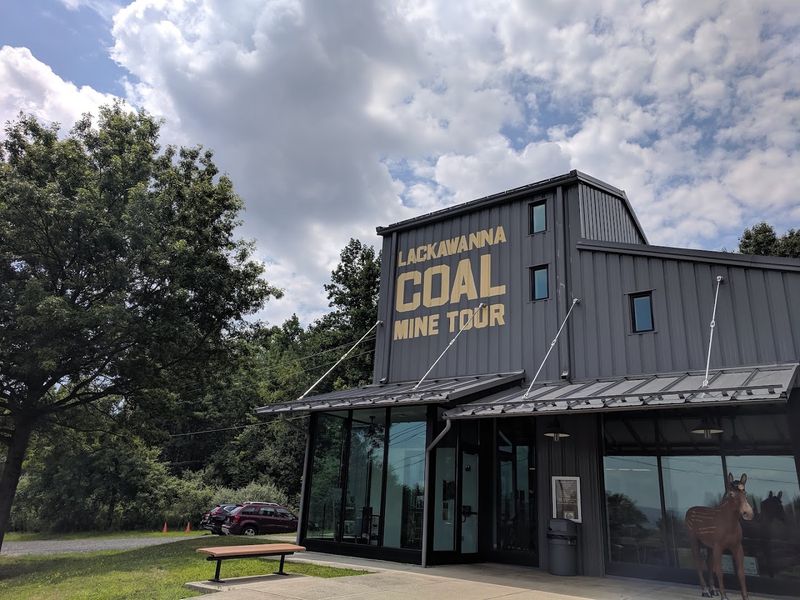
Three hundred feet below McDade Park in Scranton, the Lackawanna Coal Mine Tour delivers an award-winning underground experience that connects visitors directly to the labor history that powered the Industrial Revolution. The mine originally opened in 1860 and operated as a working anthracite colliery before being converted into a public museum in 1985 following significant federal rehabilitation funding.
Getting underground here involves boarding a mantrip mine car, an underground personnel carrier, which descends into Slope No. 190, the last deep mine in Lackawanna County. The guided half-mile tour through tunnels and gangways covers three different coal veins and explains mining techniques, safety practices, and the daily routines of workers, including mule boys and nippers. Mannequins positioned throughout the tunnels illustrate working conditions at different points in the mine’s history.
The mine holds a steady 50 to 54 degrees Fahrenheit, and hard hats are provided and required for all visitors. A visitor center above ground features an introductory video and a gift shop stocked with coal mining memorabilia, coal crafts, and fossils. The Pennsylvania Anthracite Heritage Museum sits directly next door, making the two sites a natural pairing for a full day of regional history.
10. No. 9 Coal Mine & Museum
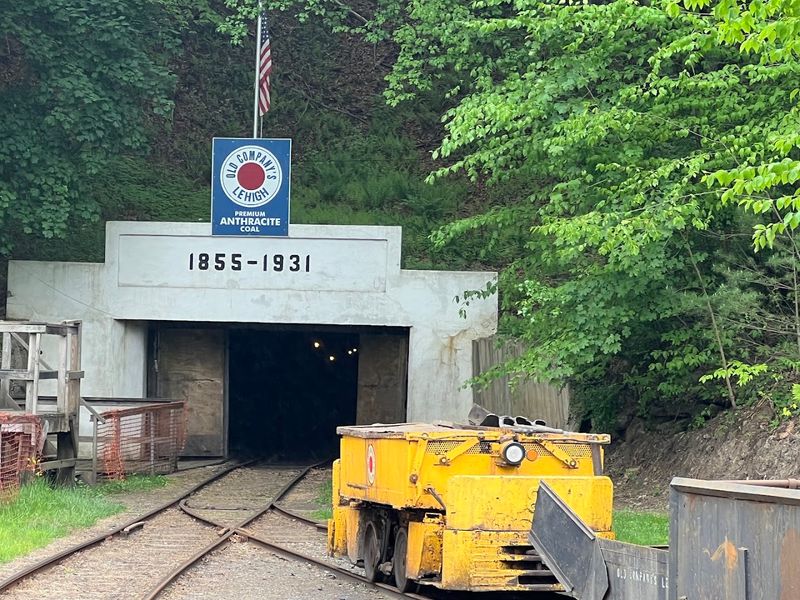
The longest continuously operated deep anthracite coal mine in the world ran for 117 years straight, and it is sitting in Lansford, Pennsylvania, waiting for visitors to come and see what that kind of endurance actually looks like. Established in 1855 by the Lehigh Coal and Navigation Company, No. 9 was engineered at a lower elevation in Panther Valley so groundwater drained naturally, a design advantage that gave it a longer operational life than most competing mines.
After closing in 1972, the mine sat silent for two decades until the Panther Creek Valley Foundation reopened it as a museum in 2002. Today’s tour begins with a 1,600-foot rail ride into the mountain aboard a vintage electric mine car, followed by a 600-foot guided walking tour through the first level. Stops include the original 700-foot-deep mine shaft, the historic mule-way, and a miner’s hospital carved directly into solid rock.
The underground temperature holds at a consistent 50 degrees Fahrenheit, so a light jacket is recommended. Above ground, the museum inside the original 1912 Wash Shanty holds the region’s largest collection of mining artifacts. The Dorrance Fan Exhibit Building displays two of the largest steam-powered mine ventilation fans from the Anthracite Region, a genuinely impressive piece of industrial machinery that most visitors have never seen up close.
11. Tour-Ed Mine & Museum
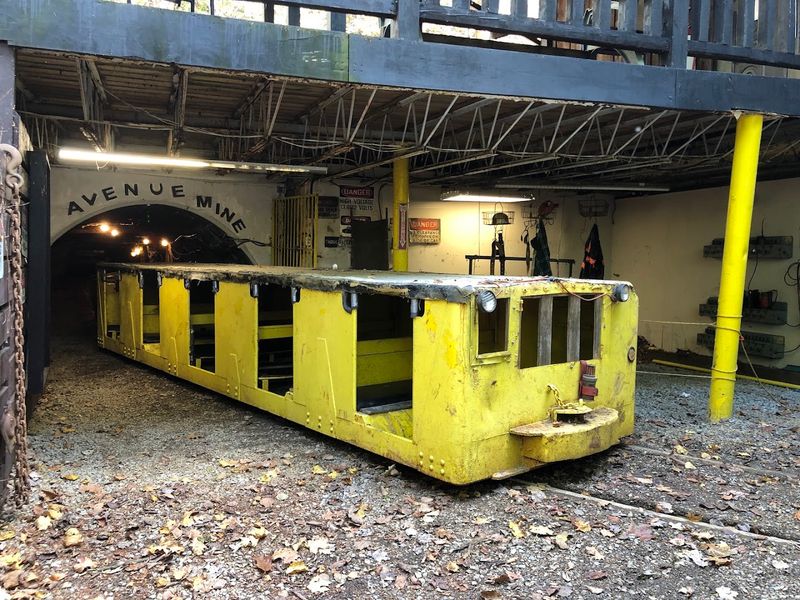
Just north of Pittsburgh in Tarentum, a working bituminous coal mine from the 1850s has been converted into one of Western Pennsylvania’s most hands-on historical experiences. The Avenue Mine supplied coal to Pittsburgh’s steel industry for over a century before Ira Wood purchased the property in 1964 with the specific goal of turning it into an educational museum. It opened to the public in the late 1960s.
The tour starts with a coal classroom introduction above ground, followed by a 160-foot descent into the mine aboard an enclosed man trip car for a half-mile ride. A retired coal miner typically leads the walking portion, explaining mining methods and safety measures from the 1850s through to modern times with the kind of detail that only comes from someone who actually worked underground. Working equipment runs during the tour, giving visitors a clear sense of the physical scale of the machinery.
Ceiling heights drop to 5 feet 9 inches in certain sections, a tangible reminder of the cramped conditions miners worked in daily. The mine holds a steady 52 to 55 degrees Fahrenheit. Above ground, the 13-acre Ira Wood Park includes a 1789 log cabin, a replica 1850s miner’s home, outdoor machinery exhibits, a sawmill, a strip mine display, and picnic areas, plus a popular Haunted Mine event each October.
Share this story