America is full of incredible foods that never quite make it onto the national radar. From the snowy Upper Peninsula of Michigan to the warm coastlines of Hawaii, every region has dishes that locals swear by but outsiders rarely hear about.
These recipes carry real history, cultural roots, and serious flavor. It’s time to give them the spotlight they’ve earned.
1. Hotdish (Minnesota)
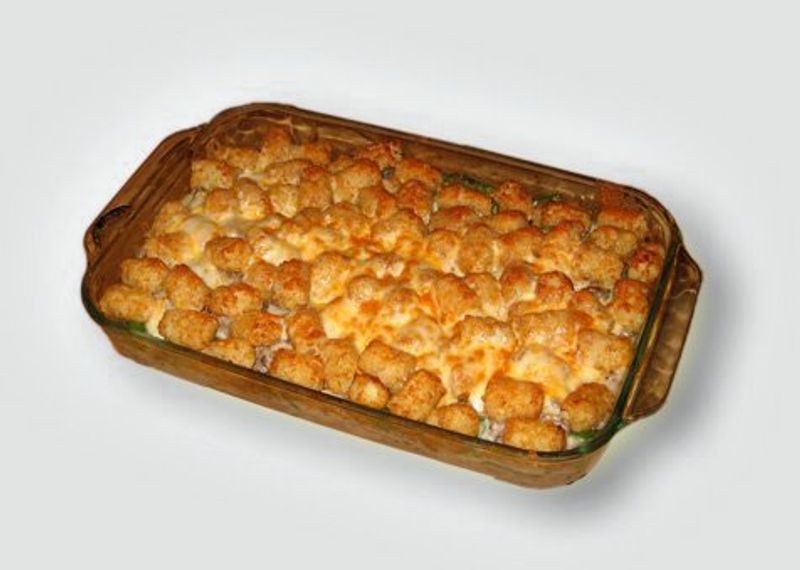
Ask any Minnesotan what they bring to a potluck, and the answer is almost always hotdish. This no-fuss casserole has been feeding families across the state for generations, and it earns every bit of that loyalty.
The basic formula combines ground beef, a can of cream soup, mixed vegetables, and either tater tots or egg noodles layered on top. Every family has its own version, and those variations are taken seriously.
Some add cheese, some swap in wild rice, and others keep it strictly traditional.
Hotdish became a staple at church suppers and school fundraisers across the Upper Midwest, where feeding a crowd on a budget was a real necessity. It’s warm, filling, and deeply familiar.
Outside Minnesota, it gets dismissed as plain comfort food, but that misses the point entirely. This dish is community on a plate.
2. Goetta (Cincinnati, Ohio)
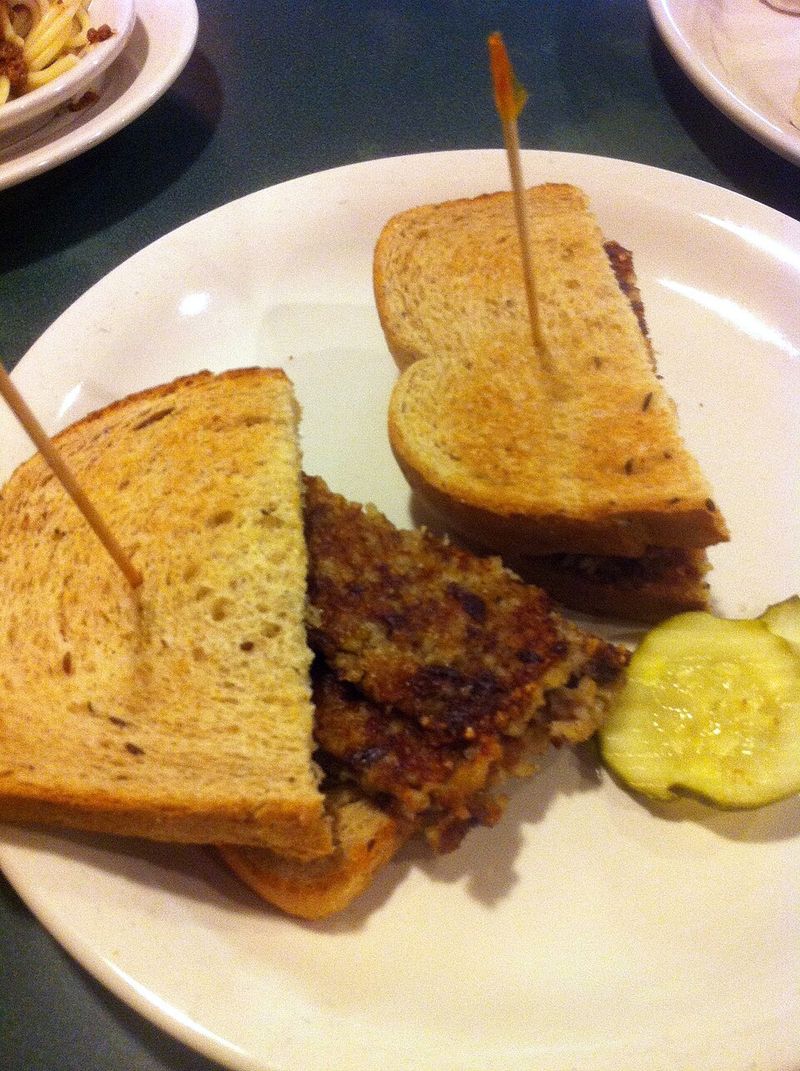
Cincinnati has its own unique food culture, and goetta might be its most underappreciated contribution. This breakfast meat is made from pork, beef, steel-cut oats, and spices, pressed into a loaf and then sliced and pan-fried until the edges turn perfectly crispy.
German immigrants brought the concept to Cincinnati in the 1800s, and it stuck hard. Today, local butchers and grocery stores stock it year-round, and the city even hosts an annual Goettafest celebrating the stuff.
Outside the Cincinnati metro area, though, most people have never even heard the name.
The oats give it a texture that’s somewhere between sausage and scrapple, with a slightly nutty flavor that pairs beautifully with eggs and toast. It’s a genuinely satisfying breakfast that costs very little to make.
If you spot it at a local market, grab it without hesitation.
3. Runza (Nebraska)
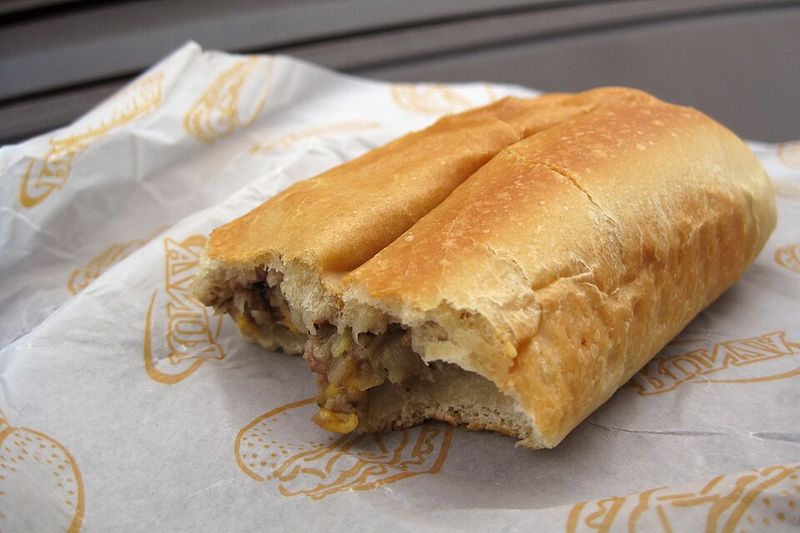
Nebraska’s most beloved handheld meal looks simple from the outside, but the story behind it stretches across continents. Volga German immigrants brought their stuffed bread tradition to the Great Plains in the late 1800s, and the runza became a regional institution.
The dough is soft and slightly chewy, baked golden around a filling of seasoned ground beef, shredded cabbage, and onions. It’s hearty, portable, and surprisingly flavorful.
A fast-food chain named Runza now operates across Nebraska and neighboring states, but homemade versions are still the gold standard at family reunions and fall festivals.
What makes runza special is how it reflects immigrant history without trying to be fancy about it. This was practical food built for hardworking people, and it has outlasted plenty of trendier dishes.
Outside the Midwest, it remains almost completely unknown, which is a real shame for everyone else.
4. Chislic (South Dakota)
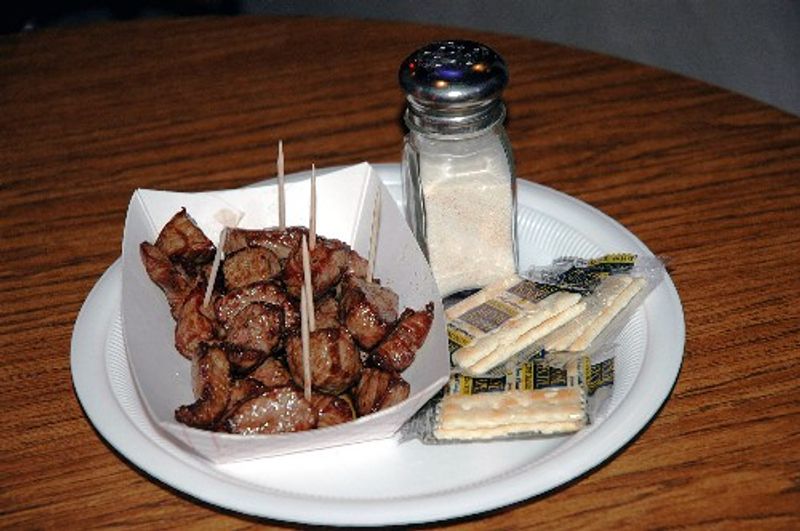
South Dakota’s official state nosh is something most Americans outside the region couldn’t pick out of a lineup. Chislic is simply cubed meat, traditionally lamb or mutton, deep-fried or grilled and seasoned with nothing more than garlic salt.
It sounds basic, but locals are fiercely devoted to it.
The dish likely came to the Great Plains through Russian Mennonite immigrants in the late 1800s. Over time it became a bar staple and a fixture at county fairs across the state.
In 2018, South Dakota officially designated chislic as its state nosh, giving it a long-overdue recognition.
The appeal is in the simplicity. Quality meat, high heat, minimal seasoning, and a stack of saltines on the side.
Some versions use beef or venison when lamb isn’t available. Either way, it’s honest, satisfying food that deserves far more attention than it currently gets beyond state lines.
5. Johnny Marzetti (Ohio)
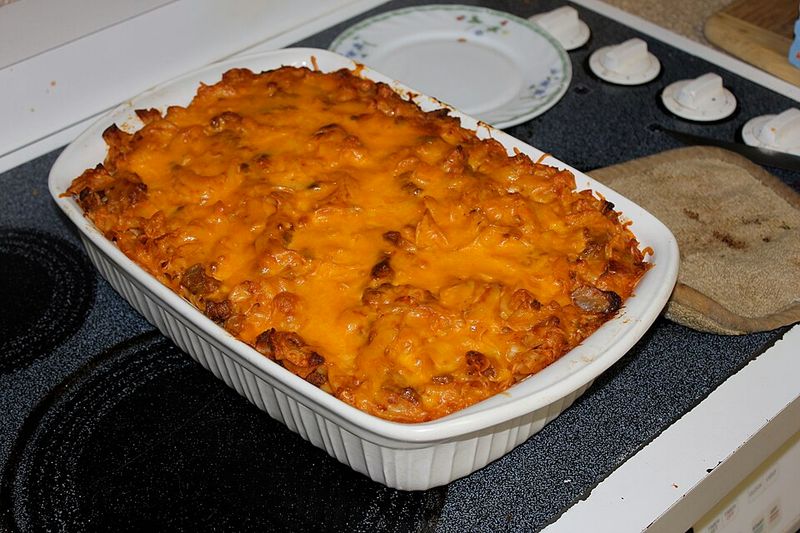
Named after a Columbus restaurant owner in the early 1900s, Johnny Marzetti is Ohio’s answer to baked pasta. Ground beef, tomato sauce, egg noodles, and a generous layer of cheese go into a baking dish and come out as something genuinely comforting and crowd-pleasing.
Teresa Marzetti reportedly created the dish at her Columbus restaurant and it spread quickly through church cookbooks and school cafeterias across the Midwest. For decades, it was one of the most-requested recipes at Ohio potlucks.
You can still find handwritten versions of it tucked into old recipe boxes across the state.
It’s similar to baked ziti or American goulash, but Johnny Marzetti has its own distinct identity tied to Ohio’s food history. The recipe is flexible enough to adapt but recognizable enough to feel like tradition.
Outside the Midwest, it rarely shows up on menus or in food conversations, which is a genuine loss.
6. Hoppin’ John (South Carolina Lowcountry)
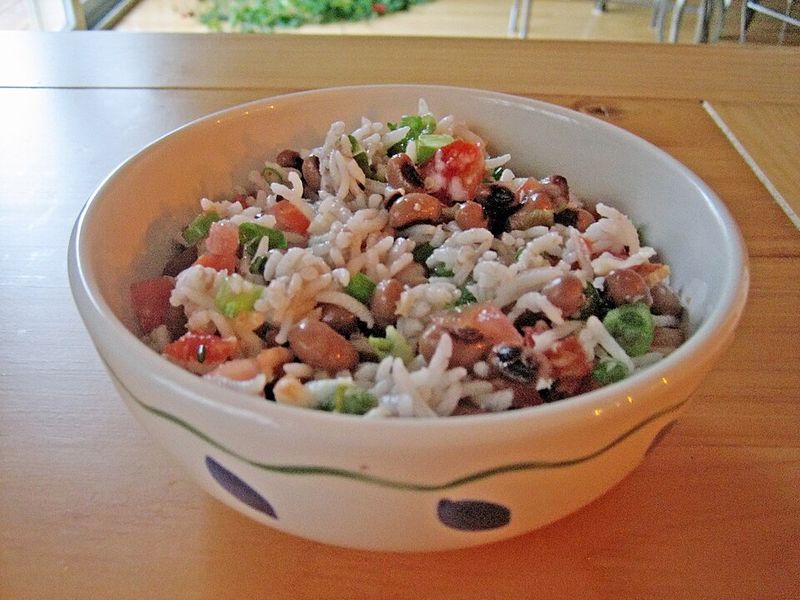
On New Year’s Day across South Carolina, plates of Hoppin’ John are passed around with the same certainty as the calendar change itself. Black-eyed peas cooked with smoked pork and served over rice is the formula, and the tradition holds that eating it brings good luck and prosperity in the year ahead.
The dish has deep roots in Gullah Geechee culture, the African American communities of the South Carolina and Georgia coastline whose culinary traditions shaped Southern cooking in profound ways. The combination of rice and legumes reflects West African cooking practices brought over during the transatlantic slave trade.
Hoppin’ John is more than a holiday dish, though. It’s a year-round staple in Lowcountry cooking, served alongside collard greens and cornbread.
The smoky, savory flavor is deeply satisfying. Beyond the Southeast, it rarely gets the recognition it deserves as one of America’s most historically significant comfort foods.
7. Booyah (Wisconsin and Northeast Minnesota)
Booyah isn’t just a meal. It’s an event.
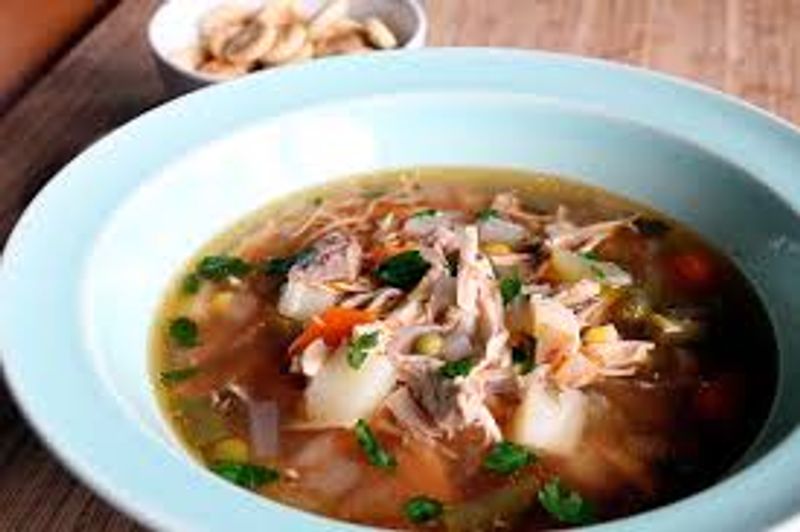
This thick, slow-cooked stew is a communal tradition in Wisconsin and the northeastern corner of Minnesota, where Belgian and other immigrant communities have been making it in enormous outdoor kettles for well over a century.
The base typically includes chicken, beef, and a long list of vegetables simmered together for hours, sometimes all day. The result is a rich, deeply flavorful stew that’s almost impossible to replicate in a small pot.
Most booyah is made in batches large enough to feed hundreds of people at parish picnics and community fundraisers.
The name itself is thought to come from the French word bouillon, adapted through generations of Midwestern use. There are booyah cook-off competitions and family recipes guarded like heirlooms.
Outside its home region, almost nobody has heard of it, which makes finding a bowl feel like a genuine discovery.
8. Garbage Plate (Rochester, New York)
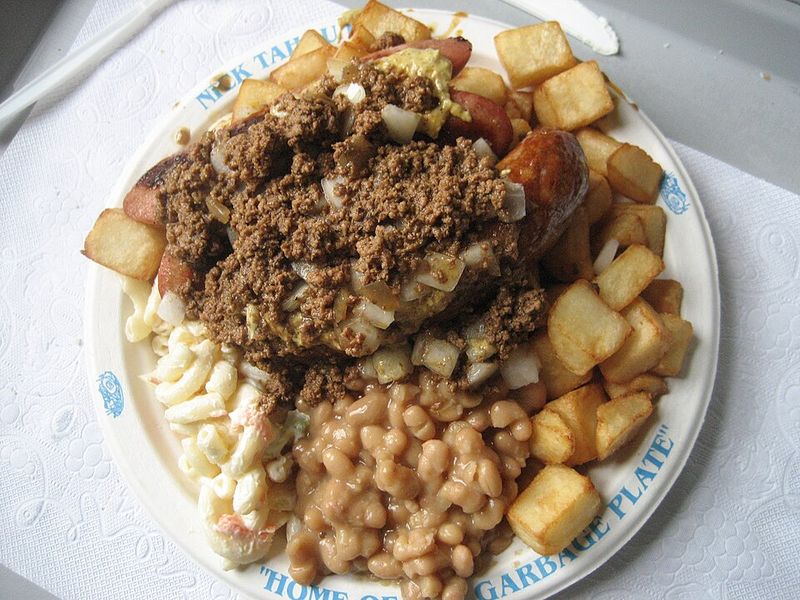
The name doesn’t do it any favors, but Rochester’s Garbage Plate has earned a devoted following that borders on obsession. Created at Nick Tahou Hots in Rochester sometime in the early 20th century, the dish piles home fries and macaroni salad as a base, then tops everything with burgers or hot dogs, meat sauce, mustard, and raw onions.
It’s chaotic, enormous, and completely intentional. The contrast of creamy macaroni, crispy potatoes, savory meat sauce, and sharp mustard creates something that sounds wrong but tastes absolutely right.
College students and late-night regulars helped turn it into a Rochester institution.
The term “Garbage Plate” is actually trademarked by Nick Tahou Hots, so other restaurants in Rochester use names like “Trash Plate” or “Junk Plate.” Beyond western New York, it’s virtually unknown. But for anyone who has eaten one at 2 a.m. after a long night, it becomes unforgettable fast.
9. Fried Brain Sandwich (Southern Indiana)
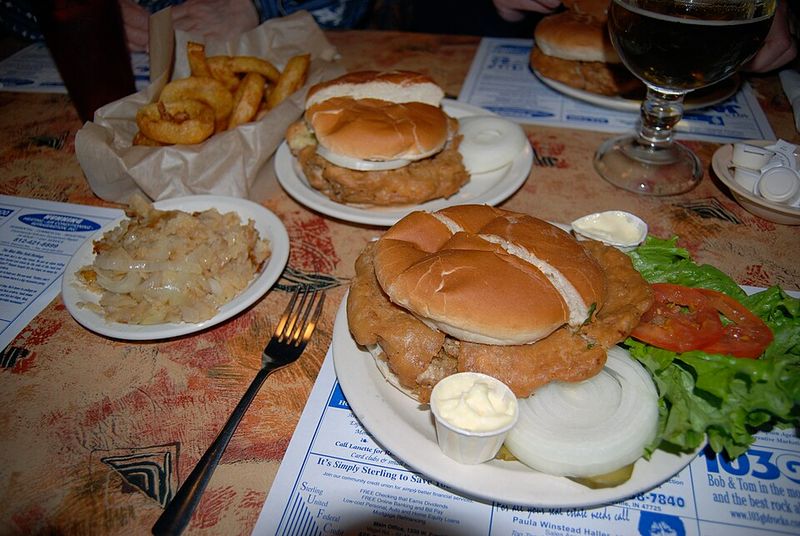
Southern Indiana’s most unusual regional specialty has been quietly hanging on for over a century, even as the rest of the country moved on. The fried brain sandwich was once a common working-class meal across the Ohio River Valley, made from calf brains battered and fried until crispy, then served on a soft bun with mustard and onions.
Mad cow disease concerns in the 1990s made beef brains harder to source legally, so many diners switched to pork brains where available. A handful of old-school taverns and diners in towns like Evansville still serve them, drawing loyal regulars who grew up eating them.
The texture is surprisingly soft inside with a crispy outer crust, and the flavor is mild and slightly rich. It’s not for the faint of heart, but it represents a genuine piece of regional food history.
Dismissing it without trying it means missing something real.
10. Loco Moco (Hawaii)
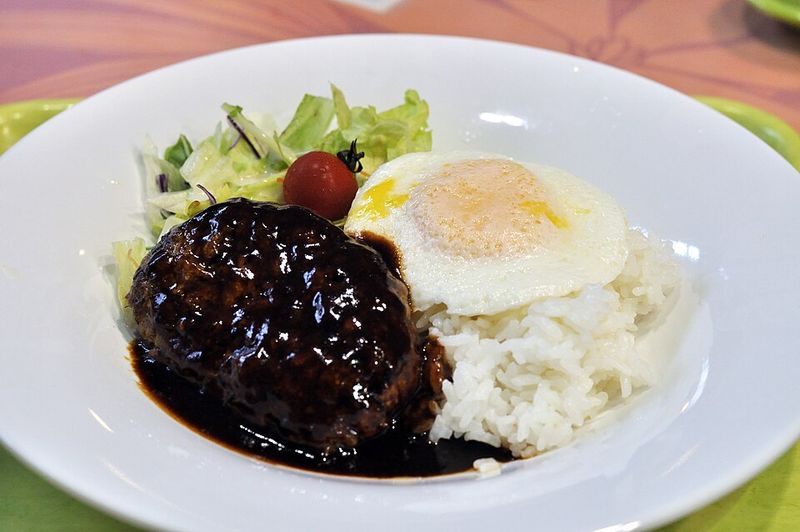
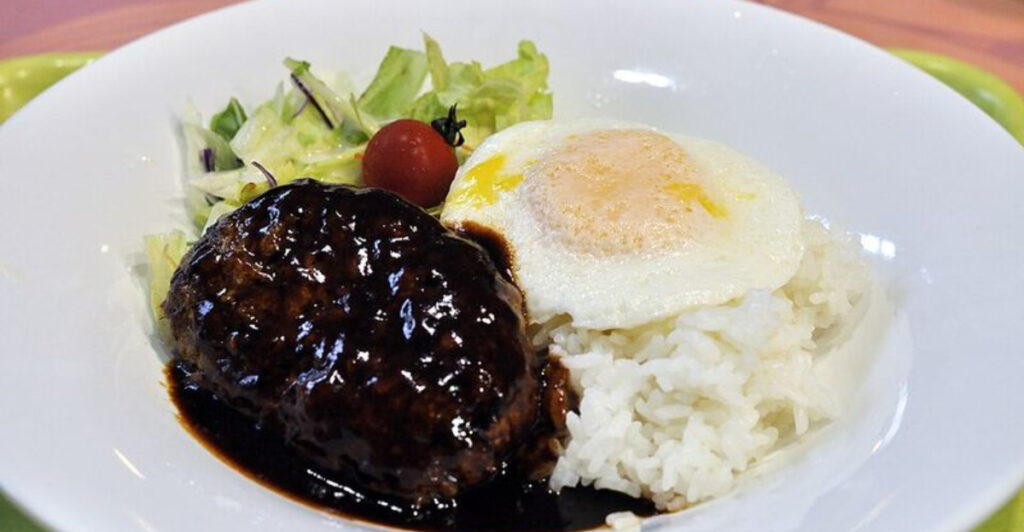
Hawaii has given American food culture a lot of great things, but loco moco might be its most underrated export. The dish was invented in Hilo in 1949 at the Lincoln Grill, created specifically for hungry teenagers who needed a cheap, filling meal that wasn’t sandwiches or American chop suey.
A scoop of white rice goes down first, then a hamburger patty, then brown gravy poured generously over everything, and finally a fried egg on top. It’s simple, filling, and wildly satisfying.
Variations across the islands include teriyaki chicken, Spam, or even kalua pork in place of the burger.
Loco moco shows up at diners, food trucks, and plate lunch spots all across Hawaii. Mainlanders who try it for the first time are almost always surprised by how well the flavors work together.
It’s the kind of dish that makes you wonder why it isn’t everywhere.
11. Pasties (Michigan’s Upper Peninsula)
In Michigan’s Upper Peninsula, the pasty is more than food. It’s an identity.
Cornish miners brought these hand-held meat pies to the U.P. in the 1800s when copper and iron mines were booming, and the tradition has outlasted the mining industry by generations.
A proper U.P. pasty is filled with beef, potatoes, rutabaga, and onions, all wrapped in a thick crimped pastry crust. The thick edge was originally designed so miners could hold the pasty without contaminating the food with their dirty hands, then discard the crust.
Today, people eat every bit of it.
Arguments about the correct recipe are a genuine cultural pastime in the U.P. Some people insist on rutabaga.
Others say carrots are acceptable. Gravy on top or no gravy at all is another debate entirely.
Outside Michigan, pasties rarely come up in food conversations, but anyone who tries a real one understands the loyalty immediately.
Share this story