 Unearth The Voyage

Some bands release one great album and then spend the rest of their careers chasing that high. A rare few, though, manage to put out record after record without a single stinker in the bunch.
I’ve spent way too many late nights going down music rabbit holes, and I keep coming back to the same jaw-dropping realization: certain bands just never missed. Here are 12 rock bands whose entire discographies are basically critic-proof.
Nirvana
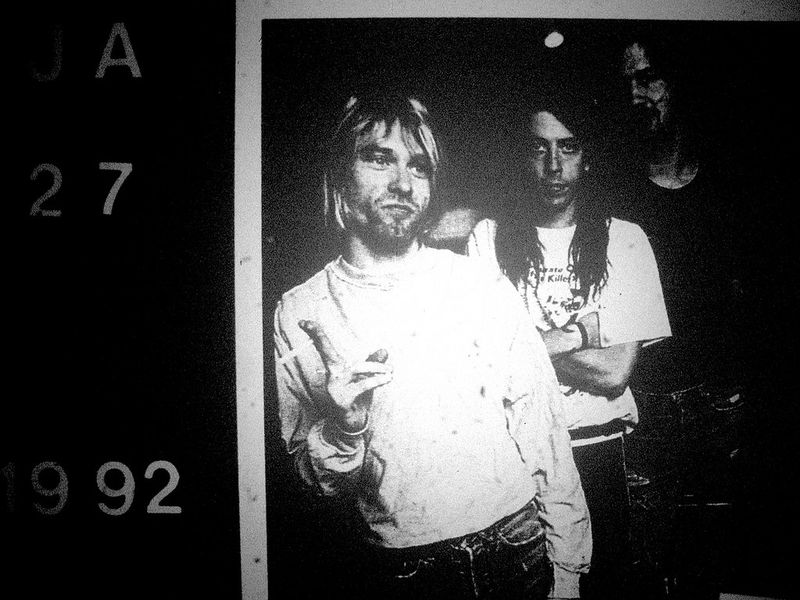
Nirvana only made three studio albums, and somehow each one defined a completely different era of rock. Bleach was raw and feral, like a garage that caught fire.
Nevermind became a cultural earthquake. In Utero was the sound of a band refusing to be swallowed by their own fame.
Critics backed this up with numbers. Nevermind and In Utero both sit in the high 80s and low 90s on Metacritic — firmly in “universal acclaim” territory.
Even Bleach, the scrappy debut recorded for $600, earned strong reviews and grew a devoted following over time.
I remember the first time I heard “Smells Like Teen Spirit” on a scratchy radio in a car that had no business still running. It felt like something had shifted.
Three albums, three distinct moods, and not one of them ever gets skipped. That’s a pretty rare thing in rock history.
The Police

Five albums, five different flavors of brilliance. The Police had a habit of evolving just fast enough to stay interesting without leaving their fans behind.
That’s a trickier balancing act than most bands ever manage.
Their debut Outlandos d’Amour got mixed reviews at first, but retrospectives have been much kinder — Rolling Stone eventually ranked it among the best debut albums ever made. Ghost in the Machine and Synchronicity are fixtures on every serious “greatest albums” list worth reading.
What’s wild is that The Police were essentially a new wave band disguised as a reggae-punk trio with a jazz drummer. Somehow that recipe produced five albums without a single weak link.
Sting’s bass playing, Copeland’s percussion gymnastics, and Summers’ angular guitar work created something that critics kept rewarding with praise across every release. Five for five is a clean sweep by anyone’s scorecard.
The White Stripes

Just two people, a guitar, a drum kit, and zero filler. The White Stripes built an entire world out of the most stripped-down setup in rock, and critics couldn’t stop cheering them on for it.
White Blood Cells scored an 86 on Metacritic. Elephant hit 92 — that’s “universal acclaim” in cold, hard numbers.
Even Get Behind Me Satan, the album where Jack White started messing with marimba and piano, still posted an 81. Icky Thump landed around 80.
Not one album dipped below “solidly positive.”
The secret sauce was tension. Two people playing like they had something to prove every single night created a sound that felt both ancient and completely modern.
Jack White’s guitar work alone could fill a music theory class. Meg’s drumming was deceptively simple and completely irreplaceable.
Together they made six albums, and none of them deserve to be skipped. Not even once.
Rage Against the Machine

Rage Against the Machine didn’t make music so much as they made arguments you could mosh to. Four studio albums, and every single one of them landed with force on critic aggregation charts – sitting in the 70s and 80s across the board.
Even Renegades, the covers album that some fans treated with skepticism, still scored a 71. That’s not a disaster.
That’s a band that couldn’t make a bad record even when they were playing other people’s songs. Tom Morello’s guitar work alone guaranteed a certain baseline of greatness on every release.
The band’s self-titled debut is still one of the most viscerally exciting rock albums ever recorded. The Battle of Los Angeles is a masterclass in controlled fury.
Renegades gets unfairly dismissed, but it introduced a new generation to songs by Cypress Hill, MC5, and Bruce Springsteen. Four punches to the jaw, and not one of them missed.
System of a Down

System of a Down made five studio albums that sounded like nothing else on the planet, and critics consistently rewarded them for it. Their self-titled debut scores an 88 on Album of the Year’s aggregation.
Toxicity sits at 81.
Even their most polarizing records stayed comfortably above “bad.”
The band’s trick was chaos with a plan. Songs would shift from Armenian folk melodies to death metal screaming to pop hooks within the same two minutes.
It shouldn’t work. It absolutely works.
Serj Tankian’s voice alone could carry a lesser band straight to the top.
Mezmerize and Hypnotize dropped in the same year, 2005, and still managed to feel distinct and fully formed. That kind of creative output, with quality maintained across the board, is genuinely rare in heavy music.
System of a Down had a short discography with an unusually high floor, and no album ever crashed through it.
Portishead

Portishead released their debut Dummy in 1994, won the Mercury Prize, and basically invented a mood that half the music world has been trying to recreate ever since. Three albums in, they still haven’t made a bad one.
Third, their 2008 return after an eleven-year absence, holds an 85 Metascore – “universal acclaim” territory. That’s not easy for any band, let alone one coming back after a decade away.
Most reunions produce polite applause and quiet disappointment. Portishead produced a masterpiece instead.
Beth Gibbons sings like she’s reading from a diary she never meant to share. Geoff Barrow builds beats that feel like they’re coming from a broken machine in the best possible way.
Three albums spread across decades, and the quality never wavered once. Portishead is proof that slow and deliberate beats rushed and prolific every single time when you’re this good.
My Bloody Valentine

My Bloody Valentine made the world wait 22 years between albums, and when m b v finally arrived in 2013, it scored an 87 on Metacritic. That is an almost offensively good result for a band that had been essentially silent since 1991.
Loveless, their 1991 landmark, sits at 93 on Metacritic with the reissue factored in. That’s not just “critically acclaimed” – that’s a record that routinely tops all-time lists across genres.
Kevin Shields spent so long perfecting the guitar tones on that album that Creation Records nearly went bankrupt funding it.
The band’s debut Isn’t Anything is also well-regarded as a pivotal shoegaze record. So across their entire catalog, My Bloody Valentine has never released anything that critics dismissed.
They waited decades between albums, then still didn’t miss. That takes a specific kind of stubbornness that most artists would call perfectionism and most accountants would call terrifying.
The xx

The xx released their debut album in 2009 and immediately made “doing less” sound like the most radical thing in music. Sparse guitars, hushed vocals, and a lot of deliberate space between notes — and critics gave it an 87 on Metacritic.
Coexist, the classic “difficult second album” trap that has swallowed countless bands whole, still scored a 79. That’s “generally positive” — not a stumble, just a quieter step.
Then I See You came back swinging in 2017 with an 85, reclaiming “universal acclaim” status with a warmer, more electronic sound.
Three albums, three distinct phases, and a consistent thread of quality running through all of them. The xx figured out early that restraint is a creative choice, not a limitation.
Most bands pile on more instruments and production as they grow. The xx proved that knowing exactly what to leave out is its own kind of genius worth celebrating.
Fleet Foxes

Fleet Foxes have released four studio albums, and Metacritic has rewarded every single one of them. The debut sits at 87.
Helplessness Blues lands at 85. Crack-Up posts an 81.
Shore hits 87 again. That is a remarkably flat quality curve for a band spanning over a decade of releases.
Most bands have at least one album where critics politely say “ambitious but uneven” and fans quietly skip half the tracklist. Fleet Foxes just kept delivering.
Robin Pecknold writes lyrics that sound like they were carved into something permanent, and the band’s layered harmonies have stayed genuinely distinctive across all four records.
Shore in particular is interesting because it came out in 2020, during a period when many artists were struggling to create under obvious pressure. Fleet Foxes released one of their most warmly received albums.
Four albums, four critical wins, and a discography that holds up front to back without a single track you want to skip.
Neutral Milk Hotel

Neutral Milk Hotel only made two studio albums, but the second one became one of the most celebrated cult records in music history. In the Aeroplane Over the Sea started as a modest release in 1998 and grew into a legend through years of critical reappraisal and devoted word-of-mouth.
Their debut On Avery Island got solid reviews at release, including strong write-ups in NME and the Houston Chronicle. It wasn’t a blockbuster, but it wasn’t a miss either.
It was a promising first step that set up one of the most stunning second albums ever recorded.
Jeff Mangum essentially disappeared from public life after Aeroplane, which only deepened the mythology around both records. Two albums, one mythic reputation, and absolutely no “bad” entry anywhere in the catalog.
Some artists spend entire careers chasing the kind of legacy Neutral Milk Hotel built with just two records and a whole lot of strange, beautiful honesty.
The Jimi Hendrix Experience
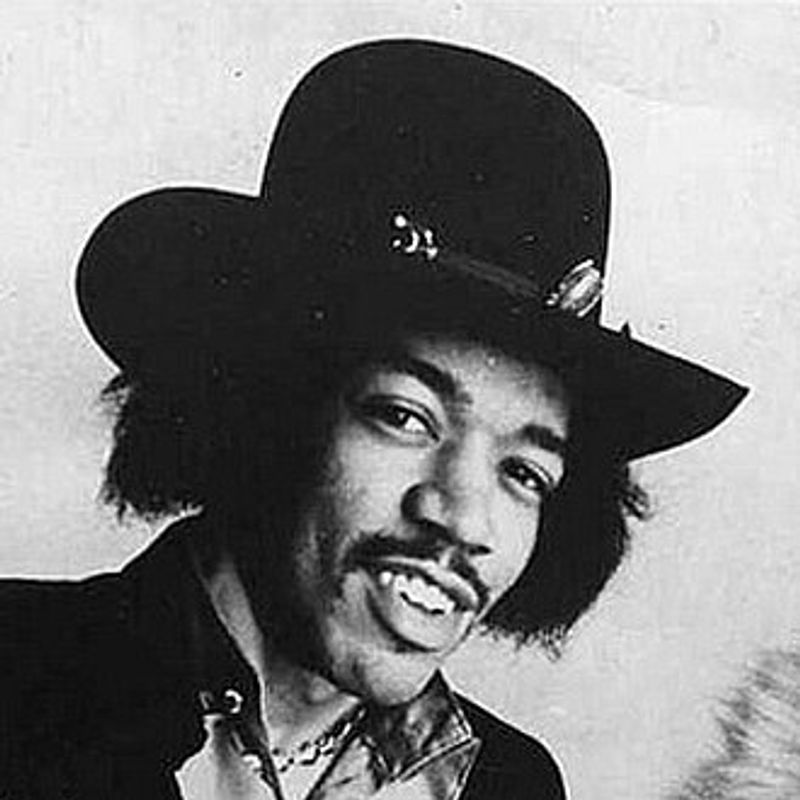
Are You Experienced came out in 1967 and immediately made every other guitarist on the planet reconsider their career choices. Jimi Hendrix was 24 years old and already playing like he had invented the electric guitar himself, then improved it.
The album is canon-level acclaimed, sitting on Rolling Stone’s all-time list and in the U.S. National Recording Registry.
Axis: Bold as Love followed the same year and is similarly documented as a critical and commercial success with placements on major greatest-albums lists. Electric Ladyland completed the trilogy in 1968 and ran nearly 75 minutes of psychedelic genius.
Three albums in roughly two years, each one expanding what rock music was allowed to do. The Jimi Hendrix Experience never had time to make a weak record because they were too busy rewriting the rules of the instrument.
A three-album run that critics and historians still treat like scripture, and honestly, the reverence is completely earned.



