Some waterfall hikes in America feel almost impossible to believe in person. Towering cascades, turquoise pools, moss-covered canyons, and roaring cliffs create landscapes that seem closer to fantasy movies than real hiking trails.
These unforgettable hikes combine incredible scenery with rewarding adventures through some of the country’s most spectacular wilderness. Lace up your boots, because these eleven trails are about to make your jaw drop.
Havasu Falls Trail — Supai, Arizona
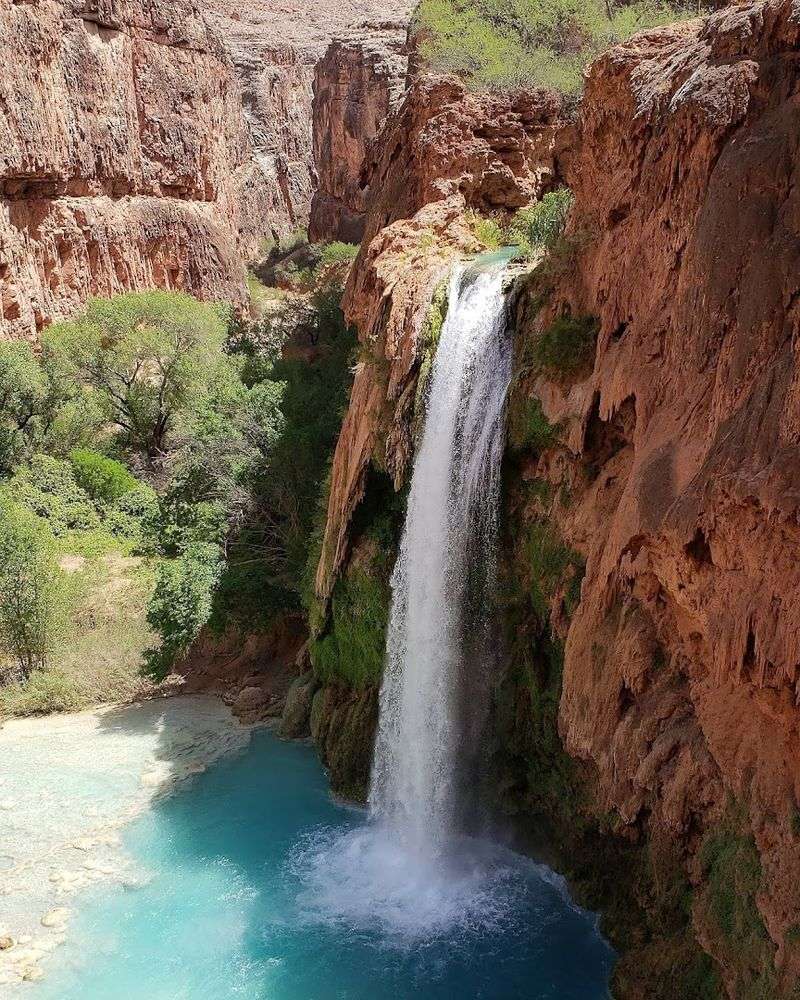
Picture a waterfall so blindingly turquoise it looks like someone poured tropical ocean water into the middle of the Arizona desert. That is exactly what awaits hikers on the Havasu Falls Trail, tucked deep inside Havasupai tribal land.
The ten-mile hike in is no joke, but every step through red rock canyon is building toward something extraordinary.
Permits are required and sell out incredibly fast, sometimes within minutes of release, so planning ahead is absolutely essential. The contrast between the burnt-orange canyon walls and the vivid blue-green pools below the falls is genuinely surreal.
Many hikers say photos do not even come close to capturing the real color.
Camping near the falls overnight lets you experience the canyon after the daytime crowds settle down. Stargazing from the canyon floor, with the sound of rushing water nearby, is an experience hikers remember for the rest of their lives.
This trail is challenging, remote, and completely worth every single effort it demands.
Yosemite Falls Trail — Yosemite National Park, California
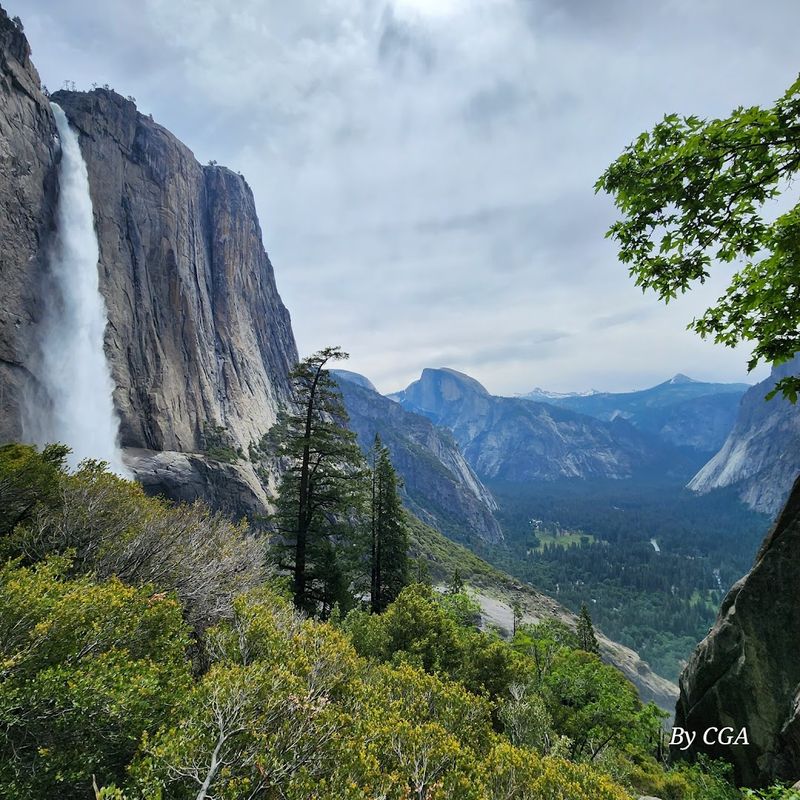
Standing at the base of Yosemite Falls and looking straight up is one of those moments that makes your brain temporarily stop working. At roughly 2,425 feet tall, this is one of the highest waterfalls in all of North America, and hiking the full trail to the top rewards you with views that stretch across the entire valley below.
Spring is the absolute best time to visit, when snowmelt sends enormous volumes of water thundering down the granite face. The roar is loud enough to feel in your chest from a surprising distance away.
Summer visitors should note the falls can slow to a trickle or disappear entirely by late August.
The upper trail section climbs steeply over rocky switchbacks, gaining around 2,700 feet in elevation. It is a serious workout, but the panoramic summit view of Half Dome and Yosemite Valley makes every burning muscle feel completely justified.
Granite cliffs, giant sequoias, and crisp mountain air make this trail feel like hiking inside a painting. Arrive early to avoid afternoon crowds and afternoon heat on the exposed upper sections.
Trail of Ten Falls — Silver Falls State Park, Oregon
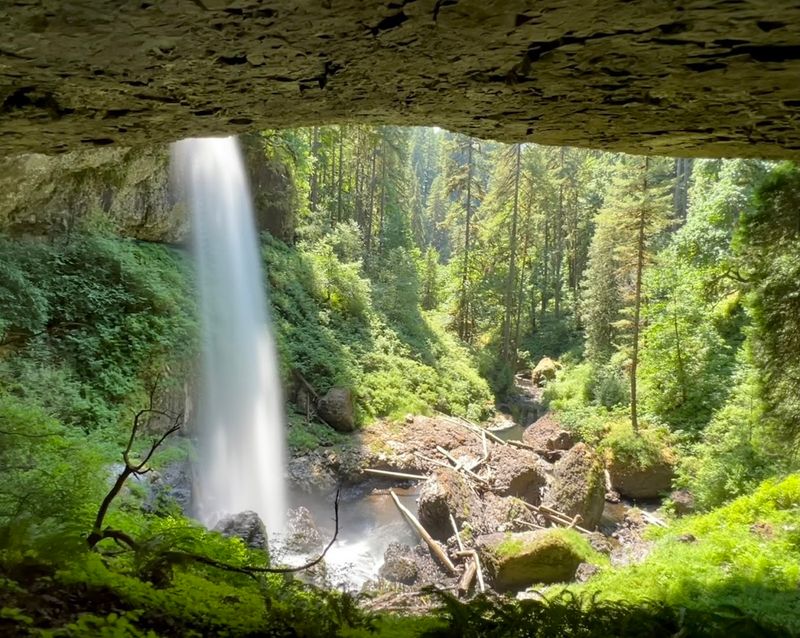
Walking behind a waterfall is one of those rare hiking experiences that feels like cheating reality, and Oregon’s Trail of Ten Falls lets you do it multiple times in a single afternoon. Silver Falls State Park packs ten separate waterfalls into one gorgeous seven-mile loop through thick Pacific Northwest forest.
South Falls alone drops 177 feet, and you can walk directly behind its curtain of water on a carved stone path.
The trail passes through old-growth Douglas fir and bigleaf maple trees that form a canopy so dense it feels like a natural cathedral overhead. Ferns and mosses cover nearly every surface, giving the whole canyon a vivid, almost neon-green glow after rainfall.
Autumn transforms the forest into brilliant gold and orange, making fall hikes here especially memorable.
Dogs on leashes are welcome on parts of the trail, which makes this a favorite outing for families and pet owners alike. The loop is well-maintained and clearly signed, so navigation is easy even for less experienced hikers.
Parking fills quickly on weekends, so arriving before nine in the morning is a smart move. This trail genuinely earns its reputation as one of Oregon’s absolute crown jewels.
Lower Yellowstone Falls Trail — Yellowstone National Park, Wyoming
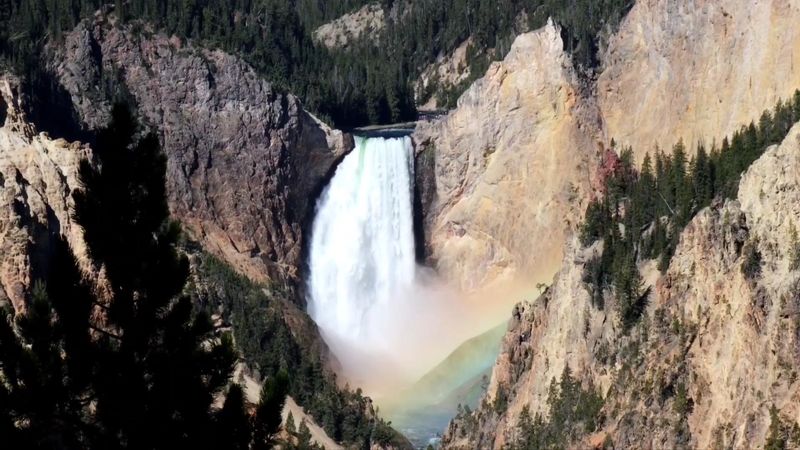
Yellowstone is famous for geysers and bison, but the Grand Canyon of the Yellowstone might actually be its most jaw-dropping secret. The Lower Falls plunge a thundering 308 feet into a canyon painted in wild shades of yellow, orange, red, and white from ancient volcanic minerals.
The color combination looks almost digitally enhanced, but this is completely, gloriously real.
Artist Point overlook offers the most famous view, showing the full canyon and waterfall in one sweeping frame. Serious hikers should tackle the Uncle Tom’s Trail, which descends steep metal staircases down into the canyon for a dramatically close-up look at the falls.
The mist rising from the base soaks you slightly, which feels absolutely refreshing on warm summer days.
Wildlife sightings along the canyon rim are common, including osprey nesting on rocky spires directly above the roaring water below. Bison frequently wander the meadows near the trailhead, so keeping a respectful distance is both required and genuinely wise.
The canyon stretches for twenty miles, meaning curious explorers can spend an entire day discovering new viewpoints and perspectives. Few places in America combine geological drama with waterfall power quite as spectacularly as this one does.
Multnomah Falls Trail — Columbia River Gorge, Oregon
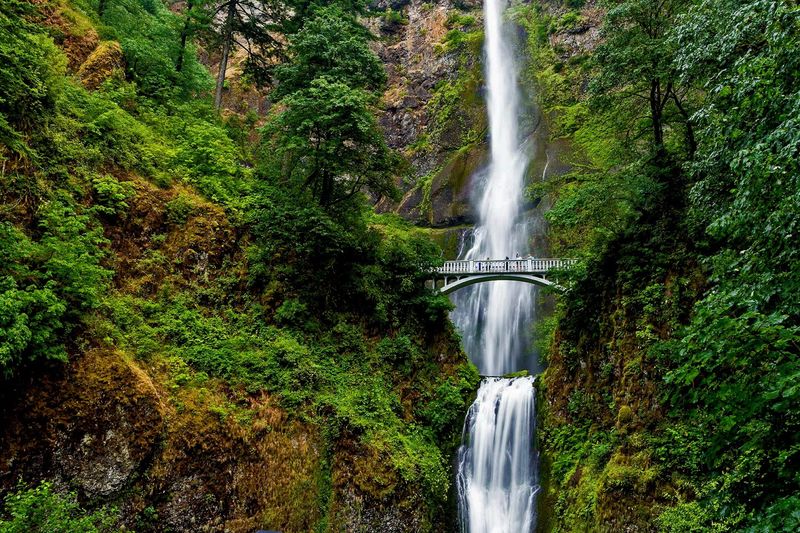
Few waterfalls in America have been photographed more times than Multnomah Falls, and standing in front of it makes you instantly understand why. The two-tier cascade drops a stunning 620 feet through lush basalt cliffs draped in bright green moss, with the historic Benson Bridge arching gracefully between the upper and lower falls.
Built in 1914, that little bridge might be the most photographed spot in all of Oregon.
The paved trail to the bridge is short and accessible, making it popular with visitors of all ages and fitness levels. Hikers willing to push further can continue up steep switchbacks to the top of the upper falls for a completely different and equally dramatic perspective looking down the gorge.
The view from above rewards the extra effort in a big way.
Multnomah Creek feeds the falls year-round, so unlike some seasonal waterfalls, this one keeps flowing even during dry summer months. The Columbia River Gorge surrounding the falls is a designated National Scenic Area, protecting miles of forested cliffs and additional smaller waterfalls nearby.
Visiting on a weekday morning dramatically reduces the crowds. Bring a light rain jacket since the mist from the base reaches farther than most visitors expect.
Arethusa Falls Trail — Crawford Notch, New Hampshire
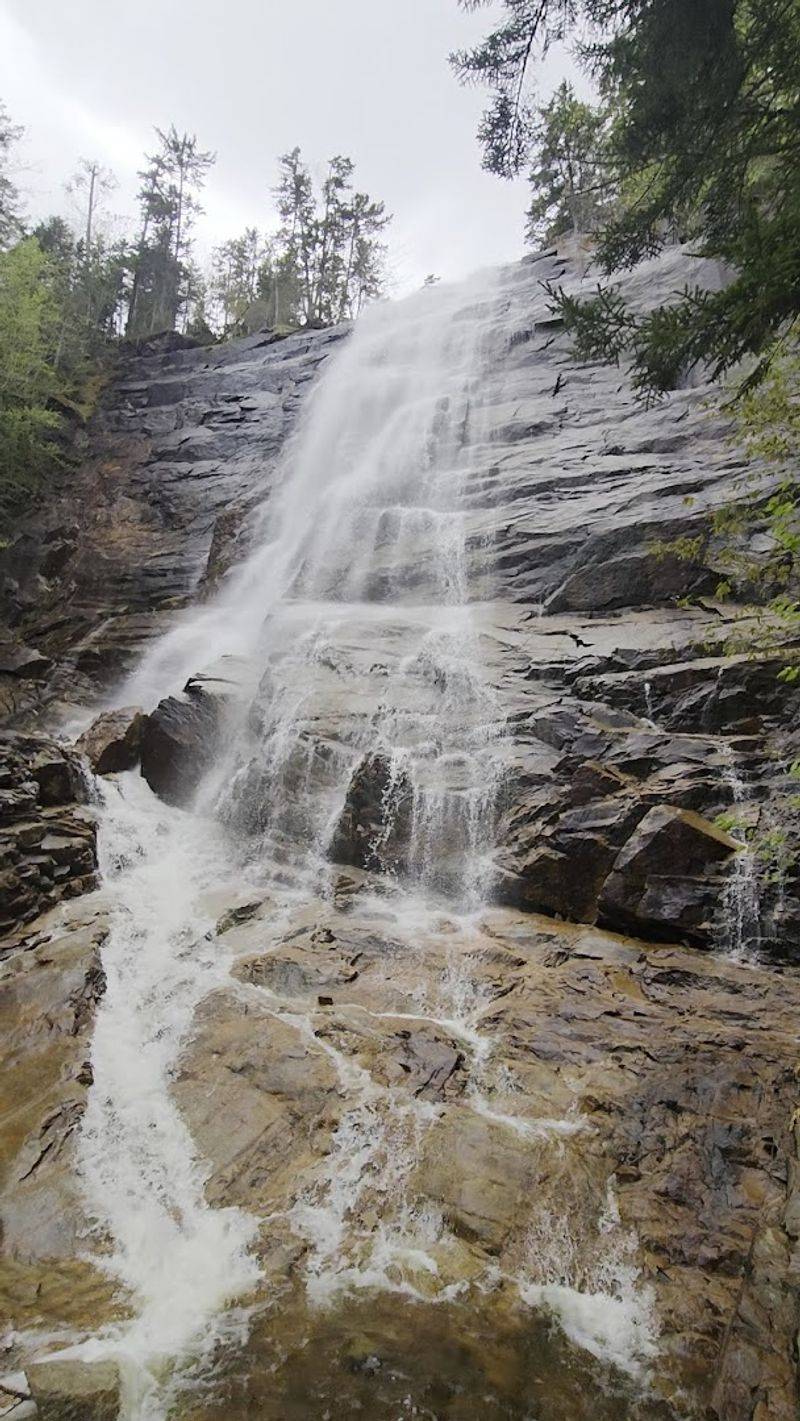
New Hampshire has a habit of hiding its most spectacular scenery behind modest trailheads, and Arethusa Falls is the perfect example of this charming understatement. At roughly 140 feet, it is the tallest single-drop waterfall in the entire state, yet the trail leading to it feels refreshingly quiet compared to more famous hiking destinations.
The 2.7-mile round trip hike climbs steadily through White Mountain forest before delivering you to this gorgeous plunge.
Autumn turns this trail into something almost unfairly beautiful, with red, orange, and gold maple leaves framing the white cascade against dark mossy rock. Water volume is highest during spring snowmelt, when the falls roar impressively and the surrounding creek runs fast and clear.
Summer visits are peaceful and shaded, making the hike comfortable even on warmer days.
A short side trail connects Arethusa Falls to nearby Ripley Falls, allowing ambitious hikers to see both waterfalls in a single satisfying loop. The forest floor along the trail is thick with ferns, wildflowers, and birch trees that whisper and rustle in the mountain breeze.
Crawford Notch State Park surrounds the trailhead with additional scenic overlooks and picnic spots worth exploring. Bring sturdy footwear since some stream crossings can be slippery after recent rainfall.
Kalalau Trail Waterfalls — Kauai, Hawaii
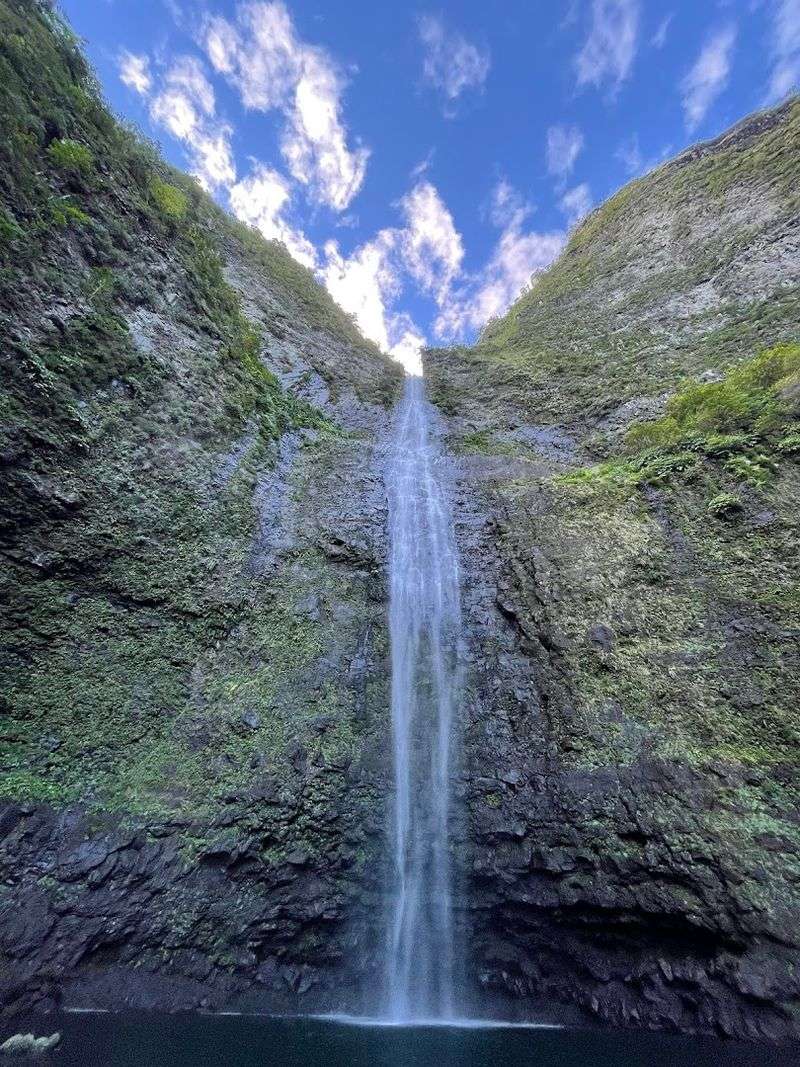
Kauai’s Nā Pali Coast is the kind of place that makes you wonder if you accidentally wandered onto a movie set. The Kalalau Trail stretches eleven miles along impossibly dramatic green cliffs above the Pacific Ocean, passing hidden valleys, jungle streams, and waterfalls that appear suddenly through dense tropical vegetation.
Multiple films and television shows have used this coastline as a backdrop, and you will recognize it immediately.
The trail is rated difficult, with narrow cliff-edge sections, slippery roots, and stream crossings that require careful footing. A state permit is required for hiking beyond the two-mile Hanakapi’ai Beach section, and permits are competitive.
The reward for completing the full trail is a remote beach camp surrounded by towering cliffs and cascading freshwater falls.
Waterfalls along the route vary seasonally, with winter months typically producing the most dramatic flows after heavy tropical rainfall. Swimming in Hanakapi’ai Falls pool is a popular goal for day hikers willing to tackle the four-mile round trip to reach it.
The trail is not for beginners, but experienced hikers consistently rank it among the most beautiful hiking experiences anywhere in the United States. Helicopter tours of the coastline offer an alternative way to appreciate the sheer scale of this remarkable landscape.
Rainbow Falls Gorge Trail — Watkins Glen, New York
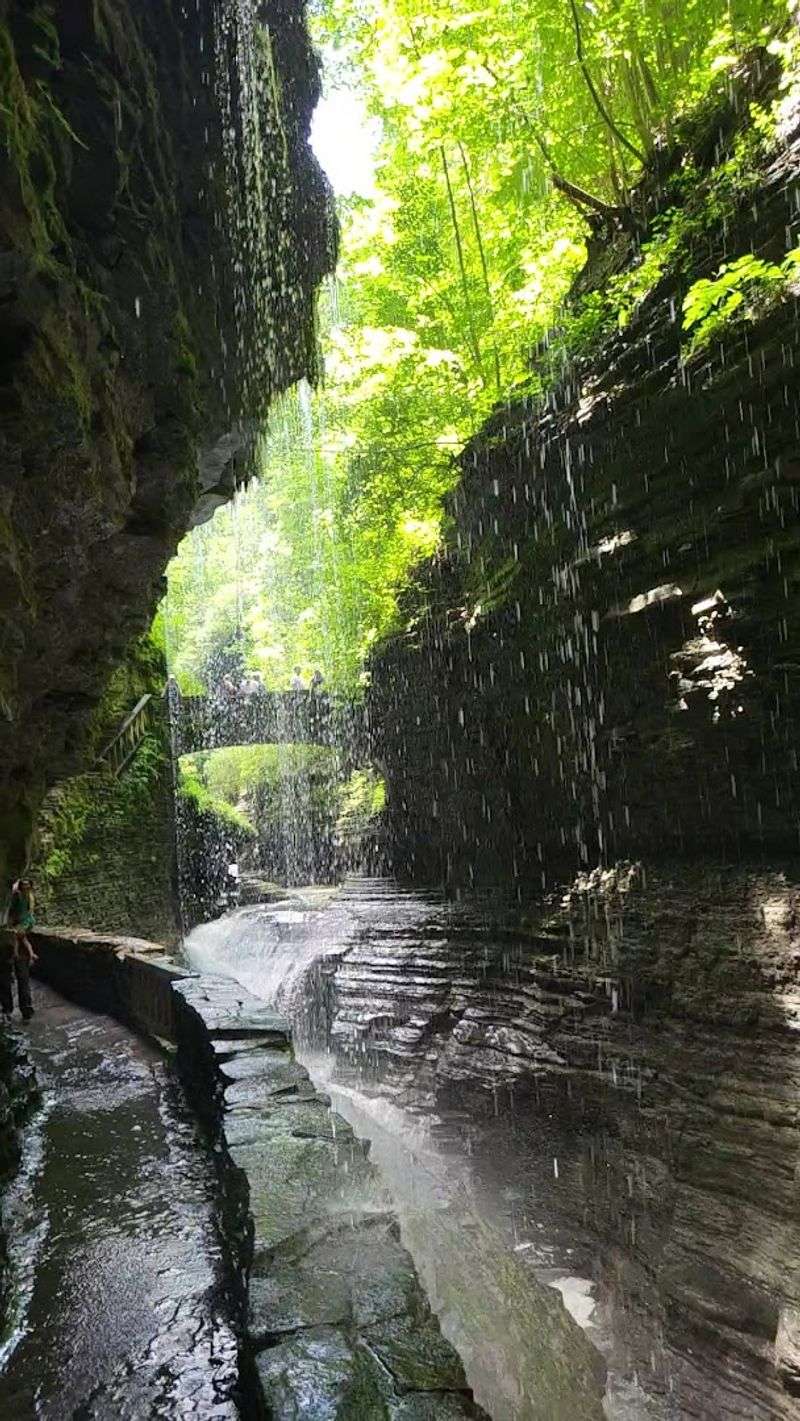
Carved by glacial meltwater thousands of years ago, Watkins Glen Gorge looks less like upstate New York and more like something from an ancient mythology. The trail winds along stone pathways cut directly into the gorge walls, passing nineteen waterfalls over just two miles.
Rainbow Falls is the showstopper, where water cascades through glowing rock formations inside a narrow, mist-filled chamber that catches sunlight in spectacular ways.
The gorge walls rise up to 200 feet on either side of the trail, and the stone overhead sometimes forms natural tunnels that hikers pass directly through. Everything is covered in thick green moss, giving the entire route a dreamlike, ancient quality.
Arriving early on summer mornings means you might have sections of the gorge completely to yourself.
The park opens seasonally, typically from mid-May through November, so timing your visit matters. Wear non-slip shoes since the stone pathways stay wet and slick from constant spray and seepage.
A shuttle service connects the gorge entrance and exit points, making the one-way hike through the full gorge very convenient. Watkins Glen also sits near the Finger Lakes wine region, making it an easy and rewarding addition to a longer New York road trip itinerary.
Burney Falls Trail — Burney, California
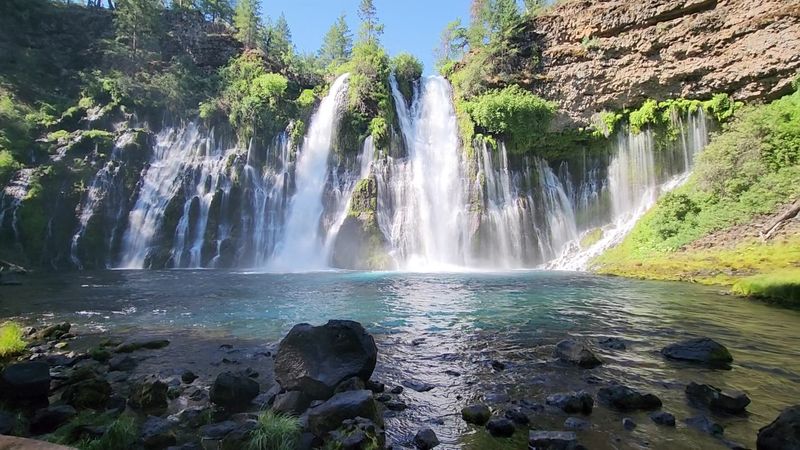
John Muir, a man who had seen essentially every breathtaking natural wonder California had to offer, reportedly called Burney Falls the eighth wonder of the world. That is a bold claim, but one look at this 129-foot cascade and the skepticism melts away completely.
Water pours not just over the main lip but seeps through the porous volcanic rock face on both sides, creating a wide, shimmering curtain effect unlike almost any other waterfall in the country.
The falls flow consistently year-round, fed by underground springs that maintain a steady volume regardless of seasonal rainfall or drought conditions. This makes Burney Falls reliably spectacular even during California’s driest summer months when many other waterfalls fade to a trickle.
The pool at the base glows a remarkable blue-green color from the clarity of the spring-fed water.
McArthur-Burney Falls Memorial State Park surrounds the falls with forest trails, campgrounds, and Lake Britton for swimming and kayaking nearby. The main falls viewpoint is a short, easy walk from the parking area, making it accessible for visitors of all fitness levels.
A longer loop trail circles the full canyon for those wanting a more complete hiking experience. The combination of geological uniqueness and sheer visual beauty makes this one of Northern California’s most underrated natural treasures.
Upper DeSoto Falls Trail — Chattahoochee National Forest, Georgia
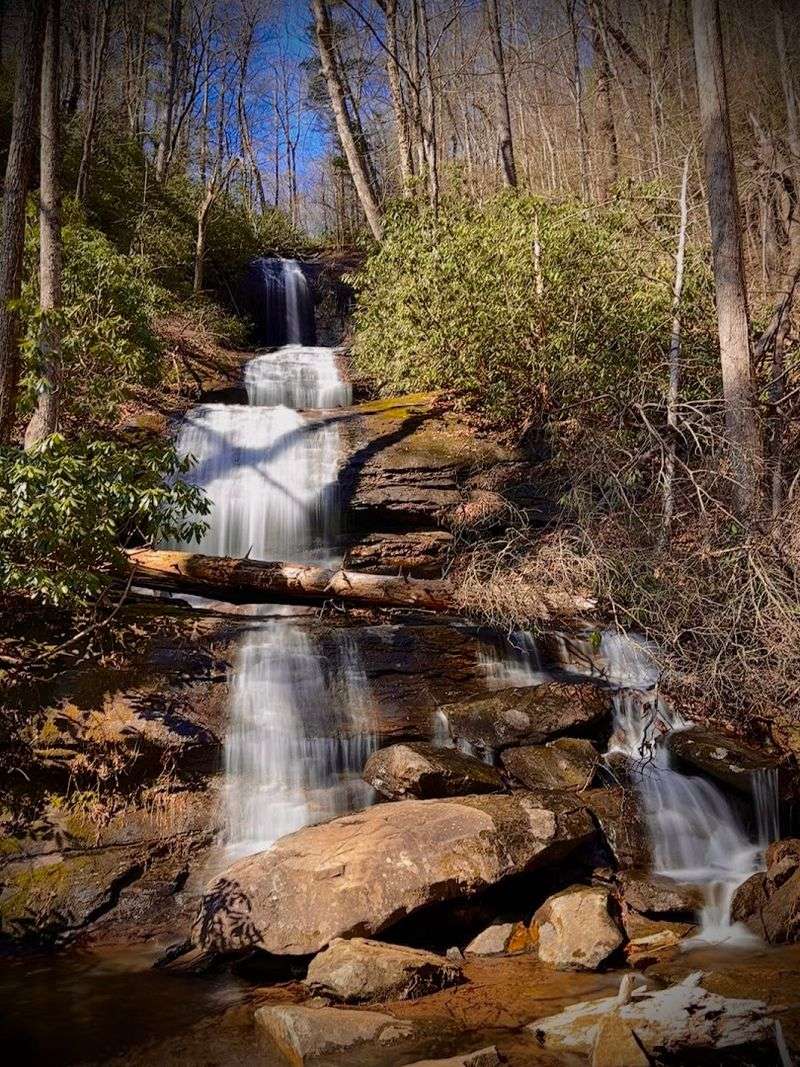
Georgia does not always get credit for its mountain scenery, but the Upper DeSoto Falls Trail in the Chattahoochee National Forest is the kind of place that quietly changes that reputation. Thick forest, a babbling creek, and cool mountain air set the mood long before the waterfall itself comes into view.
The hike is only about four miles round trip, making the dramatic payoff feel almost unfairly easy to reach.
DeSoto Falls actually refers to a series of cascades along the same creek, with the upper falls being the tallest and most visually striking of the group. Mist drifts through the trees surrounding the base, softening the light and giving the whole scene a genuinely enchanted quality.
Spring wildflowers bloom along the trail banks, adding bursts of color to the already lush forest floor.
The trail follows DeSoto Creek through a forest of hardwoods and hemlocks, crossing wooden bridges and passing mossy boulders along the way. Fall foliage season transforms the surrounding hills into a brilliant patchwork of red, orange, and yellow.
Camping is available at a nearby campground for those wanting to extend the adventure into a full overnight trip. This trail is a perfect reminder that the Southern Appalachians hide some genuinely spectacular waterfall scenery worth seeking out.
Avalanche Lake Trail — Glacier National Park, Montana
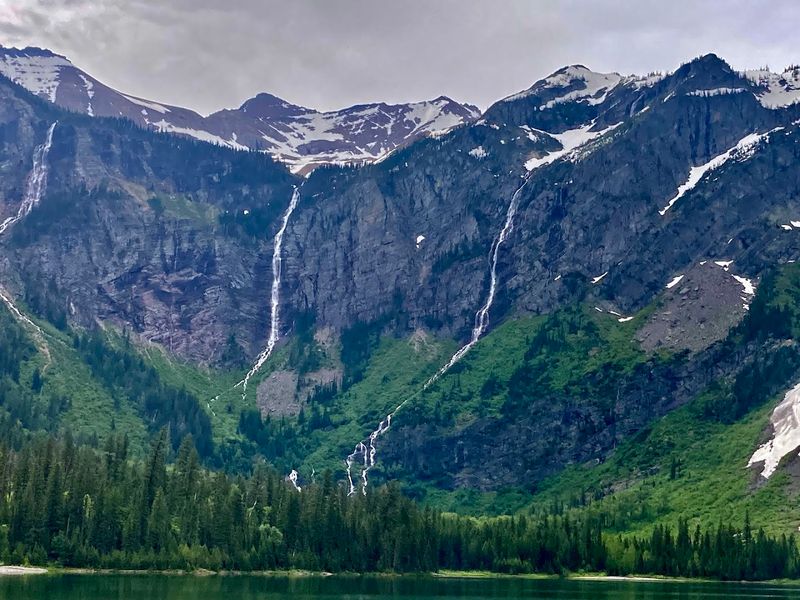
Stepping out of a cedar forest and suddenly facing a glacier-carved alpine lake ringed by waterfalls pouring from every cliff face is the kind of moment hikers spend years chasing. Avalanche Lake in Glacier National Park delivers exactly that, and it happens at the end of a surprisingly accessible four-mile round trip trail.
The lake sits in a dramatic bowl of sheer rock walls, with snowmelt cascades tumbling down from hundreds of feet above in multiple directions simultaneously.
The trail begins in a magnificent old-growth cedar and hemlock forest along Avalanche Creek, where the water has carved smooth red rock channels into the creekbed. This lower section alone is worth the hike even before reaching the lake.
Wildflowers carpet the meadow edges in summer, and mountain goats occasionally appear on the cliff faces above.
Glacier National Park is home to some of the most pristine wilderness remaining in the lower 48 states, and the Avalanche Lake Trail showcases that perfectly. Bears are active throughout the park, so carrying bear spray and hiking in groups is strongly recommended.
The Going-to-the-Sun Road provides stunning scenic access to the trailhead area. Early morning hikers are often rewarded with glassy-calm lake reflections of the surrounding cliffs and waterfalls, making for absolutely unforgettable photography opportunities.
Share this story