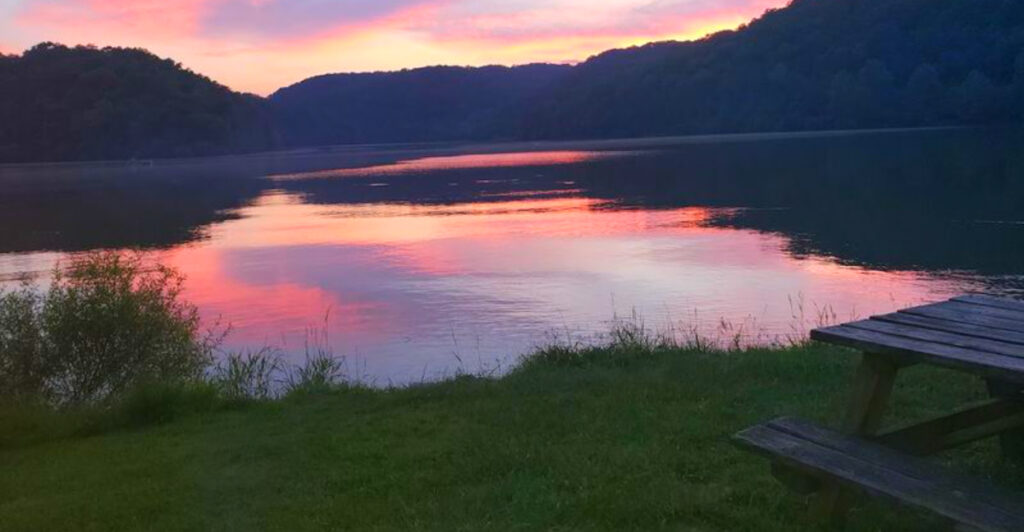
West Virginia is one of those states that makes you wonder why more people are not talking about it. The Mountain State packs ancient forests, dramatic river gorges, misty ridgelines, and sparkling lakes into a surprisingly compact landscape.
Whether you are a hardcore hiker, a casual paddler, or someone who just wants to sit in a camp chair and stare at something beautiful, this state has a campground for you. The twelve campgrounds on this list were chosen because they each offer something genuinely spectacular, from towering waterfalls and clear mountain lakes to wide open wilderness views and winding forest trails.
Some are polished state parks with full amenities, while others lean toward that raw, backcountry feel. All of them deliver on scenery in a big way.
Read on to find your next favorite outdoor escape in one of America’s most underrated outdoor destinations.
Babcock State Park Campground, Clifftop, West Virginia
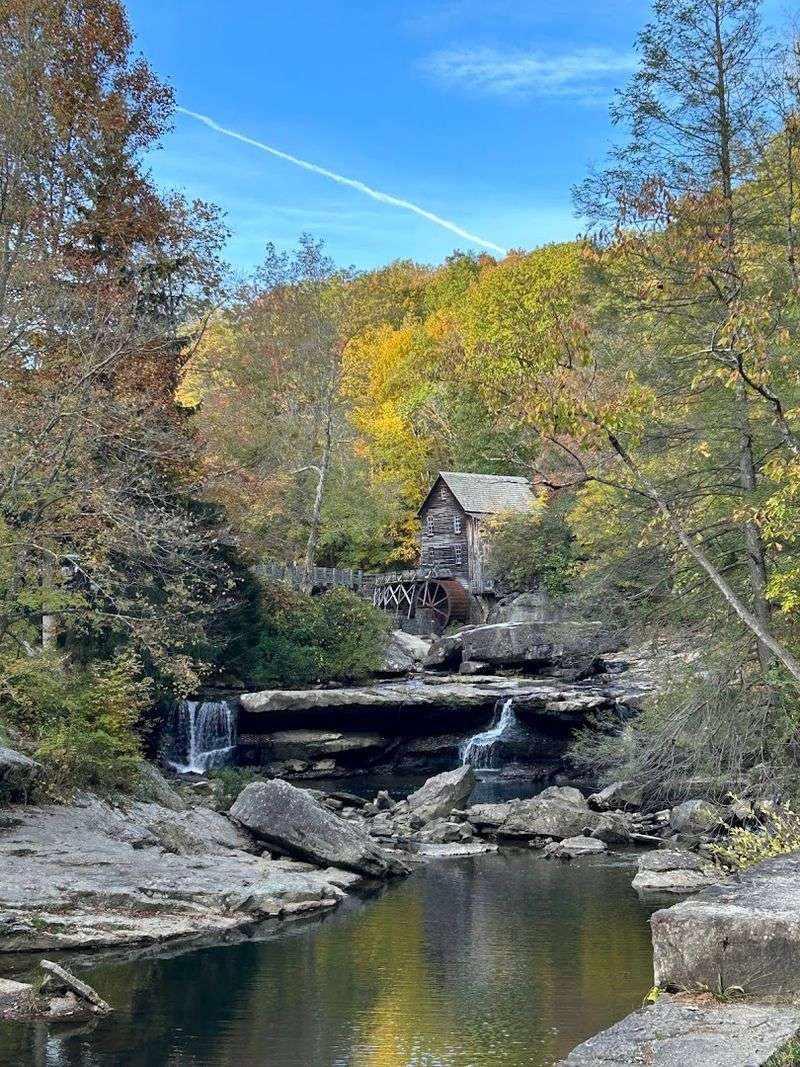
Few campgrounds in the entire Appalachian region can claim a backdrop as photogenic as the Glade Creek Grist Mill, and Babcock State Park has it front and center.
The campground at Babcock sits within a forested setting that mixes hardwood trees, mountain streams, and winding trails through classic West Virginia terrain. Campers have access to over 20 miles of hiking trails, including routes that pass through deep forest and along rocky creek beds.
The mill itself, reconstructed in the 1970s using parts from several old mills across the state, is one of the most photographed structures in West Virginia. It still grinds corn during operating hours, which adds a genuinely cool historical layer to the visit.
Babcock also offers fishing in Glade Creek, a swimming pool for summer visits, and a camp store for supplies. The campground has both standard and electric sites, making it accessible for tent campers and RV travelers alike.
This one earns its reputation.
Blackwater Falls State Park Campground, Davis, West Virginia
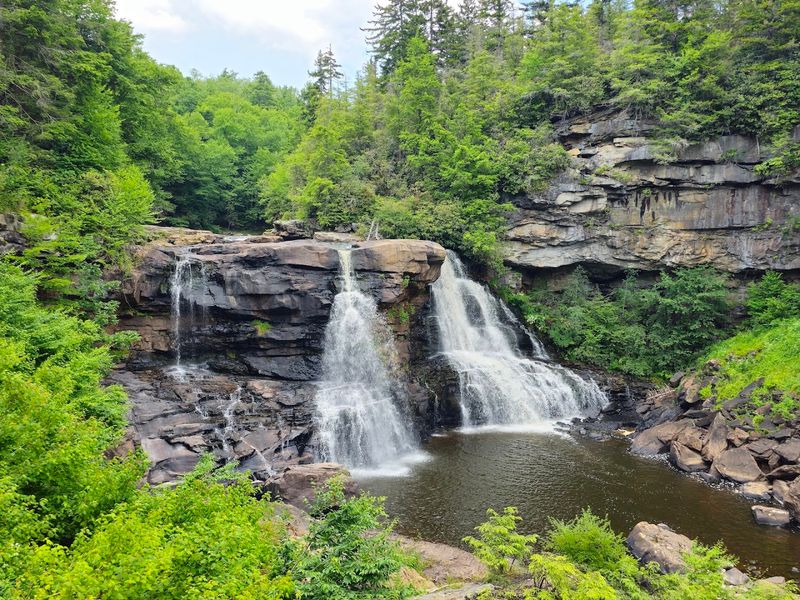
There is a reason Blackwater Falls is one of the most visited state parks in West Virginia, and the dark amber waterfall tumbling five stories into a rugged canyon is a pretty solid explanation.
The campground here puts you within easy reach of multiple overlooks, a network of trails, and some of the most striking canyon views in the Allegheny Mountains. The park spans over 1,688 acres and includes access to Lindy Point, which offers a panoramic view of the gorge that genuinely stops people in their tracks.
Fall is peak season here, when the surrounding maples, birches, and aspens turn the hillsides into a patchwork of orange and gold. But the park is worth visiting in any season, including winter, when the frozen falls create a completely different kind of dramatic scenery.
Campers can choose from tent sites, RV hookups, and cabins. The park also has a lodge, a restaurant, and a camp store, so you are never too far from a hot meal.
Audra State Park Campground, Buckhannon, West Virginia
Not every great campground needs to shout about itself, and Audra State Park is proof that quiet confidence goes a long way.
Tucked along the banks of the Middle Fork River in Upshur County, Audra offers a wooded riverside setting that feels genuinely removed from everyday noise. About half of the campsites sit close enough to the river that you can walk to the water in under a minute, which is a real advantage on a hot summer afternoon.
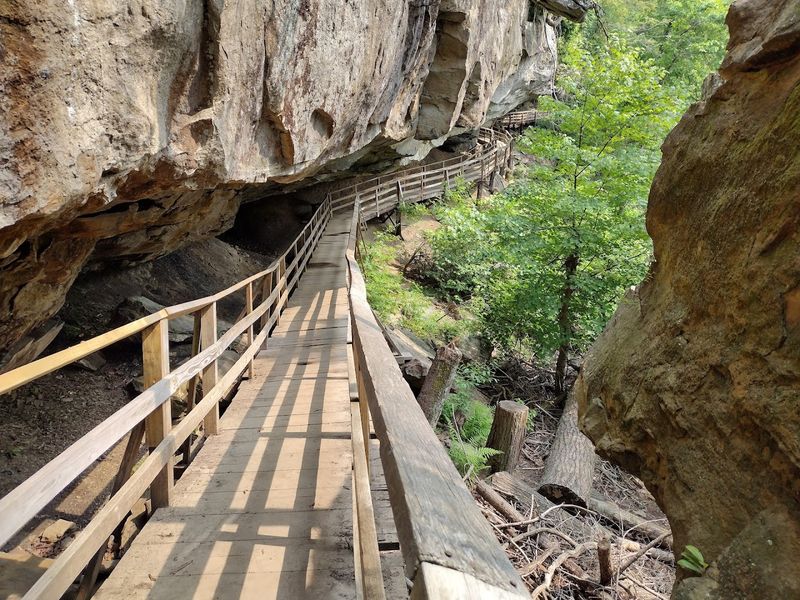
The Alum Cave Trail is one of the park’s standout features, covering 2.7 miles and passing under a massive rock overhang on a wooden boardwalk. It is a short hike with a big payoff, offering river views and unique rock formations that kids and adults both tend to enjoy.
Swimming holes in the Middle Fork River are popular from June through August, and the park has clean facilities with electric hookups available. For campers who prefer shade, clear water, and simple natural beauty without a lot of crowds, Audra is genuinely hard to beat.
Canaan Valley Resort State Park Campground, Davis, West Virginia
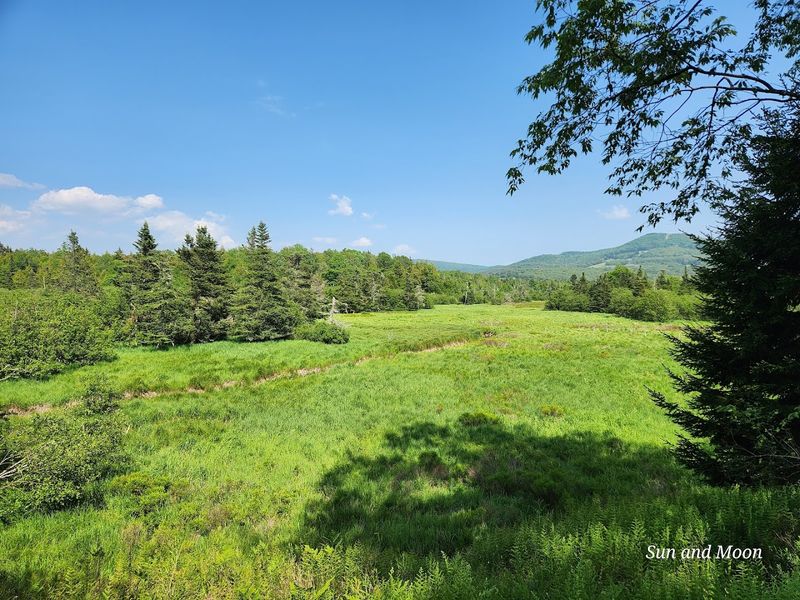
Canaan Valley sits at roughly 3,200 feet above sea level, making it the highest valley of its size east of the Mississippi River, and that elevation gives the whole place a distinctly different atmosphere from the rest of West Virginia.
The campground here is well-maintained and offers access to over 20 miles of hiking and biking trails that wind through meadows, wetlands, and forested ridges. Wildlife sightings are common, with white-tailed deer, black bears, and various bird species frequently spotted along the trail corridors.
The valley’s wetlands are a recognized ecological treasure, covering hundreds of acres and supporting plant species more typical of northern Canada than the mid-Atlantic region. It is a genuinely unusual landscape that gives the park a character all its own.
The campground has both primitive and electric sites, and the resort side of the park offers a lodge, restaurant, and indoor pool for those who want a comfort upgrade mid-trip. Cool evenings are basically guaranteed here, even in July, so pack a layer.
Coopers Rock State Forest Campgrounds, Bruceton Mills, West Virginia
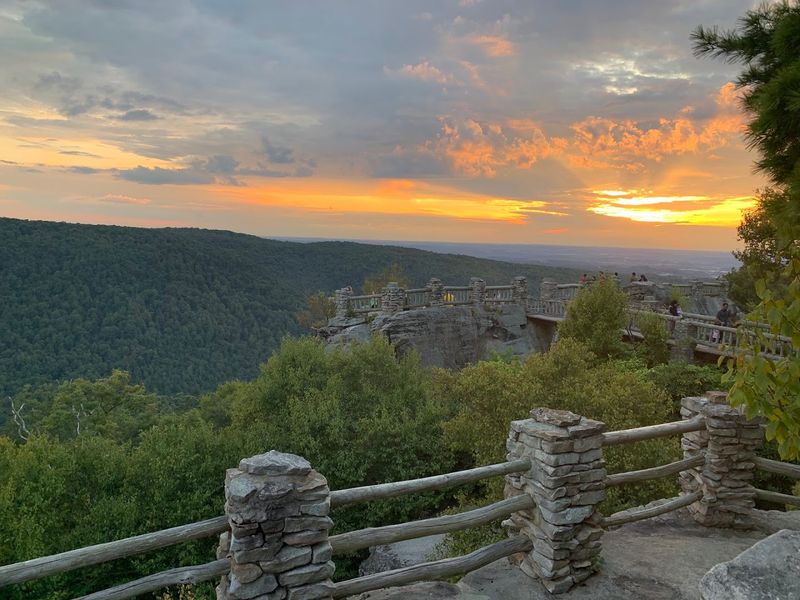
The overlook at Coopers Rock is the kind of view that makes people stop mid-sentence, pull out their phone, and immediately forget what they were saying.
The forest covers over 12,700 acres of rugged terrain in Preston and Monongalia counties, and the campgrounds give visitors a solid base for exploring all of it. Two separate camping areas provide options for different group sizes and preferences, and both are well-positioned near the trail network.
Rock climbers have been drawn to Coopers Rock for decades, thanks to the gritstone boulders and cliff faces scattered throughout the forest. The Cheat Canyon overlook is the crown jewel, but there are dozens of other viewpoints and trail junctions worth exploring, including routes that dip into the canyon itself.
The forest is only about 12 miles from Morgantown, which means it sees weekend traffic, especially in fall when the Cheat Canyon turns into a showcase of color. Arriving on a weekday gives you a noticeably quieter experience.
Rhododendron thickets line many of the trails and add real visual interest in late spring.
Holly River State Park Campground, Hacker Valley, West Virginia
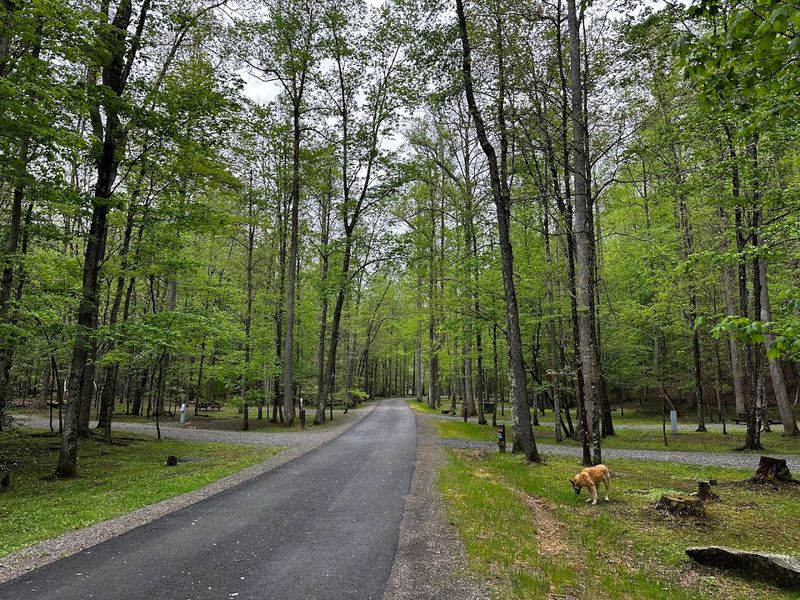
Holly River State Park is the second-largest state park in West Virginia, and yet somehow it manages to feel like a well-kept local secret.
The park covers over 8,100 acres of thick Appalachian forest in Webster County, with more than 42 miles of hiking trails threading through the landscape. That is a serious trail network for a single park, and it means repeat visitors consistently find new routes to explore.
The campground sits in a shaded valley setting with wooded sites near Holly River and its tributaries. Ferns carpet the forest floor along many of the trail corridors, and wildflowers appear throughout spring and early summer.
There is a swimming pool on site, a camp store, and playgrounds, which makes Holly River a practical choice for families with young kids. The park also has picnic shelters and a softball field, giving it more of a classic state park feel than a wilderness retreat.
That balance between accessibility and genuine natural beauty is what keeps campers coming back here year after year.
Watoga State Park Campgrounds, Marlinton, West Virginia
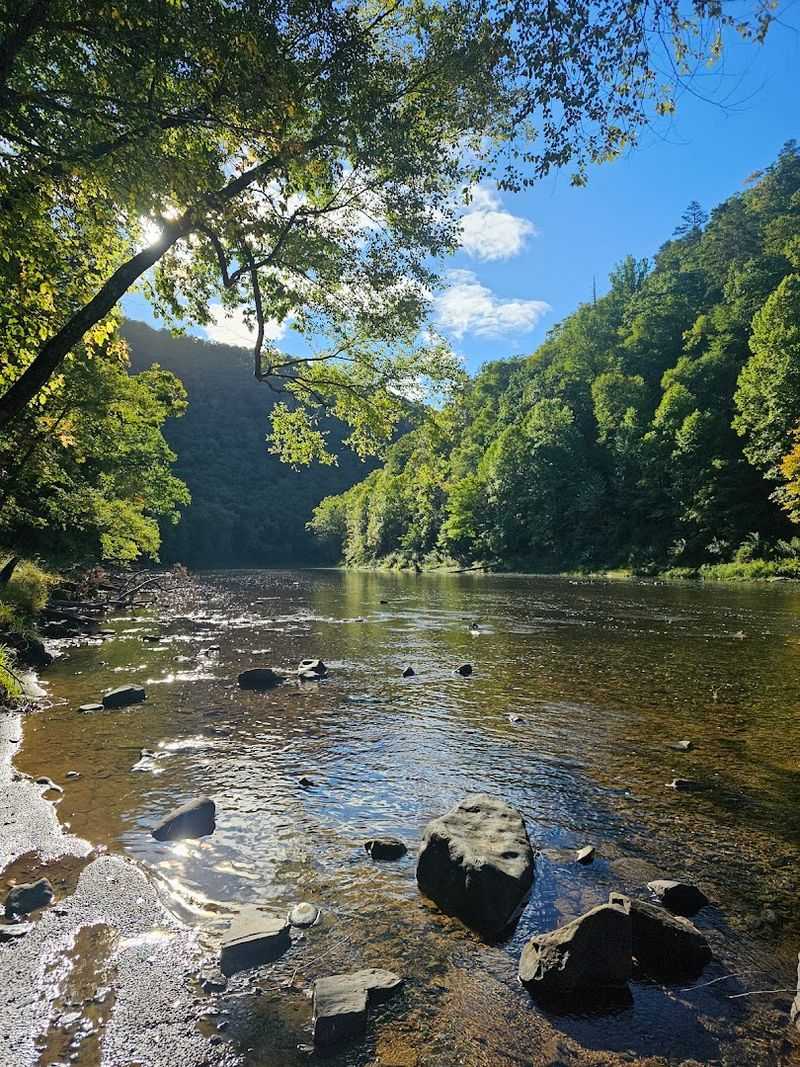
Watoga holds the title of West Virginia’s largest state park at over 10,000 acres, which means you have room to genuinely disappear into the woods for a few days without running into the same trail twice.
The park has two campgrounds, one near the lake and one deeper in the forest, giving visitors flexibility depending on whether they want water views or deeper tree cover. Both are well-maintained with electric hookups available, and the park also has a camp store and a small restaurant during peak season.
Watoga is located near the Greenbrier River Trail, a 78-mile rail-trail that runs along the Greenbrier River and is considered one of the finest long-distance trail corridors in the eastern United States. Cyclists and hikers use it regularly, and the proximity to Watoga makes the park a popular starting point.
The lake at Watoga is stocked with trout and bass, and rowboat rentals are available. Deer are frequently spotted in the meadows near the campground at dusk, which is one of those small details that makes a camping trip feel genuinely memorable.
Pipestem Resort State Park Campground, Pipestem, West Virginia
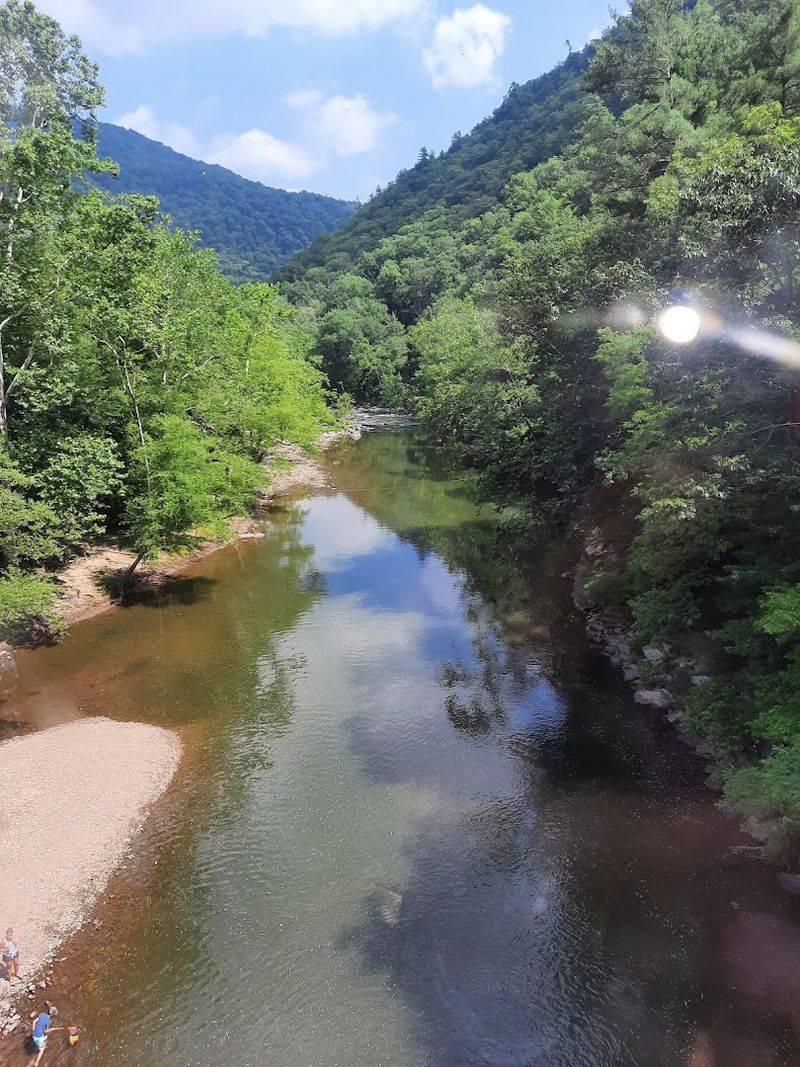
Pipestem Resort State Park has a geographic feature that most parks can only dream about: a 1,000-foot-deep river gorge running right through the middle of it.
The Bluestone River Gorge cuts through the park and creates some of the most dramatic scenery in southern West Virginia. Campers at the park’s campground have access to an aerial tramway that descends into the gorge, which is one of the more unusual and genuinely exciting park features in the entire state.
The campground itself is wooded and well-equipped, with electric hookups, a camp store, and proximity to the park’s two lodges, two restaurants, and an 18-hole golf course. It is one of the more resort-oriented state parks in the system, which suits families who want outdoor scenery without giving up too much comfort.
Hiking trails in the park range from easy gorge-rim walks to more challenging descents toward the river. The Bluestone River at the bottom of the gorge offers fishing and wading opportunities for those willing to make the descent.
Spring wildflowers along the gorge rim are particularly impressive in April and May.
Summersville Lake State Park Campgrounds, Summersville, West Virginia
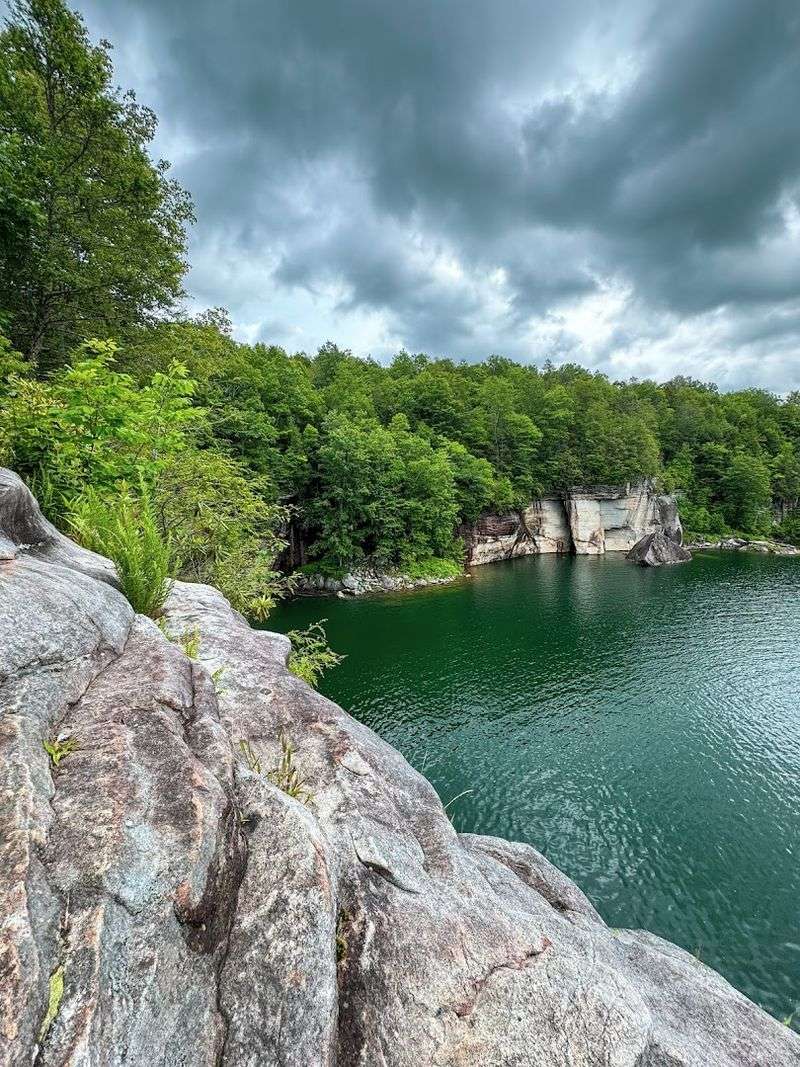
Summersville Lake has a habit of making first-time visitors do a double take, because the clear blue water and 60-foot sandstone cliffs look more like something from the American Southwest than central West Virginia.
As the state’s newest state park, Summersville Lake State Park has three campgrounds: Overlook, Deer Run, and Joe Branch. Each offers a slightly different setting, but all three put campers within easy reach of the lake and its many recreational options.
The lake covers 2,790 acres and is well known for world-class rock climbing along its cliff faces, as well as excellent scuba diving visibility in the clear water. Boating, fishing, swimming, and paddleboarding are all popular activities, and the park has launch facilities and rental options available.
Fall brings a particularly striking contrast between the golden foliage and the blue water, making it one of the more photogenic camping destinations in the state during October. Reservations are strongly recommended for summer weekends, as the campgrounds fill up quickly once warm weather arrives.
Beech Fork State Park Campgrounds, Barboursville, West Virginia
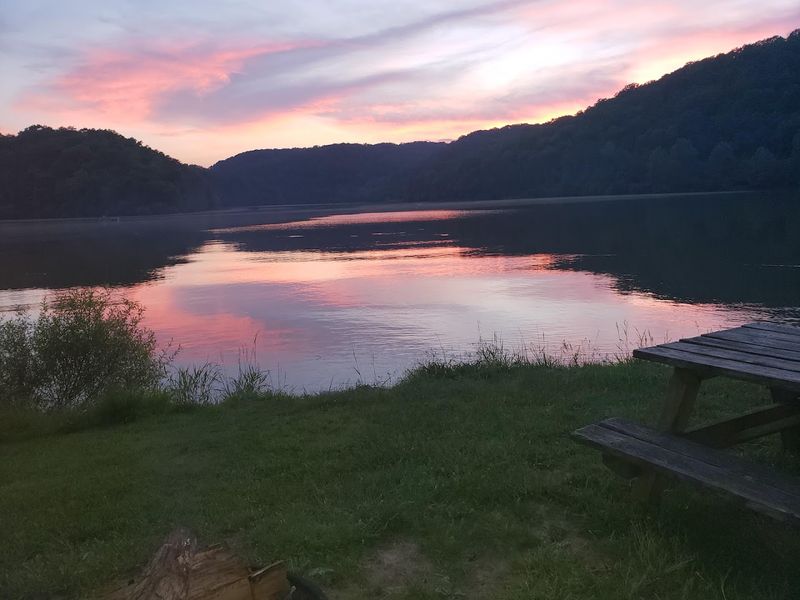
Beech Fork State Park is the kind of place that regulars return to every single summer, and once you have spent a morning watching the lake from a lakefront campsite, it is not hard to understand why.
The park covers 3,144 acres in Cabell County and centers around a 720-acre lake formed by the Beech Fork Dam. Multiple camping areas are spread around the park, and several sites sit close enough to the water to give that genuine lakeside feel that campers specifically seek out.
Fishing is a major draw here, with bass, catfish, and crappie all present in the lake. The park also has hiking trails, a swimming beach, boat rentals, and a camp store, making it a well-rounded destination for families who want variety without having to drive between multiple locations.
The wooded hills surrounding the lake give the park a pleasant enclosed feeling, and the tree cover keeps many of the campsites shaded during summer afternoons. It is a practical, scenic, and accessible option for campers in the western part of the state who do not want to drive several hours into the mountains.
Stonewall Resort State Park Campground, Roanoke, West Virginia
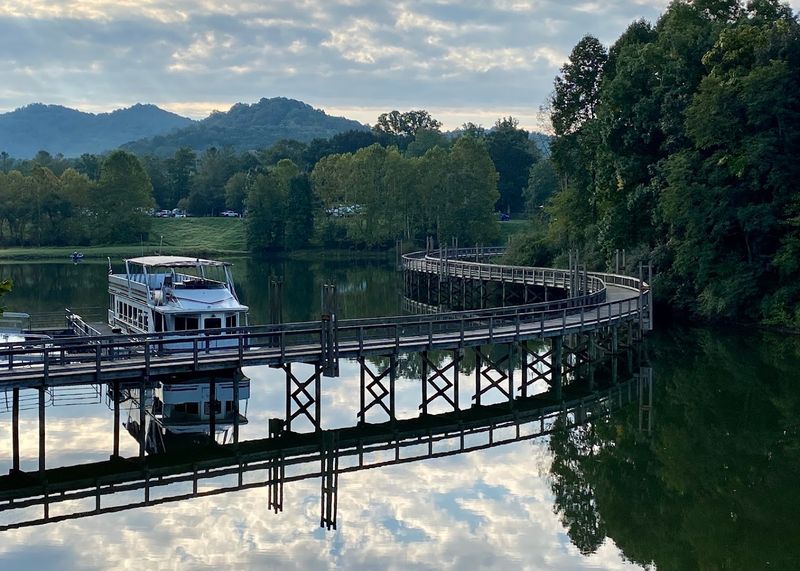
Named after the famous Civil War general who was born just down the road in Clarksburg, Stonewall Resort State Park combines history, lakeside scenery, and modern amenities in a package that is hard to argue with.
The Briar Point Campground sits along Stonewall Jackson Lake, which covers 2,650 acres and offers boating, fishing, and paddling opportunities throughout the warmer months. Campers at Briar Point have direct access to the lake and to the park’s trail system, which winds through forested terrain along the shoreline.
The resort side of the park includes a full-service lodge, a spa, and an 18-hole golf course, which makes Stonewall one of the more versatile state parks in West Virginia for mixed-group trips where not everyone wants to rough it equally.
Largemouth bass and walleye fishing are popular on the lake, and the park hosts fishing tournaments throughout the season. The campground has electric hookups and modern restrooms, so the experience leans more toward comfortable camping than backcountry adventure.
For many visitors, that is exactly the point.
Share this story