Some places are built around a single attraction. Fayette Historic State Park feels like three destinations folded into one.
Set on a remote stretch of Michigan’s Garden Peninsula, this Upper Peninsula park pairs towering limestone bluffs, wooded ridge trails, and a calm Lake Michigan shoreline with the kind of stillness that makes the trip feel instantly worthwhile. The scenery changes fast here – forest gives way to open water, trails climb to sweeping overlooks, and quiet shoreline paths invite you to slow down and stay longer than planned.
It is the kind of park that rewards wandering rather than rushing, and its isolation only adds to the appeal. For travelers looking for a place that feels scenic, peaceful, and unexpectedly varied, Fayette delivers a full-day outdoor experience that feels far bigger than its footprint.
Where the Drive Becomes Part of the Experience
Fayette Historic State Park is the kind of place that feels removed from everyday travel the moment you start heading toward it. The route out along Michigan’s Garden Peninsula does not build toward flashy roadside attractions or crowded commercial stops.
Instead, it gradually narrows into a quieter, more wooded journey, where long stretches of forest make the destination feel increasingly hidden. That sense of distance matters, because by the time you finally arrive, the park already feels like something you had to seek out rather than simply stumble across.
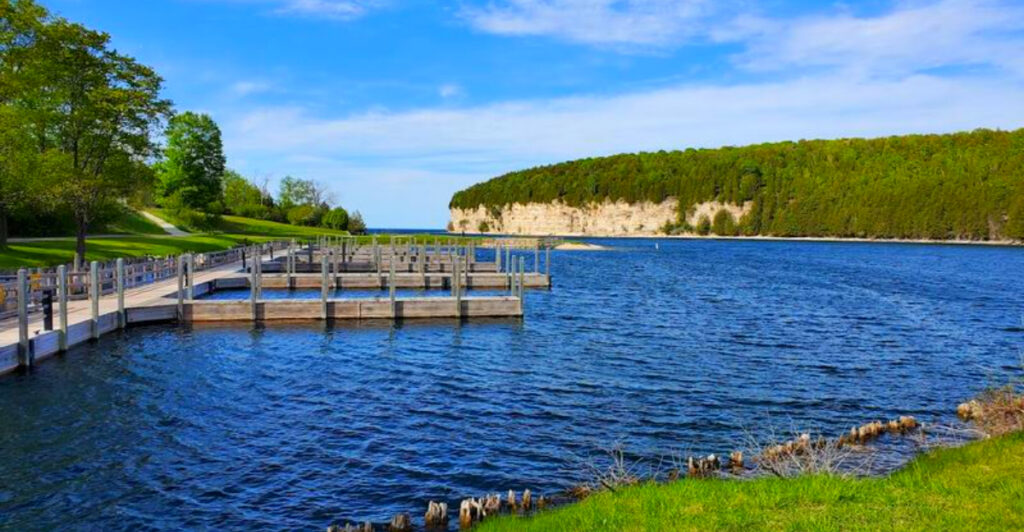
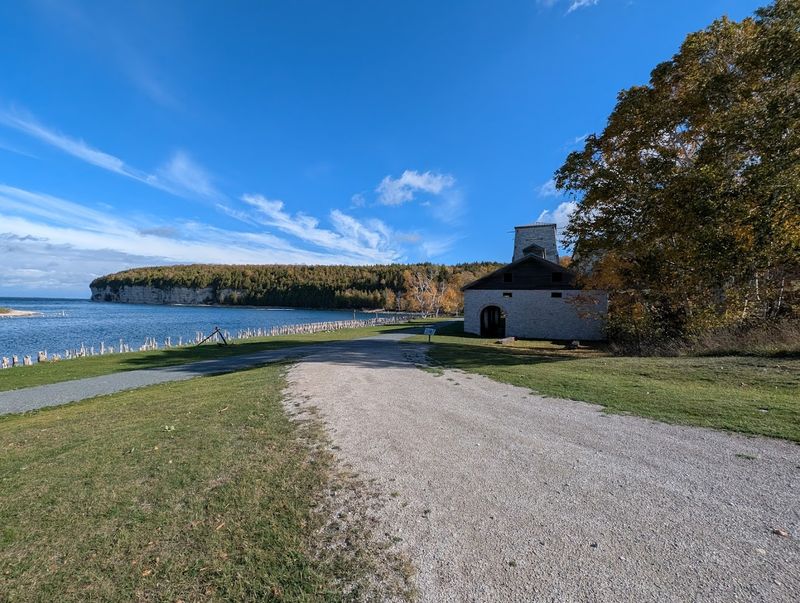
Then the landscape opens. The trees break, the harbor comes into view, and suddenly the setting widens into lake water, pale stone, and open sky.
It is a dramatic reveal, but not in an overstated way. It feels natural, almost accidental.
That first impression shapes everything that follows. Fayette does not present itself as a single attraction.
It introduces itself as an environment, and the experience begins long before you step onto a trail.
A Landscape That Changes With Every Step You Take
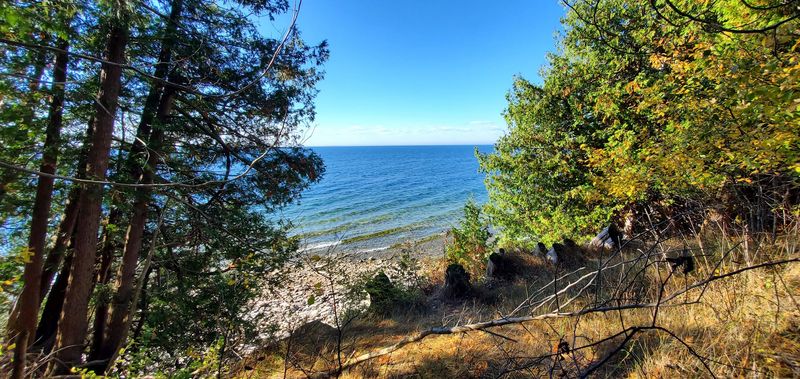
On paper, Fayette Historic State Park covers just over 1,100 acres, but the place feels larger because the scenery changes so often and so completely. The shoreline gives way to wooded sections, wooded sections open into meadow-like clearings, and elevated trails suddenly create broad views across Big Bay de Noc.
Because these transitions happen gradually, the park never feels divided into separate zones. Instead, it feels like one continuous landscape with different moods unfolding as you move through it.
That shifting character is part of what makes the visit satisfying. Some parks reveal everything at once, but Fayette holds back just enough to keep you curious.
A turn in the path might lead from dense shade into open sun, or from a quiet inland trail to an overlook where the water takes over the entire horizon. The result is a place that encourages wandering rather than rushing.
Even a few hours here feel fuller than expected, because each stretch of the park offers a new texture, a new view, and a slightly different pace.
The Limestone Bluffs That Give the Park Its Shape
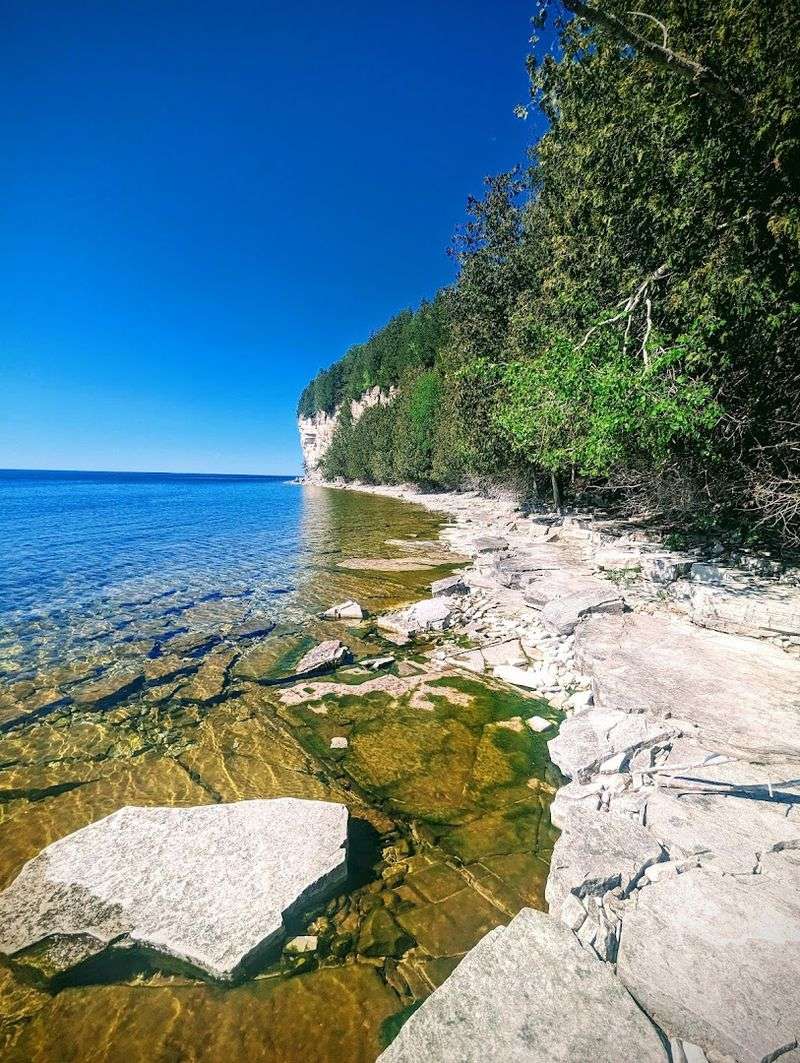
The towering limestone bluffs at Fayette are not just a scenic bonus. They define the visual structure of the park.
Rising behind the historic core and curving along the harbor, they create a strong contrast between rock, forest, and water that gives the entire area its character. Their pale surface catches light differently throughout the day, shifting from muted gray in the morning to warmer tones in late afternoon, which means the same view can feel completely different depending on when you see it.
What makes them especially memorable is how they interact with the surrounding landscape. From below, they seem tall and almost protective, standing over the harbor with a kind of quiet permanence.
From above, they become part of a much broader composition that includes rooftops, shoreline, and distant lake views. This double perspective is one of Fayette’s great strengths.
The bluffs are impressive from nearly every angle, but never repetitive. They anchor the park visually while still changing enough with light and location to reward a second and even third look.
Shoreline Views That Feel Uncrowded and Unfiltered
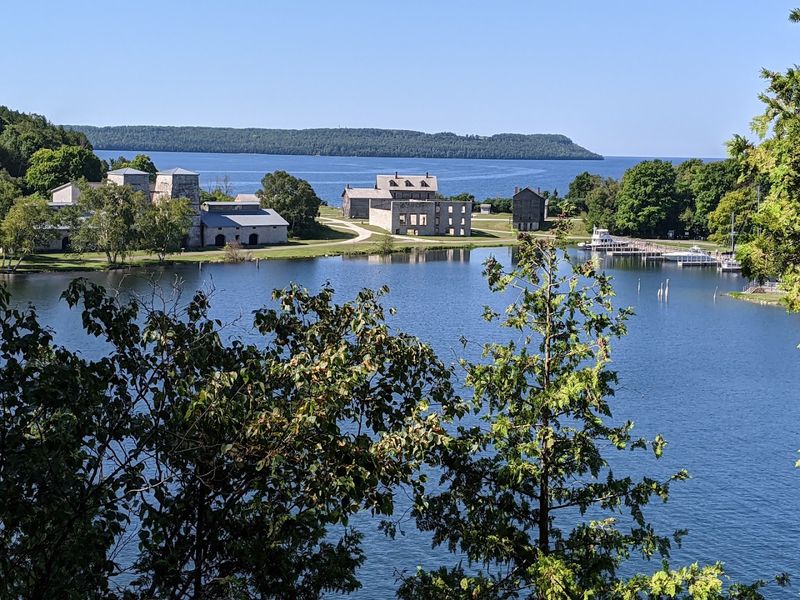
The shoreline at Fayette has a natural simplicity that is hard to find at more developed lake destinations. There is no boardwalk atmosphere, no row of shops pressing up against the water, and no attempt to turn the setting into something busier than it needs to be.
Instead, the lake remains the main event. The water is clear, the edges are rocky, and the open views across Big Bay de Noc create a sense of space that immediately slows you down.
What stands out is not just the beauty of the shoreline, but the lack of distraction around it. You are not competing with noise, traffic, or overly programmed activity.
Even when other visitors are nearby, the landscape still feels calm. This makes simple moments—sitting near the water, walking the edge of the harbor, stopping to watch the light change—feel like worthwhile parts of the trip rather than pauses between bigger attractions.
Fayette understands that scenery does not always need embellishment. Sometimes a quiet shoreline, a wide lake, and the right angle of evening light are enough to carry an entire afternoon.
Trails That Reward Walking at a Slower Pace
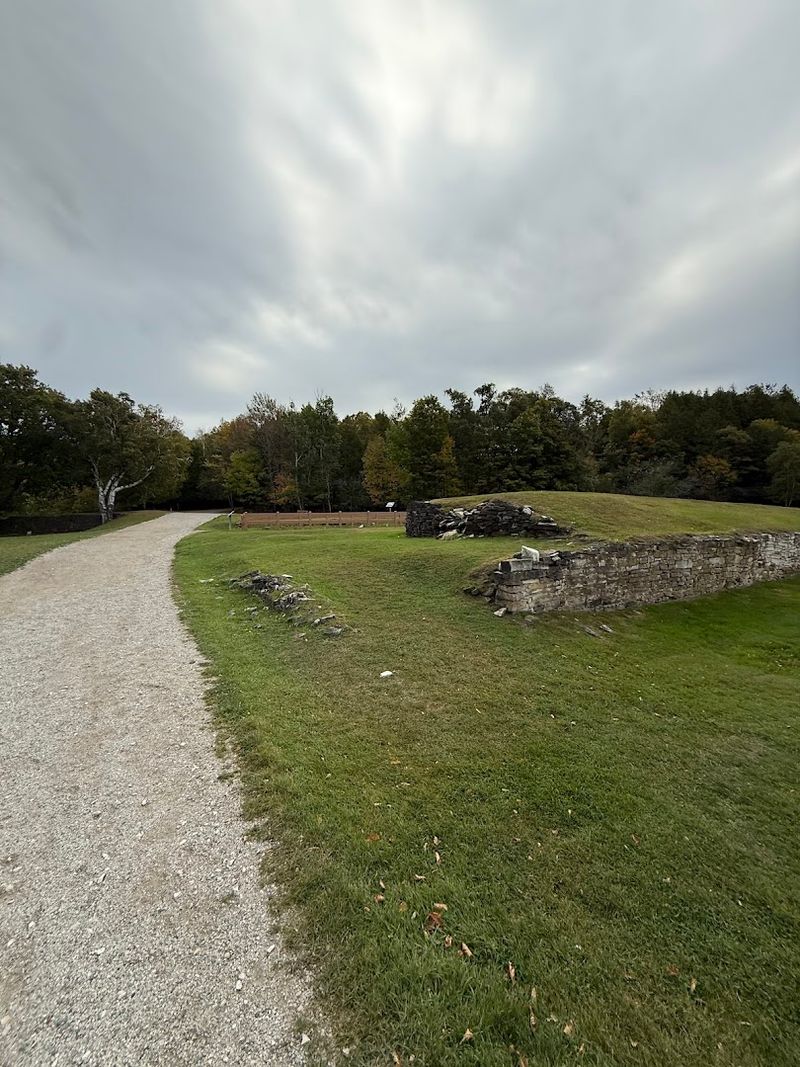
Fayette’s trails are not built around extreme difficulty or bragging-rights mileage. Their appeal lies in how much variety they pack into a manageable visit.
The paths move through forest, over uneven but approachable terrain, and up toward overlooks that expand the visual scale of the park. That makes them ideal for travelers who want to feel active without turning the day into a strenuous outing.
You can cover a lot of ground here, but the park is at its best when you let the trails unfold gradually.
Because the routes pass through different environments, the experience of walking never becomes monotonous. One stretch may feel enclosed and shaded, with the sound of wind moving through trees above you.
Another may suddenly open to a view where water and sky take over. Those transitions make short hikes feel richer than their distance suggests.
Fayette is not a place where you race to a single viewpoint and head back. It is a place where the entire walk matters, and where the pleasure comes from the steady accumulation of smaller scenic moments.
Why the Ridge Trails Stand Out the Most

Among the park’s various walking routes, the ridge trails are the ones that tend to stay with people longest. They offer the broadest perspective on everything that makes Fayette special: the harbor below, the limestone walls, the rooftops of the preserved buildings, and the wider expanse of Big Bay de Noc beyond.
Even though the climbs are generally manageable, the change in elevation creates a satisfying payoff. You feel like you have arrived somewhere, even if the hike itself never becomes especially intense.
The views from above also reshape your understanding of the park. From the shoreline, Fayette feels intimate and enclosed.
From the ridges, it suddenly appears more layered and expansive. You begin to see how the terrain fits together, how the harbor sits in relation to the cliffs, and how the wooded sections soften the historic area rather than competing with it.
That broader view gives the whole destination more depth. The ridge trails do not just provide scenery.
They provide context, and that makes the return trip feel different from the climb up.
Camping Here Is Really About the Atmosphere
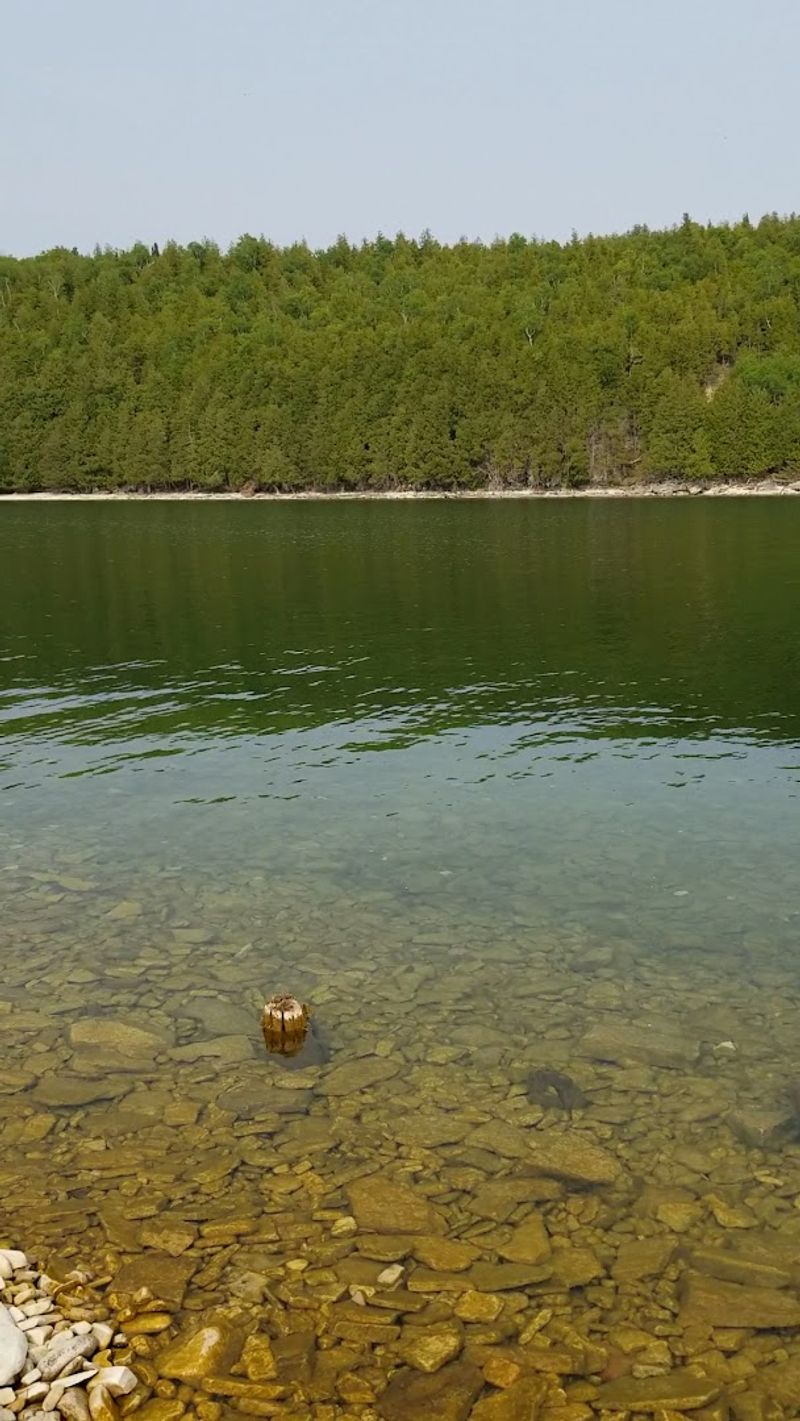
The campground at Fayette is not trying to compete with resort-style destinations. That is one of its advantages.
The appeal is not luxury or nonstop convenience. It is the feeling of staying somewhere quiet enough for the setting to dominate the experience.
The campsites are functional, the surroundings are peaceful, and the atmosphere is shaped more by forest air and distant water than by entertainment or infrastructure. That simplicity works in the park’s favor because it keeps the focus where it belongs.
Spending the night changes your relationship to the place. Instead of arriving, exploring, and leaving in a single sweep, you begin to notice the park at different times of day.
Late evening settles differently here than it does during visiting hours, and morning light gives the landscape a softer, more spacious feel. The biggest luxury is not an upgraded amenity.
It is time—time to experience the park when fewer people are around and when the setting feels less like a stop on an itinerary and more like somewhere you are temporarily living inside.
A Better Kind of Beach Day
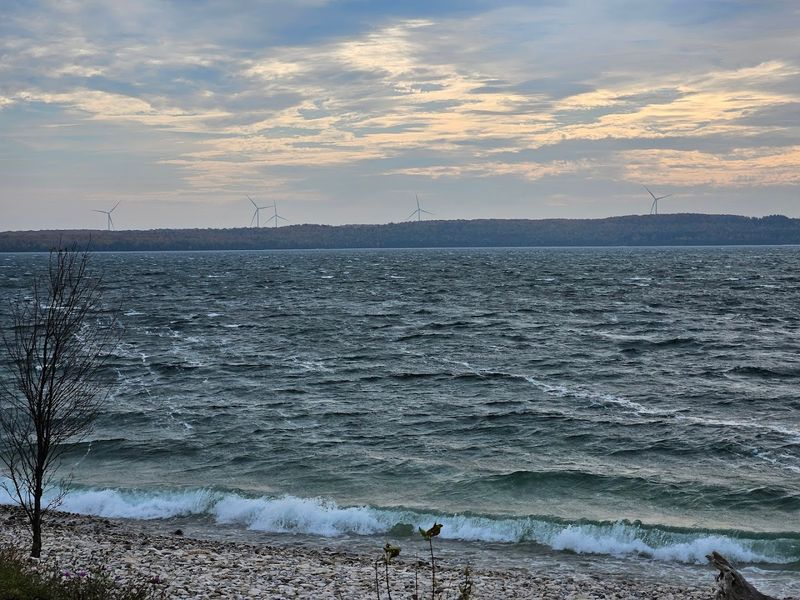
Fayette is not the place to go if your idea of a beach trip depends on soft sand, music, and heavy crowds. Its shoreline is rockier, quieter, and much more natural than that.
But for a lot of travelers, that is exactly the point. The lake here feels cleaner, calmer, and more connected to the surrounding landscape.
You are not stepping into an entertainment zone. You are stepping into a stretch of waterfront that still feels mostly like itself.
That difference changes how people use the space. Instead of trying to turn the shoreline into an all-day event with constant activity, visitors tend to settle into it more gently.
Some wade into the clear water, some sit with a picnic, and some simply move between the harbor and nearby paths. The appeal comes from atmosphere rather than amenities.
Fayette’s version of a beach day is less about spectacle and more about breathing room. It offers water, scenery, and stillness in proportions that feel increasingly rare, especially during the warmer months when busier destinations begin to feel overrun.
Kayaking Adds an Entirely Different Perspective
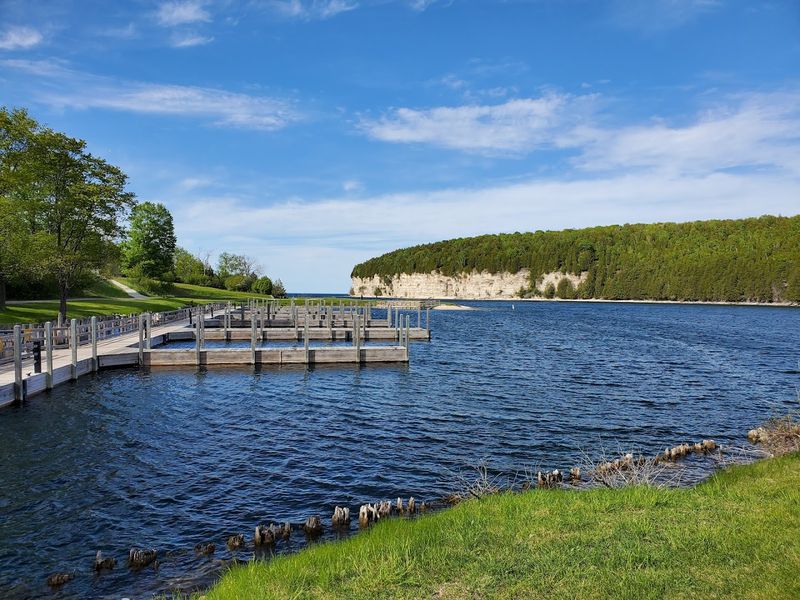
One of the best ways to understand Fayette’s landscape is to see it from the water. Kayaking shifts the experience completely, because the cliffs, shoreline, and harbor no longer feel like background elements.
They become immediate and immersive. From a kayak, the limestone walls rise higher, the harbor feels wider, and the subtle contours of the coastline become much easier to appreciate.
Features that seem distant from land suddenly feel close enough to study.
The harbor’s relative calm also makes this perspective more accessible than it might sound. Even visitors without extensive paddling experience can appreciate the quieter water near shore, especially in good conditions.
Early morning tends to be particularly rewarding, when the surface is smoother and reflections are more pronounced. What makes kayaking here memorable is not speed or adrenaline.
It is the chance to move slowly through a landscape that seems designed to be observed from multiple angles. Seeing Fayette from the water does not replace the trails or overlooks.
It complements them by making the park feel fuller and more dimensional.
Families Can Spend a Full Day Without Forcing It
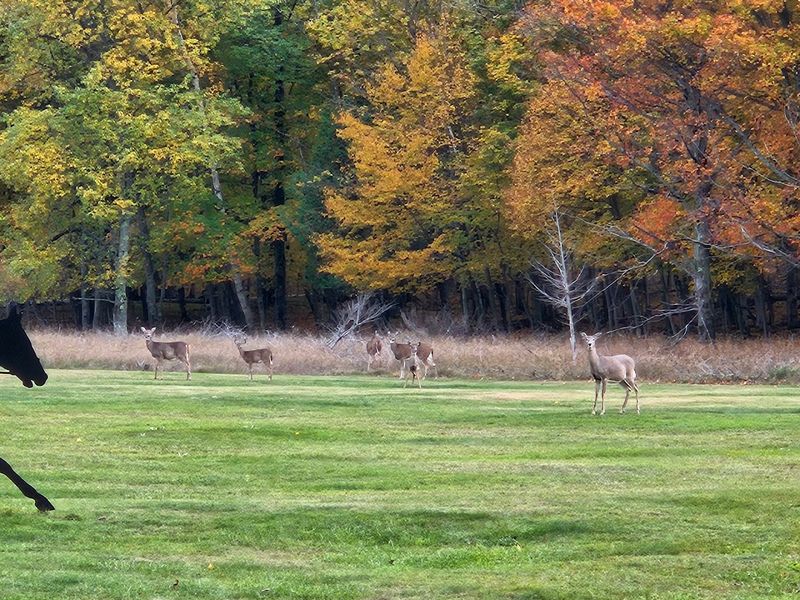
One of Fayette’s quiet strengths is how well it works for mixed-age groups. Some destinations claim to be family-friendly but require constant planning to keep everyone engaged.
Fayette tends to work more naturally than that because the experience is varied without feeling fragmented. Adults can appreciate the scenery and slower pace, while children usually respond well to the freedom of moving between open spaces, shoreline access, trails, and preserved buildings without everything being overly restricted.
That flexibility matters. A family can spend part of the day walking easy paths, part near the water, and part exploring the historic area without needing to turn each stop into a separate excursion.
The park also avoids the problem of feeling too educational in a forced way or too scenic in a passive one. It balances movement, curiosity, and open-ended discovery.
That makes it especially good for travelers who want a destination that can hold everyone’s attention without relying on manufactured entertainment. Fayette gives families enough structure to stay oriented and enough space to make the day their own.
Why Fayette Lingers After the Trip Is Over
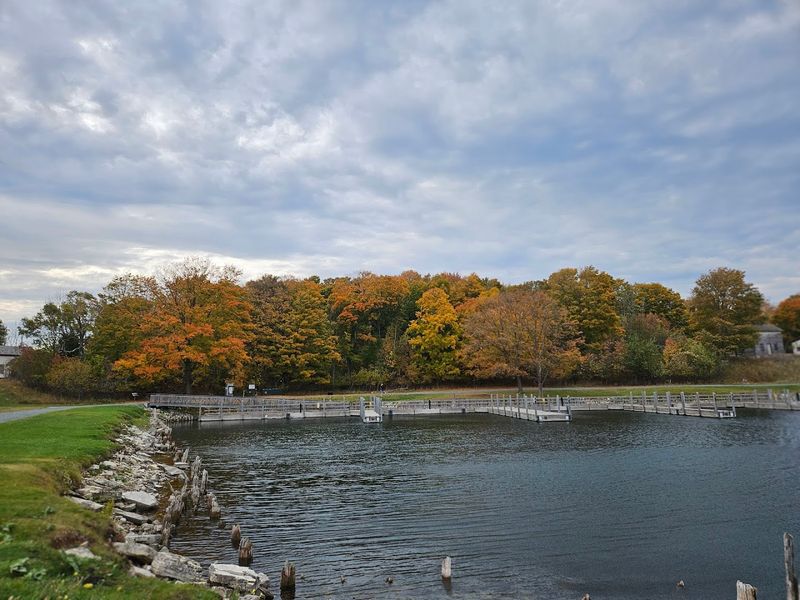
Plenty of scenic places impress you in the moment and then fade quickly once the trip is done. Fayette tends to linger longer than that.
Part of the reason is visual: the pale cliffs, calm harbor, wooded trails, and wide lake views combine into a setting that is easy to remember. But the deeper reason is that the park never feels like it is trying too hard.
It does not overwhelm you with one oversized attraction or one heavily curated experience. It gives you room to notice things for yourself.
That freedom creates a more personal kind of attachment. Visitors remember not just what they saw, but how the place felt—the quiet of the trails, the shift in light across the water, the sense of being farther away from ordinary life than the map would suggest.
Fayette earns its impact gradually. It does not demand attention so much as hold it.
That is why people keep talking about it after they leave. Not because it is loud or flashy, but because it feels complete, balanced, and unexpectedly restorative in ways many destinations no longer do.
Share this story