 Unearth The Voyage
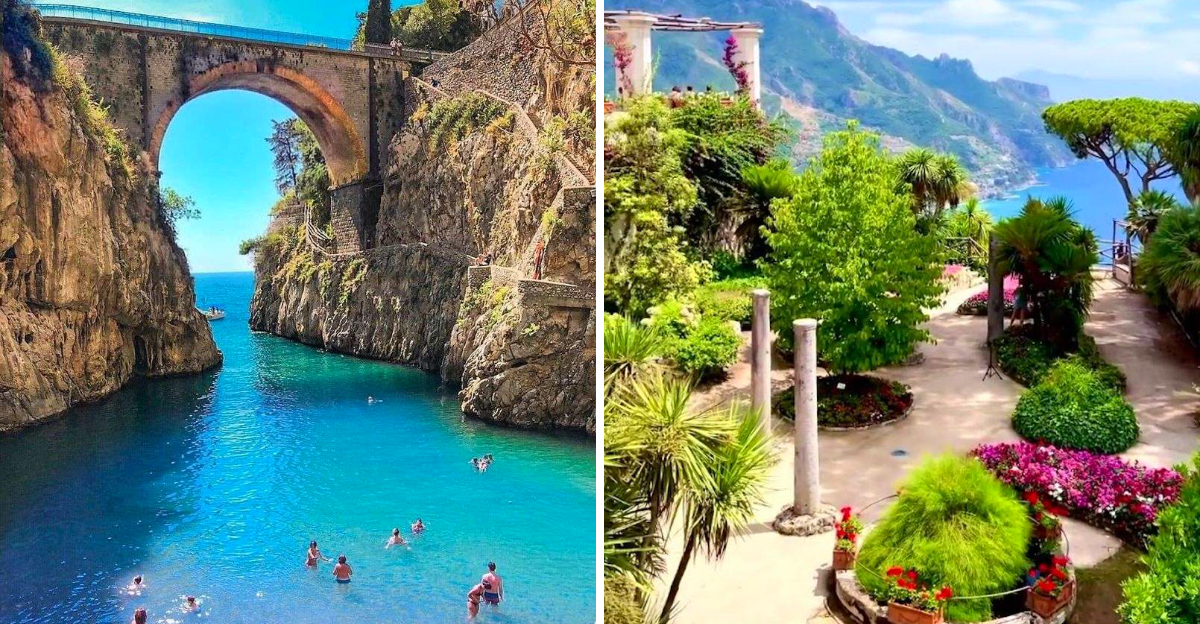
The Amalfi Coast stretches along southern Italy like a sun-drenched masterpiece, where cliffside villages cling to rocky slopes above the shimmering Mediterranean. Each small town offers its own personality, from quiet fishing harbors to hilltop gardens with views that seem to go on forever.
Whether you’re drawn to historic architecture, sunset-watching spots, or authentic Italian food traditions, these coastal gems deliver unforgettable experiences that capture the magic of this legendary coastline.
Positano — Cliffside Elegance and Sea Views
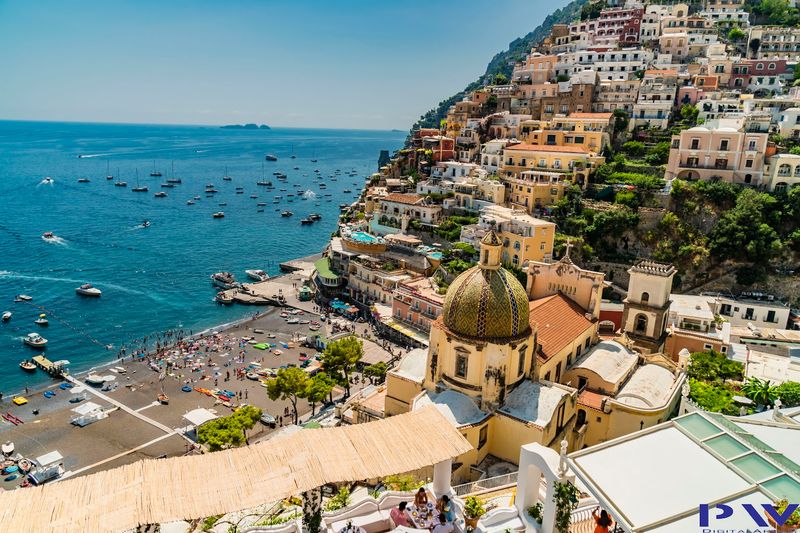
Positano grabs your attention the moment you see it. Pastel houses tumble down steep cliffs like a waterfall of peach, pink, and yellow, ending at two lovely pebble beaches where clear water meets the shore.
Marina Grande and Fornillo beaches offer sun loungers, seaside cafés, and views that stretch across the Tyrrhenian Sea.
Narrow stairways connect the town’s layers, lined with bougainvillea and boutique shops selling handmade sandals, linen clothing, and local ceramics. Every turn reveals another postcard-worthy scene.
Terraces and balconies overlook the water, making breakfast or sunset aperitivo feel like a special occasion.
Despite being one of the coast’s most famous spots, Positano maintains a relaxed seaside rhythm. Locals greet visitors warmly, and the town balances upscale hotels with family-run restaurants serving fresh seafood and lemon-infused dishes.
The dramatic topography means lots of stairs, but the payoff is constant visual delight.
Sunset transforms the town into pure gold, with the Mediterranean reflecting pink and orange hues. Photographers and romantics flock here for good reason.
Positano delivers the quintessential Amalfi Coast experience — beauty, elegance, and that unmistakable Italian coastal magic all rolled into one stunning cliffside village.
Amalfi — Historic Port Town and Architectural Charm
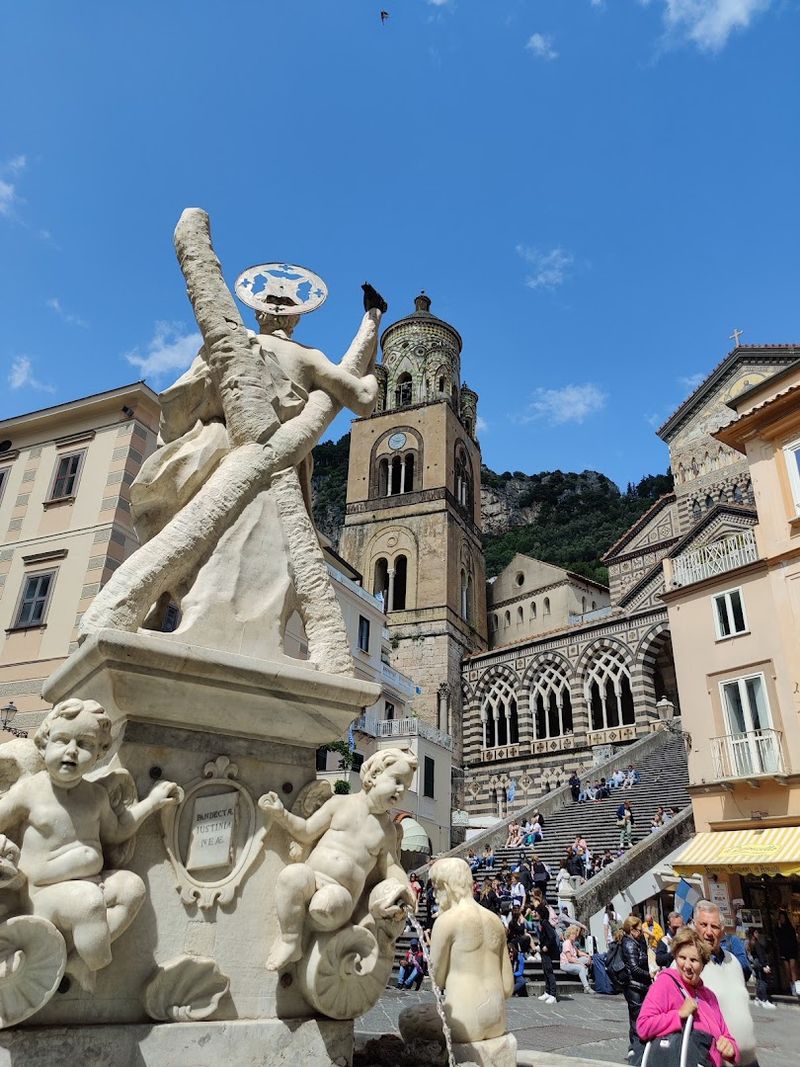
Walking into Amalfi feels like stepping into a history book that’s still being written. The town’s Piazza del Duomo serves as the beating heart, where the stunning Duomo di Sant’Andrea rises with its striped Arab-Norman façade and elegant bell tower.
Bronze doors imported from Constantinople centuries ago still guard the entrance, reminding visitors of Amalfi’s powerful maritime past.
Once a rival to Venice and Genoa, Amalfi controlled Mediterranean trade routes during the Middle Ages. That legacy lives on in the town’s proud architecture and cultural traditions.
Today, the harbor bustles with ferries and fishing boats, while nearby streets wind past family-run trattorie serving scialatielli pasta with seafood and sfusato lemons.
The town offers excellent access to coastal attractions. Ferry connections make day trips easy, and the nearby Valle dei Mulini (Valley of the Mills) provides scenic hiking among old paper mills.
Amalfi’s central location makes it a practical base for exploring the coast.
Evenings bring a magical quality to the piazza. Locals and visitors gather at outdoor tables, sharing meals and stories as the cathedral glows under soft lighting.
Amalfi blends historic grandeur with everyday Italian life in a way that feels genuine and welcoming.
Ravello — Hilltop Serenity and Garden Views
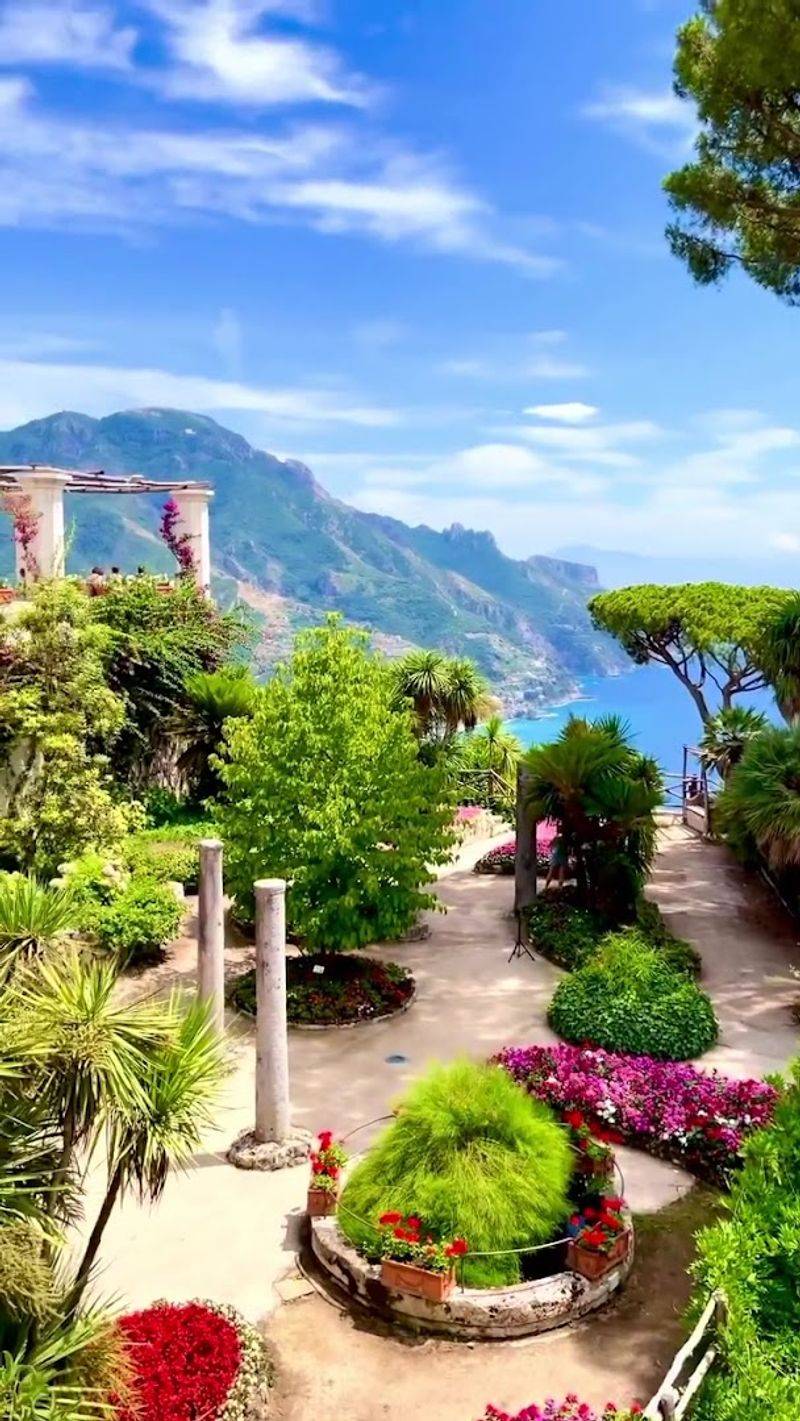
Ravello sits high above the coastline like a quiet secret. While other towns hug the water, this hilltop village offers a different perspective — sweeping views that take in miles of coastline, sea, and sky.
The atmosphere feels peaceful and romantic, attracting artists, musicians, and travelers seeking tranquility.
Villa Cimbrone’s gardens steal the show with the famous Terrazza dell’Infinito, where marble statues line a terrace seemingly suspended over the Mediterranean far below. The view stretches endlessly, creating a sense of floating between earth and heaven.
Villa Rufolo’s gardens also enchant visitors with colorful blooms and coastal panoramas that inspired composer Richard Wagner.
Cobbled lanes connect historic villas, churches, and intimate piazzas. Classical music concerts fill summer evenings, especially during the renowned Ravello Festival.
The town’s cultural richness adds depth to its natural beauty.
Fewer crowds mean you can actually hear birds singing and bells ringing from distant churches. Restaurants serve local wine and traditional dishes on terraces overlooking the coast.
Ravello rewards those who make the uphill journey with some of the most breathtaking and peaceful experiences on the entire Amalfi Coast, where time seems to slow down and beauty takes center stage.
Praiano — Sunset Views and Local Charm
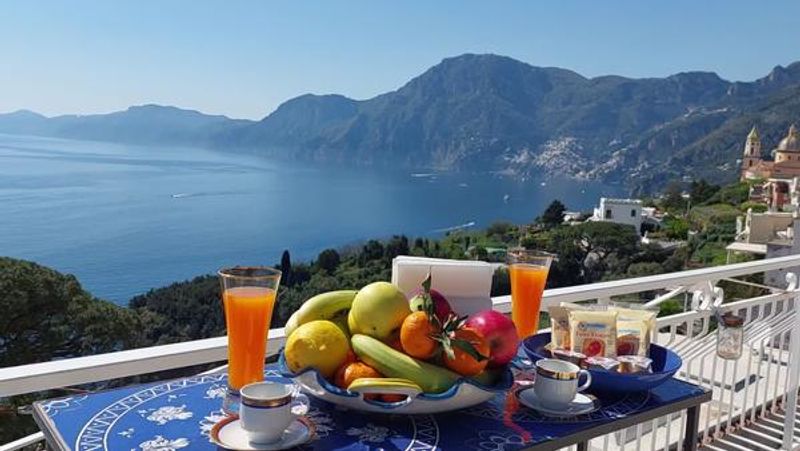
Praiano doesn’t shout for attention like its neighbors. Tucked between Positano and Amalfi, this quieter village rewards visitors with golden sunsets and authentic local life.
The town faces west, making it the perfect sunset-watching spot on the coast.
Gavitella beach offers a peaceful cove with clear water and views stretching toward Capri. The small Marina di Praia, reached by steep stairs, provides another scenic swimming spot surrounded by cliffs.
Both beaches feel less crowded than nearby alternatives, giving you space to actually relax.
Narrow lanes wind past family-run restaurants where grandmothers still make pasta by hand. Cafés serve strong espresso and sweet sfogliatelle pastries without tourist markups.
Locals greet visitors warmly, happy to share recommendations and stories about coastal life.
The Path of the Gods hiking trail starts near Praiano, offering spectacular coastal views for those who enjoy walking. The town also serves as a convenient base for boat trips and coastal exploration without the higher prices of Positano.
As evening arrives, the sky transforms into shades of pink, orange, and purple. Watching the sun sink into the Mediterranean from a Praiano terrace, with a glass of local wine in hand, captures the essence of why people fall in love with the Amalfi Coast.
Atrani — Tiny Town, Big Heart
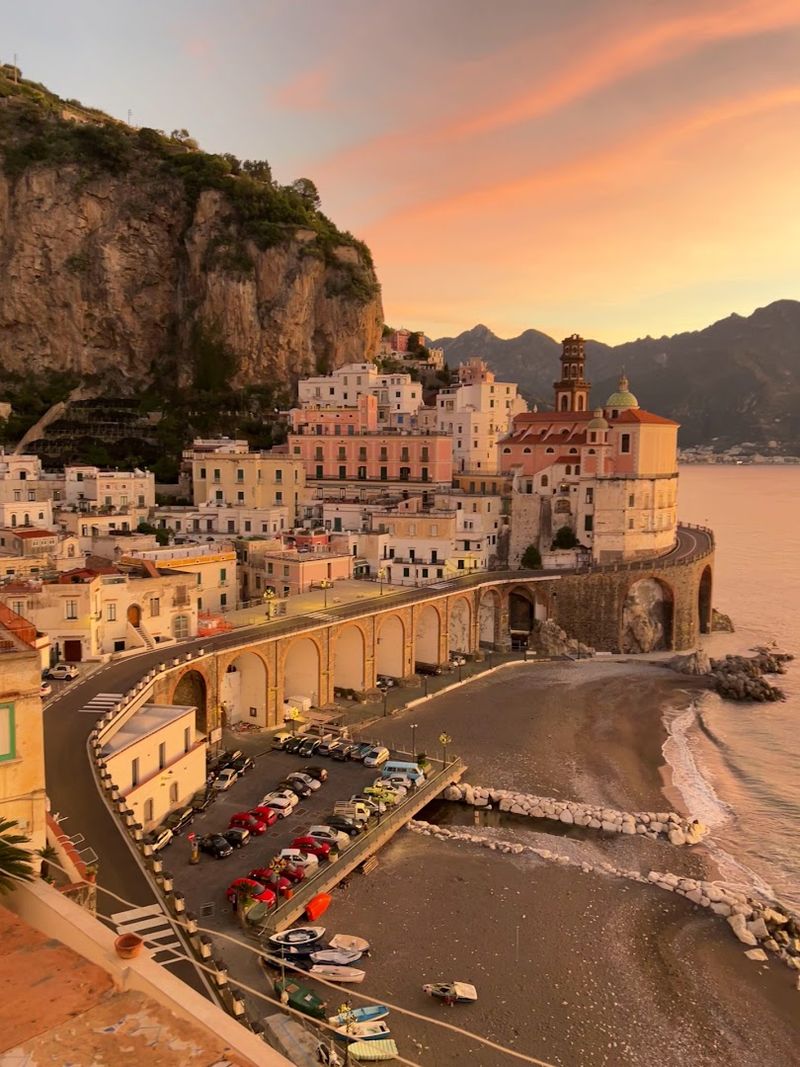
Atrani holds the title of one of Italy’s smallest municipalities, but size doesn’t measure character. This tiny village packs tremendous charm into a compact space just east of Amalfi.
A short tunnel connects the two towns, yet Atrani feels worlds away from tourist crowds.
The town’s heart is a small piazza that opens directly onto a pebble beach. Cafés line the square, where locals gather for morning coffee and evening conversation.
The scene feels timeless — children play near the water while grandparents watch from shaded benches, just as they’ve done for generations.
Narrow passages and steep stairways connect whitewashed houses crowned with terracotta roofs. The 10th-century Church of San Salvatore de’ Birecto, where Amalfi’s medieval doges were crowned, stands as a reminder of the town’s historical importance.
Walking these quiet streets feels like discovering a secret corner of Italy.
Simple pleasures define the Atrani experience. Fresh pasta at a family trattoria, espresso at dawn while fishermen prepare their boats, sea breezes carrying the scent of lemon trees.
No major attractions compete for attention — the town itself is the attraction.
Atrani proves that authentic Italian coastal life still exists, unhurried and genuine, where community connections matter more than tourist infrastructure.
Minori — Coastal History and Culinary Traditions
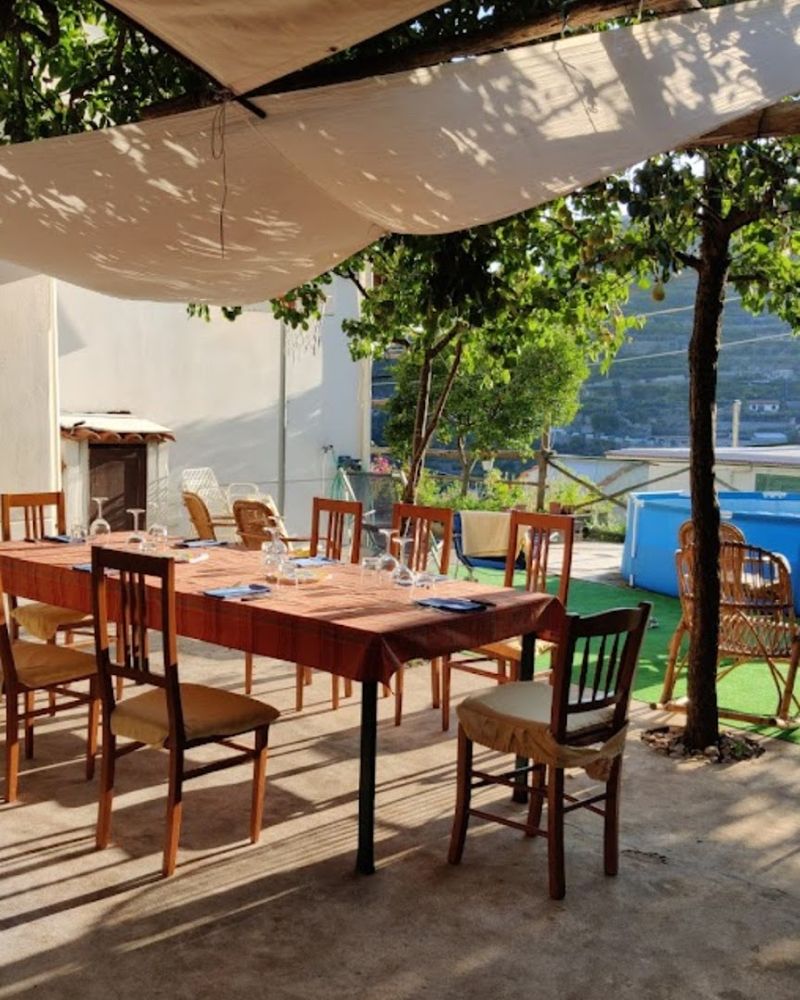
Minori quietly claims one of the longest histories on the Amalfi Coast. Archaeological evidence shows continuous habitation since Roman times, when wealthy families built seaside villas here.
The Villa Romana ruins still stand near the town center, offering a fascinating glimpse into ancient coastal luxury.
Food takes center stage in Minori. The town’s pastry shops create delizie al limone — small sponge cakes soaked in lemon cream — that have earned regional fame.
Local restaurants serve fresh seafood caught that morning, prepared with recipes passed through generations. The annual Gusta Minori food festival celebrates these culinary traditions each September.
A pleasant beachfront promenade invites leisurely walks, lined with cafés where locals and visitors mingle without pretension. The atmosphere feels relaxed and welcoming rather than polished for tourism.
Prices remain reasonable compared to flashier coastal towns.
The town’s compact size makes everything walkable. Ancient churches, lemon groves, and residential neighborhoods sit within easy reach.
Minori serves as an excellent base for exploring the coast while experiencing authentic daily Italian life.
What Minori lacks in dramatic cliffs or famous landmarks, it compensates with historical depth, culinary excellence, and genuine warmth. Travelers seeking substance over style find this town perfectly satisfying, where food, history, and seaside beauty blend naturally.
Maiori — Wide Beaches and Easygoing Vibes
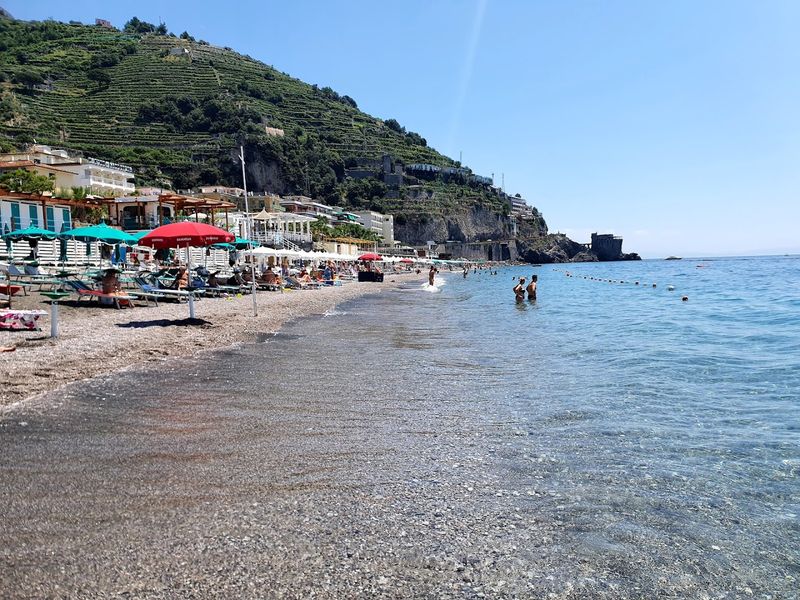
Maiori breaks the Amalfi Coast mold. Instead of dramatic cliffs plunging into deep water, this town offers the coast’s longest unbroken stretch of beach — nearly a kilometer of sandy shoreline perfect for spreading out a towel and spending the day.
Families especially appreciate the gentle, accessible waterfront.
The broad promenade runs parallel to the beach, lined with cafés, gelato shops, and restaurants serving pizza and seafood. Palm trees provide shade, and the relaxed atmosphere encourages slow mornings and lazy afternoons.
Sun loungers and umbrellas are available for rent, but plenty of public beach space remains free.
Behind the beachfront, Maiori reveals layers of history and charm. Pastel-colored buildings rise toward hillsides dotted with churches and chapels.
The town suffered damage during World War II flooding, then rebuilt with wider streets and more open spaces than typical coastal villages.
Hiking trails lead into surrounding hills, offering scenic overlooks and connections to other coastal towns. The Sentiero dei Limoni (Lemon Path) connects Maiori to Minori through terraced lemon groves, providing beautiful views and fragrant air.
Maiori attracts visitors who prioritize beach time and easygoing vibes over cliffside drama. The town delivers authentic Italian coastal living with space to breathe, making it ideal for travelers seeking relaxation and accessibility along this stunning stretch of Mediterranean shoreline.
Vietri sul Mare — Ceramics, Color and Sea
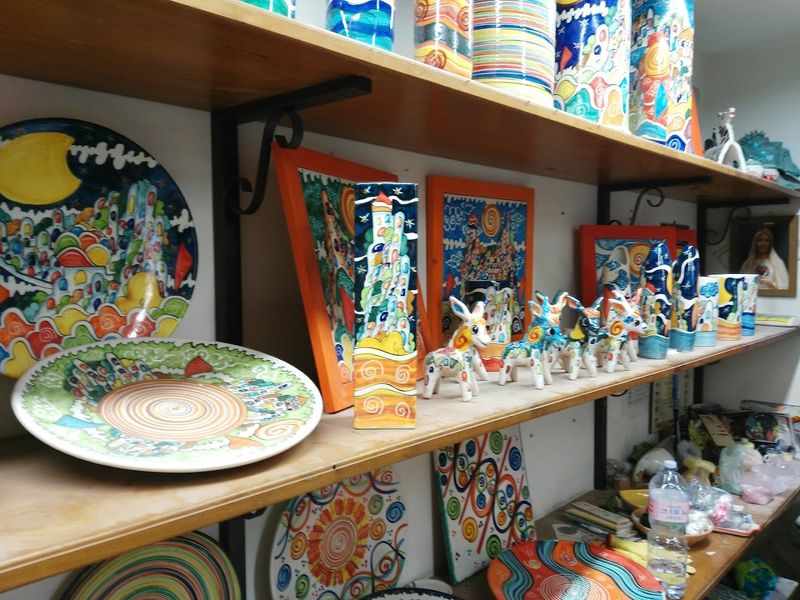
Vietri sul Mare announces the beginning of the Amalfi Coast with an explosion of color. Centuries-old ceramic traditions define this gateway town, where hand-painted pottery fills shop windows with brilliant yellows, blues, and greens.
The craft dates back to the Renaissance, when local artisans developed distinctive styles that still characterize Vietri ceramics today.
Walking through town means encountering ceramic art everywhere — decorative tiles on building facades, fountains adorned with painted majolica, and dozens of workshops where artists continue traditional techniques. Visitors can watch craftspeople paint intricate patterns on plates, vases, and decorative pieces.
These make wonderful souvenirs that actually reflect local culture rather than generic tourist goods.
The waterfront offers sweeping views across the Gulf of Salerno. Seafood restaurants line the marina, serving fresh catches with local wine.
The beach at Marina di Vietri provides a pleasant spot for swimming and sunbathing with less intensity than busier coastal towns.
The town’s church dome, covered in colorful ceramic tiles, serves as a landmark visible from surrounding areas. This combination of artistic tradition, coastal beauty, and welcoming atmosphere gives Vietri a unique identity among Amalfi Coast destinations.
Whether you’re shopping for authentic Italian ceramics or simply enjoying seaside views, Vietri sul Mare delivers vibrant color and cultural richness that perfectly introduce the wonders waiting further along the coast.
Conca dei Marini — Cliffside Views and Grotta dello Smeraldo
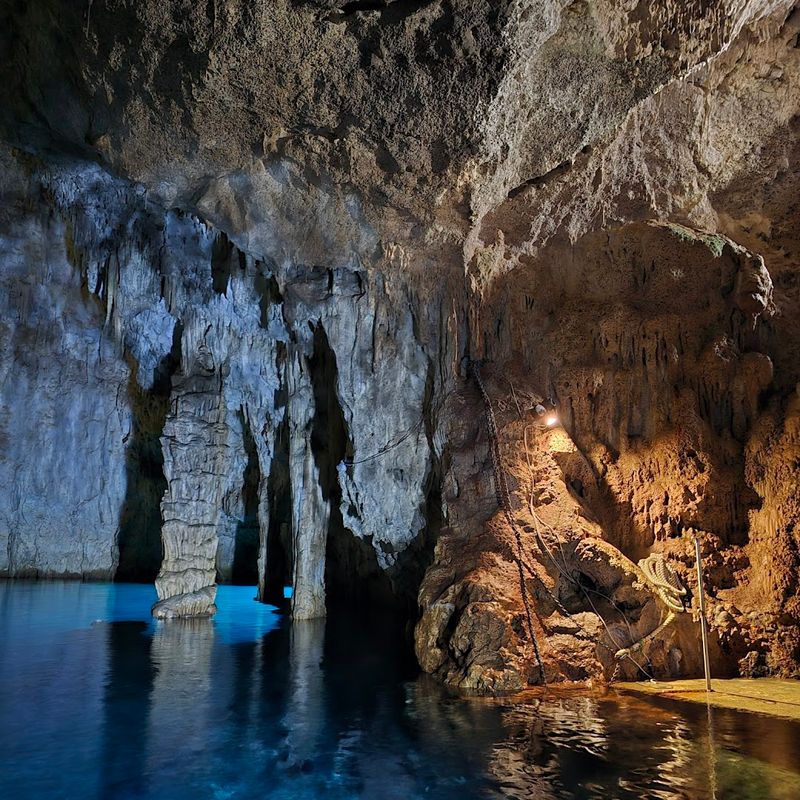
Conca dei Marini may be small, but its natural wonders punch above its weight. Perched on cliffs between Amalfi and Positano, this quiet village offers dramatic coastal panoramas and access to one of the region’s most magical attractions — the Grotta dello Smeraldo, or Emerald Grotto.
The sea cave earns its name from the extraordinary emerald-green light that fills the interior. Sunlight filters through an underwater opening, illuminating the water with an otherworldly glow.
Small boats ferry visitors into the cave, where stalactites and stalagmites create a surreal underground landscape. The experience feels mystical, like entering a hidden realm beneath the coast.
Above ground, Conca dei Marini’s narrow lanes wind past rustic restaurants serving local specialties. The town’s Santa Rosa monastery gave birth to sfogliatella pastries, a beloved Neapolitan treat with crispy layers and sweet ricotta filling.
Enjoying one here connects you to authentic culinary history.
Coastal viewpoints around town offer sweeping vistas without crowds. The setting feels peaceful and unspoiled, perfect for travelers who want natural beauty without tourist infrastructure overwhelming the experience.
Conca dei Marini rewards curious visitors with memorable moments — from glowing emerald waters to quiet cliffside contemplation. The town proves that some of the coast’s best experiences come in small, unexpected packages where nature’s artistry takes center stage.
Furore — Fjord Cove and Spectacular Setting
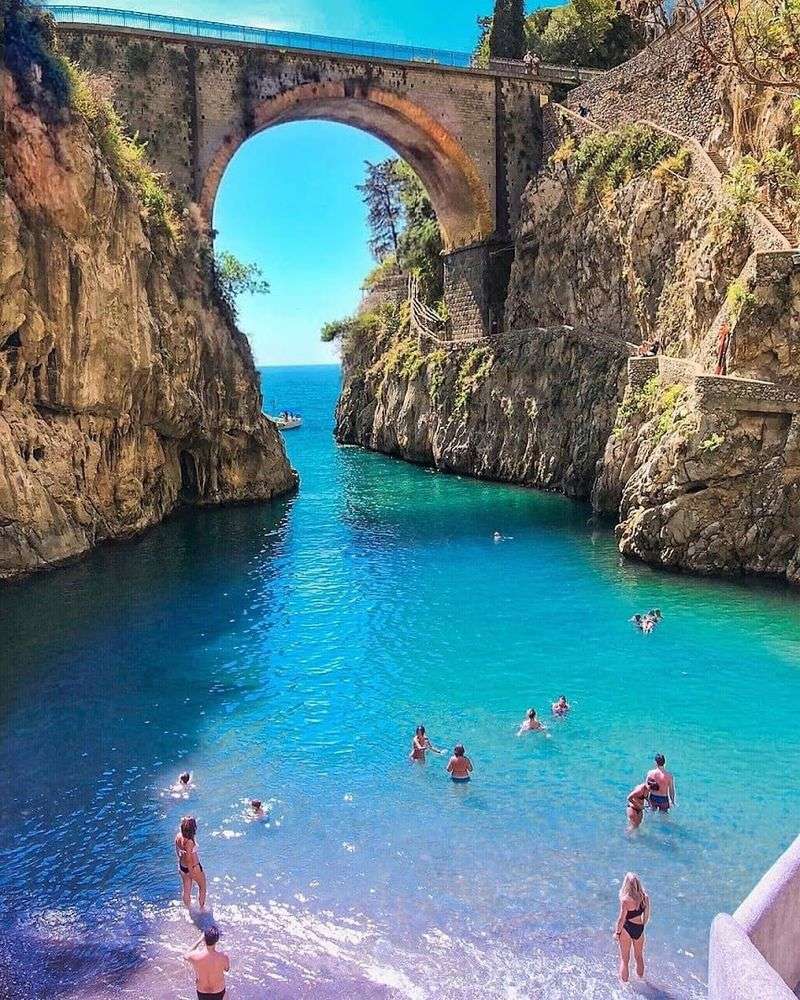
Furore barely qualifies as a town in the traditional sense. Houses scatter across hillsides above a dramatic sea inlet known as the Fiordo di Furore, creating one of the coast’s most striking and unusual landscapes.
A tall bridge spans the rocky gorge, with a tiny pebble beach far below where turquoise water meets steep cliffs.
The setting is pure drama. Sheer rock walls rise on both sides of the narrow inlet, and the contrast between vertical stone and horizontal sea creates powerful visual impact.
Photographers love this spot, especially when light and shadow play across the gorge throughout the day.
Each summer, the bridge hosts the World High Diving Championships, when athletes plunge from dizzying heights into the fjord below. The event draws international attention to this otherwise quiet corner of the coast.
Outside competition season, the beach offers peaceful swimming in crystal-clear water.
Few cafés or restaurants exist in Furore proper, which preserves its wild, untamed character. The lack of commercial development means the natural beauty remains the main attraction.
Visitors come for views and photos rather than shopping or dining.
Furore represents the Amalfi Coast at its most raw and dramatic, where geological forces created something extraordinary. The fjord’s unique character offers a refreshing contrast to charming villages and manicured gardens found elsewhere along this legendary coastline.
Cetara — Fishing Village Flavors and Cozy Views
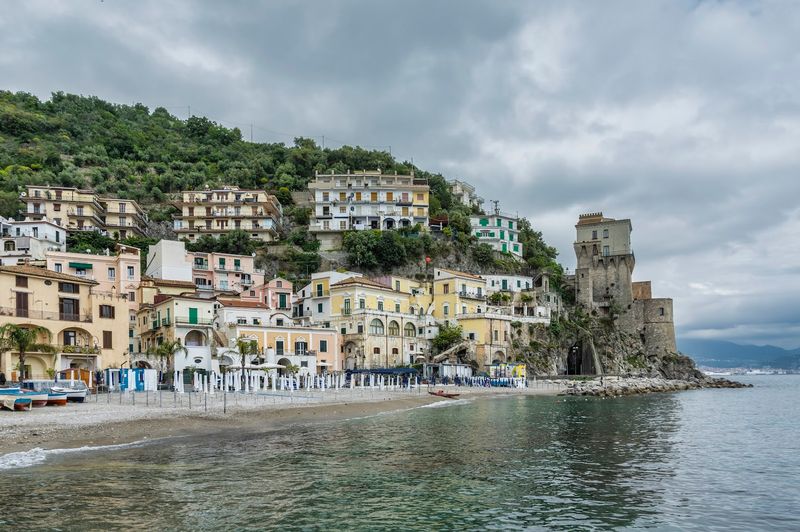
Cetara remains refreshingly real. While other coastal towns adapted to tourism, this small fishing village continues traditions that stretch back centuries.
The harbor fills with working fishing boats rather than pleasure yachts, and local life revolves around the sea’s daily rhythms and seasonal catches.
The town’s culinary claim to fame is colatura di alici — an amber-colored anchovy sauce that dates to Roman times. Made by fermenting anchovies with salt, the resulting liquid adds intense umami flavor to pasta dishes.
Local families guard recipes passed through generations, and restaurants serve authentic preparations you won’t find elsewhere.
Beyond anchovies, Cetara’s seafood restaurants offer exceptional quality at reasonable prices. Freshly caught fish arrives directly from boats to kitchens, prepared simply to highlight natural flavors.
Eating here feels like joining a family meal rather than dining in a tourist establishment.
The harbor provides peaceful views of pastel houses climbing hillsides, with fishing nets drying in the sun and locals repairing boats. The atmosphere remains unhurried and genuine, offering glimpses into traditional coastal life that’s increasingly rare along this famous stretch of coastline.
Cetara appeals to travelers who value authenticity over polish, where food traditions matter and community connections remain strong. The village proves that simple pleasures — fresh fish, honest hospitality, and harbor views — create memorable experiences without requiring famous landmarks or dramatic scenery.
Scala — Medieval Steps and Panoramic Heights
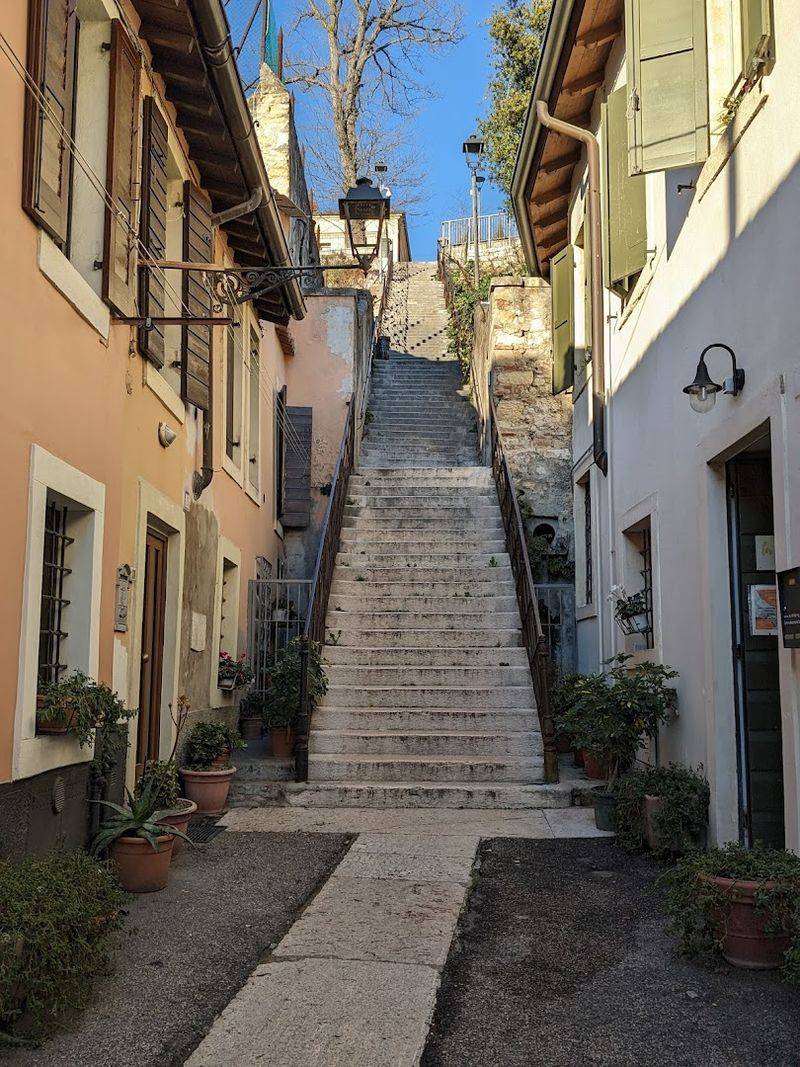
Scala climbs higher than any other Amalfi Coast village, perched on mountain slopes with sweeping views that stretch across the entire coastline. Founded in the 4th century, it claims to be the oldest settlement in the region, with medieval roots visible in ancient churches, stone stairways, and quiet residential lanes.
The elevation provides spectacular panoramas without the crowds found at sea-level towns. Terraced vineyards and gardens surround the village, producing local wine and vegetables that supply family restaurants.
The air feels cooler and fresher up here, offering relief during hot summer months.
Scala actually consists of several small hamlets connected by old pathways and steps. Exploring these connections reveals Romanesque churches, historic fountains, and stone houses that have stood for centuries.
The Duomo di San Lorenzo, dating to the 12th century, showcases beautiful medieval architecture.
Hikers appreciate Scala as a starting point for mountain trails offering even more dramatic coastal views. The paths wind through chestnut forests and past ancient ruins, providing peaceful alternatives to beach-focused activities.
Fewer tourists venture this high, meaning Scala retains an authentic mountain village character. Locals maintain agricultural traditions, and the pace of life moves slowly.
Visitors seeking tranquility, historical depth, and breathtaking views away from coastal crowds discover that Scala delivers all three in abundance, proving that sometimes the best perspectives come from stepping back and climbing higher.



