1965 reshaped popular music as folk artists plugged in and reached a wider audience. Bob Dylan, The Byrds, and Simon and Garfunkel helped define a new sound that blended lyrical depth with rock-driven energy.
These songs did more than change style. They reflected cultural shifts happening at the time and helped turn folk rock into a major force.
Here are 12 tracks that defined the genre’s breakthrough year.
1. “Mr. Tambourine Man” – The Byrds (No. 1, 1965)
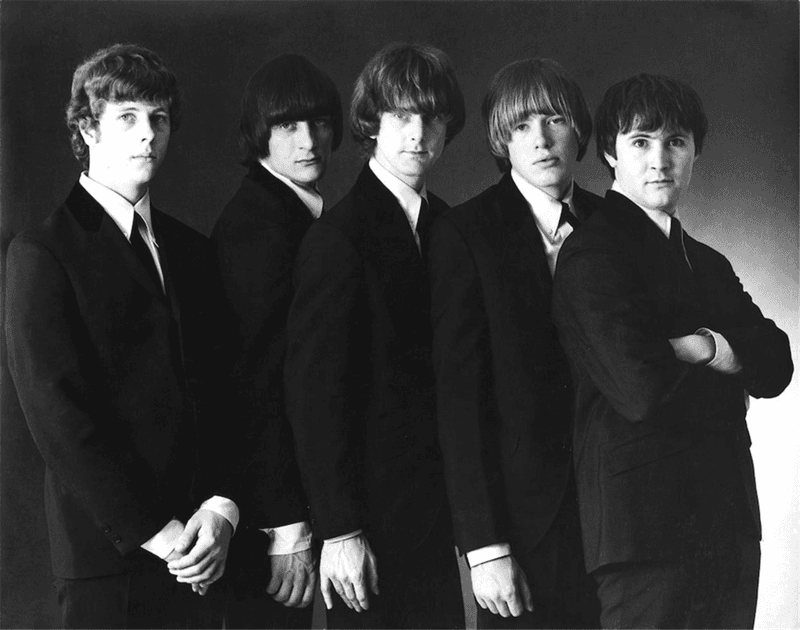
Few singles in pop history have launched an entire genre the way this one did in the spring of 1965. The Byrds took Bob Dylan’s original acoustic recording and rebuilt it around Roger McGuinn’s ringing 12-string Rickenbacker guitar, creating a sound that was instantly recognizable and widely imitated.
The track reached number one on both the American and British charts, making it a transatlantic folk rock landmark. Producer Terry Melcher stripped the song down to a single verse and chorus, giving it a radio-friendly tightness that Dylan’s version never had.
McGuinn’s guitar tone became the defining sound of the genre for the next several years. Bands across California and Britain scrambled to replicate that chiming, layered quality.
The Byrds proved that Dylan’s poetry could reach a mainstream pop audience without losing its intelligence. Their version became the blueprint that countless artists used to understand what folk rock could actually sound like when built for commercial radio.
2. “Turn! Turn! Turn!” – The Byrds (No. 1, Dec 1965)
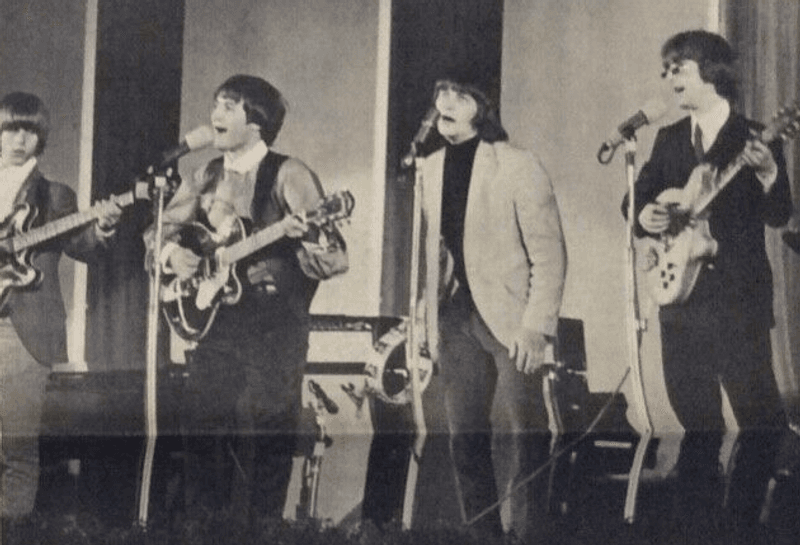
By the time this song hit number one in December 1965, The Byrds had already changed popular music once that year. Doing it twice in the same twelve months was a statement about just how dominant they had become in the folk rock space.
Pete Seeger wrote the melody and adapted the lyrics almost entirely from the Book of Ecclesiastes, making it one of the oldest texts ever to reach the top of the American pop charts. The Byrds recorded it with the same jangly electric approach that had worked so well on their debut single.
The timing of the release was significant. Anti-war sentiment was growing rapidly across American college campuses in late 1965, and a song built around themes of peace and cyclical change resonated deeply with that audience.
It connected folk music’s tradition of social commentary directly to rock and roll’s energy. The track cemented The Byrds as the central act of the folk rock movement, not just a one-hit novelty.
3. “Eve of Destruction” – Barry McGuire (No. 1, 1965)
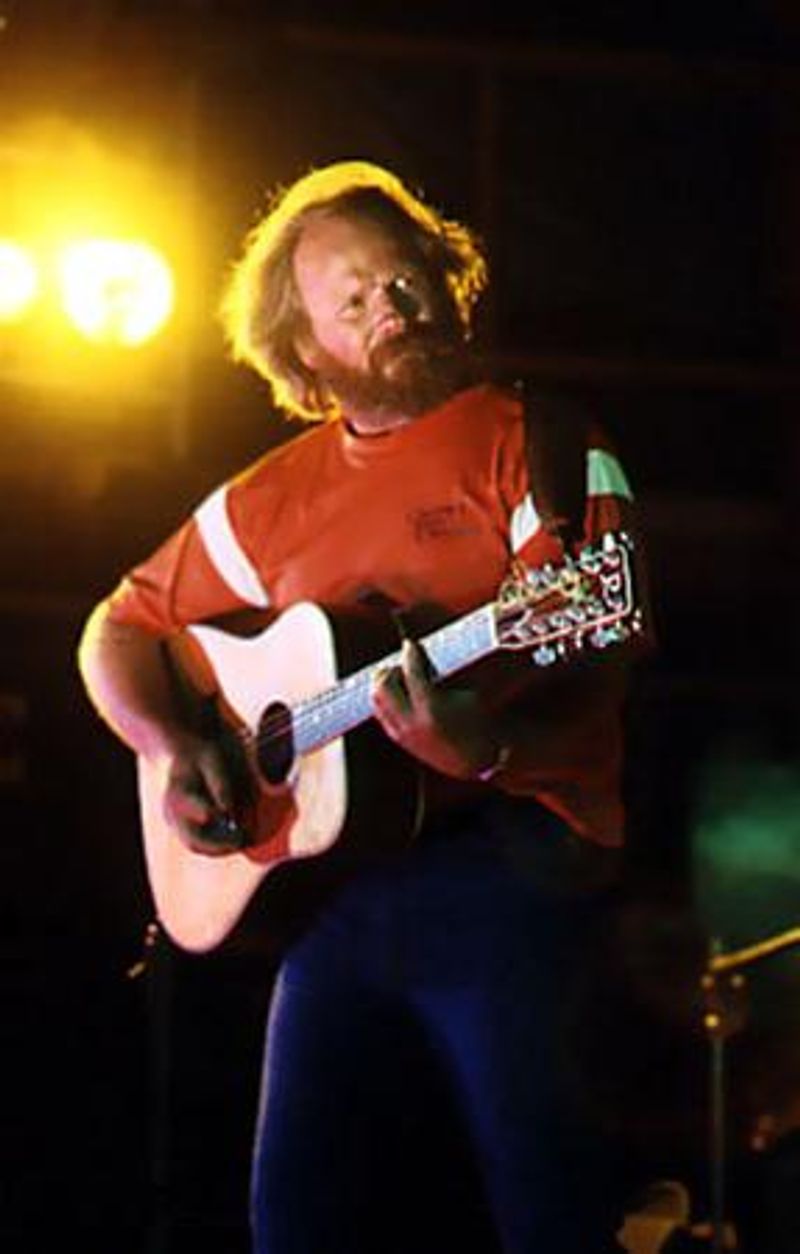
Released in July 1965 and recorded in a single take, this track was arguably the most politically direct song to ever reach number one on the American pop charts. P.F.
Sloan wrote the lyrics in one night, and McGuire delivered them with a raw, unpolished vocal style that matched the urgency of the words.
Radio stations in several cities refused to play it, calling the content too controversial. That resistance only increased public curiosity and drove sales higher.
The song addressed military conflict, racial inequality, and political hypocrisy with a bluntness that no major chart hit had attempted before.
McGuire had previously been a member of the New Christy Minstrels, a mainstream folk group, which made his turn toward confrontational protest rock all the more striking. The production team at Dunhill Records gave the track an electric folk rock arrangement that placed it firmly in the emerging genre.
It showed that folk rock was not just pleasant pop. It could carry genuine anger and still top the charts.
4. “The Sound of Silence” – Simon & Garfunkel (No. 1, Jan 1966, recorded 1965)
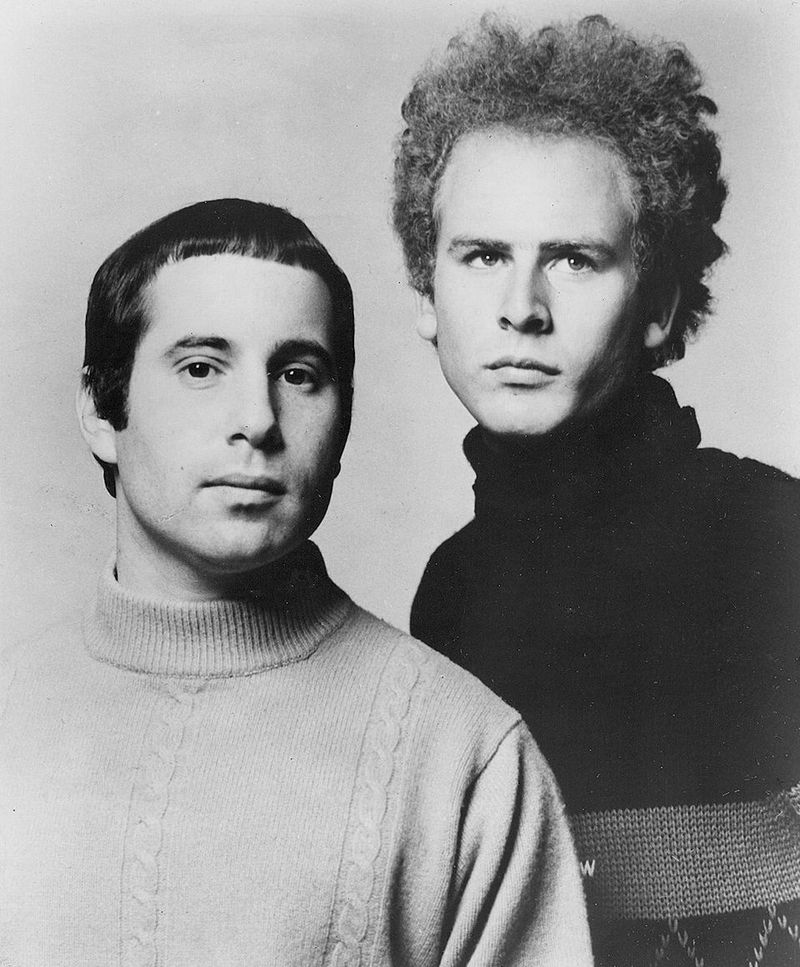
Paul Simon wrote this song in 1964, and the original acoustic version appeared on the duo’s debut album without making much of an impression commercially. What changed everything was a decision made without Simon and Garfunkel’s knowledge.
Producer Tom Wilson overdubbed electric guitar, bass, and drums onto the original acoustic recording in 1965, transforming it into a folk rock track. Columbia Records released this new version in September 1965, and it climbed steadily until it reached number one in January 1966.
The song became one of the most celebrated examples of how electric instrumentation could deepen rather than dilute a folk composition.
Simon and Garfunkel had actually broken up by the time the electric version charted. The song’s unexpected success brought them back together and launched one of the most critically acclaimed careers in popular music.
The track demonstrated that folk rock was not just about protest or politics. It could also carry introspective, literary themes that connected with millions of listeners who had never set foot in a Greenwich Village coffee house.
5. “I Got You Babe” – Sonny & Cher (No. 1, 1965)
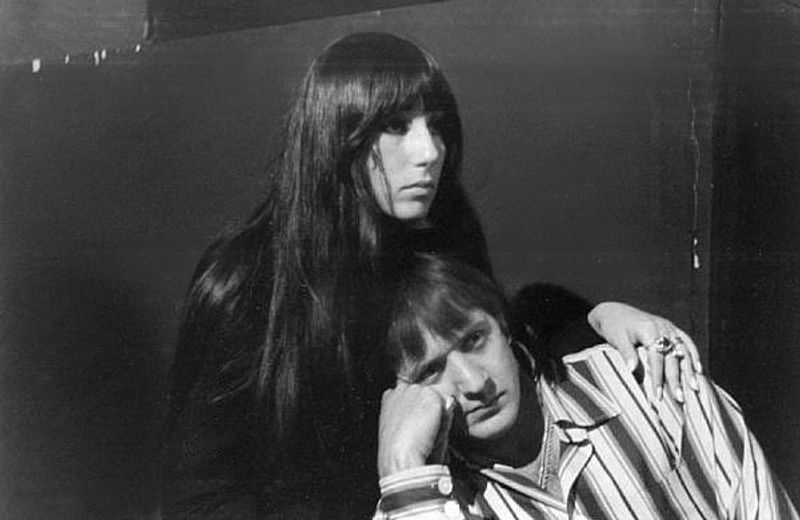
Sonny Bono wrote this song specifically to showcase the chemistry he and Cher had as a duo, and it worked beyond anyone’s expectations. Released in July 1965, it reached number one in both the United States and the United Kingdom, making Sonny and Cher international stars almost overnight.
The track blended folk rock’s acoustic sensibility with a pop structure that was deliberately simple and direct. Cher was only nineteen years old when it was recorded, and her deep, confident voice contrasted sharply with the lighter vocals that dominated female pop at the time.
Their visual style was as important as their music. Sonny and Cher dressed in fur vests, striped pants, and bohemian accessories that aligned them with the counterculture even as their music remained accessible to mainstream radio audiences.
They occupied a unique space in 1965, appealing to both folk rock fans and casual pop listeners. The song remains a defining document of how folk rock absorbed pop ambitions without abandoning its roots in acoustic folk tradition.
6. “Like a Rolling Stone” – Bob Dylan (No. 2, 1965)
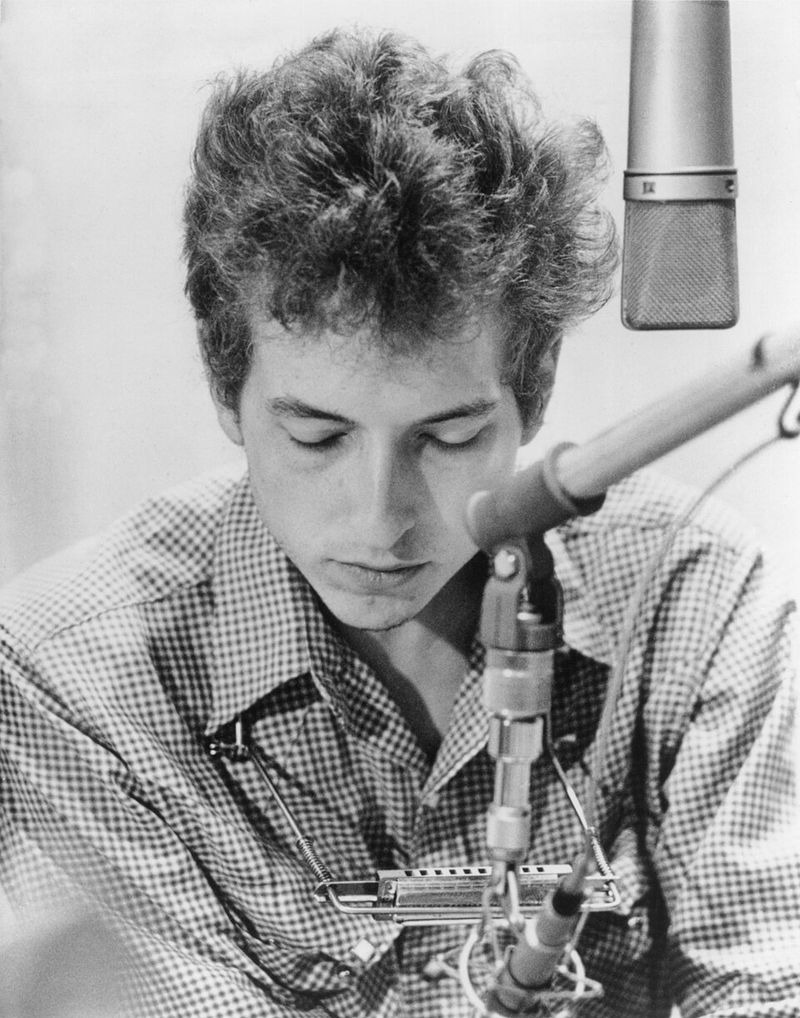
When Columbia Records received the final recording of this song in June 1965, executives were uncertain about releasing a six-minute track on a commercial single. Radio stations typically refused anything over three minutes.
Dylan and producer Bob Johnston pushed forward anyway, and the result permanently changed what a pop song was allowed to be.
The track reached number two on the Billboard Hot 100, blocked from the top spot by a song with far less cultural weight. Dylan’s shift from acoustic folk to electric rock had already drawn criticism from purist folk audiences, but this single made the argument for his new direction impossible to dismiss.
Al Kooper, who played the Hammond organ on the track, was not even hired as a keyboardist. He talked his way into the session and improvised the now-iconic organ part in real time.
The recording captured something unrepeatable. Dylan’s lyrics, which described social displacement and loss of privilege with sharp, almost journalistic precision, set a new standard for what rock music could say.
It remains one of the most analyzed songs in American music history.
7. “Do You Believe in Magic” – The Lovin’ Spoonful (#9, 1965)
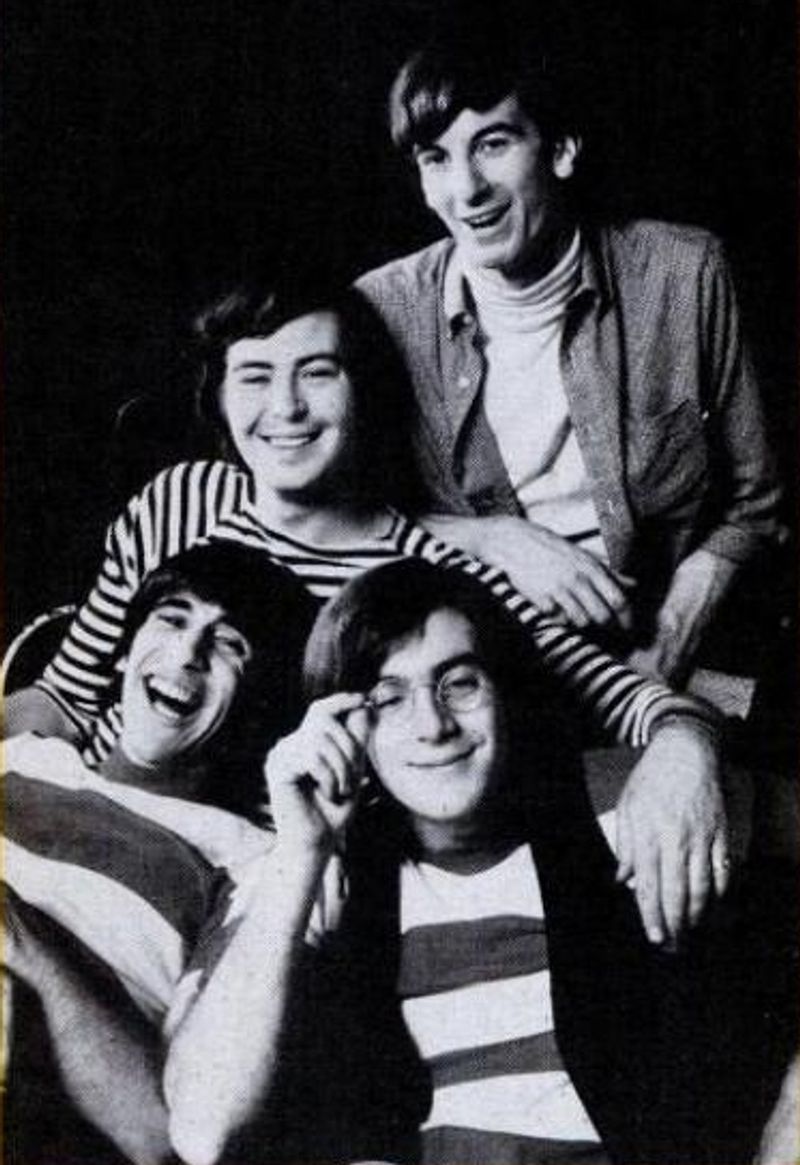
If The Byrds gave folk rock its shimmering, electric identity, The Lovin’ Spoonful gave it its sense of joy. “Do You Believe in Magic” arrived in 1965 with a warmth and accessibility that helped broaden the genre beyond protest songs and poetic abstraction.
John Sebastian’s songwriting leaned into optimism, celebrating the simple, almost childlike power of music itself. The track’s jug-band roots and light, bouncing rhythm made it feel less confrontational than Dylan’s work, but no less important in shaping folk rock’s appeal.
Reaching number nine on the Billboard charts, the song proved that folk rock did not have to be serious to be meaningful. It could be playful, catchy, and still carry emotional weight.
The Lovin’ Spoonful helped open the door for a softer, more radio-friendly branch of the genre, one that invited listeners in rather than challenging them at every turn.
8. “California Dreamin’” – The Mamas & the Papas (#4, 1965)
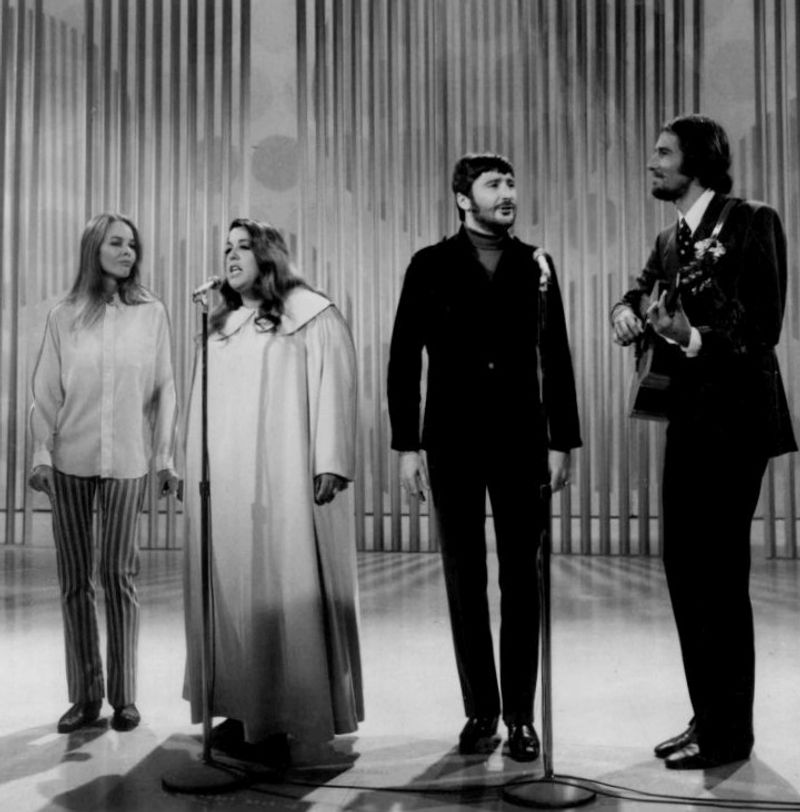
Few songs capture a mood as completely as “California Dreamin’.” Released at the end of 1965, it became one of the defining recordings of the folk rock era, blending introspective lyrics with lush, almost orchestral vocal harmonies.
John and Michelle Phillips, along with Denny Doherty and Cass Elliot, created a layered vocal sound that set them apart from nearly every other act of the time. Their harmonies were not just decorative; they carried the emotional weight of the song’s longing and displacement.
The track reached number four on the Billboard charts and quickly became an anthem for a generation caught between seasons, both literally and culturally. Its themes of restlessness and escape resonated deeply during a period of rapid social change.
“California Dreamin’” showed that folk rock could be cinematic, expanding the genre’s sonic possibilities while still keeping its lyrical introspection intact.
9. “Universal Soldier” – Donovan (#50, 1965)
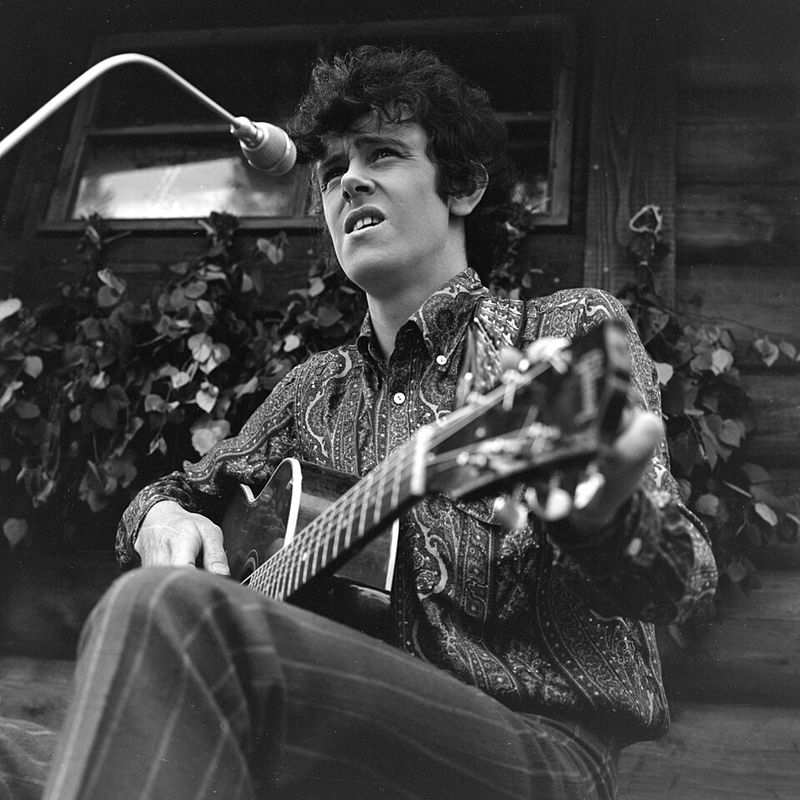
While American artists were electrifying folk music, Donovan was crafting a parallel movement in the United Kingdom. His version of “Universal Soldier,” written by Buffy Sainte-Marie, stood as one of the most direct anti-war statements of the era.
The song strips conflict down to its most uncomfortable truth: that wars are ultimately carried out by individuals making personal choices. Delivered with minimal instrumentation, Donovan’s performance keeps the focus squarely on the lyrics.
Though it peaked modestly at number fifty, its cultural impact far outweighed its chart position. The track became a staple of the growing protest movement, echoing similar themes found in American folk rock hits of the same year.
“Universal Soldier” reinforced that folk rock’s power did not depend on electrification alone. Its core strength remained its ability to confront difficult ideas with clarity and conviction.
10. “Mr. Tambourine Man” – Bob Dylan (album, Billboard 200 No. 1)
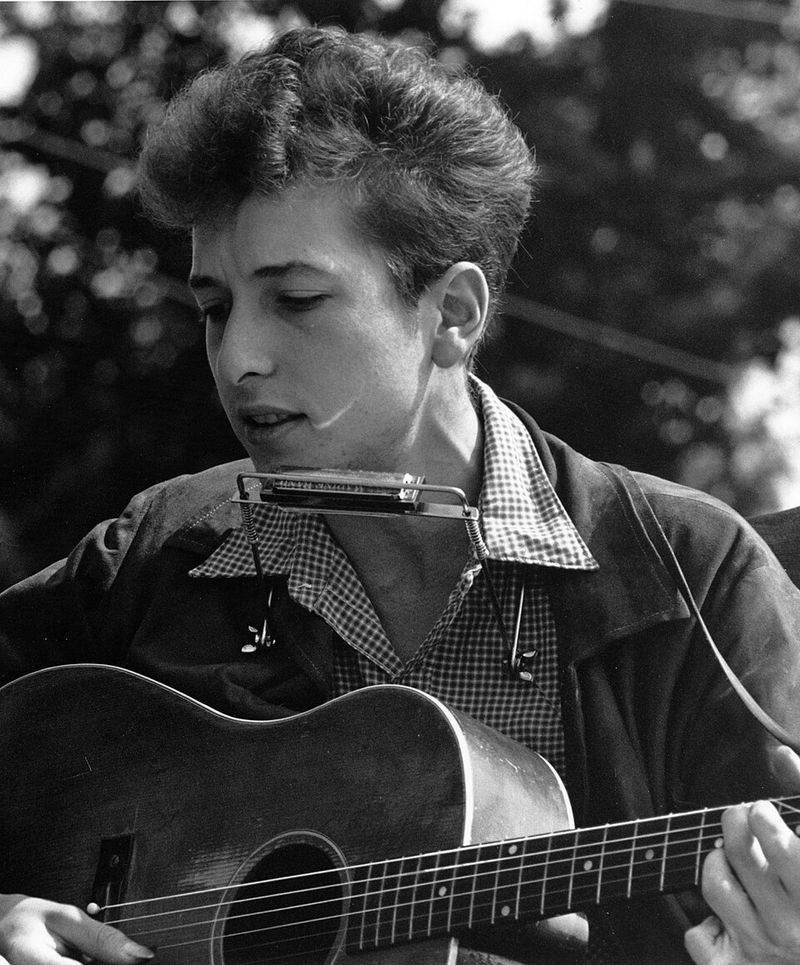
Dylan’s fifth studio album, released in March 1965, reached the top of the Billboard 200 and represented the peak of his acoustic folk period before his electric turn later that year. The title track became the song The Byrds chose for their landmark single, but Dylan’s own version told a different story.
Where The Byrds made the song radio-ready and bright, Dylan’s original was a sprawling, stream-of-consciousness performance that lasted over five minutes and included verses the Byrds omitted entirely. His acoustic guitar and harmonica arrangement was rooted in the folk tradition he was simultaneously preparing to leave behind.
The album’s commercial success proved that folk music could compete at the highest level of the pop market without electric instrumentation. Dylan had built an audience large enough to push a purely acoustic album to number one on a chart dominated by rock and roll acts.
That achievement made his subsequent electric pivot even more significant. It showed that his move to rock was a creative choice, not a commercial necessity, which is exactly what made it so controversial among his existing fanbase.
11. “All I Really Want to Do” – Cher (#15, 1965)
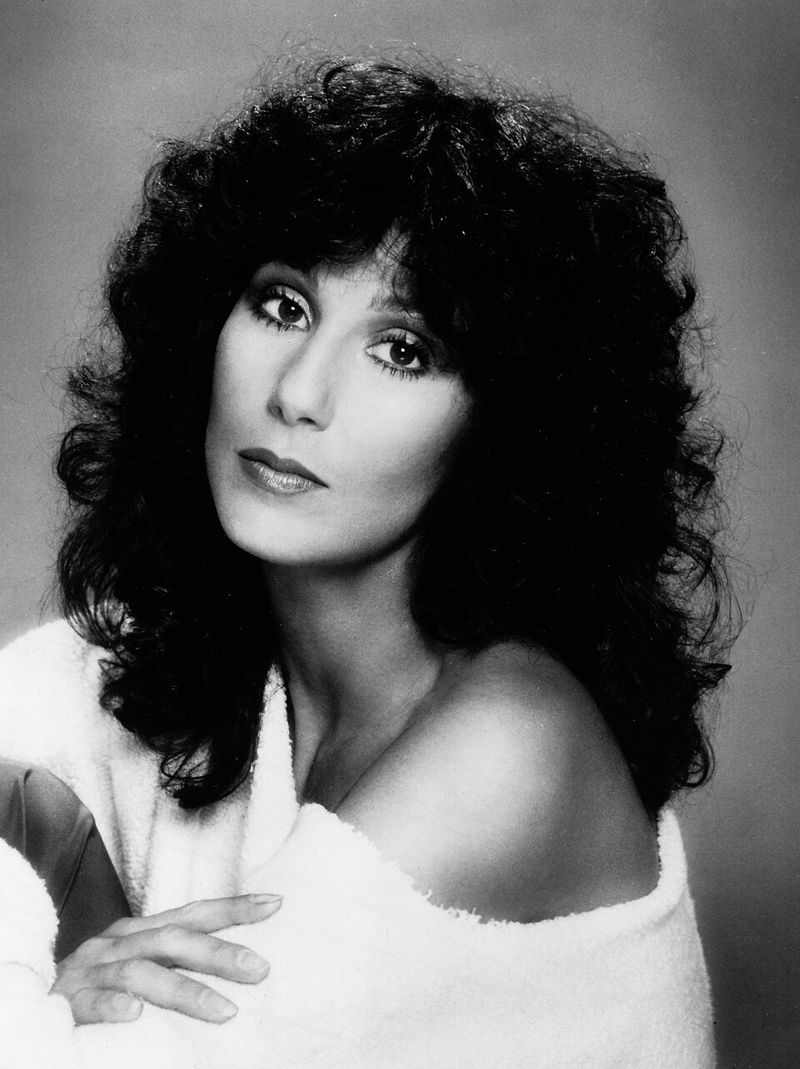
In 1965, even Bob Dylan’s songs became battlegrounds for interpretation. “All I Really Want to Do” was recorded by both The Byrds and Cher, with each version offering a completely different take on the same material.
Cher’s rendition, produced by Sonny Bono, leaned into a more polished pop-folk sound, driven by her distinctive contralto voice. Where The Byrds emphasized jangling guitars and group harmonies, Cher delivered a more direct, personality-driven performance.
Her version climbed to number fifteen on the Billboard charts, outperforming The Byrds’ competing release in the United States. It demonstrated that folk rock could adapt to different vocal styles and still retain its core identity.
Cher’s success with the track helped prove that the genre was not limited to bands or traditional folk purists. It could evolve into something more individualistic and commercially versatile.
12. “For What It’s Worth” – Buffalo Springfield (#7, 1967; roots in 1965)
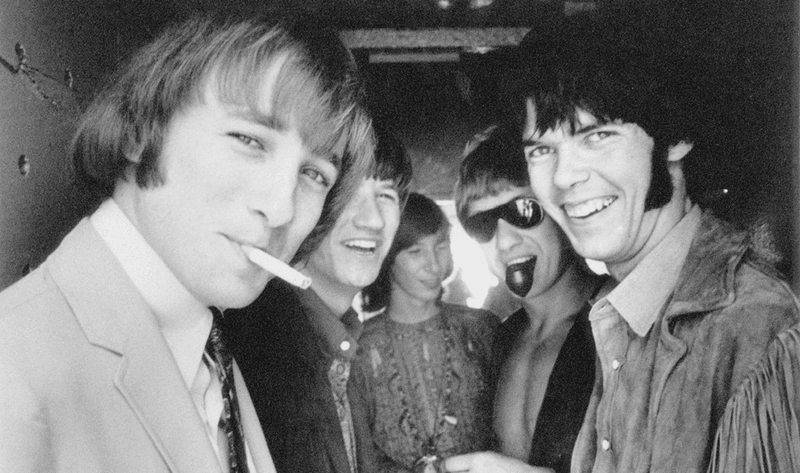
Although it would not hit the charts until 1967, “For What It’s Worth” is deeply rooted in the cultural tensions already brewing in Los Angeles in 1965. Buffalo Springfield formed that year, and the environment that shaped this song was already taking hold.
Stephen Stills wrote the track in response to clashes between young people and authorities on the Sunset Strip, capturing a sense of unease that was spreading across the country. The famous opening line, “There’s something happening here,” became an understated anthem of the era.
Musically, the song blends folk introspection with a restrained electric arrangement, allowing its message to unfold gradually rather than overwhelm the listener.
Reaching number seven on the Billboard charts, it became one of the defining protest songs of the late 1960s. Its inclusion here highlights how the groundwork laid in 1965 quickly evolved into even more explicit political expression.
Share this story