 Unearth The Voyage
Before podcasts and paranormal subreddits, these stories traveled by whispers on porches and the hiss of late night radio. They were warnings for curious kids and fuel for bravado around dying campfires.
You might think they faded, but the chill still shows up when the road empties and the wind changes. Read closely, and you may remember who first told you one of these tales.
1. The Jersey Devil (New Jersey)
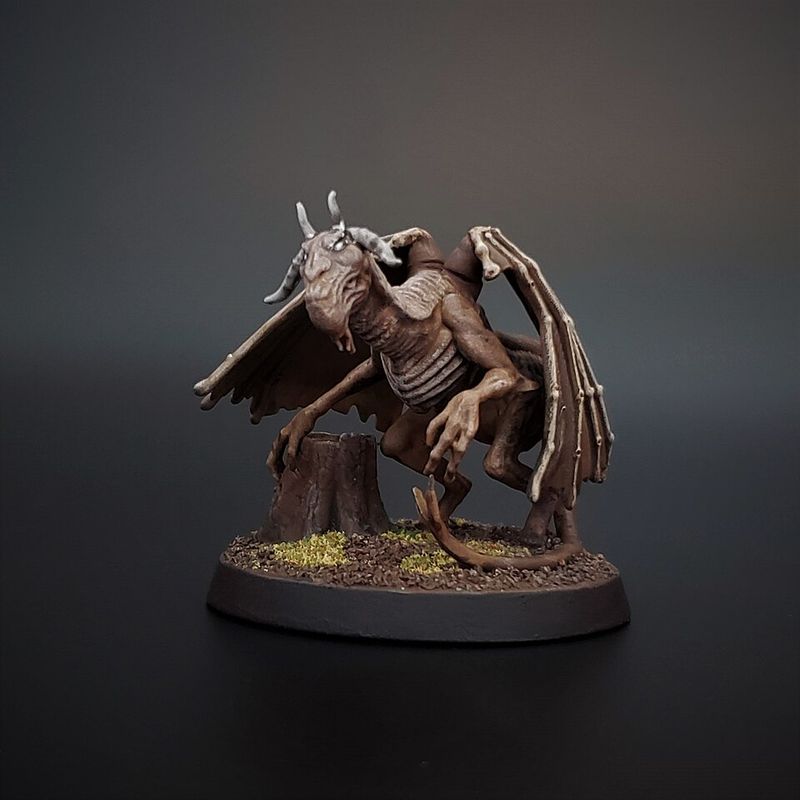
They say Mother Leeds cursed her thirteenth child, and the Pine Barrens kept the receipt. Hooves on the roof, wings slapping the night, and a shriek that could roust gulls off Barnegat Bay.
Timber cutters and trappers carried stories out like resin on their sleeves, each version resinous, sticky, impossible to shake. Newspapers in 1909 printed panicked sightings across multiple towns.
The pines still feel endless, sand roads dissolving into scrub and wiregrass. You pass a cranberry bog and catch yourself scanning treelines for something angular.
Biologists cite owls, cranes, or misread tracks, and they are often right. But folklore is a durable currency in South Jersey, passed through diners alongside pork roll and coffee.
The name is a passport to goosebumps. If a branch snaps where no one stands, you will quicken your step.
The Barrens are big enough to make anything seem likely.
2. The Mothman (West Virginia)
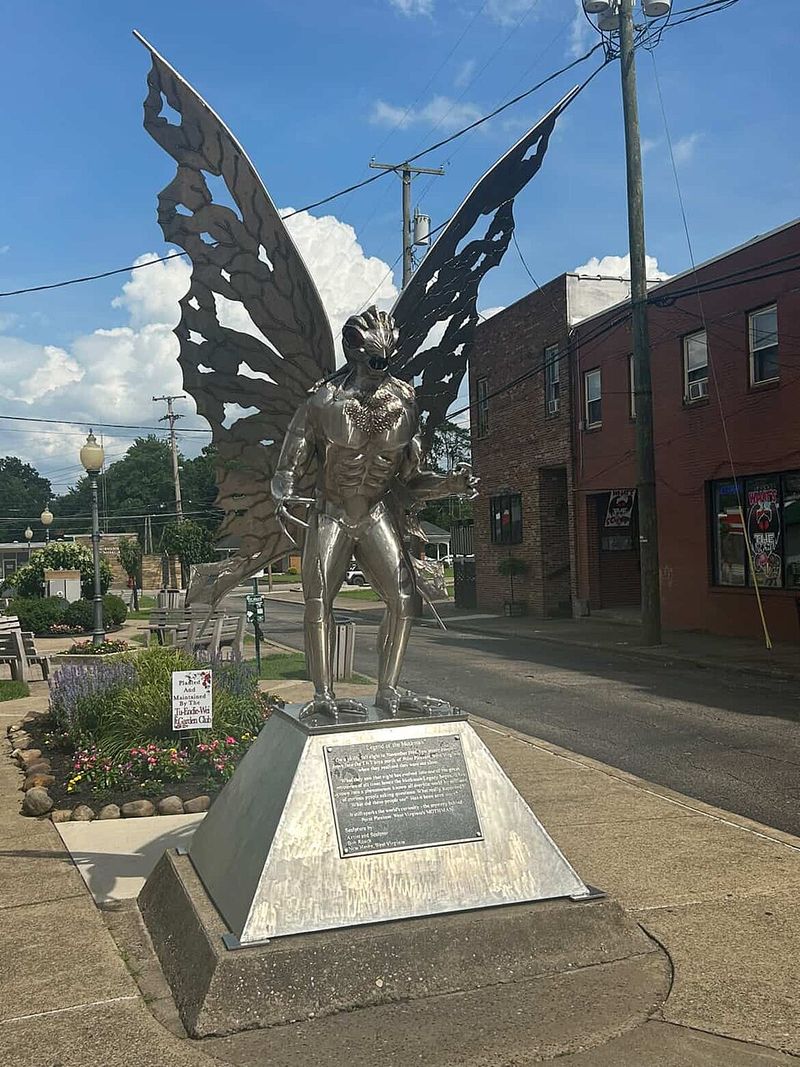
Point Pleasant remembers the eyes first, a heat lamp red that looked through you instead of at you. The late 1960s brought reports of a towering, winged figure near the TNT area, an abandoned World War II munitions site riddled with echoing domes.
Teenagers sped away from what they swore chased their car, tires throwing gravel like hail. Then the Silver Bridge fell in December 1967, taking forty six lives.
Coroners ruled metal fatigue, a single eye bar failure. Yet the timing impressed itself on local memory like a fingerprint.
Was Mothman an omen or just a story that attached itself to grief because grief demands a shape. The town prints it on T shirts and hosts a festival, equal parts healing and spectacle.
You cross a bridge now and glance at the girders anyway. Some warnings arrive in silhouettes, decades late, still impossible to ignore.
3. The Vanishing Hitchhiker

You see her too late, a pale figure by the shoulder, and your hands are already turning the wheel. She slides into the passenger seat, damp air filling the car, voice thin as radio static between stations.
An address, a thanks so soft it feels practiced. At the gate, she is gone, seatbelt unclicked, leaving only a scarf folded like an apology.
The homeowner at the porch has the face of someone repeating a litany. She died there years ago, he says, every fall around homecoming.
Thousands of versions ripple across the country, each with a different exit, different corsage, same cold shock. Sociologists call it a resurrection legend, a way to bind roads to memory.
You keep driving, fingers whitening on the wheel. Every empty plaid blanket in the backseat feels like proof.
Your breath fogs the glass, and you stop looking at the mirror.
4. The Goatman (Maryland)
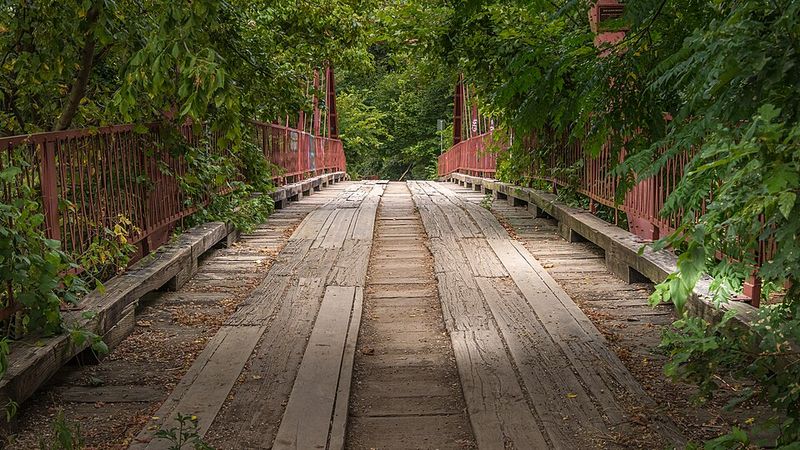
Prince George’s County teens swapped locations in whispers: the bridge, the turnout, the break in the fence. There, the Goatman waited, horns black against sodium orange streetlight, axe brighter than his eyes.
It was a dare and a date, bravery measured in minutes with the windows down. They told of scratch marks and a bleat that sounded uncomfortably human.
Local journalists tracked reports back to the 1950s and 60s, lumping sightings with escaped lab animal rumors. A biology lab, a wrong experiment, a joke that ran too far.
Still, couples drove anyway, because fear has a gravity. Maryland’s suburbs sprouted cul de sacs where farms once stood, but any patch of second growth can feel like forever.
If the car rocks, you swear it is hooves. If the glass mists, you measure the outline outside.
It thrives in the pause before the lock clicks.
5. The Bell Witch (Tennessee)
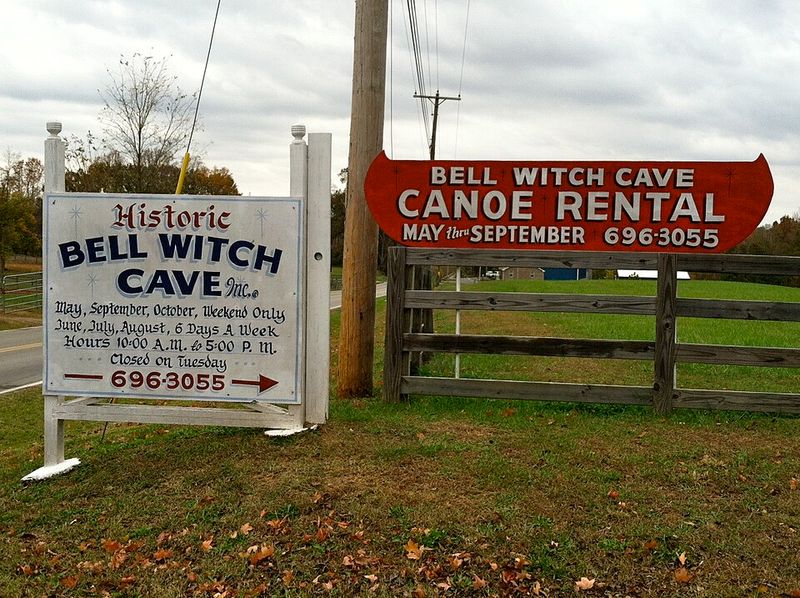
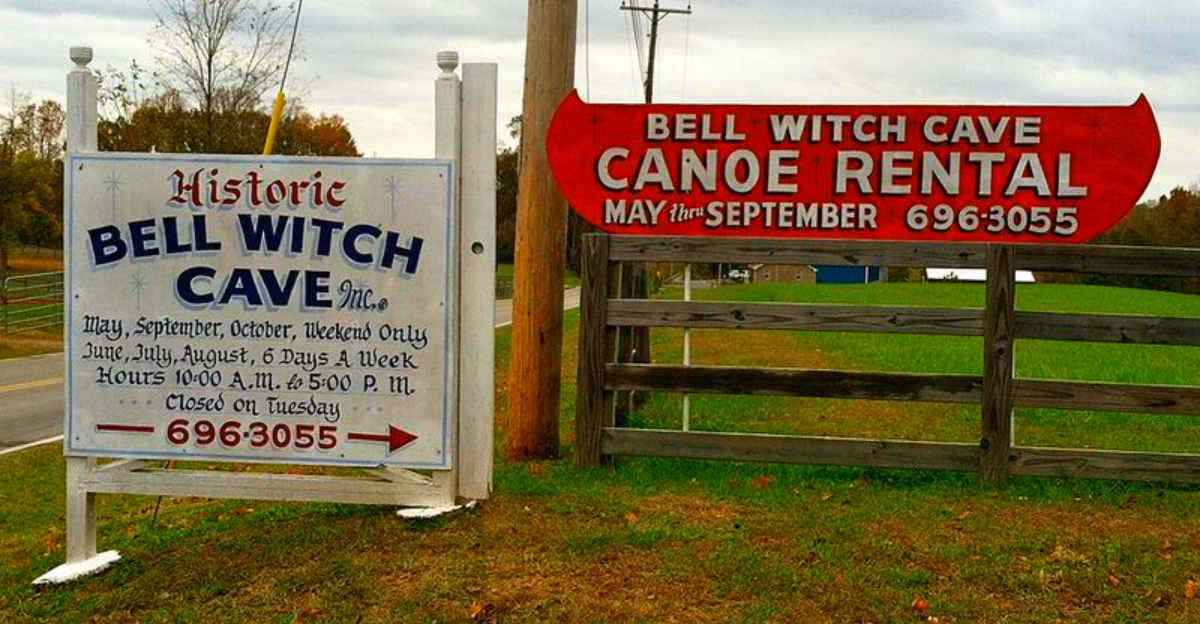
In northern Tennessee, the Bell family said a voice lived in their walls. It pinched, pulled, and mocked, mastering scripture and secrets it should not have known.
Neighbors claimed to hear it too, as if the house itself had learned to speak back. When John Bell fell ill, some swore the spirit vowed to finish him, and the story spread like frost through Robertson County.
Historians argue over records, yet the legend reads like America’s first viral haunting. Guides point to cave mouths and cedar groves where the air feels a notch colder.
You hear that a bell sometimes rings with no visible rope. The detail that lingers is the whisper, bright and cruel, repeating private confessions.
Skeptics shrug, but try sleeping where voices practiced on your name. Folk memory keeps the cadence, measured and mean.
In the dark, you wait for it to answer back.
6. The Lost Colony of Roanoke (North Carolina)
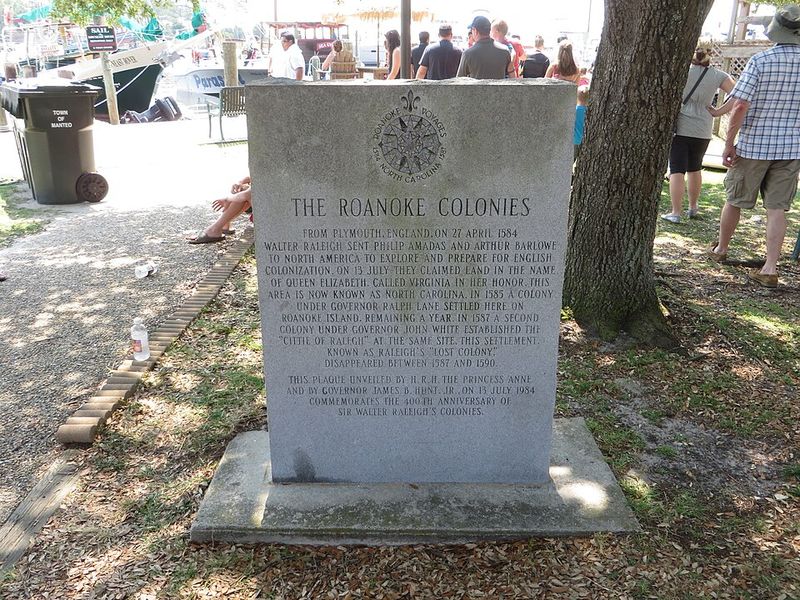
English footprints pressed into Carolina sand and then simply ended. When John White returned in 1590, the palisade stood, gardens gone to seed, and one word carved into wood: CROATOAN.
No cross, no blood, no bodies. Every telling becomes a map the listener tries to solve, tracing waterways toward Hatteras, scanning tree lines for smoke that never rises.
Archaeologists propose absorption into local tribes or slow starvation splintering the group. Recent digs have found European artifacts on Hatteras Island and inland, promising but inconclusive.
What persists is the feeling of a page torn neatly from a book. America loves a mystery it can hike to, read on plaques, and argue in diners.
Roanoke offers the blueprint. Wind moves through live oaks, and cicadas buzz like distant voices.
You lean closer to the carving each time, knowing it will not change, and still half expecting motion.
7. The Wendigo (Upper Midwest)
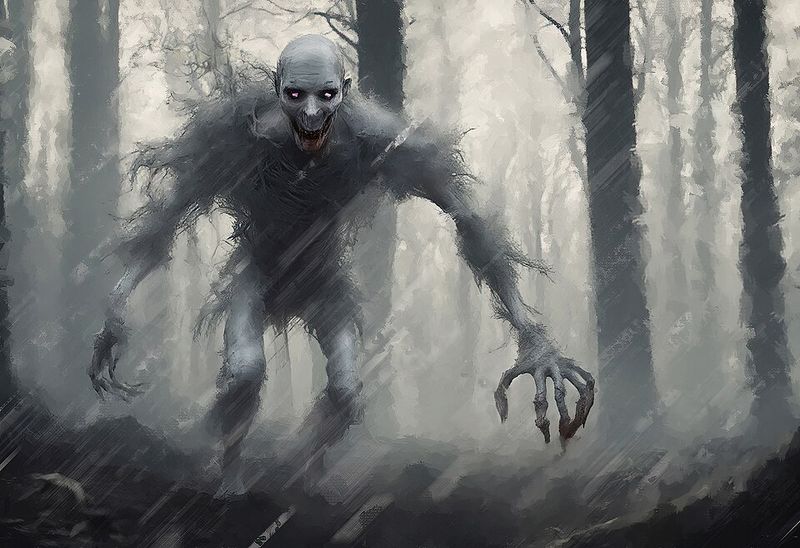
Cold that takes language first, then judgment. Among Algonquian speaking peoples, the Wendigo is a caution sharpened by hunger, an emaciated presence that stalks winter and greed.
Its ribs are a counting frame for the desperate. Elders told stories when the pantry thinned, making morality feel like survival, because often it was.
The wind off Superior can erase a trail in minutes.
Anthropologists document Wendigo psychosis cases reported in colonial records, a pathologized fear that says plenty about outsiders and scarcity. You do not need belief to feel the discipline in the tale.
Respect the weather, share food, do not wander too long into snow that wants your heat. In northern forests today, fatalities from exposure still number in the hundreds nationwide each winter.
Statistics are practical ghosts. The story’s shape moves with you between black spruces.
Something watches restraint like a lit candle in a storm.
8. The Axeman of New Orleans (Louisiana)
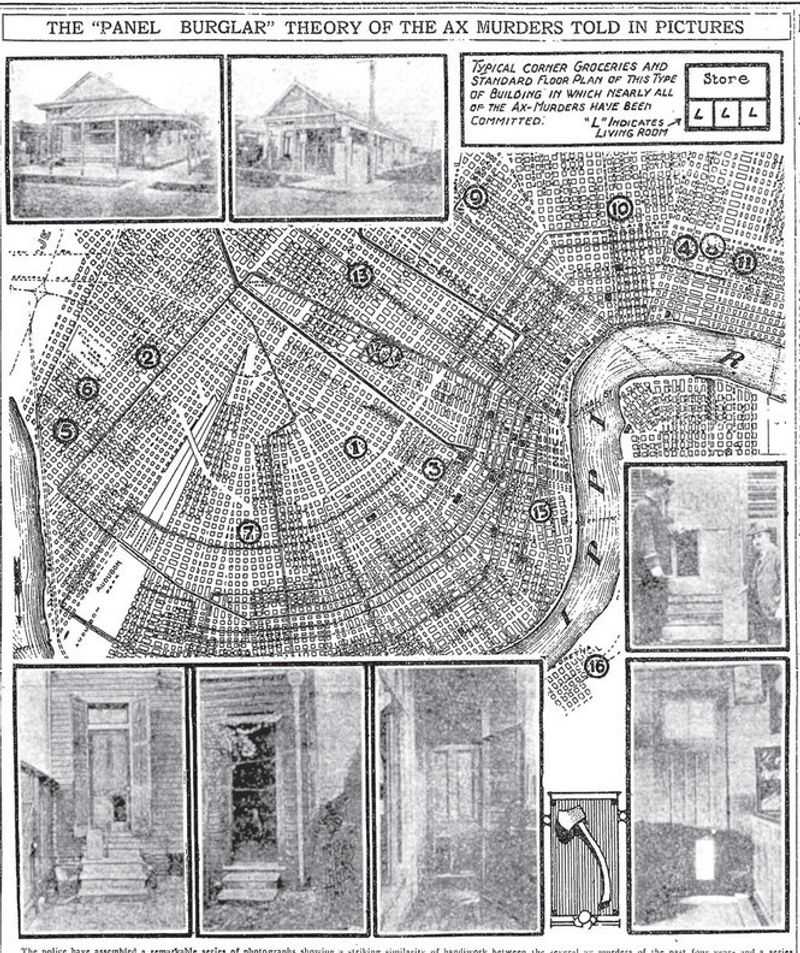
In 1918 and 1919, fear moved with the humidity. The Axeman slipped through back doors, took lives, and left the city wide awake.
He even wrote a letter to newspapers claiming he would spare any home playing jazz on a certain night. Clubs filled, records spun, and the city leaned into music as if melody were armor.
The killer was never caught.
Crime historians draw lines between victims, tools, and opportunity, naming suspects who never quite fit. New Orleans chose a different coping mechanism: make meaning and make it loud.
When people say folklore blurs with fact here, they mean the living refuse to be only frightened. The Axeman’s letter survives in archives, blaring bravado and weird etiquette.
You can walk those blocks now and count the bars. Brass carries far after midnight.
Somewhere, a porch groove still sounds like a ward.
9. The Ozark Howler (Arkansas & Missouri)
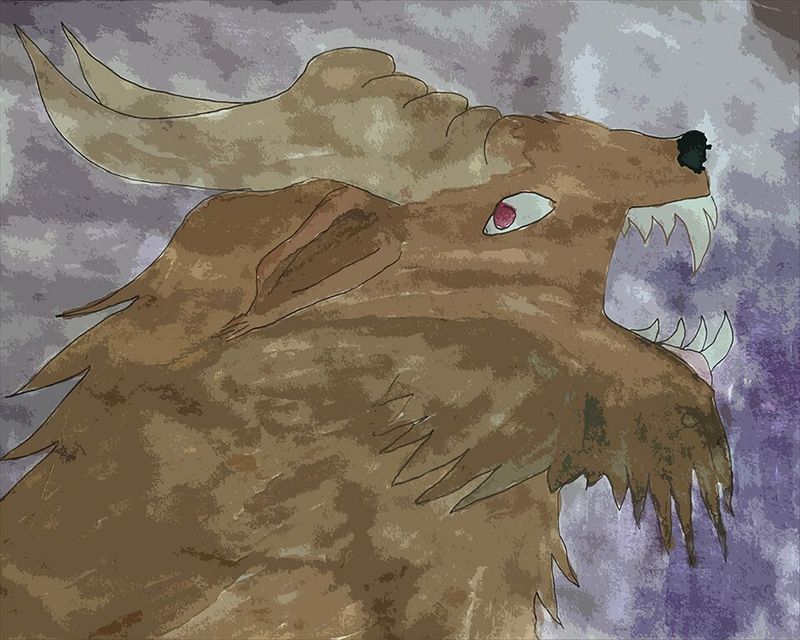
In the Ozarks, sound travels in curious angles. People hear a cry that is not cougar, not coyote, something with a throat full of rusted bells.
They call it the Howler, a black shape large enough to steal the breath from ranch hands. Old stories call out horns and a back hunched like a pulled bow.
It belongs to ridgelines and hollers where radio dies.
Wildlife agencies log credible mountain lion reports now and then, though confirmed breeding populations remain debated in this region. Farmers remember missing calves as evidence anyway.
Our ears grab at a taxonomy our eyes cannot supply. The Howler becomes the category you cannot catalog or sedate.
Drive those winding highways after midnight, and a single yell will fillet your confidence. The valleys catch and return it.
By the third echo, you will have named it against your better sense.
10. The Black Eyed Children
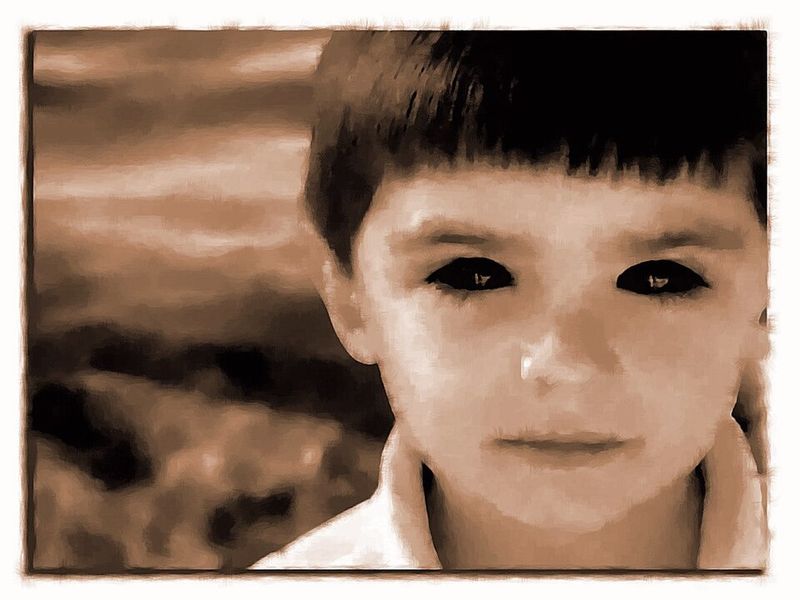
A knock after nine, too gentle to be trouble, too patient to be normal. Children on the stoop ask to use the phone or for a ride, sentences flattened like they learned them phonetically.
When you meet their eyes, there is no iris, only a black you want to name as shadow. Every instinct you own slams shut like a trunk.
They do not step in uninvited.
Stories gained traction in the late 1990s message boards, then spilled into documentaries and late night radio. The pattern rarely includes violence, which somehow tightens the dread.
Behavioral scientists cite how eye contact drives trust, and its inversion creates revulsion. That logic holds, but the myth keeps walking cul de sacs anyway.
You picture porch lights as lighthouses. If the knock comes again, you will stand very still.
Let the silence answer while your pulse edits the distance.
11. The Ghost Lights of Marfa (Texas)
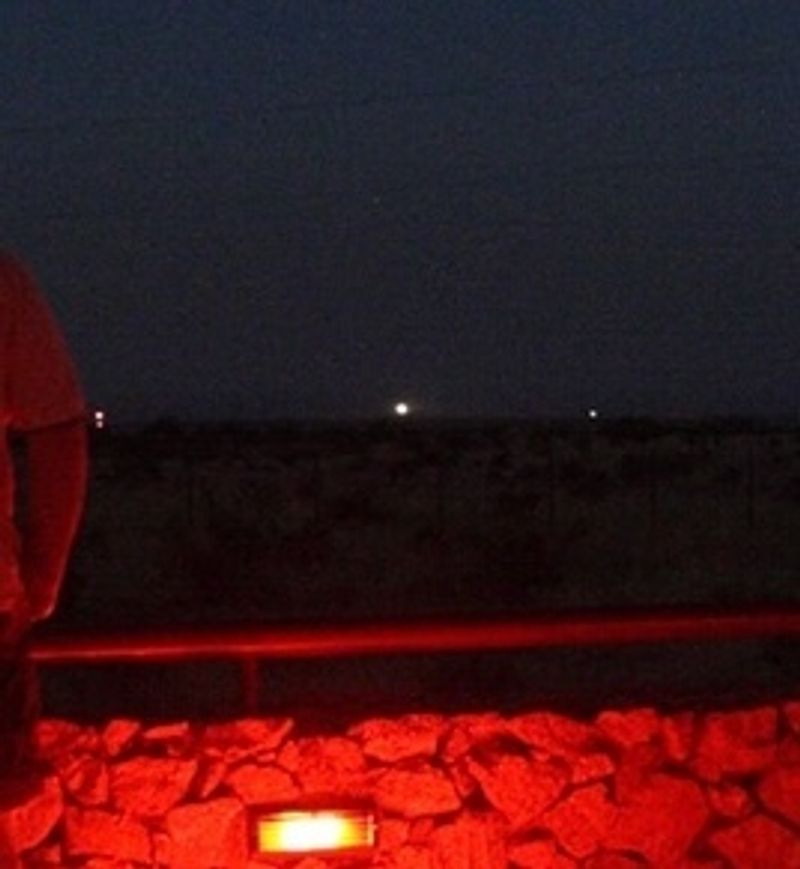
West Texas lays its sky like a tablecloth, and then the lights arrive uninvited. Out past Marfa, orbs float and split, red then white, moving against the logic of ranch roads.
People have watched them for over a century. The state even built a viewing area, a polite way of saying, Yes, this is a thing, bring a jacket.
Scientists propose car headlights, mirages, or refracted temperature layers.
Those answers explain many nights, not all. The Chinati backdrop makes you receptive, silhouettes etched like cut paper.
You stand with strangers, swapping theories that sound smarter in the dark. A 2011 student study attributed several displays to highway traffic patterns, satisfying and slightly disappointing.
Still, the lights rehearse their choreography on schedule enough to be neighborly. You drive away with your radio low.
Sometimes the horizon blinks back a farewell, and you do not blink first.
12. The White Lady of Union Cemetery (Connecticut)
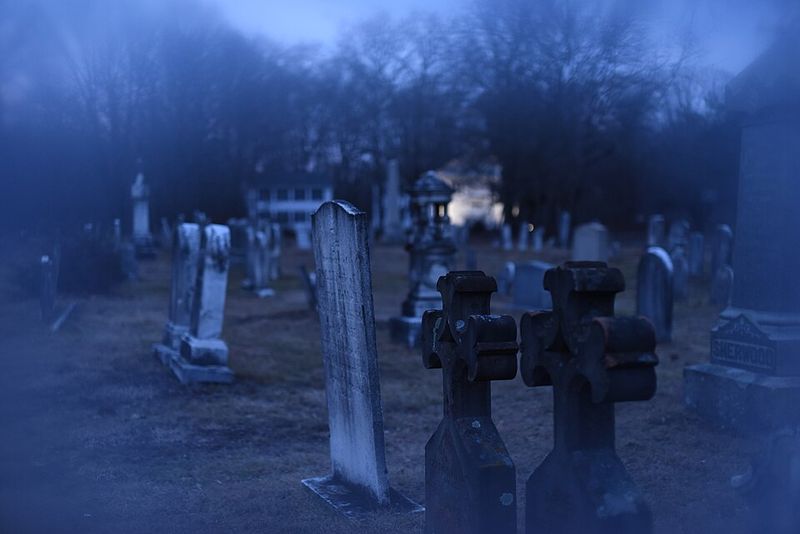
In Easton, a two lane road hugs a cemetery where visibility goes philosophical after dusk. Drivers report a woman in white stepping into their beams, too luminous to be flesh, too detailed to be trick light.
Photographers swear a handful of frames caught a hem and a face looking away. The gate closes early, which feels like good manners and policy disguised as warning.
Connecticut’s colonial graveyards are dense with names that read like syllabaries of austerity. The White Lady carries no fixed biography, a blank that encourages projection.
Paranormal investigators bring recorders, and night brings its own answers: owls, temperature drops, breath that looks like spirit if you want it to. Still, that sudden figure on Route 59 persists.
You touch the brakes out of reverence or reflex. Either way, you pass slowly as if history is crossing.
It usually is.



