Asia is home to some of the world’s oldest cities, where centuries of history still shape daily life. From former imperial capitals to key stops along ancient trade routes, these destinations offer a deeper look at how cultures, religions, and traditions developed over time.
Each of these 12 cities stands out for its historical impact and lasting influence. Here are the ones that continue to draw travelers looking for more than just modern skylines.
1. Kyoto, Japan
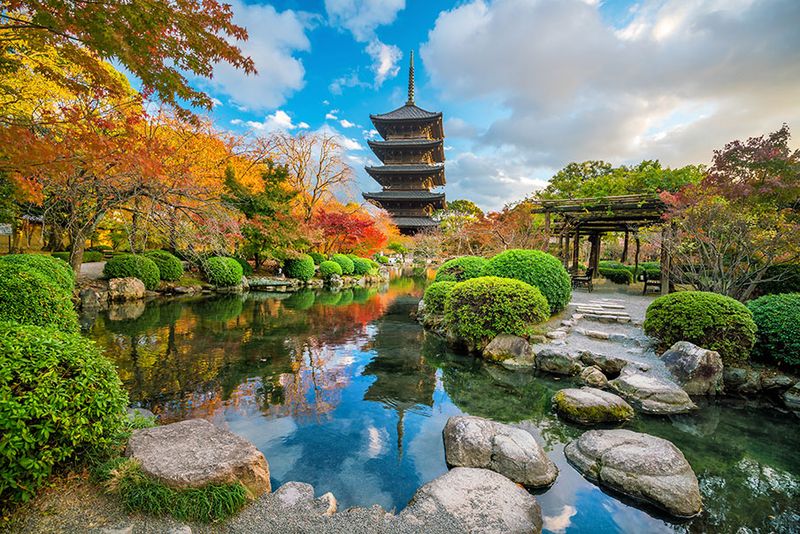
Japan kept its cultural soul alive in one city more than anywhere else, and that city is Kyoto. For over a thousand years, from 794 to 1868, it served as the country’s imperial capital, and the result is a place packed with more history per square kilometer than almost anywhere in Asia.
Kyoto holds 17 UNESCO World Heritage Sites, including iconic landmarks like Kinkaku-ji, the Golden Pavilion, and the ancient wooden structure of Kiyomizu-dera Temple. The Gion district still preserves the tradition of geisha culture, where formal tea ceremonies have been practiced for centuries.
Unlike many historic cities that suffered heavy damage during World War II, Kyoto was largely spared, which is why so much of its original character remains intact today. Visitors can explore traditional machiya townhouses, walk through bamboo groves, and discover centuries-old shrines tucked behind quiet neighborhood streets.
Plan at least four days here, because Kyoto rewards slow, deliberate exploration.
2. Varanasi, India
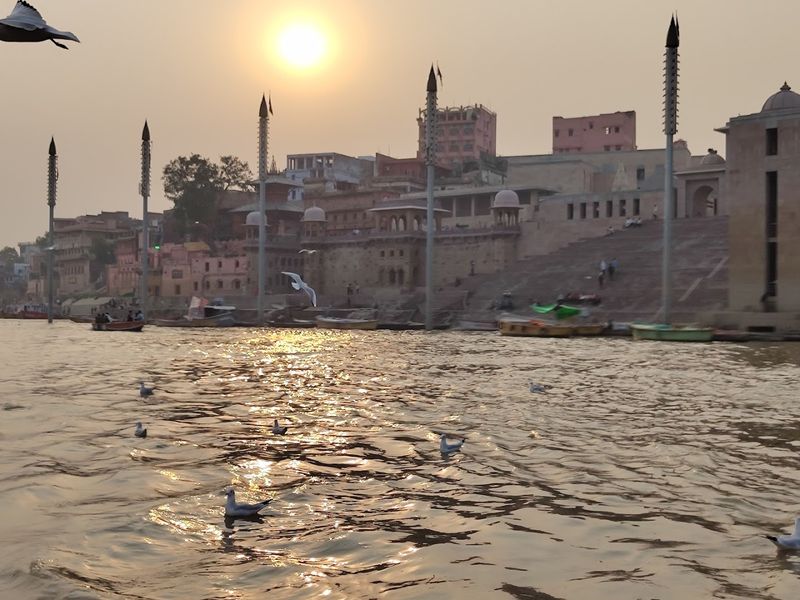
Few cities on Earth can claim to be among the oldest continuously inhabited places in human history, but Varanasi does exactly that, with a documented history stretching back more than 3,000 years. Known also as Kashi or Banaras, it holds the distinction of being the most sacred city in Hinduism.
The heart of Varanasi is its famous ghats, a long series of stone steps leading down to the Ganges River, where pilgrims gather daily to perform religious rituals and prayers. There are over 80 ghats in total, each with its own history and significance.
Devout Hindus believe that reaching Varanasi at the end of their lives and having their ashes immersed in the Ganges can bring liberation from the cycle of rebirth. Beyond its spiritual importance, the city has long been a center of learning, classical music, and silk weaving.
The narrow winding lanes of the old city are filled with temples, shrines, and centuries-old architecture that no photograph can fully capture.
3. Angkor, Cambodia
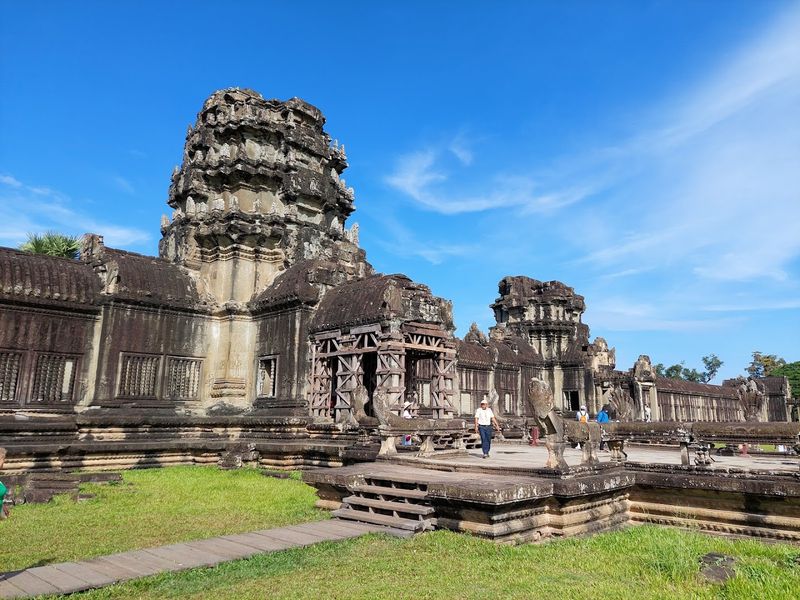
Hidden within the jungles of northern Cambodia lies one of the most awe-inspiring archaeological sites ever created. Angkor was the heart of the Khmer Empire from the 9th to the 15th centuries, a civilization so advanced that its capital was once among the largest cities in the world.
The crown jewel of the site is Angkor Wat, a विशाल temple complex originally built in the early 12th century as a Hindu temple dedicated to Vishnu before gradually transforming into a Buddhist site. Its intricate bas-reliefs, towering spires, and near-perfect symmetry make it one of the most recognizable landmarks on Earth.
But Angkor is far more than just Angkor Wat. The sprawling complex covers over 400 square kilometers and includes dozens of major temples, such as Bayon, famous for its massive stone faces, and Ta Prohm, where tree roots dramatically intertwine with ancient ruins.
At its peak, Angkor was a highly sophisticated urban center with advanced water management systems that supported hundreds of thousands of residents. Today, it stands as a UNESCO World Heritage Site and one of the most important archaeological discoveries in human history.
Exploring Angkor at sunrise, as the first light reflects off the temple towers, is an experience that belongs on every serious traveler’s bucket list.
4. Petra, Jordan
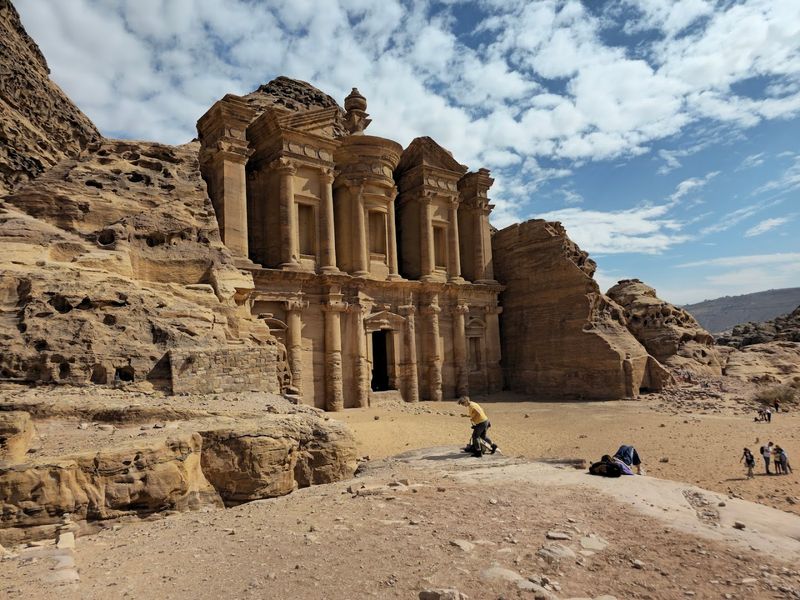
Carved directly into towering rose-red sandstone cliffs, Petra is one of the most visually dramatic archaeological sites in the entire world, and it has been drawing travelers from across the globe ever since it was formally introduced to the Western world in 1812.
The Nabataeans, a highly skilled Arab civilization, established Petra as early as the 4th century BC and turned it into a major commercial hub connecting Arabia, Egypt, and the Mediterranean. At its peak, the city housed tens of thousands of people and controlled some of the most profitable trade routes of the ancient world.
The most photographed structure in Petra is Al-Khazneh, known as the Treasury, a massive facade sculpted into the cliff face with extraordinary precision. Visitors reach it by walking through the Siq, a narrow canyon passage stretching nearly 1.2 kilometers.
Petra is both a UNESCO World Heritage Site and one of the New Seven Wonders of the World, and it genuinely earns every title it holds.
5. Samarkand, Uzbekistan
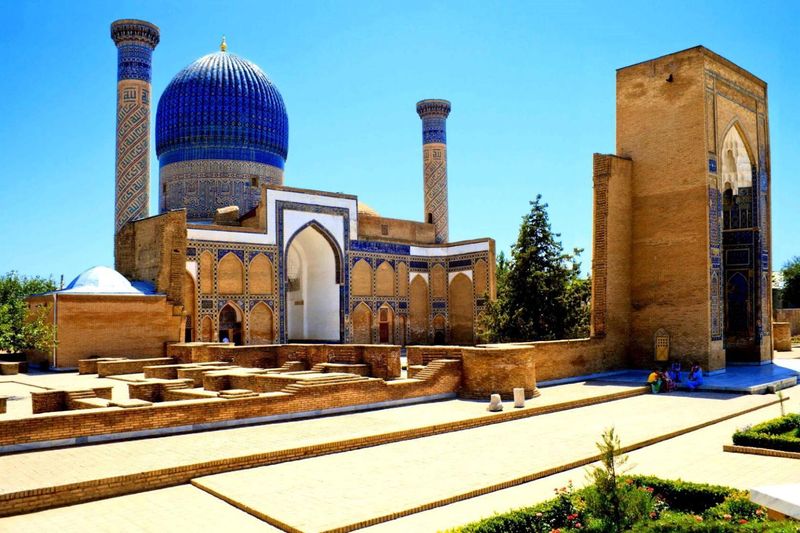
Central Asia’s crown jewel of architecture sits in Uzbekistan, and it has been turning heads since the days when camel caravans ruled the trade world. Samarkand rose to incredible prominence in the 14th century when the conqueror Timur, also known as Tamerlane, made it the dazzling capital of his empire.
The city’s most iconic landmark is the Registan, a public square flanked on three sides by grand madrasas covered in brilliant blue and turquoise mosaic tilework. Each madrasa was a center of Islamic learning and scholarship, and together they form one of the most impressive architectural ensembles anywhere in the world.
Other key sites include the Gur-e-Amir mausoleum, where Timur himself is buried, and the Shah-i-Zinda necropolis, a long alleyway of ornate mausoleums that dates back to the 11th century. Samarkand’s strategic position on the ancient Silk Road made it a meeting point for Persian, Chinese, Indian, and European cultures.
The city has held UNESCO World Heritage status since 2001.
6. Bagan, Myanmar
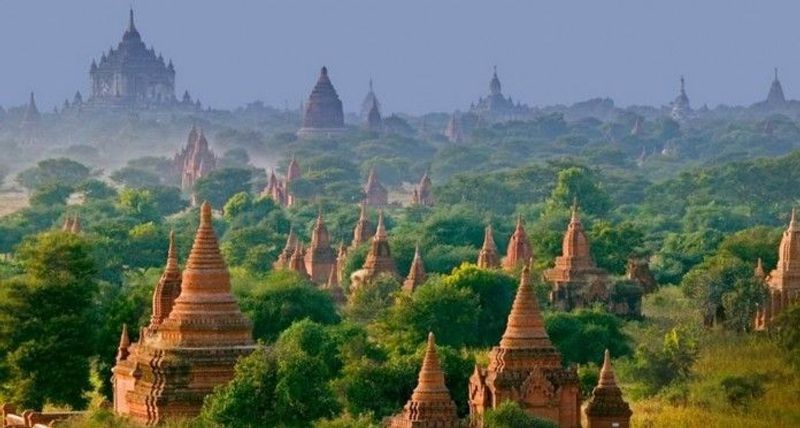
Across a wide flat plain in central Myanmar, more than 2,000 ancient temples and pagodas rise from the earth in one of the most extraordinary concentrations of religious architecture found anywhere on the planet. Bagan was the capital of the Pagan Kingdom from the 9th to the 13th centuries, and during that time, rulers commissioned religious monuments by the thousands.
At its absolute peak, historians estimate that Bagan contained over 10,000 temples and stupas. Today, more than 2,000 remain standing in various states of preservation, making it a site that genuinely rewards multiple days of exploration.
The Ananda Temple, built around 1105 AD, is considered one of the finest surviving examples of early Burmese architecture.
Travelers can explore the site by bicycle, horse-drawn cart, or electric scooter, each method offering a different perspective on the scale of the landscape. Bagan was officially inscribed on the UNESCO World Heritage list in 2019.
Watching the sun rise over the temple-dotted plain from a high vantage point is widely regarded as one of Asia’s most memorable travel experiences.
7. Xi’an, China
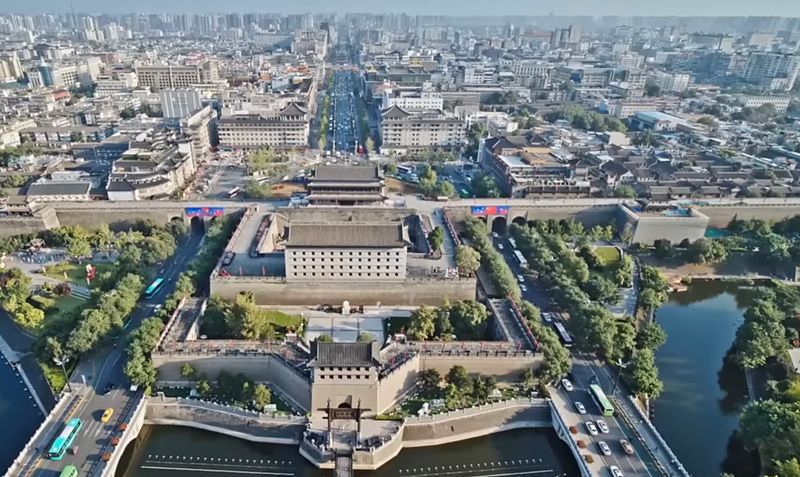
The city that launched one of history’s greatest archaeological discoveries is also the city that anchored the eastern end of the ancient Silk Road for centuries. Xi’an served as the capital of China under multiple dynasties, including the powerful Qin, Han, and Tang, making it one of the most historically significant cities in all of East Asia.
The Terracotta Army, discovered by farmers in 1974 and dating back to around 210 BC, is Xi’an’s most famous attraction. The burial complex of Emperor Qin Shi Huang contains thousands of life-sized clay soldiers, horses, and chariots, each with unique facial features, arranged in military formation to protect the emperor in the afterlife.
Beyond the Terracotta Army, Xi’an offers the remarkably well-preserved Ancient City Wall, one of the most complete city wall systems remaining in China, stretching over 13 kilometers in a near-perfect rectangle. The Muslim Quarter, home to a large Hui Muslim community, features the Great Mosque of Xi’an, a structure that blends Chinese and Islamic architectural styles in a genuinely unexpected way.
8. Kathmandu, Nepal
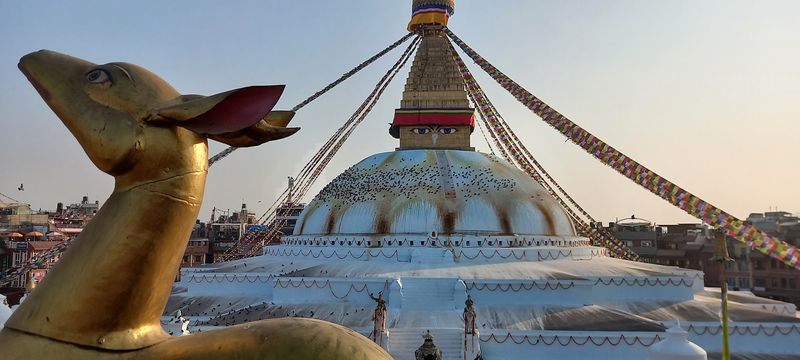
Perched in a Himalayan valley at an elevation of about 1,400 meters, Kathmandu is a city where Hindu temples and Buddhist stupas stand side by side, often within the same neighborhood, and sometimes sharing the same courtyard. This seamless blending of two major religious traditions is one of the things that makes Kathmandu genuinely unlike any other city in Asia.
The Kathmandu Valley as a whole contains seven UNESCO World Heritage Sites, including the famous Boudhanath Stupa, one of the largest Buddhist stupas in the world, and the Pashupatinath Temple, one of the most sacred Hindu sites in South Asia. The ancient royal squares of Patan, Bhaktapur, and Kathmandu Durbar each showcase extraordinary Newari architecture that dates back centuries.
Kathmandu is also the main gateway for trekkers and mountaineers heading into the Himalayas, which adds an adventurous energy to the city’s deeply traditional character. The old neighborhoods of Thamel and Patan are ideal for exploring on foot, with courtyards, shrines, and ancient carved wooden architecture around nearly every corner.
9. Hanoi, Vietnam
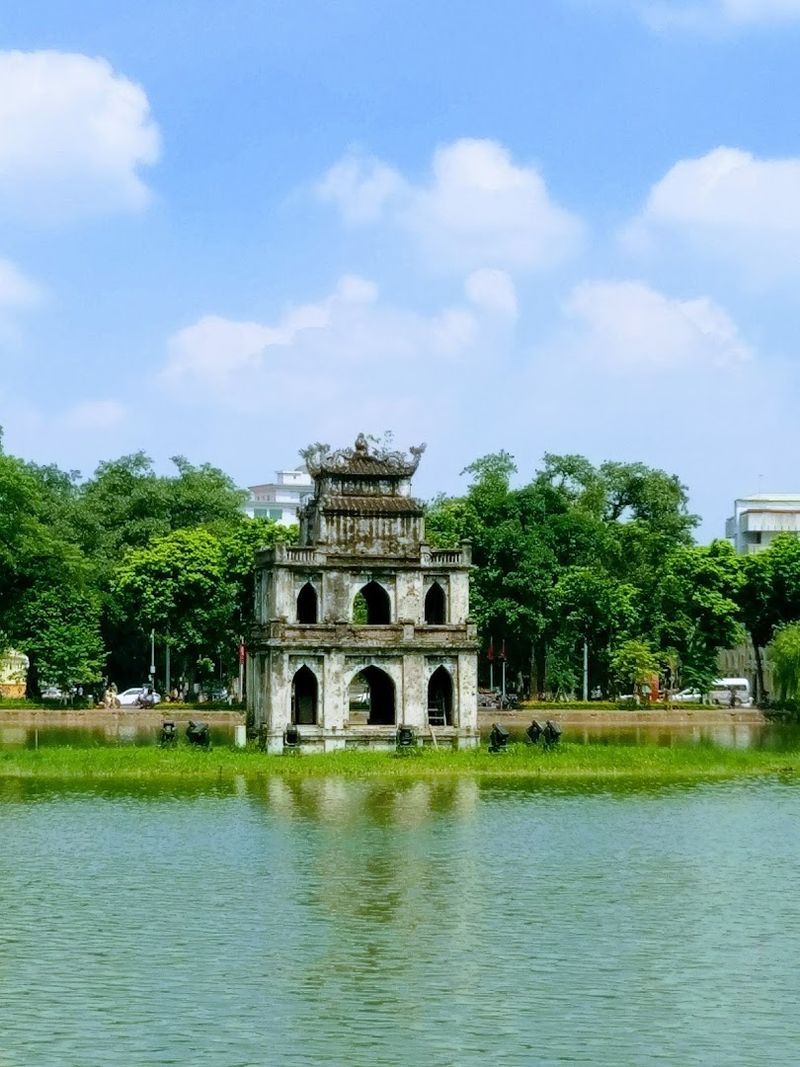
Vietnam’s capital city has been accumulating history for over a thousand years, and it shows in the best possible way. Hanoi was established as a major political center in 1010 AD when Emperor Ly Thai To moved the capital to the banks of the Red River, and it has been a hub of Vietnamese culture and governance ever since.
The Old Quarter is the city’s historic commercial heart, a dense grid of narrow streets where each lane was traditionally dedicated to a specific trade, from silk and paper to silverware and lacquerware. Many of those trade traditions still continue today, making the Old Quarter one of the most living, breathing historic districts in Southeast Asia.
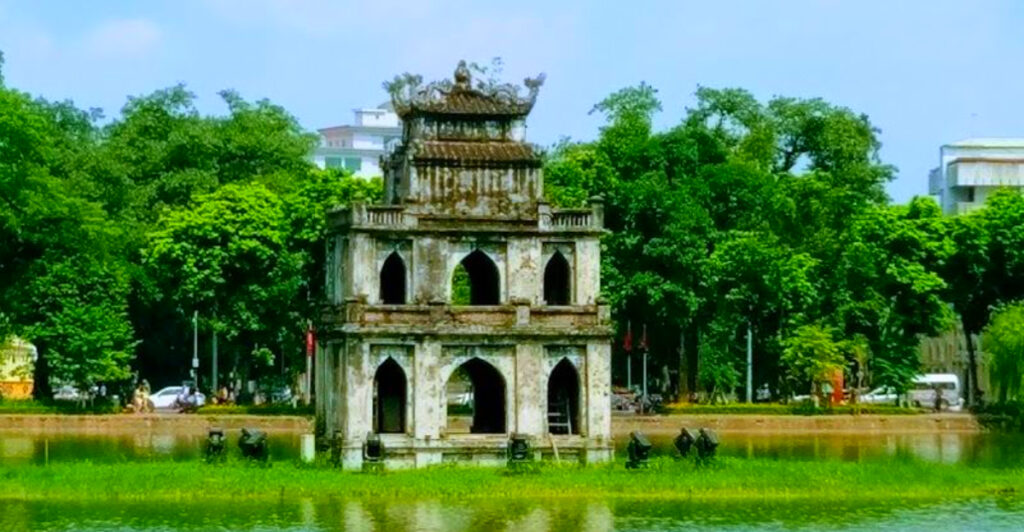
Key landmarks include the Temple of Literature, Vietnam’s first national university founded in 1070, and the One Pillar Pagoda, a unique wooden structure built on a single stone pillar in the middle of a small pond. Hoan Kiem Lake, located right in the city center, holds a legendary story about a magical sword and a giant turtle, which remains central to Hanoi’s cultural identity.
10. Istanbul, Turkey
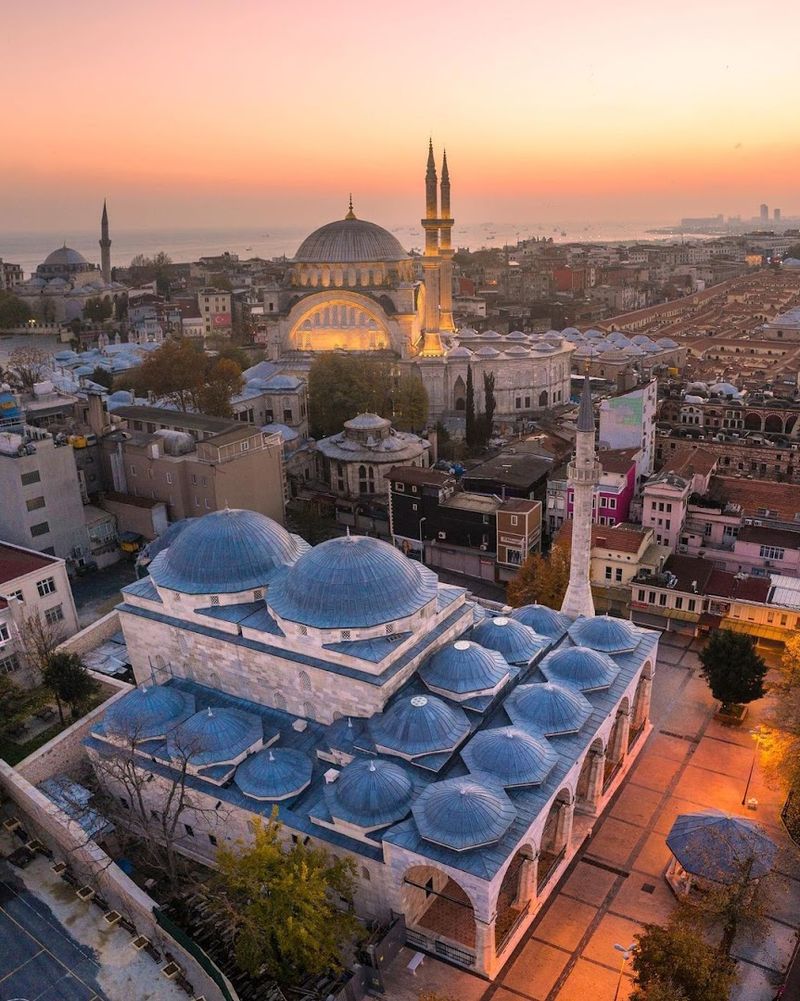
Straddling two continents at once, Istanbul is the only major city in the world that sits across both Europe and Asia, separated by the Bosphorus strait. That geographic reality has shaped its entire history, turning it into one of the most culturally layered cities on Earth for well over two thousand years.
Istanbul served as the capital of three consecutive empires: the Roman, the Byzantine, and the Ottoman. Each left behind monuments that still define the city’s skyline today.
The Hagia Sophia, originally built as a Christian cathedral in 537 AD, later became an Ottoman mosque and is now considered one of the greatest architectural achievements in history.
The Blue Mosque, the Topkapi Palace, and the Grand Bazaar, one of the world’s oldest and largest covered markets with over 4,000 shops, are all within walking distance of each other in the historic Sultanahmet district. Istanbul’s layered history means that a Roman cistern, a Byzantine church, and an Ottoman caravanserai can all appear on the same city block.
It is a traveler’s paradise for history enthusiasts of every kind.
11. Luang Prabang, Laos
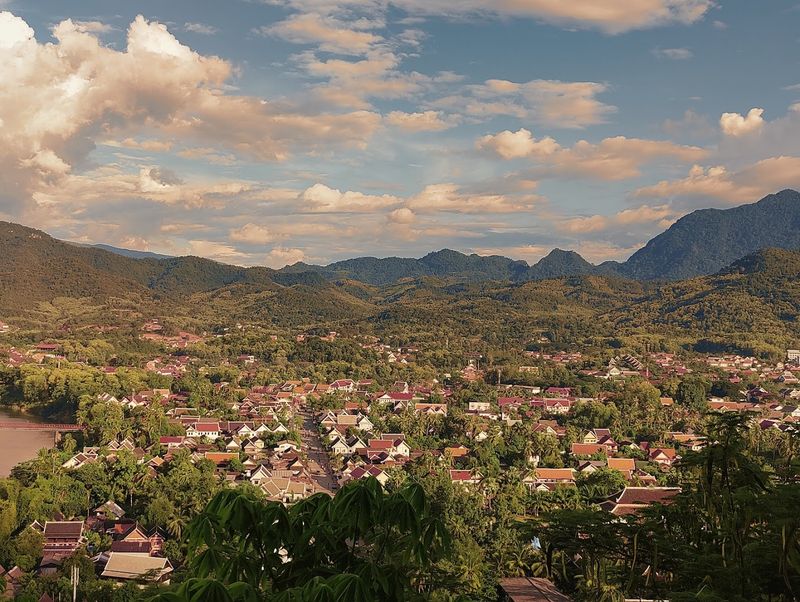
Tucked into the mountains of northern Laos at the point where the Mekong and Nam Khan rivers meet, Luang Prabang is a city that somehow managed to preserve both its traditional Lao Buddhist character and its French colonial architecture side by side, without one erasing the other.
The city rose to prominence in the mid-14th century as the royal capital of the Lane Xang Kingdom, one of the most powerful kingdoms in Southeast Asian history. It remained an important center of Buddhist scholarship and education for hundreds of years, and today it is home to over 30 active temples, including the magnificent Wat Xieng Thong, built in 1560.
Luang Prabang was designated a UNESCO World Heritage Site in 1995 in recognition of its exceptional architectural heritage and its well-preserved urban fabric. The daily almsgiving ceremony, known as Tak Bat, where hundreds of monks walk through the streets at dawn to receive offerings from residents, is one of the most distinctive cultural traditions still practiced here every single morning.
12. Ayutthaya, Thailand
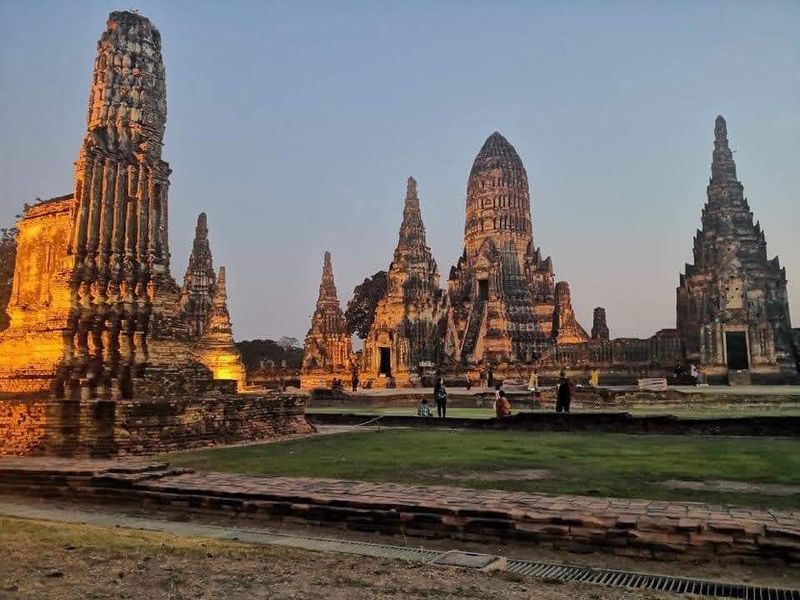
Thailand’s most powerful ancient kingdom did not go quietly, and the ruins it left behind are among the most striking archaeological sites in all of Southeast Asia. Ayutthaya was founded in 1351 and grew into one of the largest and wealthiest cities in the world by the 17th century, with a population estimated at around one million people at its peak.
The kingdom fell in 1767 after a Burmese invasion, and much of the city was destroyed. What remains today is a haunting landscape of crumbling brick towers, headless Buddha statues, and temple foundations spread across a large island formed by three rivers.
The Ayutthaya Historical Park, which covers much of the old city center, became a UNESCO World Heritage Site in 1991.
Key temple complexes include Wat Mahathat, famous for the Buddha head entwined in tree roots, Wat Phra Si Sanphet, which once housed a massive golden Buddha statue, and Wat Chaiwatthanaram, a grand riverside temple built in 1630. Exploring Ayutthaya by bicycle is the most practical and rewarding way to cover the full spread of ruins across the site.
Share this story