Egypt has a way of making you feel like you stumbled into a history book that never ends. From towering pyramids to hidden tombs carved deep into desert cliffs, the country holds some of the most jaw-dropping historic sites on the planet.
Whether you are a history nerd or just someone who loves a good adventure, Egypt delivers on every level. These 12 places are the ones that turn a good trip into an unforgettable one.
The Great Pyramid of Giza, Giza
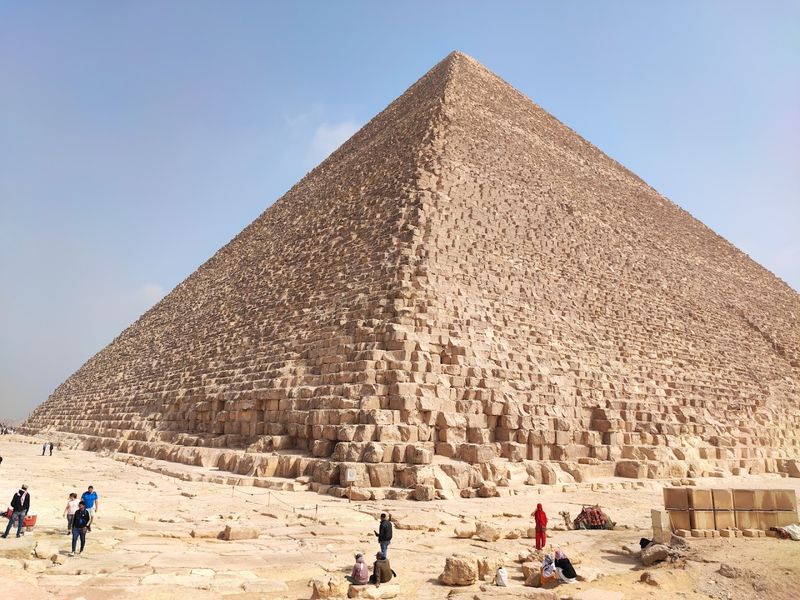
No amount of photos can prepare you for standing next to the Great Pyramid of Giza. Built over 4,500 years ago for King Khufu, it is the last surviving Wonder of the Ancient World.
That title is not just a fun fact. It is a reality check that stops you mid-step.
The pyramid was built using an estimated 2.3 million stone blocks, some weighing up to 80 tons. Archaeologists are still debating exactly how ancient workers pulled that off.
The mystery alone is worth the trip.
Go early in the morning to beat the crowds and the heat. The Giza Plateau also includes the Sphinx and two other major pyramids, so budget a full day.
Wear comfortable shoes because the ground is uneven and the site is larger than most people expect. Standing there, you will understand why this place changes the mood of a whole trip.
Saqqara, Giza Governorate
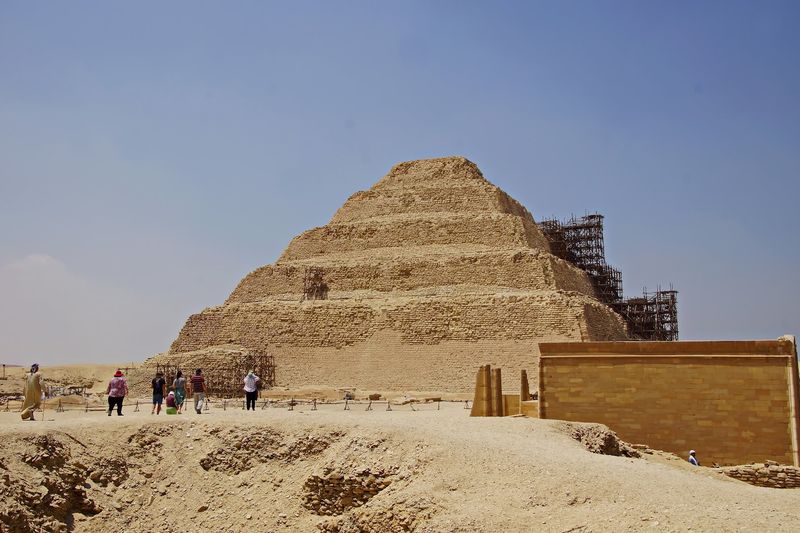
Saqqara is the kind of place that rewards slow travelers. The more time you spend walking the site, the more layers of Egyptian history keep revealing themselves.
Most visitors come for the Step Pyramid of Djoser, and honestly, that alone justifies the detour from Giza.
Built around 2650 BCE, the Step Pyramid is considered one of the earliest large-scale stone structures ever constructed. It was designed by the architect Imhotep, who later became so legendary that ancient Egyptians essentially turned him into a god.
Not a bad legacy for an architect.
Saqqara also holds dozens of mastaba tombs with detailed wall carvings that show everyday life in ancient Egypt. The colors in some of these tombs have survived surprisingly well.
Hire a local guide here because the site is vast, and without context, you might walk past something remarkable without realizing it. Plan for at least three hours.
Dahshur, Giza Governorate
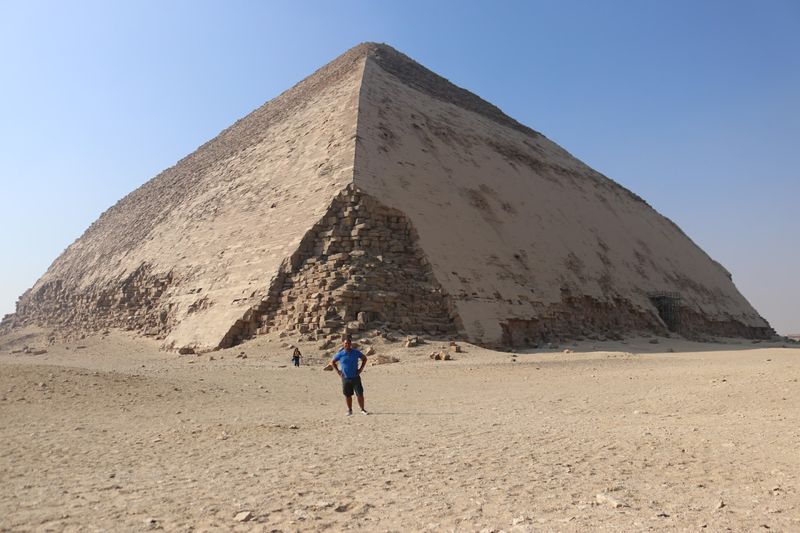
Dahshur is where pyramid building stopped being a guessing game and became a science. The Bent Pyramid gets its name from the noticeable change in angle partway up, which happened because engineers realized the original slope was too steep.
You can practically see the ancient problem-solving in the stonework.
Right next to it stands the Red Pyramid, Egypt’s first successful true pyramid. It was also built by Pharaoh Sneferu, making Dahshur essentially his personal trial-and-error laboratory.
The fact that he kept building until he got it right is oddly inspiring.
What makes Dahshur especially appealing is the lack of crowds. Unlike Giza, you can walk around these pyramids in relative peace, which makes the experience feel more personal and less like a theme park.
The Red Pyramid even allows visitors to climb down into the burial chamber. Check Egypt’s official monuments portal for current visitor hours before you go.
Karnak, Luxor
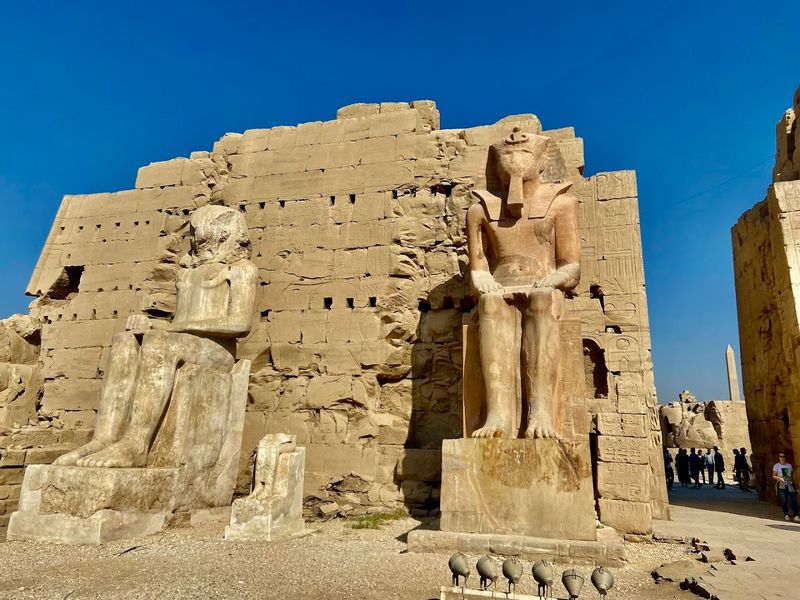
Karnak is not a temple. It is a city that happens to be made of temples.
Covering over 100 hectares, it is the largest ancient religious complex ever built, and walking through it feels like getting lost in a very well-decorated labyrinth.
Construction at Karnak spanned more than 2,000 years, with dozens of pharaohs adding their own halls, obelisks, and chapels. The Great Hypostyle Hall alone contains 134 massive columns, some reaching 21 meters tall.
Standing between them is one of those moments where the word “big” completely loses its meaning.
Karnak was the beating heart of ancient Thebes and one of the most politically powerful religious centers in Egyptian history. Pharaohs used it to show off divine favor, which meant constant renovation and expansion.
The Sacred Lake on the site is also worth a stop. Visit in the late afternoon when the golden light makes every carved surface look even more dramatic.
Luxor Temple, Luxor
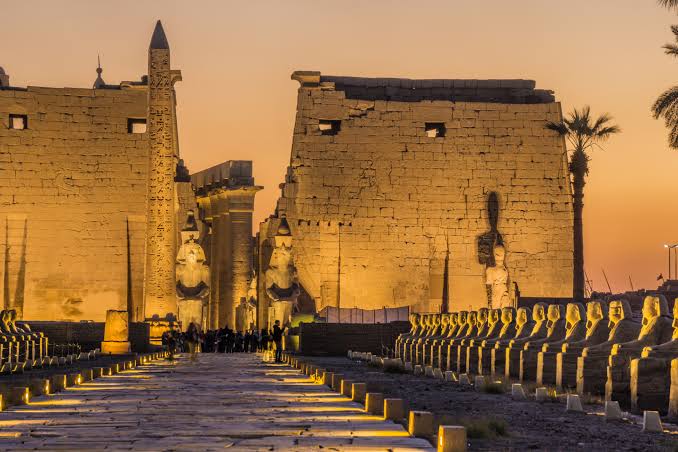
Luxor Temple pulls off something most ancient sites cannot: it looks just as stunning at night as it does during the day. The temple is lit up after dark, and the contrast between the glowing ancient stone and the modern city surrounding it is genuinely striking.
Built primarily by Amenhotep III and later expanded by Ramses II, the temple was dedicated to the rejuvenation of kingship. It was not a funerary temple but a place where the divine essence of the pharaoh was celebrated.
That distinction gives the site a different energy compared to Karnak.
One detail that surprises many visitors is the mosque built inside the temple complex. When the temple was buried under centuries of sand, a village grew on top of it.
The mosque stayed when the excavations began. It is a layered piece of history sitting right on top of another.
Try visiting both in the morning and at night for two very different experiences.
Valley of the Kings, Luxor
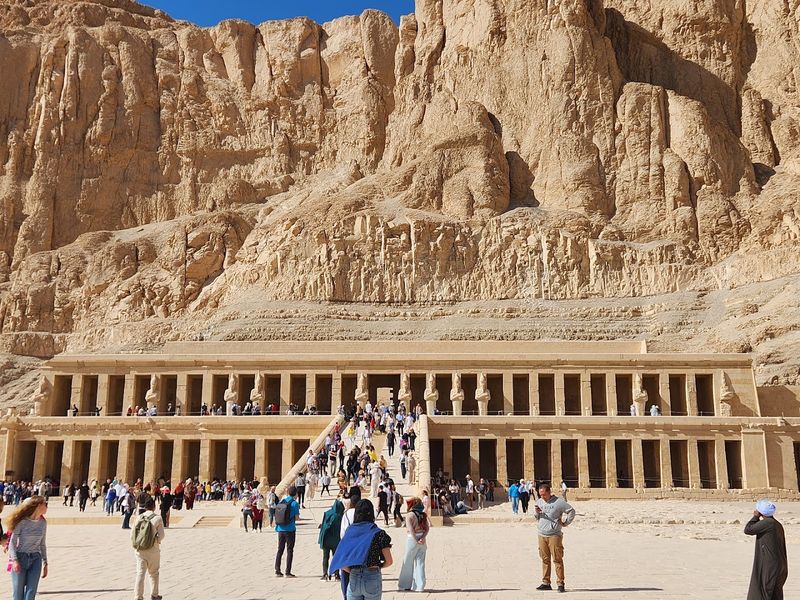
There is something quietly thrilling about walking into a tomb that was sealed for thousands of years. The Valley of the Kings, carved into the limestone cliffs on Luxor’s west bank, holds the burial sites of New Kingdom pharaohs dating back to around 1539 BCE.
Over 60 tombs have been discovered here, and each one is decorated with elaborate scenes from the Book of the Dead. The colors inside many tombs are shockingly vivid.
Tutankhamun’s tomb is the most famous, partly because it was found nearly intact in 1922, which was a discovery so significant it made global headlines and sparked a worldwide obsession with ancient Egypt.
A standard ticket gives access to three tombs, but you can pay extra to enter Tutankhamun’s or the particularly stunning tomb of Seti I. Go early because the site gets busy fast.
Egypt’s official monuments site confirms the Valley of the Kings is open to visitors, though specific tomb access can change seasonally.
Abu Simbel, Aswan Governorate
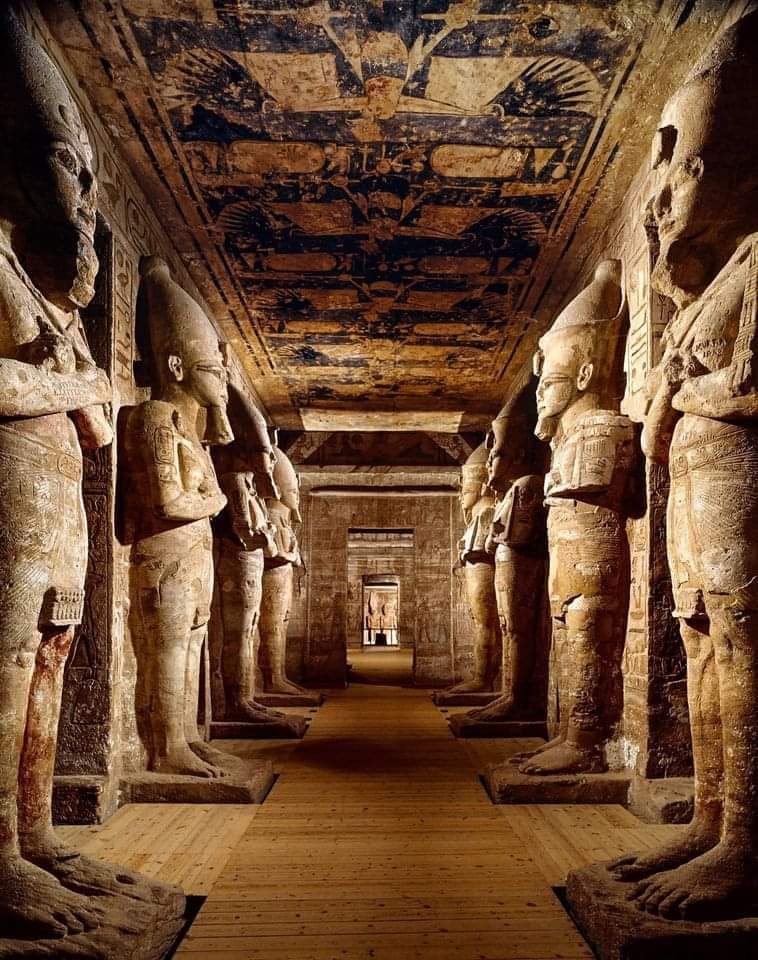
Abu Simbel is the kind of site that makes you stop talking mid-sentence. The four colossal statues of Ramses II carved directly into the rock face stand over 20 meters tall each, and they have been staring down visitors since around 1265 BCE.
They still look like they mean business.
What makes Abu Simbel even more remarkable is that the entire temple was relocated in the 1960s to save it from rising floodwaters caused by the construction of the Aswan High Dam. UNESCO organized the move, cutting the temples into over 1,000 blocks and reassembling them on higher ground.
The engineering feat was arguably as impressive as the original construction.
The temples are part of the UNESCO-listed Nubian Monuments, which adds another layer of global significance to an already extraordinary site. Twice a year, sunlight reaches deep into the inner sanctuary to illuminate specific statues.
The Abu Simbel Sun Festival draws thousands of visitors for exactly this event. Book travel and accommodation well in advance if your timing lines up.
Philae, Aswan
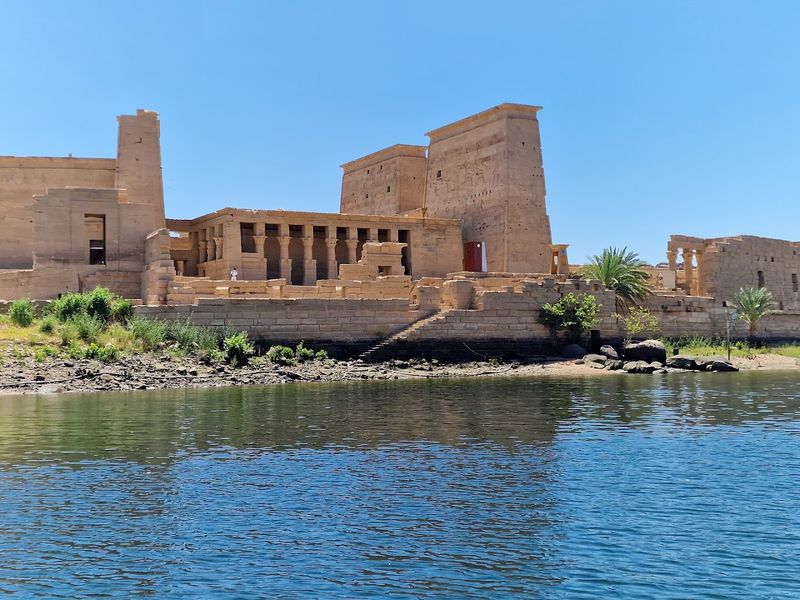
Getting to Philae involves a short boat ride, which somehow makes the whole experience feel like a proper archaeological adventure. The island sits in the Nile near Aswan, and the Temple of Isis that dominates it is one of the best-preserved examples of later Egyptian religious architecture.
Like Abu Simbel, Philae was also rescued and relocated as part of the UNESCO Nubian Monuments salvage operation in the 1970s. The temple was carefully moved to the nearby island of Agilkia to protect it from the rising waters of Lake Nasser.
The effort took nearly a decade and involved engineers from around the world.
The Temple of Isis was one of the last places in Egypt where the ancient religion was still practiced, remaining active well into the 6th century CE. That gives Philae a different kind of emotional weight compared to older sites.
Check Egypt’s official monuments portal for current access details. The evening sound and light show here is also worth considering for a different kind of visit.
Cairo Citadel, Cairo
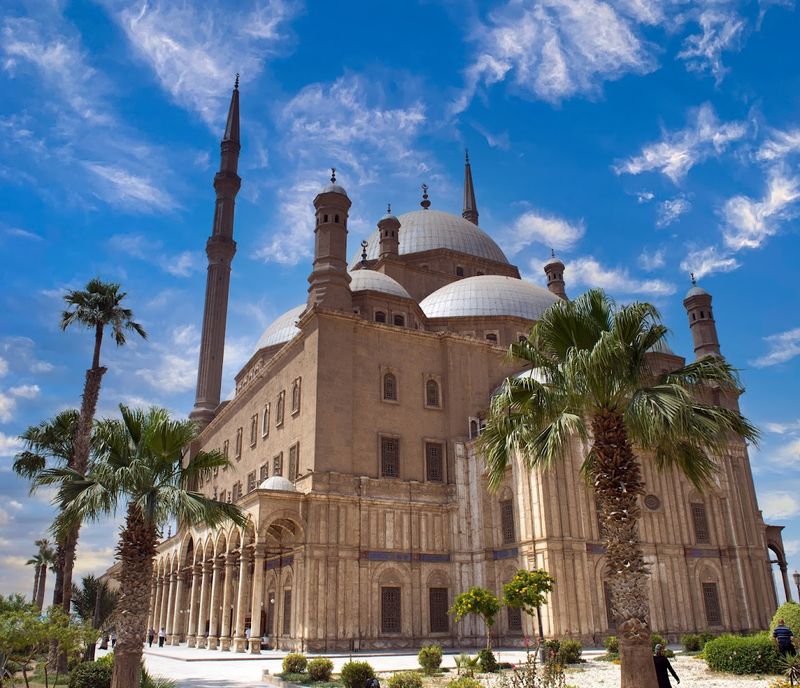
The Cairo Citadel flips the script on what an Egypt trip usually looks like. After days of pharaonic temples and ancient tombs, arriving at this medieval Islamic fortress feels like changing channels to something completely different.
Built by Salah al-Din in the 12th century, it dominated Cairo’s skyline for hundreds of years.
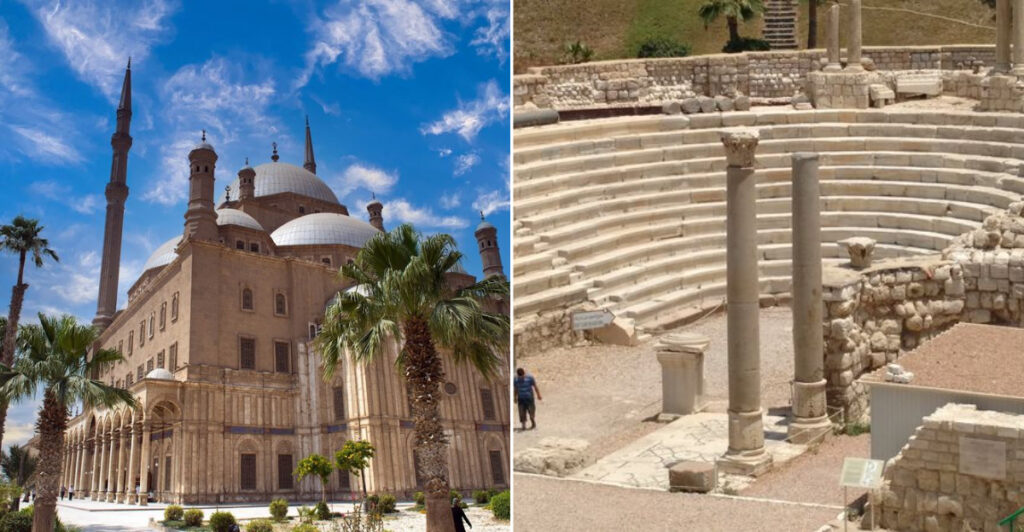
The citadel served as the seat of Egyptian government for nearly 700 years, which makes it one of the most politically significant structures in the country’s history. The Muhammad Ali Mosque inside the complex, built in the Ottoman style in the 19th century, is visually stunning and a sharp contrast to everything else on this list.
From the citadel walls, the views over Cairo are sweeping and genuinely impressive. On a clear day, the Giza pyramids are visible in the distance, which is a fun full-circle moment.
Egypt’s official monuments site lists current opening hours. Budget at least two hours here and wear modest clothing when visiting the mosque inside the complex.
The Egyptian Museum, Cairo
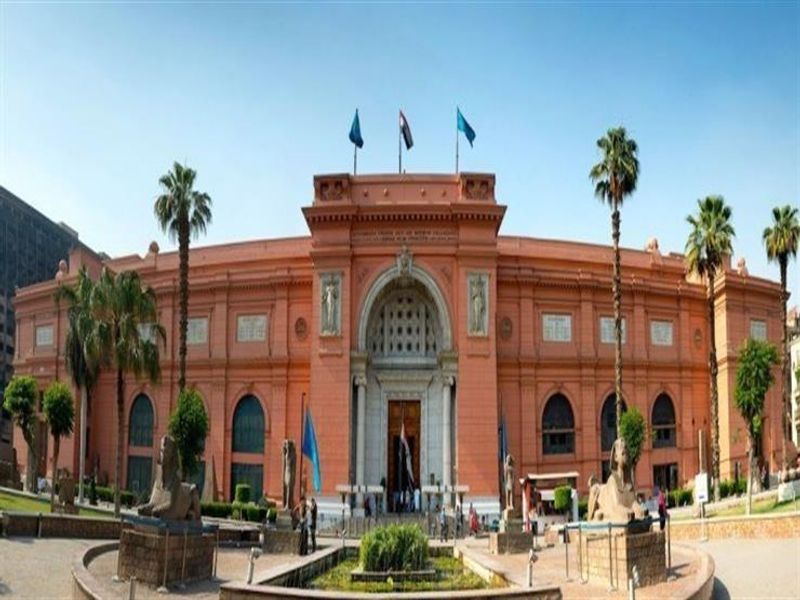
Some of the most important objects in human history are sitting inside a pink building in central Cairo. The Egyptian Museum, opened in 1902, holds over 120,000 artifacts, including the treasures from Tutankhamun’s tomb that were pulled from the Valley of the Kings a century ago.
The gold death mask alone is worth the flight.
The museum itself is a historic landmark, not just a container for historic things. Walking through it feels like traveling through Egyptian history in fast-forward, from prehistoric tools to Roman-era mummies.
The sheer volume of artifacts on display is almost overwhelming in the best possible way.
The new Grand Egyptian Museum near Giza is now open and houses many major collections, but the original Tahrir museum still holds its own. Hiring a guide for at least part of the visit is highly recommended because many labels are minimal and context transforms the experience.
Allow three to four hours minimum, and maybe bring a snack because time disappears inside this place.
Kom el-Dikka, Alexandria
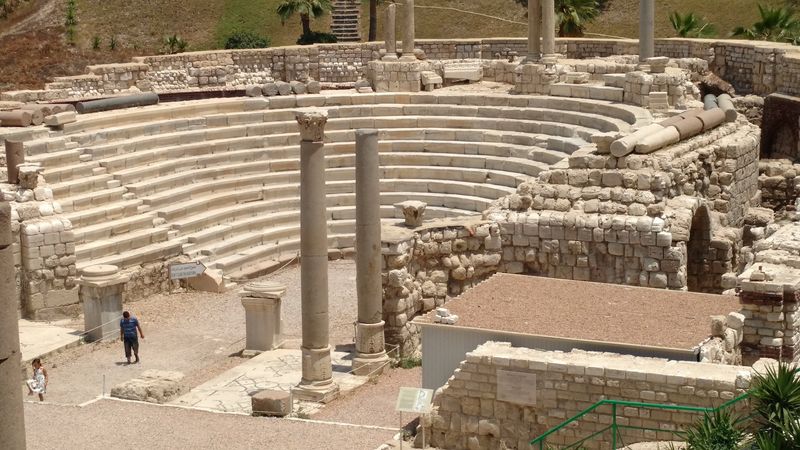
Alexandria tends to get overshadowed by Cairo and Luxor in most Egypt itineraries, but Kom el-Dikka makes a strong case for including it. Right in the middle of a modern city block, this archaeological site preserves the remains of a Roman and Byzantine-era urban quarter that most travelers never see.
The centerpiece is Egypt’s only Roman theater, a beautifully preserved semicircular structure with tiered marble seating. It was discovered in the 1960s during construction work, which is the kind of plot twist that only happens in cities with 2,000-plus years of layered history beneath the pavement.
Kom el-Dikka also includes Roman baths, lecture halls, and residential villas with detailed mosaic floors. The site gives Alexandria’s history a tangible shape that the city’s famous but largely vanished ancient landmarks cannot.
Egypt’s official monuments site describes it as a unique example of Roman urban life in Egypt. Combine this with a visit to the nearby Bibliotheca Alexandrina for a full day in the city.
Saint Catherine Area, South Sinai
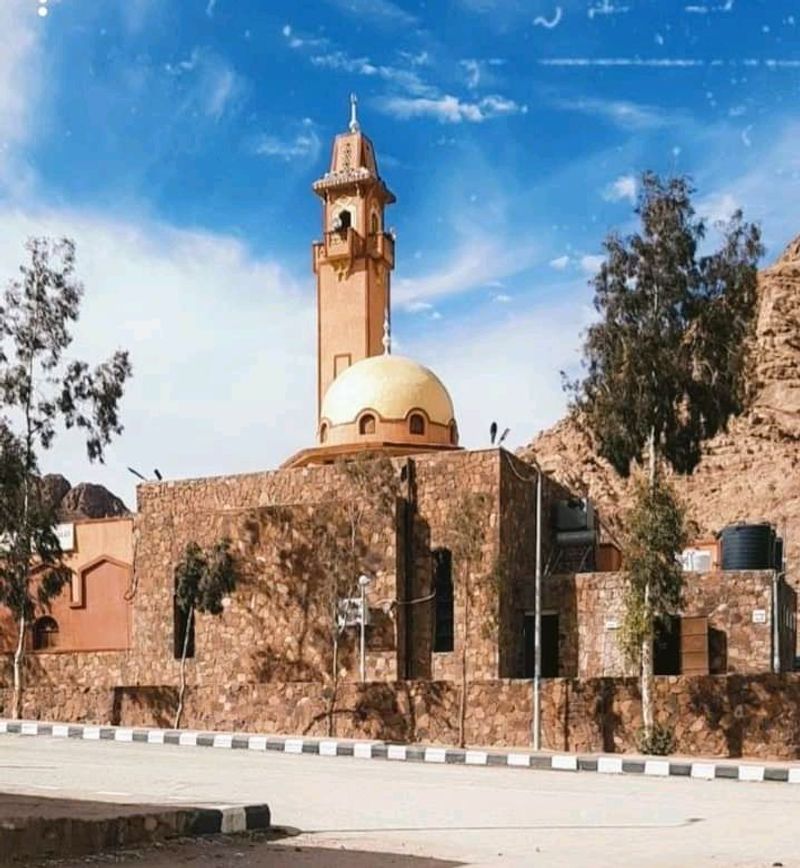
Saint Catherine Area is not just a historic site. It is a place where three world religions converge on the same patch of desert, and that combination gives it an atmosphere that is hard to find anywhere else on Earth.
UNESCO recognizes the area around the Monastery of Saint Catherine and Mount Horeb as sacred to Christianity, Islam, and Judaism.
The monastery itself, built in the 6th century by the Byzantine Emperor Justinian, is one of the oldest continuously operating Christian monasteries in the world. Its library holds the second-largest collection of early Christian manuscripts after the Vatican.
That is not a detail most people expect to find in the middle of the Sinai desert.
Mount Sinai, rising behind the monastery, is traditionally identified as the site where Moses received the Ten Commandments. Many visitors hike to the summit before dawn to catch the sunrise over the surrounding mountains.
The hike takes about two hours each way. Pack warm layers because desert nights at altitude are genuinely cold, regardless of how hot the days feel.
Share this story