Maryland is basically an open-air history museum, and the admission is free. From Civil War battlegrounds to ghost towns swallowed by forest, the state is packed with ruins that tell stories better than any textbook ever could.
I visited a few of these spots last fall, and let me tell you, standing in front of a crumbling furnace or a half-sunken church changes how you think about the past. Whether you are a history buff, an adventure seeker, or just someone who loves a good road trip, these 12 ruins are absolutely worth the detour.
Fort Frederick Ruins in Big Pool, Maryland
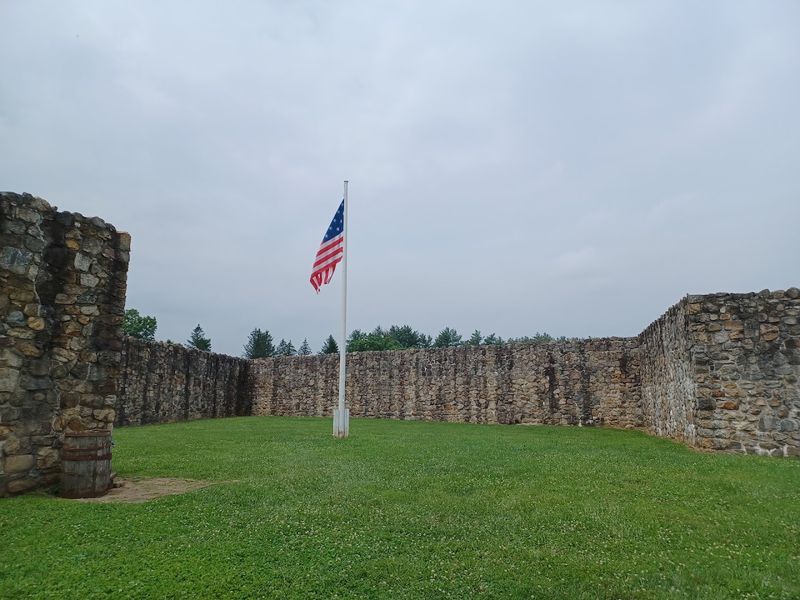
Built in 1756 during the French and Indian War, Fort Frederick is one of the best-preserved stone forts in the entire country. Most forts from that era were made of wood and rotted away centuries ago.
This one stuck around, and it has some serious stories to tell.
The thick limestone walls still stand tall, giving you a real sense of just how serious colonial defense looked. Walking along the perimeter feels like stepping onto a movie set, except everything is completely real.
The fort sits inside a state park, so the grounds are well maintained and easy to explore.
Bring a picnic. Seriously, the setting along the Potomac River makes it one of the most scenic historic spots in western Maryland.
Rangers sometimes offer guided tours that go deep into the fort’s role during the Revolutionary War too. It is a full day worth of history without any of the homework.
Point Lookout Civil War Ruins in Scotland, Maryland
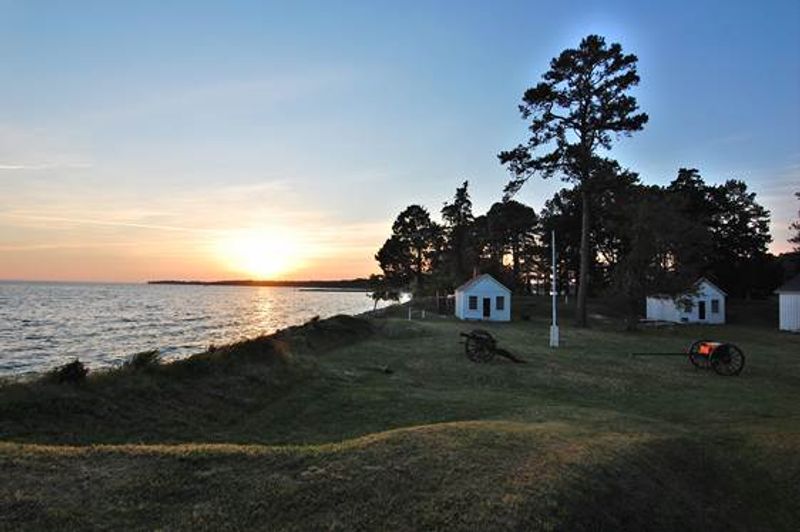
Point Lookout holds the grim record of being the largest Union prison camp for Confederate soldiers during the Civil War. At its peak, over 20,000 prisoners were crammed into a space built for far fewer.
The conditions were brutal, and thousands of men never made it home.
Today, the site sits at the very tip of a peninsula where the Potomac River meets the Chesapeake Bay. The ruins are subtle but haunting.
Crumbling foundations peek through the grass, and historical markers help you piece together what once stood there.
The location itself is stunning in a bittersweet way. Breezy waterfront views contrast sharply with the weight of what happened here.
Ghost hunters have been visiting Point Lookout for decades, claiming it is one of the most haunted spots on the East Coast. Whether or not you believe in that stuff, the history alone is more than enough reason to visit.
Historic St. Mary’s City Archaeological Ruins in St. Mary’s City, Maryland
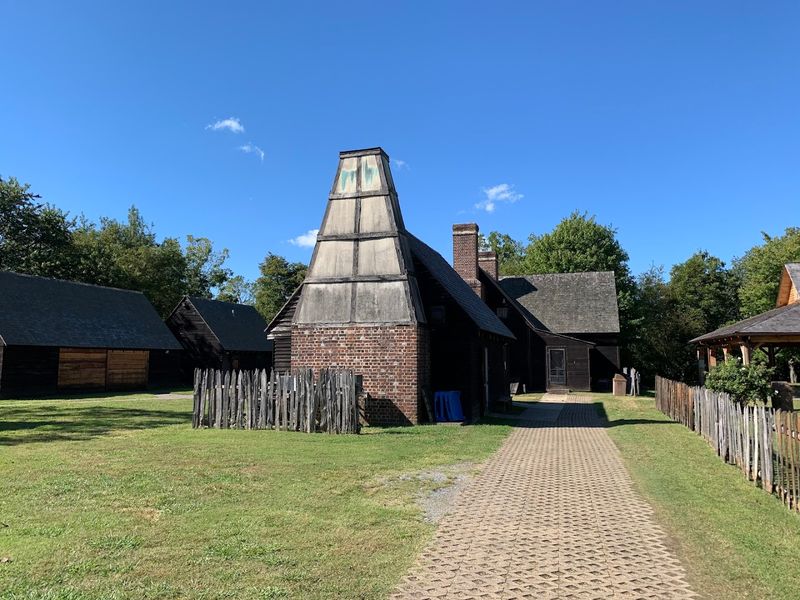
Maryland’s very first capital city was founded in 1634, and for a while, it was kind of a big deal. Then the capital moved to Annapolis in 1694, and St. Mary’s City slowly faded into the earth.
What archaeologists have uncovered since is nothing short of remarkable.
The site spans over 800 acres and includes the remains of the original statehouse, a tavern, and various colonial homes. Some structures have been carefully reconstructed so visitors can get a real feel for 17th-century Maryland life.
The outdoor museum format makes it approachable for all ages.
I spent an afternoon wandering the grounds last spring, and the scale of the place genuinely surprised me. Ongoing digs mean there is always something new being uncovered.
If you time your visit right, you might even catch archaeologists actively working on a dig. That kind of live history is rare, and St. Mary’s City delivers it with style.
Jerusalem Mill Village Ruins in Kingsville, Maryland
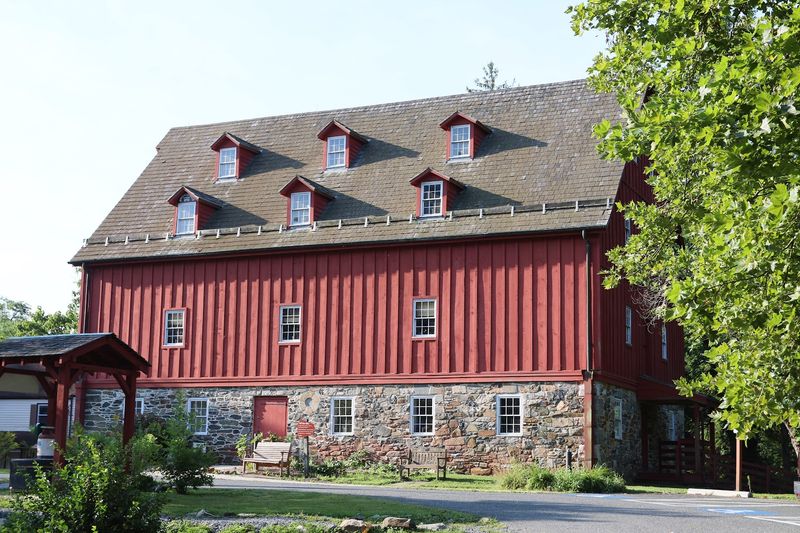
Tucked inside Gunpowder Falls State Park, Jerusalem Mill Village is the kind of place that makes you feel like you accidentally time-traveled. The stone grist mill has been standing since around 1772, and it still looks like it means business.
The creek running beside it only adds to the whole dramatic effect.
The village includes the mill, a gun shop, a blacksmith shop, and several other structures in various states of preservation. Some buildings have been restored, while others are gloriously crumbling in that photogenic way ruins tend to be.
Photographers absolutely love this spot, and honestly, the camera does not lie here.
Hiking trails connect the village to the broader park, making it easy to combine a history visit with a nature walk. The mill occasionally hosts living history events where costumed volunteers demonstrate colonial crafts.
Check the park calendar before you go because those events fill up fast and are genuinely worth the trip.
Catoctin Furnace Ruins in Thurmont, Maryland
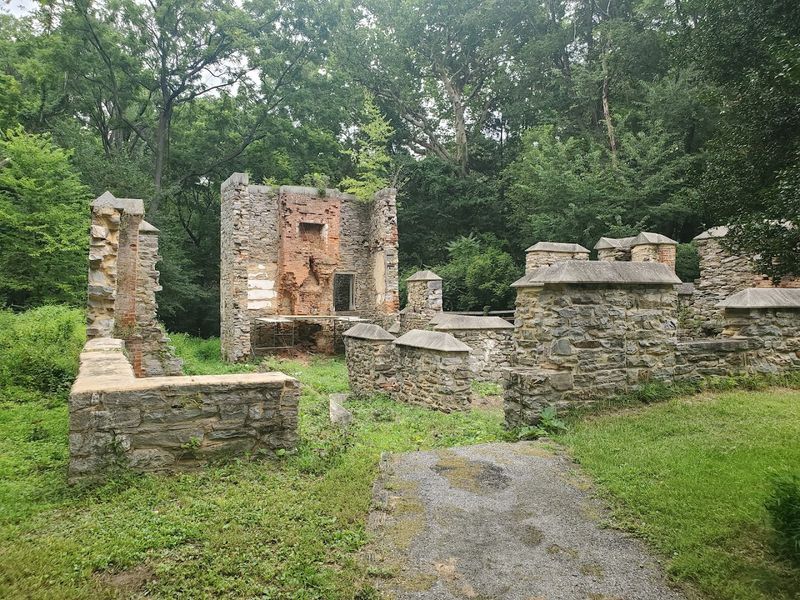
Catoctin Furnace fired up for the first time in 1776, which means it was literally producing iron for the American Revolution. Cannons and camp equipment forged here helped outfit the Continental Army.
Not bad for a spot most people drive past without a second glance.
The ruins include the original stone furnace stack, which still stands impressively tall despite being over 200 years old. Interpretive signs explain the iron-making process in plain language, making it easy to understand even if metallurgy was never your strong suit.
The surrounding forest has reclaimed much of the old ironmaster’s village, giving the site an eerie, abandoned quality.
A small museum nearby adds context to the whole operation. Recent archaeological work has uncovered evidence of the workers who lived here, including enslaved people whose labor powered the furnace.
That layer of history gives Catoctin Furnace a depth that goes well beyond pretty stonework. Plan at least two hours for a proper visit.
Daniels Ghost Town Ruins in Ellicott City, Maryland
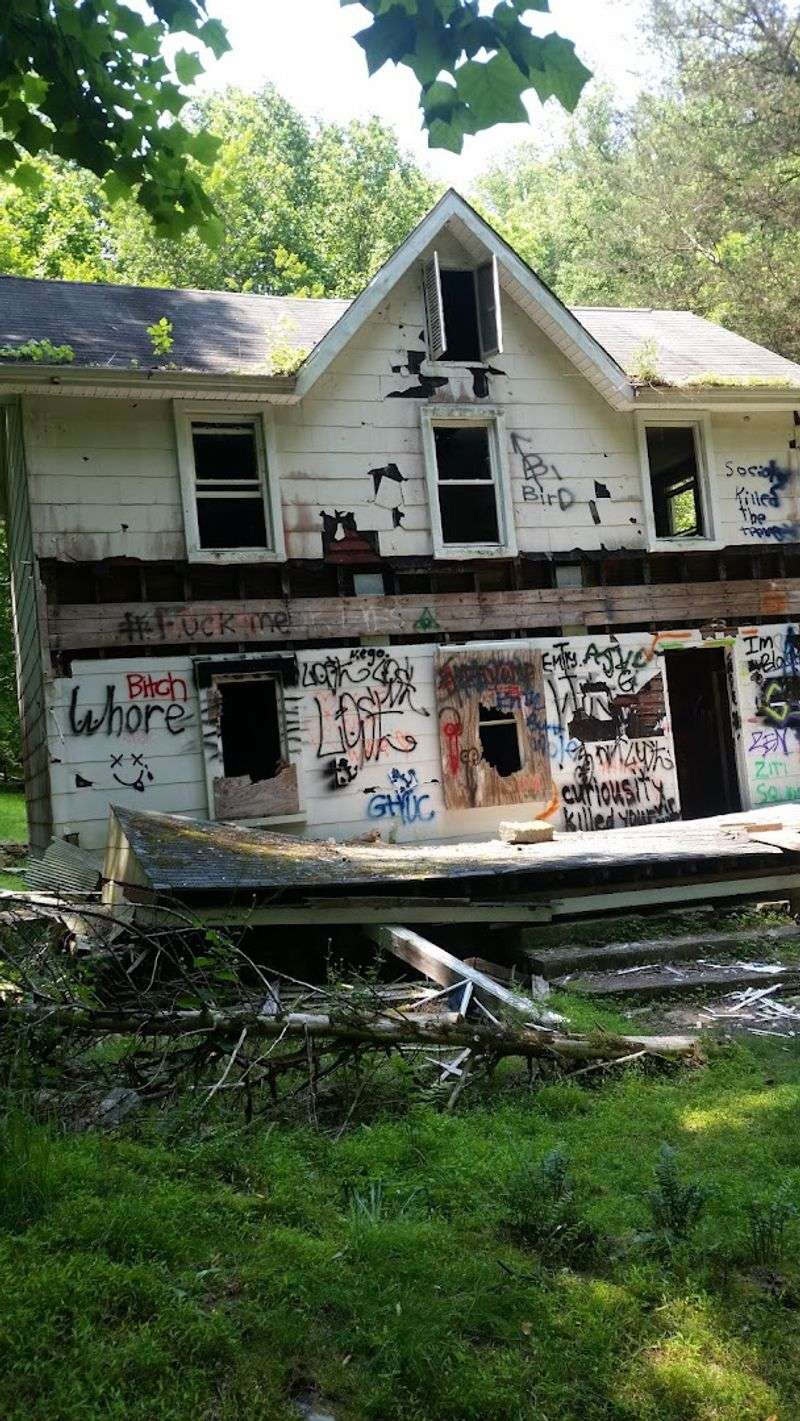
Daniels is one of Maryland’s best-kept secrets, and locals who know about it treat that knowledge like a golden ticket. The mill town operated along the Patapsco River for over a century before floods and economic decline finally knocked it out.
The last residents left in the 1970s, and nature has been enthusiastically moving back in ever since.
Stone mill buildings, worker cottages, and a church ruin are scattered along the riverbank, half-swallowed by vines and trees. The contrast between the sturdy stonework and the encroaching forest is genuinely striking.
Trail access from Patapsco Valley State Park makes getting there an adventure in itself.
Flood damage from recent years has altered some of the structures, so conditions can change between visits. Always check trail status before heading out.
The hike in is moderate and rewards you with one of the most atmospheric abandoned sites in the entire mid-Atlantic region. Bring good shoes and a fully charged camera battery.
Paw Paw Tunnel and Canal Ruins in Oldtown, Maryland
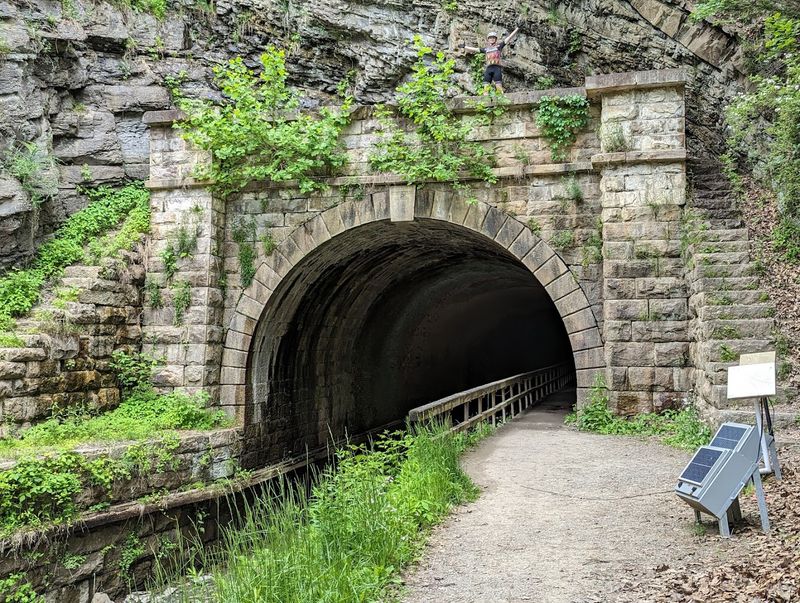
The Paw Paw Tunnel is 3,118 feet of hand-drilled, brick-lined engineering stubbornness. Workers spent 14 years blasting and chiseling through a mountain to save six miles of canal travel.
That kind of commitment deserves a standing ovation, or at minimum, a visit.
The tunnel is part of the Chesapeake and Ohio Canal National Historical Park, and the surrounding towpath is lined with the ruins of old canal locks, lockhouses, and aqueducts. Walking through the tunnel itself is a genuinely memorable experience.
The brick archwork is stunning, and the darkness inside is the real deal, so bring a flashlight.
The canal ruins along this stretch tell the story of a transportation system that was already becoming obsolete the moment it was completed in 1850. Railroads had beaten the canal to the punch.
Still, the infrastructure held on for decades before being abandoned to floods and time. Few places in Maryland pack this much industrial drama into one trail.
Fort Washington Ruins in Fort Washington, Maryland
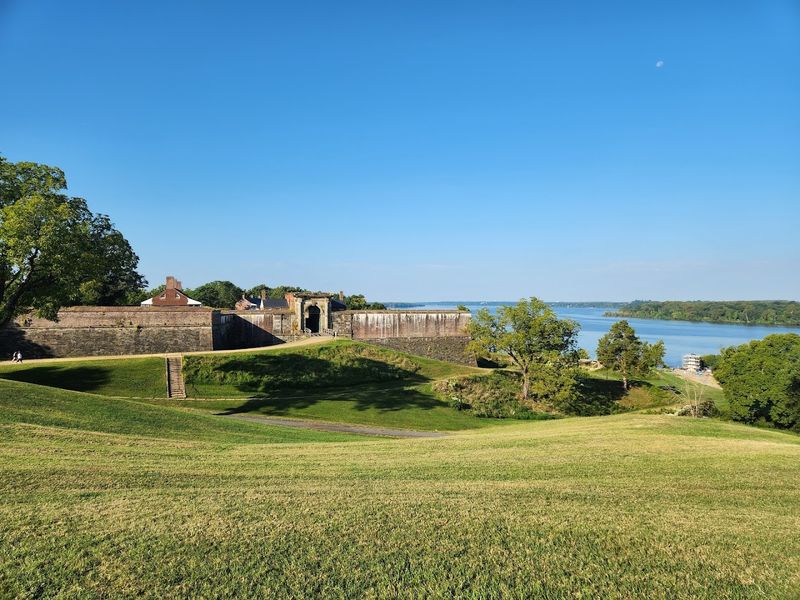
Fort Washington has the distinction of being the only permanent fort ever built to defend the nation’s capital. It also has the distinction of being blown up by its own garrison in 1814 to prevent the British from capturing it.
Points for commitment, questionable points for strategy.
The ruins of the original fort sit beneath and beside the reconstructed version that replaced it. Walking the grounds, you can see layers of military history stacked on top of each other, from the War of 1812 through World War II.
The views of the Potomac River from the walls are genuinely spectacular.
The site is managed by the National Park Service and is well worth the small entry fee. Rangers lead regular tours that explain the fort’s surprisingly dramatic history in entertaining detail.
I visited on a quiet Tuesday morning and practically had the place to myself. Weekends can get busy, so an early arrival is always a smart move.
Baltimore and Ohio Railroad Ruins in Ellicott City, Maryland
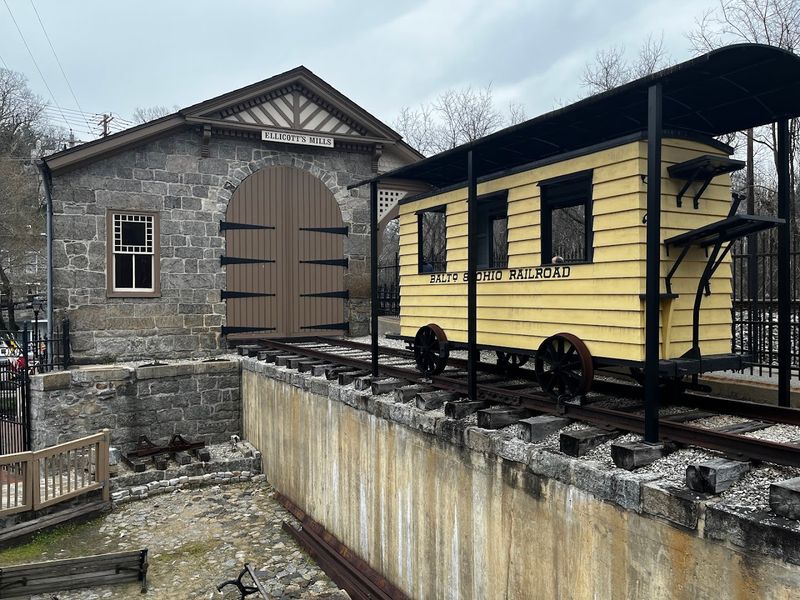
Ellicott City is home to the oldest surviving railroad station in the entire United States, and the B&O Railroad Museum complex around it carries some serious industrial weight. The granite station dates to 1830, when railroads were still a brand-new idea that most people thought was slightly insane.
Turns out, it was a pretty good idea.
The surrounding ruins include old engine houses, retaining walls, and rail infrastructure that tell the story of America’s first commercial railroad line. Flood damage in recent years has reshaped parts of the historic district, making some ruins more visible than ever.
The resilience of the remaining structures is honestly impressive.
The station itself operates as a museum with exhibits covering early railroad history in fascinating detail. Admission is reasonable, and the staff clearly love what they do.
Pair your visit with a walk through Ellicott City’s charming main street for a full afternoon well spent. The whole area rewards slow, curious exploration.
Holland Island Church Ruins in Chesapeake Bay, Maryland
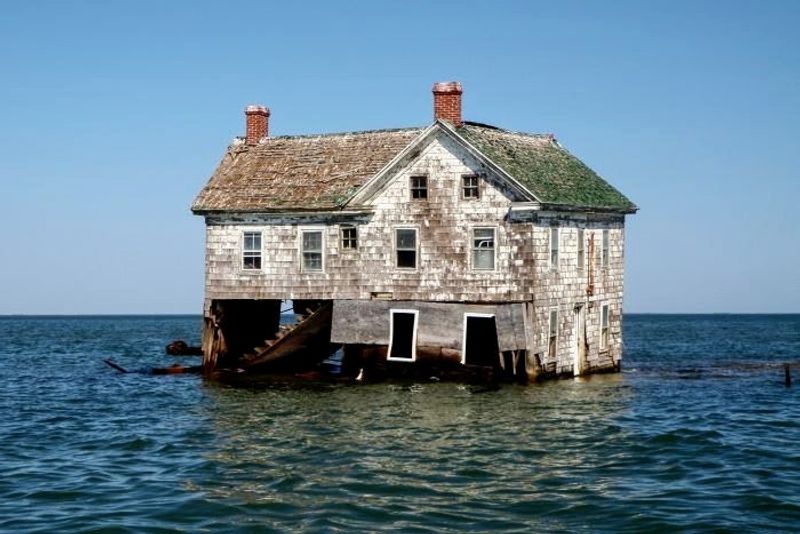
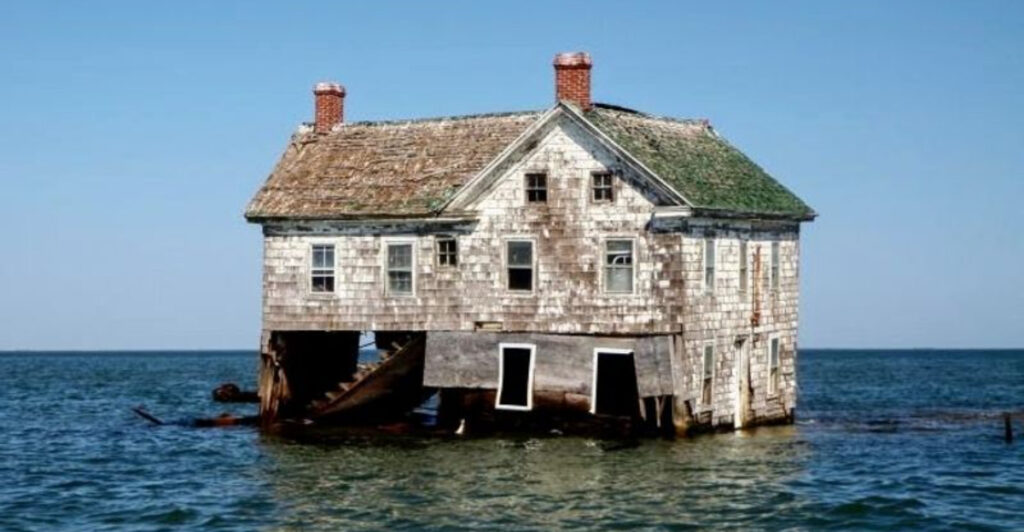
Holland Island is sinking, and it has been for over a century. Once home to a thriving fishing community of nearly 400 people, the island was gradually abandoned as erosion claimed the land.
By 2010, the last remaining house collapsed into the bay. What is left is genuinely haunting.
The ruins of a brick church still poke above the waterline, depending on tides and storms. Reaching the island requires a boat, which adds to the sense of pilgrimage.
Kayakers and small watercraft operators make the trip regularly, especially during calmer weather months.
Holland Island is one of the most striking visual examples of sea-level rise and erosion on the entire East Coast. Scientists and historians treat it as a cautionary tale about building communities on vulnerable land.
For visitors, it is a rare chance to see a ghost town that is not just abandoned but actively disappearing. The Chesapeake has a way of keeping things dramatic.
Antietam Iron Furnace Ruins in Sharpsburg, Maryland
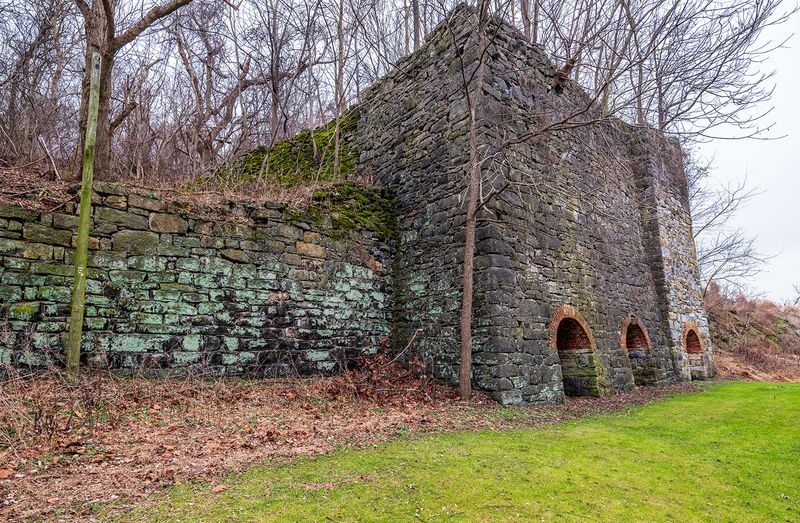
Most people who visit Sharpsburg come for the Civil War battlefield, but the Antietam Iron Furnace sitting nearby is a seriously underrated stop. The furnace dates back to 1765 and produced iron for the Continental Army during the Revolution.
It was a busy, smoke-filled, industrial powerhouse long before the famous battle ever happened.
The stone stack still stands near Antietam Creek, partially covered in moss and surrounded by trees. It is the kind of ruin that rewards a slow walk around the perimeter.
Details in the stonework tell the story of skilled craftsmanship from an era when everything was built to last.
Combining a visit here with the nearby battlefield makes for a full and genuinely moving day in Maryland history. The contrast between industrial ruins and battlefield memorials puts the region’s past into sharp focus.
Parking near the furnace is easy, and there is no admission fee. Sometimes the best history lessons are completely free.
Thomas Viaduct Historic Stone Structure in Relay, Maryland
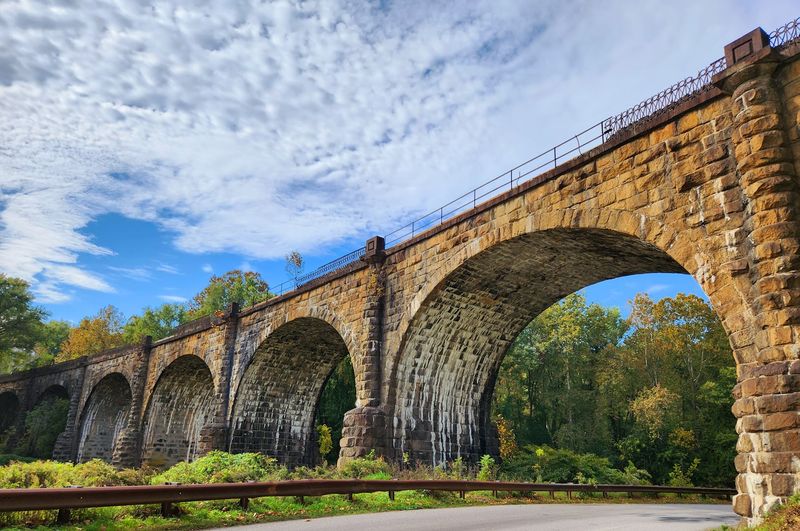
The Thomas Viaduct is not exactly a ruin, but it is absolutely ancient by American infrastructure standards. Completed in 1835, it is the oldest multi-arch stone railroad bridge still in use in the entire country.
Trains still cross it regularly, which is either a testament to brilliant engineering or a very long streak of good luck.
The bridge curves gracefully across the Patapsco River valley on eight granite arches, each one perfectly proportioned. Standing beneath it feels like being inside a very serious piece of architecture.
The granite was quarried locally, and the craftsmanship has outlasted virtually everything else built in that era.
The surrounding area offers good viewpoints for photography, especially from the riverbank below. Access is straightforward, and the site is free to visit.
Engineers and history lovers alike tend to get genuinely emotional standing near this thing. It was named after B&O Railroad president Philip Thomas, who clearly had excellent taste in lasting monuments.
Share this story