 Unearth The Voyage

History class can only cover so much, and a lot of wild, weird, and important events never make the cut. I remember sitting in school thinking American history was just wars, presidents, and the occasional gold rush.
Turns out, I was missing some seriously bizarre chapters. From molasses floods to pig-related standoffs, these 12 forgotten events prove that American history is stranger than any fiction.
The Battle of Athens (1946)
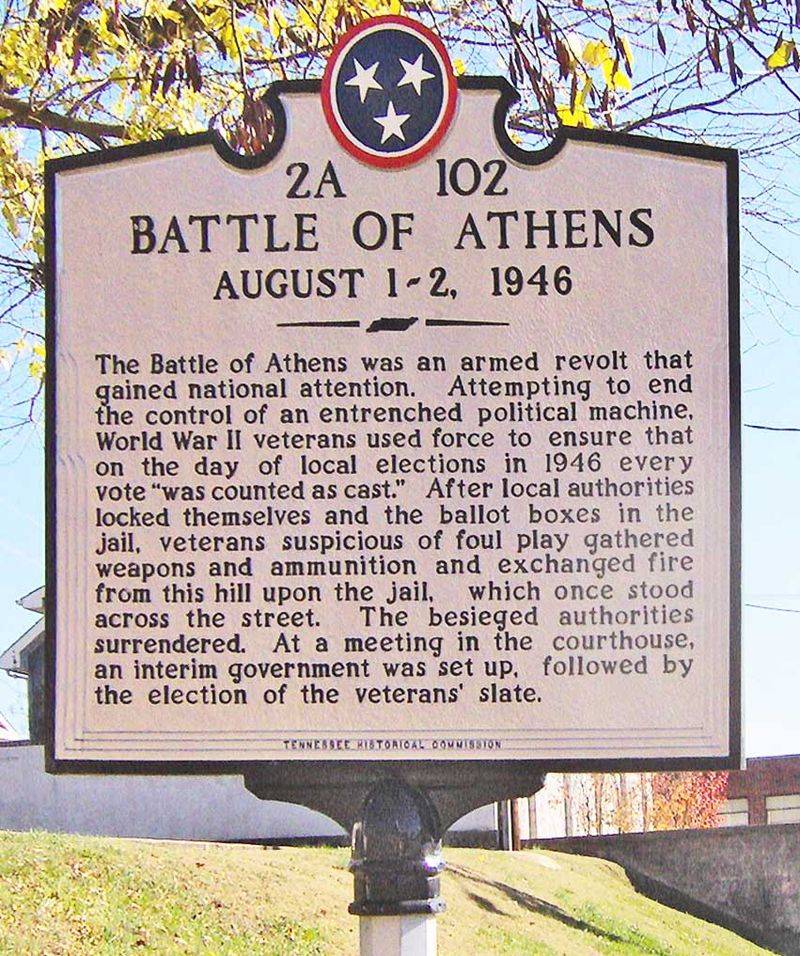
Armed veterans storming a jail with dynamite sounds like a movie plot, but it actually happened in small-town Tennessee. After returning from World War II, veterans in Athens decided they had fought for democracy abroad and were not about to lose it at home.
Local political boss Paul Cantrell had been rigging elections for years. When he tried to steal the 1946 election by locking ballot boxes inside the jail, veterans grabbed their rifles and fought back.
Bullets flew. Dynamite blasted the jail door open.
The veterans won.
What makes this story remarkable is that it worked. The corrupt officials fled, and fair elections returned to McMinn County.
No one was killed. The story rarely appears in textbooks, yet it stands as one of the most dramatic examples of ordinary citizens defending their right to vote.
Pretty hard to top that civic lesson.
The Pig War (1859)

A pig got shot. Nearly two world powers went to war over it.
The Pig War of 1859 is exactly as ridiculous as it sounds, and I genuinely love it for that.
San Juan Island, sitting between Vancouver Island and the American mainland, was claimed by both Britain and the United States. An American farmer shot a British-owned pig that kept eating his potatoes.
The British threatened to arrest him. American settlers demanded military protection.
Soldiers arrived on both sides.
At peak standoff, 461 American soldiers faced five British warships carrying 2,140 men. Both commanding officers refused to fire first, and the whole thing cooled into a joint military occupation that lasted 12 years.
Nobody else died. The pig remained the sole casualty of the entire conflict.
Kaiser Wilhelm I of Germany eventually arbitrated the dispute in America’s favor. A pig started it.
A German emperor ended it. History is wild.
The Wilmington Insurrection (1898)

The only successful coup d’etat on American soil happened in Wilmington, North Carolina, in 1898, and most Americans have never heard about it. That silence is not an accident.
Wilmington had a thriving Black middle class and a biracial local government that was actually working. White supremacist Democrats, furious at losing political power, organized a violent takeover.
They burned down the Black-owned newspaper, killed an estimated 60 to 300 Black residents, and forced elected officials to resign at gunpoint before replacing them with their own people.
The coup leaders faced zero legal consequences. Several were celebrated as heroes in North Carolina for decades afterward.
The state did not officially acknowledge the massacre until 2006. A government commission spent years documenting what happened.
This was not a riot or a riot that got out of hand. It was a planned overthrow of a legitimately elected government.
That distinction matters enormously.
The Battle of Blair Mountain (1921)

The largest armed uprising in American history since the Civil War happened in West Virginia in 1921, and it barely gets a footnote in most history books. About 10,000 coal miners picked up guns and marched to free their fellow workers from brutal company control.
Coal companies in Logan County owned everything: the houses miners lived in, the stores where they shopped, and the private police who beat them when they complained. Miners trying to unionize were evicted, beaten, or killed.
After years of abuse, the miners had enough.
The federal government responded by sending in the U.S. Army and bombing the miners from airplanes.
Actual American citizens bombed by their own government, on American soil. The miners were defeated, and union organizing in the region collapsed for over a decade.
Blair Mountain deserves way more attention than it gets. The story of workers fighting for basic dignity never gets old.
The Fort Pillow Massacre (1864)

Fort Pillow should be one of the most talked-about events of the Civil War. Instead, it gets quietly skipped over in most classrooms, possibly because what happened there is deeply uncomfortable to confront.
In April 1864, Confederate General Nathan Bedford Forrest led an attack on Fort Pillow, Tennessee, which was garrisoned partly by Black Union soldiers. After the fort fell, Confederate troops massacred surrendering soldiers, targeting Black troops in particular.
Survivors reported men being shot, buried alive, and burned.
Congressional investigators confirmed the massacre. Forrest, who later helped found the Ku Klux Klan, was never prosecuted.
The event became a rallying cry for Black Union soldiers, who went into subsequent battles shouting “Remember Fort Pillow.” That phrase captured something real: a determination not to let the murders define the outcome of the war. Fort Pillow is a brutal chapter, but ignoring it does not make it disappear.
The New York City Draft Riots (1863)
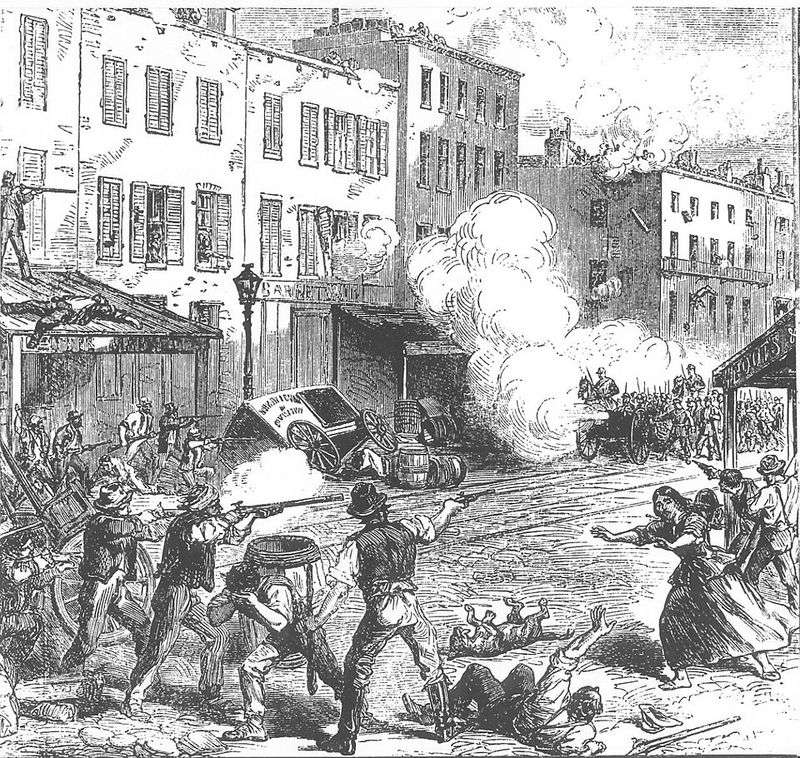
For four days in July 1863, New York City descended into the deadliest civil unrest in American history. The trigger was a draft lottery for the Civil War, but the violence that erupted went far beyond anger at conscription.
Working-class white men, many of them Irish immigrants, were furious that wealthy men could pay $300 to avoid the draft. That rage quickly turned racist.
Mobs targeted Black New Yorkers, burning the Colored Orphan Asylum and lynching at least 11 Black men in the streets. Estimates put the death toll between 120 and 2,000 people.
The Union Army, fresh from Gettysburg, had to be deployed in New York to restore order. The riots revealed the deep contradictions at the heart of a war supposedly being fought to end slavery.
Many of the rioters had no interest in fighting to free people they saw as job competition. History is rarely as clean as the textbook version.
The Bonus Army (1932)
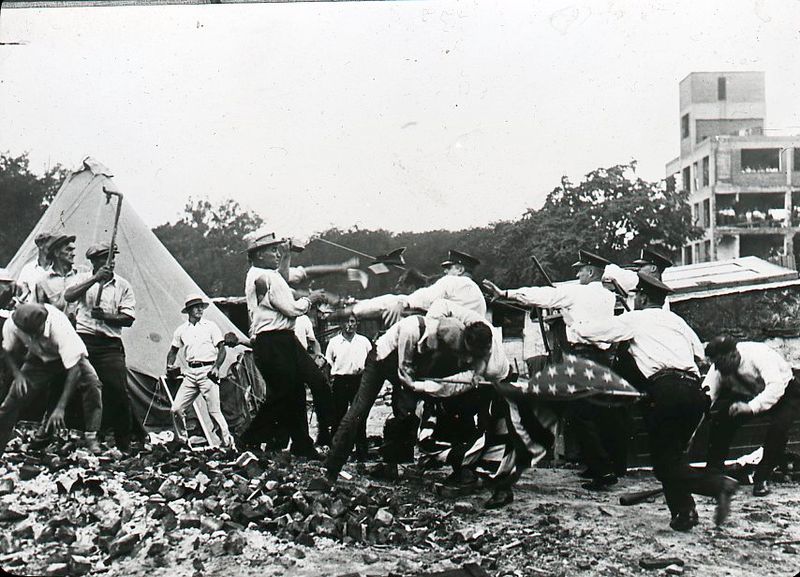
World War I veterans marched on Washington in 1932, not with weapons, but with a simple request: pay us the bonus you promised. The government’s response was to send in tanks and cavalry to drive them out.
With their kids watching.
Congress had promised veterans a bonus for their service, payable in 1945. With the Great Depression crushing families, veterans asked for early payment.
Around 43,000 people, including families, set up a tent city near the Capitol. President Hoover ordered General Douglas MacArthur to clear them out.
MacArthur went way beyond his orders. Troops used tear gas, bayonets, and fire to destroy the camp.
A baby died. Several veterans were injured.
The images of soldiers attacking their own comrades horrified the public and contributed to Hoover’s landslide election loss that fall. Franklin Roosevelt won partly because he was not the man who sent cavalry against veterans holding American flags.
The Battle of Palmito Ranch (1865)

The Civil War officially ended when Lee surrendered at Appomattox on April 9, 1865. Somebody forgot to tell the troops near Brownsville, Texas, and so they kept fighting for another month.
On May 12, 1865, Union Colonel Theodore Barrett ordered an attack on a Confederate position at Palmito Ranch, apparently wanting to claim some battlefield glory before the war fully wound down. Confederate forces counterattacked and actually won, driving the Union troops back to the Rio Grande.
It was the last land battle of the Civil War, and the Confederates won it.
Here is the extra twist: the Confederate soldiers already knew the war was over. They fought anyway.
Private John J. Williams of Indiana became the last Union soldier killed in the Civil War, dying in a battle that happened a month after the war had already ended.
That is a particularly rough way to go down in history.
The Great Molasses Flood (1919)

On January 15, 1919, a 50-foot-tall storage tank in Boston’s North End exploded and sent 2.3 million gallons of molasses surging through the streets at 35 miles per hour. This is a real sentence about a real event.
The wave of molasses was reportedly 25 feet high and destroyed buildings, snapped elevated train supports, and killed 21 people. Horses drowned in it.
The cleanup took weeks. Locals claimed for years afterward that on hot summer days, the neighborhood still smelled faintly of molasses.
The tank had been poorly constructed and was known to leak. Residents had complained.
The company, United States Industrial Alcohol, initially blamed anarchists before eventually losing a massive civil lawsuit. The disaster led to new engineering and safety regulations in Massachusetts.
It also remains one of those historical events that sounds completely made up right up until you check the sources. Boston got stuck with quite the sticky situation that January.
The Philadelphia Yellow Fever Epidemic (1793)
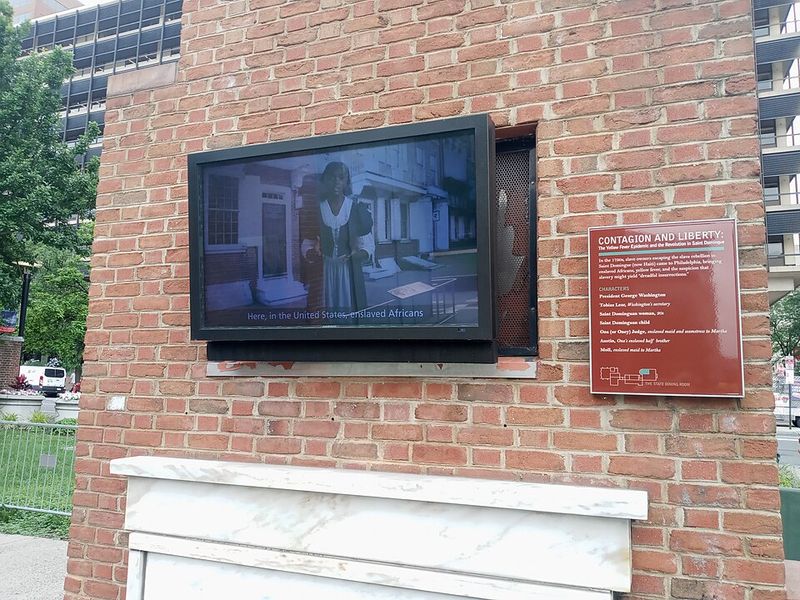
Philadelphia in 1793 was the capital of the United States and the most important city in the country. Then yellow fever arrived, and within months, roughly 10 percent of the entire city’s population was dead.
The epidemic killed around 5,000 people out of a population of 50,000. President Washington fled the city.
So did most of the government, the wealthy, and anyone else who could afford to leave. The people who stayed, often the poor and the Black community, kept the city running through the worst of it.
The Free African Society, led by Absalom Jones and Richard Allen, organized nursing and burial efforts at enormous personal risk. Many of them died too.
The epidemic forced early Americans to grapple with public health in ways they were completely unprepared for. It also quietly revealed who actually held communities together during a crisis.
That part of the story deserves far more attention than it typically receives.
The Sultana Disaster (1865)
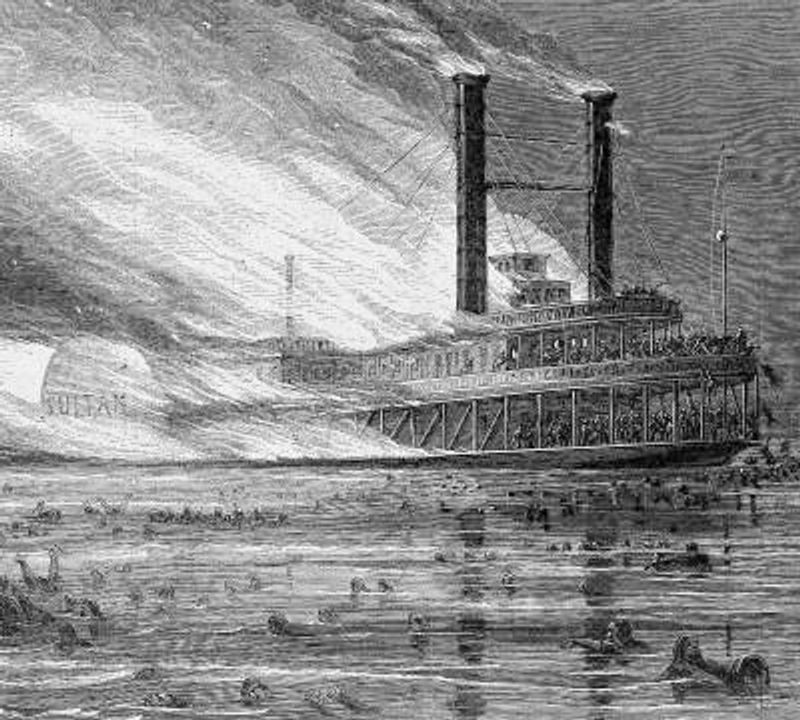
Three days after Abraham Lincoln was assassinated, the deadliest maritime disaster in American history happened on the Mississippi River. Almost nobody noticed, because the country was still in shock over Lincoln.
The steamboat Sultana was legally rated to carry 376 passengers. On April 27, 1865, it was carrying approximately 2,400 people, mostly Union soldiers recently released from Confederate prison camps.
The boilers exploded in the middle of the night. Around 1,800 people died, more than perished on the Titanic.
The disaster was almost certainly caused by a faulty boiler repair and the greed of officials who were paid per soldier transported. Investigations were launched and then quietly dropped.
The timing, coming right after Lincoln’s death and the end of the war, meant newspapers had little space for another catastrophe. The Sultana sank not just in the river but in the historical record, taking nearly 1,800 stories with it.
The St. Louis World’s Fair Human Zoo (1904)

The 1904 St. Louis World’s Fair was celebrated as a triumph of American progress. It also featured something that should make any modern reader deeply uncomfortable: real human beings displayed in zoo-like exhibits for entertainment.
Organizers brought indigenous people from the Philippines, Africa, and other regions and displayed them in reconstructed villages as living proof of supposed racial hierarchy. Visitors paid to observe them the way they might observe animals.
Anthropologists debated their intelligence publicly. It was called science at the time.
One man, an Congolese man named Ota Benga, was later displayed in the Bronx Zoo in an actual monkey house. Black ministers in New York protested loudly, but it took weeks to get him released.
The World’s Fair exhibits were celebrated in newspapers and attended by millions. The entire episode reflects how scientific racism was not a fringe idea but mainstream American thought in 1904.
That context matters for understanding what came after.



