Romania is the kind of country that makes you wonder if someone wrote it into existence. From fog-wrapped castles in Transylvania to underground kingdoms carved out of salt, this place is packed with landmarks that look like they belong in a fantasy novel.
Whether you are planning a trip or just love a good story, these 12 spots will seriously test your sense of what is real and what is too good to be true.
Bran Castle
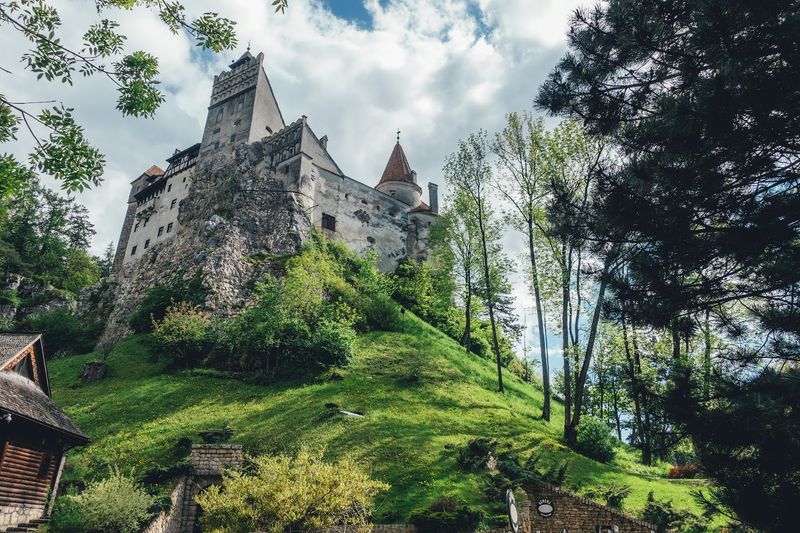
Every horror fan has heard the name Bran Castle, but most do not know the real story. Vlad the Impaler probably never lived here.
The Dracula connection is mostly tourist gold, but honestly? It works.
The castle sits above the village of Bran like it owns the place. Narrow stairways twist between floors, towers jut out at odd angles, and red roofs cap everything with a dramatic flair that no architect today would dare attempt.
Built in the 14th century, it served as a royal residence before becoming a museum. Queen Marie of Romania actually loved this place and decorated it herself.
You can still see her personal touches inside.
Tickets and visitor hours are listed on the official Bran Castle site. Go in autumn if you can.
The surrounding forest turns golden, the mist rolls in, and suddenly the Dracula myth does not seem so far-fetched after all.
Peles Castle
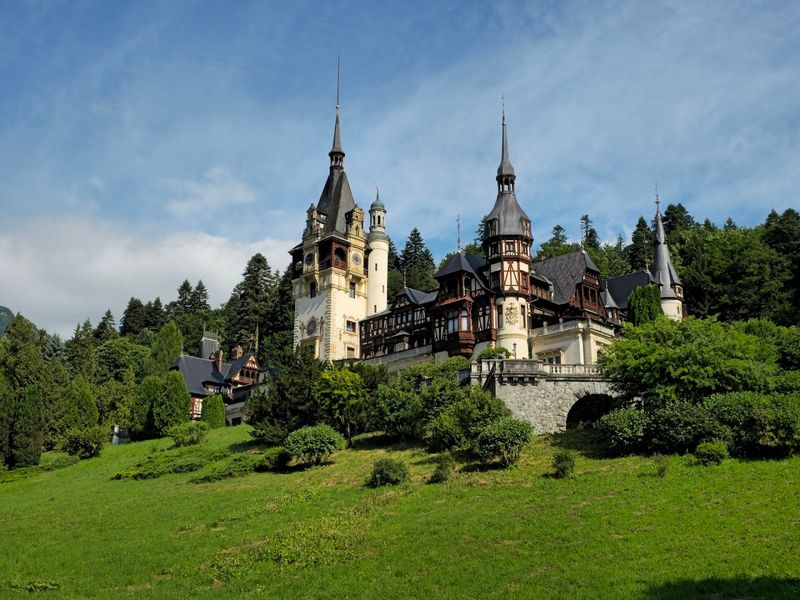
Peles Castle does not look like a fortress built to keep enemies out. It looks like a place built to keep beauty in.
Nestled in the Carpathian mountains near Sinaia, this royal residence is a full-on fantasy of turrets, carved balconies, and manicured gardens.
King Carol I commissioned it in the 1870s, and the result is staggering. Inside, you will find over 160 rooms stuffed with Venetian glass, Flemish tapestries, and enough carved walnut to make a furniture maker weep with joy.
The weapons room alone could fuel three different Netflix series. Each hall has a different theme, so wandering through feels less like a museum tour and more like flipping through the world’s most expensive design catalog.
The Peles National Museum site posts current visiting hours and ticket prices. Book in advance during summer.
This place draws serious crowds, and for very good reason.
Corvin Castle
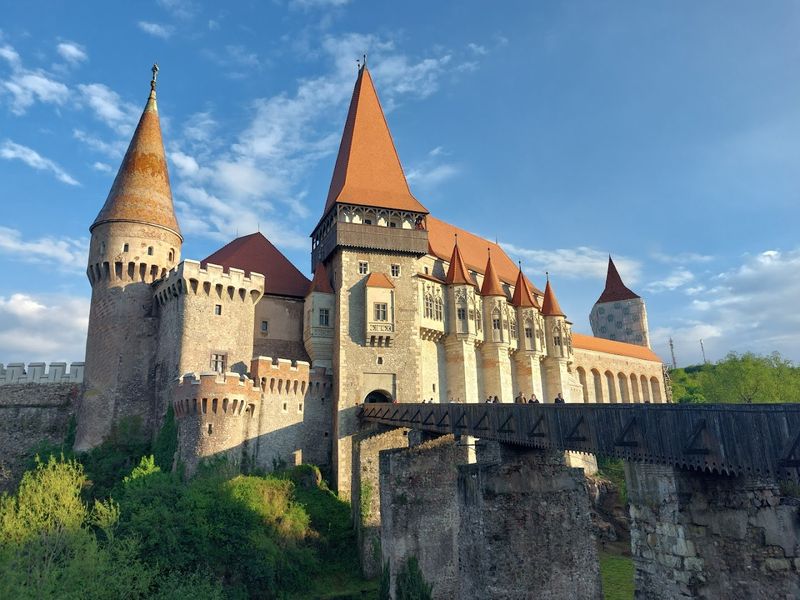
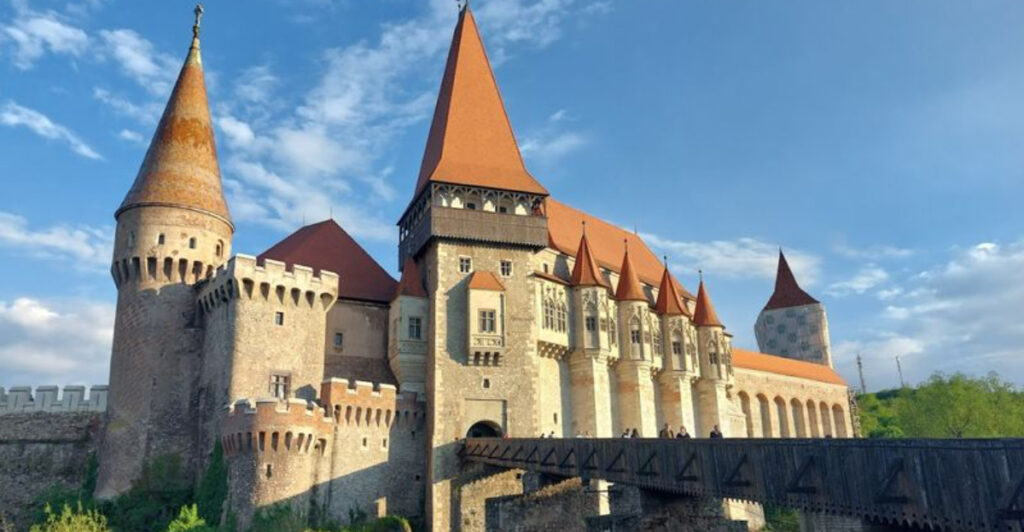
Corvin Castle is what happens when medieval architects decided subtlety was overrated. Located in Hunedoara, this Gothic fortress has a drawbridge, stone towers, a dry moat, and the kind of dramatic silhouette that stops people mid-scroll.
Built in the 15th century by John Hunyadi, one of medieval Europe’s most celebrated military commanders, Corvin is not just for show. It saw real battles, real prisoners, and real history.
One legend claims Vlad the Impaler was actually held captive here. So Bran Castle gets the fame, and Corvin gets the actual story.
The interior is equally impressive. Knights’ Hall, the Council Tower, and a chapel that survived centuries of conflict are all open to visitors.
The courtyard alone makes you feel like you have walked into a different century entirely.
Check the castle’s official site for updated ticket prices and opening times before you visit. It is absolutely worth the trip.
Sighisoara Citadel
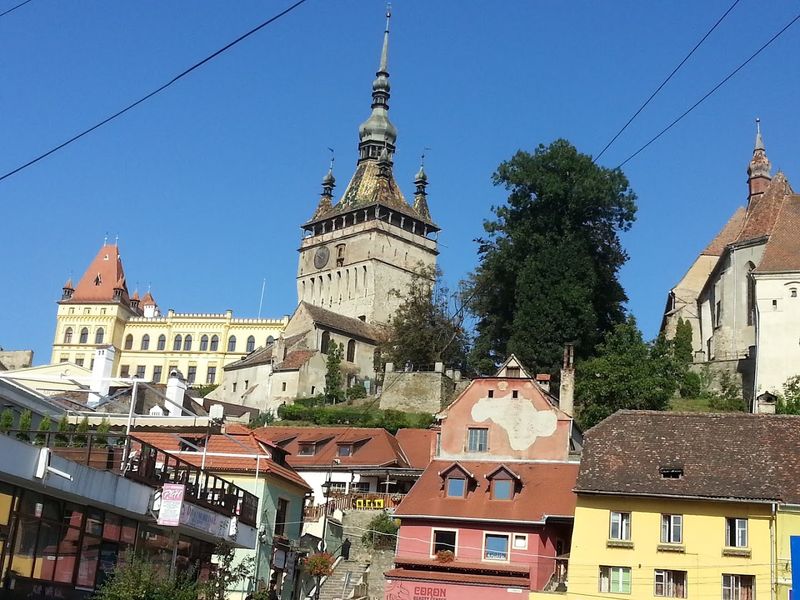
Sighisoara is the town that time genuinely forgot, and we are all grateful for it. The medieval citadel sits on a hilltop in Transylvania, its colorful houses leaning over cobbled lanes like nosy neighbors watching you pass.
This is a UNESCO World Heritage Site, recognized as one of the best-preserved medieval towns in Europe. The Clock Tower alone is worth the trip.
Built in the 14th century, it still keeps time and now houses a history museum inside its thick stone walls.
I spent an afternoon here just wandering without a map, which I recommend wholeheartedly. Every alley leads somewhere interesting: a hidden courtyard, a painted doorway, a church older than most countries.
Fun fact: Vlad the Impaler was reportedly born here in 1431. There is a house on the main square that claims the honor.
Whether it is true or not, the plaque makes for a great photo. Come hungry.
The local food scene is excellent.
The Painted Monasteries of Bucovina
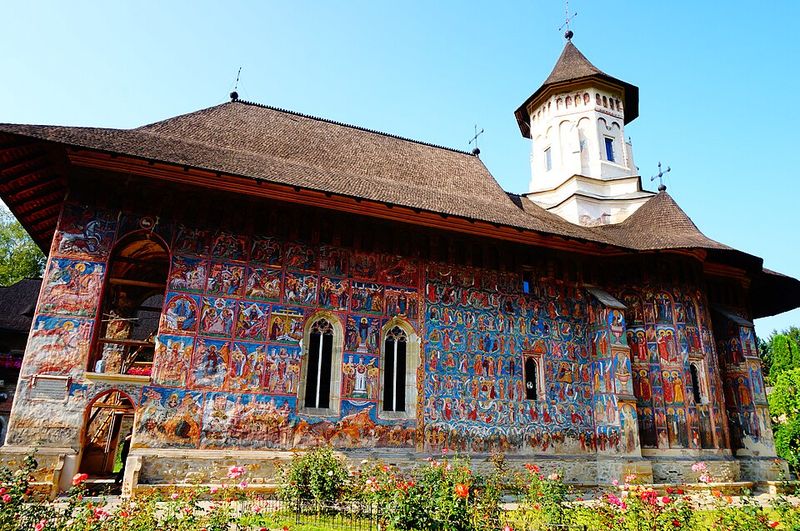
Nowhere else in Europe will you find church walls painted like this. The monasteries of northern Moldavia, built between the late 15th and 16th centuries, are covered on the outside with detailed religious frescoes in rich blues, greens, and reds that have survived centuries of weather.
UNESCO listed these churches as unique in Europe and especially well preserved. The blue of Voronet Monastery is so distinctive it earned its own name: Voronet blue.
Artists and historians have been trying to replicate the exact shade for years without full success.
Each monastery tells a different story through its frescoes. Sucevita, Moldovita, Humor, and Arbore are all worth visiting, and they are close enough together to cover in a dedicated day trip through the Bucovina region.
The countryside around them is gorgeous too, rolling hills and quiet villages that make the drive between sites feel like a reward in itself. Plan to arrive early to avoid tour groups.
Turda Salt Mine
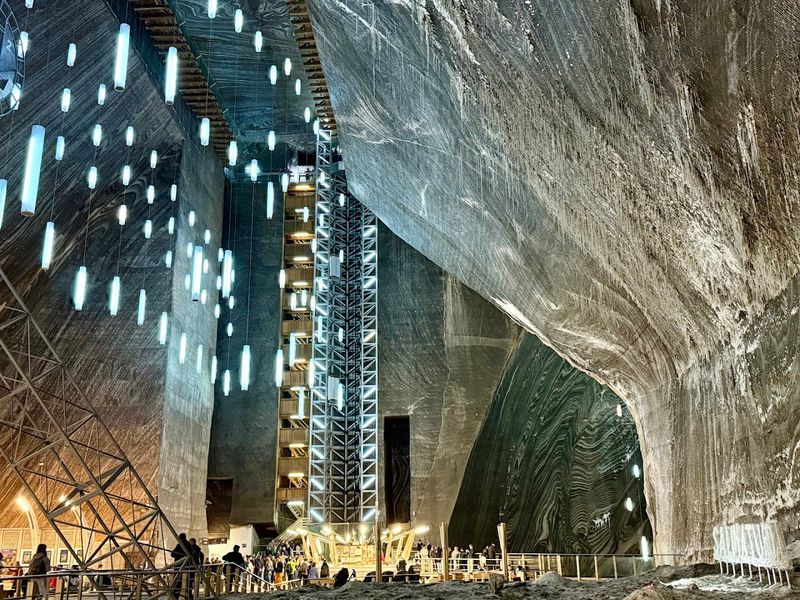
An underground Ferris wheel inside a salt mine sounds like a fever dream, but Turda Salt Mine is very much real. Located near Cluj-Napoca, this former mine was converted into one of the most surreal tourist attractions in all of Europe.
The main chamber drops 42 meters underground and opens into a space so enormous that people look like ants walking across the floor. There is a lake with rowing boats, a mini golf course, a bowling alley, and yes, a full Ferris wheel.
All underground. All inside a salt mine.
The air down there is actually good for you. The salt-rich microclimate is known to benefit people with respiratory issues, so visitors come for both the spectacle and the health benefits.
It is a win-win situation with unusually good lighting.
Check the official Turda Salt Mine site for current ticket prices and hours. Weekends get busy, so a weekday visit gives you more room to fully appreciate the weirdness.
Palace of Parliament, Bucharest
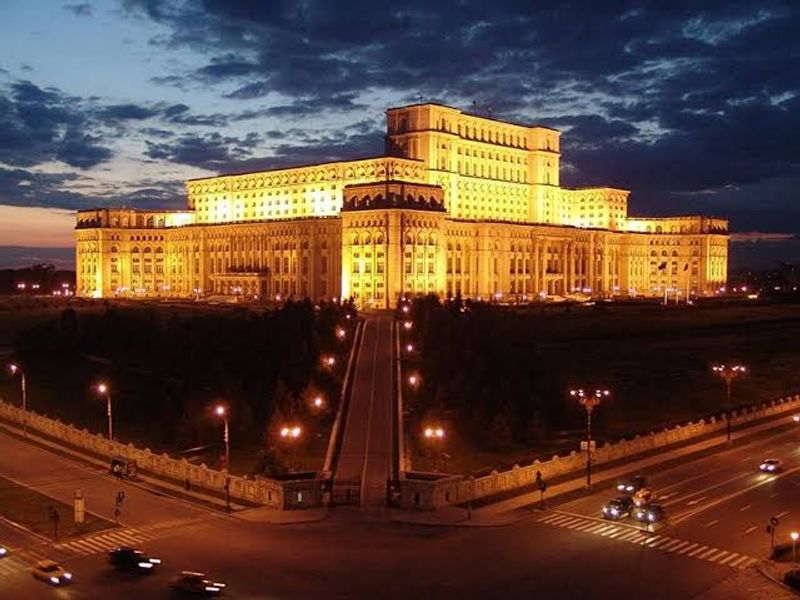
The Palace of Parliament does not ease you in gently. It hits you all at once: a building so large that it has its own microclimate and reportedly sinks a few millimeters every year under its own weight.
Nicolae Ceausescu ordered its construction in the 1980s, and the numbers behind it are genuinely staggering.
It is the second-largest administrative building in the world after the Pentagon. Over one million cubic meters of marble were used inside.
The building has 1,100 rooms, 12 stories above ground, and 8 below. The chandeliers alone weigh several tons each.
Guided tours run regularly and take you through halls so large that your voice echoes back to you a full second later. It is grand, overwhelming, and historically complicated all at once.
Whatever your feelings about its origins, walking through it is an experience that sticks with you. Current tour information is available through Bucharest visitor resources.
Book ahead, especially in peak season.
Alba Carolina Citadel
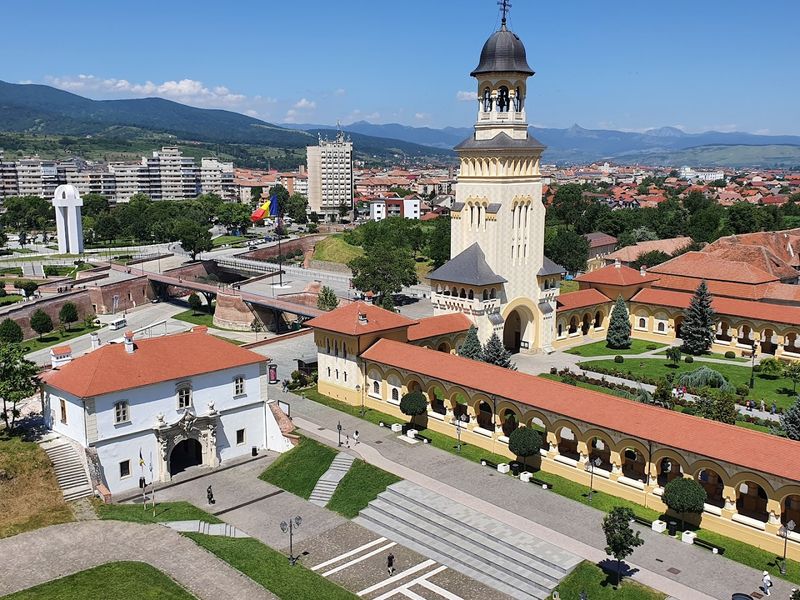
Star-shaped fortresses are rare. A star-shaped fortress you can actually walk around, eat lunch inside, and attend a concert in?
That is Alba Carolina Citadel, and it is genuinely one of Romania’s most underrated landmarks.
Built in the early 18th century by the Habsburgs, the citadel in Alba Iulia stretches across a massive area with six bastions, seven gates, and a layout so precise it looks like a geometry lesson from above. The gates are decorated with elaborate stone carvings that would not look out of place on a royal palace.
Inside the walls you will find churches, museums, a cathedral, and wide ceremonial spaces used today for cultural events and historical reenactments. Romania’s declaration of unity in 1918 was signed here, giving the whole place an extra layer of national importance.
The local tourism guide describes it as a fully restored open-air cultural stage. Entry to the citadel grounds is free, making it one of the best-value landmarks in the country.
Biertan Fortified Church
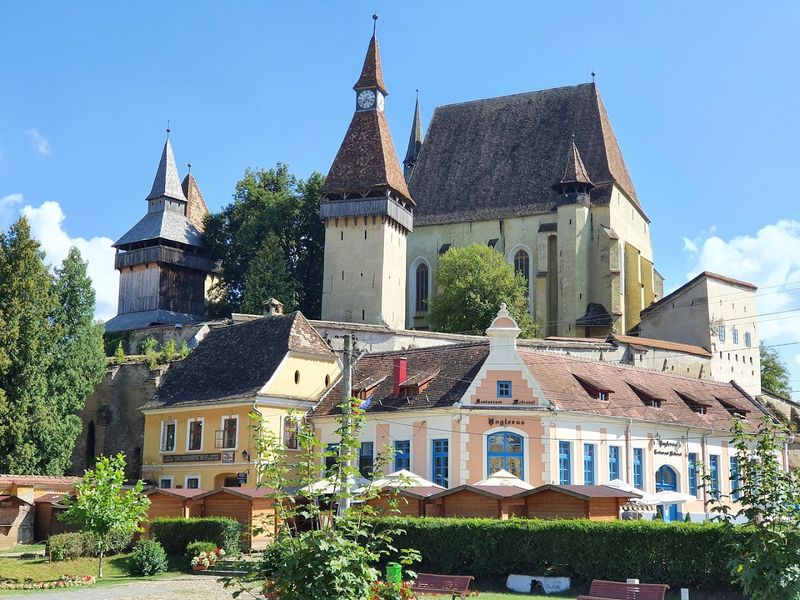
Most villages have a church. Biertan has a fortress with a church inside it, which is a very different thing.
Perched on a hill above a quiet Saxon village in Transylvania, this fortified church looks like it was built by people who took both their faith and their self-defense very seriously.
UNESCO recognized Biertan as part of Romania’s fortified church heritage, a group of Saxon villages with churches that doubled as defensive strongholds during medieval times. The complex includes three rings of defensive walls, towers, and a church interior that has been remarkably well preserved.
The sacristy door features a locking mechanism with 19 bolts that can all be activated with a single key. It was so impressive that it won a gold medal at the 1900 Paris World Exhibition.
That is a detail that never gets old in conversation.
Romania Tourism lists Biertan as a visitor attraction in Transylvania. The village itself is tiny and charming, and the walk up to the church takes about ten minutes.
The Merry Cemetery of Sapanta
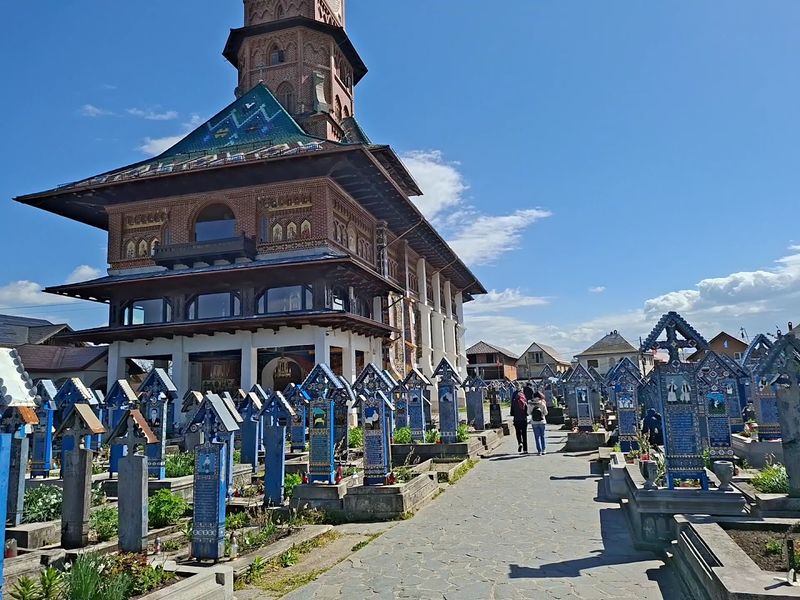
Only in Romania would a cemetery become a tourist attraction because it is too cheerful to ignore. The Merry Cemetery of Sapanta in Maramures is exactly what it sounds like: a graveyard full of brightly painted wooden crosses, each one telling the life story of the person buried beneath it.
Local artist Stan Ioan Patras started carving and painting these crosses in the 1930s. Each one features a short poem, often funny and occasionally a little savage, describing how the person lived or died.
The blue paint used on the crosses became so iconic it is now called Sapanta blue.
Reading the epitaphs is equal parts hilarious and moving. One cross reportedly describes a man who annoyed his mother-in-law.
Another commemorates someone who loved their horse more than anything else. It is folk art, biography, and comedy rolled into one unusual cultural landmark.
Widely documented as a top attraction in Maramures, the cemetery is open to visitors year-round. It is small, deeply human, and completely unforgettable.
Danube Delta
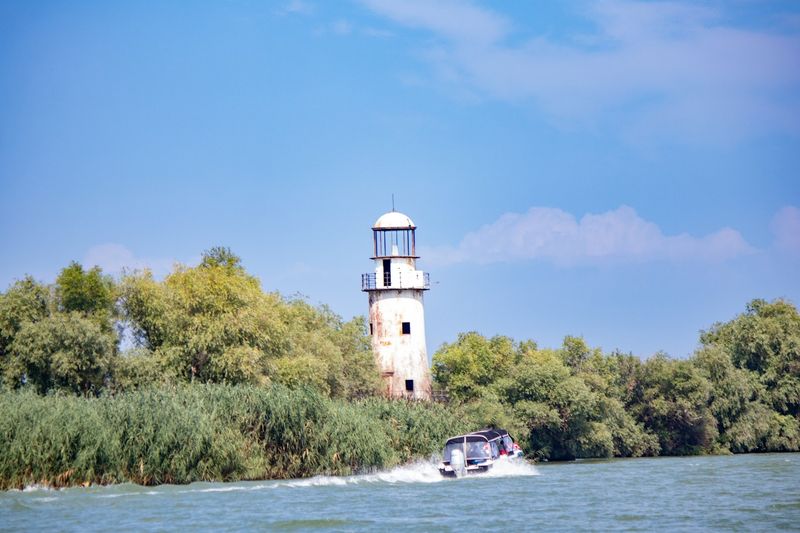
The Danube Delta is where Europe quietly runs out of land and turns into something else entirely. At the edge of Romania, the Danube splits into three main channels and fans out into the Black Sea, creating one of the most biodiverse wetland ecosystems on the planet.
UNESCO lists it as the largest and best-preserved delta in Europe. Over 300 bird species pass through or nest here, including pelicans, cormorants, and herons.
The fish diversity is equally impressive, and the reed beds stretch for kilometers in every direction.
Getting around requires a boat, which is part of the appeal. There are no highways here, no big hotels blocking the view, just water, wildlife, and the occasional village accessible only by water.
It feels like a place that exists outside normal rules.
Tulcea is the main gateway city for delta tours. Guided boat trips can be arranged there, ranging from half-day excursions to multi-day adventures.
Pack light, bring binoculars, and prepare to be genuinely amazed.
Romanian Athenaeum
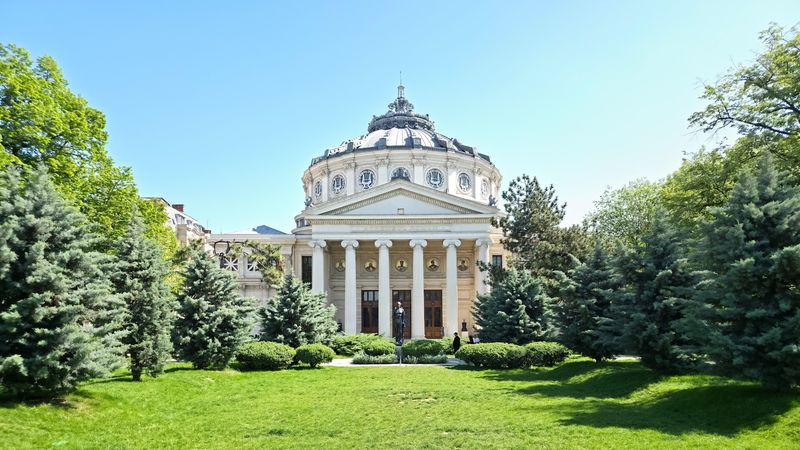
The Romanian Athenaeum is the kind of building that makes you straighten your posture just by looking at it. Built in 1888 in the heart of Bucharest, this neoclassical concert hall has a circular colonnade, a grand dome, and an interior that takes your breath away before the music even starts.
Home to the George Enescu Philharmonic, it hosts concerts year-round and remains one of the most important cultural venues in Eastern Europe. The circular hall inside is decorated with a 70-meter fresco depicting key moments in Romanian history.
It wraps the entire upper wall and took years to complete.
Fundraising to build the Athenaeum relied partly on public donations, with a campaign slogan that roughly translates to “Give a penny for the Athenaeum.” Romanian citizens literally crowdfunded a national landmark. That is a fun fact worth remembering.
Visitor information and concert schedules are available through the George Enescu Philharmonic’s official site. Even if you skip the concert, the building alone is worth the visit.
Share this story