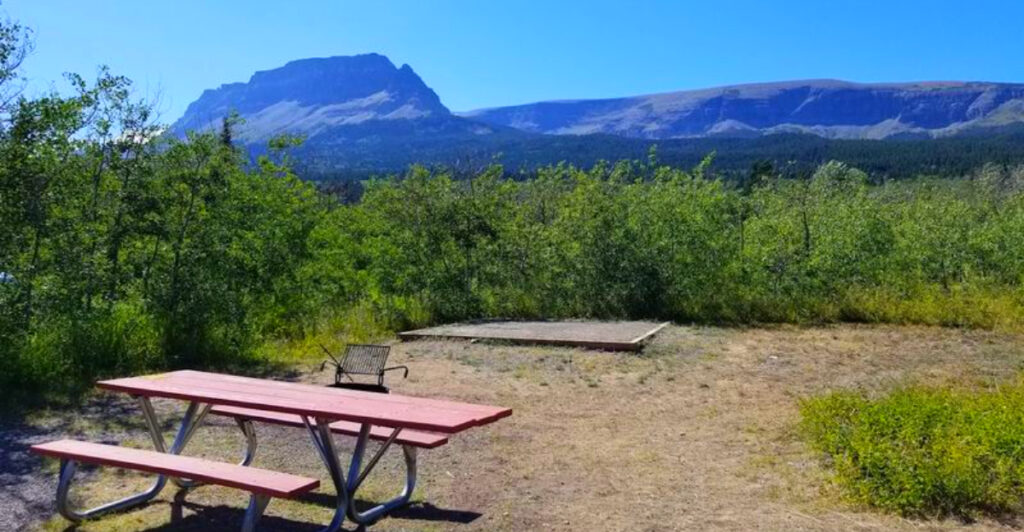
Montana is the kind of place where the view from your campsite can genuinely stop you in your tracks. The state covers nearly 150,000 square miles, and a surprising amount of that land is wild, rugged, and jaw-droppingly beautiful. From the glacier-carved valleys of the northwest to the ancient badlands of the east, Montana’s campgrounds put some of North America’s most dramatic landscapes right outside your tent door. This list covers 12 campgrounds that deliver scenery so good you might forget to check your phone for days.
Some sit inside world-famous national parks, others hide in quieter corners of national forests and state parks, and each one offers something genuinely worth the drive. Whether you are planning your first Montana camping trip or looking for a new spot to add to your rotation, these campgrounds are the real deal.
1. Many Glacier Campground, Babb, Montana
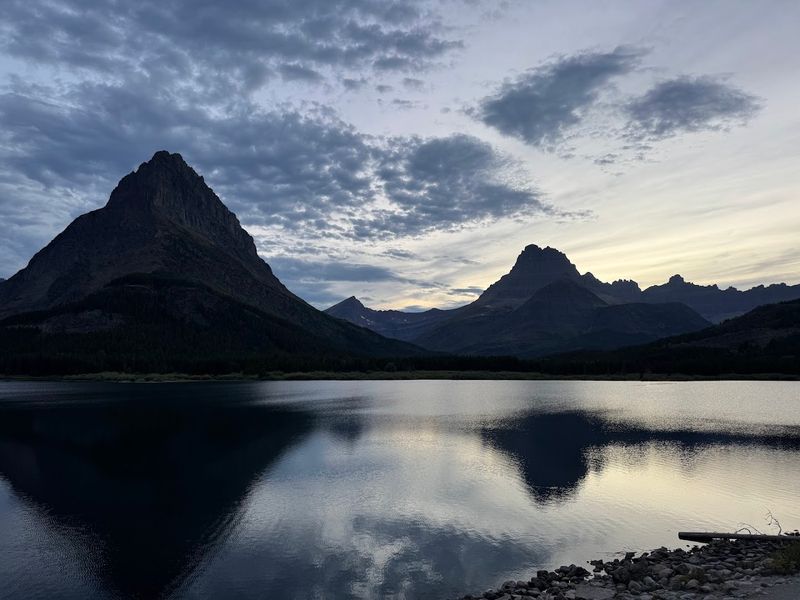
Few campgrounds in the entire country can match the raw drama of Many Glacier’s setting, where jagged peaks rise so steeply they seem to be competing for height.
Tucked into the northeastern corner of Glacier National Park, this campground sits near Swiftcurrent Lake and serves as the starting point for some of the park’s most celebrated hikes, including trails to Iceberg Lake and Grinnell Glacier.
Wildlife sightings here are genuinely common. Bears, moose, bighorn sheep, and mountain goats all move through the valley regularly, making every morning feel like a nature documentary you did not have to subscribe to.
The campground has 109 sites and is open from late May through mid-September, though dates vary by year. Cell service is limited, which most visitors consider a feature rather than a problem.
Reservations are essential during peak summer months. The Many Glacier Hotel sits nearby, so even non-campers often use the area as a day-use hub.
2. Fish Creek Campground, West Glacier, Montana
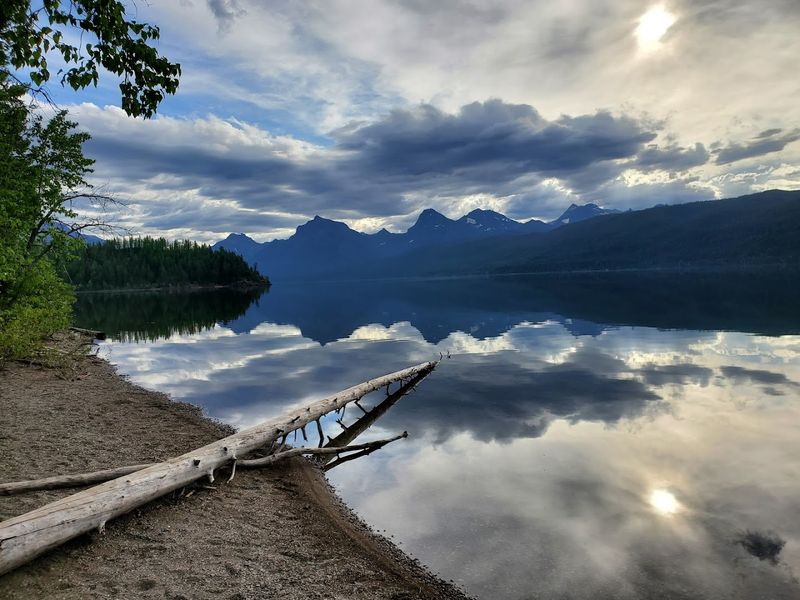
Not everyone wants the biggest campground in the park, and Fish Creek makes a strong case for choosing the quieter option.
Located on the western shore of Lake McDonald, Fish Creek sits about four miles north of Apgar and offers 178 sites nestled among some of Glacier National Park’s most impressive old-growth trees. The forest canopy here is thick enough to provide welcome shade on hot summer afternoons.
Many sites are large enough for RVs up to 35 feet, making this one of the few spots in the park that genuinely works for bigger rigs. Tent campers will find plenty of options too, with several sites positioned near the lakeshore.
Nearby access points lead to lake viewpoints, bicycle-friendly roads, and the shuttle system that connects visitors to the Going-to-the-Sun Road corridor. The campground is typically open from mid-June through early September.
Because it sits slightly farther from the main visitor hub, Fish Creek tends to feel more relaxed, which is exactly what many campers are after.
3. St. Mary Campground, St. Mary, Montana
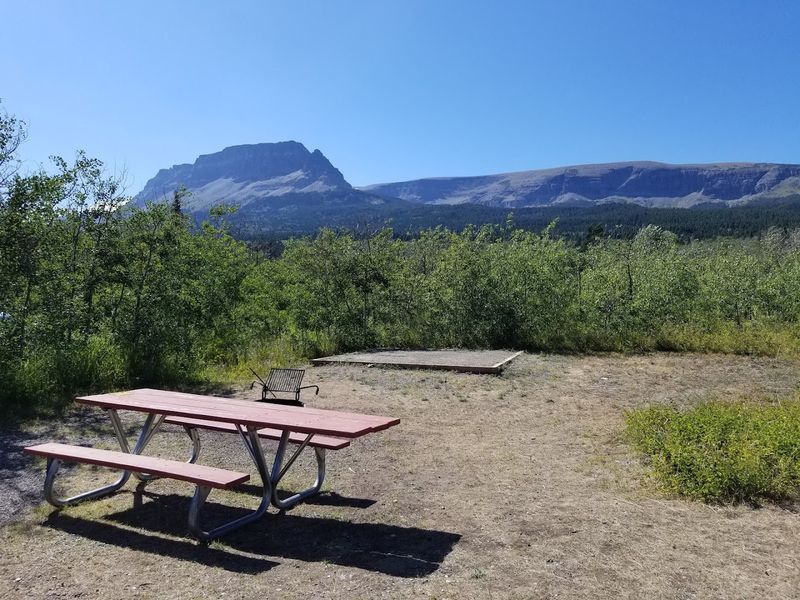
The eastern side of Glacier National Park operates on a completely different visual frequency, and St. Mary Campground captures it perfectly.
Where the western side leans into dense forest, St. Mary opens onto broad, windswept grasslands with the Rocky Mountain Front rising dramatically to the west. St. Mary Lake stretches nearby, and its famously clear water shifts color depending on the time of day and angle of light.
The campground has over 140 sites and serves as the eastern gateway to the Going-to-the-Sun Road, putting visitors within easy reach of the Sun Point Nature Trail, the Wild Goose Island overlook, and the St. Mary Visitor Center.
Sunrise here arrives with a clarity that makes the mountain ridgelines look almost painted. Wildlife including deer, foxes, and the occasional bear pass through the area regularly.
Reservations are available through Recreation.gov and are highly recommended from July through August. The campground typically opens in late May and closes after Labor Day weekend.
4. Lake Como Campground, Darby, Montana
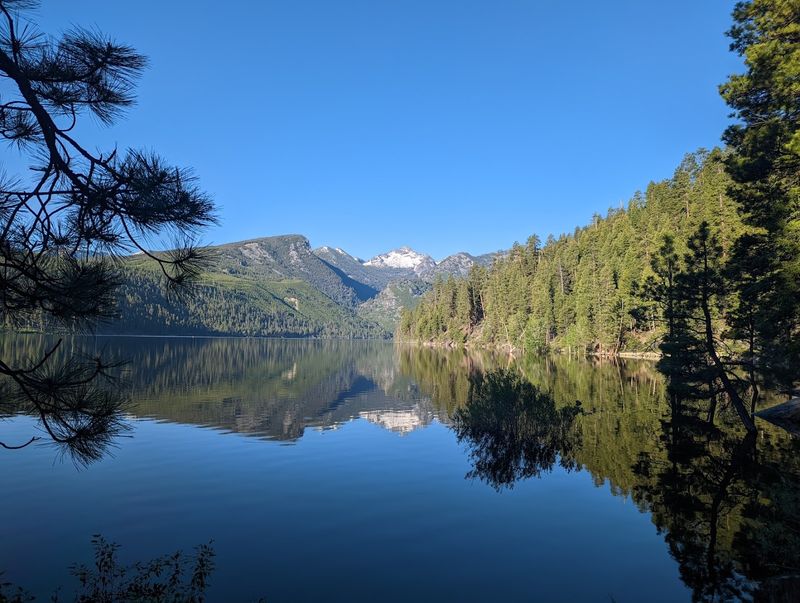
Montana has a Lake Como, and yes, it holds up surprisingly well against its Italian namesake, minus the crowds and the designer sunglasses.
Tucked into the Bitterroot National Forest near the small town of Darby, Lake Como Campground sits beside a sparkling reservoir surrounded by forested ridges and open mountain views. The lake is popular for swimming, boating, kayaking, and paddleboarding, with a boat launch and beach area available to campers.
A loop trail circles the lake and covers about six miles, making it an accessible and rewarding hike for most fitness levels. Families with kids tend to love this campground because the water activities keep everyone busy without requiring serious gear or experience.
The campground has 11 sites managed by the Forest Service, and the area typically sees less traffic than Glacier, giving it a more laid-back character. Sites are available on a first-come, first-served basis.
Late June through August is the most popular window, when water temperatures make swimming genuinely inviting.
5. Hood Creek Campground, Bozeman, Montana
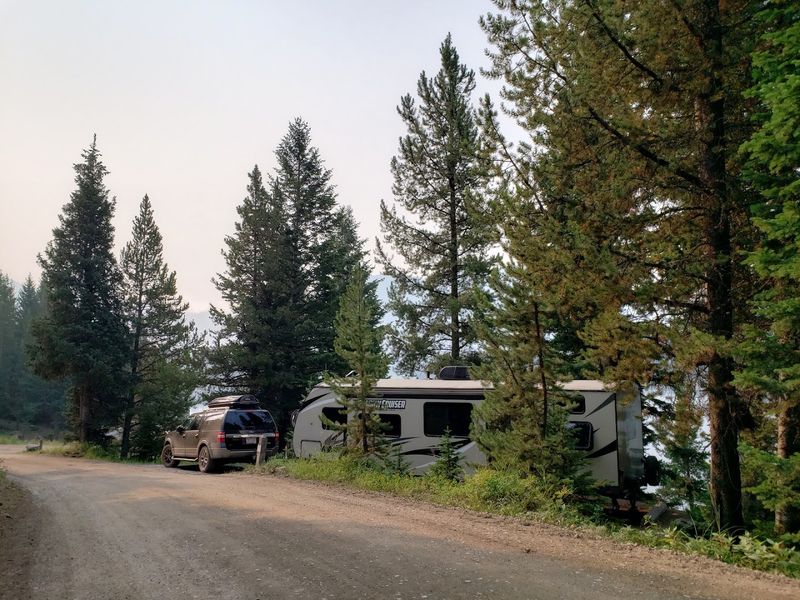
Bozeman locals treat Hyalite Canyon like a backyard playground, and Hood Creek Campground is one of the best entry points into that playground.
Located about 12 miles south of Bozeman in the Custer Gallatin National Forest, Hood Creek sits near Hyalite Reservoir at an elevation of roughly 6,700 feet. The reservoir reflects the surrounding peaks on calm mornings, and the area is threaded with trails leading to waterfalls, alpine lakes, and panoramic overlooks.
The campground has 18 sites and works well for both tents and smaller RVs. Non-motorized boating is permitted on the reservoir, making kayaking and canoeing popular options for campers who bring their own gear.
Several well-marked trailheads depart directly from the campground area, including routes to Palisade Falls, one of Montana’s most accessible and photogenic waterfall hikes. The round trip to the falls covers less than a mile.
Sites can be reserved through Recreation.gov, and the campground typically operates from late May through mid-September depending on snowpack.
6. Fairy Lake Campground, Bozeman, Montana
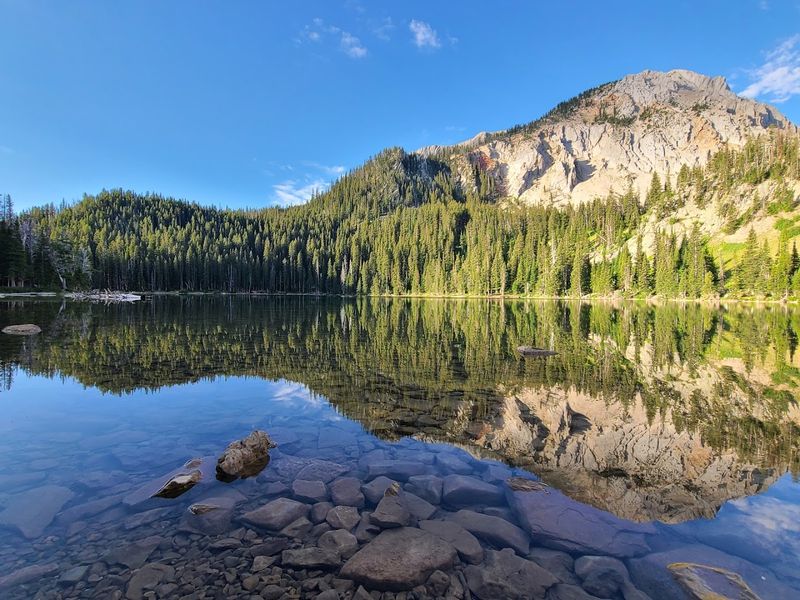
The name sounds like something out of a children’s book, but Fairy Lake Campground delivers scenery that is entirely, dramatically real.
Perched at about 7,400 feet in the Bridger Mountains northeast of Bozeman, this small campground sits beside a clear alpine lake with the limestone cliffs of Sacagawea Peak rising sharply above. The drive up the gravel road is part of the experience, winding through open terrain with views expanding in every direction.
The campground has only nine sites, which keeps the atmosphere quiet and uncrowded even during busy summer weekends. Tent camping only, no hookups, and generators are generally discouraged to preserve the peaceful setting.
A challenging trail from the campground climbs to the summit of Sacagawea Peak at 9,665 feet, rewarding hikers with sweeping views of the Gallatin Valley and surrounding ranges. The hike covers about four miles round trip with significant elevation gain.
Sites are first-come, first-served, and the campground typically opens in July once snow clears from the access road.
7. Woodbine Campground, Nye, Montana
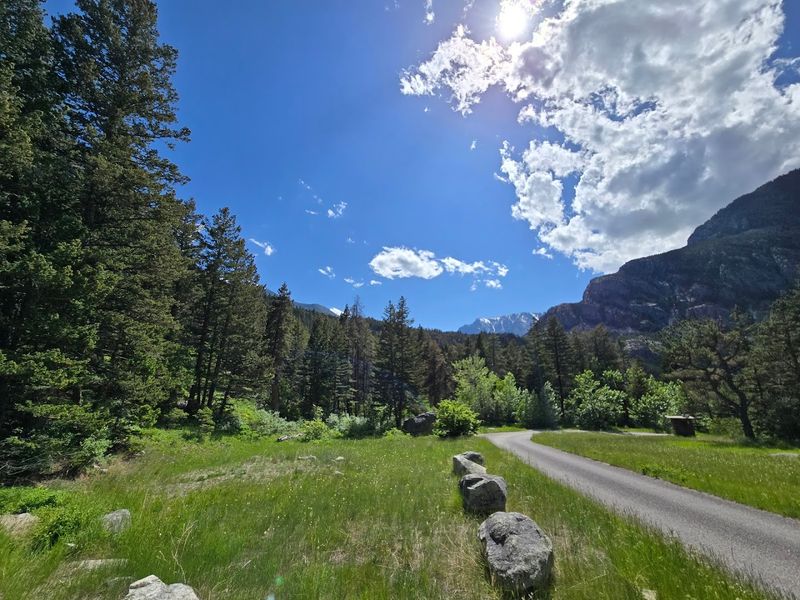
If your idea of a great campground involves thick forest, dramatic cliffs, and a mountain stream close enough to hear from your tent, Woodbine already has your name on a site.
Located near the small community of Nye in Stillwater County, Woodbine Campground sits at the edge of the Absaroka-Beartooth Wilderness inside the Custer Gallatin National Forest. The setting feels genuinely remote even though the access road is paved most of the way.
Woodbine Falls sits just a short walk from the campground, making it one of the easier waterfall hikes in the region and a natural first stop after setting up camp. The falls drop over 50 feet into a rocky basin surrounded by dense vegetation.
The campground has 46 sites spread across a forested area alongside Stillwater River, and the river provides opportunities for fishing and wildlife watching throughout the season. Elk, deer, and osprey are frequent visitors.
Reservations are available through Recreation.gov. The campground typically operates from late May through early September.
8. Missouri Headwaters State Park Campground, Three Forks, Montana
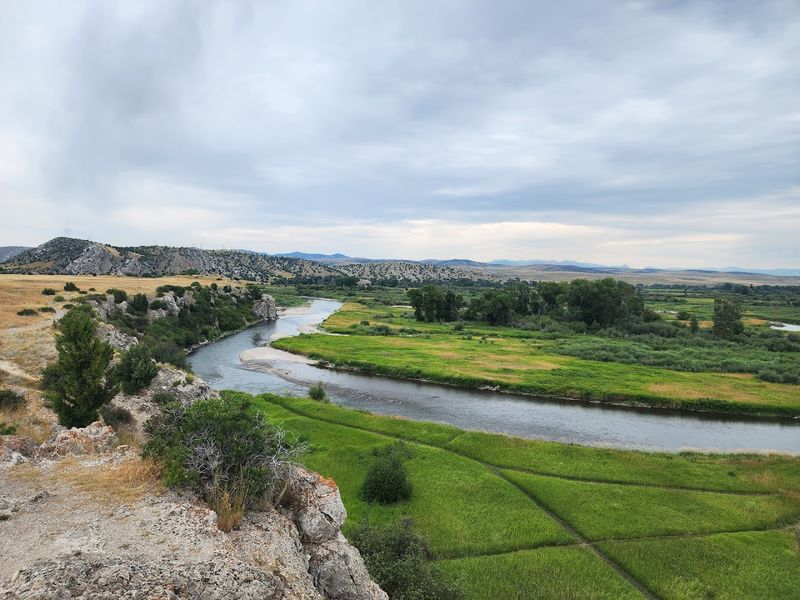
There is something undeniably cool about camping at the exact spot where three rivers decide to become one of North America’s longest.
Missouri Headwaters State Park sits at the confluence of the Jefferson, Madison, and Gallatin Rivers, the point where they merge to form the Missouri River. This location carries serious historical weight, as the Lewis and Clark Expedition reached this spot in 1805 and documented it as one of their most significant geographic discoveries.
The campground has 17 sites including tent and RV options, and the park offers hiking trails, a boat launch, and interpretive signage that brings the history of the area to life without feeling like a classroom.
Cottonwood trees line the riverbanks, and the open meadows around the park provide broad views of the surrounding mountain ranges, including the Bridger and Madison ranges to the east and south.
Sunrise and sunset both produce colorful skies that reflect across the calm river surfaces. The park is open year-round, though services are limited outside of summer months.
9. Big Arm Unit, Flathead Lake State Park, Big Arm, Montana
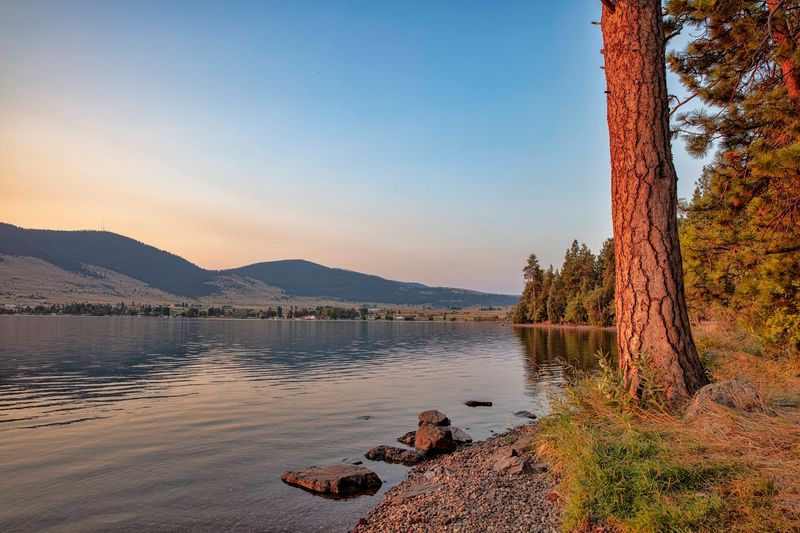
Flathead Lake is the largest natural freshwater lake west of the Mississippi, and the Big Arm unit puts you right on its western shore with the Mission Mountains as a backdrop.
Managed as part of Flathead Lake State Park, Big Arm offers waterfront campsites, a pebble beach, and a boat launch that makes it a natural hub for kayaking, paddleboarding, and fishing. The lake covers over 190 square miles, so there is always plenty of open water to explore.
The campground has 40 sites including some with electrical hookups, accommodating both tent campers and RVs. The layout keeps most sites close to the water, which means lake views are available from a good portion of the campground.
Evenings at Big Arm tend to deliver memorable sunsets that stretch across the western sky and reflect across the lake’s surface. Nearby Wild Horse Island, accessible by boat, is home to bighorn sheep, bald eagles, and a small herd of wild horses.
The park is open from May through September, and reservations are strongly recommended during July and August.
10. Whitefish Lake State Park Campground, Whitefish, Montana
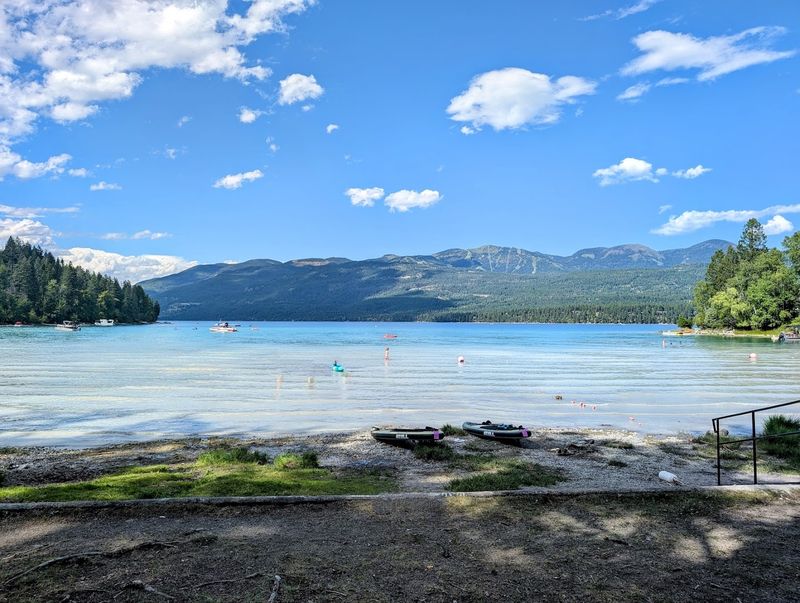
Whitefish has earned a reputation as one of Montana’s most appealing small towns, and its state park campground is one of the better-kept secrets attached to that reputation.
Located less than a mile from downtown Whitefish, the campground sits on the shore of Whitefish Lake, surrounded by a dense mix of pine and fir trees that give each site a sense of privacy. The lake is clear and calm enough for swimming, kayaking, and stand-up paddleboarding throughout the summer.
The campground has 25 sites with electrical hookups and 2 tent-only sites, making it a practical option for campers with RVs who still want a lakeside setting. A sandy beach area and boat dock give campers direct water access without needing to travel anywhere.
Glacier National Park is about 25 miles to the east, so many visitors use Whitefish as a base for day trips into the park while enjoying a more relaxed campground environment in the evenings.
Reservations open in May through Montana’s state park system, and the campground operates from May through September.
11. Makoshika State Park Campground, Glendive, Montana
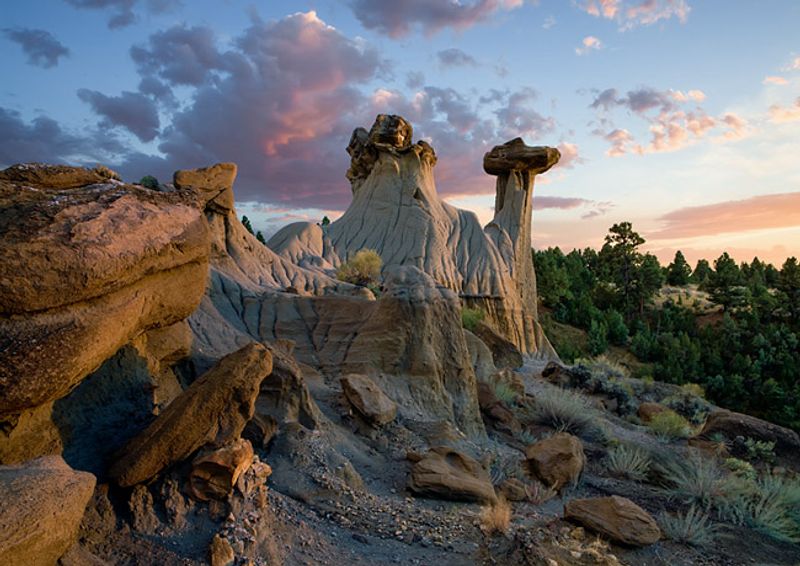
Montana’s largest state park looks like it belongs on another planet, and that is precisely what makes camping here so memorable.
Makoshika State Park covers over 11,500 acres of badlands terrain near the eastern Montana city of Glendive, where millions of years of erosion have sculpted sandstone and mudstone into towers, ridges, and layered canyon walls. The name comes from a Lakota phrase meaning roughly “bad land” or “land of bad spirits,” which feels accurate when you first see the landscape.
The campground has 22 sites including a group area, and the park’s visitor center houses actual dinosaur fossils recovered from the surrounding terrain, including Triceratops and Tyrannosaurus rex specimens found within park boundaries.
Hiking trails wind through the formations, and the views from the canyon rim overlooks are unlike anything else in the state. This is not alpine Montana, but it is absolutely Montana at its most ancient and unusual.
The park is open year-round, and the campground operates from May through October with reservations available through Montana State Parks.
12. Apgar Campground, West Glacier, Montana
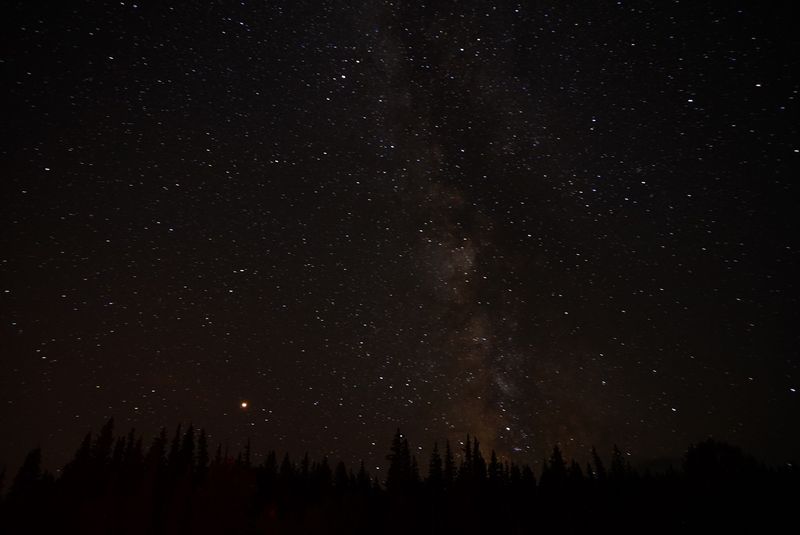
Lake McDonald has a way of making first-time visitors do a double-take, and Apgar Campground gives you a front-row seat to the whole show.
Situated near the southwestern shore of the lake inside Glacier National Park, Apgar is one of the park’s largest campgrounds, with over 190 sites spread through towering western red cedar and hemlock trees.
Its location makes it a natural base for exploring the iconic Going-to-the-Sun Road, which begins just a short distance away. The campground also connects to multiple trailheads and sits within easy reach of the Apgar Visitor Center.
Early mornings at the lake produce glassy reflections of the surrounding peaks that draw photographers from around the country. Sites fill up quickly during summer, so reservations through Recreation.gov are strongly recommended.
Apgar is open seasonally, typically from late May through mid-October, and accommodates both tents and RVs up to 21 feet in most loops.
Share this story