 Unearth The Voyage
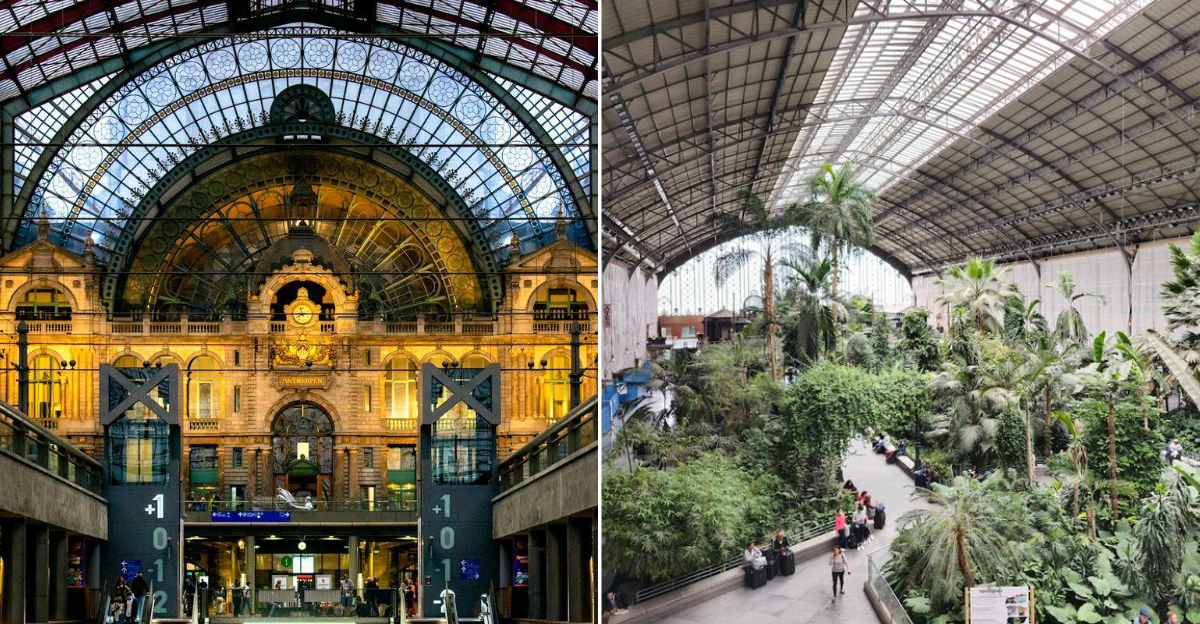
Some train stations are just places you pass through. But a handful across Europe are so jaw-droppingly beautiful that missing your train almost feels worth it.
From soaring stone arches to hand-painted ceramic tiles, these stations have more art and history packed into them than most actual museums. Grab your ticket and get ready to be seriously impressed.
St Pancras International, London: The Gothic Masterpiece That Turns Every Arrival Into a Grand Entrance
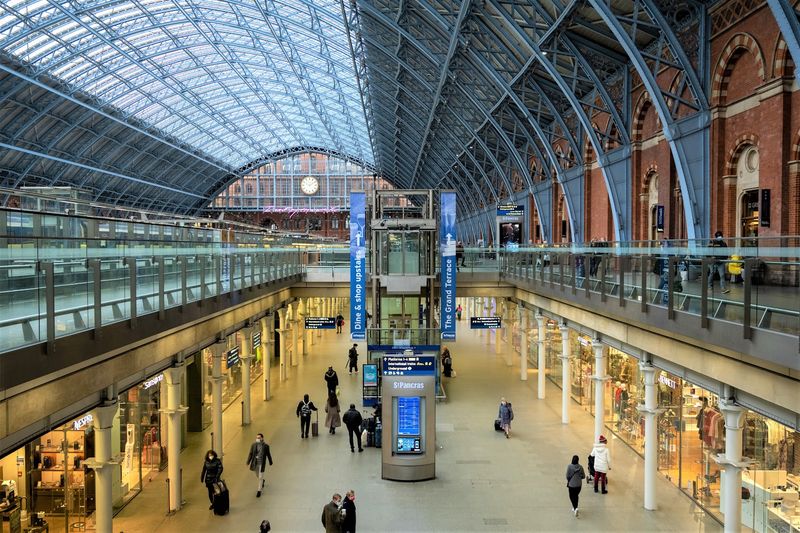
Walking into St Pancras feels less like catching a train and more like starring in your own period drama. The red brick exterior, with its spires and arched windows, was completed in 1868 and is one of the finest examples of Victorian Gothic architecture anywhere in the world.
For years, the building was nearly demolished. Thankfully, poet John Betjeman campaigned loudly to save it, and today a statue of him stands inside, gazing up at the roof he helped preserve.
Good man.
The Eurostar terminal is housed here, meaning you can step off a train from Paris and straight into one of London’s most theatrical spaces. The champagne bar on the upper level is the longest in Europe, which feels entirely appropriate for a station this dramatic.
Arrive early on purpose. You will want the extra time.
Milano Centrale, Italy: The Monumental Station That Feels Bigger Than Life
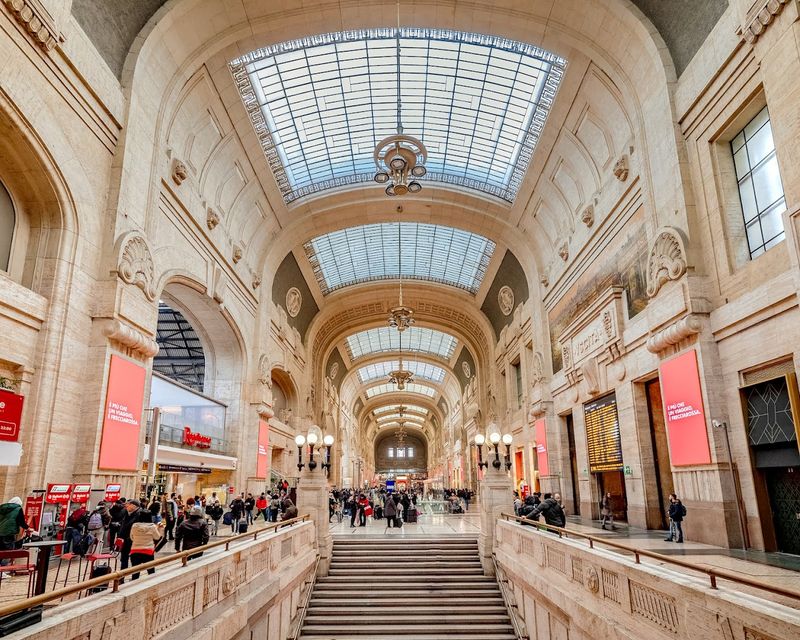
Milano Centrale was built to make a statement, and it absolutely delivers. Opened in 1931, the station stretches 200 meters wide and features a facade covered in stone carvings, reliefs, and decorative details that take serious time to absorb.
It is monumental in every sense of the word.
The main hall, known as the Galleria delle Carrozze, rises to extraordinary heights with arched vaults that could comfortably fit a small cathedral inside. The stone eagles, mythological figures, and Art Deco flourishes reflect the architectural ambitions of the era.
On my first visit to Milan, I spent twenty minutes standing in the entrance hall with my neck craned upward before someone gently pointed out I was blocking the doorway. Fair enough.
The station serves around 120 million passengers a year, so try visiting during off-peak hours for a calmer, more rewarding experience of this spectacular space.
Madrid Atocha, Spain: The Historic Station With a Tropical Garden Inside
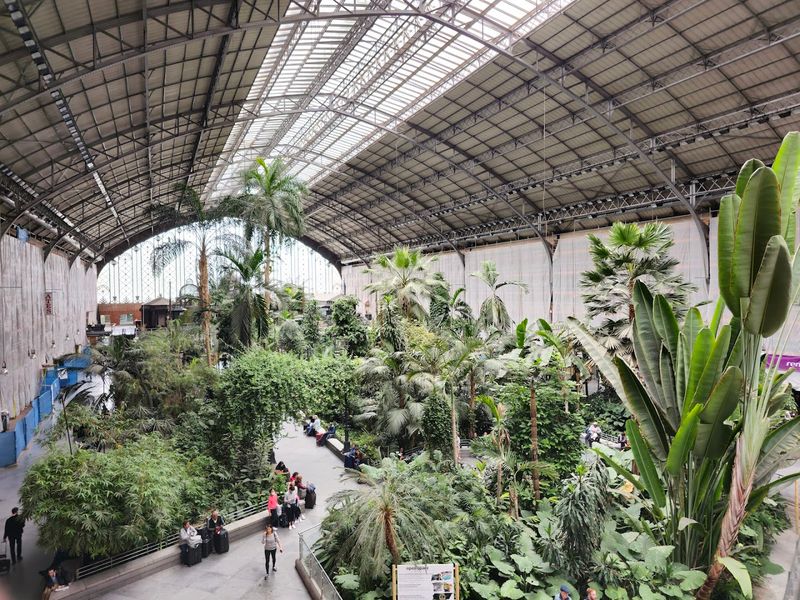
Madrid Atocha holds a secret that most people never expect to find inside a train station: a full-blown tropical garden. The original 19th-century iron-and-glass terminal was converted into a botanical greenhouse in 1992, filled with over 7,000 plants from 260 different species.
Tortoises wander freely among the greenery.
Yes, actual tortoises. Living in a train station.
Spain clearly has its priorities sorted.
The new high-speed rail terminal sits alongside the historic building, keeping the old structure beautifully preserved. The garden area is open to anyone, whether you have a train to catch or not.
It is a genuinely peaceful spot in the middle of a busy capital city. There is also a memorial inside dedicated to the victims of the 2004 Madrid train bombings, making the space both beautiful and deeply meaningful.
Worth every minute of a visit.
Antwerp Central Station, Belgium: The Railway Cathedral That Looks Like a Palace
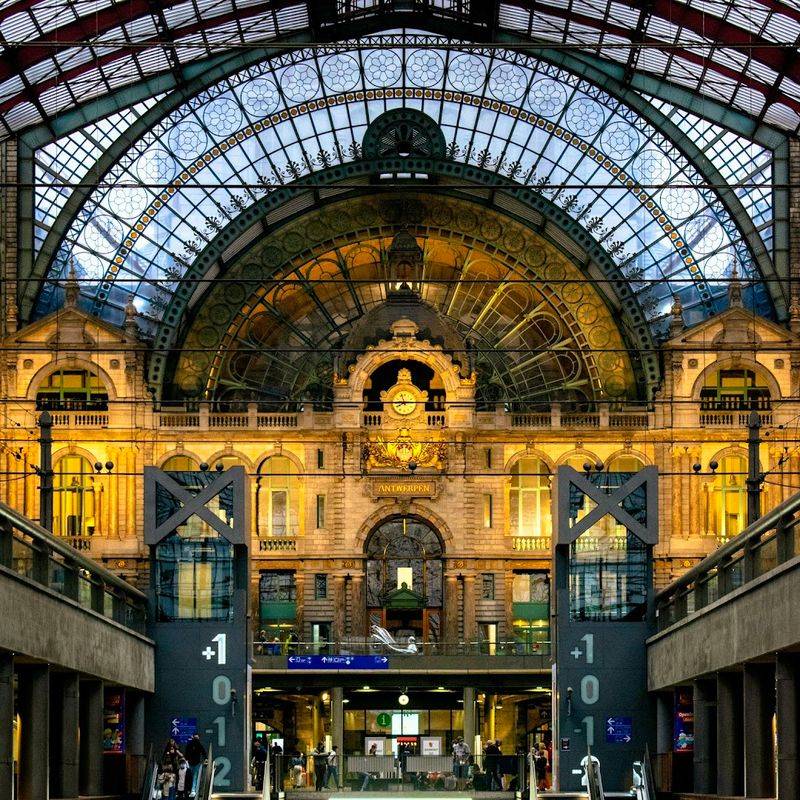
Antwerp Central is the kind of station that makes you forget you were in a hurry. Built between 1895 and 1905, it was nicknamed the “Railway Cathedral” for a very good reason.
The soaring dome rises 56 meters above the marble floors, and every inch of the interior is carved, gilded, or polished to perfection.
The architect Louis Delacenserie pulled inspiration from classical and baroque styles, and the result is gloriously over the top. Four underground platforms were added in the 2000s without disturbing the historic shell.
Engineers basically performed architectural surgery, and it worked beautifully.
First-time visitors often walk in and immediately stop walking. It is physically hard to keep moving when a ceiling that grand is above your head.
Give yourself extra time here, because the photo opportunities alone could fill an afternoon.
Rossio Station, Lisbon: The Fairytale Gateway With a Storybook Facade
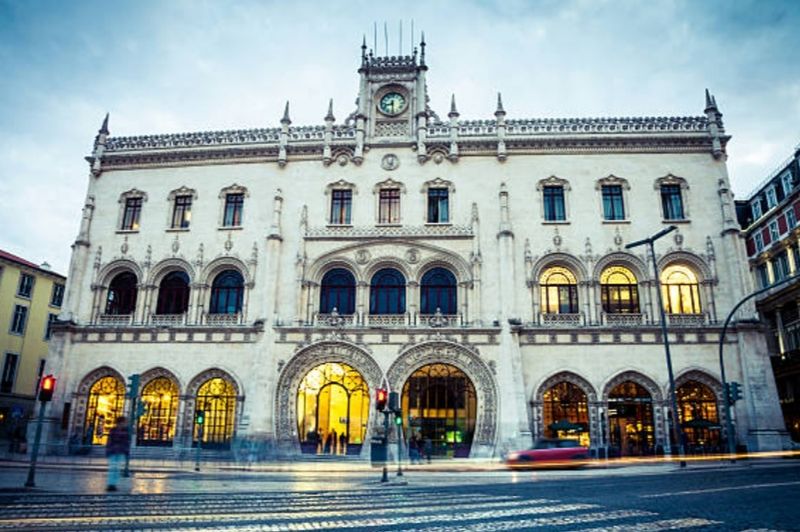
Rossio Station has a facade so ornate it looks like someone carved an entire fairy tale into the stonework. Built in 1886 in the Neo-Manueline style, it features two elaborate horseshoe-shaped doorways that frame the entrance like something straight out of a storybook.
Lisbon really does not do things by halves.
The Manueline style is uniquely Portuguese, blending Gothic architecture with maritime motifs and intricate decorative detail. Rossio pulls it off with serious flair.
The carved stone surfaces include ropes, spheres, and floral patterns that reward a slow, close look.
The station sits right in the heart of the city, steps from Praca Dom Pedro IV. Catching a train to Sintra from here is one of the classic Lisbon day trips, and the journey starts in style.
Even locals admit the building is special. That is the highest compliment any tourist spot can earn.
Sao Bento Station, Porto: The Tile-Covered Landmark That Doubles as a Public Art Gallery
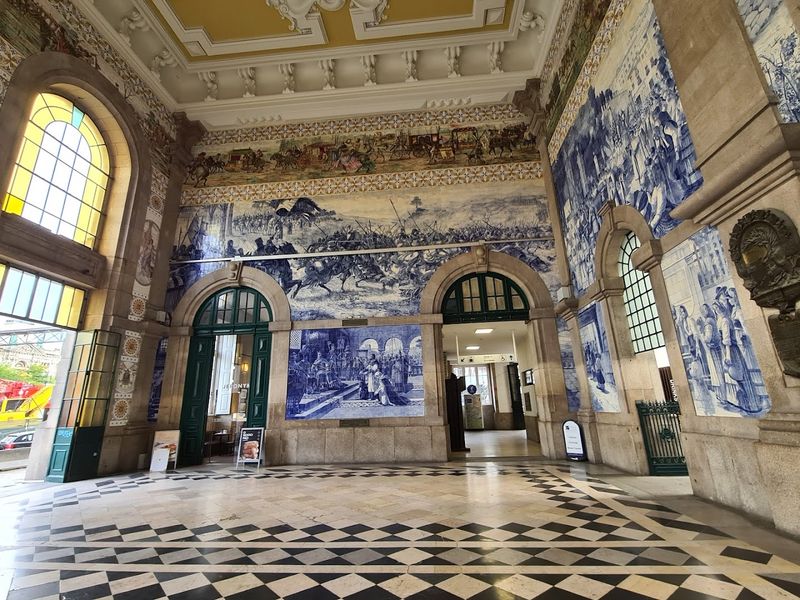
Sao Bento Station in Porto is essentially a free art gallery that happens to also run trains. The entrance hall is covered floor to ceiling in over 20,000 hand-painted blue and white azulejo tiles, depicting scenes from Portuguese history, rural life, and royal celebrations.
Artist Jorge Colaco spent eleven years completing the panels.
Eleven years. For a train station.
That is commitment.
The tiles date from 1905 to 1916 and are remarkably well preserved. Each panel tells a different story, and you could spend a long time studying the details without running out of things to notice.
The building itself was constructed on the site of a former convent, adding another layer of historical depth to the visit. Porto is already one of Europe’s most rewarding cities to explore, and Sao Bento is a genuinely unmissable stop on any itinerary.
Go early to beat the crowds.
Paris Gare de Lyon, France: The Belle Epoque Beauty With One of Europe’s Most Elegant Halls
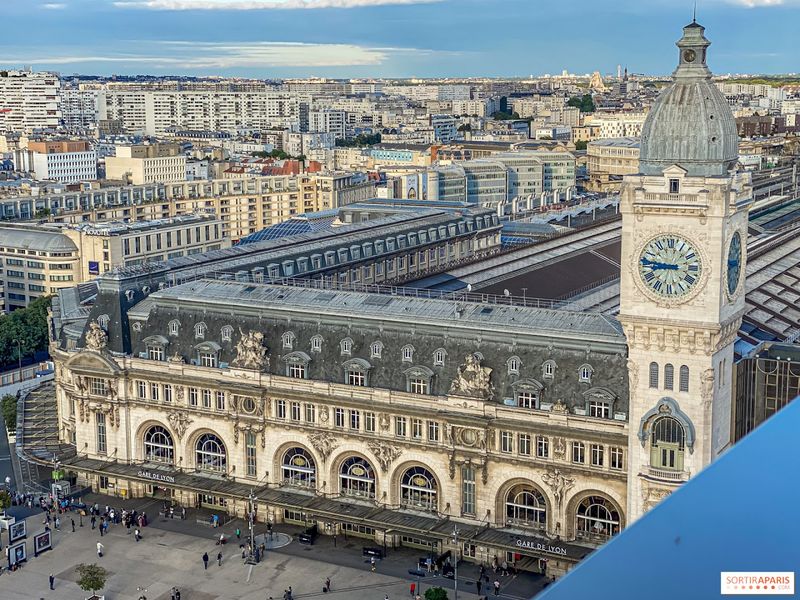
Paris Gare de Lyon has a restaurant so beautiful that people book tables just to sit inside it, with no intention of catching a train at all. Le Train Bleu, opened in 1901, features gilded ceilings, oil paintings, and chandeliers that make it one of the most lavishly decorated dining rooms in Europe.
The food is excellent too, which is a bonus.
The station itself dates from 1900 and was built for the Paris Universal Exhibition. The clock tower is a Parisian landmark, and the grand hall below buzzes with the energy of one of France’s busiest rail hubs.
High-speed TGV trains to Lyon, Marseille, and beyond all depart from here.
Even if you are just passing through, take five minutes to look up at the painted ceilings in the main hall. The artistry is extraordinary, and most commuters rush past without ever noticing it.
Do not be one of them.
Amsterdam Centraal, Netherlands: The Neo-Renaissance Icon That Looks Like a National Museum
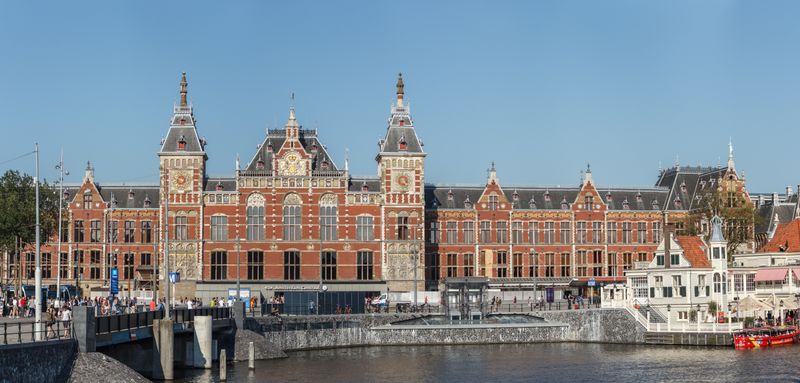
Amsterdam Centraal and the Rijksmuseum were designed by the same architect, Pierre Cuypers, which explains why first-time visitors sometimes head to the wrong building. Both opened in the 1880s, and both feature the same ornate red brick Neo-Renaissance style that makes Amsterdam’s city center so visually distinctive.
The station sits on three artificial islands, supported by 8,687 wooden piles driven into the riverbed. That is an extraordinary feat of 19th-century engineering, and the building has not shifted since.
The Dutch are remarkably good at building things on water.
The interior has been modernized over the decades, but the facade remains gloriously intact. Step outside to the front and you get one of Amsterdam’s most iconic views, with trams, cyclists, and canal boats all competing for space in classic Dutch fashion.
The station is also the city’s main transport hub, connecting trains, metros, ferries, and buses in one central spot.
Helsinki Central Station, Finland: The Granite Art Nouveau Landmark Everyone Stops to Admire
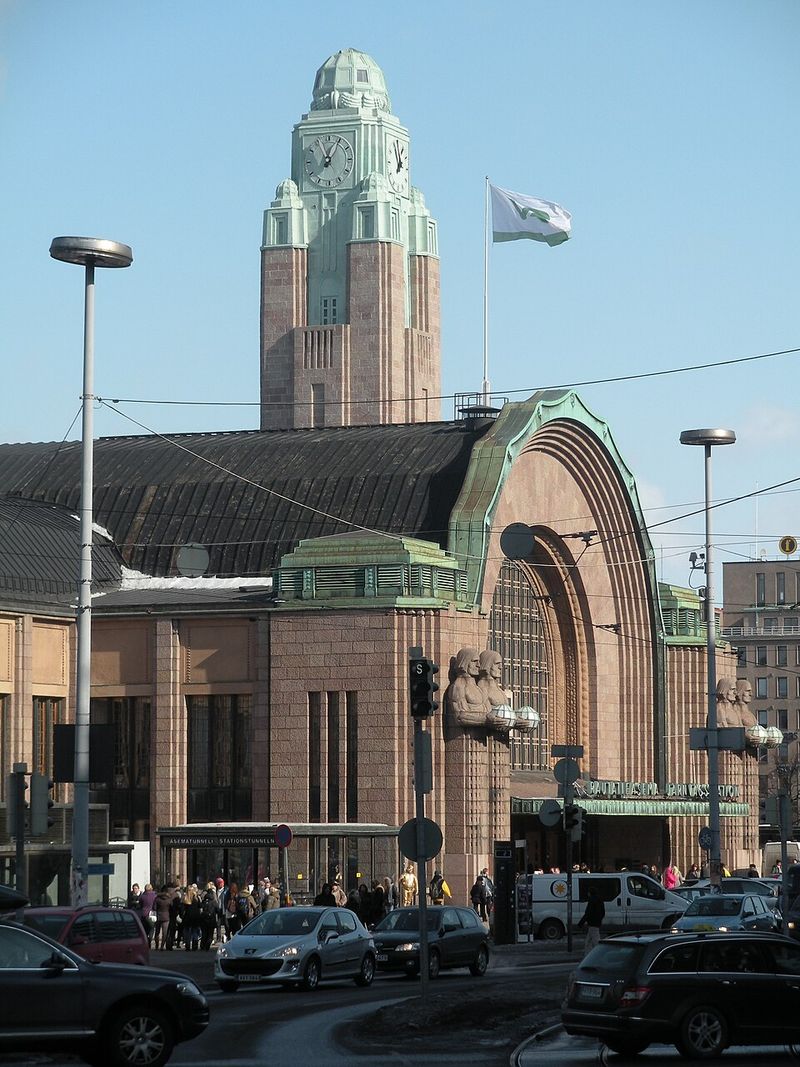
Four stone giants stand at the entrance of Helsinki Central Station, each holding a glowing orb above their heads. It is dramatic, slightly mysterious, and completely unforgettable.
The figures were sculpted by Emil Wikstrom and have been lighting the way for arriving passengers since the station opened in 1919.
Architect Eliel Saarinen designed the building in a style that blends Art Nouveau with a distinctly Nordic sensibility. The warm reddish granite gives the whole structure a solidity and gravitas that feels entirely appropriate for Finland.
The interior is clean, functional, and beautifully proportioned.
The clock tower rises 48 meters and is visible from much of the surrounding city center. Helsinki is not always on European travel bucket lists, but it absolutely should be.
The station alone is a compelling reason to visit. Finland has a quiet confidence in its design culture, and this building is one of its finest expressions.
Highly recommended.
Strasbourg-Ville Station, France: The Historic Beauty Wrapped in a Striking Glass Shell
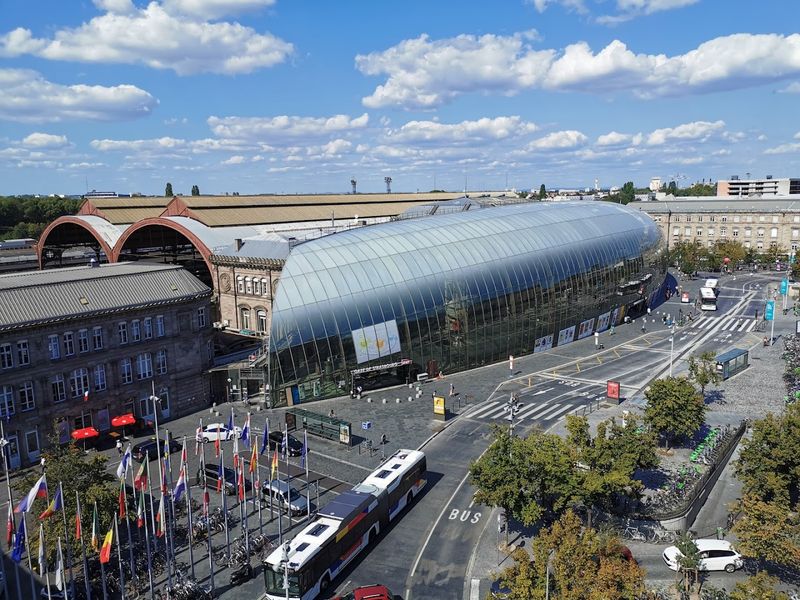
Strasbourg-Ville plays an architectural trick that works brilliantly. The original neo-Romanesque station, built in 1883 during German rule of Alsace, was wrapped in a spectacular modern glass and steel shell in 2007.
Old meets new in the most dramatic way possible, and somehow it all makes perfect sense.
The glass addition was designed by the architecture firm AREP and allows natural light to flood the entrance area while protecting the historic facade behind it. The contrast between the warm stone of the 19th-century building and the cool transparency of the modern shell is genuinely striking.
It is the kind of renovation that actually improves on what came before.
Strasbourg itself sits right on the French-German border and has a fascinating dual cultural identity that shows up in its food, language, and architecture. The station reflects that perfectly.
Arriving here feels like stepping into a city that cannot quite decide which century it belongs to, in the best possible way.
Budapest Nyugati Station, Hungary: The Iron-and-Glass Classic With Old-World Drama
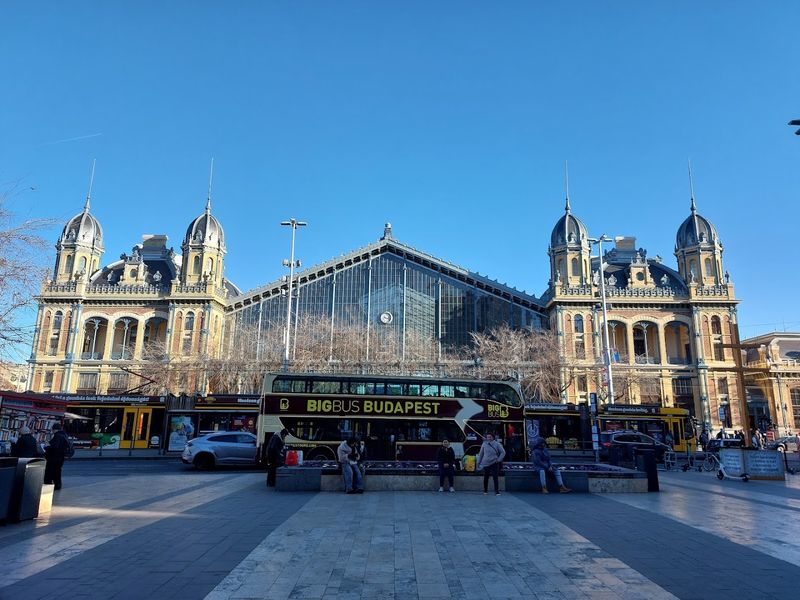
Budapest Nyugati was designed by the Eiffel company, and yes, that is the same firm behind the famous Paris tower. Built in 1877, the station features a soaring iron-and-glass facade that floods the interior with natural light.
It was one of the most advanced railway structures in the world when it opened.
The main hall is a masterpiece of 19th-century industrial design. The delicate ironwork, the arching glass roof, and the grand proportions all combine to create a space that feels theatrical without trying too hard.
There is a McDonald’s inside that occupies the old royal waiting room, which is either charming or mildly criminal depending on your perspective.
Budapest as a whole is one of Europe’s most underrated cities, and Nyugati is a perfect introduction to its layered, dramatic architectural character. Trains run across Hungary and into neighboring countries from here, making it a practical hub as well as a beautiful one.
Leipzig Hauptbahnhof, Germany: The Vast Historic Station That Feels Like a City Museum
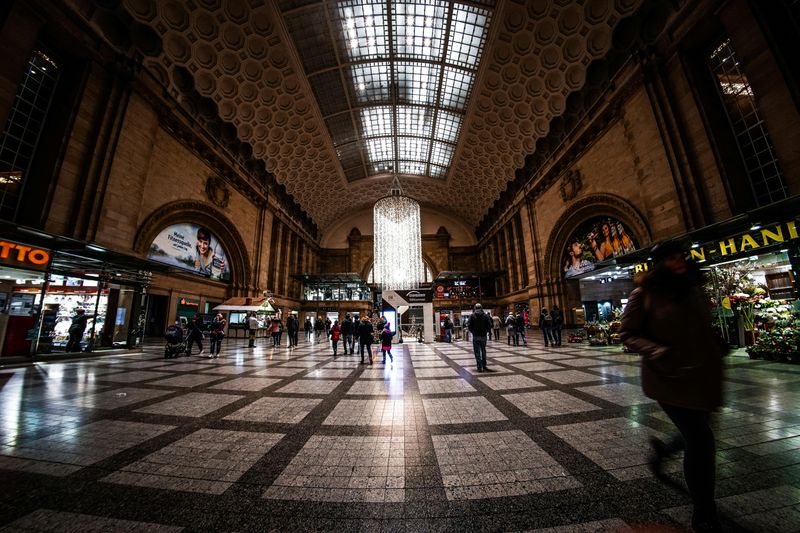
Leipzig Hauptbahnhof holds the record as the largest terminus station in the world by floor area, covering 83,640 square meters. That is not a typo.
This place is enormous, and exploring it properly takes genuine effort. When it opened in 1915, it was already considered one of the grandest railway projects in Europe.
The station has 26 platforms arranged symmetrically, divided between two former railway companies that merged their operations here. The result is a building with an almost ceremonial sense of balance and order.
Three levels of shopping and dining have been added below the historic hall, giving the station a life well beyond its train schedule.
The historic upper hall, with its long vaulted roof and stone columns, is the real draw. It has a quiet grandeur that rewards slow walking and upward glancing.
Leipzig is a city with serious cultural credentials, and its main station reflects that confidence perfectly. A genuinely impressive place.



