New Mexico is one of those places that makes you wonder why you waited so long to visit. From alien legends and ancient cliff dwellings to world-class art and glowing white sand dunes, this state packs a serious punch.
I took my first road trip through New Mexico a few years back and came home with a camera full of photos and a list of reasons to return. Whether you are planning your first visit or your fifth, these 12 attractions deserve a spot on your itinerary.
White Sands National Park, Alamogordo, New Mexico
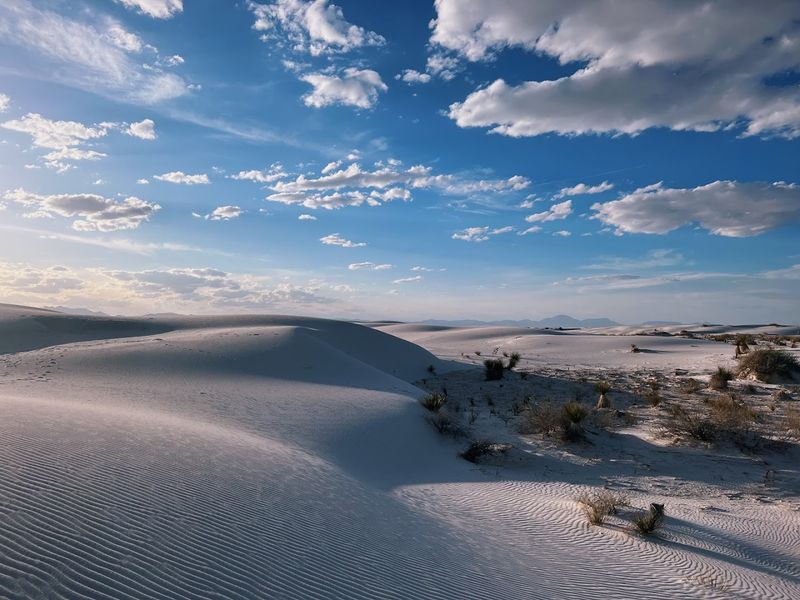
White Sands holds a record most parks cannot touch: it is the world’s largest gypsum sand dune field, covering 275 square miles of blinding white. Dunes Drive is open, though a safety corridor is in effect and missile-range closures can happen with advance notice.
Check the park website before you head out so a surprise closure does not ruin your day.
The sand stays cool even in summer because gypsum does not absorb heat the way regular sand does. That means barefoot walks are actually enjoyable here, which is a rare and welcome bonus.
Sledding down the dunes on a rented plastic disc is absolutely as fun as it sounds.
Sunset is peak hour at White Sands. The white dunes turn soft shades of pink and gold, and photographers plant themselves hours early for good reason.
Arrive before 4 p.m. to secure a parking spot without the stress.
Carlsbad Caverns National Park, Carlsbad, New Mexico
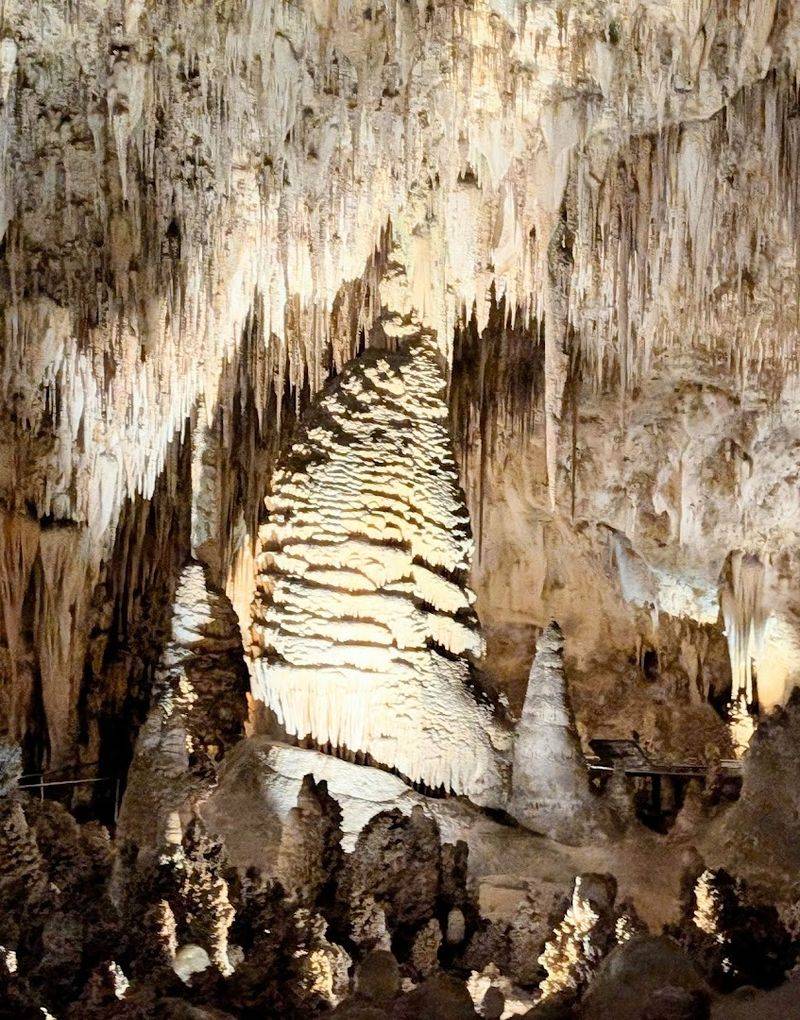
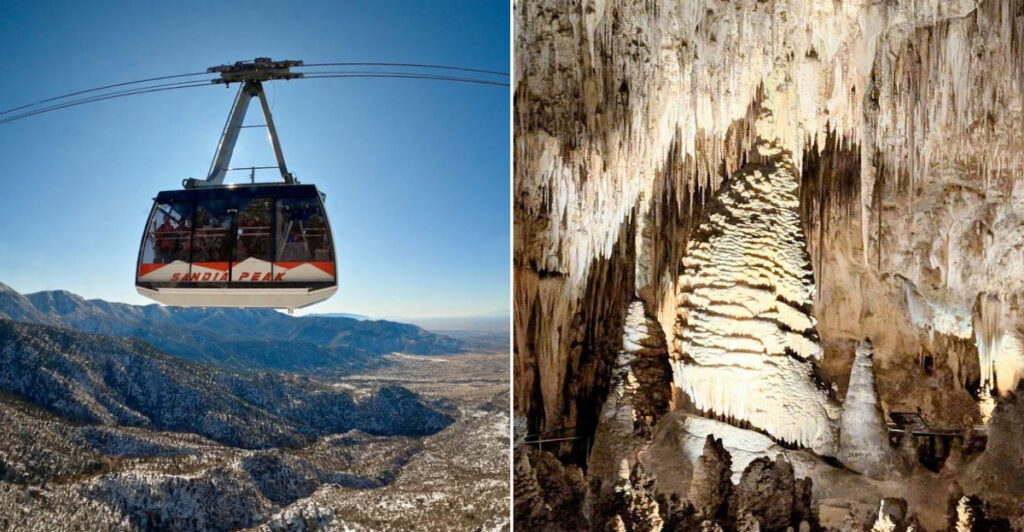
More than 119 caves hide beneath the Chihuahuan Desert, and Carlsbad Caverns is the showstopper of the bunch. The Big Room is the largest natural cave chamber in North America, stretching 8.2 acres underground.
That is not a typo. It is genuinely enormous.
Timed-entry reservations are strongly recommended for entering Carlsbad Cavern, so book ahead before your trip. Walk-ins are possible but risky during busy seasons, and nobody wants to drive hours into the desert only to be turned away.
The self-guided tour of the Big Room takes about an hour and a half at a comfortable pace.
Every evening from late spring through fall, hundreds of thousands of Brazilian free-tailed bats spiral out of the cave entrance at dusk. The bat flight program is free and genuinely spectacular.
Rangers give a short talk beforehand, and the whole experience feels like something out of a nature documentary. Do not skip it.
Bandelier National Monument, Los Alamos, New Mexico
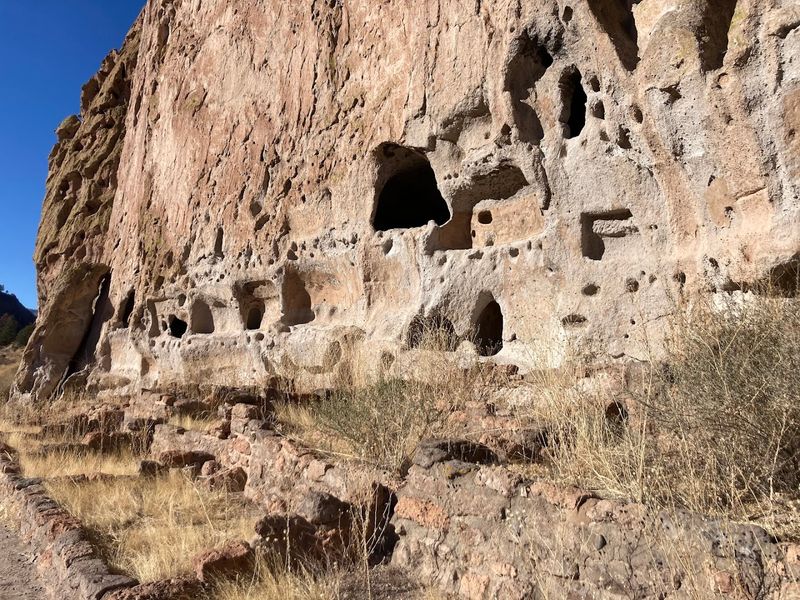
About 900 years ago, Ancestral Pueblo people carved homes directly into the soft volcanic rock of Frijoles Canyon. Bandelier National Monument preserves those cliff dwellings, along with petroglyphs, canyon landscapes, and centuries of layered history.
The park sits just 50 miles from Santa Fe, making it a very doable day trip.
The Main Loop Trail is the most popular route and covers the best of the cliff dwellings in about 1.5 miles. Tall wooden ladders lead up to some of the cave rooms, and yes, you can climb them.
I will admit the ladders look more intimidating from the ground than they actually are.
Bandelier is open and operating year-round. Spring and fall offer the most comfortable hiking temperatures, and the canyon light in the late afternoon is genuinely beautiful for photos.
Parking fills up fast in summer, so arrive early or use the shuttle from the White Rock Visitor Center to avoid the headache.
Taos Pueblo, Taos, New Mexico
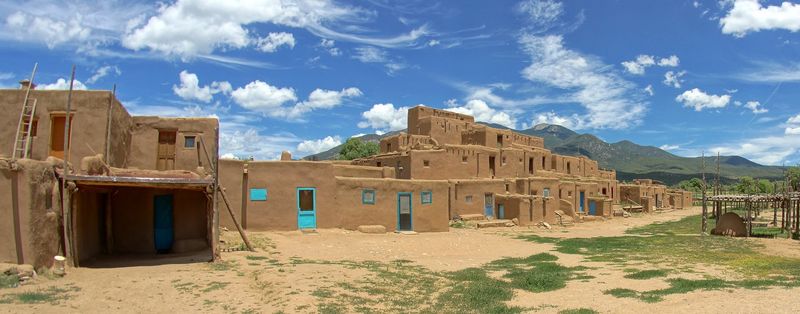
Taos Pueblo has been continuously inhabited for over 1,000 years, making it one of the oldest living communities in the United States. The multi-story adobe structures are a UNESCO World Heritage Site and a National Historic Landmark.
That is a double crown very few places in the world can claim.
The pueblo is generally open daily from 9 a.m. to 4 p.m., but it is a living community, not a museum. Closures happen for ceremonies or unexpected circumstances, so calling ahead before your visit is smart.
When it is open, guided tours from community members offer context that no guidebook can fully replicate.
Visitors are asked to respect photography rules and stay on designated paths. Local artisans sell handmade pottery, jewelry, and bread baked in traditional outdoor ovens called hornos.
Buying directly from community members supports the pueblo in a meaningful way. Plan to spend at least two hours here because rushing through would be a genuine shame.
Georgia O’Keeffe Museum, Santa Fe, New Mexico
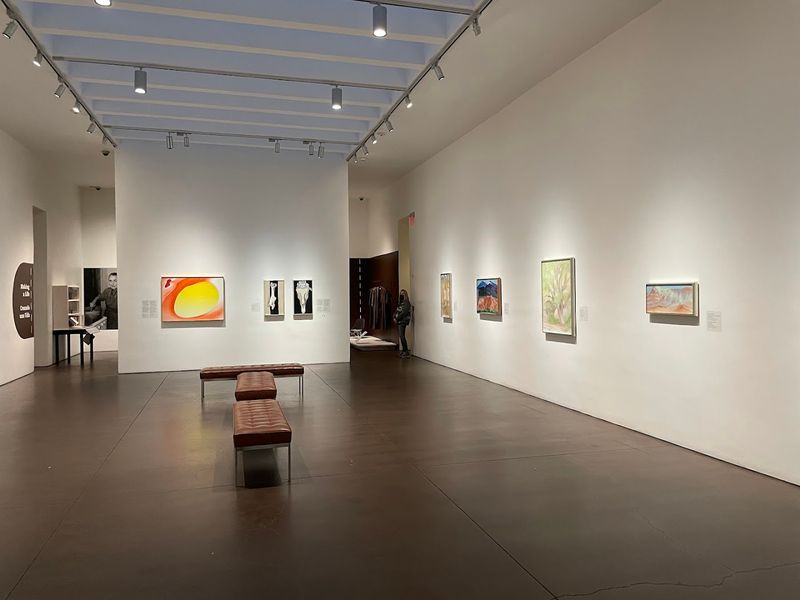
Georgia O’Keeffe spent decades painting the New Mexico landscape, and her work turned bleached skulls and desert flowers into some of the most recognized art in American history. The museum dedicated to her life and work sits at 217 Johnson Street in downtown Santa Fe, open daily from 10 a.m. to 5 p.m.
Reservations are recommended, especially in peak tourist season.
The permanent collection includes over 1,100 works, spanning her entire career from early charcoal sketches to the large-format New Mexico paintings she became famous for. The museum is small enough to feel personal but rich enough to keep art fans busy for hours.
Even visitors who are not big art people tend to leave genuinely impressed.
Santa Fe’s downtown is walkable, so pairing the museum with lunch at a nearby restaurant makes for a great full-day plan. The gift shop carries high-quality prints and books that make excellent souvenirs.
Skip the generic keychains and grab something you will actually display at home.
Meow Wolf House Of Eternal Return, Santa Fe, New Mexico

Meow Wolf is the kind of place that makes adults feel like kids again and leaves kids completely speechless. The House of Eternal Return is an immersive art installation built inside a 20,000-square-foot former bowling alley in Santa Fe.
The storyline involves a mysterious family, a house full of portals, and enough hidden rooms to keep you exploring for hours.
Hours vary by day, so checking the website before you go is essential. Advance ticket purchase is strongly recommended because this place sells out regularly, especially on weekends.
Showing up without a ticket and hoping for the best is a gamble that rarely pays off.
Every room is designed by a different artist, so the experience shifts dramatically as you move through the space. One minute you are crawling through a refrigerator into an alien forest, and the next you are standing inside a giant beating heart.
It is weird in the best possible way, and I mean that as the highest compliment.
Sandia Peak Tramway, Albuquerque, New Mexico
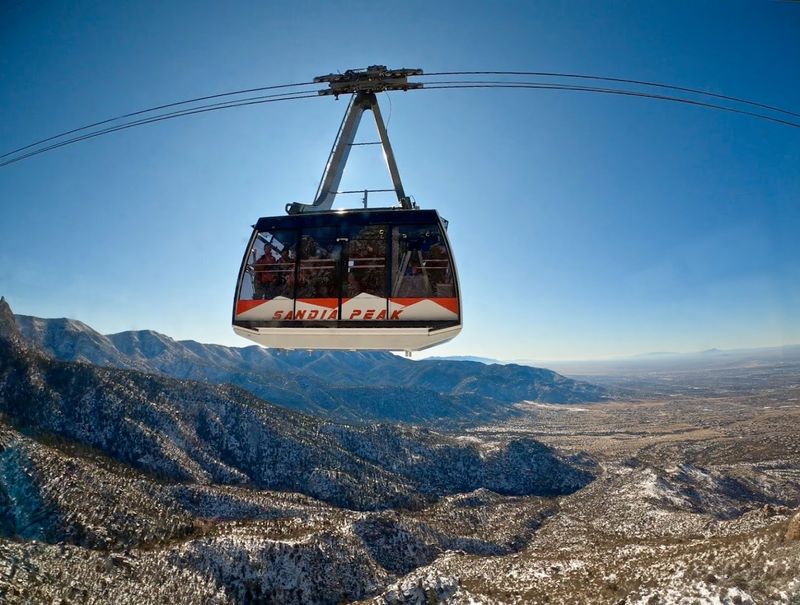
At 2.7 miles, the Sandia Peak Tramway is the longest aerial tram in North America. It carries passengers from the edge of Albuquerque up to 10,378 feet in about 15 minutes.
The views of the Rio Grande valley spread out below you during the ride, and on a clear day you can see for over 11,000 square miles.
The tram runs daily from 9 a.m. to 8 p.m., weather permitting. Strong winds occasionally cause temporary closures, so checking conditions before heading over is worth the 30-second effort.
TEN 3 Restaurant at the summit is open and serves food and drinks with arguably the best view in New Mexico.
Hikers use the tram to access the Crest Trail system in the Cibola National Forest. Temperatures at the top run about 25 degrees cooler than in the city, so bring a layer even in July.
Watching the Albuquerque city lights sparkle from the summit at dusk is a memory that sticks with you.
Valles Caldera National Preserve, Jemez Springs, New Mexico
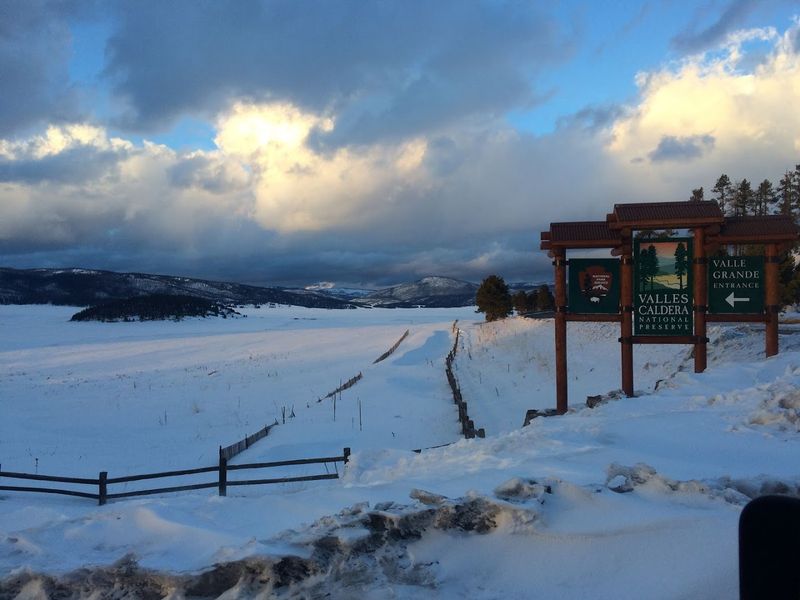
Valles Caldera was formed by a massive volcanic eruption 1.25 million years ago, leaving behind a stunning 13-mile-wide bowl of meadows, streams, and mountain peaks. It is one of the best-preserved calderas on the planet.
Elk herds roam the valley floor in numbers that will make your jaw drop.
The preserve is open for pedestrian access from dawn to dusk every single day of the year. Vehicle and backcountry access depends on seasonal conditions, so check the National Park Service website for road updates before planning an extended trip.
The main overlook from Highway 4 is free and gives a sweeping first look at the caldera even without stepping out of your car.
Fishing, hiking, snowshoeing, and wildlife watching are all on the activity menu depending on the season. The Jemez Mountains surrounding the preserve add layers of scenery that change dramatically from summer green to fall gold.
This place genuinely does not get the attention it deserves, which means fewer crowds for the people who do show up.
Petroglyph National Monument, Albuquerque, New Mexico
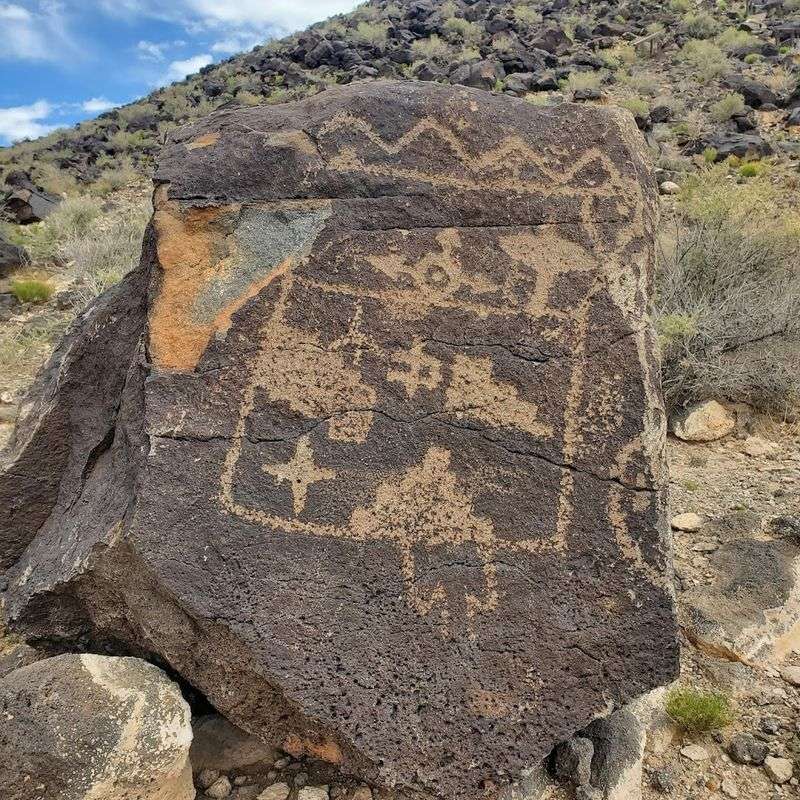
Over 24,000 images are carved into the dark volcanic basalt along a 17-mile stretch of West Mesa in Albuquerque. Petroglyph National Monument protects symbols, animals, and figures etched by Ancestral Pueblo people and early Spanish settlers over hundreds of years.
That is a lot of ancient art packed into one surprisingly accessible park.
Boca Negra Canyon is open during normal city park hours and offers the most concentrated collection of carvings with short, easy trails. The monument is a day-use park, meaning no camping, but most visitors spend between one and three hours exploring the different canyon units.
Bring water because the sun reflects hard off those black rocks.
The petroglyphs are fragile and irreplaceable, so touching them is strictly off limits. Staying on the trail protects both the carvings and the desert crust underfoot.
Early morning visits reward you with softer light and cooler temperatures, which makes the whole experience significantly more pleasant than showing up at noon in August.
Chaco Culture National Historical Park, Nageezi, New Mexico
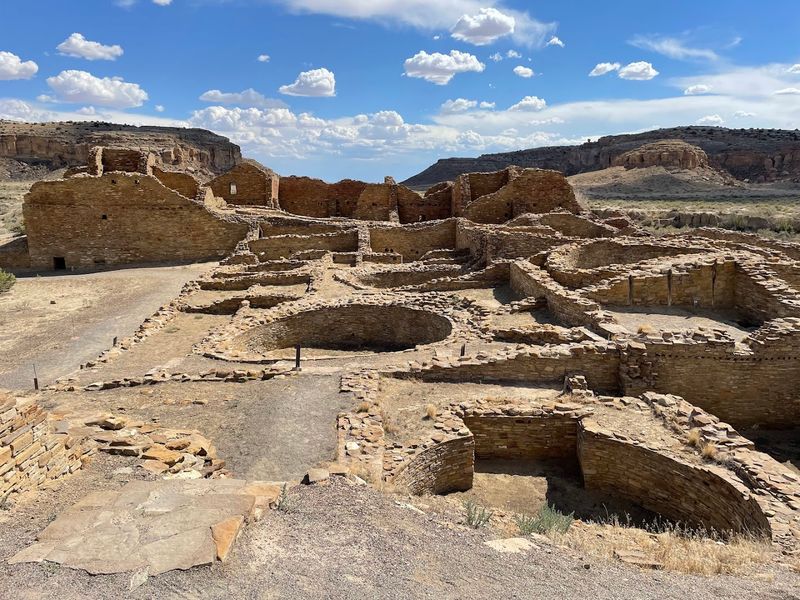
Chaco Canyon was once the center of a civilization that built multi-story stone structures aligned precisely with solar and lunar events. Pueblo Bonito alone contained over 650 rooms and stood four stories tall.
These people were doing serious architectural and astronomical work without modern tools, and that fact never gets old.
The loop road is open from 7 a.m. to 7 p.m. as of March 2026, but the final unpaved road section becomes impassable when wet. Checking road conditions before the drive out is not optional, it is survival strategy.
Chaco sits in a remote area with no gas stations or restaurants nearby, so fuel up and pack food before you go.
Night sky programs at Chaco are legendary. The park is a designated Dark Sky Park, and the Milky Way is visible on clear nights with a clarity that feels almost unfair to people used to city lights.
Ranger-led star talks add fascinating context to the astronomical alignments built into the ruins themselves.
Aztec Ruins National Monument, Aztec, New Mexico
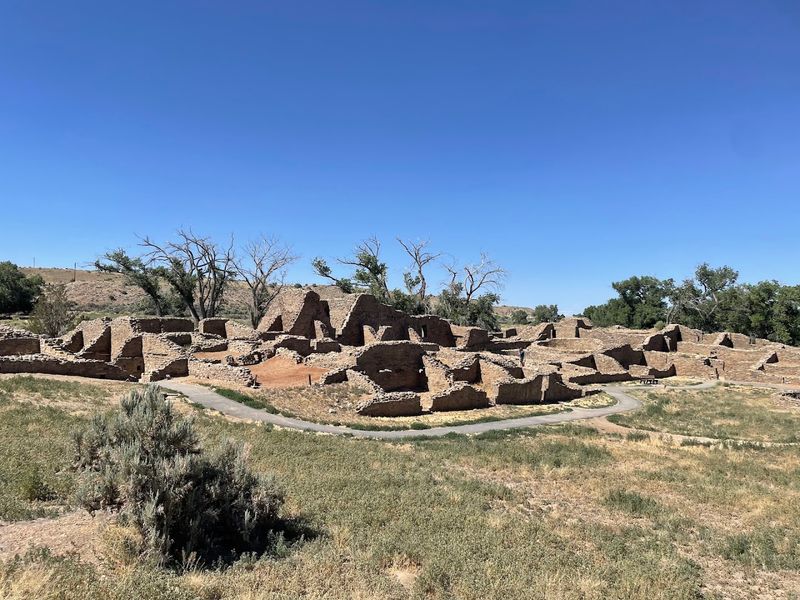
Despite the name, the Aztec Ruins were built by Ancestral Pueblo people, not the Aztecs. Early settlers named the site incorrectly and the label stuck, which is historically awkward but now a certified fun fact to drop on your travel companions.
The monument is a UNESCO World Heritage Site and shares cultural connections with nearby Chaco Canyon.
The visitor center is open from 9 a.m. to 5 p.m. every day except Thanksgiving, Christmas, and New Year’s Day. The self-guided trail leads through the West Ruin, one of the most intact Ancestral Pueblo great houses in existence.
The reconstructed Great Kiva is the highlight and one of the only fully restored ceremonial chambers you can walk inside anywhere in the country.
The monument sits right in the town of Aztec, making it easy to combine with lunch nearby. Admission is affordable, and the whole visit takes about 90 minutes.
It is the kind of stop that punches well above its weight on the overall road trip experience scale.
Gila Cliff Dwellings National Monument, Mimbres, New Mexico
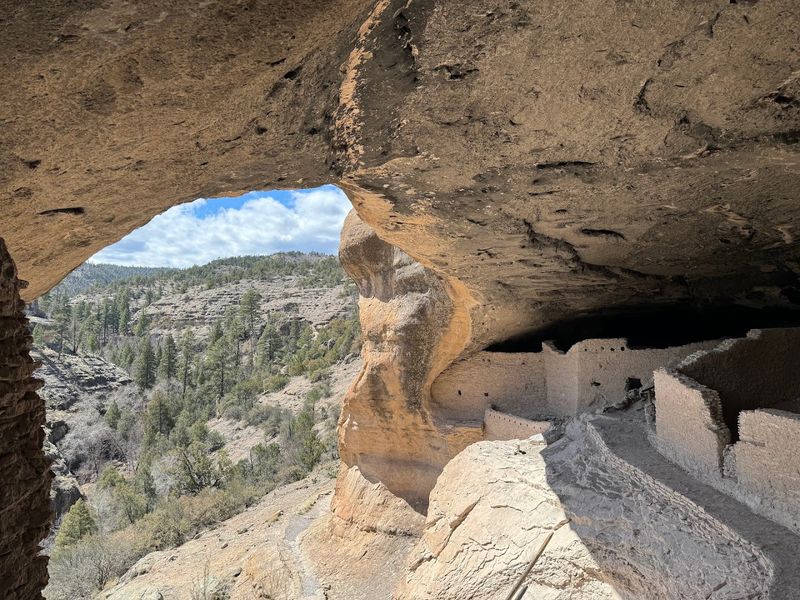
Tucked into the Gila Wilderness, these cliff dwellings were built by the Mogollon people around 1280 AD and abandoned roughly 40 years later. The mystery of why they left so quickly is still debated by archaeologists, which makes the whole site feel like an unsolved puzzle waiting for you.
Getting here requires a winding 44-mile drive through mountain scenery that is stunning on its own.
The Cliff Dweller Trail, the cliff dwellings themselves, and the visitor center are open daily from 9 a.m. to 4 p.m. The trail is about a mile round trip with a modest elevation gain, and you can walk directly through several of the cave rooms.
That level of access is rare and makes the experience feel genuinely special rather than just another roped-off ruin.
The Gila National Forest surrounds the monument, offering camping, hot springs, and miles of hiking trails for those who want to extend the visit. Visiting in fall means golden cottonwood trees lining the creek below the dwellings.
It is a long drive from most New Mexico cities, but the payoff is absolutely worth the miles.
Share this story