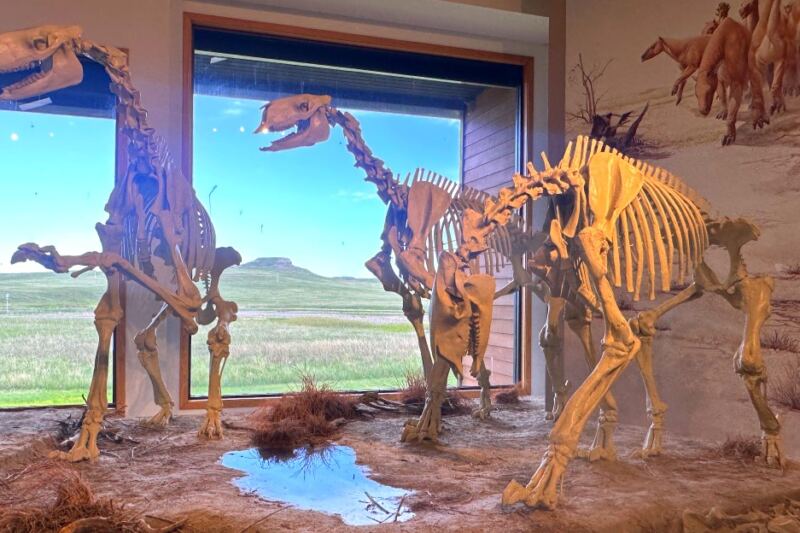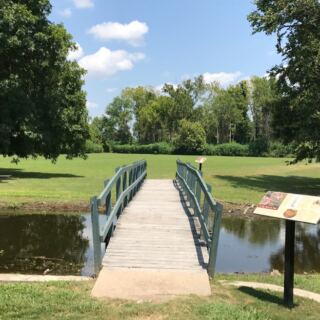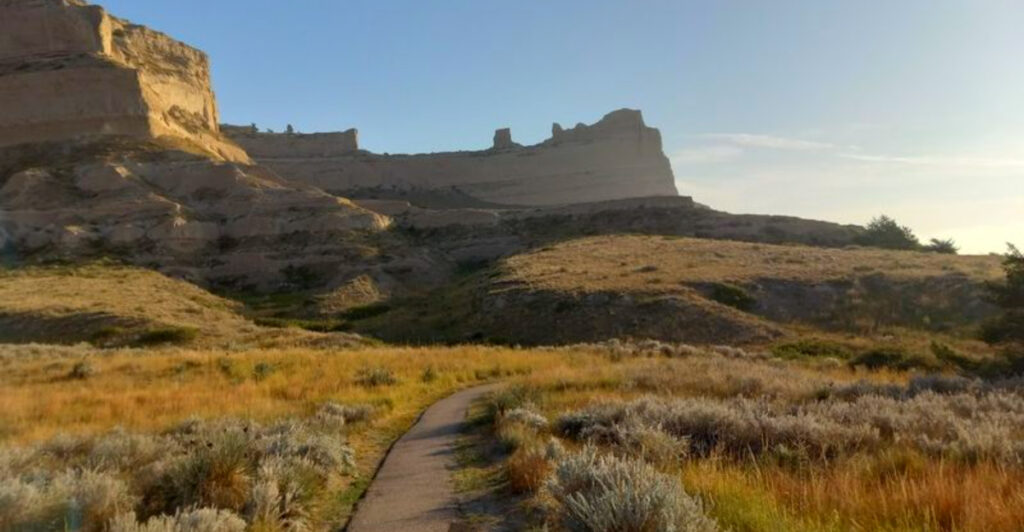
Most people picture Nebraska as a flat stretch of farmland that goes on forever, but that image misses a lot of what this state actually has to offer. Nebraska is home to rugged bluffs, river valleys, dense forests, and even a waterfall taller than a seven-story building.
Whether you are a seasoned hiker or someone who just wants a scenic walk on a Saturday afternoon, the trails here will genuinely catch you off guard. Some routes follow paths once used by Oregon Trail pioneers, while others lead to overlooks where you can see three different states at once.
The variety is real, and the views are far more dramatic than most people expect from the Great Plains. This list covers 12 trails across Nebraska that consistently deliver impressive scenery, practical hiking experiences, and a few surprises along the way.
Get ready to rethink everything you thought you knew about hiking in the Midwest.
1. Saddle Rock Trail, Scotts Bluff National Monument, Gering, Nebraska
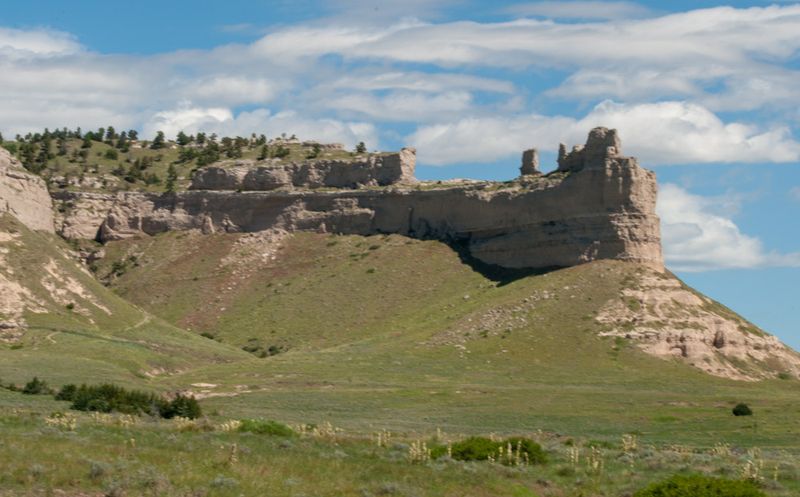
Nebraska has a way of keeping its best scenery a secret, and Saddle Rock Trail is one of the best-kept secrets in the state. This 1.7-mile route winds through cliffs and narrow canyon passages before opening up to views that stretch across the entire North Platte Valley.
The trail gains noticeable elevation as it climbs, and hikers who push through the steeper sections are rewarded with dramatic rock formations rising sharply from the surrounding plains. On a clear day, the landscape seems to go on without end.
What makes this trail especially interesting is its historical layer. Oregon Trail pioneers once navigated this exact terrain, using Scotts Bluff as a landmark to guide their westward journey.
Visible wagon ruts can still be spotted near the base, adding a sense of connection to the past that most hiking trails simply cannot offer. Plan for about two hours round trip.
2. North Overlook Trail, Scotts Bluff National Monument, Gering, Nebraska
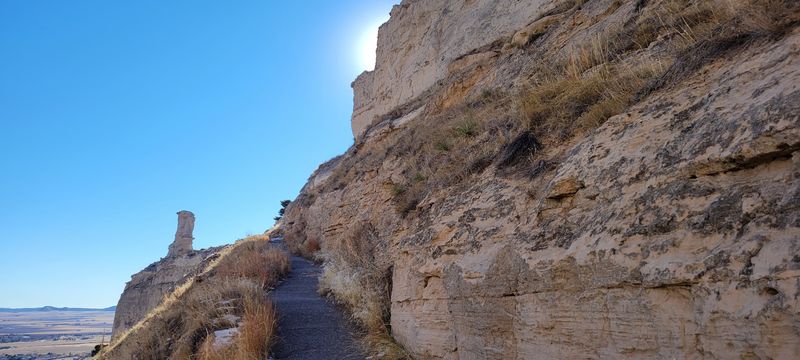
Not every great trail requires an all-day commitment, and the North Overlook Trail at Scotts Bluff proves that point convincingly. This relatively short and manageable route delivers a payoff that feels completely out of proportion with the effort required to get there.
From the overlook platform, the view sweeps across the broad valley below, giving hikers a clear sense of just how dramatically the bluffs rise from the surrounding flatlands. The contrast between the vertical rock faces and the open plains stretching beyond is genuinely striking.
The trail pairs naturally with the South Overlook Trail, and many visitors choose to walk both in the same visit. Together they give a full picture of the monument from multiple angles.
The North Overlook is particularly popular in the morning when the light hits the rock faces directly and the valley below is still quiet. Comfortable footwear is all you really need here.
3. Wildcat Hills Trails, Wildcat Hills State Recreation Area, Gering, Nebraska
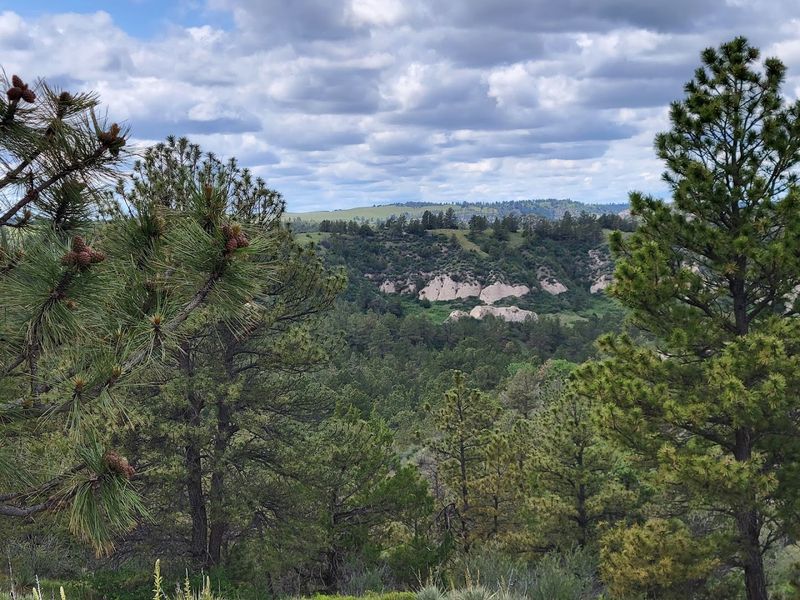
Rocky outcrops, pine-covered ridges, and canyon views are not what most people picture when they think of western Nebraska, but Wildcat Hills delivers all three without apology. The area sits just south of Scotts Bluff and offers a hiking experience that feels genuinely rugged compared to the surrounding landscape.
The Turkey Run Trail, at 1.5 miles, winds past fascinating rock formations and through pine woodlands that create a sense of real wilderness. The shorter Monument View Trail, roughly half a mile, leads to an overlook with clear sightlines across the North Platte River Valley.
Wildlife sightings are common here, including mule deer, wild turkey, and Rocky Mountain bighorn sheep that were reintroduced to the area decades ago. The combination of geological interest, animal life, and elevated views makes Wildcat Hills stand out as one of the more underrated outdoor destinations in Nebraska.
Bring water and a camera, because both will get plenty of use.
4. Oregon Trail Pathway, Scotts Bluff National Monument, Gering, Nebraska
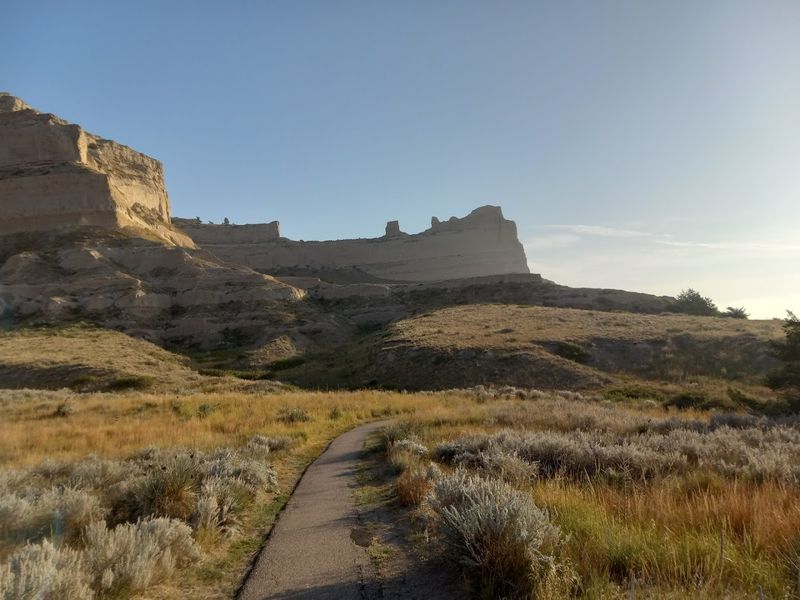
Few hiking experiences in the Great Plains come with as much historical weight as the Oregon Trail Pathway through Mitchell Pass. The trail follows the actual route used by hundreds of thousands of pioneers during the 1800s, and the physical evidence of that history is still visible underfoot.
Wagon ruts pressed into the earth by countless westward-bound travelers can be seen along the path, and the dramatic bluffs rising on either side create a natural corridor that feels both ancient and impressive. The scenery here is not subtle.
Scotts Bluff served as a crucial landmark for Oregon Trail travelers, and standing in Mitchell Pass makes it easy to understand why. The towering rock walls on both sides create a sense of passage that is hard to replicate anywhere else in the region.
The pathway is accessible and relatively flat through the pass itself, making it suitable for hikers of varying fitness levels. History and scenery rarely combine this well.
5. Platte River State Park Waterfall Trails, Louisville, Nebraska
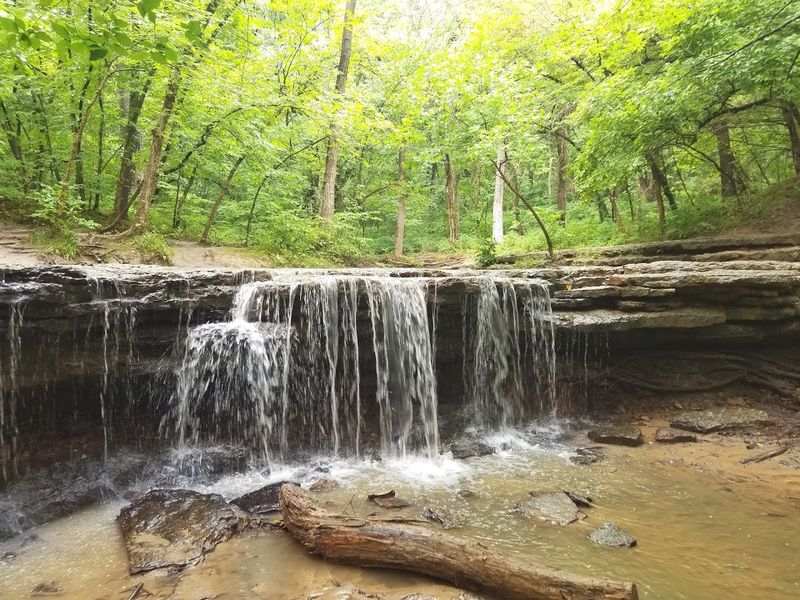
Eastern Nebraska is not exactly known for dramatic terrain, which is exactly what makes Platte River State Park such a pleasant shock to first-time visitors. The park sits within a surprisingly hilly landscape of wooded ravines, footbridges, and small waterfalls tucked into narrow valleys.
The Stone Creek Falls Trail covers just a quarter mile but leads to one of the park’s most photogenic spots, where water drops over rocky bluffs roughly 80 feet above the Platte River basin. Two observation towers within the park add even more elevation, offering sweeping views across the tree canopy and the wide river corridor below.
The trail network here is well-maintained and clearly marked, making navigation easy even for casual hikers. Families with children tend to enjoy the variety of shorter loops that wind through the forest without demanding too much physical effort.
The park is open year-round, and the waterfall is accessible in most seasons. It earns its reputation quickly.
6. Kountze Memorial Trail Area, Eugene T. Mahoney State Park, Ashland, Nebraska
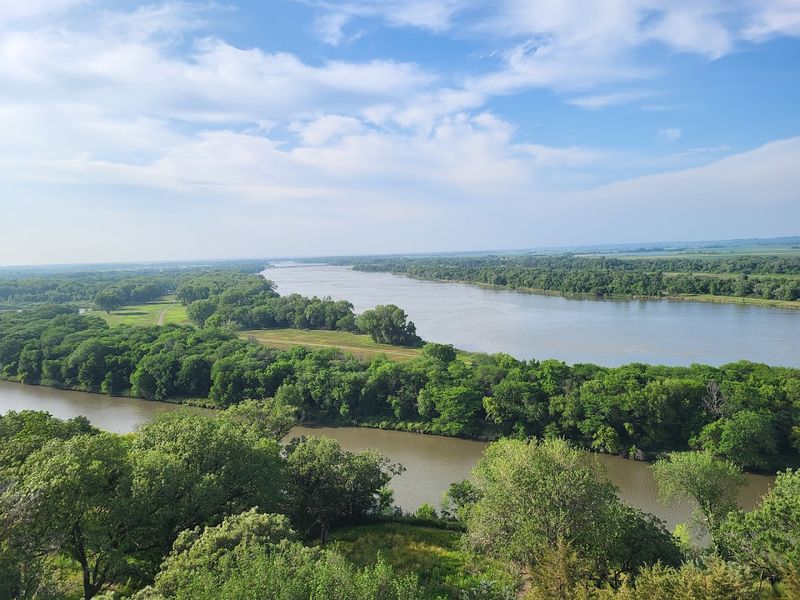
Mahoney State Park gets most of its attention for family recreation, waterparks, and cabin stays, so the hiking trails here tend to fly under the radar. That is good news for anyone who wants a peaceful walk with genuinely rewarding views and minimal trail congestion.
The Kountze Memorial Trail Area winds through wooded terrain and connects to elevated points that overlook the Platte River corridor. The park’s observation tower adds extra height to the experience, providing a wide-angle view of the surrounding woodlands and river valley that stretches out in multiple directions.
The trail system is well-suited for hikers who want a moderate outing without committing to a strenuous climb. Interpretive signage along some sections adds educational value, making the walk useful for families with curious kids.
The combination of accessible trails, solid views, and a full range of park amenities nearby makes Mahoney an easy choice for a half-day outdoor adventure close to Omaha. Arrive early on weekends.
7. River View Trail, Indian Cave State Park, Shubert, Nebraska
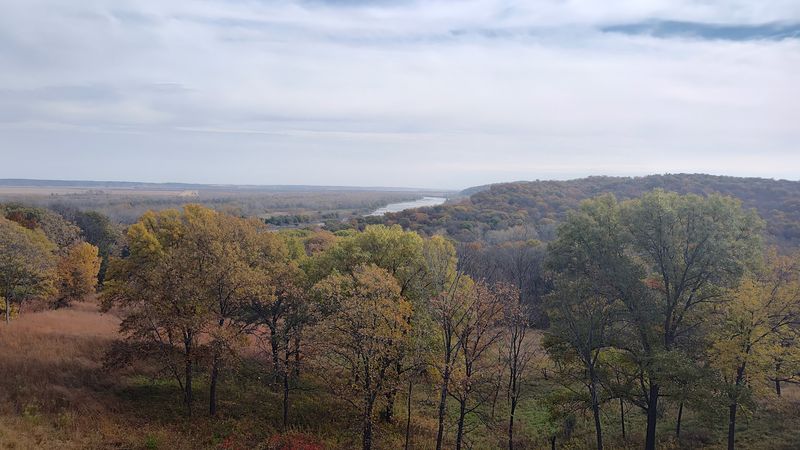
Nebraska’s southeastern corner holds one of the state’s most surprising landscapes, and Indian Cave State Park is the best place to explore it. The River View Trail climbs through dense hardwood forest before reaching ridgetop overlooks with clear views down into the Missouri River valley.
Trails 8 and 10 within the park are particularly well-regarded for their elevated vantage points, where the Missouri River appears below through gaps in the forest canopy. The terrain here is legitimately hilly and forested in a way that catches most visitors off guard.
The park also contains a sandstone cave with Native American petroglyphs, a 19th-century ghost town site, and over 20 miles of trails total. That level of variety is rare in Nebraska state parks.
The River View Trail itself covers manageable distance but rewards the effort with scenery that feels more at home in the Ozarks than the Great Plains. Bring a trail map and plan for a few hours.
8. Summit Trails, Scotts Bluff National Monument, Gering, Nebraska
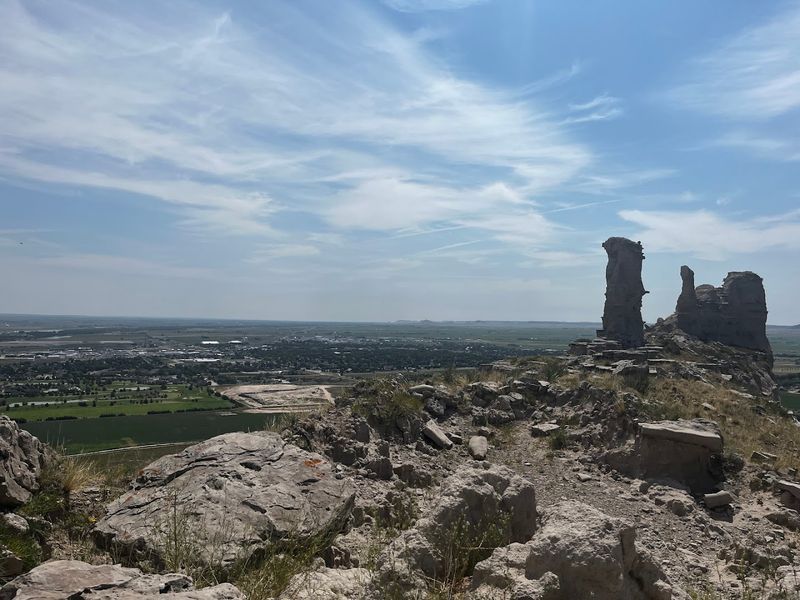
Reaching the top of Scotts Bluff by foot is a completely different experience from arriving by vehicle tunnel, and the Summit Trails make that climb both achievable and worthwhile. The network of paths at the top allows hikers to explore the bluff from several angles rather than being locked into a single viewpoint.
Wide-open panoramas stretch for miles in every direction from the summit, and on a clear day the scale of western Nebraska becomes the main event. The flatlands below look almost impossibly vast from this elevation, and the rock formations along the rim add visual texture to an already impressive scene.
The summit area connects with the Saddle Rock Trail below, so ambitious hikers can combine both routes for a longer outing. The trails are well-marked and maintained by the National Park Service, and interpretive panels at various points explain the geology and history of the monument.
Early morning visits offer the best light and the fewest crowds. Water is essential.
9. Woodland Trails, Ponca State Park, Ponca, Nebraska
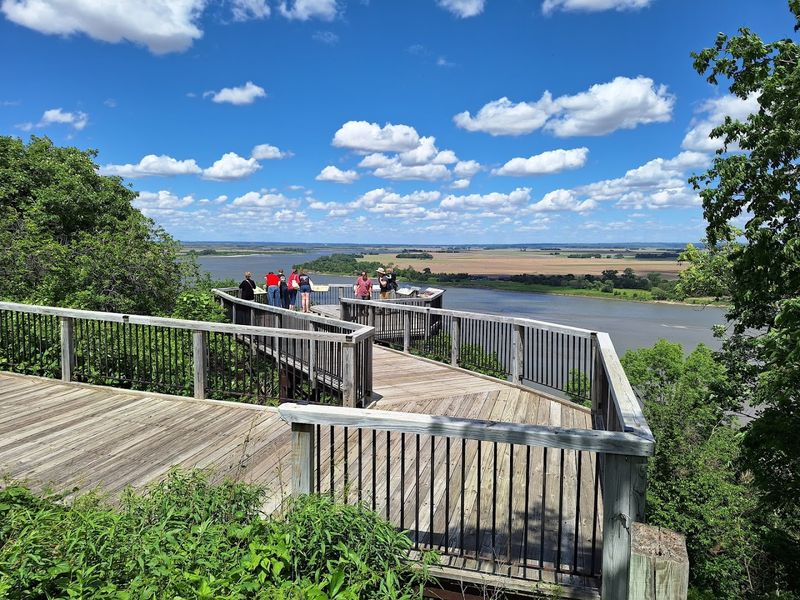
Ponca State Park sits along the Missouri River bluffs in northeastern Nebraska and offers some of the most geographically interesting terrain in the entire state. The Woodland Trails wind through rolling hills and forested ridges that look nothing like the flat Nebraska most people picture.
The Tri-State Overlook Trail is the park’s most talked-about route, leading to a viewpoint where Nebraska, Iowa, and South Dakota are all visible at once. That kind of geography is genuinely rare, and the overlook delivers on its promise with open sightlines in multiple directions.
The Buffalo Run Trail’s eastern section runs along the Missouri River bluffs and provides river views that are consistently impressive throughout the year. The park covers over 2,000 acres of varied terrain, and most of the trail network is well-maintained for hikers of different skill levels.
Wildlife sightings, including white-tailed deer and wild turkey, are common throughout the woodland sections. Plan for at least half a day to appreciate the full variety of scenery here.
10. Cowboy Trail Segment, Valentine, Nebraska
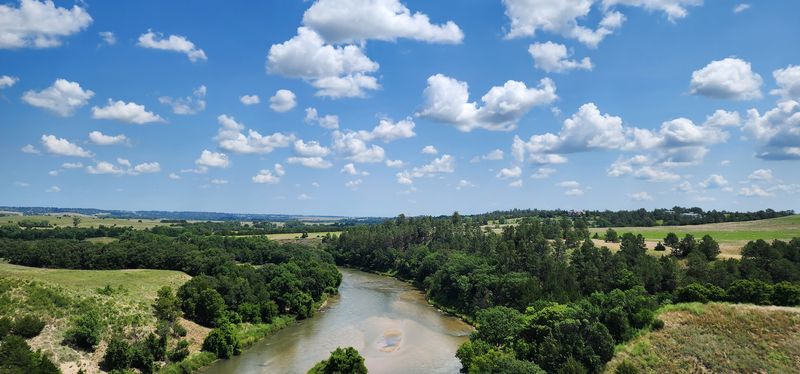
The Cowboy Trail stretches across Nebraska for nearly 200 miles, but the segment near Valentine offers scenery that stands apart from the rest of the route. This section passes through the heart of the Sandhills, one of the largest grass-stabilized dune systems in the world.
Rolling grass-covered dunes, wide-open skies, and a sense of quiet that is hard to find anywhere else define the experience here. The trail follows a converted rail corridor, so the grade stays gentle and the path is easy to navigate even for casual hikers.
Near Valentine, the trail also passes close to the Niobrara River corridor, adding river valley scenery to the Sandhills backdrop. The combination creates a landscape that is distinctly Nebraskan and genuinely beautiful in its own understated way.
Sunrise and late afternoon are particularly good times to be on this stretch, when the dunes cast long shadows across the grass. Wildlife sightings, including sandhill cranes during migration, add to the appeal.
11. Smith Falls State Park Trails, Valentine, Nebraska
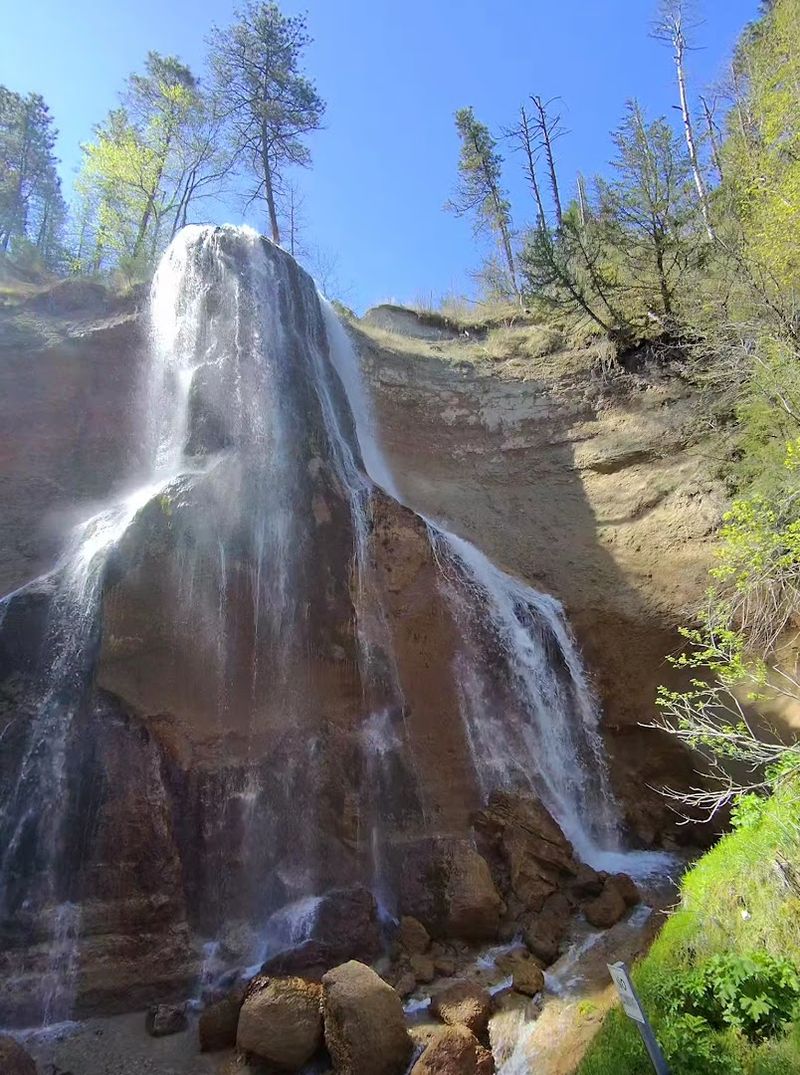
Nebraska’s tallest waterfall is tucked inside a forested canyon near Valentine, and the hike to reach it is short enough that almost anyone can manage it. Smith Falls drops 70 feet into the canyon below, which makes it a legitimate natural landmark rather than just a trickle over some rocks.
The trail to the falls crosses a scenic footbridge over the Niobrara River, a National Scenic River known for its clear water and sandstone cliffs. The surrounding landscape includes dense cedar and hardwood forest, with the canyon walls rising sharply on both sides of the river corridor.
The full trail system at Smith Falls State Park is relatively compact, but the variety of scenery packed into a short distance is impressive. Visitors can combine the waterfall hike with views of the Niobrara River canyon from elevated points nearby.
The park is most visited during summer, but the falls are accessible in other seasons as well. Arrive early to secure a parking spot on busy weekends.
12. MoPac Trail, Eastern Nebraska
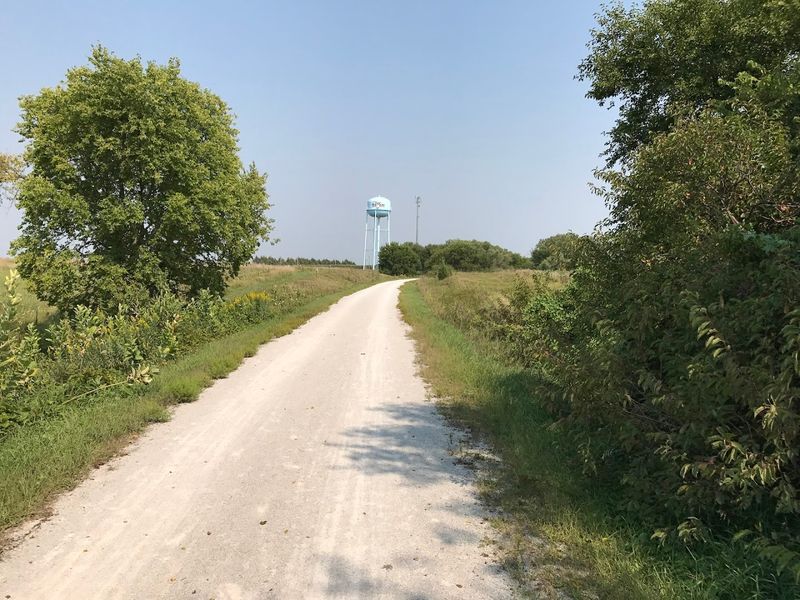
Rail-trails tend to get overlooked by serious hikers, but the MoPac Trail in eastern Nebraska makes a strong case for the category. Converted from an old Missouri Pacific Railroad corridor, the trail runs through a mix of open farmland, wooded stretches, and broad prairie that showcases the quieter side of the state.
The eastern segment between Eagle and Wabash covers roughly 26 miles of well-maintained surface that works equally well for hiking and cycling. The landscape along this section transitions between agricultural fields, wooded creek valleys, and open grassland in a way that keeps the scenery from becoming repetitive.
The trail is flat and accessible, making it a practical option for hikers who want distance over elevation. Prairie wildflowers appear along the edges during warmer months, and the wooded sections provide natural shade during summer outings.
Small towns along the route offer rest stops and basic amenities. The MoPac is not dramatic terrain, but it delivers a genuinely pleasant cross-section of eastern Nebraska that rewards those who take the time to explore it.
Share this story