Art gets more interesting when it leaves the museum and starts negotiating with weather, geography, engineering, and public curiosity. These exhibits are not just big objects in open space – they are records of how cities, deserts, coastlines, and parks have become part of creative history.
Moving from late twentieth century land art to twenty-first century interactive installations, this list shows how outdoor works can reflect tourism, technology, environmental thinking, and changing ideas about public culture. Keep reading and you will see how each project turns a location into a cultural document, not just a backdrop.
1. The Floating Piers – Italy
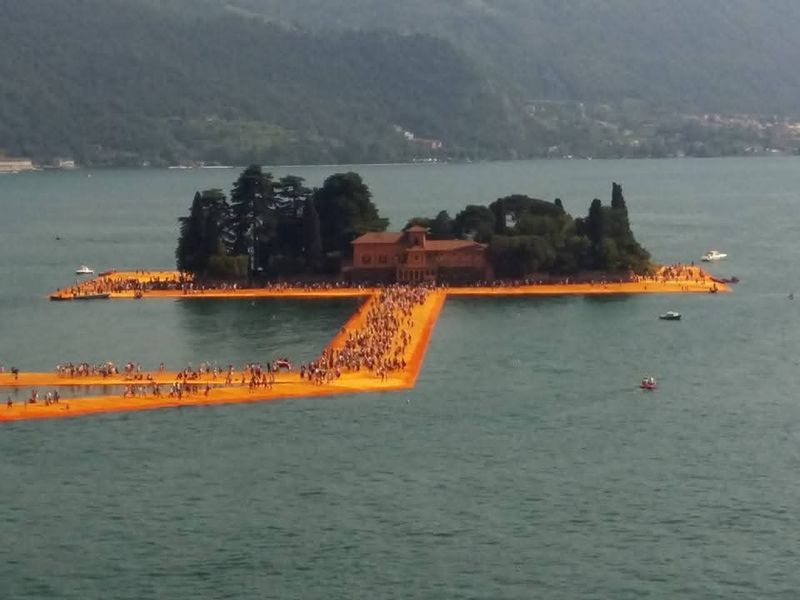
For sixteen days in 2016, Lake Iseo became the site of one of the most discussed walks in contemporary art. The Floating Piers, designed by Christo and Jeanne-Claude, connected Sulzano, Monte Isola, and San Paolo Island with modular floating docks covered in saffron-yellow fabric.
The installation extended about three kilometers over water and continued through nearby streets, folding ordinary movement into a large public event. Visitors did not simply observe it from shore.
They crossed it, queued for it, photographed it, and turned the artwork into a shared social ritual.
That public participation mattered because Christo and Jeanne-Claude built careers around temporary projects that existed through planning, logistics, and collective anticipation as much as through form. Their work often required years of negotiation, engineering, permits, and private funding before appearing briefly and disappearing on schedule.
The Floating Piers showed how an outdoor exhibit could be both monumental and temporary, glamorous and practical. It redefined creativity by making access, movement, and duration part of the artwork rather than afterthoughts.
2. teamLab Borderless Outdoor Installations – Japan
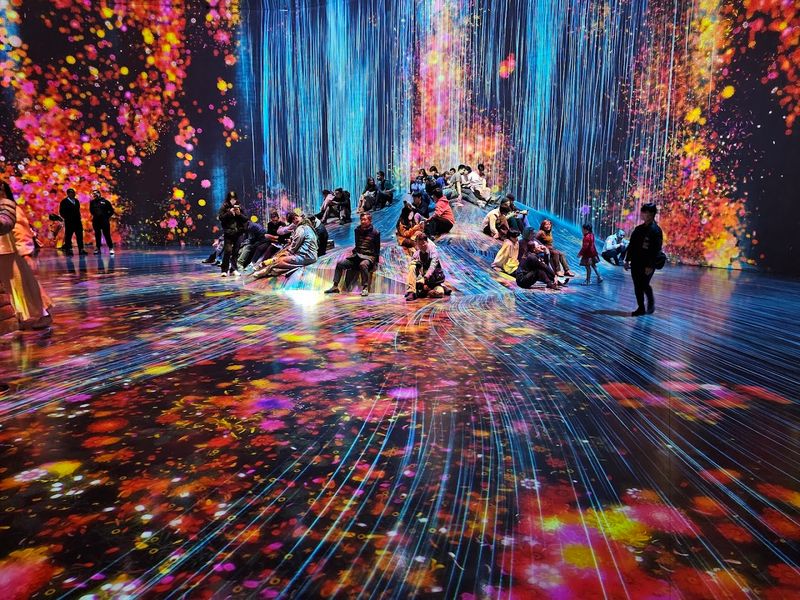
Digital art usually arrives attached to screens, cables, and indoor darkness, yet teamLab keeps finding ways to let it wander outside. Across projects in Japan, the collective has placed responsive light, projected flowers, and interactive environments into gardens, parks, and open-air settings where weather and movement shape the experience.
Founded in 2001, teamLab works at the intersection of coding, design, engineering, and fine art, which helps explain why its installations often behave less like static objects and more like systems. Images shift when visitors pass through, overlap, or pause, turning spectators into co-authors with surprisingly little ceremony.
That approach fits a broader twenty-first century change in public art. Audiences now expect immersion, participation, and camera-ready moments, but teamLab adds serious technical ambition by making software, sensors, and landscape operate together.
The result redefines outdoor creativity not through size alone, but through behavior. You are seeing an exhibit that updates itself in real time, proving public art can be fluid, social, and technologically literate without losing visual charm.
3. The High Line Art – New York City
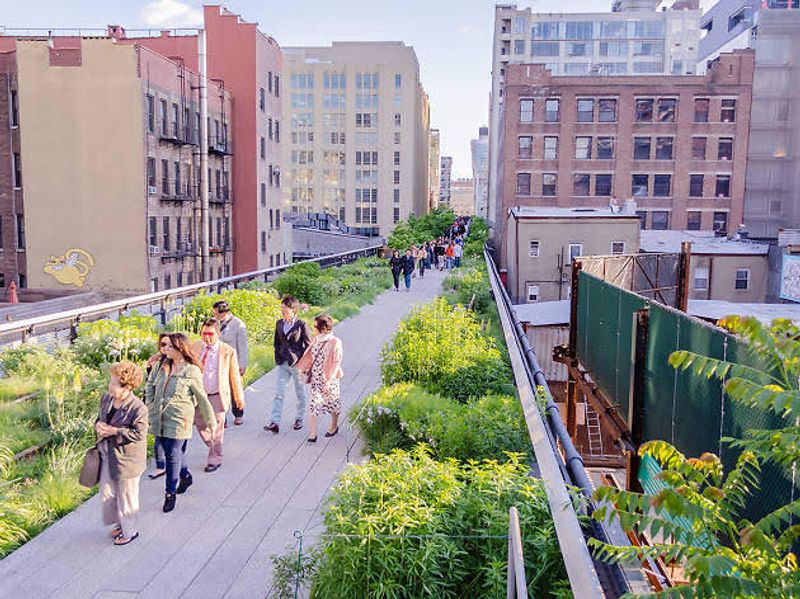
New York managed a neat trick here: it turned abandoned infrastructure into a cultural runway above the streets. The High Line, opened in phases beginning in 2009 on a former freight rail line, combines landscape architecture, preservation, and rotating contemporary art commissions.
High Line Art became central to that identity by placing sculpture, murals, video, and performance within a public park used by locals and visitors alike. The setting matters because artworks appear beside grasses, benches, apartment towers, and old industrial structures, linking current art to the city’s manufacturing past.
This is creativity with urban policy in the room. The project helped define how postindustrial spaces could be repurposed, and it influenced redevelopment conversations far beyond Manhattan, sometimes drawing praise and debate in equal measure.
What makes the exhibit significant is its constant turnover. Instead of one permanent monument, you get an evolving public program shaped by curators, artists, neighborhood changes, and pedestrian habits.
It turns a walk into an ongoing conversation about how cities remember themselves while remaking their image.
4. The Singing Ringing Tree – England
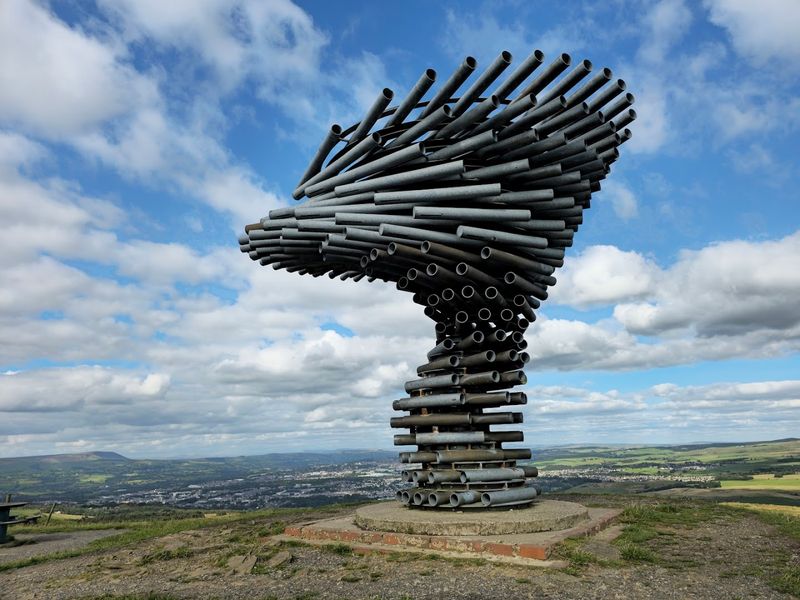
Few public artworks let the weather take partial credit, but this one makes it part of the staffing plan. The Singing Ringing Tree, completed in 2006 by architects Mike Tonkin and Anna Liu in Lancashire, is a wind-powered sculpture made from galvanized steel pipes arranged in a branching form.
The piece belongs to the Panopticons series in East Lancashire, which aimed to place distinctive landmarks across the region. Its design references both industrial materials and the area’s elevated moorland setting, giving the sculpture local roots without becoming a history lesson disguised as furniture.
When wind passes through tuned pipes, the structure produces varying tones, so the work operates as sculpture, instrument, and viewpoint marker. That interactivity remains elegantly simple because no screen, app, or button is required.
Its larger significance lies in regional identity. Postindustrial areas have often used landmark art to reshape perception, encourage tourism, and build new civic narratives after economic change.
The Singing Ringing Tree redefines creativity by making infrastructure, landscape branding, and public curiosity work together in one remarkably direct form.
5. Desert Breath – Egypt
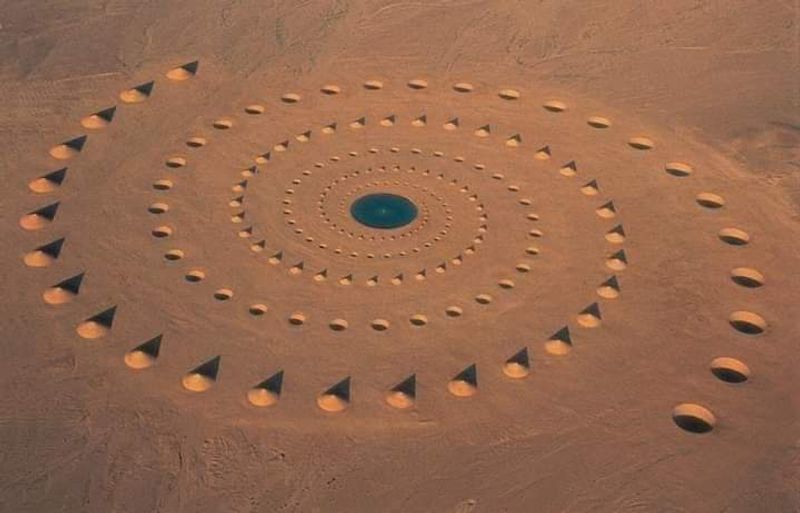
Some artworks need walls, but this one recruited a desert the size of a headline. Desert Breath, created in 1997 by D.A.ST. Arteam, sits near El Gouna in Egypt and covers roughly 100,000 square meters with twin spirals shaped from sand.
The project used displaced desert material itself, forming positive and negative cones that turned geometry into terrain rather than decoration. Its center once held water, adding a measured contrast between strict design and an environment known for constant change.
What makes the piece memorable is not just scale, but its built-in timeline. Wind and erosion gradually alter the forms, so the work doubles as land art and long-term record of nature editing human intention.
It also belongs to a late twentieth century moment when artists pushed beyond galleries and treated remote space as part of the concept. You are not just looking at sculpture here – you are watching permanence lose an argument with geography.
6. Val di Sella Art Park – Italy
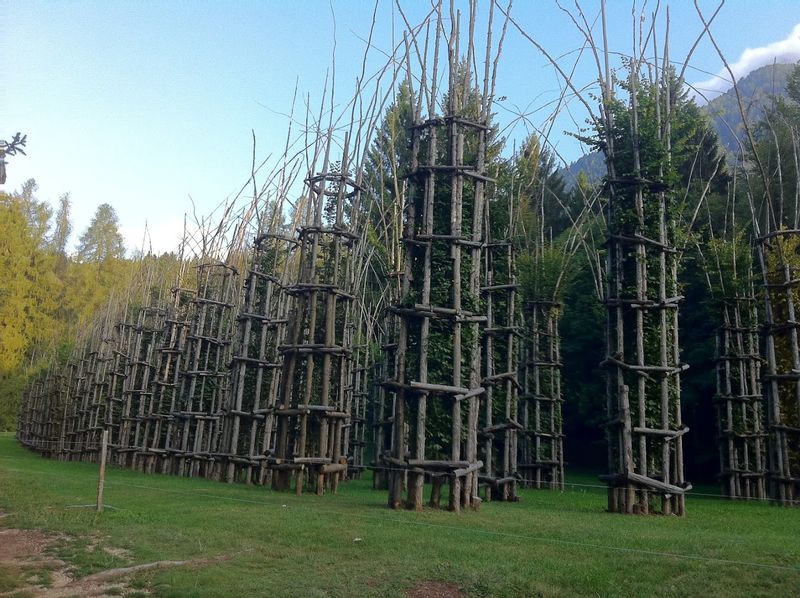
Here, permanence is politely shown the exit before the tour even begins. Arte Sella, in Val di Sella in northern Italy, began in 1986 and developed into a major example of environmental art created from natural materials such as branches, leaves, stones, and timber.
Artists produce site-specific works that are meant to change over time, which makes decay part of the creative process rather than an unfortunate maintenance issue. The park’s famous pieces, including Giuliano Mauri’s Cattedrale Vegetale, frame nature not as backdrop but as collaborator, editor, and eventual inheritor.
This approach connects with broader late twentieth century interest in ecology, impermanence, and alternatives to commercial gallery systems. It also pushes visitors to think historically about art objects, because many museums train us to expect preservation, while Arte Sella expects transformation.
That difference is the point. The park redefines creativity by refusing the usual promise that important art must remain fixed, protected, and market-ready forever.
You encounter ideas about stewardship, time, and landscape design in one place, all without pretending that culture exists separately from environmental change.
7. Storm King Art Center – New York
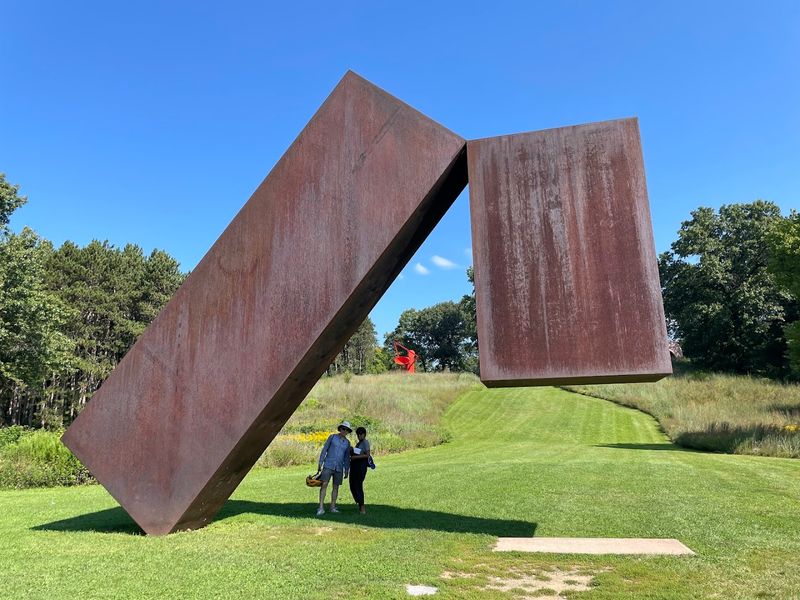
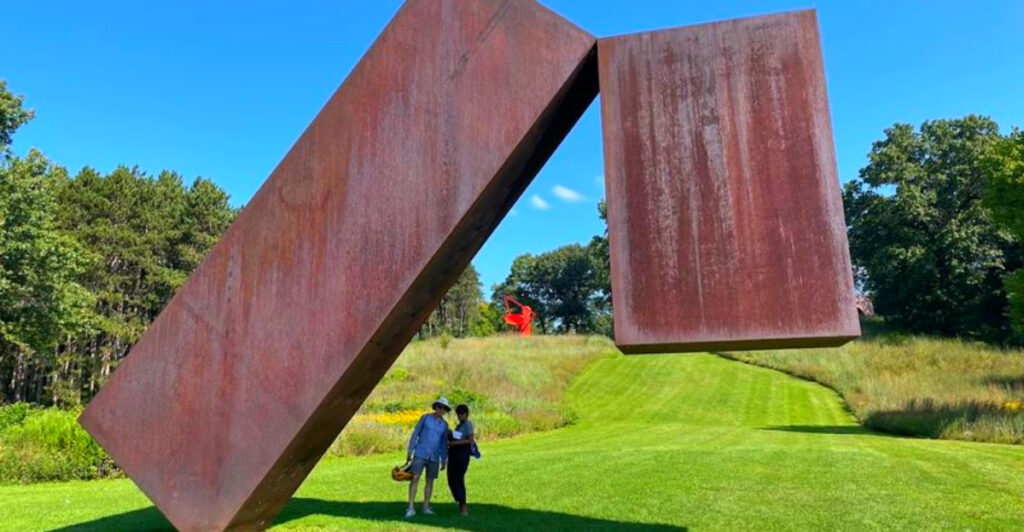
If sculpture ever needed room to stretch, Storm King Art Center solved the problem generously. Opened in 1960 in New York’s Hudson Valley, the institution developed into one of the most important open-air sculpture parks in the United States, spanning hundreds of acres.
Its collection includes major works by Alexander Calder, Mark di Suvero, Maya Lin, and many others, giving visitors a compressed history of postwar sculpture in a landscape setting. Scale is crucial here because many works were designed or selected with distance, topography, and changing sightlines in mind.
Storm King also reflects a larger shift in museum thinking. Rather than isolating art from environment, it allows trees, fields, paths, and weather to influence how each piece is read without turning the landscape into mere decoration.
The center has helped normalize the idea that outdoor exhibits can be academically serious, publicly accessible, and visually direct all at once. You leave understanding that monumentality is not simply about size.
It is about placement, context, and the steady negotiation between artwork, institution, and land.
8. Rainbow Panorama – Denmark
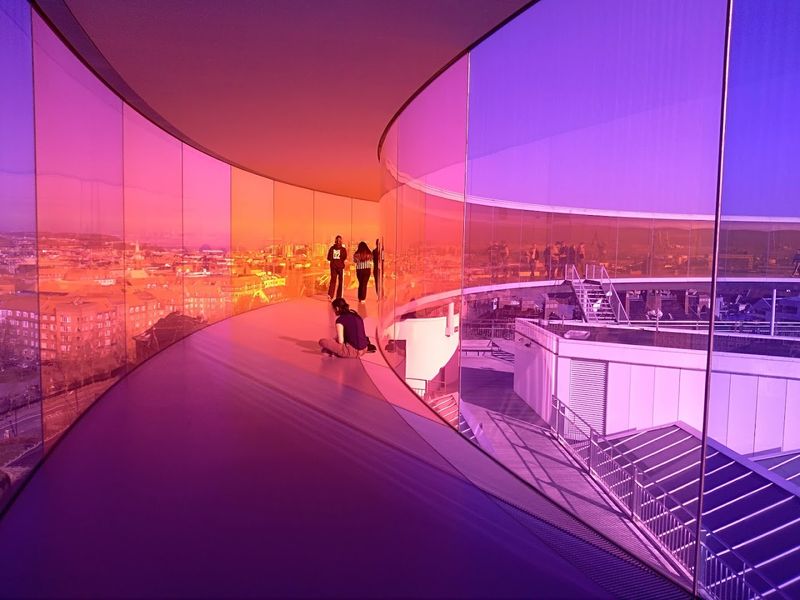
Put a colored lens over a city and suddenly urban planning gets a playful rival. Your Rainbow Panorama, created by Olafur Eliasson in 2011 atop ARoS Aarhus Art Museum in Denmark, is a circular rooftop walkway made of glass in a continuous color spectrum.
The structure measures about 150 meters around and gives visitors changing views of Aarhus filtered through red, blue, green, and other hues. Eliasson has long explored perception, atmosphere, and the mechanics of seeing, so the work fits neatly within his broader practice while remaining instantly legible to the public.
Its popularity also says something about contemporary museum culture. Institutions increasingly use rooftop spaces and architectural additions to extend visitor experience beyond traditional galleries, making the building itself part of the attraction.
Yet the panorama is more than a photogenic loop. It turns the city into a rotating exhibit and reminds you that vision is always mediated by design, technology, and context.
Creativity here comes from altering perspective with remarkable economy, proving a simple walk can become an argument about how people construct visual reality.
9. Desert X – Various Locations
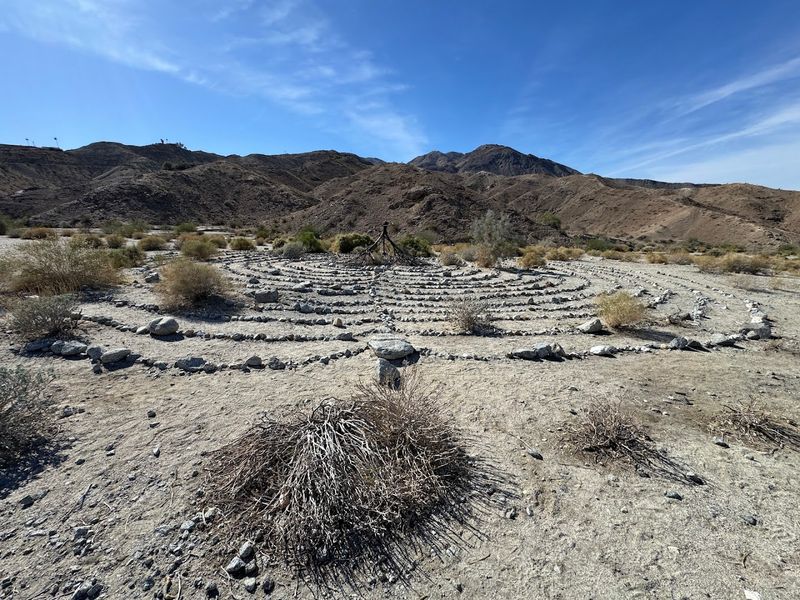
When an exhibition disperses across a desert, the map becomes part of the curatorial statement. Desert X, launched in 2017 in California’s Coachella Valley and later expanded internationally, presents temporary site-specific installations by contemporary artists in arid landscapes and nearby communities.
The format draws on land art history, but it updates the model for an era shaped by social media, destination travel, and public debate about ecology, access, and local context. Works often address water use, borders, architecture, labor, or the visual mythology of the desert, keeping the show anchored in place rather than treating the landscape as blank scenery.
That regional specificity matters because deserts have long been used in art as symbols of emptiness, which usually overlooks actual histories and communities. Desert X attempts a more contemporary conversation by pairing visual spectacle with social and environmental topics.
Its influence lies in scale and circulation. People do not visit one fenced venue.
They move through a network of sites, roads, viewpoints, and discussions, which turns the exhibition into a temporary cultural geography. Creativity here is curatorial as much as artistic.
10. The Kelpies – Scotland
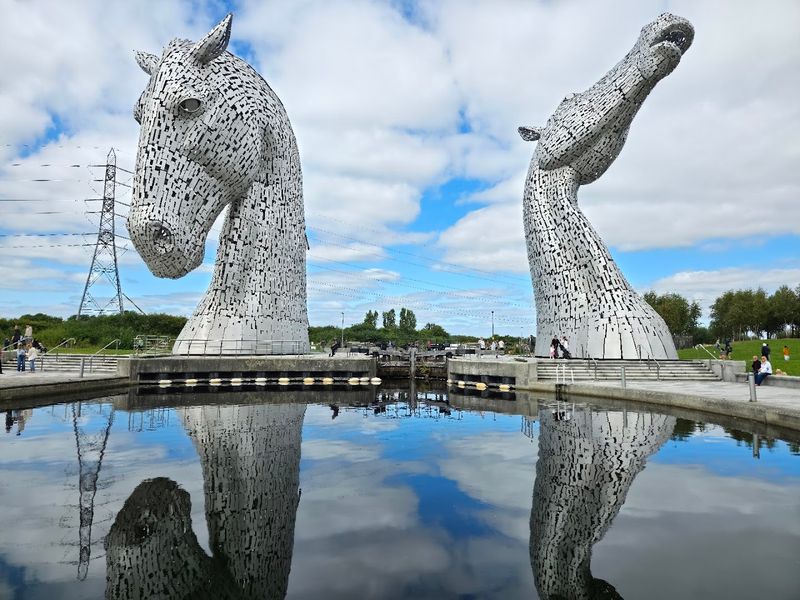
Two giant horse heads rising near a canal are not exactly subtle, which is part of their success. The Kelpies, designed by sculptor Andy Scott and unveiled in 2013 near Falkirk, stand about 30 meters high and form a centerpiece of The Helix park project in central Scotland.
Though their name references shape-shifting water spirits from Scottish folklore, the sculptures also honor the working horses that once powered canals, farms, and industry. That dual meaning lets the project connect myth, labor history, and national identity without becoming stiffly commemorative.
Constructed from steel with complex internal frameworks, the heads are feats of engineering as well as public art. Their location beside canal infrastructure reinforces the historical connection to transport networks that shaped Scotland’s economic development before mechanization took over many tasks.
The Kelpies show how contemporary outdoor exhibits can package heritage for broad audiences while retaining genuine substance. You get folklore, industry, tourism, and landmark design in one memorable form.
Creativity here lies in scale with purpose, not scale for its own sake, which is a distinction public art does not always manage gracefully.
11. Forevertron – Wisconsin
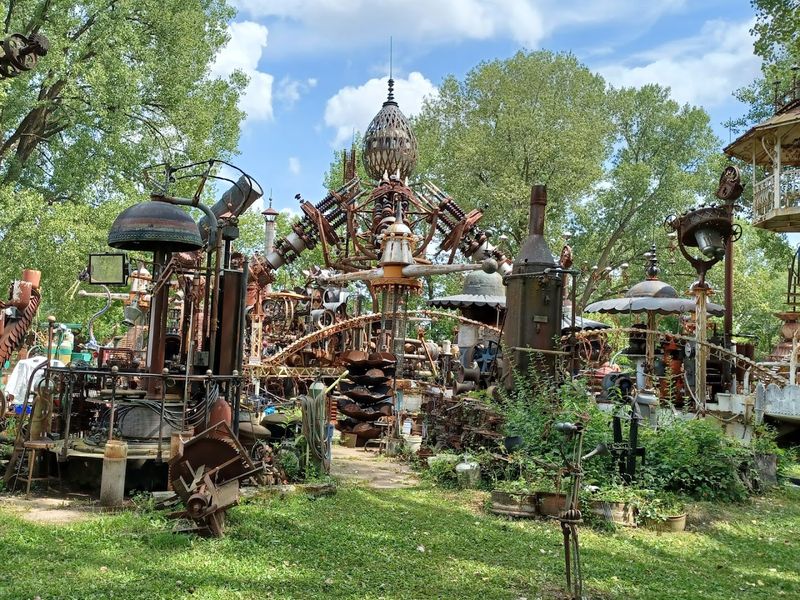
Some monuments begin with marble, while this one began by asking what the scrapyard was doing this weekend. The Forevertron in North Freedom, Wisconsin, was built by artist Tom Every, known as Dr. Evermor, from salvaged industrial machinery, metal relics, and architectural fragments.
Completed over many years and standing around 50 feet high, it anchors a larger sculpture park filled with similarly inventive constructions. The piece blends Victorian fantasy, found-object assemblage, and roadside attraction energy in a way that feels deeply American, especially in its affection for mechanical leftovers.
That cultural context matters. Twentieth century industry left behind a huge visual archive of gears, boilers, and metal components, and artists like Every turned those remnants into alternative histories rather than waste.
The Forevertron looks playful, but it also reflects long traditions of folk art, outsider art, and regional ingenuity.
Its charm comes from refusing clean categories. Is it sculpture, engineering parody, local landmark, or a machine for impossible travel.
Arguably all four. It redefines creativity by proving that reuse can be grand, eccentric, and culturally revealing without needing institutional polish to make its case.
12. ArcelorMittal Orbit – London
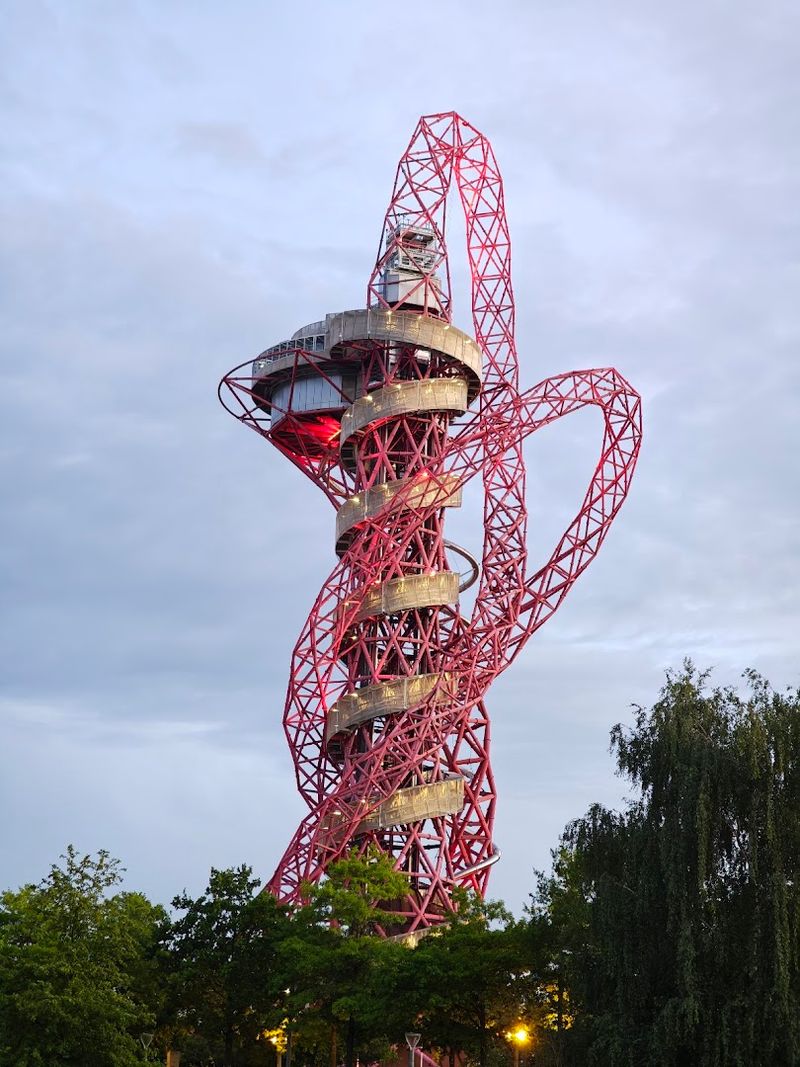
Olympic host cities love a legacy project, but few are as determinedly unusual as this red steel tangle. The ArcelorMittal Orbit, designed by Anish Kapoor and Cecil Balmond for the 2012 London Olympics, stands in Queen Elizabeth Olympic Park as both observation tower and public sculpture.
Commissioned during a period when cities increasingly used landmark design to signal ambition, the structure merges engineering bravado with event-driven branding. Its looping form rejects the calm symmetry of classic towers, which made reactions mixed at first and all the more interesting over time.
The Orbit later added a slide designed by Carsten Holler, pushing the project further into participatory spectacle. That evolution says a lot about contemporary public culture, where visitors often expect iconic structures to offer an experience, not just a silhouette for postcards.
Historically, it sits at the intersection of mega-event architecture, private sponsorship, and public art. The sculpture redefines creativity by refusing to choose one role.
It is viewing platform, urban symbol, entertainment device, and industrial statement at once, which sounds busy on paper but works surprisingly well in person.
Share this story