 Unearth The Voyage
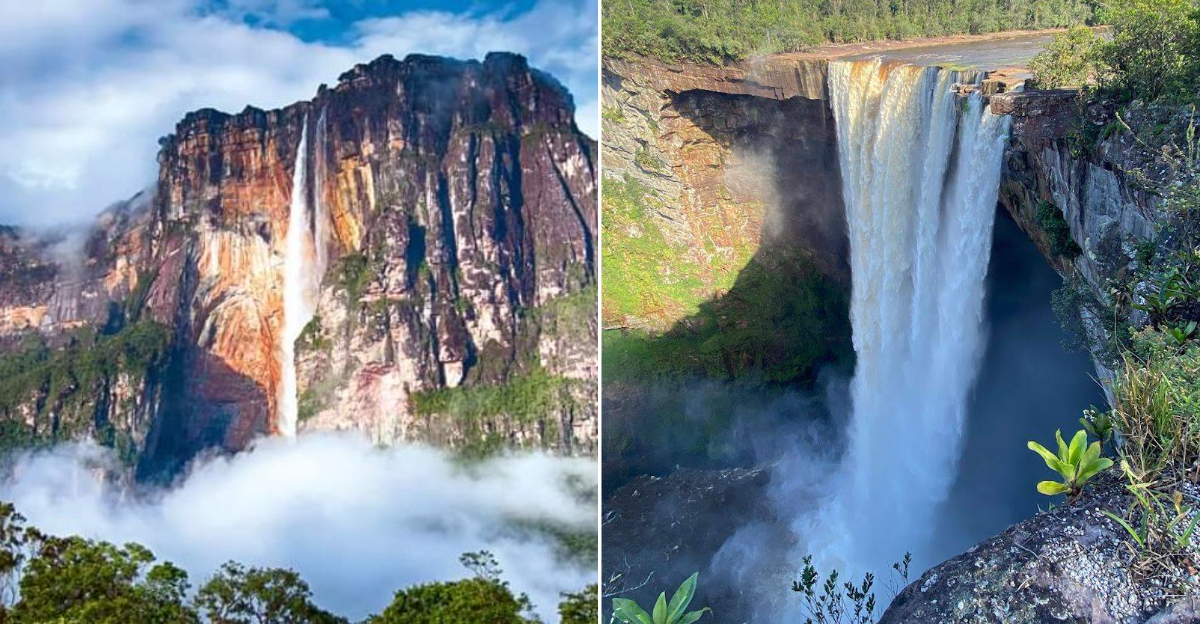
Some places on Earth make you stop, stare, and completely forget what you were worried about five minutes ago. Waterfalls have that effect on people.
From thundering giants that shake the ground beneath your feet to delicate cascades tucked inside lush forests, these natural wonders are worth every mile of travel. Here are 12 of the most breathtaking waterfalls on the planet that absolutely deserve a spot on your bucket list.
Iguazú Falls, Argentina and Brazil
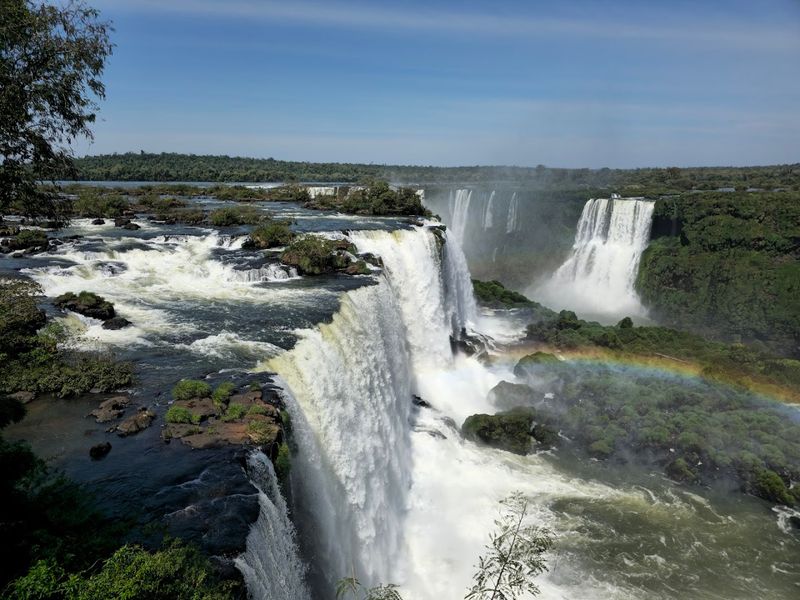
Eleanor Roosevelt reportedly took one look at Iguazú Falls and whispered, “Poor Niagara.” That reaction makes total sense once you see this beast of a waterfall system stretching nearly 2,700 meters across the Argentina-Brazil border.
Made up of roughly 275 individual falls, Iguazú is basically nature showing off. UNESCO recognized it as a World Heritage Site, and the semicircular cascade creates walls of mist so thick you will get soaked just walking the viewing paths.
Pack a rain jacket and accept your fate.
The Argentine side puts you right on top of the falls via walkways, while Brazil gives you the wide-angle panoramic view. Visiting both sides is absolutely worth the extra border crossing.
I crossed into Argentina just to stand at the Devil’s Throat lookout, and the roar alone was enough to make my knees go weak. Go in the wet season for maximum drama.
Victoria Falls, Zambia and Zimbabwe
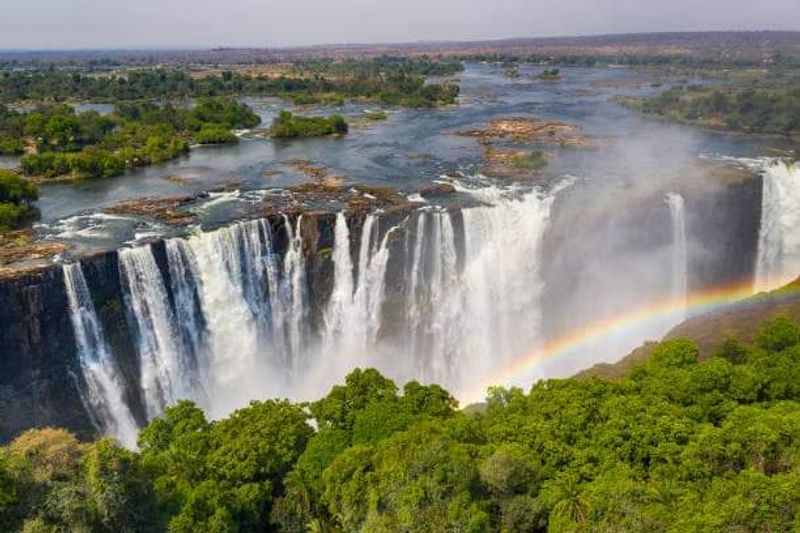
Locals call it Mosi-oa-Tunya, which translates to “The Smoke That Thunders.” That name is not poetic exaggeration. The Zambezi River stretches more than 2 kilometers wide before plunging into the gorge below, and the mist can be spotted from over 20 kilometers away.
Victoria Falls is one of those rare places where the hype is completely justified. Standing at the main viewpoint, the spray hits you like a warm shower that you did not ask for but absolutely needed.
During peak flow season, the mist is so intense that umbrellas become useless within seconds.
The Zambia side offers more adventurous access, including the famous Devil’s Pool, a natural rock pool right at the edge of the falls where brave swimmers dangle their feet over the drop. Zimbabwe provides broader viewing angles.
Either way, you are getting one of the most jaw-dropping waterfall experiences on the entire planet.
Angel Falls, Venezuela
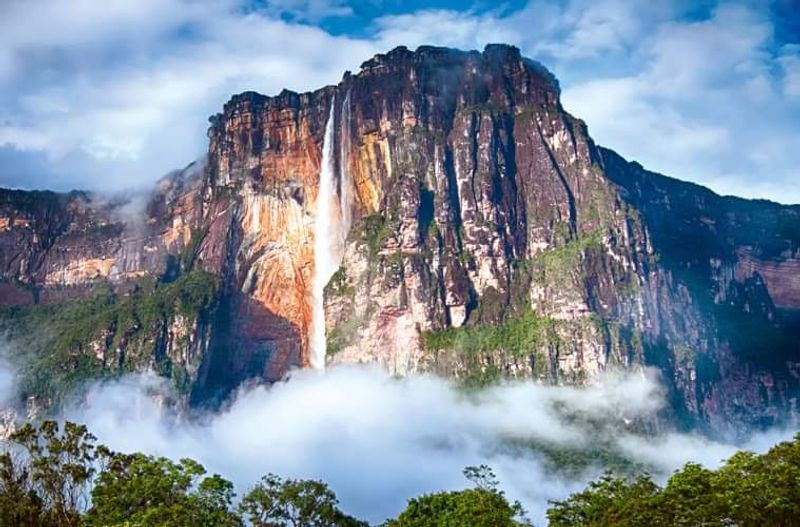
The world’s tallest waterfall has a name that sounds like it belongs in a fairy tale, and the view matches. Angel Falls drops a staggering 1,002 meters in free fall from the edge of Auyán-Tepui, a flat-topped mountain rising out of Venezuela’s Canaima National Park.
Getting there is half the adventure. There are no roads.
You take a small plane to Canaima, then a boat through jungle rivers, then a hike through dense forest. The falls are so tall that water partially evaporates or turns to mist before reaching the base during dry season.
The waterfall was named after Jimmie Angel, an American aviator who crash-landed on the tepui in 1937 while searching for gold. He found something better.
UNESCO recognized Canaima National Park as a World Heritage Site for its extraordinary landscape. If remote, wild, and genuinely hard-to-reach waterfalls are your thing, Angel Falls is the ultimate destination.
Niagara Falls, United States and Canada
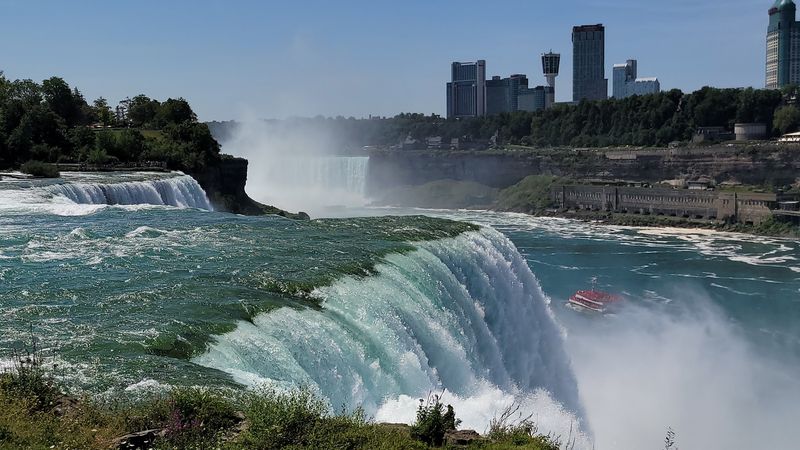
Niagara Falls is the waterfall equivalent of a rock legend. Everyone knows it, everyone has seen photos, and yet standing at the edge still hits differently than expected.
Millions of visitors show up every year, and the crowds have not dulled the spectacle one bit.
The Horseshoe Falls on the Canadian side carries about 90 percent of the Niagara River’s flow, making it the star of the show. The American side offers Niagara Falls State Park, the oldest state park in the US, where you can walk right up to the brink on a series of well-maintained trails and platforms.
The Maid of the Mist boat tour has been running since 1846, and it remains one of the best ways to experience the falls up close. You get a blue poncho, you get absolutely drenched, and you love every second of it.
Whether you visit from New York or Ontario, Niagara rewards everyone equally.
Yosemite Falls, California, United States
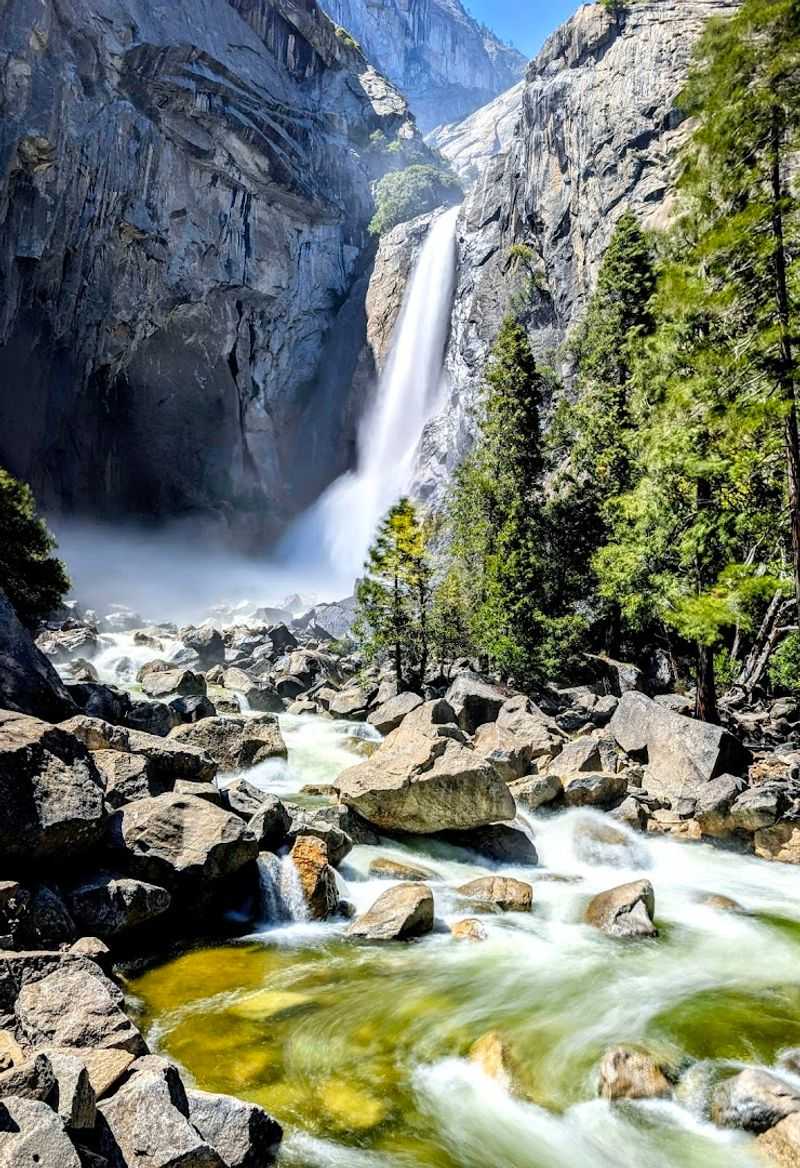
At 2,425 feet total, Yosemite Falls is one of the tallest waterfalls in North America, and it has been stopping hikers in their tracks since the park first opened to visitors. The National Park Service breaks it into three sections: upper fall, middle cascades, and lower fall.
Spring is the golden season here. Snowmelt from the Sierra Nevada sends water rushing over the granite cliffs at full force, creating a roar you can hear from Yosemite Valley below.
By late summer, the falls can slow to a trickle or dry up completely, so timing your visit matters.
The lower fall trail is an easy 1-mile round trip suitable for most visitors. For the ambitious crowd, the Upper Yosemite Fall Trail climbs 2,700 feet and rewards hikers with a view directly over the edge.
I tackled that trail on a warm May morning and the view from the top made every sweaty step worth it. Bring plenty of water.
Plitvice Lakes Waterfalls, Croatia
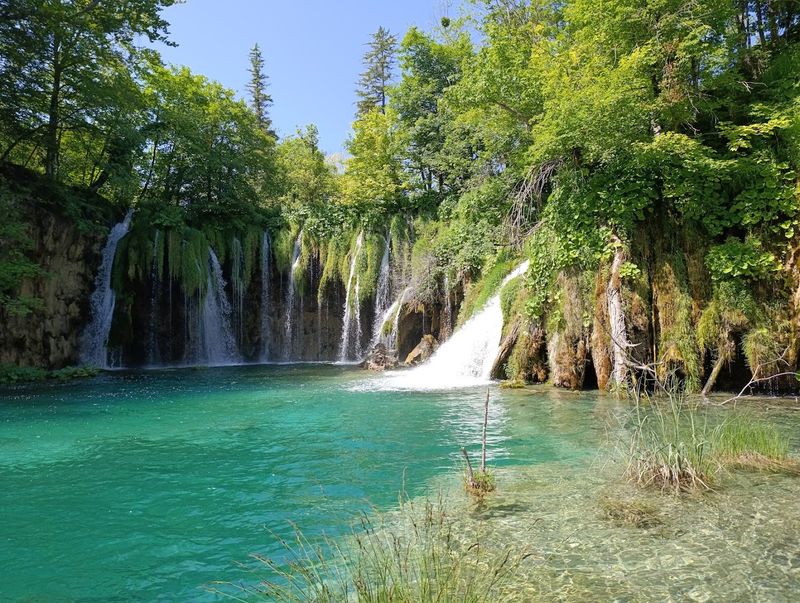
Plitvice does not play by normal waterfall rules. Instead of one big dramatic plunge, it gives you an entire system of 16 terraced lakes connected by hundreds of small waterfalls tumbling over naturally formed travertine barriers.
It looks like a screensaver, except it is completely real.
UNESCO named it a World Heritage Site partly because the geological processes that built this landscape are still actively happening today. Minerals in the water slowly deposit and build new barriers, which means the park is literally reshaping itself while you walk through it.
The water color is the first thing that gets people. Depending on the light and season, the lakes shift between turquoise, green, grey, and blue.
Wooden boardwalks take you right over the water so you can look straight down into the crystal-clear depths. Autumn is spectacular here when the surrounding forest turns orange and red.
Book tickets in advance because this place sells out fast during peak season.
Kaieteur Falls, Guyana
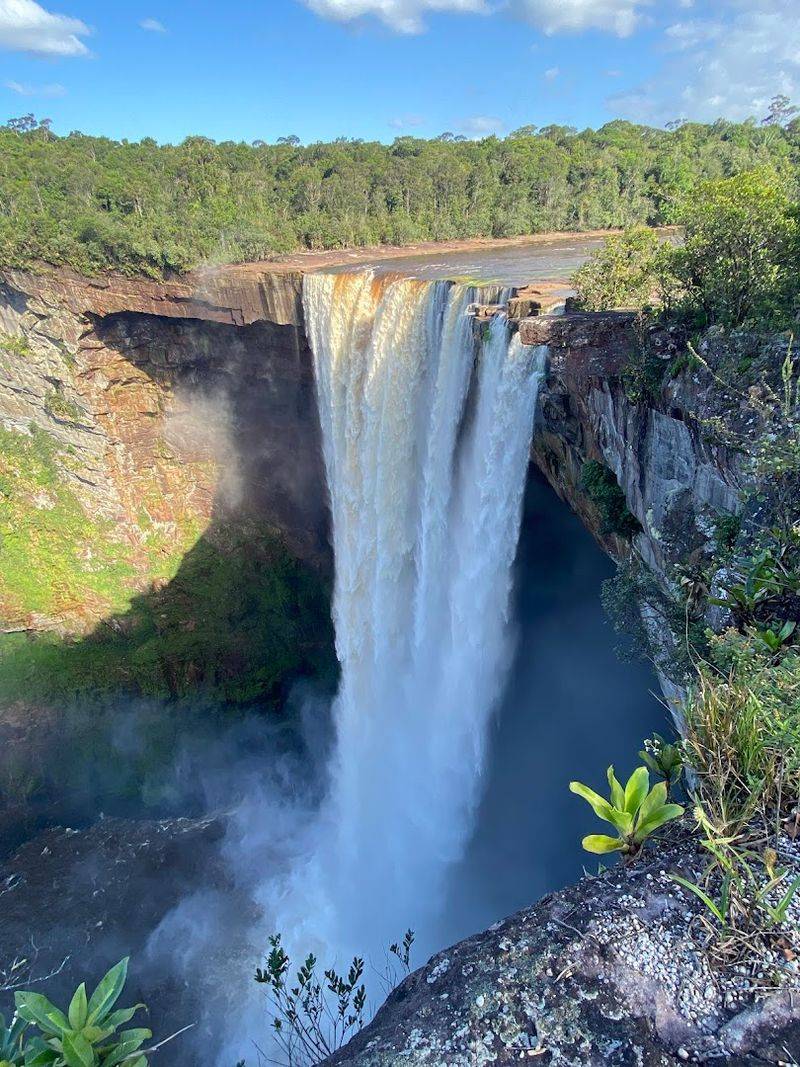
Most people cannot even point to Guyana on a map, which is exactly what makes Kaieteur Falls such a rewarding find. This is not a waterfall for the casual tourist.
Getting there requires a small propeller plane flight over an unbroken carpet of Amazon rainforest, and that journey alone is unforgettable.
Kaieteur drops 741 feet in a single uninterrupted plunge, making it one of the most powerful single-drop waterfalls on Earth. The volume of water combined with that height creates a force that few other falls can match.
The mist from the base feeds a unique microhabitat where rare species of frogs and plants survive nowhere else.
The viewing platform puts you genuinely close to the edge with minimal barriers. No crowds, no gift shops, no overpriced coffee stands.
Just raw, overwhelming nature doing its thing. Guyana Tourism has been quietly building its reputation as an ecotourism destination, and Kaieteur is the crown jewel of that story.
This one is worth every logistical headache.
Dettifoss, Iceland
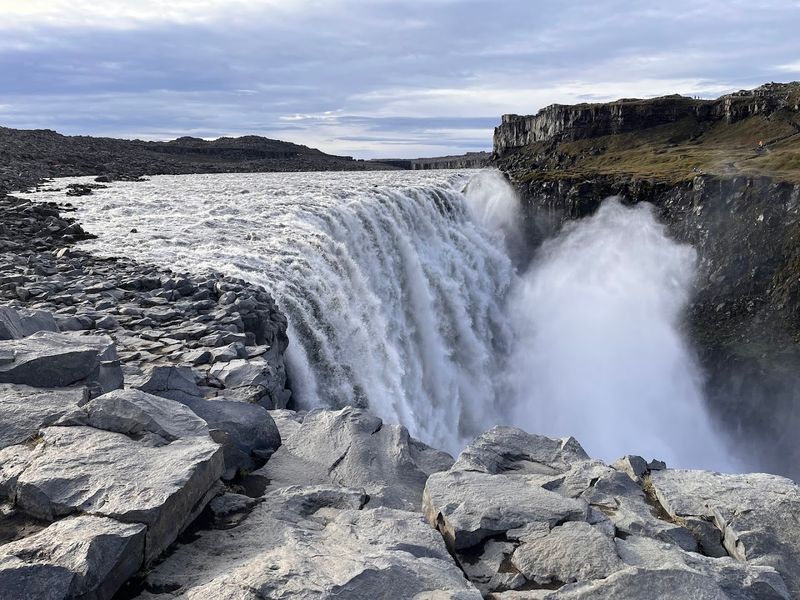
Dettifoss is not pretty in the conventional sense. It is grey, thunderous, and slightly terrifying, which is exactly why it earned a starring role in the opening scene of the film Prometheus.
Raw power has its own kind of beauty.
Located in Vatnajokull National Park in northeast Iceland, Dettifoss measures roughly 44 to 45 meters high and about 100 meters wide. What makes it Europe’s most powerful waterfall is the sheer volume of glacial meltwater pushing through at any given moment.
The ground shakes. The noise is relentless.
Your phone camera will struggle with the mist.
There are viewing platforms on both the east and west banks of the Jokulsa a Fjollum river, each offering a different perspective. The west bank road is paved and easier to access.
The east bank is rougher but gives you a closer, more dramatic angle on the falls. Either way, wear waterproof boots.
The path gets genuinely muddy, and puddles here have no mercy.
Gullfoss, Iceland
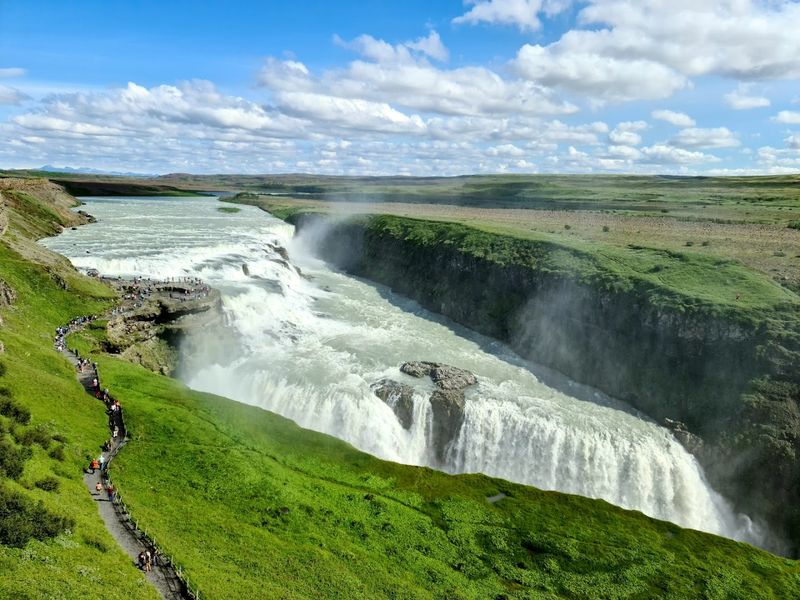
Gullfoss has a heroic backstory that most visitors do not know about. In the early 1900s, a foreign investor wanted to harness the falls for hydroelectric power.
A local farmer’s daughter named Sigridur Tomasdottir fought the plan so fiercely, even threatening to throw herself into the falls, that the project was eventually abandoned. The falls were saved.
Today Gullfoss is one of Iceland’s most visited natural attractions and a centerpiece of the famous Golden Circle route. The two-tiered waterfall drops the Hvita river into a rugged canyon, and the combination of glacial blue water against dark volcanic rock is genuinely striking.
Most visitors combine Gullfoss with Geysir and Thingvellir National Park in a single day trip from Reykjavik. The viewing path gets you close enough to feel the spray, and on sunny days a rainbow hovers almost permanently above the canyon.
It is the kind of stop that turns a road trip into a memory. Do not skip it.
Skógafoss, Iceland
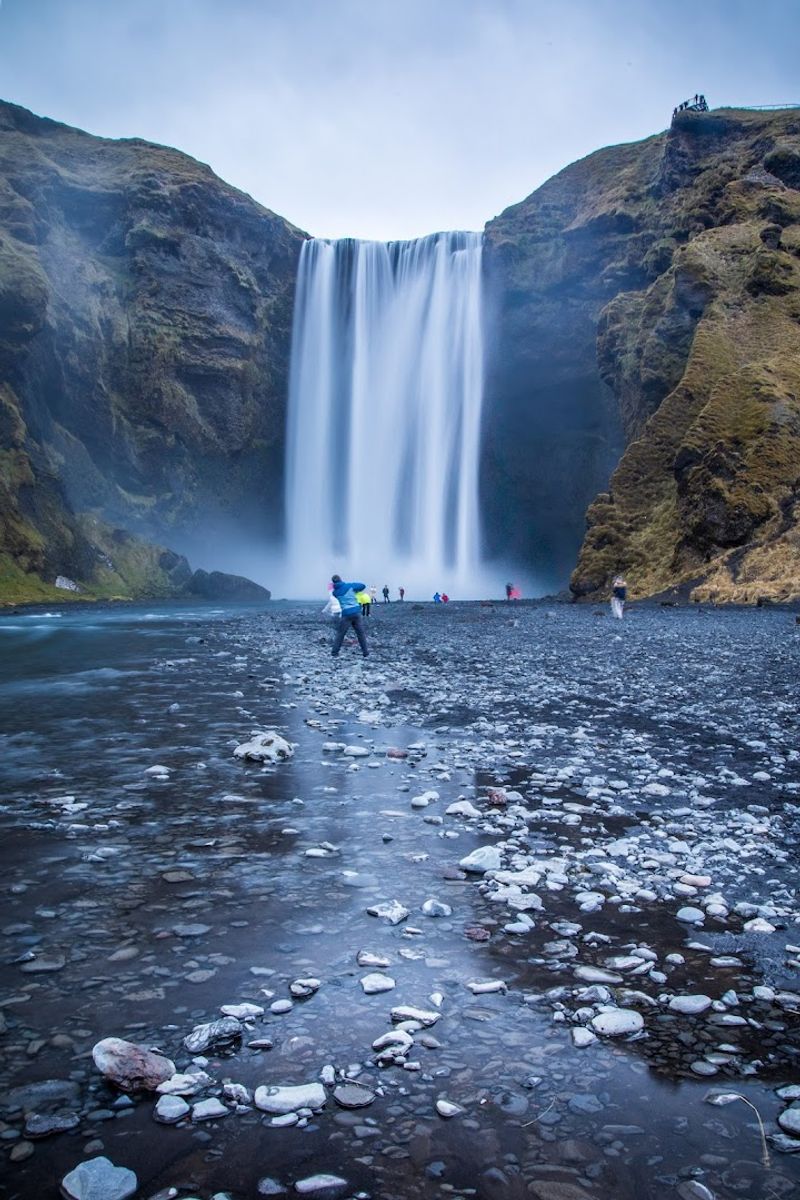
Skogafoss is the waterfall that keeps on giving. Standing 60 meters tall and 25 meters wide, it sits right off Route 1, which means you can pull over, walk two minutes, and suddenly find yourself standing directly in front of a massive wall of falling water.
No hike required.
According to local legend, the first Viking settler in the area hid a chest of gold behind the falls. Villagers supposedly found the chest centuries later but only managed to grab the ring on the lid before it disappeared.
That ring is now on display in a local museum, which is either proof of the legend or a very good marketing strategy.
Climb the staircase to the right of the falls and you reach the top, where the Skoga River begins its descent. From there, a trail continues into the highlands past dozens more waterfalls.
On a clear day with the sun at the right angle, the mist creates a permanent rainbow at the base. Skogafoss genuinely earns its reputation.
Sutherland Falls, New Zealand
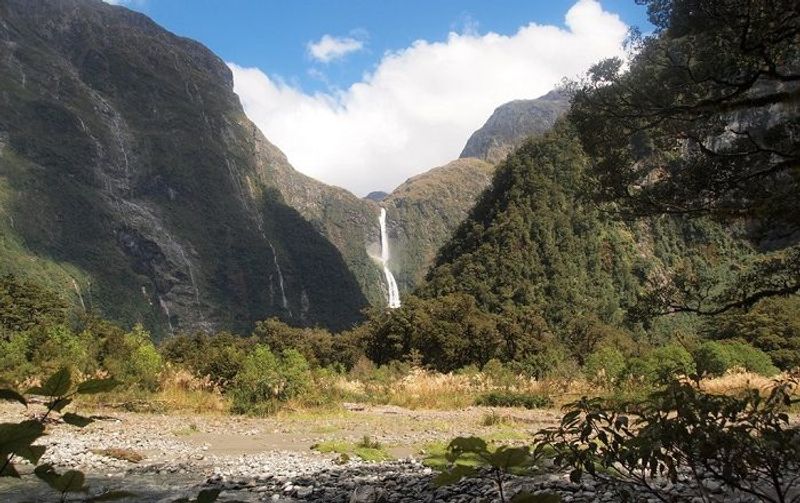
Getting to Sutherland Falls is the whole point. Located deep inside Fiordland National Park, this three-tiered giant drops 580 meters and can only be reached via the Milford Track, one of the most celebrated multi-day walks in the world.
The journey earns the view.
DOC materials for the Milford Track consistently list the side trip to Sutherland Falls as a definite highlight of the entire four-day walk. Tourism New Zealand ranks it among the tallest and most breathtaking waterfalls in the country.
That is a competitive category in a place as waterfall-rich as New Zealand.
The falls feed Lake Ada before eventually draining into Milford Sound. Fiordland is one of the wettest places on Earth, which means the falls are almost always running at full capacity.
Rain is basically guaranteed, but in Fiordland, rain is part of the experience rather than a reason to stay inside. Pack good waterproofs, embrace the mud, and walk toward the roar.
You will not regret it.
Jog Falls, India
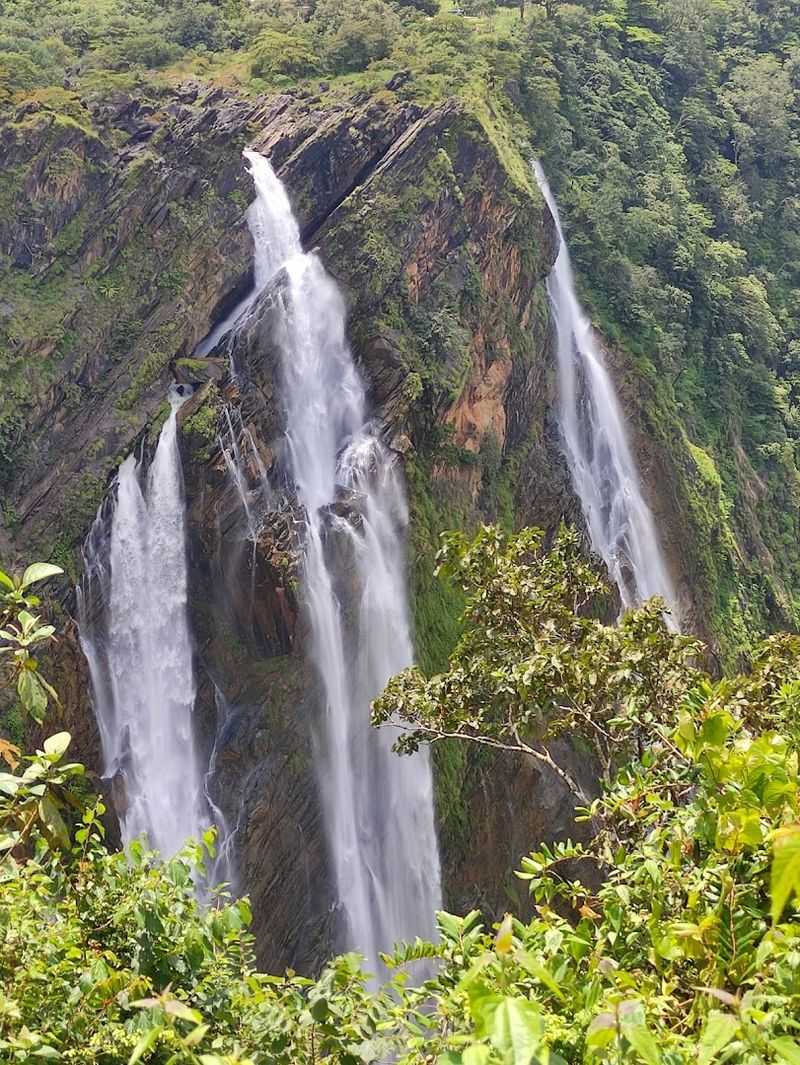
Jog Falls has a split personality. Visit during the dry season and you might find a modest trickle creeping down a very tall cliff.
Show up during monsoon and the whole cliff face transforms into a roaring curtain of water that Karnataka Tourism proudly calls one of the highest waterfalls in India.
The falls drop around 253 meters in four distinct streams, each with its own name: Raja, Rani, Rover, and Rocket. That last one earns its title during peak flow, shooting water outward with serious force.
The surrounding landscape turns intensely green during the rains, and the viewpoint fills with visitors who have made the trip specifically for this seasonal spectacle.
The best time to visit is between July and September, right in the thick of monsoon season. The roads to Jog Falls can get slippery and the viewing area becomes busy, but the payoff is spectacular.
Local vendors sell hot corn and snacks near the viewpoint, which honestly makes the whole experience feel like a proper event. Timing is everything here.



