 Unearth The Voyage
Florida is famous for its theme parks and beaches, but the Sunshine State hides countless treasures that most visitors never discover. Beyond the crowded tourist spots, you’ll find charming small towns, natural wonders, and historic sites that showcase the real Florida.
These underrated destinations offer authentic experiences, stunning scenery, and memories that will last far longer than any souvenir t-shirt.
1. Cedar Key
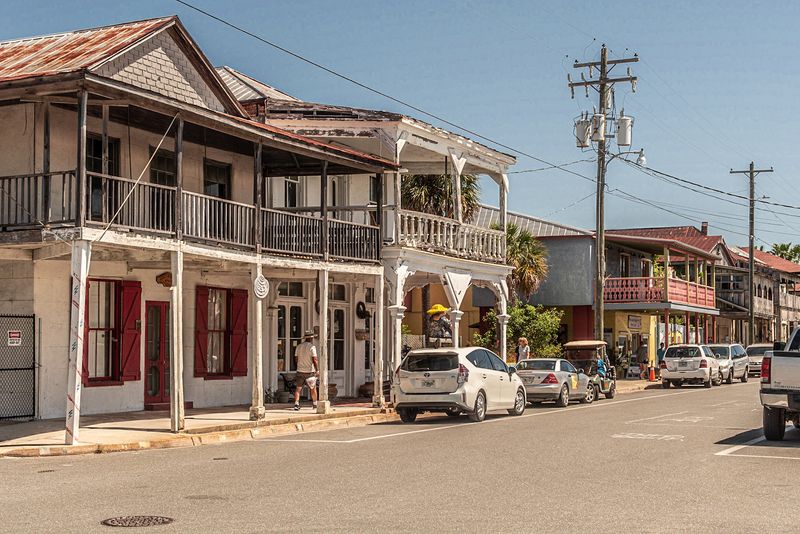
Stepping onto Cedar Key feels like traveling back to Old Florida, where time moves slower and life revolves around the tides. This tiny fishing village sits on a cluster of islands along the Gulf Coast, connected by bridges and blessed with some of the most peaceful sunsets you’ll ever witness.
The population barely reaches 700 people, which means you won’t find chain restaurants or big hotels here.
Instead, Cedar Key offers fresh oysters pulled straight from the water, art galleries tucked into historic buildings, and locals who actually wave when you pass by. The downtown area stretches just a few blocks, packed with quirky shops selling handmade crafts and local artwork.
Fishing boats bob in the harbor while pelicans dive for their dinner just offshore.
Nature lovers can kayak through the maze of islands, spotting manatees, dolphins, and countless bird species in the shallow waters. The Cedar Key National Wildlife Refuge protects several surrounding islands where sea turtles nest during summer months.
Whether you’re eating stone crab claws at a waterfront shack or watching the sun melt into the Gulf, this hidden gem delivers the authentic coastal Florida experience that developers haven’t ruined yet.
2. Mount Dora
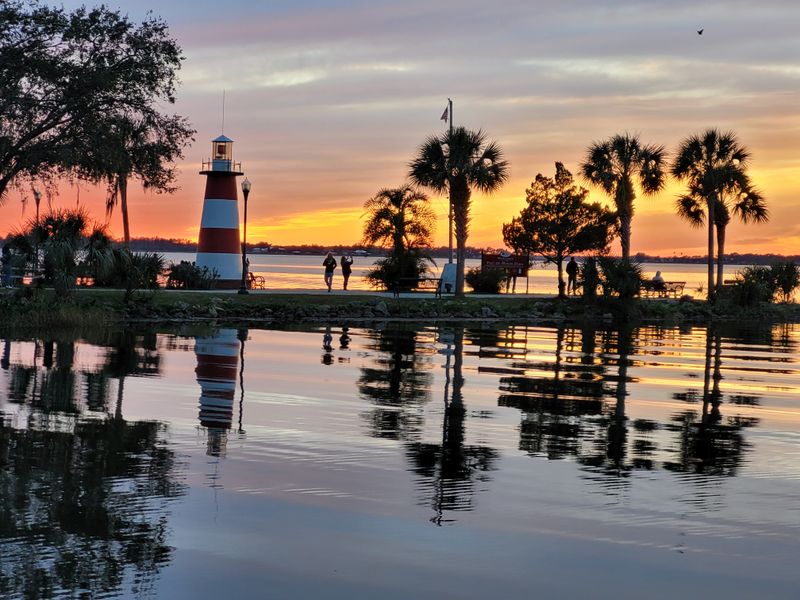
Antique shops line every street in Mount Dora, a Victorian-era town that somehow escaped Florida’s modern makeover. Rolling hills surround this lakeside community, which is pretty unusual for a state flatter than a pancake.
Downtown stretches for blocks, filled with over 30 antique stores, art galleries, and independent boutiques that actually sell interesting stuff instead of beach towels and keychains.
The town sits on the shores of Lake Dora, where you can take a historic boat cruise or rent a kayak to explore the Dora Canal. Spanish moss drapes from massive oak trees that shade the brick sidewalks, creating perfect conditions for strolling and window shopping.
Throughout the year, Mount Dora hosts festivals celebrating everything from art to bicycles to Scottish heritage.
Coffee shops and restaurants occupy historic buildings with actual character, not the cookie-cutter designs you see everywhere else. You can catch a play at the historic Icehouse Theatre or ride the Mount Dora Trolley to learn about the town’s fascinating past.
The surrounding lakes and trails offer hiking, biking, and birdwatching opportunities when you need a break from shopping. This small town proves that Florida had charm long before it became America’s favorite vacation destination.
3. Tarpon Springs Sponge Docks
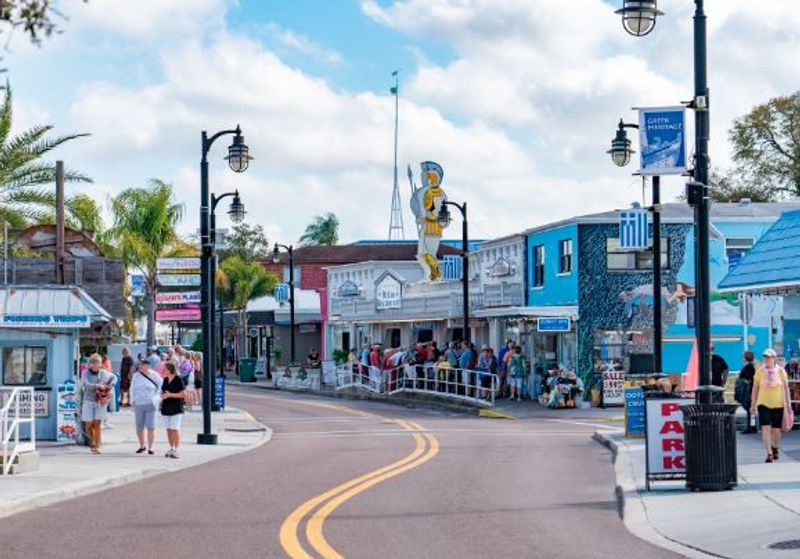
Greek restaurants serve authentic moussaka and baklava along the waterfront where sponge divers still practice their traditional craft. Tarpon Springs became home to Greek immigrants over a century ago when they arrived to harvest natural sponges from the Gulf floor.
Today, their descendants keep the culture alive through food, festivals, and the continued sponge diving industry that made this town famous.
Walking down Dodecanese Boulevard feels like visiting a Mediterranean village transplanted to Florida’s coast. Shops sell natural sponges in every size imaginable, from tiny bath sponges to massive ones used for car washing.
You can watch demonstrations of sponge diving techniques or take a boat tour to see divers in action.
The smell of grilled octopus and fresh bread drifts from family-owned tavernas where recipes have passed down through generations. St. Nicholas Greek Orthodox Cathedral towers over the historic district, its architecture and interior artwork stunning enough to rival churches in Greece itself.
During the annual Epiphany celebration, young men dive into the cold January waters to retrieve a cross thrown by the archbishop.
Beyond the docks, downtown Tarpon Springs offers more galleries, shops, and cafes worth exploring on foot.
4. Bok Tower Gardens
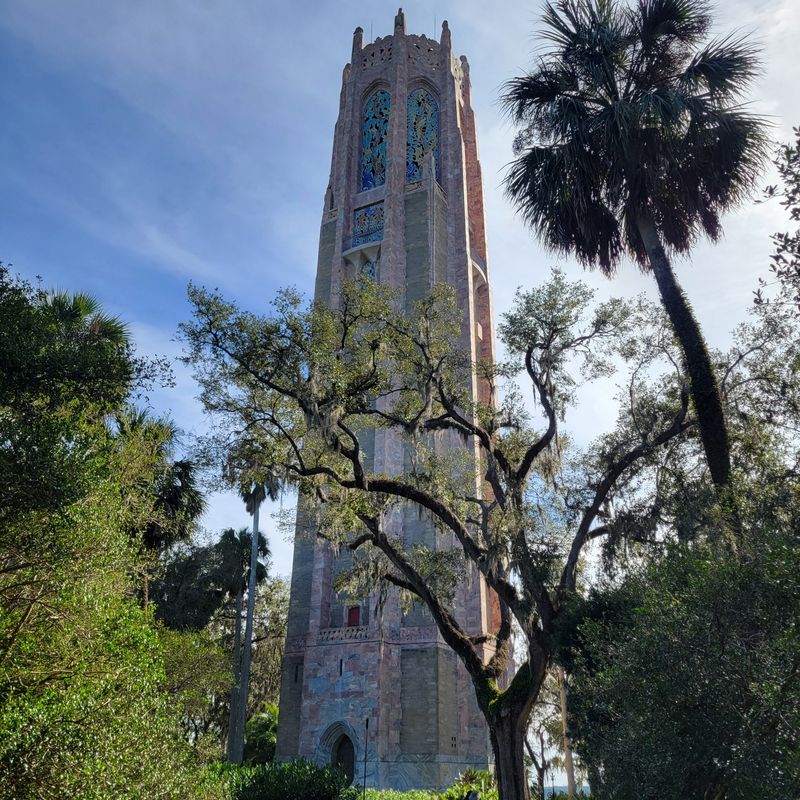
A 205-foot singing tower rises from the highest point in peninsular Florida, surrounded by gardens so peaceful you’ll forget the outside world exists. Edward Bok, a Dutch immigrant who became a successful magazine editor, created this sanctuary in the 1920s as a thank-you gift to America.
The tower contains 60 bronze bells that ring out concerts daily, filling the air with music that echoes through the landscaped grounds.
Winding paths lead through 50 acres of gardens showcasing camellias, azaleas, magnolias, and palm trees arranged in stunning combinations. A moat surrounds the tower, reflecting its pink and gray stonework in the still water where turtles sun themselves on logs.
The gardens sit atop Iron Mountain, which at 298 feet above sea level counts as a mountain in Florida’s flat landscape.
Inside the visitor center, exhibits explain Bok’s life story and the tower’s construction process. The historic Pinewood Estate, a 20-room Mediterranean Revival mansion, offers tours that reveal how wealthy families lived during Florida’s boom years.
Birds sing from every direction as you explore the nature preserve surrounding the formal gardens. Pack a picnic and claim a shady spot under the oaks, or time your visit for one of the daily carillon concerts that make this place truly magical.
5. Weeki Wachee Springs State Park
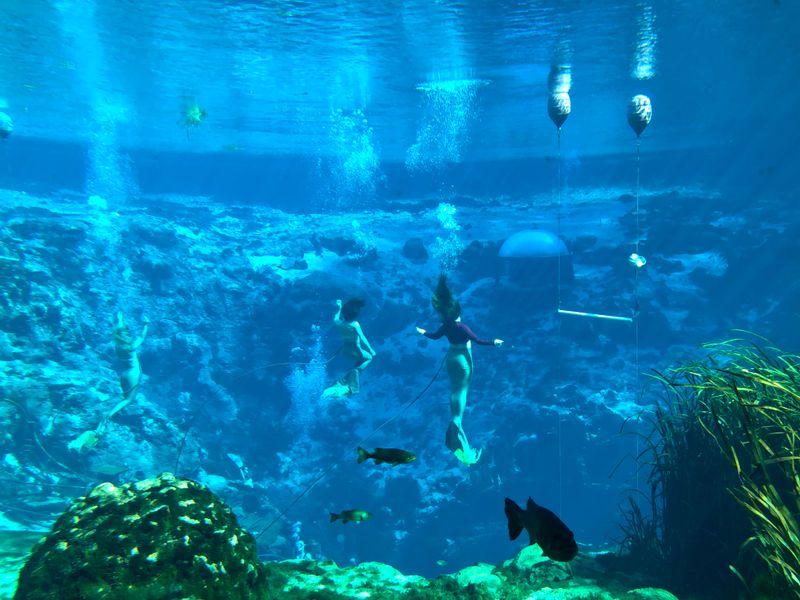
Real mermaids swim through crystal-clear springs at Florida’s most wonderfully weird attraction, performing underwater ballet shows that have amazed audiences since 1947. Professional swimmers wearing glittering tails and seashell tops hold their breath while drinking soda, eating bananas, and dancing 16 feet below the surface.
The spring pumps out 117 million gallons of fresh water daily, maintaining a constant 74-degree temperature year-round.
Watching the mermaid show through the underwater theater’s windows feels like peeking into a magical world where fairy tales come true. The performers train for months to master the breathing techniques that allow them to stay submerged for extended periods.
Between shows, you can kayak or paddleboard down the Weeki Wachee River, which winds through six miles of untouched Florida wilderness.
Manatees, turtles, and fish swim alongside your boat in water so clear you can see every grain of sand on the bottom. The park also features Buccaneer Bay, a spring-fed water park perfect for cooling off after your river adventure.
Admission includes both the mermaid shows and river access, making it an incredible value compared to Florida’s expensive theme parks. This quirky slice of Old Florida proves that sometimes the best attractions are the ones that never changed with the times.
6. Corkscrew Swamp Sanctuary
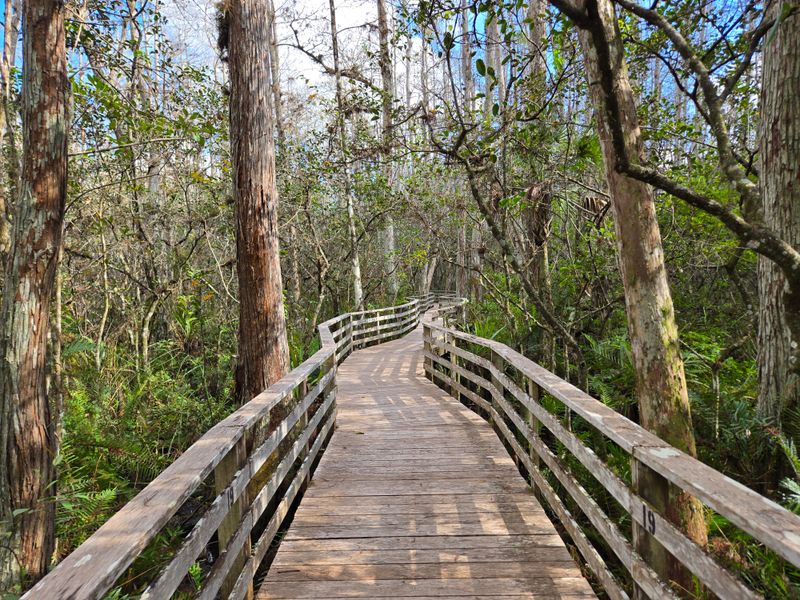
Massive bald cypress trees tower overhead, some over 500 years old, as you walk the boardwalk through one of North America’s largest old-growth cypress forests. The National Audubon Society protects this 13,000-acre wilderness where nature operates exactly as it has for centuries.
A 2.25-mile elevated walkway keeps your feet dry while allowing you to explore deep into the swamp’s heart.
Alligators sun themselves on logs while wood storks wade through shallow pools searching for fish. These endangered birds nest here in one of the largest colonies remaining in the United States.
The sanctuary provides critical habitat for countless species, from tiny tree frogs to elusive Florida panthers that occasionally leave tracks in the mud.
Early morning visits offer the best wildlife viewing when animals are most active and the light filters beautifully through the canopy. The boardwalk passes through several distinct ecosystems including wet prairie, marsh, and pine flatwoods before reaching the ancient cypress cathedral.
Rangers lead guided walks during winter months, sharing knowledge about the plants, animals, and ecology that make this place special.
Bring binoculars and a camera with a good zoom lens because you’ll want to capture the incredible birds and scenery. This sanctuary proves that Florida’s wildest places are worth protecting from development.
7. Blowing Rocks Preserve
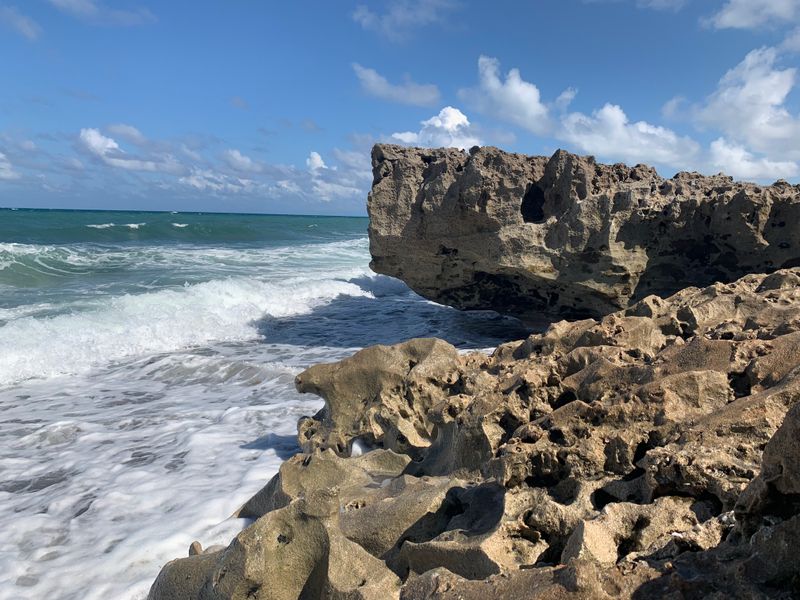
Waves crash against ancient limestone rocks, shooting water 50 feet into the air through holes and crevices carved over thousands of years. This dramatic coastline looks nothing like Florida’s typical sandy beaches, offering instead a rocky shoreline that could belong in Maine or California.
The Nature Conservancy manages this 73-acre preserve, protecting one of the largest Anastasia limestone rock formations on the Atlantic coast.
During high tide and rough seas, the rock display becomes truly spectacular as ocean swells force water through the porous limestone with explosive force. The rocks create natural tide pools filled with crabs, fish, and sea creatures trapped between waves.
A short trail winds through coastal hammock and mangrove wetlands before emerging onto the rocky beach.
Sea turtles nest along the preserve’s sandy sections during summer months, and volunteers patrol nightly to protect the nests from predators. The preserve also provides important habitat for threatened plants found nowhere else in the world.
Visit during spring or fall when strong winds create the best conditions for watching water shoot through the rocks.
Sunrise here is absolutely stunning as golden light illuminates the spray and rocks. Pack water shoes because the limestone can be sharp, and time your visit around high tide for the most impressive show nature can provide.
8. Venetian Pool
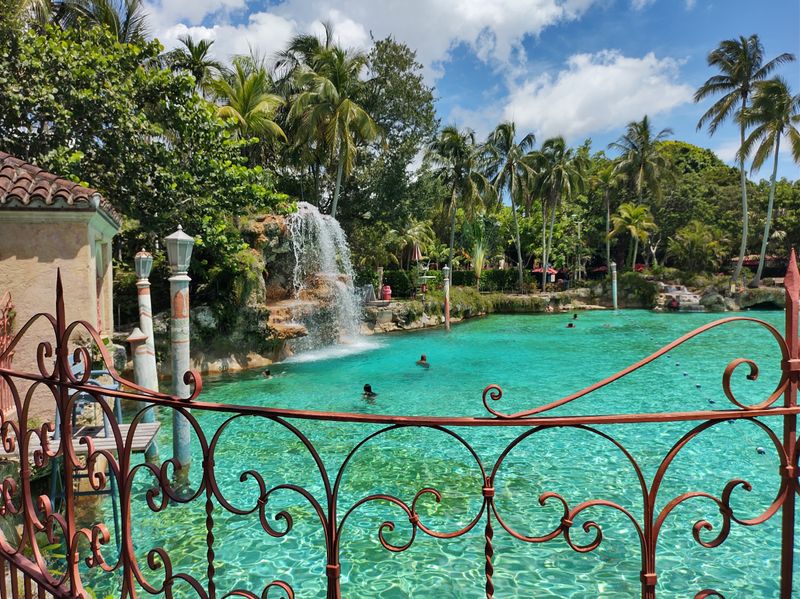
Carved from a coral rock quarry in 1923, this stunning public pool looks more like a Mediterranean resort than a neighborhood swimming spot. Architect Denman Fink transformed an ugly industrial site into an aquatic wonderland complete with waterfalls, caves, and Venetian-style bridges.
Fresh spring water fills the pool daily, replacing all 820,000 gallons and maintaining crystal-clear conditions without harsh chemicals.
Stone towers and palm trees surround the irregular-shaped pool, creating the feeling that you’ve discovered a hidden lagoon. The pool appears in movies and photo shoots regularly because its unique beauty captures Old Florida glamour perfectly.
During summer, the pool hosts concerts and special events where you can swim under the stars.
Unlike most historic landmarks, you can actually jump in and enjoy this piece of history rather than just looking at it. The pool depth varies from three to eight feet, with shallow areas perfect for younger swimmers.
Cave grottos and waterfall features provide shady spots to cool off between swimming sessions.
Admission prices are incredibly reasonable compared to water parks, and the facility limits daily capacity to prevent overcrowding. Bring your swimsuit and towel because this is one museum exhibit you’ll want to experience firsthand.
The Venetian Pool proves that functional spaces can be works of art worth preserving.
9. St. George Island State Park
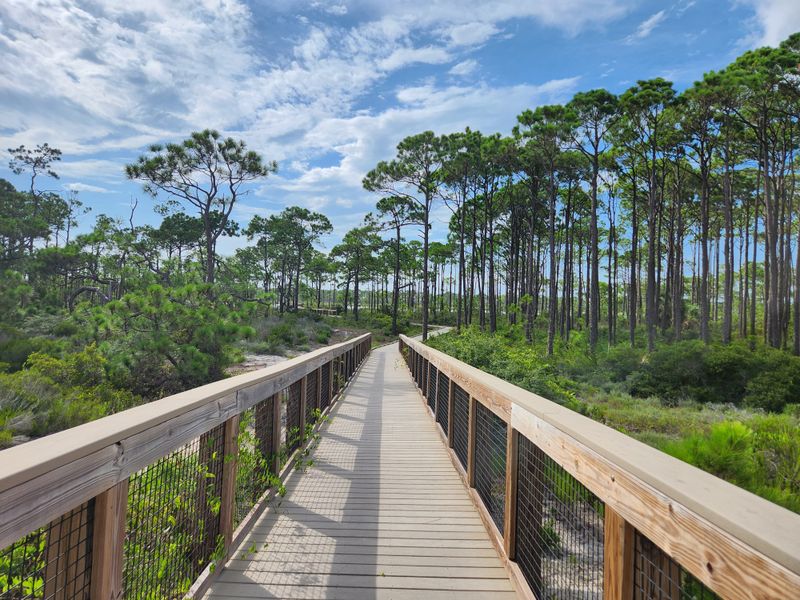
Nine miles of undeveloped beaches stretch along this barrier island where you might walk for hours without seeing another person. White sand dunes topped with sea oats rise behind the beach, protecting the island from storms while providing nesting habitat for sea turtles and shorebirds.
The park occupies the eastern end of St. George Island, preserving 1,962 acres of coastal wilderness.
Unlike Florida’s crowded beach towns, this island escaped overdevelopment and maintains its natural character. The Gulf side offers calm, shallow waters perfect for swimming and shell collecting.
On the bay side, kayakers paddle through salt marshes teeming with fish, birds, and other marine life.
Campgrounds allow overnight stays for visitors who want to wake up to sunrise over the Gulf. The park provides primitive camping areas for those seeking solitude and developed sites with facilities for families.
Fishing is excellent from the beach, pier, or kayak, with redfish, trout, and flounder commonly caught.
Summer brings loggerhead sea turtles that crawl ashore to lay eggs in the dunes after dark. Rangers mark and protect the nests until baby turtles hatch and scramble toward the ocean weeks later.
Bring everything you need because services are limited, but that’s exactly what makes this beach special compared to Florida’s commercialized coastal areas.
10. Dry Tortugas National Park
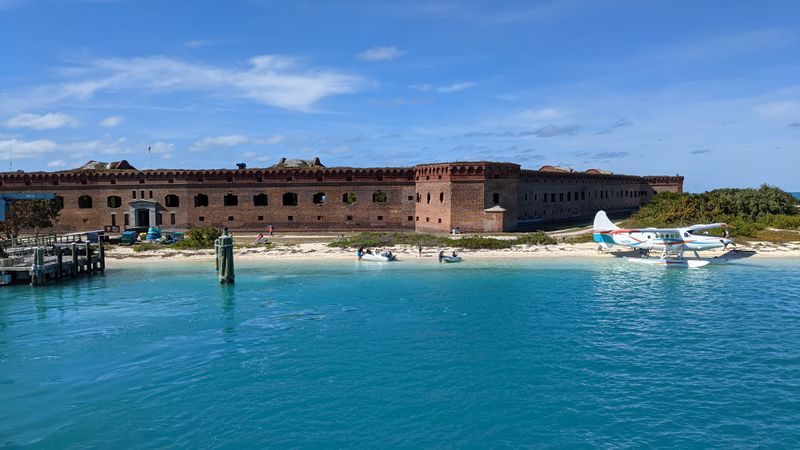
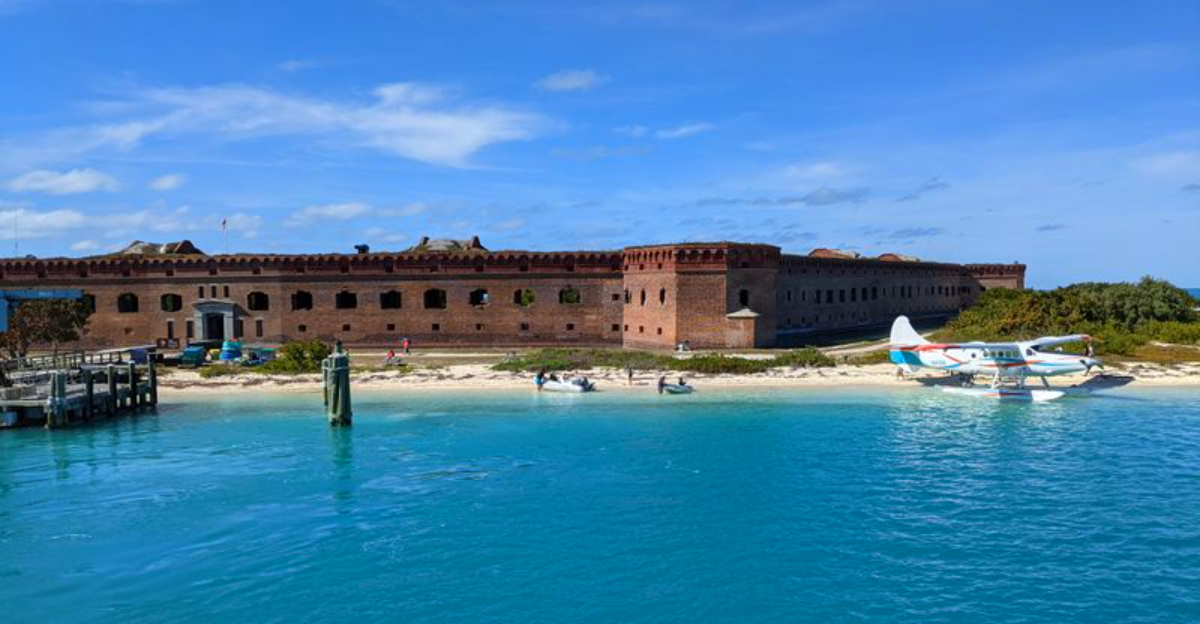
A massive brick fortress rises from a tiny island 70 miles west of Key West, accessible only by boat or seaplane. Fort Jefferson, the largest masonry structure in the Western Hemisphere, contains over 16 million bricks but was never finished despite 30 years of construction.
The fort served as a military prison during the Civil War, most famously holding Dr. Samuel Mudd, who treated John Wilkes Booth after Lincoln’s assassination.
Today, the fort sits abandoned except for a few park rangers and the visitors who make the journey. Crystal-clear water surrounds the island, revealing coral reefs and tropical fish in every direction.
Snorkeling here ranks among the best in North America, with sea turtles, rays, and colorful reef fish swimming just offshore.
The ferry ride takes about two hours each way, giving you several hours to explore the fort and surrounding waters. Seaplanes offer a faster but pricier option that includes stunning aerial views of the islands.
Camping is available for adventurous visitors who want to experience the park after day-trippers leave.
Bird migrations bring thousands of exhausted travelers who rest on these tiny islands during spring and fall. The combination of history, pristine nature, and remote location makes Dry Tortugas one of America’s most unique national parks despite being one of the least visited.
11. Falling Waters State Park
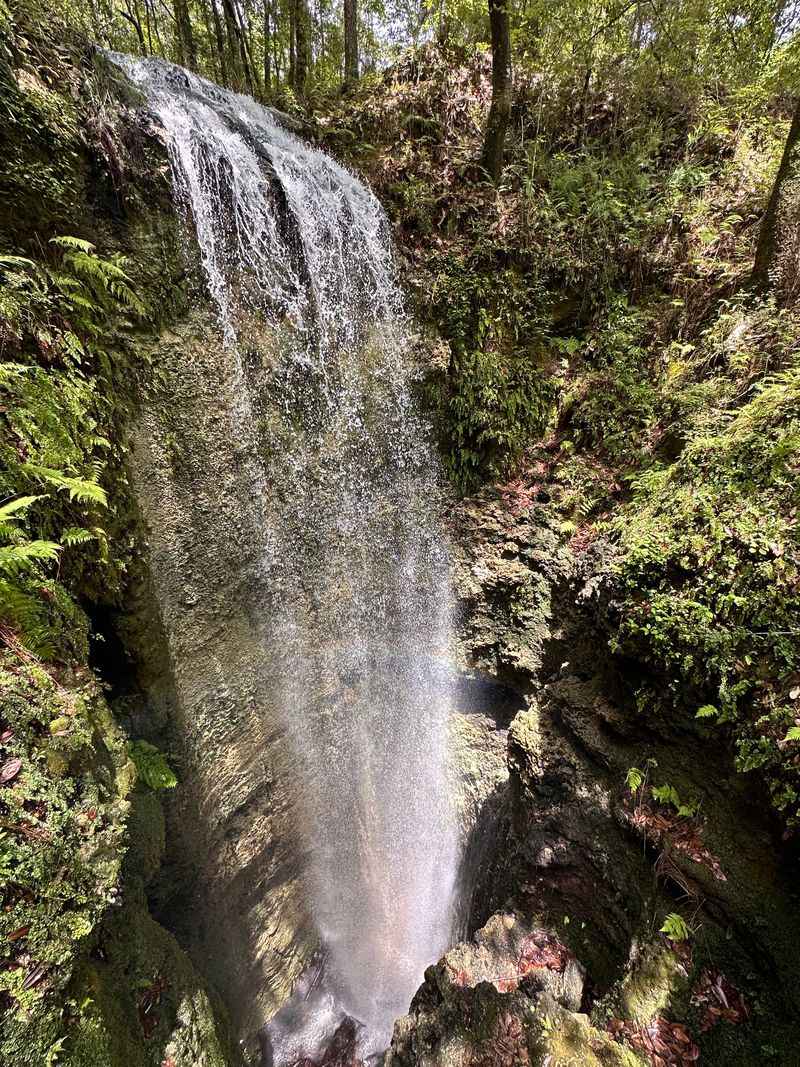
Water plunges 73 feet into a cylindrical sinkhole, creating Florida’s tallest waterfall in a state not exactly known for dramatic elevation changes. The waterfall disappears into an underground cave system that nobody has fully explored despite numerous attempts.
During dry seasons, the flow reduces to a trickle, but after heavy rains, the cascade becomes impressive enough to justify the drive to Florida’s Panhandle.
A wooden boardwalk and observation platform provide perfect viewing angles for photos and contemplation. The sinkhole measures 100 feet deep and 20 feet wide, with ferns and moss clinging to the limestone walls.
Scientists believe the underground stream eventually connects to the Floridan Aquifer, but the exact path remains a mystery.
Beyond the waterfall, the park offers hiking trails through longleaf pine forests and hardwood hammocks. A small lake provides swimming and fishing opportunities when you need to cool off.
The campground features shaded sites perfect for weekend getaways, though the park sees far fewer visitors than Florida’s beach destinations.
This geological oddity formed when the limestone bedrock dissolved over thousands of years, creating the sinkhole and underground drainage system. Visit after spring rains for the best water flow, and bring bug spray because the shaded forest can host hungry mosquitoes during warm months.
12. Florida Caverns State Park
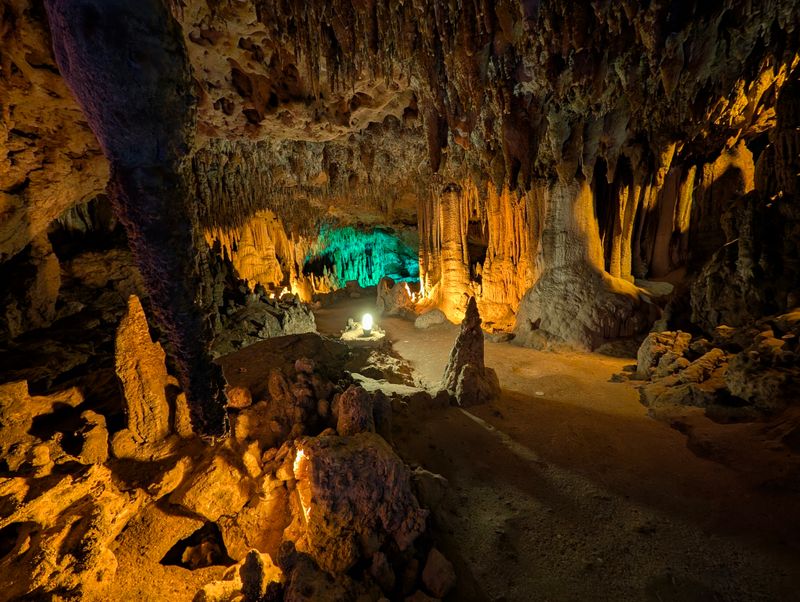
Descending into Florida’s only air-filled cave system feels like entering another planet where stone formations grow in impossible shapes. Stalactites hang from the ceiling like icicles while stalagmites rise from the floor, some meeting in the middle to form columns.
The guided cave tour leads visitors through several rooms decorated with flowstone, draperies, and soda straws formed by mineral-rich water dripping over thousands of years.
Rangers explain the geology and history while pointing out formations that resemble everything from waterfalls to wedding cakes. The temperature stays around 65 degrees year-round, providing welcome relief from Florida’s summer heat.
Native Americans used these caves for shelter long before European settlers arrived, and artifacts discovered inside reveal human presence dating back thousands of years.
Above ground, the park offers hiking trails, canoeing on the Chipola River, and swimming in a spring-fed pool. The river runs clear and cool, perfect for paddling and spotting wildlife along the wooded banks.
Camping facilities allow overnight stays for visitors exploring this corner of the Panhandle.
Cave tours fill quickly during peak season, so arrive early or make reservations in advance. Wear closed-toe shoes with good traction because the cave floors can be slippery.
This underground wonderland proves that Florida’s natural treasures extend far below its sandy surface.



