Most people picture coal country and winding mountain roads when they think of West Virginia. But tucked between the ridges and river valleys of the Mountain State are places that look like they belong on a different continent entirely. We’re talking Swiss Alpine villages founded by 19th-century immigrants, Gothic stone institutions that tower like medieval castles, pedestrian plazas designed after Austrian ski resorts, and historic market halls older than the state itself. West Virginia has quietly been collecting European-flavored destinations for over 150 years, and most visitors have no idea they exist.
Whether you’re a history buff, an architecture fan, or just someone who wants a passport-free taste of the Old World, this list is your guide to the Mountain State’s most surprisingly European corners. From a gilded palace rising out of Appalachian hills to a riverside town that looks straight out of a German postcard, prepare to have your expectations completely rearranged.
1. Helvetia, Helvetia, West Virginia
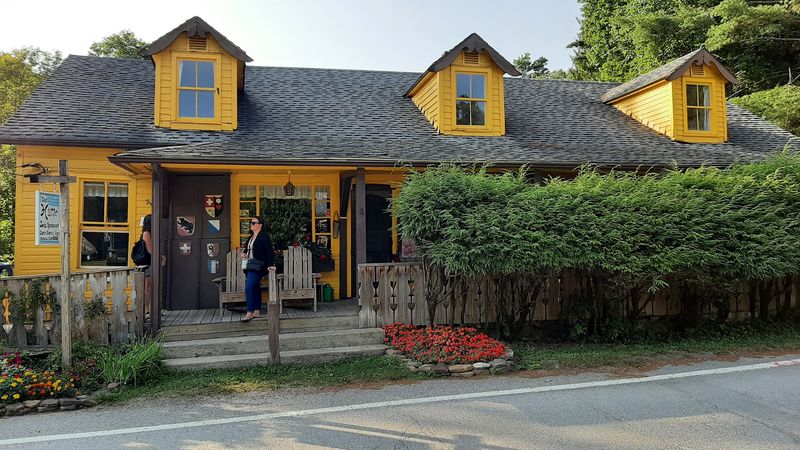
Back in 1869, a group of Swiss and German immigrants hiked deep into a West Virginia mountain valley, looked around, and apparently decided it reminded them enough of home to stay forever.
The village they built, Helvetia, takes its name from the Latin word for Switzerland, and that heritage has never faded. Hand-crafted wooden homes with Alpine gingerbread trim and bright floral patterns still line the quiet streets, looking remarkably unchanged from photographs taken a century ago.
Helvetia has been listed on the National Register of Historic Places since 1978, and the community actively maintains its cultural roots through annual events. The pre-Lenten Fasnacht celebration combines Swiss Fasnacht and Sechselauten traditions into what locals call a “mountain Mardi Gras.”
Visitors can try locally produced Appalachian Alpine Cheese at the Hutte Restaurant or general store. Guided walking tours and a self-guided two-and-a-half-mile historic trail hike round out the experience nicely.
2. Shepherdstown Historic District, Shepherdstown, West Virginia
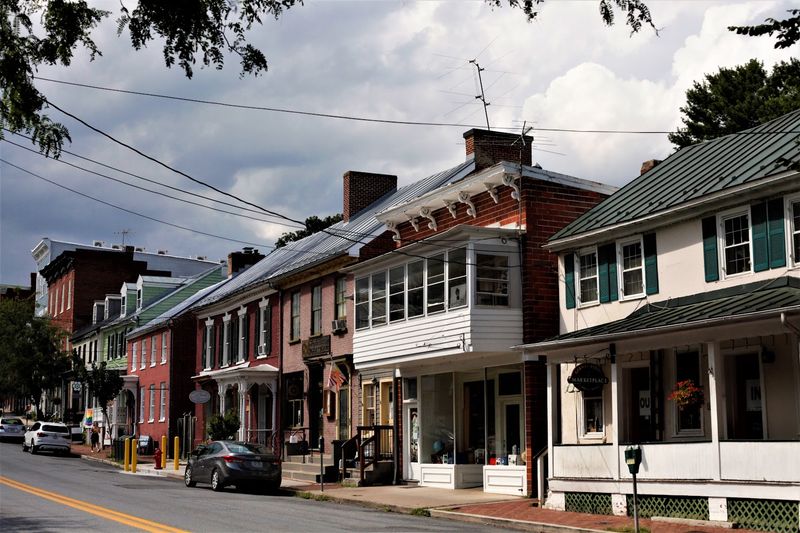
Founded as Mecklenburg in 1762, Shepherdstown holds the title of West Virginia’s oldest town, and its historic core looks every bit the part.
Brick sidewalks, narrow streets, and rows of preserved Federal, Georgian, and Greek Revival buildings give the district a character that visitors frequently compare to smaller European historic towns. A commercial brickyard established before 1794 supplied much of the material, which explains why so many of the substantial two-story, five-bay structures have survived in such good condition.
The district encompasses 386 contributing resources, including the Greek Revival McMurran Hall and the 32-room Entler Hotel. Historic street furniture such as metal fences, mounting blocks, and mature trees adds additional layers of authenticity to every block.
Shepherdstown also served as a field hospital after the Battle of Antietam, giving the town a weight of history that goes well beyond its picturesque appearance. Independent cafes and bookstores fill the ground floors of many historic buildings today.
3. Oglebay Mansion Museum, Wheeling, West Virginia
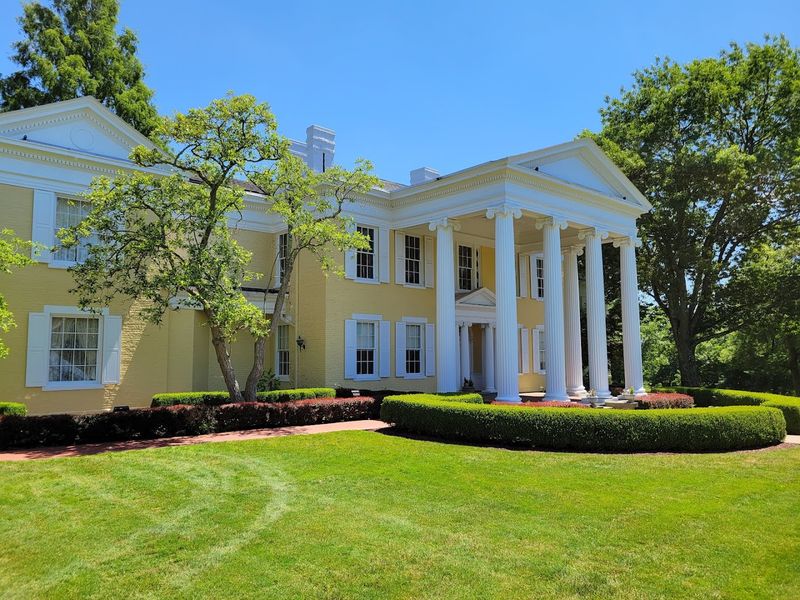
The story behind Oglebay Mansion Museum is almost as interesting as the building itself: industrialist Earl William Oglebay acquired the estate in 1901, transformed it into an experimental farm, and then upon his passing in 1926 left the entire 1,650-acre property to the City of Wheeling for public enjoyment.
The central portion of the mansion dates to the mid-1800s, and its English roots run deep. The previous owner had named the estate Waddington after his family’s ancestral English property, a detail that still shapes the property’s unmistakably manor-house character.
Today the mansion operates as West Virginia’s first accredited museum, featuring 13 beautifully restored period rooms filled with fine art, antique furniture, and Civil War memorabilia. The Neo-Classical architecture, with its grand columns and elaborate woodwork, sets the tone before visitors even reach the front door.
The surrounding formal gardens remain a popular wedding venue, and the broader park grounds offer enough to fill an entire afternoon of exploration.
4. Blennerhassett Island Historical State Park, Parkersburg, West Virginia
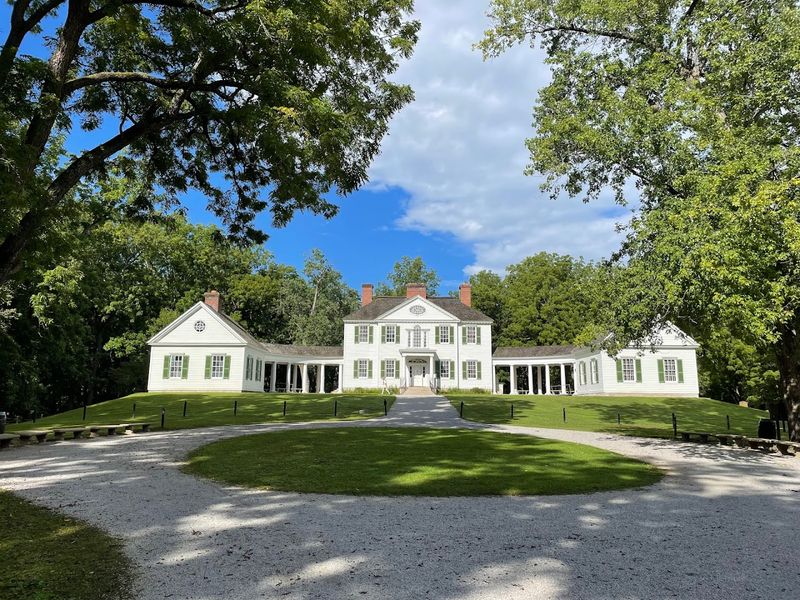
Getting to Blennerhassett Island already feels like a minor adventure, since the only way to reach it is aboard the Island Belle Sternwheeler departing from Point Park in Parkersburg.
Once on the island, visitors encounter a meticulously reconstructed Palladian mansion modeled after the original home of Harman and Margaret Blennerhassett, completed in 1800 and widely considered the most beautiful house in the western territories at the time. The original was destroyed by fire in 1811, and the current structure is a 1984 reconstruction built with serious attention to historical accuracy.
Horse-drawn carriage rides and wagon tours carry guests through the island’s formal gardens, while costumed interpreters lead mansion tours that bring 18th-century plantation life into sharp focus. The park operates seasonally from early May through late October each year.
Beyond the mansion, the island offers self-guided walking tours, biking, and hiking trails, making it a well-rounded destination for history enthusiasts and casual visitors alike.
5. Bavarian Inn Resort & Brewing Company, Shepherdstown, West Virginia
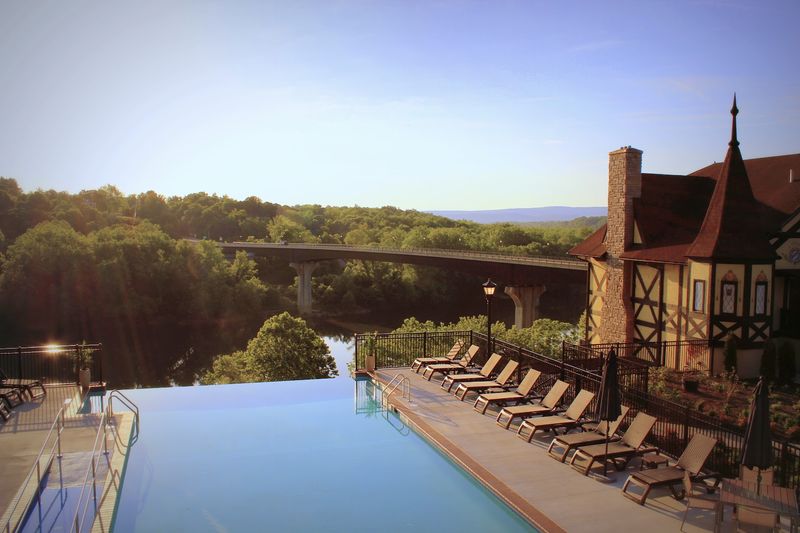
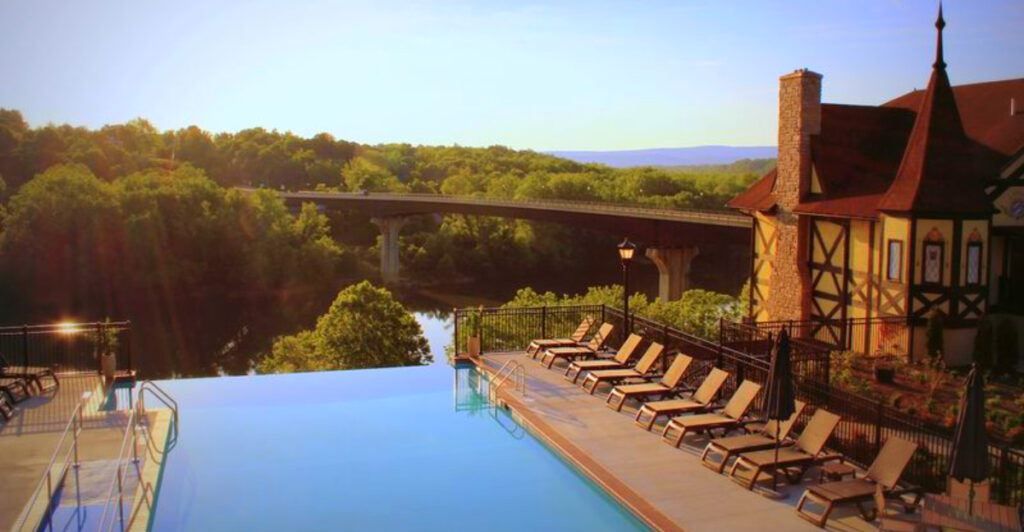
Perched on a bluff above the Potomac River, the Bavarian Inn Resort has been convincing guests they’ve accidentally crossed into Germany since it first opened its chalet-style doors.
The 11-acre property was deliberately designed to evoke a European countryside retreat, complete with elegantly appointed chalets, manicured landscaping, and European-influenced dining featuring authentic German and American dishes. It holds both the AAA Four Diamond award and Wine Spectator’s Best of Award of Excellence, which are not easy honors to collect.
Rooms come with gas fireplaces, whirlpool baths, and private balconies overlooking the Potomac River, making it easy to forget you’re technically in West Virginia. An infinity swimming pool and outdoor bar add to the resort-style experience.
The Bavarian Brothers Brewery operates on-site, offering a brewpub, lounge, and an outdoor beer garden. For anyone who has dreamed of a Bavarian holiday without the transatlantic airfare, this resort makes a genuinely convincing case.
6. Snowshoe Mountain Resort Village, Snowshoe, West Virginia
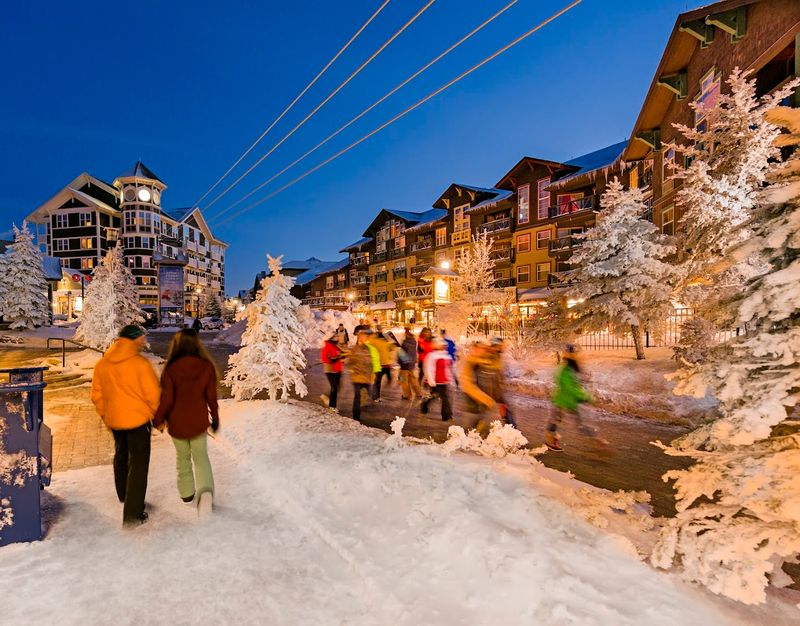
High in the Allegheny Mountains, Snowshoe Mountain Resort has constructed a pedestrian village that borrows heavily from the European Alpine ski resort playbook, and it pulls off the look with surprising confidence.
The village sits near the summit of the mountain and was developed using a “Modern Alpine” architectural style, with lodges, plazas, cafes, retail stores, and restaurants all connected by pedestrian streets and urban plazas. Every building and alteration within the resort must pass through an architectural design committee to maintain a consistent aesthetic, which keeps the village looking cohesive rather than piecemeal.
Wind-protected public spaces were specifically engineered into the design, giving the plaza areas a sheltered, European town-square quality even during the coldest months. The Rimfire Lodge and Highland House are among the accommodation options that reinforce the mountain-chalet atmosphere.
Summer brings mountain biking and golf to the lineup, making Snowshoe a legitimate year-round destination rather than a one-season novelty with a European paintjob.
7. Wheeling Historic Centre Market, Wheeling, West Virginia
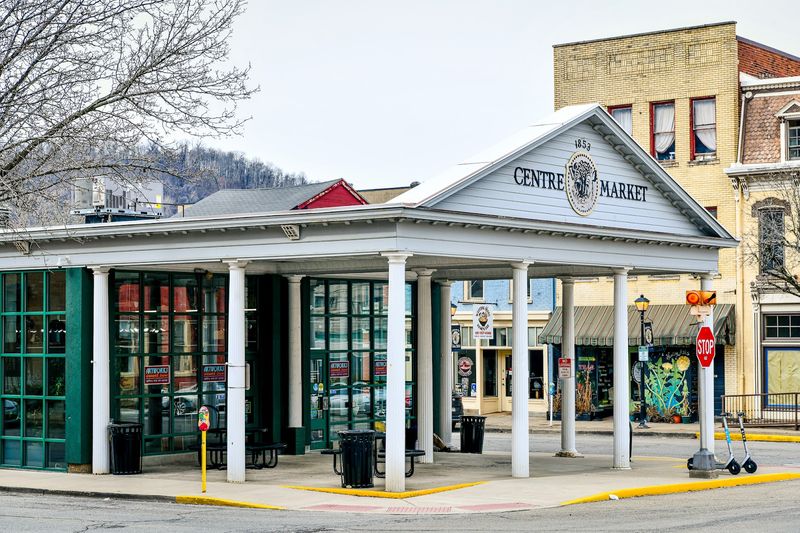
Here is a fun fact that stops most visitors mid-stride: the Upper Market House at Centre Market, built in 1853, is the oldest cast-iron market house in the entire United States.
That alone earns it a spot on any list of remarkable American buildings, but the European comparison comes naturally when you see the full complex. The Upper Market House was constructed in a neo-classical style with Doric columns, while the Lower Market House, added in 1890, features a neo-Romanesque design, giving the district two distinct 19th-century European architectural flavors in one compact area.
The Centre Market Square Historic District has been listed on the National Register of Historic Places since 1975, and the surrounding ornate brick Victorian commercial buildings make the whole neighborhood feel like a well-preserved European market quarter. Notably, Centre Market predates the state of West Virginia itself.
Today the market hosts an eclectic mix of independently owned boutiques, antique shops, cafes, and restaurants, keeping the district lively and genuinely local in character.
8. Trans Allegheny Lunatic Asylum, Weston, West Virginia
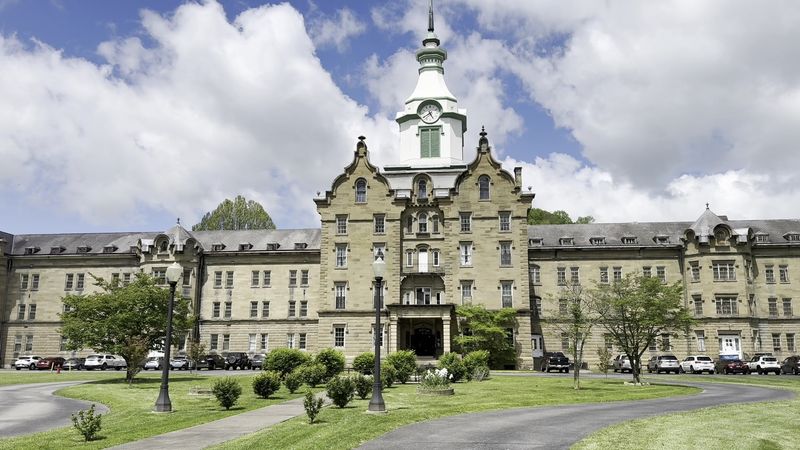
Few buildings in America command attention quite like the Trans Allegheny Lunatic Asylum, a colossal Gothic Revival and Tudor Revival stone complex that looms over Weston like something transported directly from 19th-century England.
Construction ran from 1858 to 1881, and the finished structure is considered one of the largest hand-cut stone buildings in the United States. Its towers, arched windows, and long limestone facade create a silhouette that architecture historians consistently compare to grand European institutional buildings of the same era.
The asylum was designed under the Kirkbride Plan, a 19th-century philosophy that promoted patient healing through natural light, ventilation, and long open corridors. Originally built for 250 patients, the facility eventually housed over 2,400 by the 1950s before closing in 1994.
Guided historical tours now explore the main building, staff apartments, morgue, and operating room, with guides dressed in 19th-century nurse outfits. Museum rooms display patient artwork and medical artifacts, providing a thorough look at the institution’s complicated history.
9. Capitol Market, Charleston, West Virginia
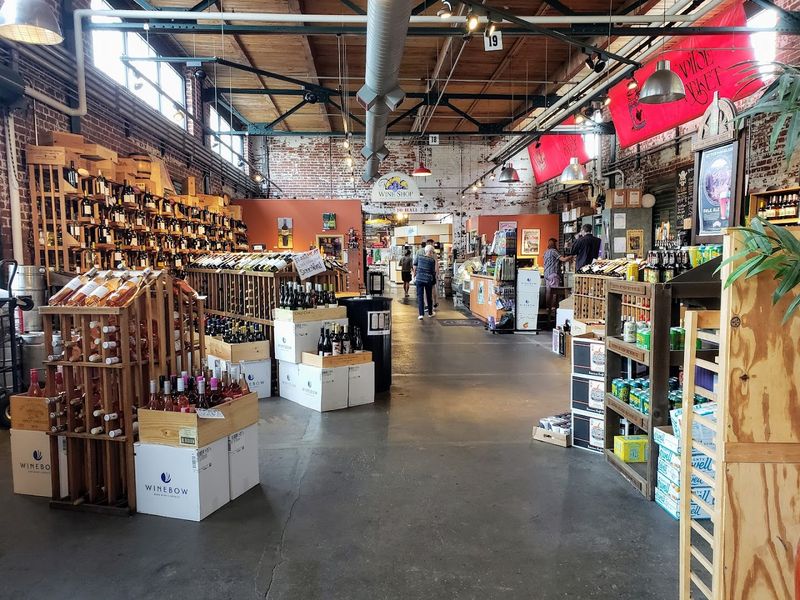
Not many public markets can claim to occupy a former railroad freight station with roots stretching back to the late 1800s, but Capitol Market in Charleston does exactly that with considerable style.
The building was originally the Kanawha and Michigan Railway Depot Warehouse, and its transformation into a bustling indoor-outdoor marketplace in 1997 preserved the historic brick architecture while giving it an energetic new purpose. The National Register of Historic Places listing confirms that the renovation respected what made the structure worth saving in the first place.
Inside, vendors offer fresh meat, fish, coffee, cheese, chocolates, and a wide range of West Virginia-made products, creating the kind of lively, mixed-vendor atmosphere that European city markets have been perfecting for centuries. Flower vendors and local produce stalls fill the outdoor sections.
Soho’s, a full-scale Italian restaurant operating within the market, adds another layer of international flavor to the experience. Capitol Market operates as a nonprofit organization committed to serving the Charleston community year-round.
10. Prabhupada’s Palace of Gold, Moundsville, West Virginia
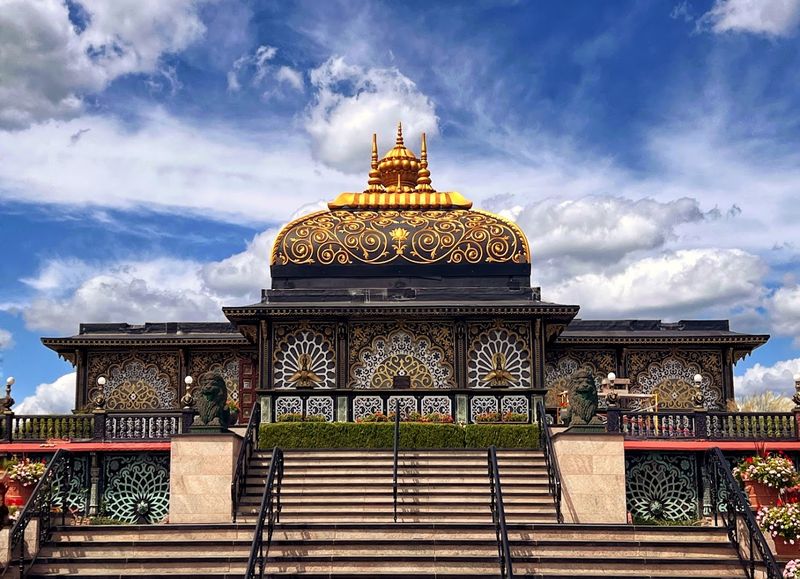
Nobody expects to find a gilded palace with 22-karat gold leaf, stained-glass windows, crystal chandeliers, and mirrored ceilings rising out of the Appalachian Mountains near Moundsville, which is precisely what makes this place so remarkable.
Construction on Prabhupada’s Palace of Gold began in the early 1970s as a residence for A.C. Bhaktivedanta Swami Prabhupada, the founder of ISKCON. After his passing in 1977, the palace became a memorial, and its Indo-Saracenic Revival architectural detailing was completed with extraordinary craftsmanship, including walls adorned with semi-precious stones.
The formal terraced gardens surrounding the palace include an award-winning Rose Garden boasting over 150 varieties, a Garden of Time, and a lake with water fountains. Resident swans, ducks, and peacocks roam the grounds, reinforcing the estate-like atmosphere that prompts comparisons to grand European palace gardens.
CNN has recognized the site as one of the “8 Religious Wonders to See in the U.S.,” and it has earned the nickname “America’s Taj Mahal” from visitors who struggle to find adequate superlatives.
11. Harpers Ferry National Historical Park, Harpers Ferry, West Virginia
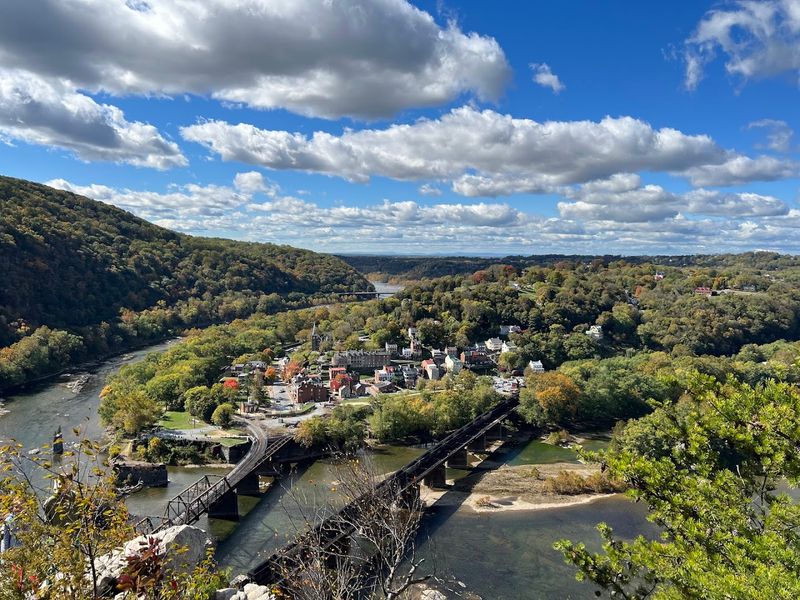
At the point where West Virginia, Maryland, and Virginia all meet, the Potomac and Shenandoah Rivers converge beneath a cluster of 19th-century stone buildings and narrow streets that consistently remind visitors of old European river towns.
Harpers Ferry National Historical Park spans nearly 4,000 acres, but the preserved Lower Town is the heart of the experience. Restored buildings, museums, and historic storefronts create a 19th-century village atmosphere that rewards slow, on-foot exploration. John Brown’s Fort, the armory site, and the historic St. Peter’s Roman Catholic Church are among the key landmarks.
The park carries enormous historical weight, having witnessed John Brown’s famous 1859 raid and multiple Civil War engagements. Over 20 miles of hiking trails range from easy riverside walks to challenging ridge hikes, some connecting directly to the Appalachian Trail.
Scenic overlooks at Maryland Heights, Jefferson Rock, and Loudoun Heights provide panoramic views across the river valleys. Horse-and-wagon tours and living history demonstrations add further depth to an already richly layered destination.
12. Elkins Depot Welcome Center and Historic Downtown, Elkins, West Virginia
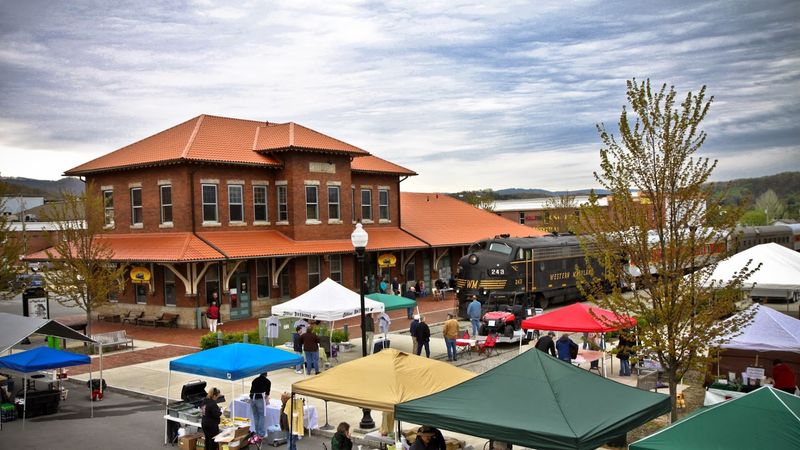
The 1908 Western Maryland Railroad depot at the center of downtown Elkins has been welcoming visitors for over a century, first as a working rail hub and now as the city’s official Welcome Center, drawing more than 42,000 visitors annually.
Elkins was incorporated in 1890 as a strategic headquarters for timber, coal, and railroad operations, and it also served as a summer retreat for Senators Henry Gassaway Davis and Stephen B. Elkins. That combination of industrial muscle and refined leisure shaped the downtown’s distinctive character, which survives in its brick streets and well-preserved historic commercial buildings.
The Durbin and Greenbrier Valley Railroad operates heritage rail excursions directly from the depot, including the Tygart Flyer, a scenic journey that stops at the picturesque High Falls. These excursions give the district a working-railway energy that European market towns built around historic rail lines would find entirely familiar.
Art galleries, local boutiques, and diverse restaurants fill the surrounding blocks, completing a downtown that balances Appalachian heritage with genuine Old World charm.
Share this story