 Unearth The Voyage
Some streets are simply roads. Others become the reason people buy plane tickets.
Across the United States, a handful of streets have built reputations so strong that their names alone carry entire cultural identities. Whether tied to music history, financial power, architectural quirks, or counterculture movements, these streets stopped being ordinary long ago.
From a crooked San Francisco hill to a Philadelphia alley inhabited since 1703, each tells a story about how places develop personalities over time. Some became famous through power and policy, others through art, commerce, or community.
What they share is a defining trait so strong that everything else became secondary. Read on to discover 13 American streets that became legendary for doing one thing exceptionally well.
1. Bourbon Street (New Orleans, Louisiana) – Nonstop Partying
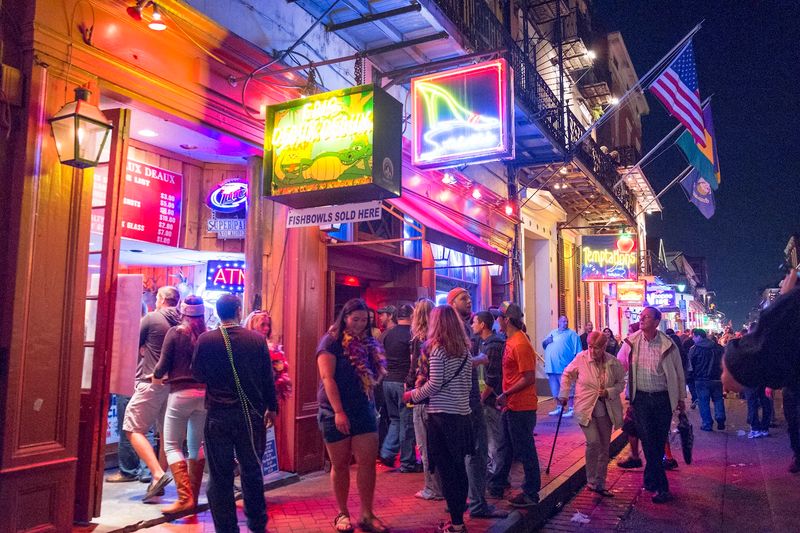
No street in America has a longer track record of organized celebration than this one. Bourbon Street earned its reputation not overnight but through centuries of French Quarter culture, starting as a formal colonial thoroughfare in the early 1700s under French and Spanish rule.
By the 20th century, jazz clubs, bars, and entertainment venues had completely redefined its identity. Mardi Gras turned the street into an internationally recognized event destination each February, drawing millions of visitors annually.
The street runs 13 blocks through the French Quarter, and its most famous section sits between Canal Street and St. Ann Street. Despite modern commercialization, its historic architecture, including the signature wrought-iron balconies, dates back to the 1800s.
Bourbon Street does not pretend to be anything other than what it is: America’s most committed party corridor, operating at full capacity 365 days a year.
2. Wall Street (New York, New York) – Global Finance
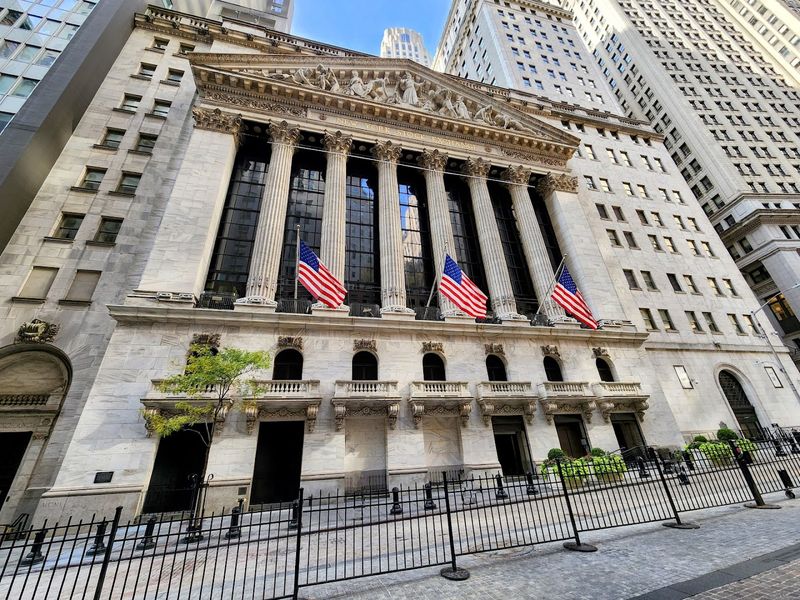
A street barely a third of a mile long somehow became the financial capital of the world. Wall Street’s name comes from an actual wall, a wooden barrier built by Dutch colonists in 1653 to protect their settlement at the southern tip of Manhattan.
By 1792, traders were already gathering under a buttonwood tree nearby to buy and sell securities, an informal arrangement that eventually became the New York Stock Exchange. The NYSE officially opened at its current address at 11 Wall Street in 1865.
Today the street handles trillions of dollars in transactions daily. The term “Wall Street” has expanded far beyond the physical block to represent the entire U.S. financial system.
Its neoclassical buildings, federal architecture, and the bronze Charging Bull statue installed in 1989 make it one of the most photographed financial districts on the planet.
3. Lombard Street (San Francisco, California) – The Crooked Road
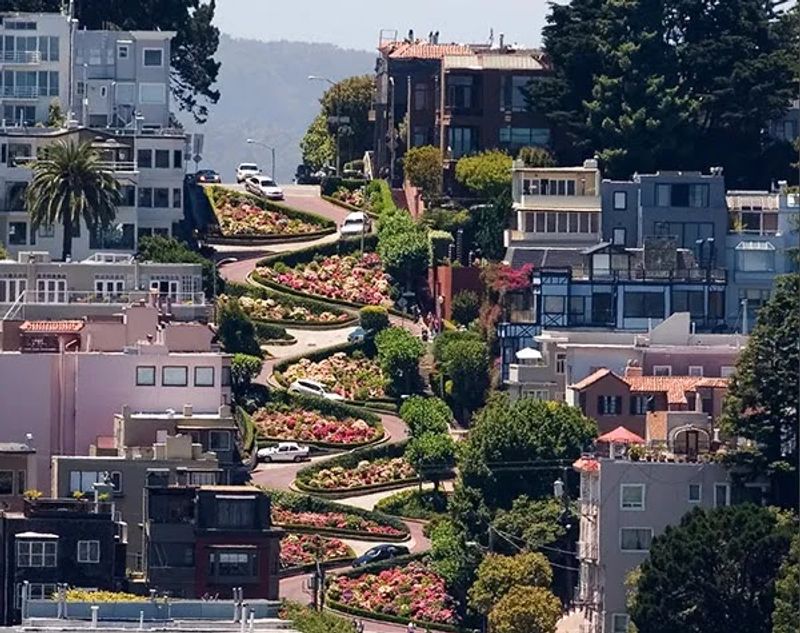
Eight hairpin turns packed into a single city block made this street one of the most photographed in the country. The steep section of Lombard Street between Hyde and Leavenworth Streets was redesigned in 1922 specifically because the original straight grade was too dangerous for vehicles to navigate.
The switchback design reduced the effective slope from 27 percent to a more manageable grade. Red brick pavement replaced the original surface in 1939, and flower beds were added to give the zigzag section a more polished look.
The design worked so well that it became a tourist attraction almost immediately.
Today, roughly two million visitors per year drive or walk the famous block. A common misconception is that it holds the title of crookedest street in the world.
That distinction actually belongs to Vermont Street in the Potrero Hill neighborhood, but Lombard remains the more famous of the two by a wide margin.
4. Hollywood Boulevard (Los Angeles, California) – The Walk of Fame
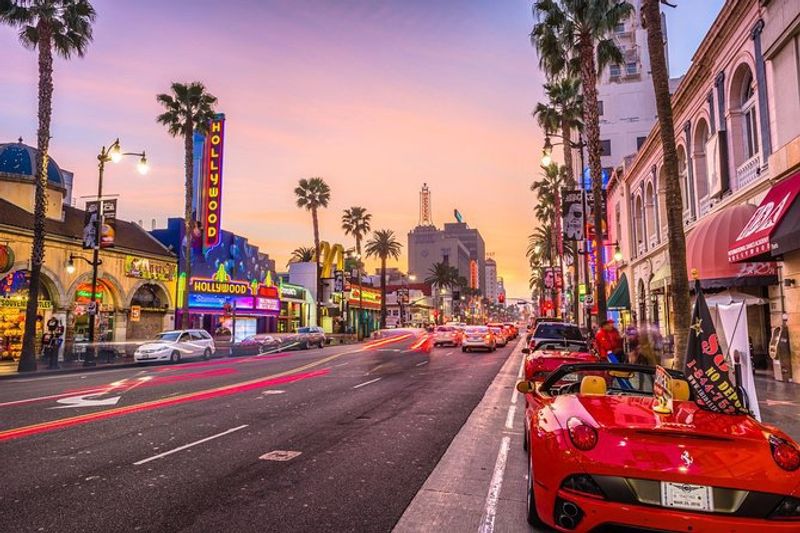
More than 2,700 brass stars are embedded into the sidewalks of Hollywood Boulevard and Vine Street, making up the most recognizable celebrity tribute in the world. The Hollywood Walk of Fame was established in 1958, with the first stars officially dedicated in 1960.
Each star costs the honoree or their studio roughly $50,000 to install and maintain. Categories include film, television, music, radio, and live theater.
The selection committee receives hundreds of nominations annually and approves around 24 new honorees each year.
The boulevard itself has a longer history, dating back to the early 1900s when Hollywood was being developed as a residential suburb of Los Angeles. The TCL Chinese Theatre, originally Grauman’s Chinese Theatre, opened in 1927 and remains one of the most visited movie palaces in the country.
Hollywood Boulevard is where the entertainment industry chose to memorialize itself permanently in concrete and brass.
5. Beale Street (Memphis, Tennessee) – The Birthplace of Blues
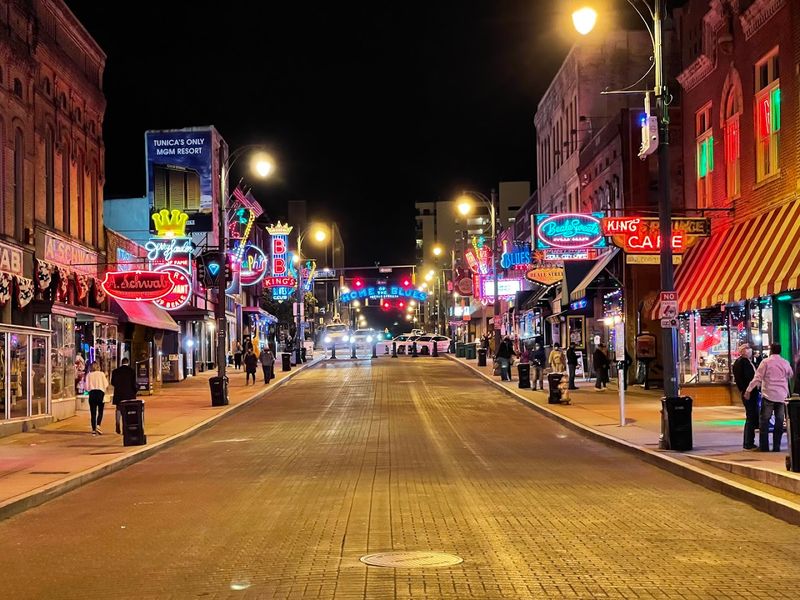
W.C. Handy published “Memphis Blues” in 1912, and Beale Street was at the center of it all.
The street had been a commercial and cultural hub for Black Memphians since the mid-1800s, but it was the early 20th century that cemented its identity as the home of American blues music.
Pawn shops, theaters, and music halls lined the street, and musicians like B.B. King, Muddy Waters, and Louis Armstrong performed there during segregation-era Memphis when opportunities elsewhere were limited.
The street fell into significant decline during the 1970s before a major redevelopment effort revived it in the 1980s.
Today the three-block entertainment district is a National Historic Landmark. Live blues, soul, and rock performances happen nightly at venues including the B.B.
King Blues Club, which opened in 1991. A bronze statue of W.C.
Handy stands in the park bearing his name at the corner of Beale and Third.
6. Pennsylvania Avenue (Washington, D.C.) – The Road to Power
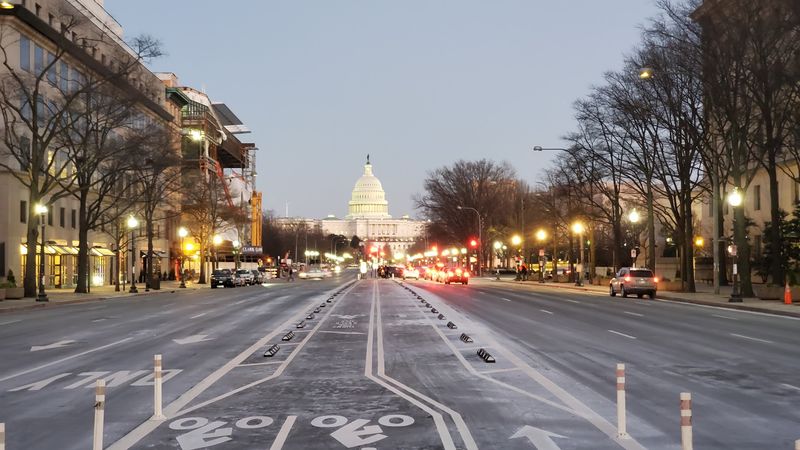
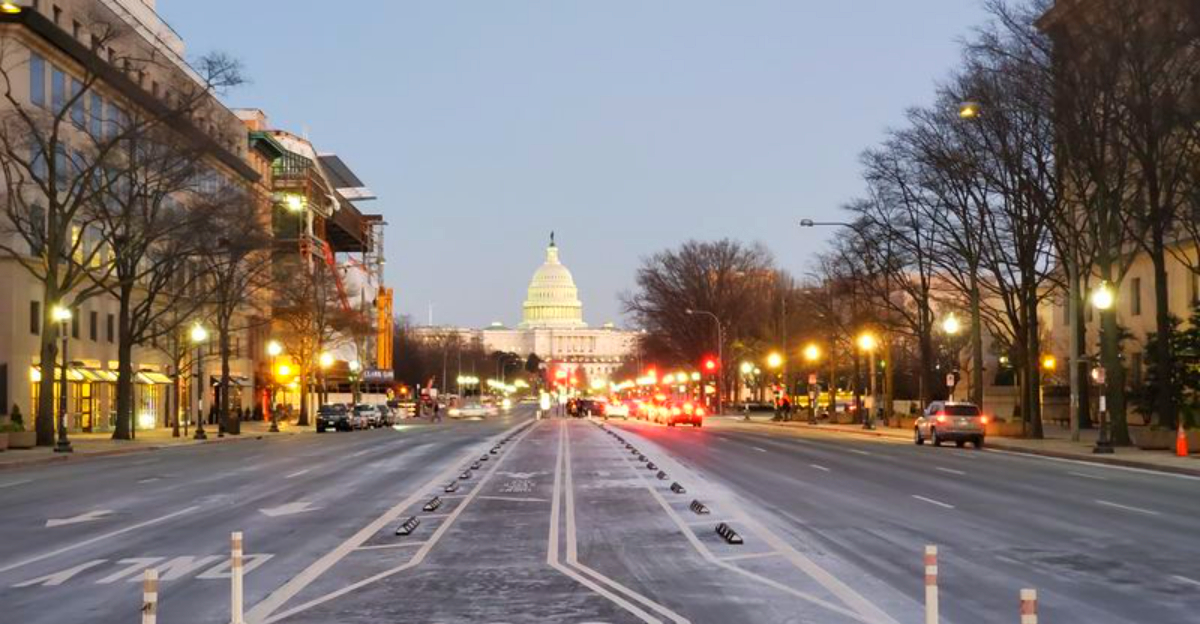
Pierre Charles L’Enfant designed Pennsylvania Avenue in 1791 as the central axis connecting the legislative and executive branches of the new American government. The street runs 1.2 miles from the Capitol to the White House, making it the most politically significant stretch of pavement in the country.
Every presidential inauguration parade since James Madison’s in 1813 has traveled this route. The avenue has also hosted victory parades, state funerals, and major national demonstrations throughout American history.
In 1965, Congress designated a portion of Pennsylvania Avenue a National Historic Site, and a major renovation effort in the 1990s transformed it into a pedestrian-friendly corridor with improved streetscaping and public spaces. The J.
Edgar Hoover FBI Building, the National Archives, and the Old Post Office Pavilion all sit along its length. No other street in America carries the same weight of institutional presence concentrated in a single corridor.
7. Fremont Street (Las Vegas, Nevada) – The Neon Light Show
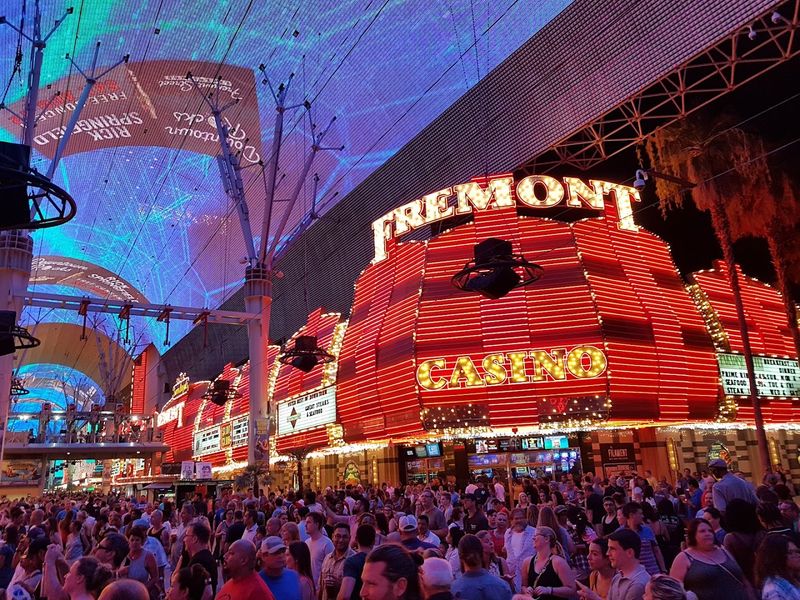
Before the Las Vegas Strip existed, Fremont Street was the city. The first paved street in Las Vegas, Fremont opened in 1905 and hosted the city’s earliest casinos, including the Golden Gate Hotel and Casino, which opened in 1906 and still operates today as the oldest casino in Las Vegas.
By the 1980s, the Strip had overtaken Fremont Street in both size and revenue, and the older district began losing visitors. In response, city planners commissioned a dramatic reinvention.
The Fremont Street Experience opened in 1995, covering four blocks of the street with a 1,500-foot-long LED canopy containing 2.1 million lights.
The canopy displays free light shows multiple times nightly. Zip lines were added in 2010, running the length of the canopy.
Fremont Street now draws roughly 17 million visitors per year, proving that a street can successfully redefine its identity without erasing its original history.
8. Route 66’s Main Street (Williams, Arizona) – Classic Americana
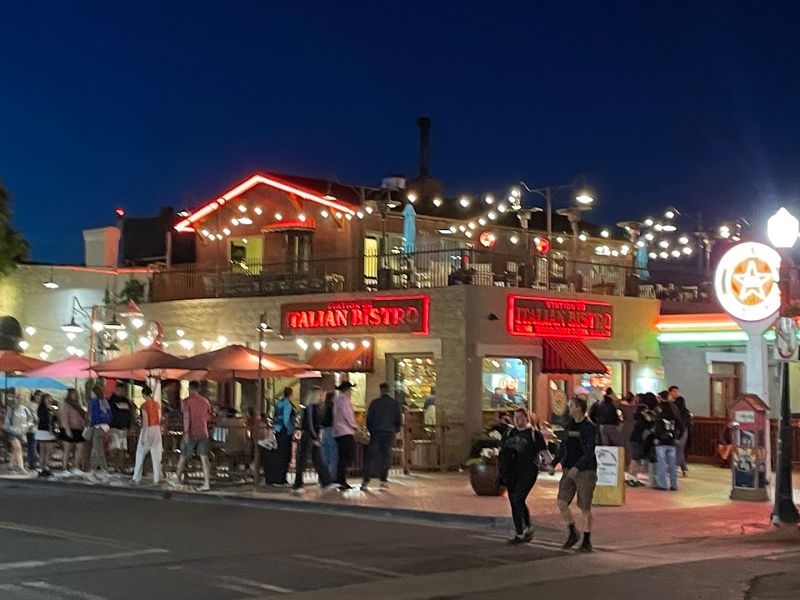
Williams, Arizona holds a specific distinction that most towns along Route 66 cannot claim: it was the last town on the historic highway to be bypassed by Interstate 40, which happened in 1984. That late bypass helped preserve its Main Street in near-original condition.
Route 66 was commissioned in 1926 as one of the original U.S. highways, connecting Chicago to Santa Monica across nearly 2,400 miles. Williams sits along one of its most intact surviving stretches.
The town’s Main Street still features diners, motels, and service stations with original 1950s signage and architecture largely unchanged.
Williams also serves as the southern gateway to the Grand Canyon, which adds to its steady tourist traffic. The Route 66 Museum located on the street documents the highway’s cultural history, from its Depression-era origins to its post-war heyday as the preferred route for American road trips.
Few Main Streets in the country carry that combination of documented history and visual continuity.
9. Duval Street (Key West, Florida) – Island Nightlife
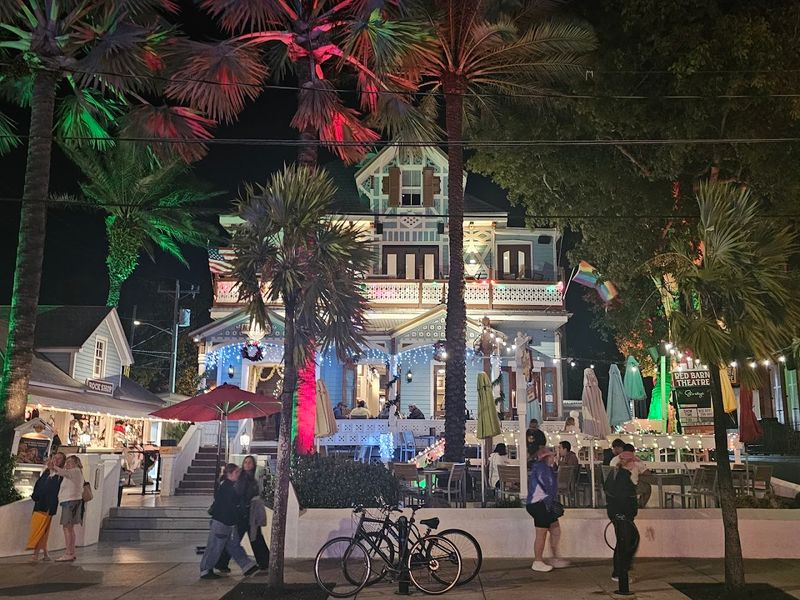
At just over a mile long, Duval Street runs the full width of Key West from the Gulf of Mexico to the Atlantic Ocean. Locals call the full-length walk from one coast to the other the “Duval Crawl,” and it has been a Key West tradition for decades.
The street is named after William Pope Duval, the first territorial governor of Florida. Its current identity as an entertainment corridor developed primarily in the 20th century, shaped by Key West’s unique status as the southernmost city in the continental United States and its history as a fishing and military town.
Sloppy Joe’s Bar, one of the most famous establishments on the street, opened in 1933. Ernest Hemingway was a regular patron during his Key West years in the 1930s.
Today, Duval Street’s mix of live music venues, galleries, and open-air restaurants makes it the social center of an island with a very distinct personality.
10. Music Row (Nashville, Tennessee) – Country Music Headquarters
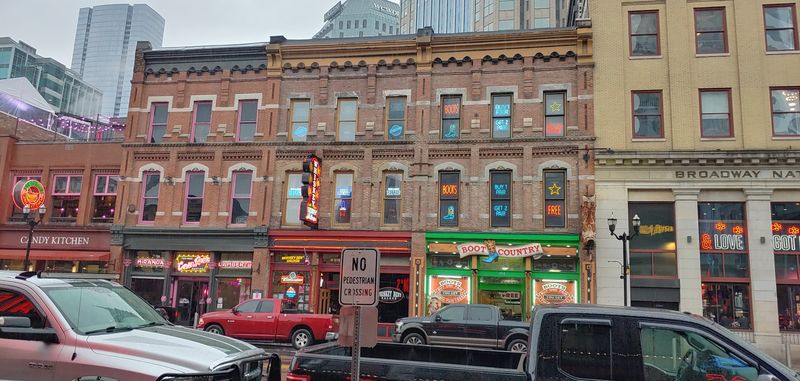
The two streets that form the core of Music Row, 16th Avenue South and 17th Avenue South, contain more recording history per square block than almost anywhere else in the country. The area began developing as a music industry hub in the late 1950s when Owen Bradley built a recording studio there in 1955.
RCA Studio B, opened in 1957, became the site of recordings by Elvis Presley, Dolly Parton, and hundreds of other artists. The district eventually grew to include hundreds of recording studios, publishing houses, management companies, and record labels concentrated within a few walkable blocks.
At its peak in the 1990s, Music Row generated billions of dollars annually for the Nashville economy. The roundabout at the center of the district features the Musica sculpture, installed in 2003.
While digital recording has shifted some of the industry’s physical footprint, Music Row remains the institutional backbone of the country music business.
11. Rodeo Drive (Beverly Hills, California) – Luxury Shopping
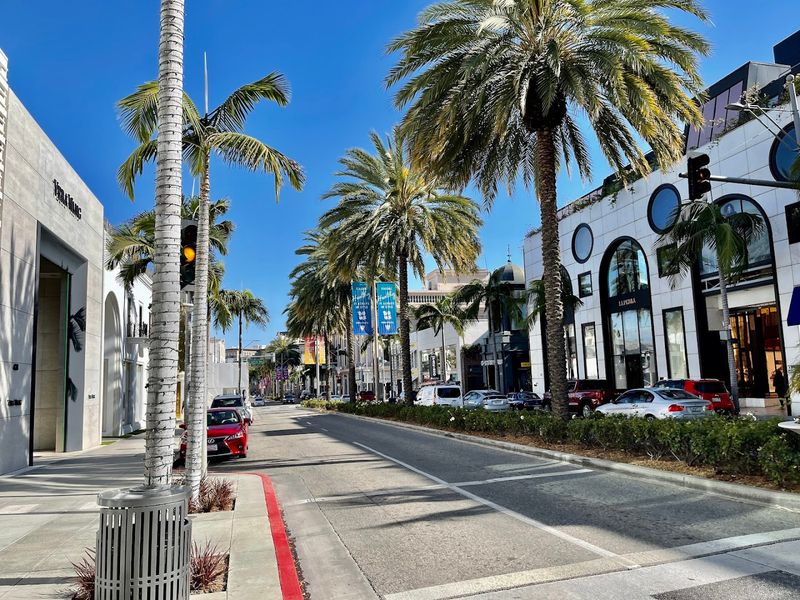
Rodeo Drive became one of the most expensive retail corridors in the world through a deliberate transformation that began in the 1960s. Before that decade, the street was a quiet residential road.
The shift started when Giorgio Beverly Hills opened in 1961, attracting a clientele that other luxury brands quickly followed.
By the 1970s, Rodeo Drive had replaced Fifth Avenue as the preferred address for European fashion houses entering the American market. Gucci, Cartier, and Tiffany all established flagship locations there.
The three-block section between Wilshire and Santa Monica Boulevards became the core of the luxury retail district.
The 1990 film “Pretty Woman” brought Rodeo Drive global pop culture recognition, significantly boosting tourism. Today, retail rents on the street rank among the highest in the United States.
The Beverly Hills city government actively manages the street’s aesthetic standards, including signage rules and streetscaping, to maintain its premium brand identity.
12. Canal Street (New Orleans, Louisiana) – Streetcars and Shopping
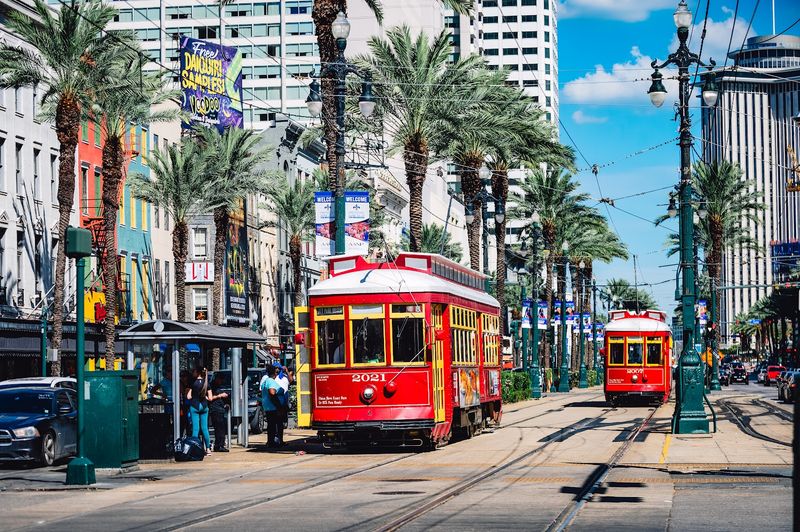
Canal Street was once described as the widest street in the world, a claim that was debated but reflected genuine civic pride in its grand scale. The street was laid out in 1807 as a proposed canal connecting the Mississippi River to Lake Pontchartrain, though the canal was never actually built.
By the mid-1800s, Canal Street had become the primary commercial boulevard of New Orleans, lined with department stores and serving as the dividing line between the French Quarter and the American Sector. Its neutral ground, the wide median strip, gave rise to the New Orleans term still used today for any street median.
The Canal Street streetcar line, one of the oldest in the country, was discontinued in 1964 but restored in 2004 as part of a broader transit revival. The streetcars now run the full length of the boulevard.
Canal Street’s combination of historic transit infrastructure and urban commercial history makes it one of the most layered streets in the South.
13. Haight Street (San Francisco, California) – Counterculture History
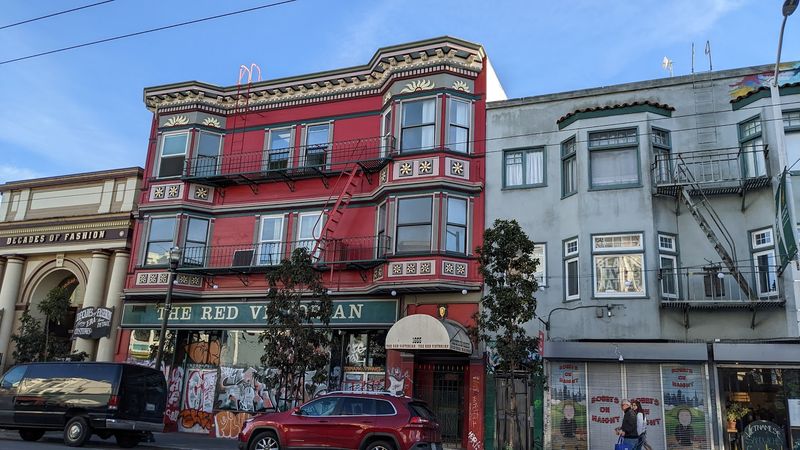
In the summer of 1967, an estimated 100,000 young people arrived in San Francisco’s Haight-Ashbury neighborhood for what became known as the Summer of Love. Haight Street was the commercial and social spine of that movement, lined with head shops, record stores, free clinics, and communal gathering spaces.
The neighborhood had been home to working-class families and Victorian housing stock since the late 1800s. By the mid-1960s, low rents attracted artists, musicians, and activists who turned the area into the center of the American counterculture.
Bands including the Grateful Dead and Jefferson Airplane had houses within blocks of the intersection.
The intersection of Haight and Ashbury Streets became so iconic that the neighborhood is simply called “Haight-Ashbury” worldwide. Today the street still operates as a cultural landmark, with vintage clothing shops, independent bookstores, and preserved murals documenting the 1960s era.
The period’s influence on American music, fashion, and political activism is directly traceable to this specific block.



