Long before modern skyscrapers and highways, these cities were already thriving centers of trade, religion, and culture. Despite wars, earthquakes, and the rise and fall of empires, they have remained continuously inhabited for thousands of years, making them some of humanity’s oldest living urban settlements.
While the exact founding dates are debated by historians and archaeologists, each has an exceptionally long record of continuous habitation. Get ready to travel back in time through 13 cities that have refused to be forgotten.
Jericho — Palestine
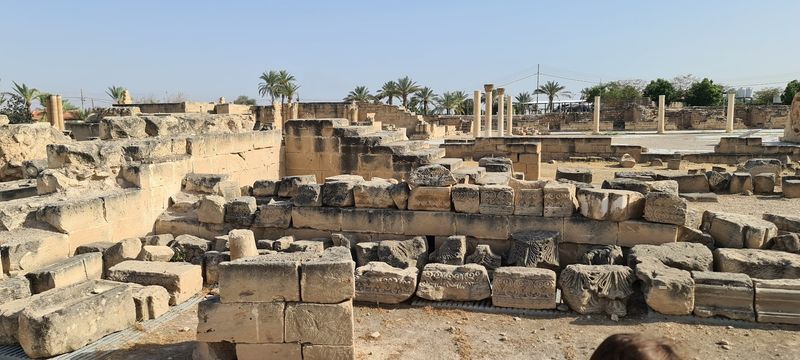
At roughly 11,000 years old, Jericho makes most other cities look like brand-new apartment buildings. Located in the West Bank near the Jordan River, it holds the remarkable title of the world’s oldest continuously inhabited city.
Archaeological digs have uncovered stone towers, mud-brick walls, and the foundations of early homes that date back to around 9000 BC.
What made Jericho so attractive to early settlers was water. The city sits near a natural spring called Ein es-Sultan, which provided a reliable source of fresh water in an otherwise dry region.
That simple resource helped people put down roots and never leave.
Today, visitors can walk through Tel es-Sultan, the main archaeological site, where layers of civilization are stacked like pages in a history book. The modern city of Jericho still thrives nearby, with a population that continues the long tradition of life in this ancient place.
Few spots on Earth carry this much unbroken human history in one location.
Damascus — Syria
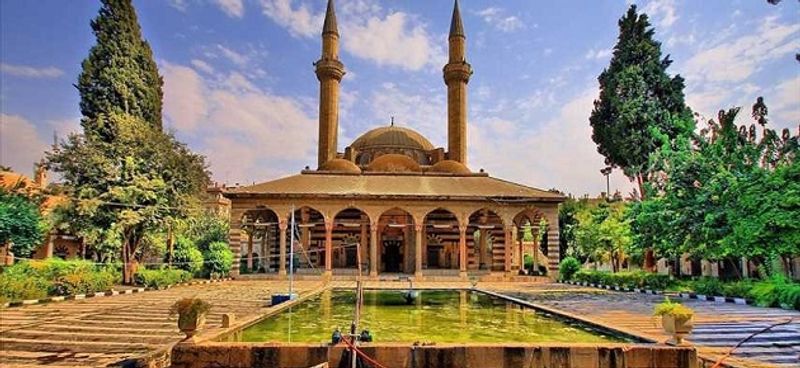
Walking through Damascus feels like flipping through a history textbook, except everything around you is real. One of the oldest continuously inhabited capitals in the world, Damascus has been home to people for thousands of years.
Its Old City, now a UNESCO World Heritage Site, preserves Roman-era streets, winding alleyways, and centuries-old markets that still buzz with activity.
The Umayyad Mosque stands at the heart of the Old City and is one of Islam’s most sacred sites. Built in the early 8th century on land that was once a Christian church and before that a Roman temple, it is a physical reminder of how many civilizations have called this city home.
Damascus also served as a key stop along ancient trade routes, connecting merchants from Asia, Europe, and Africa. Silk, spices, and glass all passed through its markets.
Despite modern conflict that has deeply affected the country, Damascus endures. Its survival over millennia of invasions, earthquakes, and political upheaval speaks to an almost stubborn determination to keep going, city block by city block.
Byblos — Lebanon
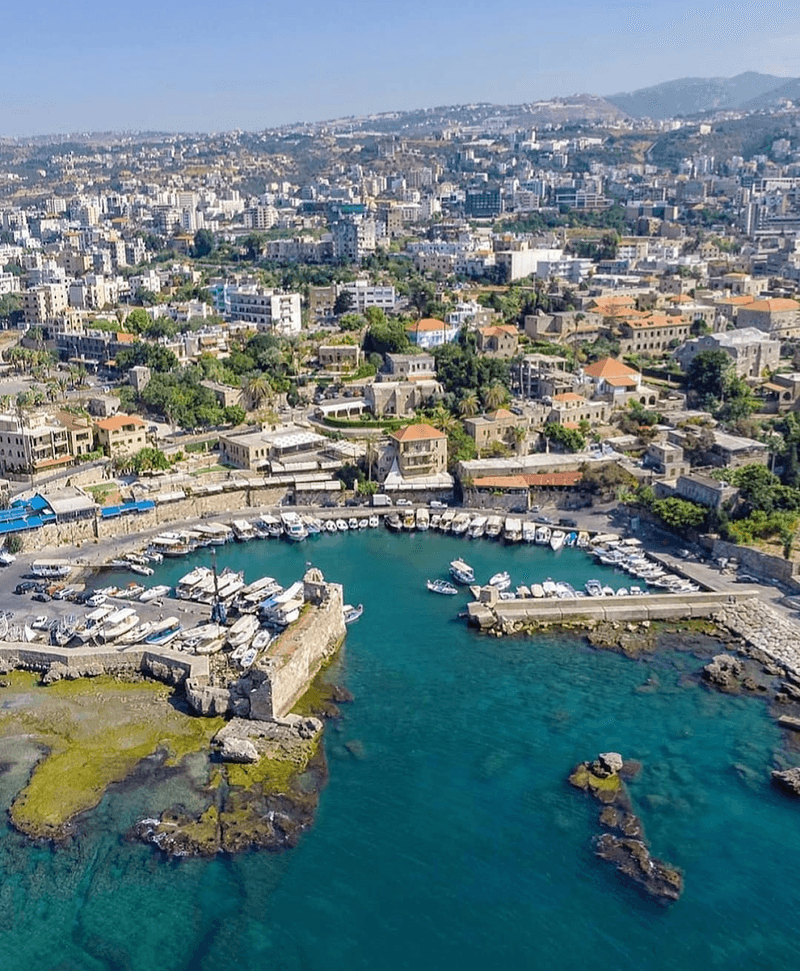
Byblos gave the world something more powerful than any army: the alphabet. This ancient Lebanese port city, occupied for at least 7,000 years, was one of the most important centers of Phoenician civilization.
Traders here helped develop one of the earliest alphabets, which eventually spread across the Mediterranean and influenced writing systems still used today.
The city also gave us the word “Bible.” Because Byblos was a major hub for papyrus trade, the Greeks named the writing material “byblos” after the city, and the word eventually evolved into the term for book. That is a pretty incredible legacy for a coastal town.
Today, Byblos is a charming mix of ancient ruins and modern Lebanese life. Visitors can explore Phoenician temples, a Crusader castle, and Roman columns, all within walking distance of busy cafes and seafood restaurants.
The harbor, once crowded with trading ships from Egypt and Greece, now hosts fishing boats and tourist vessels. Byblos proves that a city does not need to be enormous to leave a massive mark on human history.
Aleppo — Syria
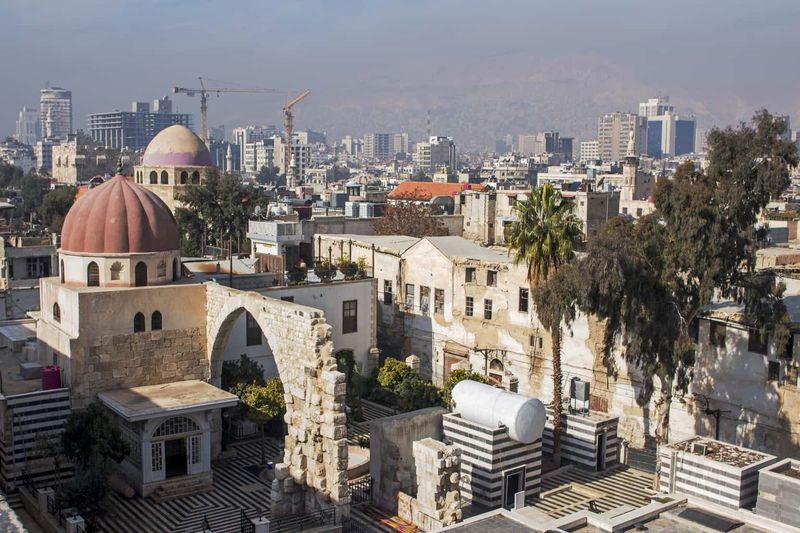
For thousands of years, merchants, soldiers, and scholars passed through Aleppo, drawn by its position at the crossroads of some of the most important trade routes in the ancient world. Sitting between the Mediterranean coast and the great civilizations of Mesopotamia, the city became a melting pot of cultures, languages, and ideas long before the concept was fashionable.
The Citadel of Aleppo is the city’s most iconic landmark, a massive hilltop fortress that has been rebuilt and reinforced by dozens of rulers over the centuries. Below it, the covered souks stretch for miles, making them among the largest medieval markets anywhere on Earth.
The smell of spices and the sound of bargaining once filled every corridor.
Aleppo’s cuisine is also legendary throughout the Arab world, with dishes like kibbeh and the famous Aleppo pepper earning fans far beyond Syria’s borders. Sadly, the city suffered devastating damage during Syria’s civil war in the 2010s.
Reconstruction efforts are ongoing, and despite the heartbreak, people remain. They always have.
Aleppo’s story is one of survival written in stone, spice, and stubborn human spirit.
Susa (Shush) — Iran
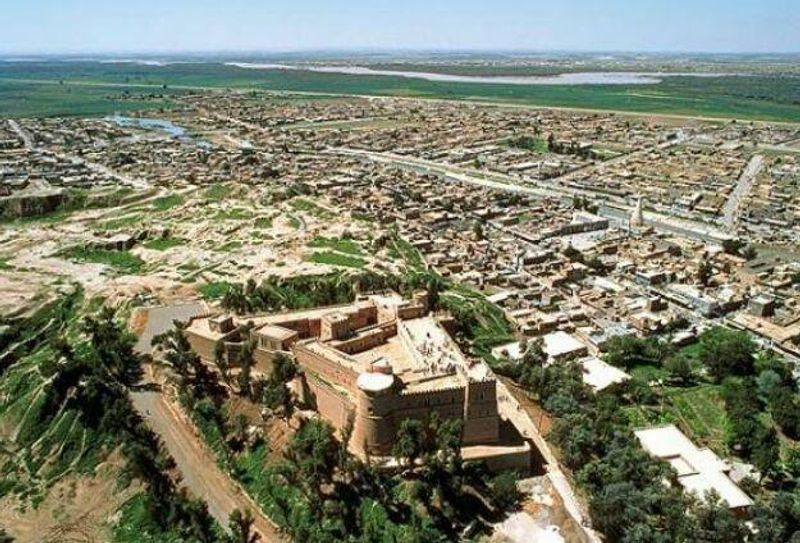
Susa was already an ancient city when Alexander the Great showed up and decided to make it his treasury. Founded around the 5th millennium BC, this Iranian city served as one of the great capitals of the Elamite Empire and later became a key administrative center for the Persian Achaemenid Empire.
That is a resume most cities can only dream about.
The city appears in several ancient texts, including the biblical Book of Esther and the story of Daniel. The famous Code of Hammurabi, one of the earliest written law codes in history, was discovered right here by French archaeologists in 1901.
Finding that stone tablet in Susa was one of the most significant archaeological moments of the 20th century.
Today, the modern town of Shush sits alongside the ancient ruins, creating an unusual overlap of the very old and the relatively new. The Apadana Palace ruins, the Tomb of Daniel, and the Susa Archaeological Museum all draw visitors curious about this remarkable place.
Susa reminds us that some cities do not just survive history, they help create it, one law code and empire at a time.
Varanasi — India
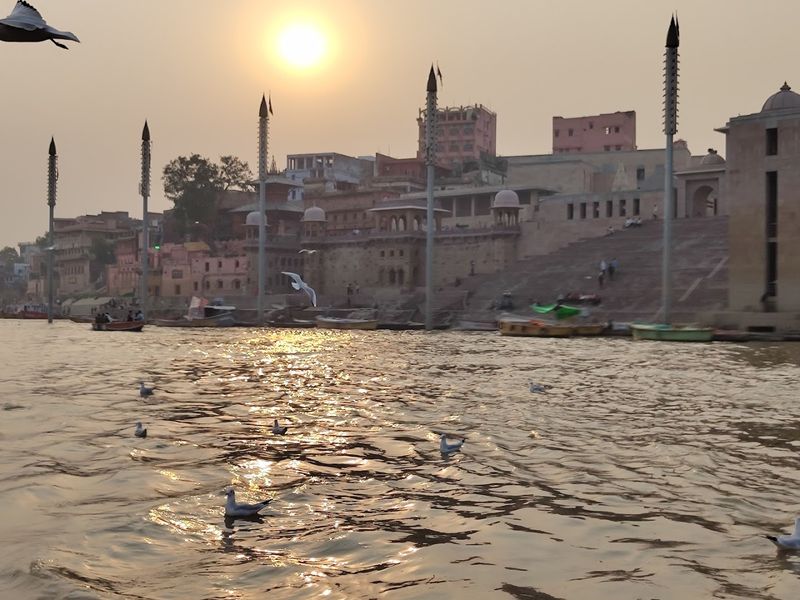
Mark Twain once wrote that Varanasi is older than history, older than tradition, older even than legend. Whether or not you agree with that poetic stretch, there is no denying that this Indian city on the banks of the Ganges River has been a spiritual powerhouse for well over 3,000 years.
Hindus consider it one of the holiest places on Earth.
Every day, thousands of pilgrims arrive at the famous ghats, the broad stone steps leading down to the river, to bathe in the sacred waters, pray, and perform ancient rituals. The evening aarti ceremony, where priests wave fire in elaborate patterns to honor the Ganges, draws enormous crowds of both worshippers and amazed tourists.
Varanasi is also a center of classical music, silk weaving, and Sanskrit learning. The city’s narrow lanes are packed with temples, sweet shops, and chai stalls, creating a sensory experience unlike anything else.
Buddhists also hold the city dear, as the Buddha gave his first sermon nearby at Sarnath. Varanasi does not simply preserve the past; it lives it out loud, every single day, with remarkable energy and devotion.
Jerusalem — Israel/Palestinian Territories
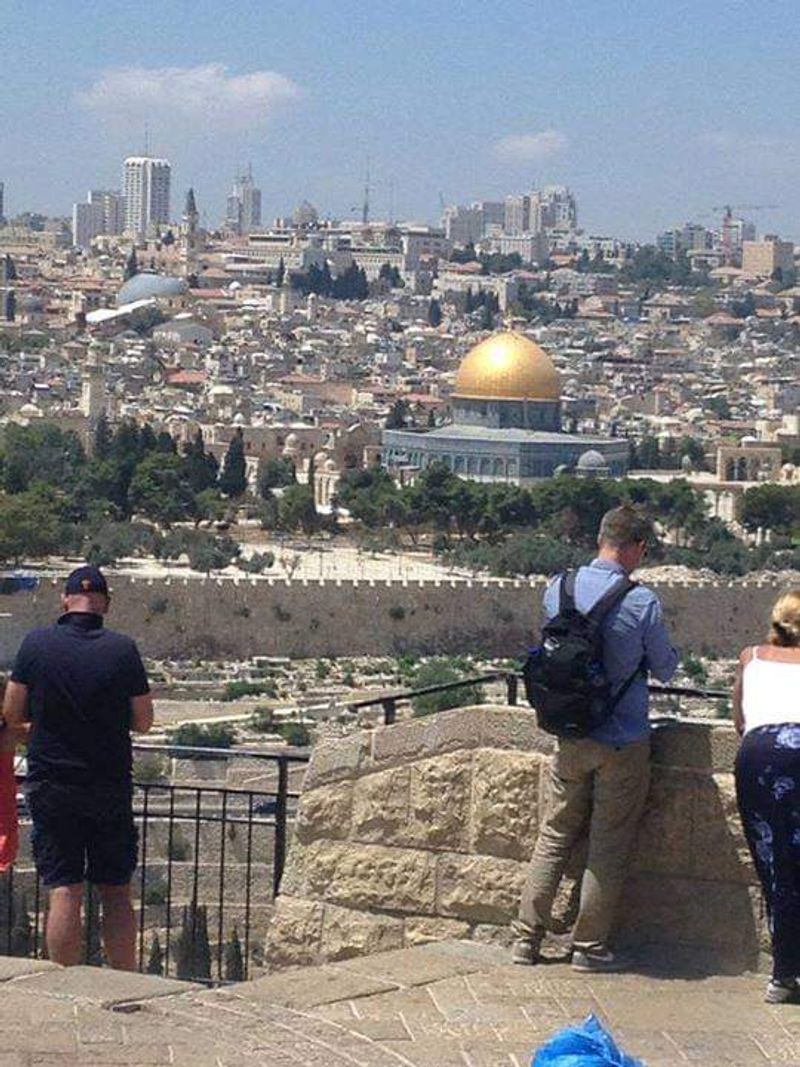
Three of the world’s major religions share a claim on Jerusalem, and that fact alone makes it unlike any other city on the planet. Sacred to Judaism, Christianity, and Islam, Jerusalem has been continuously inhabited for thousands of years and fought over by empires, crusaders, and modern nations.
Its Old City packs more religious history into one square kilometer than most countries contain altogether.
The Western Wall is the holiest site in Judaism, where people tuck handwritten prayers into the ancient stones. Just steps away, the Church of the Holy Sepulchre marks the traditional site of Jesus’s crucifixion and resurrection.
Above it all, the golden Dome of the Rock gleams on the Temple Mount, one of Islam’s most revered locations.
Walking through Jerusalem’s four quarters, Jewish, Muslim, Christian, and Armenian, feels like touring four different worlds that somehow share the same narrow streets. The smell of fresh bread from a bakery might drift past a centuries-old monastery.
Despite its turbulent political history, Jerusalem continues to draw millions of pilgrims and travelers every year, all searching for something in its ancient stones. Few cities carry this much meaning for this many people.
Athens — Greece
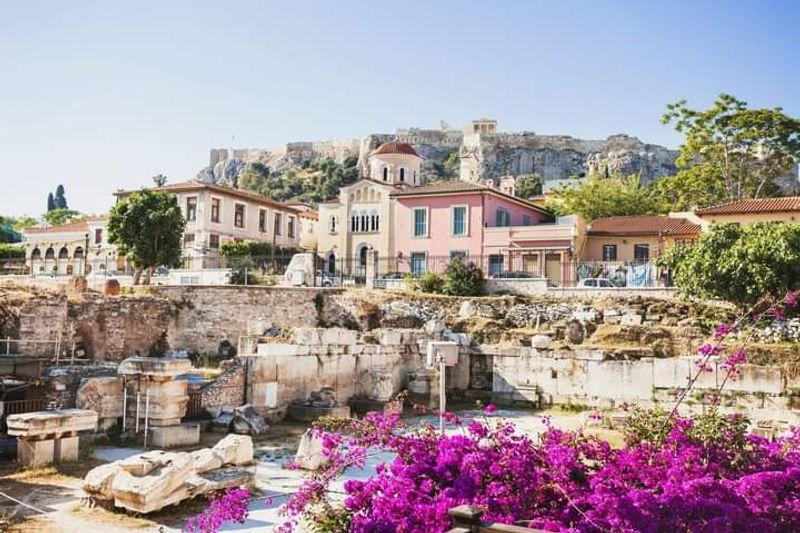
The city that invented democracy, philosophy, and the Olympic Games is still very much open for business. Athens has been continuously inhabited for more than 3,000 years, making it one of Europe’s oldest cities.
The Acropolis, a rocky hilltop crowned by the Parthenon, has watched over the city since ancient times and remains one of the most recognized landmarks on Earth.
Ancient Athens produced thinkers like Socrates, Plato, and Aristotle, whose ideas about logic, ethics, and government still shape modern education and law. The city was also home to playwrights like Sophocles and Euripides, whose dramas are still performed in theaters worldwide.
Not bad for a city that peaked a few thousand years ago.
Modern Athens is a lively, energetic capital of about four million people. Neighborhoods like Monastiraki and Plaka sit directly beneath ancient ruins, creating a fascinating contrast between old marble and modern espresso bars.
The National Archaeological Museum houses one of the finest collections of Greek antiquities anywhere. Athens proves that a city can carry an enormous historical legacy without being stuck in the past, blending ancient glory with contemporary Mediterranean flair.
Erbil — Iraq
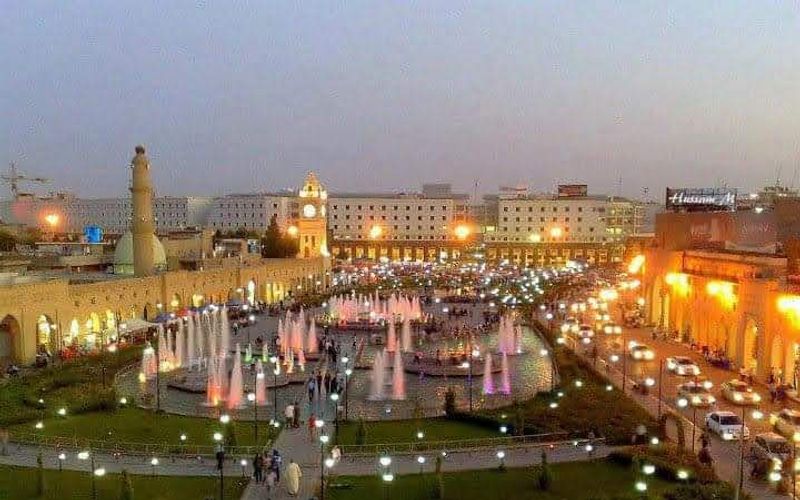
Rising about 30 meters above the surrounding city, the Citadel of Erbil looks like something straight out of a fantasy novel, except it is completely real and people have been living there for at least 6,000 years. Located in the Kurdistan Region of northern Iraq, Erbil holds a UNESCO World Heritage designation for its extraordinary citadel, which sits on a massive ancient mound built up by thousands of years of continuous occupation.
The city’s strategic location helped it thrive under a long parade of rulers, including the Assyrians, Persians, Greeks, Romans, and Ottomans. Each left something behind, whether in architecture, language, or cultural tradition.
Erbil also served as an important stop on ancient trade routes connecting Mesopotamia with the wider world.
Today, Erbil is a modern and relatively prosperous city with shopping malls, universities, and a busy international airport. Yet the ancient citadel still dominates the skyline, a reminder that beneath all the modern development, something very old and very enduring lies beneath.
Restoration efforts are working to preserve the citadel’s historic buildings. Erbil is living proof that a city can grow forward without ever losing sight of where it came from.
Yerevan — Armenia
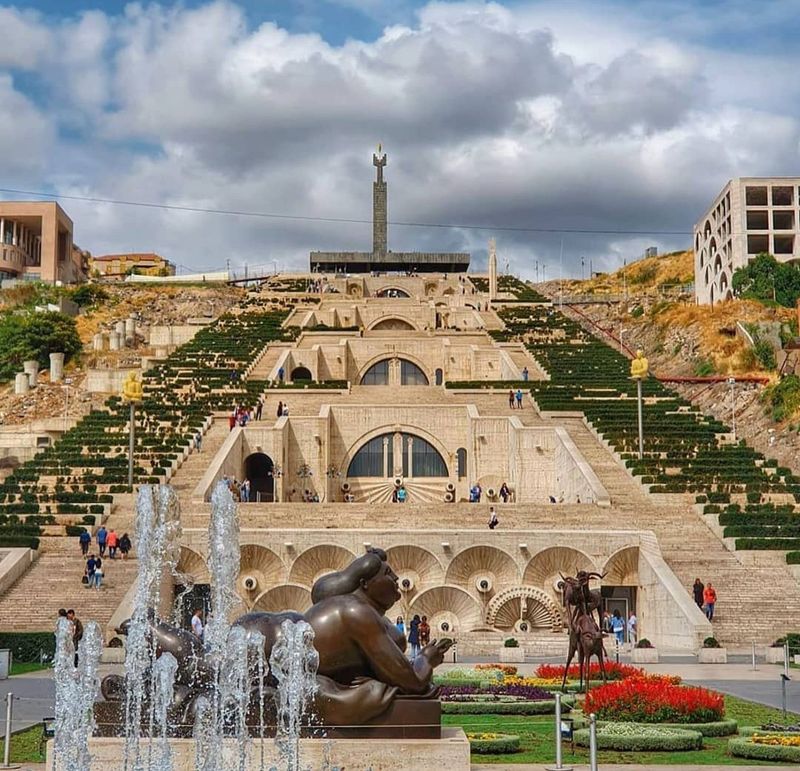
Yerevan started life as a military fortress called Erebuni, built in 782 BC by the Urartian king Argishti I. That makes the Armenian capital older than Rome, a fact Armenians are happy to remind you of.
The Erebuni Fortress still stands on the outskirts of the city, and its museum displays ancient weapons, wall paintings, and artifacts that bring the early settlement to life.
Despite centuries of invasion, earthquakes, and the devastating Armenian Genocide of the early 20th century, Yerevan has survived and rebuilt. The city was heavily redesigned during the Soviet era, giving it wide boulevards and pink tufa stone buildings that glow warmly in the afternoon sun.
That distinctive rosy color has earned Yerevan the nickname “the Pink City.”
Modern Yerevan is a surprisingly lively place, packed with outdoor cafes, jazz clubs, and art galleries. Republic Square transforms into a light and water show on summer evenings.
On clear days, the majestic snow-capped peak of Mount Ararat, deeply symbolic to Armenians, looms on the horizon just across the border in Turkey. Yerevan carries its ancient roots with pride while embracing a confident, forward-looking spirit.
Luxor (Ancient Thebes) — Egypt
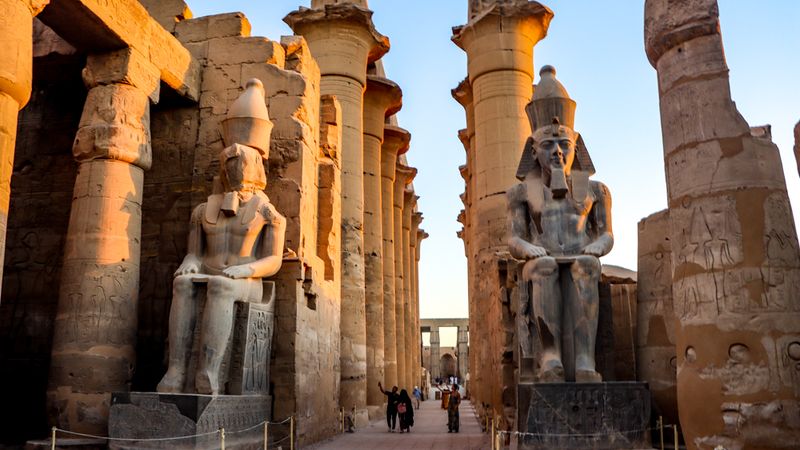
Luxor is essentially an open-air museum the size of a city. Known in ancient times as Thebes, this Egyptian city served as the capital of the New Kingdom, the era that produced pharaohs like Ramesses II and Tutankhamun.
The sheer scale of what the ancient Egyptians built here is still jaw-dropping thousands of years later.
The Karnak Temple Complex is the largest ancient religious site in the world, a sprawling collection of temples, chapels, and obelisks built over more than 2,000 years. Across the Nile, the Valley of the Kings holds the elaborately decorated tombs of pharaohs, including the famous tomb of Tutankhamun discovered by Howard Carter in 1922.
Luxor Temple, lit up dramatically at night, reflects in the Nile like something from a dream.
The modern city of Luxor has grown up around these monuments, and locals go about their daily lives surrounded by some of the most extraordinary ancient structures ever built. Horse-drawn carriages still clip-clop past temple walls.
Felucca boats drift quietly on the Nile at sunset. Luxor balances everyday Egyptian life with a tourist industry built on thousands of years of breathtaking history.
Derbent — Russia
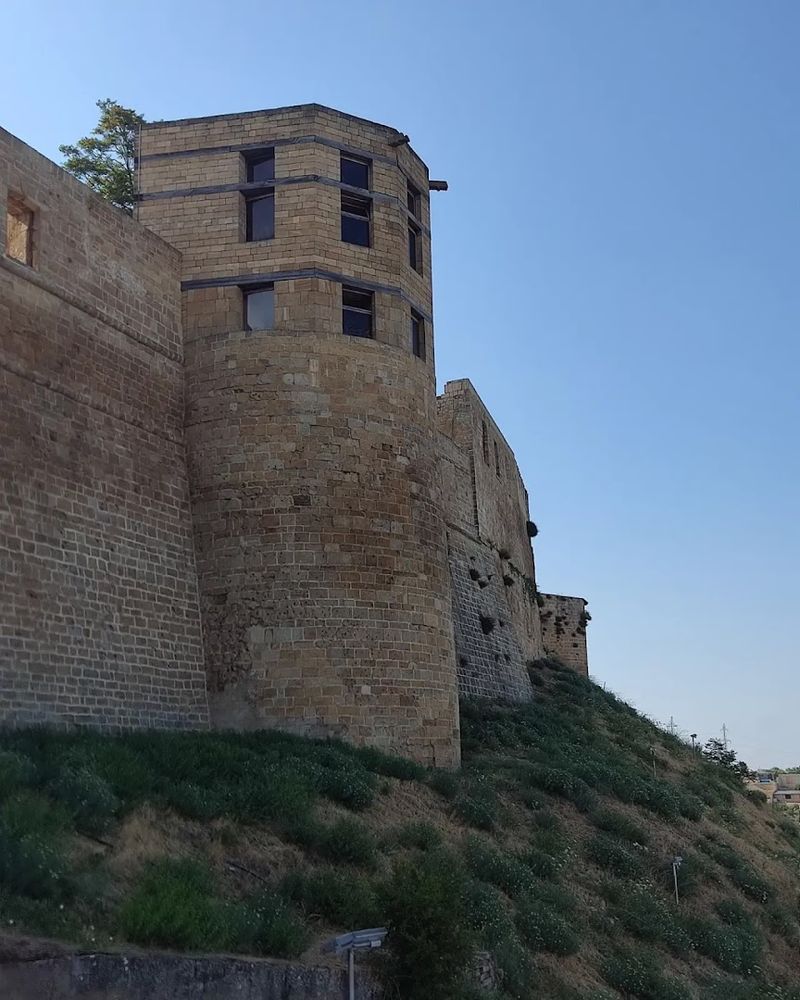
Tucked between the Caucasus Mountains and the Caspian Sea, Derbent holds a title that surprises most people: it is Russia’s oldest city. Settled for more than 5,000 years, this southern city in the Republic of Dagestan served as one of the most strategically vital gateways between Europe and Asia for much of recorded history.
Whoever controlled Derbent controlled the passage between two continents.
The city’s defining feature is its remarkable Naryn-Kala citadel and the ancient walls that extend from the hilltop fortress all the way down to the Caspian shoreline. These walls, built primarily during the Sassanid Persian period in the 5th and 6th centuries AD, were designed to block invaders from sneaking around the mountain barrier.
The entire fortification system is now a UNESCO World Heritage Site.
Derbent has been ruled by Persians, Arabs, Mongols, Russians, and many others, leaving behind a rich cultural mix that is still visible in the city’s architecture, food, and traditions. Pomegranate orchards and vineyards surround the city, and local wine has been produced here for centuries.
Derbent is not the most famous city on this list, but its story is every bit as fascinating as any of them.
Istanbul — Türkiye
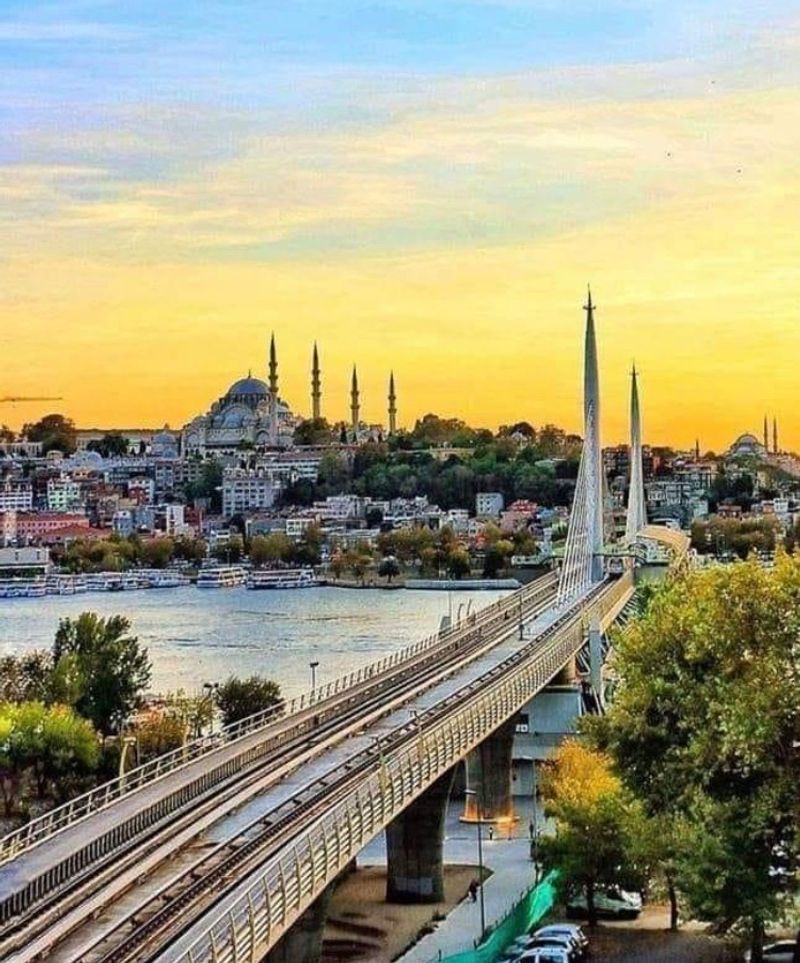
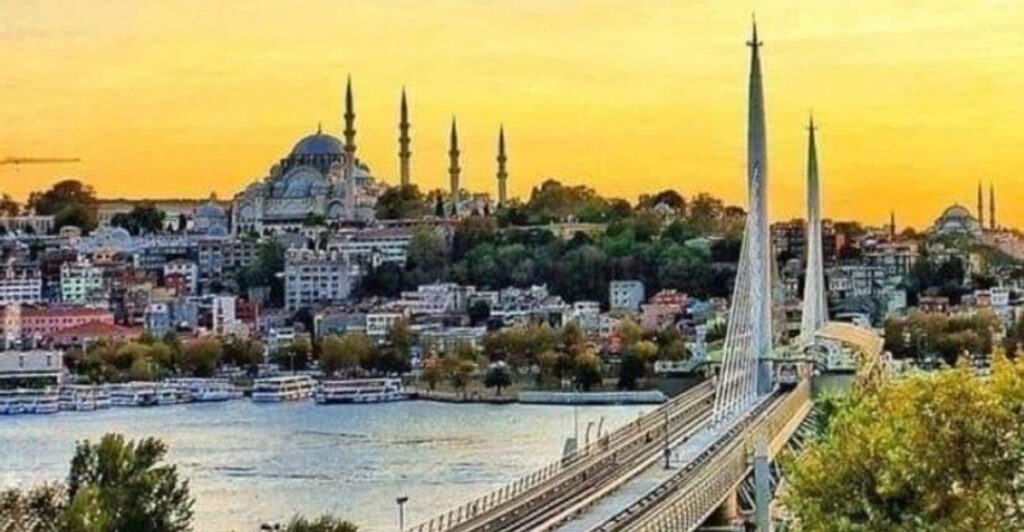
Istanbul is the only city in the world that sits on two continents, and it has been making history on both sides of the Bosphorus for nearly 3,000 years. Founded as Byzantion by Greek colonists around 657 BC, it later became Constantinople, the glittering capital of the Byzantine Empire, and then Istanbul, the heart of the Ottoman Empire.
That is three major civilizations, one city.
The Hagia Sophia alone tells the city’s whole complicated story. Built as a Christian cathedral in 537 AD, converted into a mosque after the Ottoman conquest in 1453, turned into a museum in 1934, and then reconverted into a mosque in 2020, it has changed roles more times than most buildings change owners.
Its massive dome and shimmering mosaics leave visitors speechless regardless of its current function.
Modern Istanbul is a city of 15 million people, a chaotic, beautiful, delicious place where Byzantine churches stand next to Ottoman mosques, and rooftop bars overlook ancient aqueducts. The Grand Bazaar, one of the world’s oldest and largest covered markets, still draws shoppers hunting for carpets, spices, and ceramics.
Istanbul does not just connect continents geographically; it connects centuries of human civilization in one extraordinary, endlessly surprising place.
Share this story