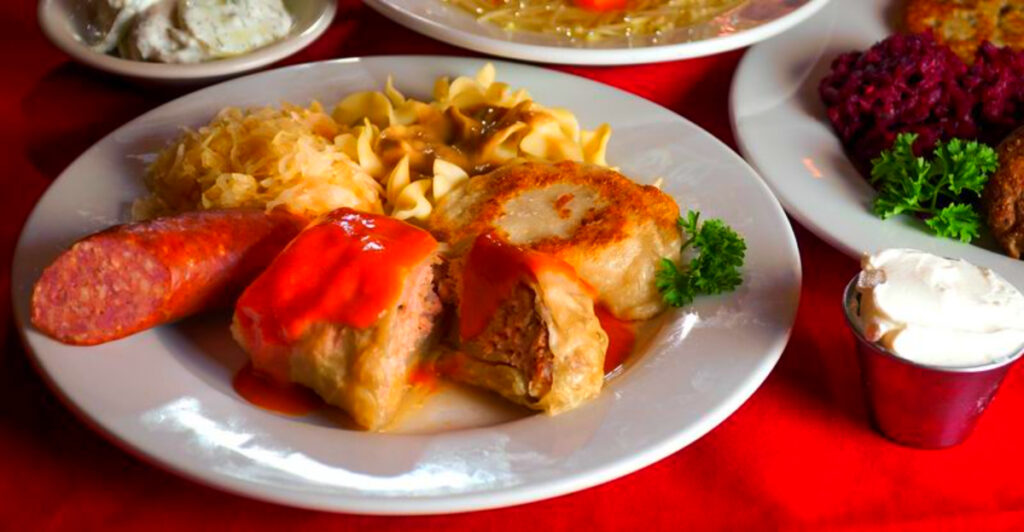
Michigan has a deep bench of restaurants that have stayed true to the same recipes for decades. Across the state, you will find spots run by the same families for generations, serving dishes that have barely changed over time.
What makes these places stand out is consistency. Think Polish pierogi in Hamtramck, family-style chicken dinners in Frankenmuth, and menus built around recipes that predate modern food trends.
Some date back to the 1800s, while others became local staples in the mid-1900s and never left.
These restaurants are not chasing attention. They have built loyal followings by doing the same things well, year after year, making them some of the most reliable and meaningful dining stops in the state.
Zehnder’s of Frankenmuth, Frankenmuth
Before Frankenmuth became a tourist destination, Zehnder’s was already feeding hungry travelers out of what used to be called the Exchange Hotel, way back in 1856.
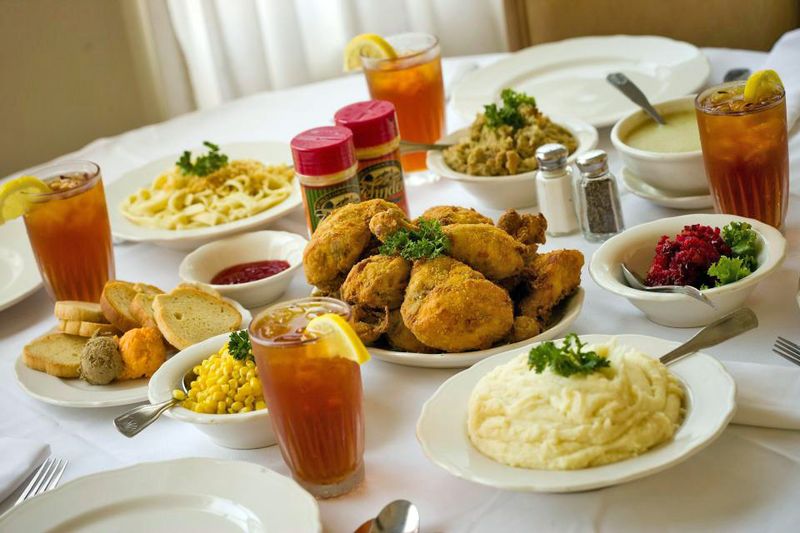
Today, the restaurant is one of the most visited in the entire Midwest, and its signature all-you-can-eat chicken dinner is the main reason why. Platters of golden fried chicken arrive family-style at the table, alongside buttered noodles, fresh-baked bread, and cranberry relish made from an old house recipe.
Multiple generations of the Zehnder family have kept the operation running, and that continuity shows in how consistently the food comes out. The dining rooms are large, capable of seating hundreds of guests at once, yet the service has remained personal and attentive for decades.
Bavarian Inn Restaurant, Frankenmuth
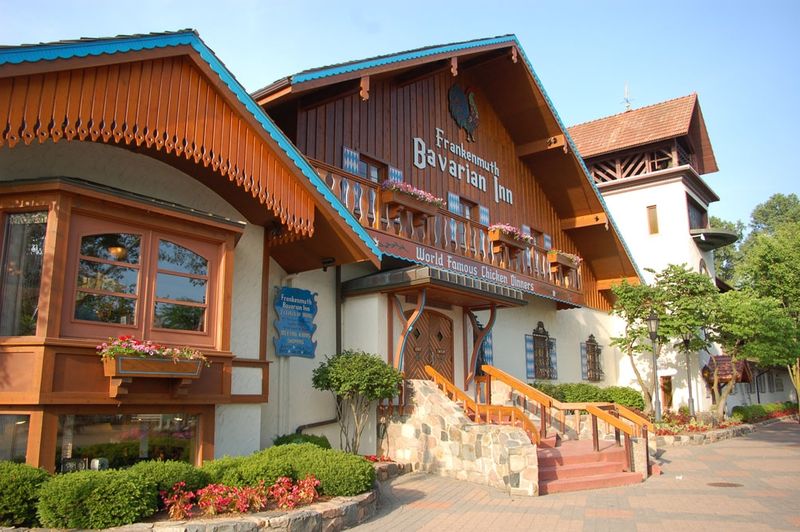
Right across the street from Zehnder’s sits a restaurant that has been quietly winning its own loyal following for generations, and the rivalry between the two is practically a Frankenmuth tradition in itself.
The Bavarian Inn Restaurant built its reputation on German-American comfort food done with real care. Chicken pot pie here is thick and satisfying, made the old-fashioned way with a proper pastry crust and a filling that takes time to prepare.
The sauerbraten is another standout, slow-cooked and served with traditional accompaniments that have stayed the same for decades.
The restaurant is family-run and proud of that fact. Seating capacity is massive, which means even on busy weekends, wait times rarely become unbearable.
The staff tends to be knowledgeable about the menu, often able to recommend dishes based on what specific guests prefer.
Metzger’s, Ann Arbor
Ann Arbor is better known for its university crowd than for old-world cooking, which makes Metzger’s all the more surprising to first-time visitors who stumble across it.
Open since 1928, this German restaurant has outlasted decades of changing food trends by doing one thing exceptionally well: cooking traditional recipes without compromise. The wiener schnitzel is pounded thin, breaded precisely, and cooked to a consistent standard that regulars have come to expect.
Sauerbraten is another menu anchor, marinated for days and served with the kind of depth that only comes from a recipe that has been refined over nearly a century.
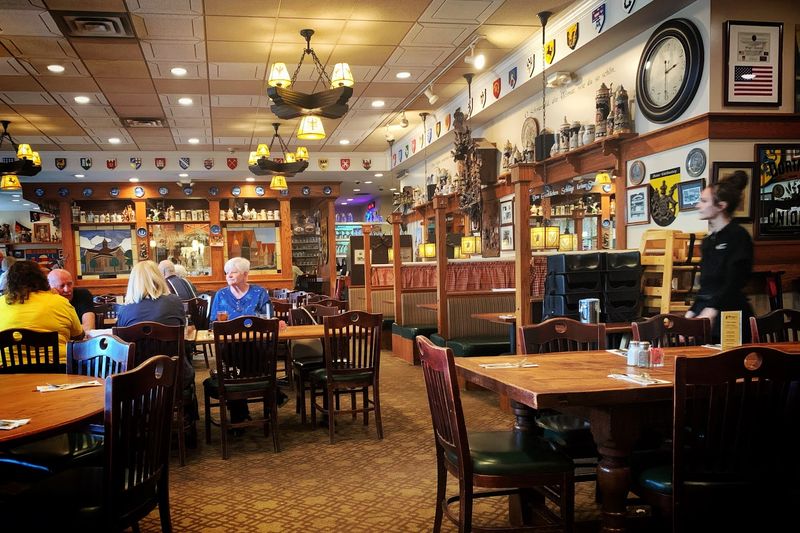
The dining room feels lived-in and honest, decorated with artifacts that reference the restaurant’s long history rather than trying to look newer than it is.
University students, longtime Ann Arbor residents, and out-of-town visitors all find common ground here over plates of food that feel genuinely irreplaceable.
Schuler’s Restaurant & Pub, Marshall
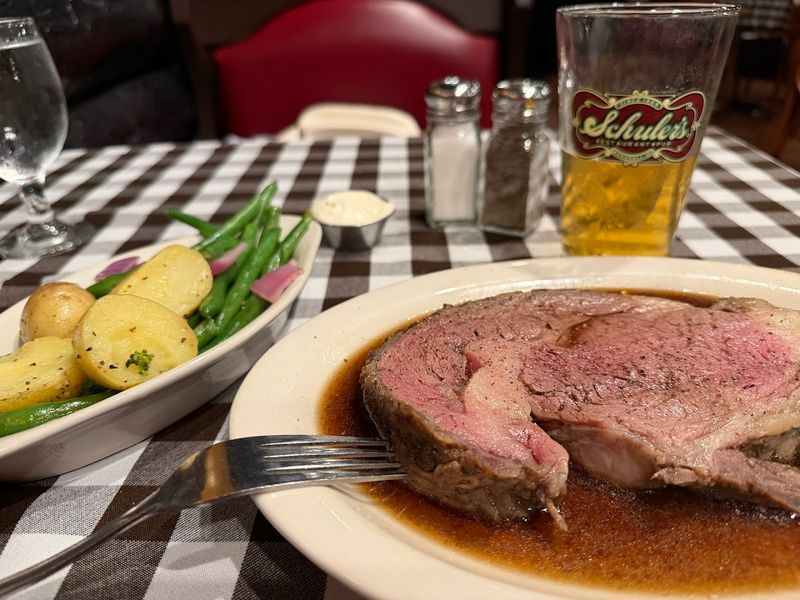
Marshall, Michigan is a small city with a surprisingly large collection of historic buildings, and Schuler’s Restaurant fits right in as a community institution that opened its doors in 1909.
More than a century later, the menu still centers on the kind of American classics that defined fine dining for much of the twentieth century. The prime rib is the headline act, slow-roasted and carved to order, served with the traditional accompaniments that regulars expect.
Swiss onion soup has become equally famous among repeat visitors, thick and rich and made to a recipe that has not changed in decades.
The pub side of the operation carries its own character, with a bar area that feels genuinely historic rather than artificially aged. A famous cheese spread served as a starter has developed a cult following of its own, and jars of it are available for purchase to take home.
Frank’s Restaurant, Zeeland
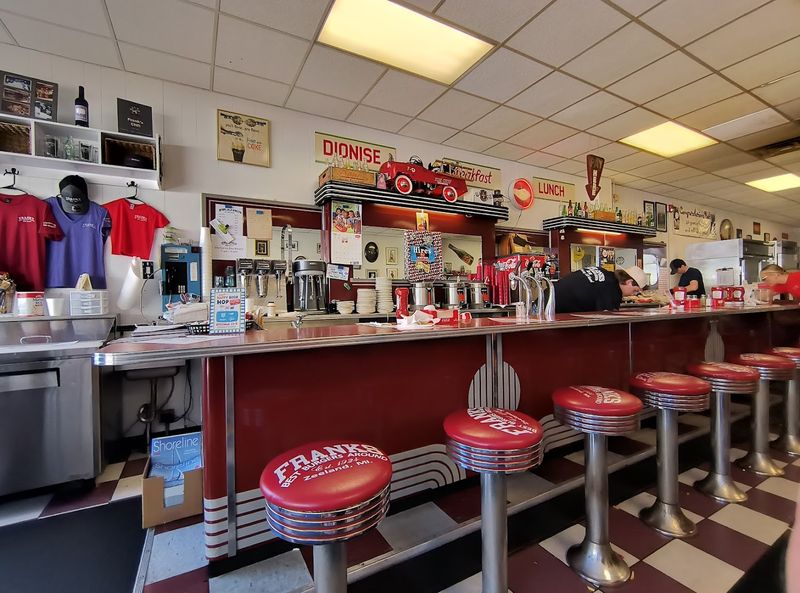
There is a particular kind of respect earned by a diner that opens early, keeps prices fair, and refuses to update the menu just because a food blogger told it to.
Frank’s Restaurant in Zeeland has been doing exactly that since 1946. The olive burger is the dish that gets the most attention, a regional Michigan specialty that combines a beef patty with a generous topping of green olive spread, producing a flavor combination that sounds unusual until you actually try it.
Breakfast is equally dependable, drawing early risers who know that a proper plate of eggs and toast is worth getting out of bed for.
The dining room is straightforward and unpretentious, the kind of place where the coffee is always hot and the portions are always honest.
Zeeland locals treat it as a given, the way you treat a reliable old friend.
Renucci’s Bar & Restaurant, Ionia
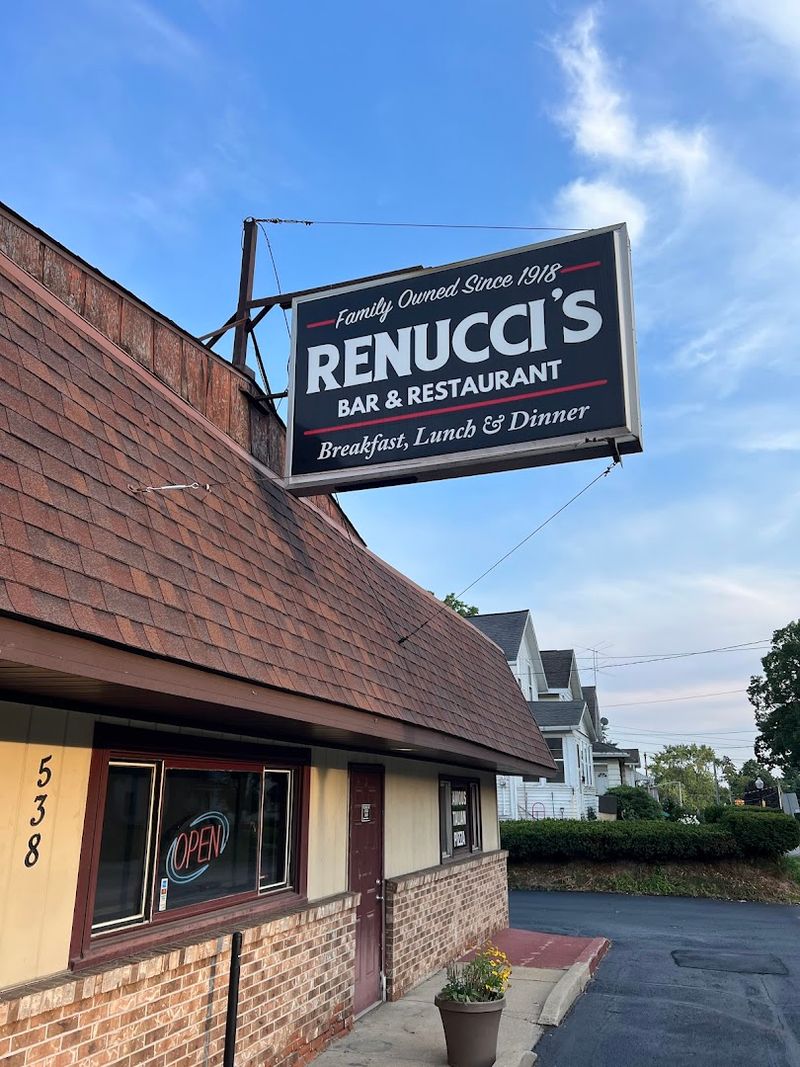
Four generations of the same family running one restaurant is not a marketing slogan at Renucci’s. It is simply the way things have worked in Ionia since 1941.
The menu reads like a greatest hits collection of Italian-American comfort food, the kind of dishes that were popular in mid-century America and never lost their appeal because they were genuinely delicious to begin with. Chicken marsala is a regular favorite, cooked with a consistency that comes from decades of practice rather than written instructions.
Fresh pasta and long-simmered sauces round out a menu that prioritizes substance over presentation.
The atmosphere is relaxed and family-friendly, matching the kind of cooking that comes out of the kitchen. Locals in Ionia treat Renucci’s as a default celebration spot, the place you go for birthdays, anniversaries, and any occasion that calls for a proper sit-down meal.
Iva’s Chicken Dinners, Sterling
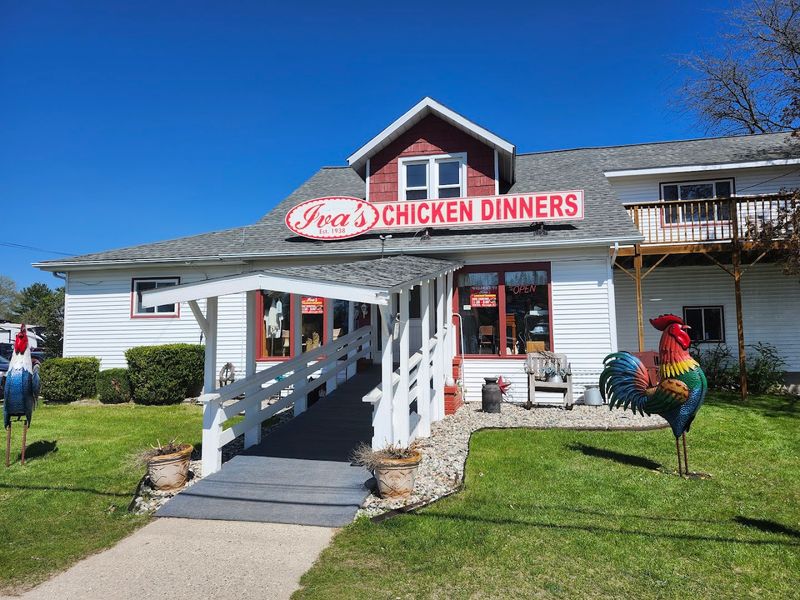
Some restaurants operate seven days a week because they have to. Iva’s Chicken Dinners in Sterling operates just four days a week because the food is worth planning your schedule around.
Open Thursday through Sunday, this place has been serving fried chicken dinners since the early 1900s, making it one of the oldest continuously operating chicken dinner spots in the entire state. The chicken arrives as part of a full spread, plated alongside classic home-cooked sides that follow the same recipes the restaurant has always used.
Nothing here is designed to impress food critics. Everything is designed to feed people well.
The limited schedule creates a natural sense of occasion around every visit. Regulars know to arrive early, and first-timers quickly learn why the line forms before the doors open.
Sleder’s Family Tavern, Traverse City
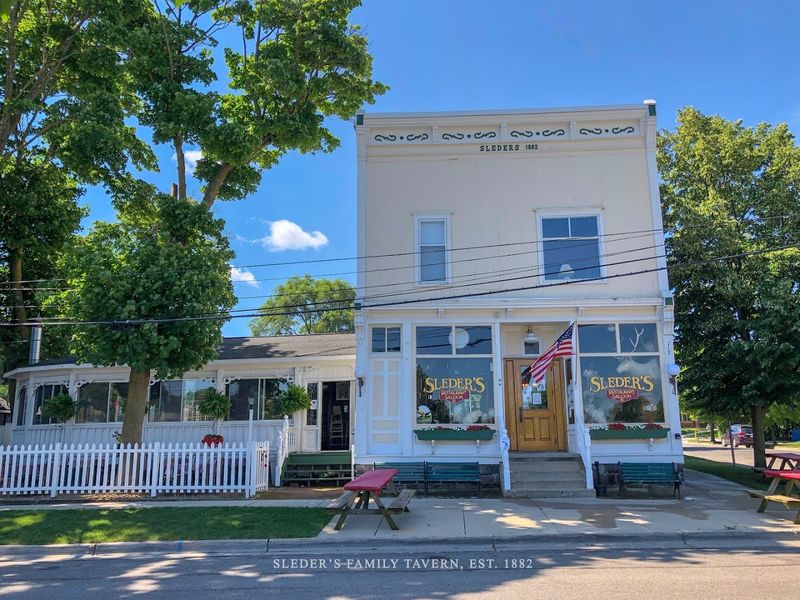
Michigan’s oldest continuously operating restaurant has been open since 1882, which means it survived two world wars, the Great Depression, and every food trend that has come and gone in the past 140 years.
Sleder’s Family Tavern in Traverse City built its reputation on straightforward American comfort food served without pretension. The fish fry is the most celebrated item on the menu, an award-winning preparation that draws crowds every week from across northern Michigan.
Homestyle dinners round out the menu with the kind of hearty, no-nonsense cooking that made the tavern a local anchor in the first place.
The building itself carries real historical weight, with a layout and character that reflect its age without feeling like a museum. Locals have been coming here for over a century, and the family atmosphere the original owners established has remained a defining feature through every ownership transition.
For a restaurant to survive 140-plus years in a competitive industry, the food has to be genuinely good. At Sleder’s, it consistently is.
White Horse Inn, Metamora

The White Horse Inn in Metamora opened in 1850, back when Michigan was still a relatively young state and nobody had invented the concept of a restaurant review.
Today it stands as one of the oldest operating restaurants in Michigan, and it has maintained its original building, complete with the kind of authentic details that no interior designer could replicate on purpose. The menu focuses on classic American comfort food, including hearty sandwiches, rich soups, and satisfying mains that match the unpretentious character of the space.
Nothing on the menu is trying to be clever, and that restraint is part of what makes the food so consistently enjoyable.
Regulars appreciate the fact that the White Horse Inn has never tried to modernize itself out of its own identity. The creaking floors and antique touches are features, not flaws, and they contribute to an experience that feels genuinely rooted in Michigan history.
For visitors exploring the rural areas east of Detroit, this inn represents a reliable stop where the food is honest and the history is real.
Ivanhoe Cafe, Detroit
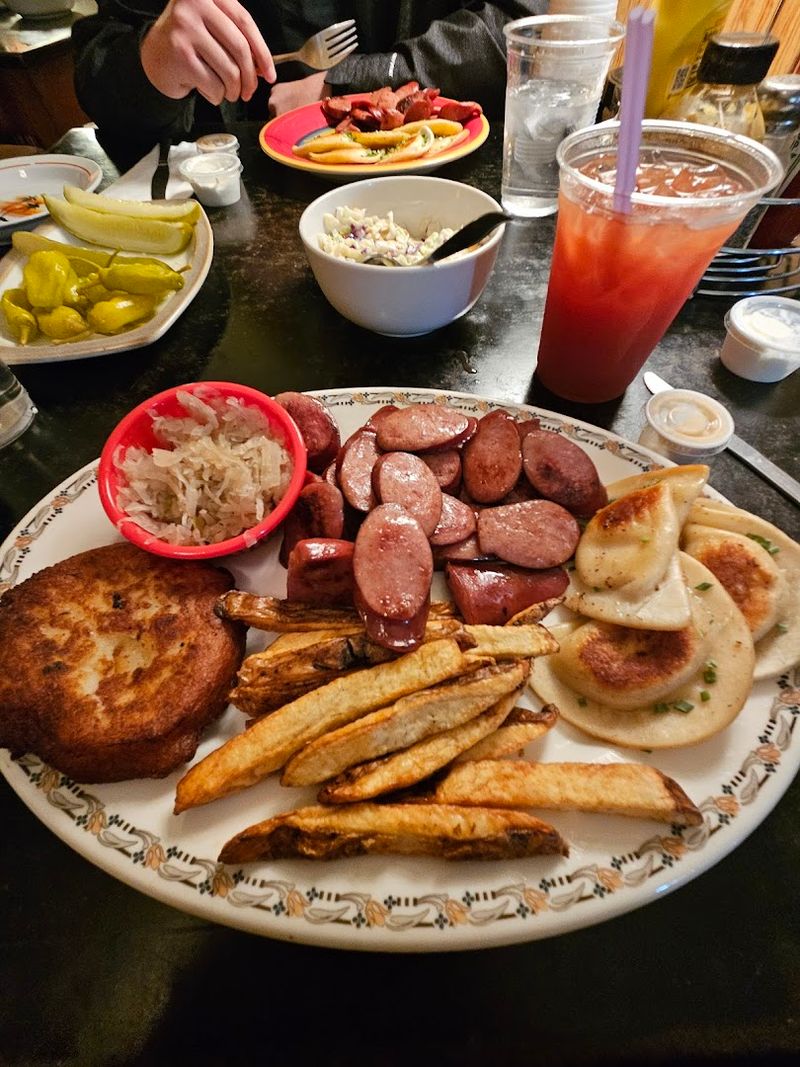
Nobody named this place the Polish Yacht Club officially, but the nickname stuck because it perfectly captures the spirit of a Detroit institution that has been feeding the neighborhood since 1965.
Ivanhoe Cafe is the kind of restaurant that regulars describe as a secret, even though everyone in the area already knows about it. The menu is built around Polish-American classics: pierogi stuffed and cooked to a recipe that has not changed in decades, kielbasa served simply and properly, and stuffed cabbage that takes real time and care to prepare.
The portions are generous, the prices are fair, and the kitchen does not cut corners.
The dining room is unpretentious in the best possible way, reflecting a community-rooted identity that was never designed to impress outsiders. It just happened to become beloved by them anyway.
First-time visitors often describe the food as tasting like something a grandmother made specifically for them, which is both the highest compliment and the most accurate description of what Ivanhoe Cafe has been delivering for sixty years.
Weston’s Kewpee Sandwich Shop, Lansing
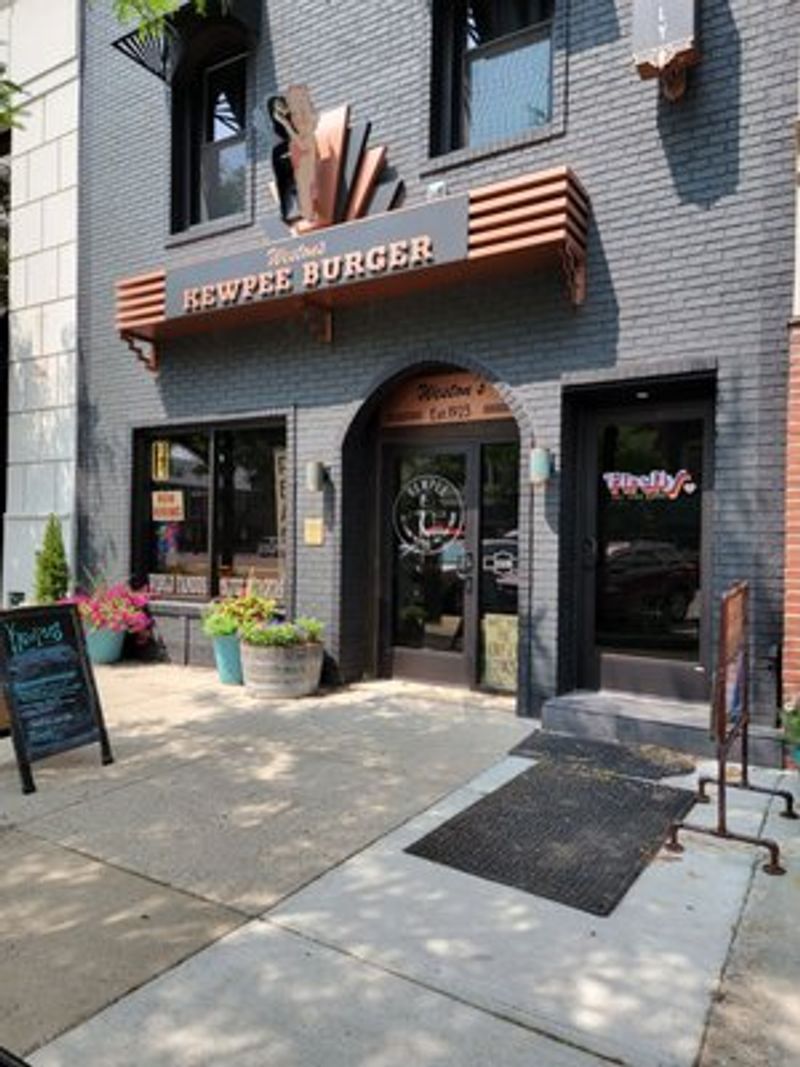
Most fast food chains that started in the 1920s either grew into global empires or vanished entirely. Weston’s Kewpee in Lansing took a third path: it stayed exactly where it was and kept doing what it always did.
Operating since 1923, this is one of the last remaining Kewpee restaurants in the country, and the Weston family has maintained original recipes and cooking methods across four generations without updating them to match current trends. The burgers are made from fresh ground beef, formed by hand, and served on soft buns that complement rather than overwhelm the patty.
Simplicity is the entire philosophy here.
The shop has a loyal following among Lansing residents who grew up eating here and continue to bring their own children and grandchildren. That cycle of generational loyalty is not manufactured through marketing.
It comes from a product that has remained consistent and genuinely good for over a hundred years.
Polish Village Cafe, Hamtramck
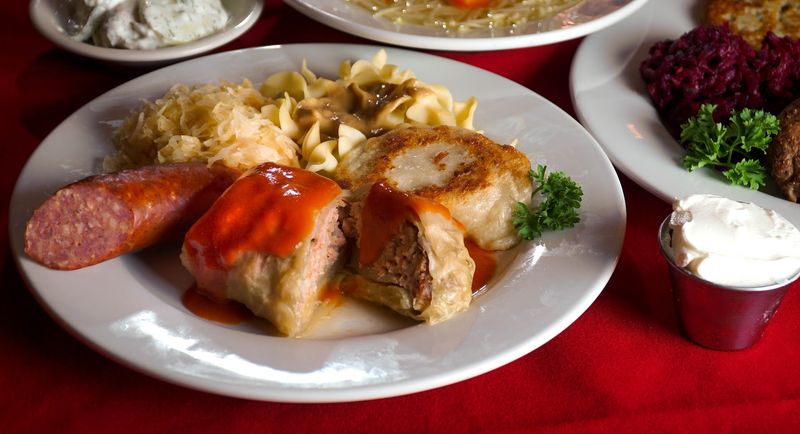
Hamtramck has one of the most distinctive food cultures in Michigan, shaped by generations of Polish immigrants who brought their recipes with them and never stopped cooking them.
The Polish Village Cafe sits at the center of that tradition, serving comfort food that follows recipes passed down through multiple family generations. Pierogi are the signature item, filled and prepared according to methods that have not been updated to suit modern preferences, because the original version was already exactly right.
Stuffed cabbage and other classic Polish dishes round out a menu that reads like a catalog of Eastern European home cooking.
The atmosphere reflects the neighborhood itself: unpretentious, community-focused, and completely unconcerned with trends. Tables fill quickly on weekends, and the crowd is a reliable mix of longtime Hamtramck residents and visitors who drove from across the metro area specifically for this food.
For anyone curious about what Polish-American cooking actually tastes like when made properly, the Polish Village Cafe provides the most direct and satisfying answer available in Michigan.
Grandma’s Recipes, Flint
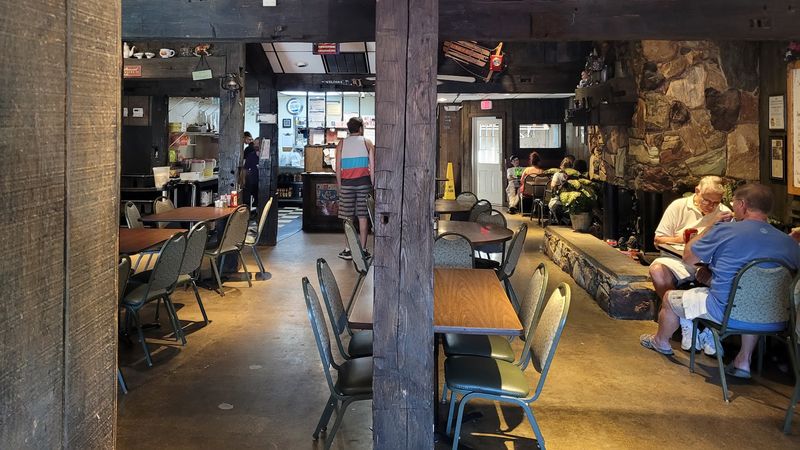
The name leaves absolutely no room for ambiguity about what this Flint restaurant is trying to do, and the menu follows through on every promise the name makes.
Grandma’s Recipes is a women-owned restaurant built around the concept of home-cooked meals inspired by timeless traditions, and that description is not just promotional language. The baked cod is prepared with the kind of straightforward technique that prioritizes the quality of the ingredient over elaborate preparation.
The fried chicken is crispy and consistent, served in portions that reflect a kitchen philosophy where generosity is considered non-negotiable.
Flint locals treat this place as a neighborhood fixture, the kind of spot that shows up in conversation whenever someone asks where to find a real home-cooked meal in the city. Recent activity on social media suggests the restaurant continues to draw steady crowds, with new customers regularly discovering what regulars have known for some time.
Share this story