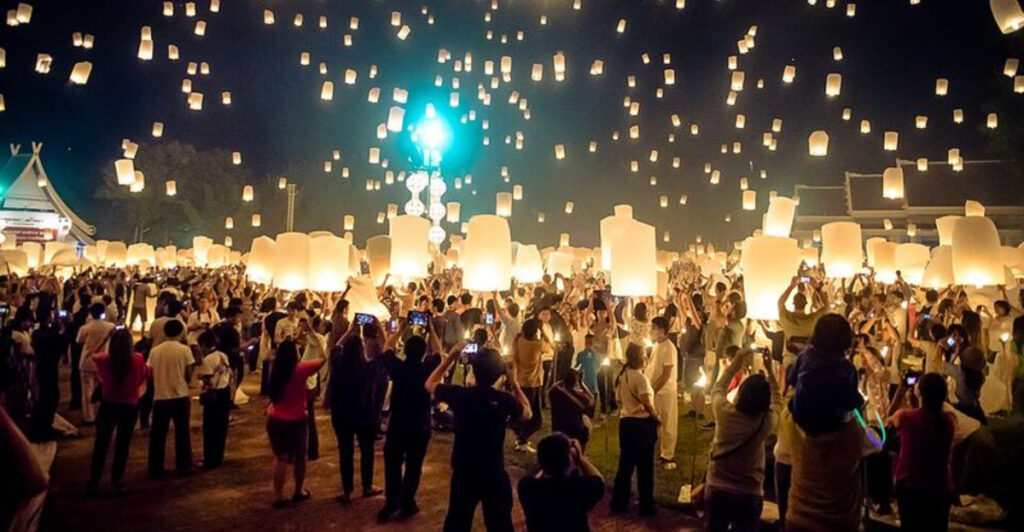
Every culture on Earth has its own special way of celebrating life, honoring the dead, or welcoming a new season. From fire-lit festivals in Scotland to lantern-filled skies in Thailand, these traditions have been passed down for generations.
Some might seem unusual at first glance, but each one carries deep meaning for the people who practice it. Get ready to explore 13 remarkable rituals from around the world that will leave you amazed and inspired.
1. Famadihana (Turning of the Bones) in Madagascar
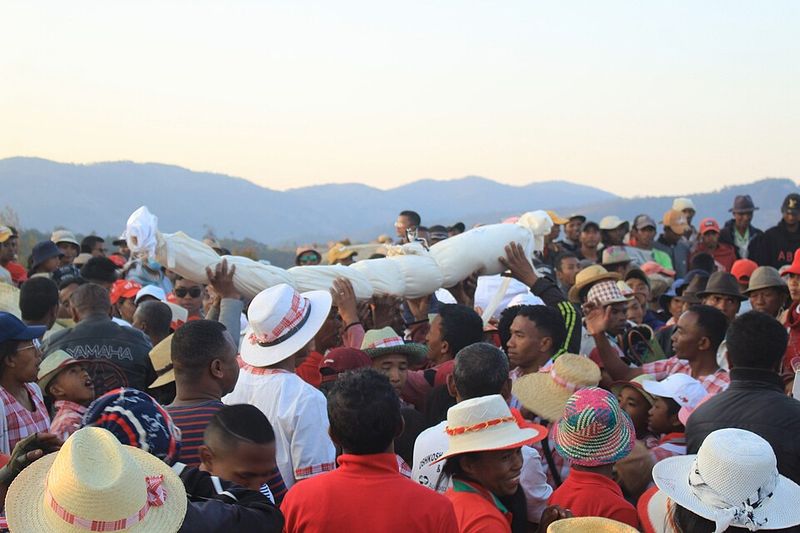
In Madagascar, death is not the end of the conversation. The Famadihana ritual, practiced by the Malagasy people, involves exhuming the remains of deceased ancestors and rewrapping them in fresh silk shrouds.
Families gather, play music, and dance with the remains as a joyful act of love and remembrance.
Held every five to seven years, this ceremony strengthens family bonds and keeps the connection between the living and the dead alive. Relatives travel from far away to attend, share food, and tell stories about those who have passed.
The Malagasy believe that the spirits of their ancestors can bring blessings to the living. Far from being morbid, Famadihana is a lively celebration filled with laughter and gratitude.
It is a powerful reminder that love does not stop when someone is gone.
2. Thaipusam in Malaysia, Singapore and India
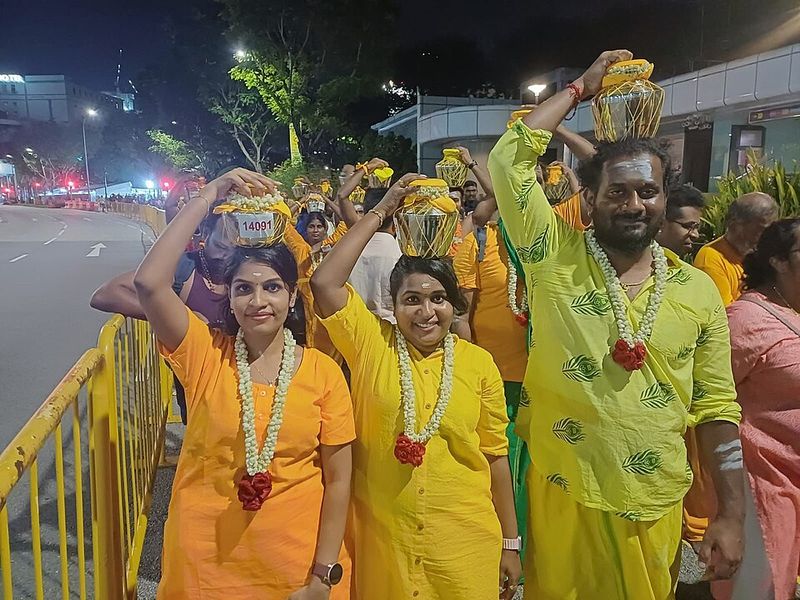
Thaipusam is one of the most visually intense religious festivals in the world. Celebrated by Tamil Hindu communities in Malaysia, Singapore, and parts of India, it honors the god Murugan with acts of deep devotion.
The most striking feature is the kavadi, a large metal frame attached to devotees’ bodies using hooks and skewers pierced through their skin.
Remarkably, most participants report feeling little to no pain during the ritual, which they attribute to their spiritual state of trance and focus. Weeks of fasting, prayer, and meditation prepare them for this demanding act of faith.
The festival draws millions of visitors each year, especially at Batu Caves near Kuala Lumpur, where devotees climb 272 steps to reach the temple. Thaipusam is a breathtaking display of human willpower, spiritual dedication, and cultural identity that has to be seen to be believed.
3. Gerewol Festival in Niger
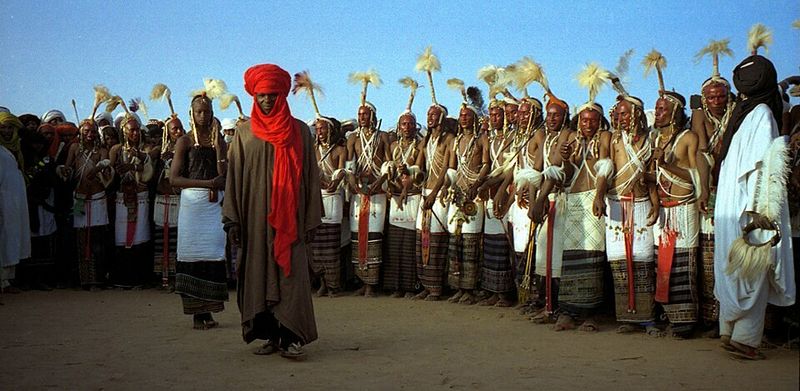
What if men were the ones who dressed up and danced to impress women? That is exactly what happens at the Gerewol Festival, celebrated by the Wodaabe people of Niger.
Young men spend hours decorating their faces with paint, wearing feathered headdresses and beaded jewelry, all to catch the eye of female judges.
The competition lasts several days and involves singing, dancing, and holding expressions like wide eyes and bright smiles for long periods. Women select the most attractive and charming men as winners, sometimes even choosing new partners.
Gerewol flips many Western ideas about beauty and gender roles completely upside down. The festival is also a social gathering where communities reunite after months of nomadic travel across the Sahel.
It celebrates Wodaabe culture, identity, and the timeless human desire to be seen and appreciated by others.
4. El Colacho (Baby Jumping Festival) in Spain
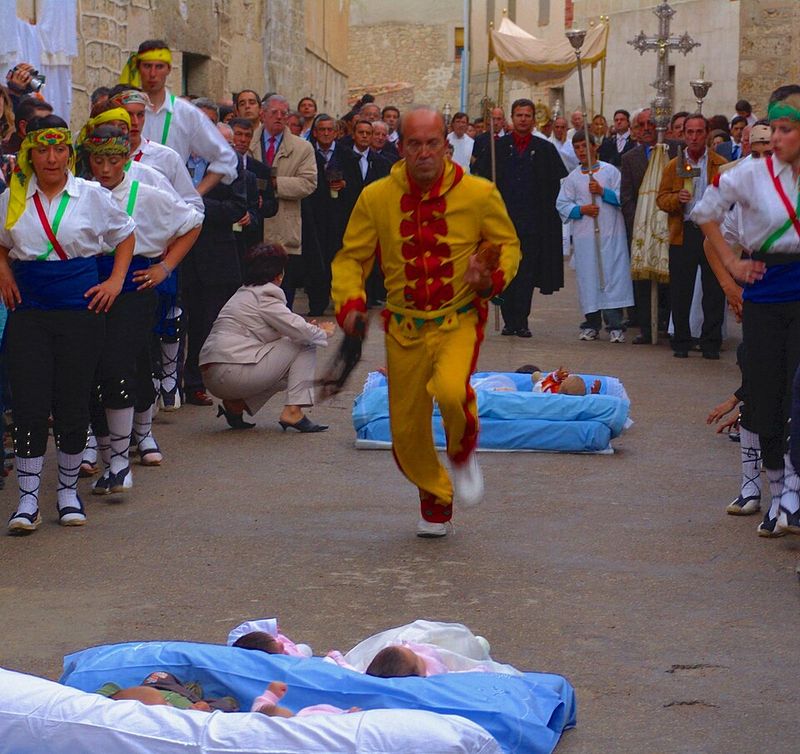
Once a year in the small Spanish village of Castrillo de Murcia, babies born in the previous twelve months are laid on mattresses in the street, and a man dressed as the devil jumps over them. Known as El Colacho, this tradition dates back to 1620 and is believed to cleanse the babies of original sin and protect them from illness.
The festival takes place during the Catholic feast of Corpus Christi, blending religious belief with folk tradition in a truly unique way. Locals line the streets to cheer and celebrate as the costumed devil makes his dramatic leaps.
Parents trust the ritual completely, and no baby has ever been harmed. The Catholic Church has expressed some reservations over the years, but the village continues the practice with pride.
El Colacho is a quirky, centuries-old tradition that perfectly captures the spirit of Spanish folk culture.
5. Up Helly Aa in Scotland
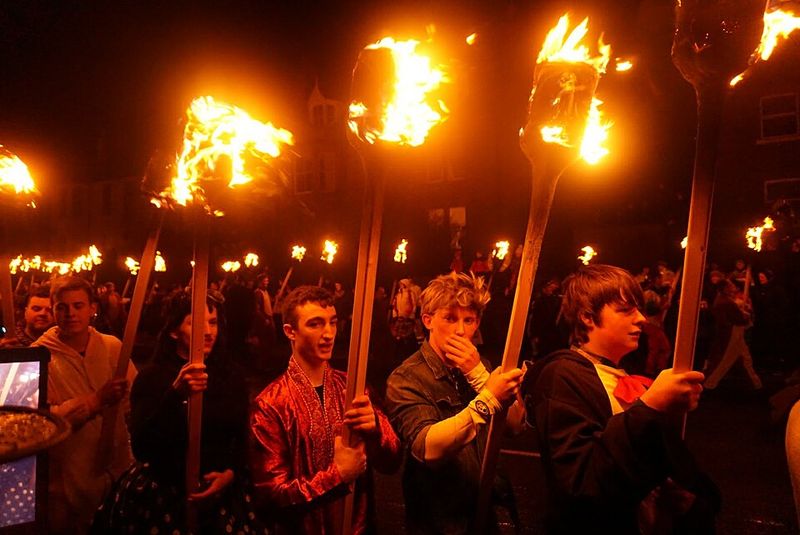
Every January, the Shetland Islands of Scotland light up with one of Europe’s most spectacular fire festivals. Up Helly Aa celebrates the islands’ Norse heritage with a dramatic procession of nearly 1,000 men dressed as Vikings, each carrying a blazing torch through the dark winter streets of Lerwick.
The highlight of the night is the burning of a full-sized replica Viking longship. Participants, called Guizers, march in formation and then hurl their torches onto the ship, sending it up in a massive wall of flames.
The sight is nothing short of extraordinary.
Up Helly Aa has been celebrated since the 1880s, and the community prepares for it throughout the entire year. Costumes are handmade, and the longship is built fresh each time.
It is a proud tribute to the Viking ancestors who once called these windswept islands home.
6. Inti Raymi in Peru
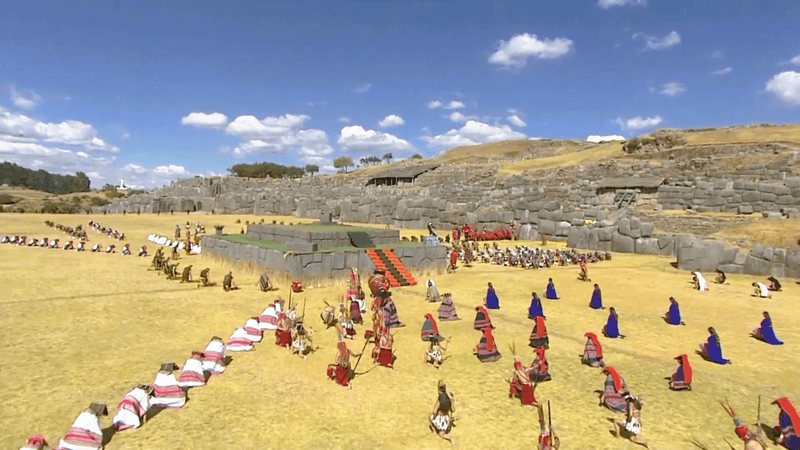
Long before the Spanish arrived in South America, the Incan Empire held grand ceremonies to honor Inti, the sun god. Inti Raymi, meaning Festival of the Sun, was the most sacred of these celebrations, marking the winter solstice in the Southern Hemisphere.
Today, it is still performed every June 24th in Cusco, Peru, drawing thousands of visitors from around the globe.
The festival features elaborate reenactments with actors dressed in traditional Incan clothing, playing the roles of the Sapa Inca and his royal court. Ceremonies take place at three historical sites, including the magnificent fortress of Sacsayhuaman.
For the Quechua people of Peru, Inti Raymi is more than a tourist attraction. It is a living connection to their ancestors and a proud expression of indigenous identity.
The festival was banned by the Spanish in 1572 but was revived in 1944 and has thrived ever since.
7. Kukeri Festival in Bulgaria
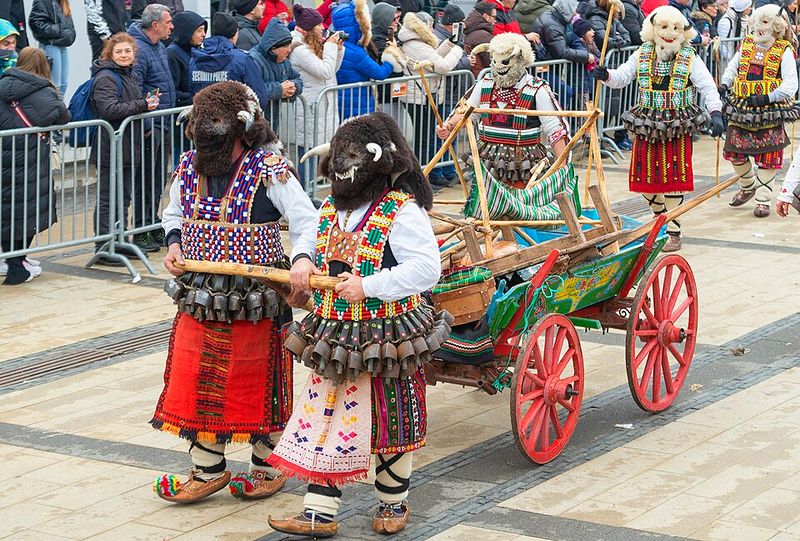
Picture enormous furry creatures with towering masks and dozens of heavy bells clanging around their waists as they stomp through village streets. That is the Kukeri Festival of Bulgaria, one of Eastern Europe’s most dramatic and ancient winter traditions.
The costumes are meant to represent spirits, and the loud bells are believed to scare away evil forces and welcome a good harvest.
Kukeri rituals are typically held between January and March, depending on the region. Men spend months crafting their elaborate outfits from animal skins, wool, and hand-carved wooden masks.
Each costume can weigh over 30 pounds.
The tradition dates back thousands of years to pre-Christian Thracian rituals. Today, it is recognized by UNESCO as an intangible cultural heritage.
Watching the Kukeri performers move through a snowy Bulgarian village feels like stepping into a living, breathing folk tale from another time entirely.
8. Dia de los Muertos (Day of the Dead) in Mexico
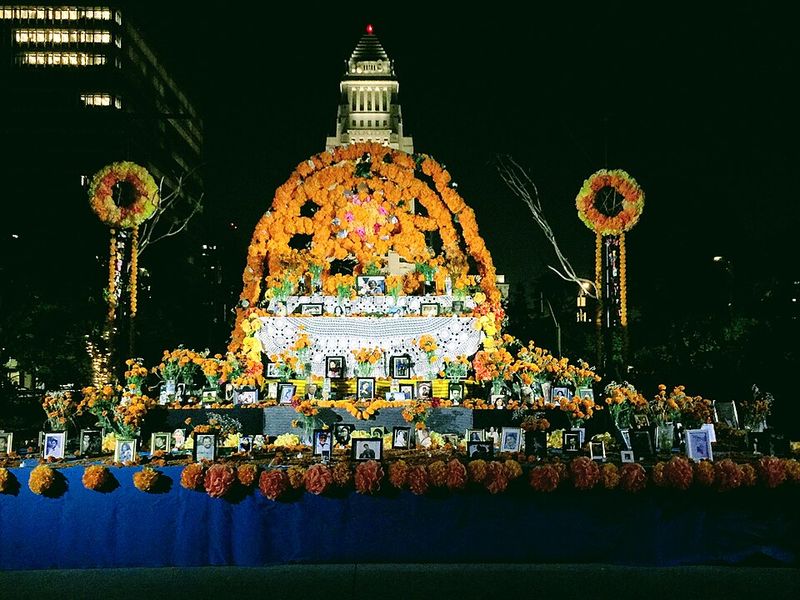
Dia de los Muertos, or Day of the Dead, is Mexico’s heartfelt tribute to those who have passed away. Celebrated on November 1st and 2nd, the holiday blends indigenous Aztec traditions with Catholic influences to create something entirely its own.
Families build ofrendas, which are decorated altars loaded with marigolds, candles, photos, and the favorite foods of their loved ones.
Rather than mourning, the holiday is a celebration. The belief is that the spirits of the dead return to visit during these two days, and families welcome them with warmth, color, and music.
Cemeteries become vibrant gathering places filled with candlelight and laughter.
Dia de los Muertos has gained worldwide recognition, partly thanks to films like Coco. But the real thing, experienced in a Mexican town or village, is something far more moving and personal than any movie can fully capture.
9. Holi Festival in India and Nepal
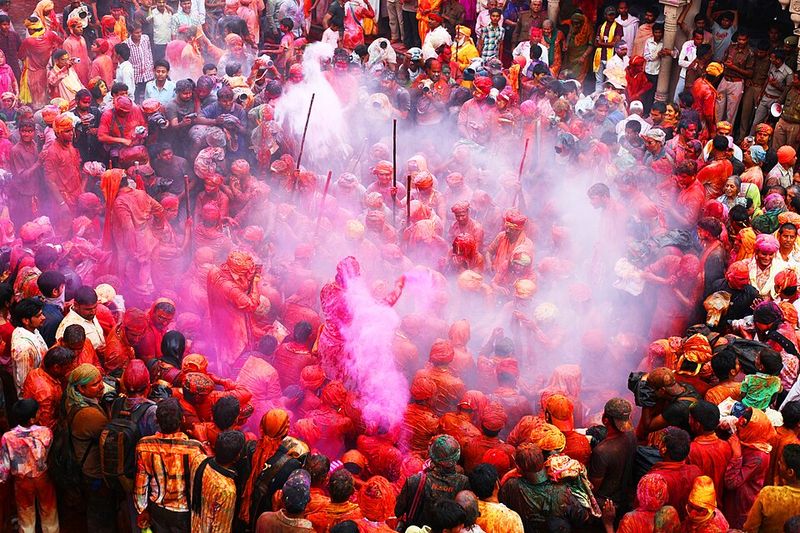
Known as the Festival of Colors, Holi is one of the most joyful celebrations on Earth. Every spring, people across India and Nepal take to the streets to throw fistfuls of brightly colored powder at each other, turning entire neighborhoods into living works of art.
Laughter, music, and dancing fill the air from sunrise to sunset.
Holi marks the arrival of spring and the victory of good over evil, rooted in Hindu mythology. The story of Prahlad and Holika, where devotion triumphs over wickedness, is central to the holiday’s meaning.
Bonfires are lit the night before to symbolize the burning away of negative energy.
What makes Holi especially beautiful is how it temporarily dissolves social boundaries. Rich and poor, young and old, all celebrate side by side.
It is a festival that reminds everyone, regardless of background, that joy is something meant to be shared.
10. Cheung Chau Bun Festival in Hong Kong
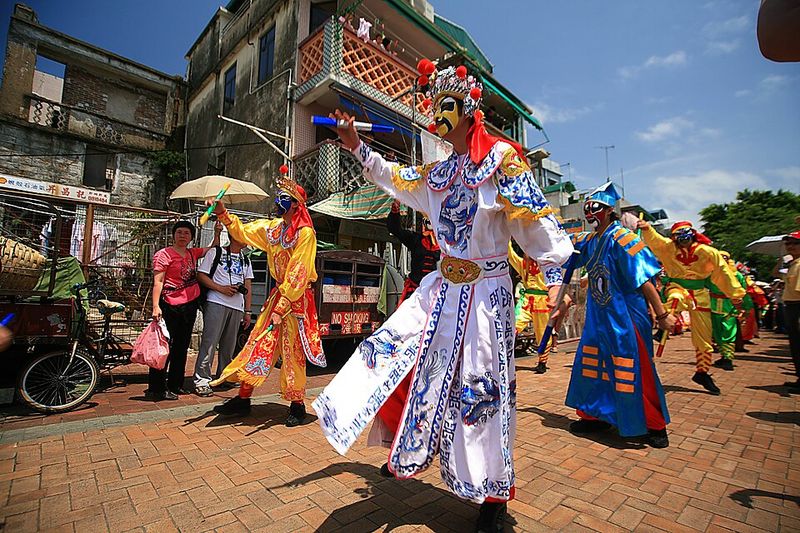
On the tiny island of Cheung Chau in Hong Kong, a five-day festival each spring features one of the most unusual competitions you will ever see: people racing to climb 60-foot towers covered entirely in steamed buns. The higher the bun, the more luck it is said to bring.
Climbers scramble as fast as they can to grab the most prized buns near the top.
The Cheung Chau Bun Festival has roots in a 19th-century plague that devastated the island. Residents performed Taoist rituals to appease wandering spirits, and the tradition stuck.
Today, the festival includes parades where children appear to float through the air on hidden platforms, dressed as gods and historical figures.
The bun-climbing competition was banned for safety reasons in 1978 but was officially revived in 2005. It remains one of Hong Kong’s most beloved and visually entertaining annual events, blending history with genuine community fun.
11. Nag Panchami in India and Nepal
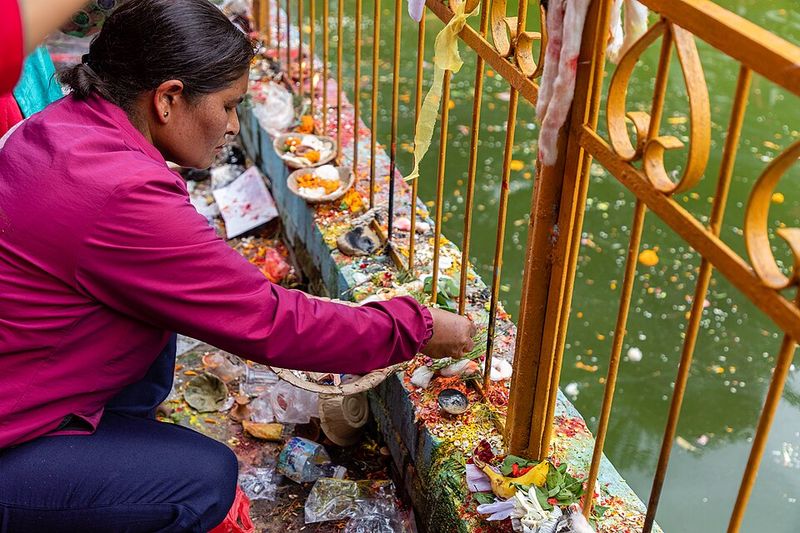
Snakes are feared by many people around the world, but in India and Nepal, one special day each year turns that fear into reverence. Nag Panchami is a Hindu festival dedicated to nagas, the sacred serpents of Hindu and Buddhist mythology.
Celebrated in July or August, it involves offering milk, flowers, and prayers to live snakes or images of cobras at temples and homes.
The festival is rooted in ancient texts and the belief that serpents are powerful protectors. Worshipping them is thought to bring good fortune and shield families from snake bites and harm.
In some villages, snake charmers bring cobras for people to see and honor up close.
Nag Panchami is a striking example of how nature and spirituality are deeply intertwined in South Asian culture. It encourages respect for creatures that many others fear, turning danger into devotion in a remarkably meaningful way.
12. Maasai Adumu (Jumping Dance) in Kenya and Tanzania
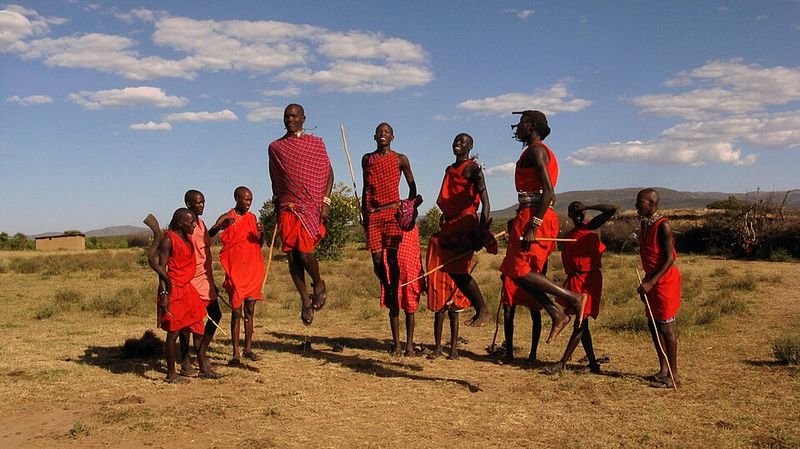
Among the Maasai people of Kenya and Tanzania, becoming a man involves more than age. Young warriors, known as junior elders or moran, must prove their strength, endurance, and pride through the Adumu, a traditional jumping dance that is both a celebration and a rite of passage.
Participants form a circle, take turns leaping as high as possible, and chant in deep, rhythmic tones while onlookers encourage each jumper.
The higher a warrior jumps, the greater his status among peers. There are no poles or props, just the raw power of the human body pushing upward from flat ground.
The competitive spirit is friendly but fierce.
Adumu is typically performed during the Eunoto ceremony, which marks the transition from junior to senior warrior. It is a moment of enormous pride for Maasai families.
Watching the Adumu in person feels like witnessing something both ancient and electrically alive.
13. Yi Peng Lantern Festival in Thailand
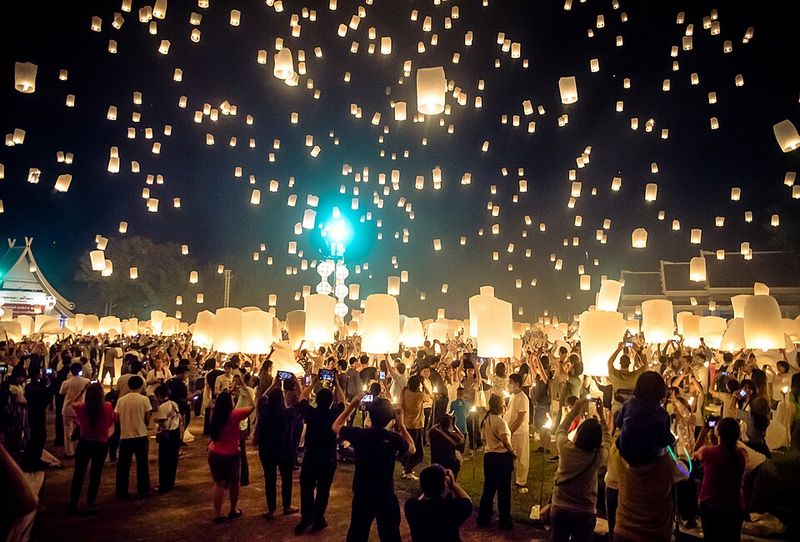
Imagine standing in a field as thousands of glowing lanterns drift silently into the night sky, one after another, until the darkness above you looks like a second galaxy. That is Yi Peng, the Lantern Festival celebrated each November in Chiang Mai, Thailand.
Participants write their worries or wishes on paper lanterns called khom loi before releasing them into the air as a symbolic act of letting go.
Yi Peng falls on the full moon of the second month of the Lanna calendar and coincides with the water festival of Loi Krathong. Together, they create one of the most visually stunning nights anywhere in the world.
Buddhist temples host special ceremonies, and the city fills with music and candlelight.
The lanterns represent the release of misfortune and the welcoming of good things to come. For many visitors, releasing a lantern at Yi Peng becomes one of the most memorable moments of their lives.
Share this story