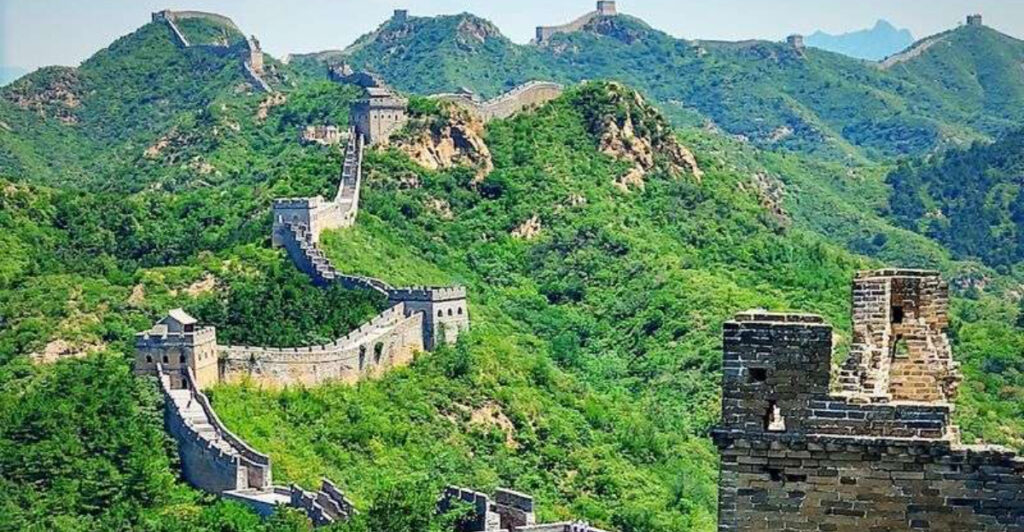
The Great Wall of China is one of those things that sounds made up the moment you start learning about it. Stretching across mountains, deserts, and valleys, it has been built, rebuilt, and expanded by dozens of dynasties over thousands of years.
Most people think they know what it is, but the real story is far stranger and more fascinating than any school textbook lets on. Get ready, because some of these facts will seriously make you question everything you thought you knew.
The Great Wall Is Over 13,000 Miles Long
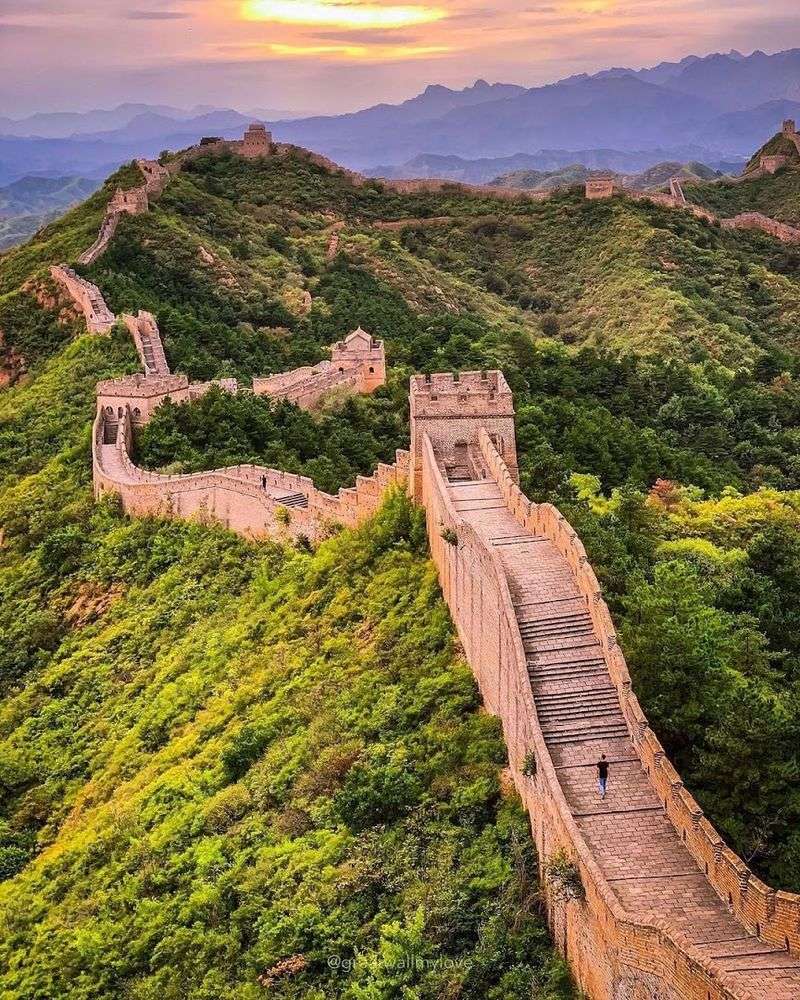
Here is a number that will stop you cold: 21,196.18 kilometers. That is the official measured length of the Great Wall, according to a 2012 archaeological survey by China’s cultural heritage authorities.
In miles, that works out to roughly 13,170. That is longer than the entire width of North America, twice over.
But before you picture one giant stone snake curling across the landscape, pump the brakes. That total includes wall sections, trenches, barriers, passes, and other defensive structures built across many different historical periods.
Some parts run parallel to each other. Others are completely disconnected.
The survey took years to complete and covered terrain ranging from freezing mountain passes to scorching desert plains. Researchers used GPS technology, on-the-ground inspections, and historical records to piece it all together.
The result was a number so large that even historians were surprised. Safe to say, this is not your average backyard fence.
It Is Not One Single Wall
The biggest myth about the Great Wall might also be the most stubborn one. Most people picture a single unbroken barrier stretching from coast to coast.
The truth is far messier and honestly much cooler.
The Great Wall is actually a collection of many walls and defensive lines built by different dynasties across more than 2,000 years of Chinese history. Britannica describes it as numerous walls, many of them running parallel to each other, spread across northern China and southern Mongolia.
Different emperors had different plans, different enemies, and different budgets.
Some sections overlap. Some point in completely different directions.
A few are separated by hundreds of miles with nothing connecting them. Think of it less like a single fence and more like a massive ancient defense network built by people who were not always working from the same blueprint.
History is rarely as tidy as the postcards suggest.
Its Story Goes Back More Than 2,000 Years
Long before China was a unified country, individual kingdoms were already stacking up walls to keep their enemies out. The idea of building defensive barriers was not new, but Emperor Qin Shi Huang took things to a whole new level around 220 B.C.
He connected earlier fortifications into a larger defensive system specifically designed to stop northern invaders.
That was just the beginning. Construction, rebuilding, and expanding continued for centuries after Qin.
Dynasties came and went, each leaving their own mark on the wall. Some sections were abandoned.
Others were strengthened. New sections were added in completely different locations.
By the time the Ming dynasty finished their work in the 1600s, the wall had been a work in progress for nearly two thousand years. So when someone casually says, “the Great Wall was built by the Chinese,” they are technically right but wildly underselling the whole situation.
This thing has more layers than a history textbook.
Most of the Famous Sections Are From the Ming Dynasty
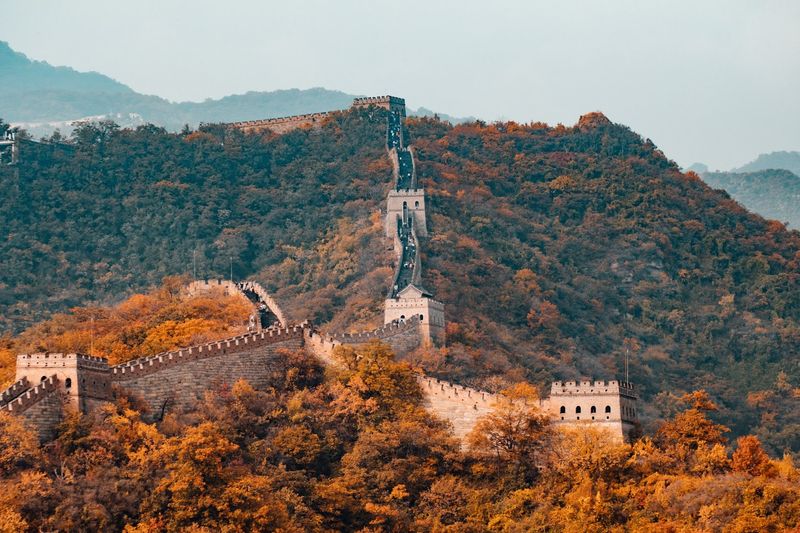
Those gorgeous photos you have seen of the Great Wall winding dramatically over mountain ridges near Beijing? Almost all of them are showing Ming-era construction.
The Ming dynasty ruled from 1368 to 1644, and during that time they went absolutely all-in on wall upgrades.
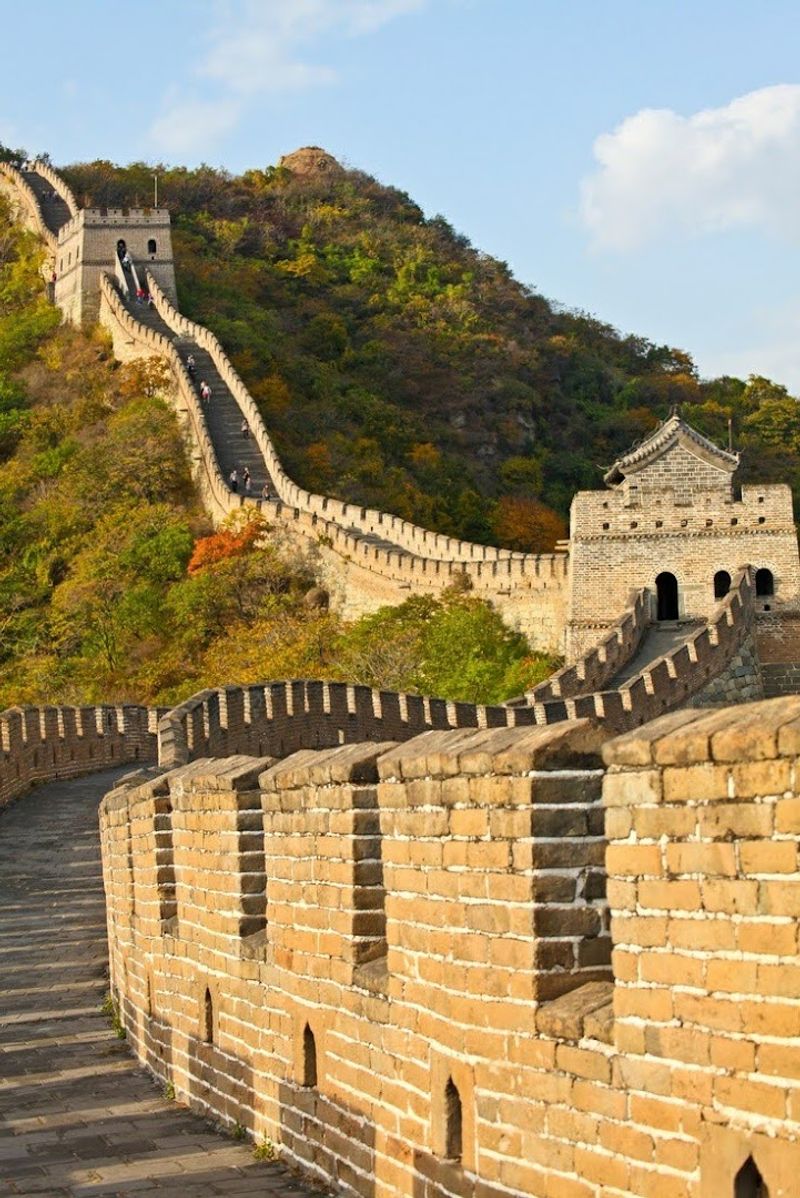
Earlier walls were often built from rammed earth and local materials. The Ming builders switched to bricks, stone, and mortar, which meant their sections held up far better over the centuries.
They also added the watchtowers and crenellated battlements that give the wall its most recognizable look.
The Ming were dealing with serious threats from northern nomadic groups, so the upgrades were not just for show. Every tower, every gate, and every reinforced section served a military purpose.
Centuries later, those same features became the backdrop for millions of tourist photos. The Ming dynasty definitely did not see that coming, but honestly, they earned the credit.
The Wall Was Built With More Than Just Bricks
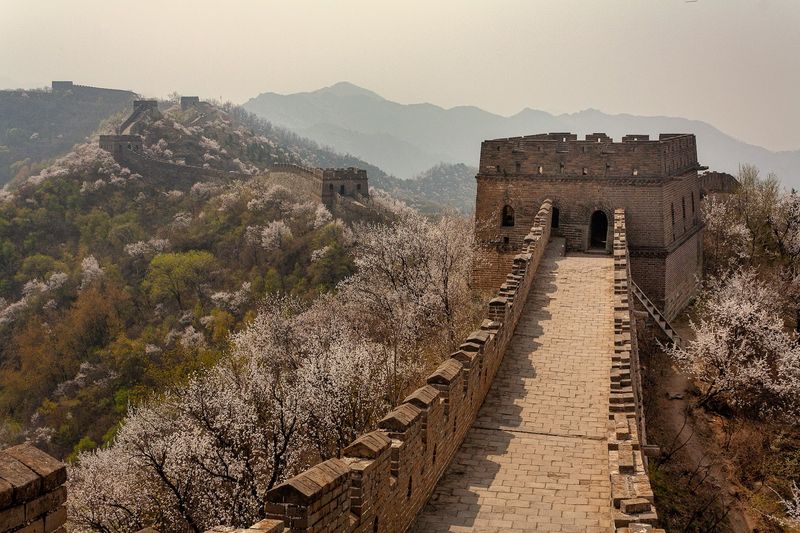
Not every part of the Great Wall looks like the postcard version. Depending on where you are and which dynasty built that particular stretch, the materials could be completely different.
Early sections used rammed earth, wood, stone, and whatever local resources were available nearby.
The Ming dynasty brought bricks, tiles, lime mortar, and cut stone into wider use, especially in the sections closest to Beijing. But out in the western deserts and remote frontier regions, rammed earth was still the go-to material simply because it was practical and available.
That variety is actually one of the most interesting things about walking the wall today. One section looks like a sturdy fortress.
Another looks like a crumbling clay ridge barely rising above the ground. Both are the Great Wall, just separated by centuries of construction and hundreds of miles of geography.
The wall did not come with a single instruction manual. Each region made do with what it had.
Sticky Rice Was Used in Ancient Mortar
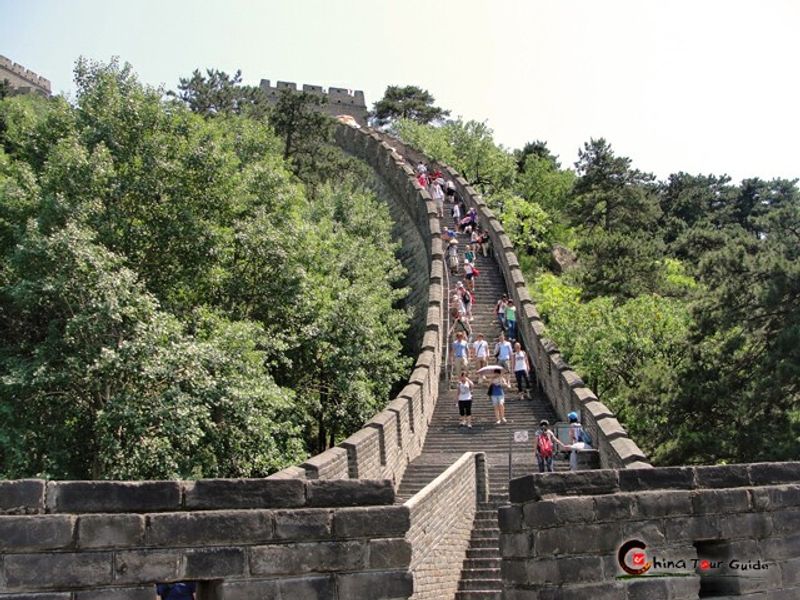
Out of all the wild Great Wall facts, this one wins the award for most unexpected ingredient. Researchers have confirmed that sticky rice soup was mixed with slaked lime to create a remarkably strong mortar used in ancient Chinese construction.
Some Ming-era structures, including parts of the Great Wall, were built using this recipe.
Scientists have actually tested the old mortar and found it surprisingly tough. The sticky rice contains a compound called amylopectin, which fills the tiny gaps in the lime paste and makes the whole mixture denser and more resistant to cracking.
Ancient builders figured this out centuries before modern chemistry had the tools to explain why it worked.
To be clear, the entire wall was not glued together with dinner leftovers. Sticky-rice mortar was used selectively, particularly in important or high-stress sections.
Still, the next time someone complains that rice is just a side dish, feel free to remind them it once helped hold up a 13,000-mile wall.
You Cannot Really See It From the Moon
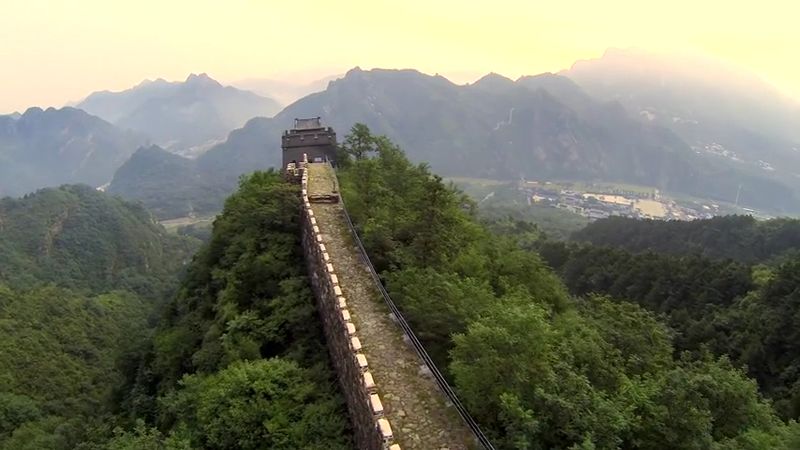
At some point in school, nearly everyone hears this one: the Great Wall of China is the only man-made structure visible from the Moon. It is also completely false, and NASA has said so directly.
The Moon is roughly 384,000 kilometers away from Earth. At that distance, the Great Wall, which is only about 15 to 30 feet wide in most places, would be completely invisible to the naked eye.
NASA has stated that the wall is not visible from the Moon, and even from low Earth orbit it is difficult or impossible to spot without camera assistance.
Chinese astronaut Yang Liwei looked for it during his 2003 space mission and could not find it either. The wall is long, yes.
But width matters when you are trying to spot something from space. A highway is actually wider and harder to miss.
The moon myth is a great story, but like a lot of great stories, it just is not true.
Some Sections Are Beautifully Restored and Open to Visitors
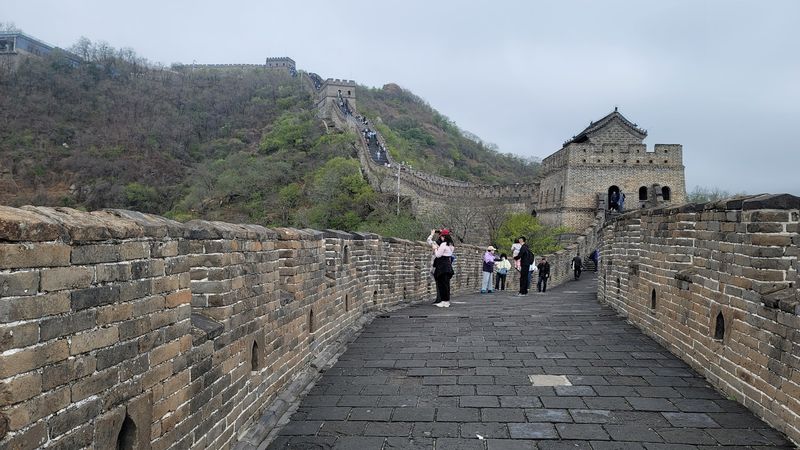
Good news for anyone with the Great Wall on their travel list: several restored sections are open and ready for visitors. Mutianyu is officially open in 2026, with peak-season weekday hours running from 7:30 to 18:00 and weekend hours extending to 18:30.
It is one of the more visitor-friendly sections, with well-maintained paths and stunning mountain scenery.
Badaling is another famous open section, and its 2026 night tour is scheduled to run from April 30 through early October. Night tours offer a completely different atmosphere, with the wall lit up against a dark sky and far fewer daytime crowds fighting for the best photo spot.
Checking official hours before visiting is always a smart move since schedules can shift by season. Both sections offer accessibility options, on-site facilities, and enough history packed into a single visit to keep anyone busy for hours.
The wall does not disappoint when you show up prepared.
Badaling Is One of the Most Famous Sections
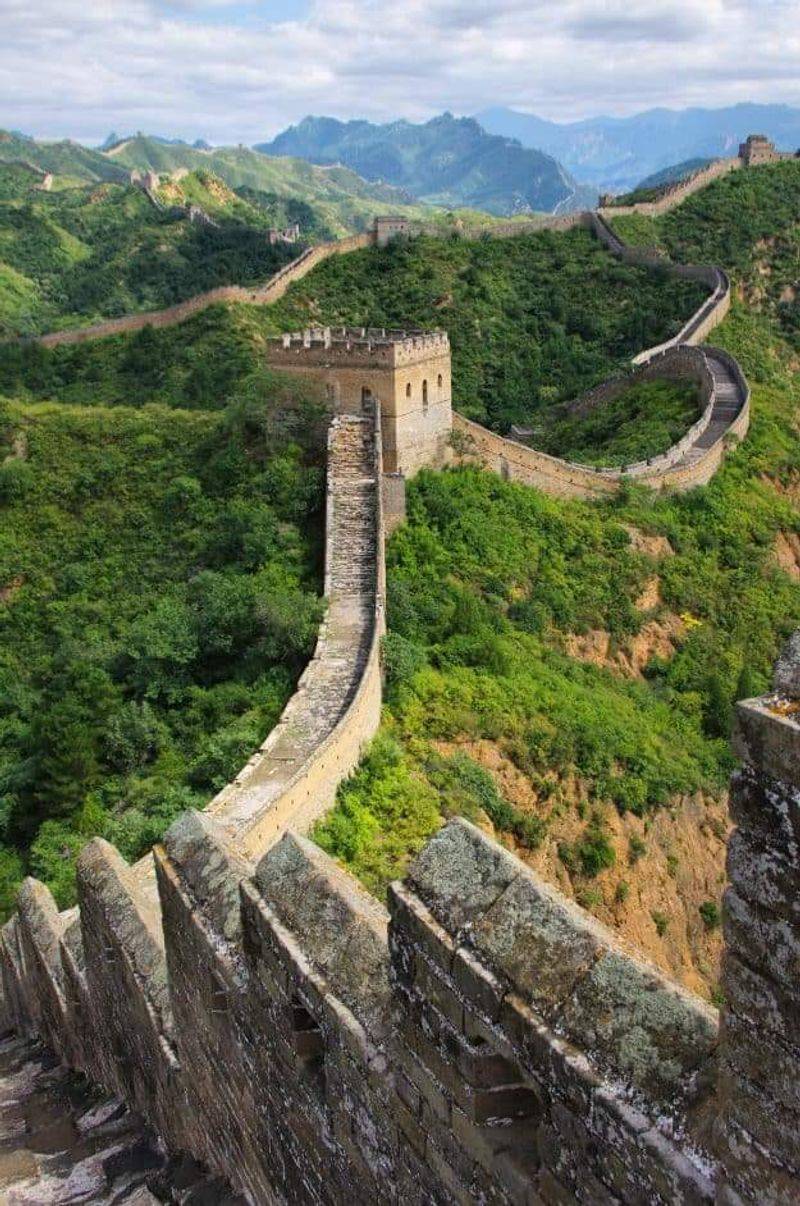
Badaling has earned its reputation as the most visited section of the Great Wall, and not by accident. Located about 80 kilometers northwest of Beijing, it is easy to reach, well-restored, and offers a genuinely impressive stretch of Ming-era wall with sweeping mountain views.
First-time visitors tend to gravitate toward Badaling because it delivers the classic Great Wall experience without requiring a serious hike or hours of travel. The infrastructure is solid, with cable cars, visitor centers, and clearly marked paths.
Current travel information confirms it remains open to visitors in 2026.
Yes, it gets crowded, especially on weekends and national holidays. But there is a reason millions of people choose it every year.
The views from the higher towers are legitimately breathtaking, and standing on a section of wall that has survived for centuries has a way of making you feel very small in the best possible way. Crowds and all, Badaling delivers.
Mutianyu Is Known for Its Scenic Mountain Views
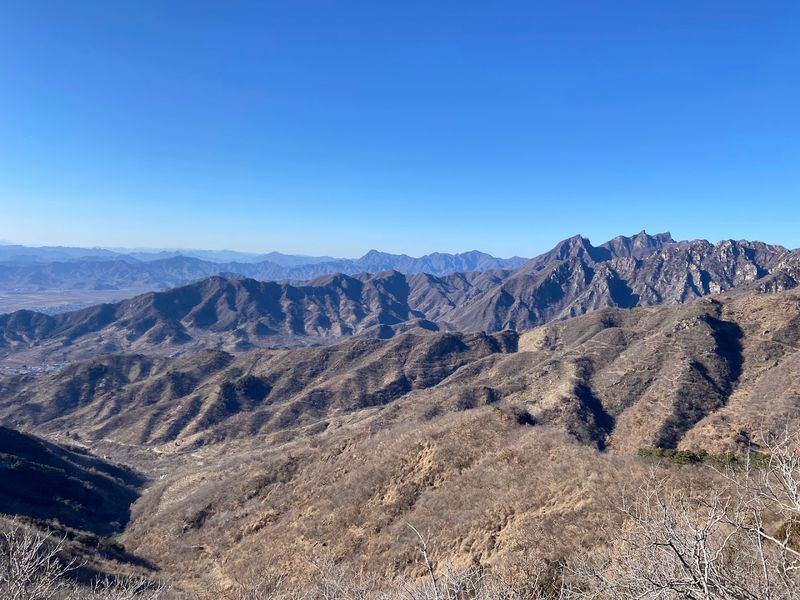
Mutianyu has a reputation among seasoned travelers as the smarter choice near Beijing. It offers the same dramatic stone walls and ancient watchtowers as other popular sections but with noticeably fewer crowds on most days.
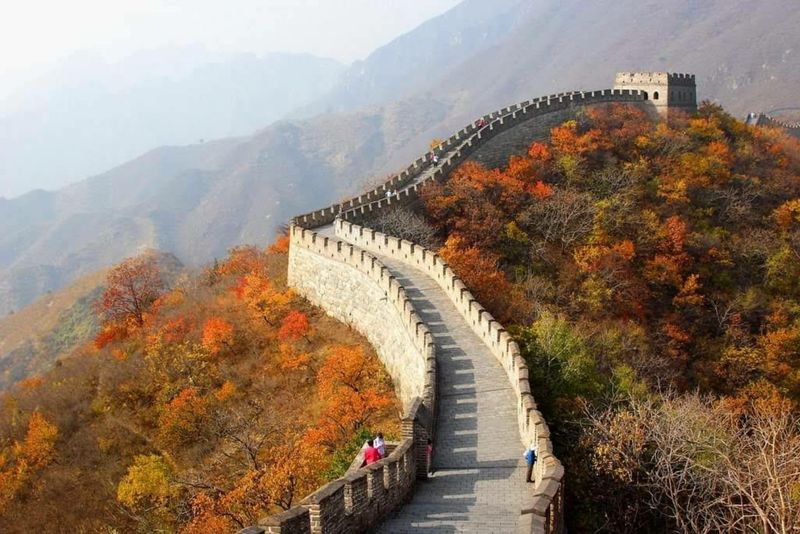
The mountain scenery here is genuinely spectacular, especially in autumn when the surrounding hills turn red and gold.
The official site lists current 2026 opening hours, making it easy to plan a visit without any guesswork. Facilities include a cable car for those who prefer not to hike up, as well as a toboggan slide coming down, which is exactly as fun as it sounds.
Mutianyu is also a solid choice for families and visitors who want accessible paths alongside impressive history. The restored sections here are well maintained and safe to walk.
I visited on a quiet Tuesday morning once and had entire stretches of wall almost entirely to myself. That kind of experience is hard to put a price on.
Jinshanling Is Loved by Hikers
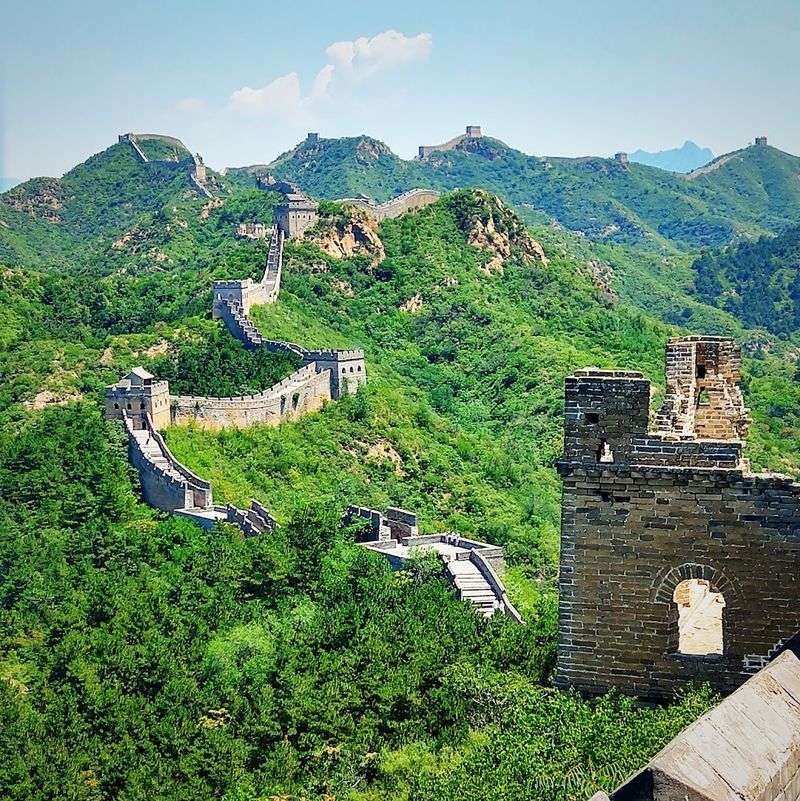
Jinshanling is where the Great Wall gets serious. Located in Hebei Province about 130 kilometers from Beijing, this section is known for its dramatic ridgeline terrain, partially restored Ming-era architecture, and hiking routes that reward the effort with genuinely jaw-dropping views.
Unlike fully restored sections, Jinshanling mixes restored walls with wilder, more weathered stretches. That contrast gives the hike a rawer, more adventurous feel.
Travel sources list it as an open scenic area with marked hiking routes and posted opening hours, so planning a visit is straightforward.
The most popular route runs from Jinshanling to Simatai and takes several hours to complete. It is not a casual stroll, but experienced hikers consistently rank it among the best Great Wall experiences available.
The trail passes dozens of watchtowers, each with its own slightly different design and view. For anyone who wants to feel like they actually earned the scenery, Jinshanling is the answer.
Large Parts of the Wall Are Disappearing
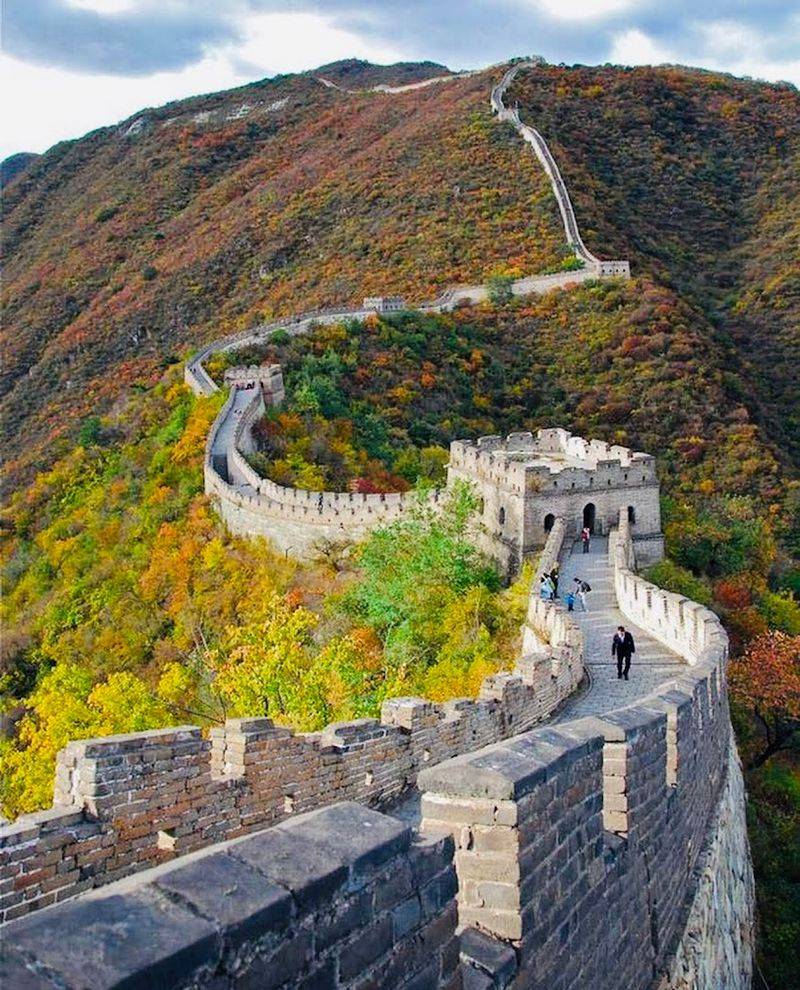
The Great Wall has survived invasions, wars, and centuries of brutal weather. What it is struggling to survive is time, erosion, and human activity.
Reports from heritage organizations have warned that large portions of the Ming-era wall have either disappeared completely or are in such poor condition that they are nearly unrecognizable.
Erosion from wind and rain wears down sections that no longer have protective coatings. In rural areas, some locals historically removed bricks from the wall to use in building homes and farm structures.
Tourism pressure, while mostly concentrated in restored sections, has also caused damage in less protected areas.
China has increased conservation efforts in recent years, but protecting thousands of miles of ancient wall across remote terrain is an enormous challenge. Visitors can help by sticking to official open sections and not climbing on fragile, unrestored areas.
The wall has been standing for millennia. The least we can do is not be the reason a piece of it disappears.
It Became a UNESCO World Heritage Site in 1987
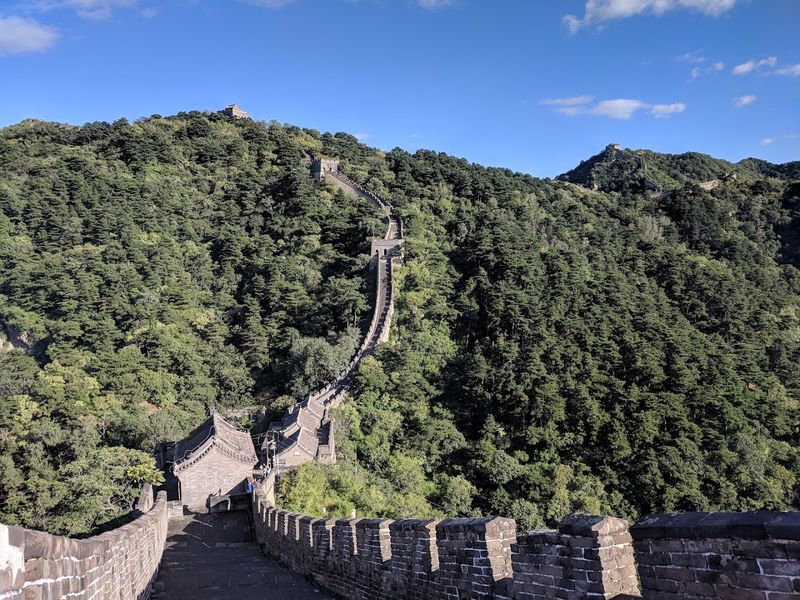
In 1987, the Great Wall of China officially joined the UNESCO World Heritage List, earning recognition as one of the most important cultural landmarks on the planet. That is a title it had been quietly deserving for centuries before anyone thought to make it official.
UNESCO describes it as the world’s largest military structure from the Ming period. The recognition acknowledges not just the physical scale of the wall but also what it represents: thousands of years of engineering, military strategy, political history, and human determination all rolled into one structure.
Being a World Heritage Site brings both benefits and responsibilities. It raises international awareness about preservation and puts pressure on governments and organizations to protect the site from further damage.
The Great Wall is not just a tourist attraction or a cool photo backdrop. It is a historical record carved into the landscape of an entire civilization.
That kind of thing deserves a little more than just a hashtag.
Share this story