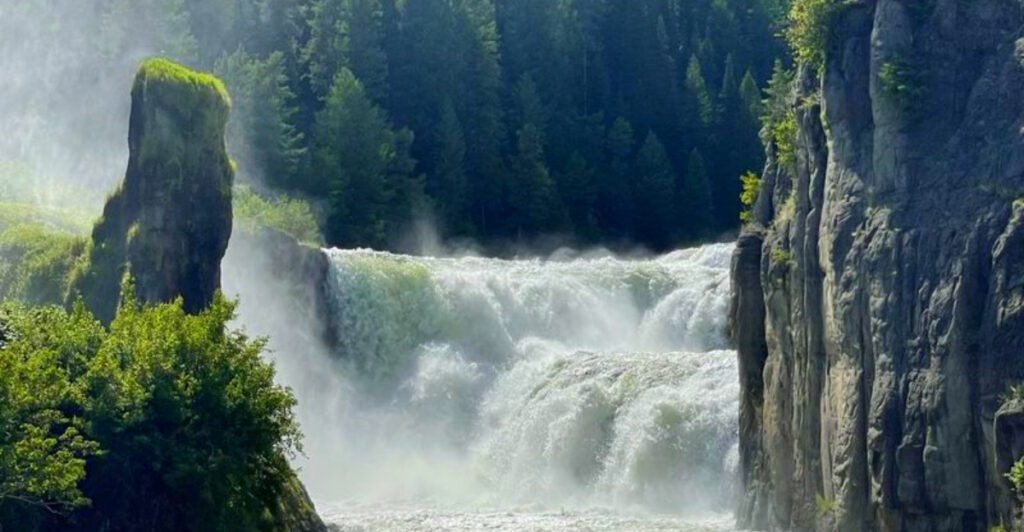
Idaho is the kind of place where you turn a corner on a forest road and suddenly find yourself staring at a waterfall that makes you question every vacation you have ever taken. The state is packed with cascades of every size, from roadside giants that stop traffic to tucked-away falls that reward anyone willing to lace up their hiking boots. Some of these waterfalls are famous enough to draw visitors from across the country, while others remain refreshingly under the radar. What they all have in common is a tendency to be even more jaw-dropping in person than any photo suggests.
This list covers thirteen of Idaho’s most spectacular waterfalls, with details on what makes each one worth the trip, how to get there, and what to expect when you arrive. Get ready to start planning your next adventure.
1. Shoshone Falls, Twin Falls, Idaho
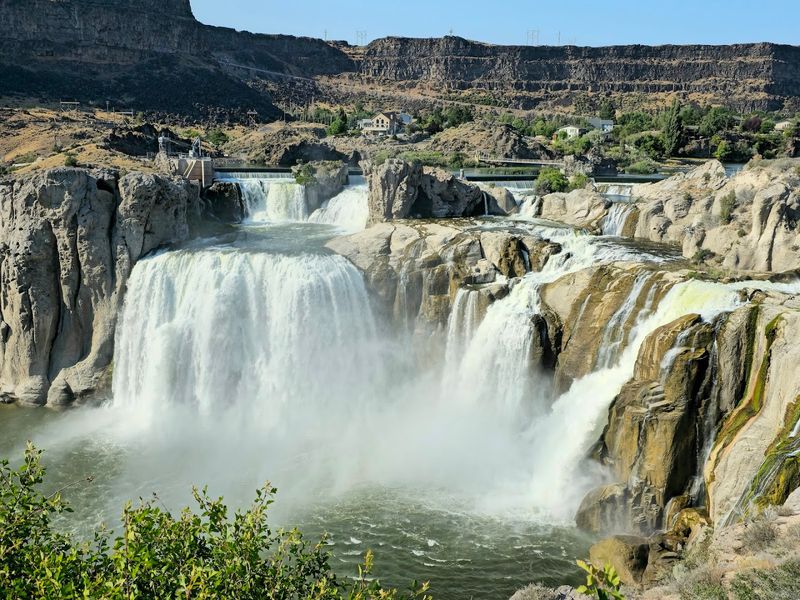
Forty-five feet taller than Niagara Falls and still somehow underrated on the national stage, Shoshone Falls is the kind of landmark that makes you wonder how you went so long without visiting. The waterfall drops 212 feet into the Snake River Canyon and stretches nearly 1,000 feet wide at peak flow.
The most dramatic viewing window runs from mid-April through early July, when snowmelt pushes the Snake River to flows that can exceed 20,000 cubic feet per second. Idaho Power maintains a minimum scenic flow of 300 cubic feet per second from April through Labor Day, so the falls are never completely dry during visitor season.
Multiple paved overlooks and a wheelchair-accessible viewing platform make it easy to appreciate the scale without breaking a sweat. The park also connects to the Snake River Canyon Rim Trail, and adventurous visitors can kayak from Centennial Waterfront Park all the way to the base of the falls. Entry costs $5 per vehicle.
2. Perrine Coulee Falls, Twin Falls, Idaho
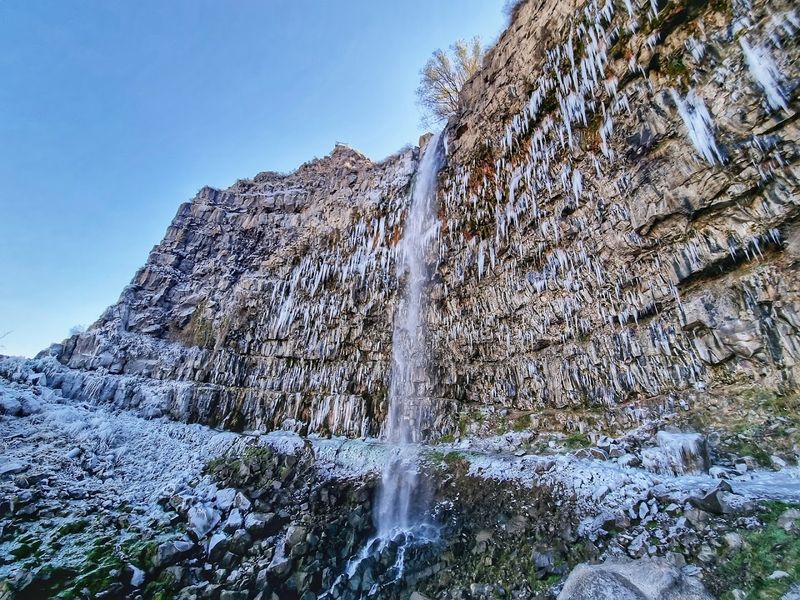
Not many waterfalls let you walk directly behind them, but Perrine Coulee Falls does exactly that, and the experience is every bit as cool as it sounds. The falls drop nearly 200 feet into the Snake River Canyon, and a short, easy trail leads visitors right to the back side of the cascade.
Unlike most seasonal falls in the region, Perrine Coulee maintains a consistent flow year-round, fed by irrigation systems and local creeks that keep the water moving even in the driest summer months. Spring snowmelt amplifies the display considerably, while winter brings dramatic icicle formations along the basalt walls.
The trailhead sits along Canyon Springs Road, with parking at a small pullout near a hairpin turn on Canyon Springs Grade. The round trip is less than a mile with minimal elevation change, making it one of the most accessible and rewarding waterfall experiences in southern Idaho. Named after pioneer I.B. Perrine, who helped build the region’s irrigation network.
3. Pillar Falls, Twin Falls, Idaho
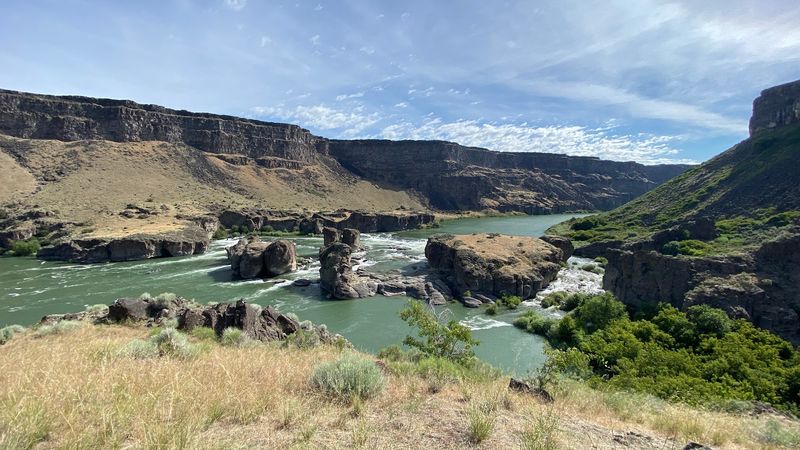
Millions of years ago, lava flows cooled and fractured into towering hexagonal columns along the Snake River Canyon, and the river has been carving its way through them ever since. The result is Pillar Falls, one of the most geologically fascinating waterfall settings in all of Idaho.
The falls drop about 20 feet through multiple channels split by the ancient rock formations, creating a scene that looks more like a fantasy landscape than a typical cascade. Most visitors reach the falls by kayak or paddleboard from Centennial Waterfront Park, paddling upstream past the iconic Perrine Bridge where BASE jumpers are a common sight overhead.
Mid-summer is the best time to visit, when lower water levels expose more of the dramatic rock pillars and allow for careful exploration on foot among the formations. Swimming near the main chute is strongly discouraged due to powerful undercurrents, so life jackets are a must for anyone on the water. Local outfitter AWOL Adventure Sports offers rentals and guided tours for first-timers.
4. Box Canyon Springs Waterfall, Wendell, Idaho
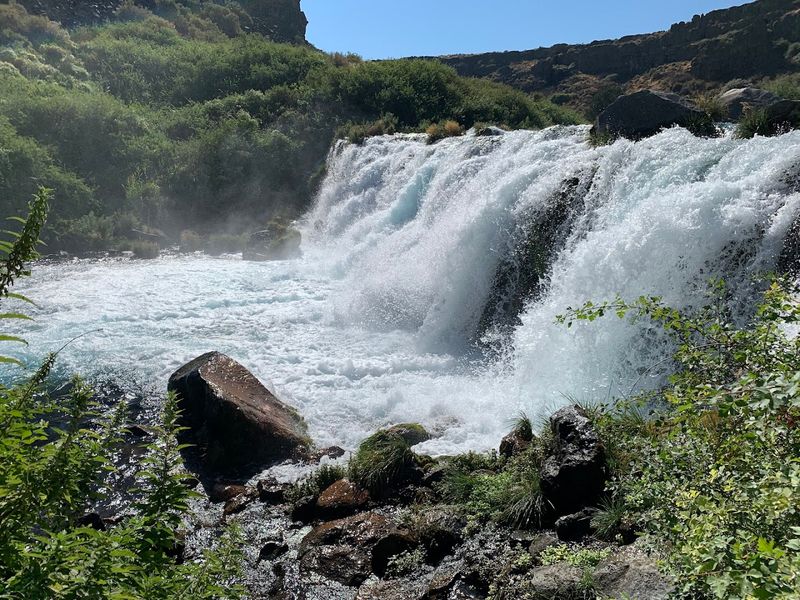
The water here is so brilliantly blue that first-time visitors often stop and stare for a full minute before remembering to take a photo. Box Canyon Springs Waterfall sits inside the Earl M. Hardy Box Canyon Springs Nature Preserve, part of the Thousand Springs State Park network, less than an hour from Twin Falls.
The springs that feed the falls are recognized as the 11th largest in North America, pushing out around 180,000 gallons per minute after snowmelt and rain filter through porous volcanic rock deep underground. The waterfall itself drops 20 to 30 feet, and the water temperature hovers around 50 degrees Fahrenheit year-round.
A $7 vehicle fee covers access to the paved overlooks at the canyon rim, and a moderately difficult trail descends 300 to 400 feet into the basalt canyon, aided by handrails on the steepest sections. Spring through early fall is the best time to visit, with early morning arrivals recommended to beat summer crowds. Sturdy footwear is a practical necessity on the descent.
5. Lower Mesa Falls, Ashton, Idaho
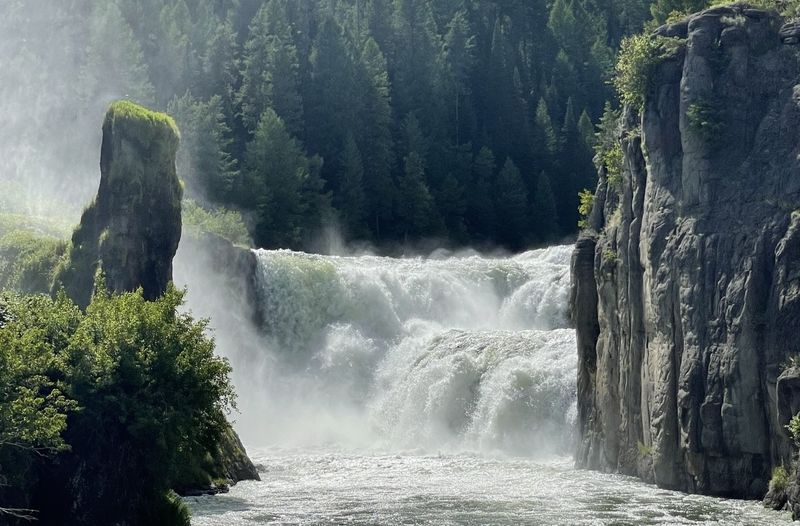
Standing at the Grandview Overlook, visitors get one of the most sweeping waterfall panoramas in the entire state, which makes it puzzling that Lower Mesa Falls so often plays second fiddle to its upstream neighbor. The falls drop 65 to 85 feet over a wide, multi-tiered volcanic ledge carved from rhyolite tuff and basalt layers formed by a supervolcano eruption roughly 1.3 million years ago.
Along with Upper Mesa Falls, this cascade holds the rare distinction of being one of the last major waterfalls in Idaho untouched by irrigation or hydroelectric development. The Henrys Fork runs here exactly as nature intended, which becomes more impressive the more you learn how few Idaho rivers can make that claim.
Access from the Mesa Falls Scenic Byway is simple, with a short paved path leading directly to the wooden overlook platform, taking about 15 minutes round trip. There is no entrance fee to visit Lower Mesa Falls. A connecting trail of 1.7 miles links it to Upper Mesa Falls for visitors who want both in one outing.
6. Upper Mesa Falls, Ashton, Idaho
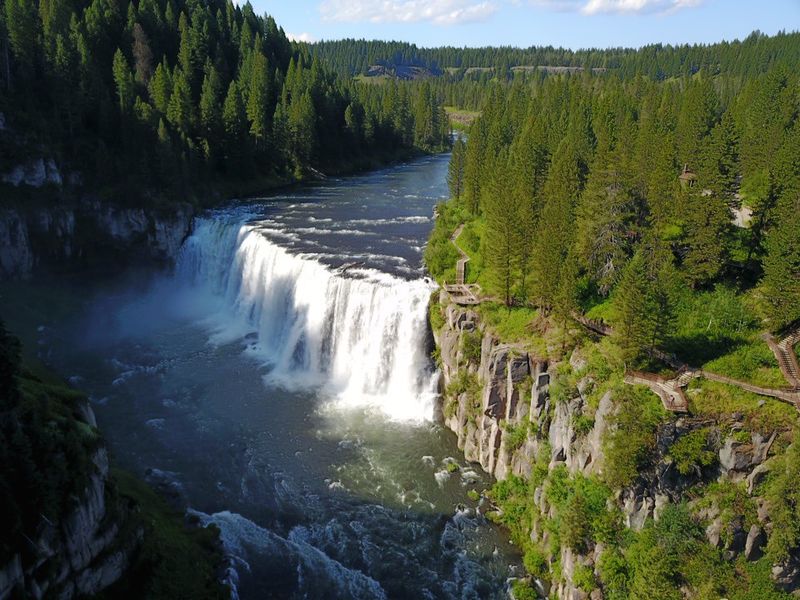
At 114 feet tall and up to 300 feet wide, Upper Mesa Falls is the kind of waterfall that makes you recalibrate your sense of scale. The Henrys Fork launches over a perfectly straight ledge of welded rhyolite tuff, rock formed from ash clouds of the Henrys Fork Caldera eruption 1.3 million years ago, creating one of the most geologically significant waterfall faces in the Northwest.
The historic Big Falls Inn, a two-story log structure built around 1907, overlooks the falls and now serves as the Mesa Falls Visitor Center. It once operated as a hotel, cafe, and stagecoach stop on the old Yellowstone Highway, and is listed on the National Register of Historic Places. Exhibits inside cover the area’s volcanic geology and colorful human history.
Paved boardwalks and multiple viewing platforms bring visitors right to the canyon rim for close-up perspectives, and an accessible ramp ensures everyone can reach the overlooks. The $5 per vehicle entrance fee supports trail and facility maintenance. Osprey and eagles are frequently spotted from the platforms. Note that the Upper Mesa Falls area is scheduled to close for roadway renovations beginning August 10, 2026.
7. Fall Creek Falls, Swan Valley, Idaho
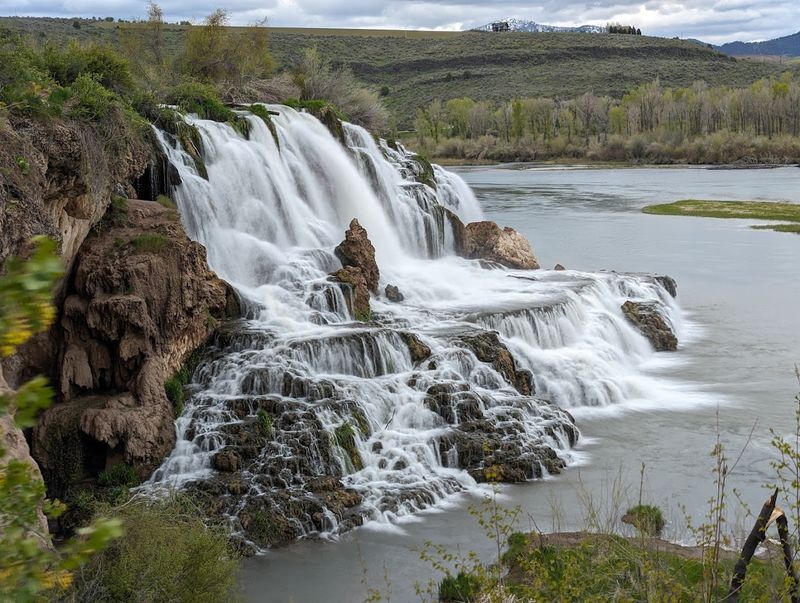
Travertine is not the rock most people picture when they think of Idaho waterfalls, but Fall Creek Falls has built its entire identity around it. The cascade tumbles 60 to 70 feet over a series of layered, step-like ledges before joining the Snake River, and a natural cave tucked beneath the upper portion adds an unexpected architectural twist to the whole scene.
Getting there is half the fun. The drive along Forest Service Road 058 from U.S. Highway 26 winds through forested canyons that turn spectacular in early autumn when the surrounding trees shift color. The falls are visible from roadside pullouts, but short dirt trails lead to the top and, during lower water levels, carefully to the base.
Summer visitors can also reach the base by canoe, paddleboard, or kayak, with a boat ramp available near the Highway 26 bridge. The area around Fall Creek Falls is quieter than most southern Idaho waterfall stops, making it a favorite among photographers who prefer their landscapes without a crowd. BLM camping is available up Fall Creek Road for those who want to stay overnight.
8. Ross Falls, Twin Falls, Idaho
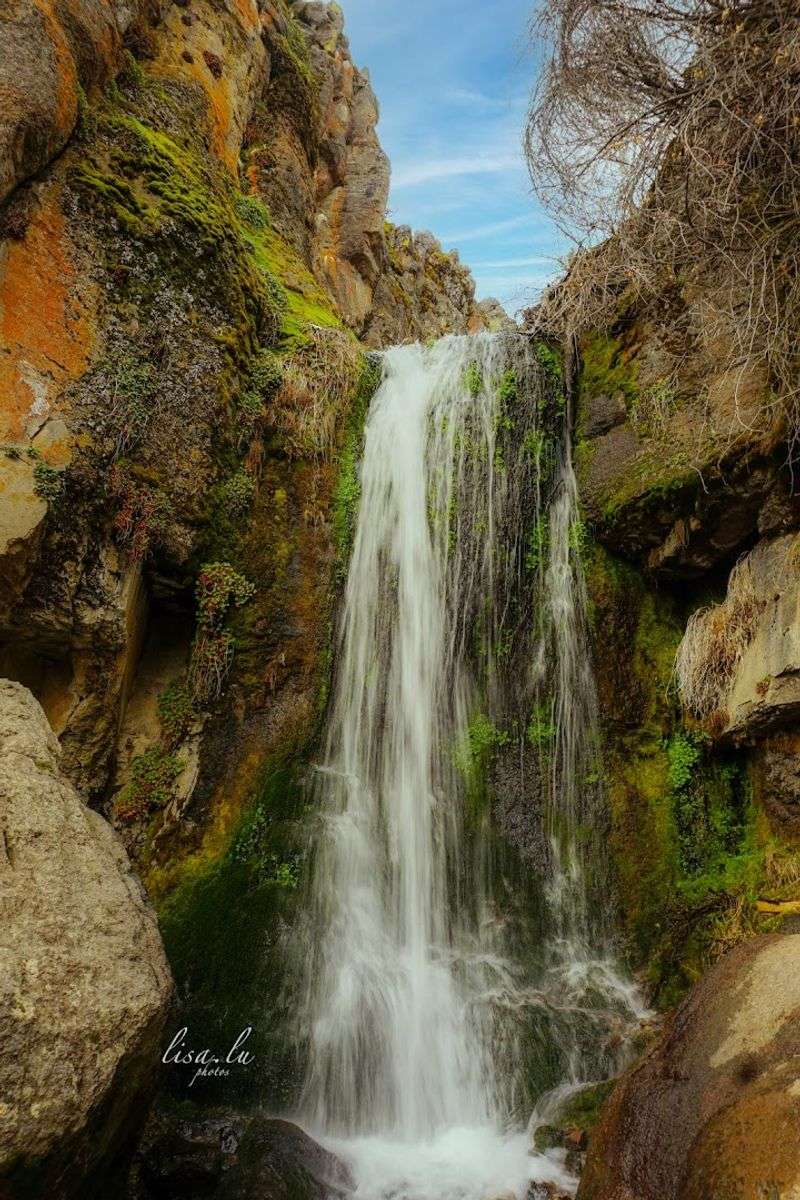
About 45 minutes south of the city that shares its name, Ross Falls quietly does its thing in the South Hills, tucked inside the Sawtooth National Forest and largely unknown to anyone who has not specifically gone looking for it. The falls drop 40 feet over cliff faces streaked with orange and rust tones, brightened by patches of vivid green moss.
Spring and early summer bring the most powerful flow, driven by snowmelt from the surrounding hills, while late summer can reduce the cascade to a modest trickle. Winter transforms the whole scene into a striking ice wall that draws a different kind of visitor entirely.
The trail is an out-and-back of about half a mile, making it genuinely kid-friendly and manageable for most fitness levels. The trailhead is well-marked along Rock Creek Road, north of Magic Mountain Ski Area, with a large pull-off for parking. Small benches placed along the path offer rest stops with pleasant woodland views. Dogs are welcome on leash, and the whole outing rarely takes more than 90 minutes.
9. Fern Falls, Island Park, Idaho
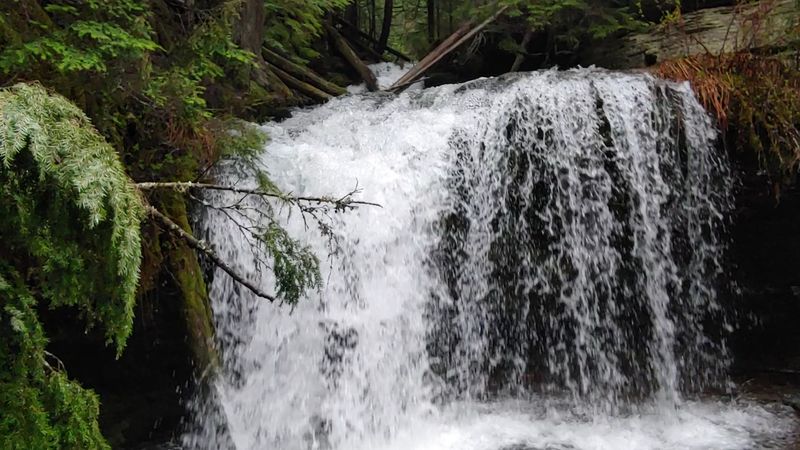
Yellow Dog Creek is not exactly a name that commands instant respect, but the waterfall it produces in the Coeur d’Alene Mountains is charming enough to make you reconsider first impressions. Fern Falls drops about 12 feet in a setting framed by moss-covered rocks, dense woodland, and the kind of lush green canopy that makes forest hikes feel genuinely refreshing.
The trail to the falls is short and easy, typically under a mile on a wide gravel path that is suitable for families and casual hikers. The hiking season runs from May through November, with spring offering the most impressive water flow during peak runoff. Fern Falls is often paired with the slightly larger Shadow Falls, located further upstream on the same trail system.
Reaching the trailhead requires navigating Forest Service roads from the Kingston exit off Interstate 90, following Forest Highway 9 and eventually Forest Road 2367. The final miles of access road can be bumpy, so a vehicle with decent ground clearance helps. There are no restrooms at the trailhead, so plan accordingly and follow Leave No Trace guidelines throughout the visit.
10. Selway Falls, Lowell, Idaho
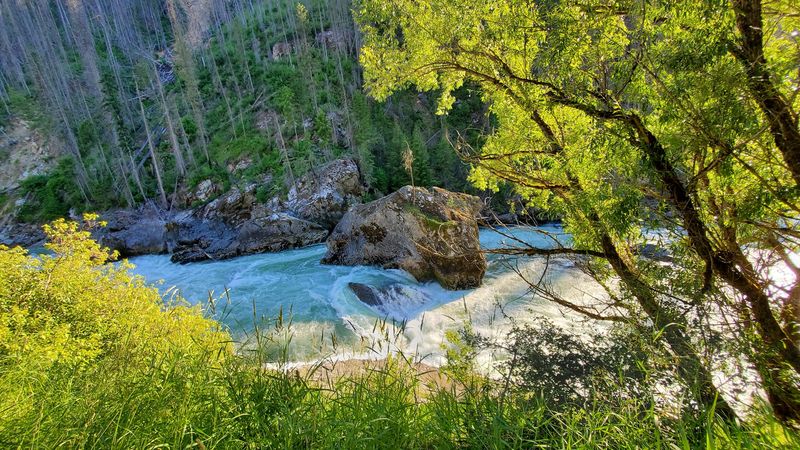
Selway Falls does not play by the usual waterfall rules. Rather than a single vertical plunge, the Selway River barrels into a broad series of rapids and cascades broken up by massive boulders, earning a Class VI whitewater classification that puts it firmly in the category of falls you admire from a safe distance rather than paddle through.
The Selway River is one of the original eight rivers protected under the 1968 Wild and Scenic Rivers Act, and the surrounding Selway-Bitterroot Wilderness is part of one of the largest roadless areas in the Lower 48. The name is believed to derive from an Indigenous word meaning smooth water, which feels like an inside joke given the river’s character here.
Access involves a 42-mile round trip drive along Forest Road 223 from Lowell, starting paved and transitioning to gravel with washboard sections. Higher elevations may have snow blocking the road until after July 4th. Whitewater rafters use Selway Falls as the endpoint of the wilderness section, with a mandatory takeout at Race Creek just upstream, and a separate 20-mile float downstream to Lowell runs May through August.
11. Shadow Falls, Wallace, Idaho
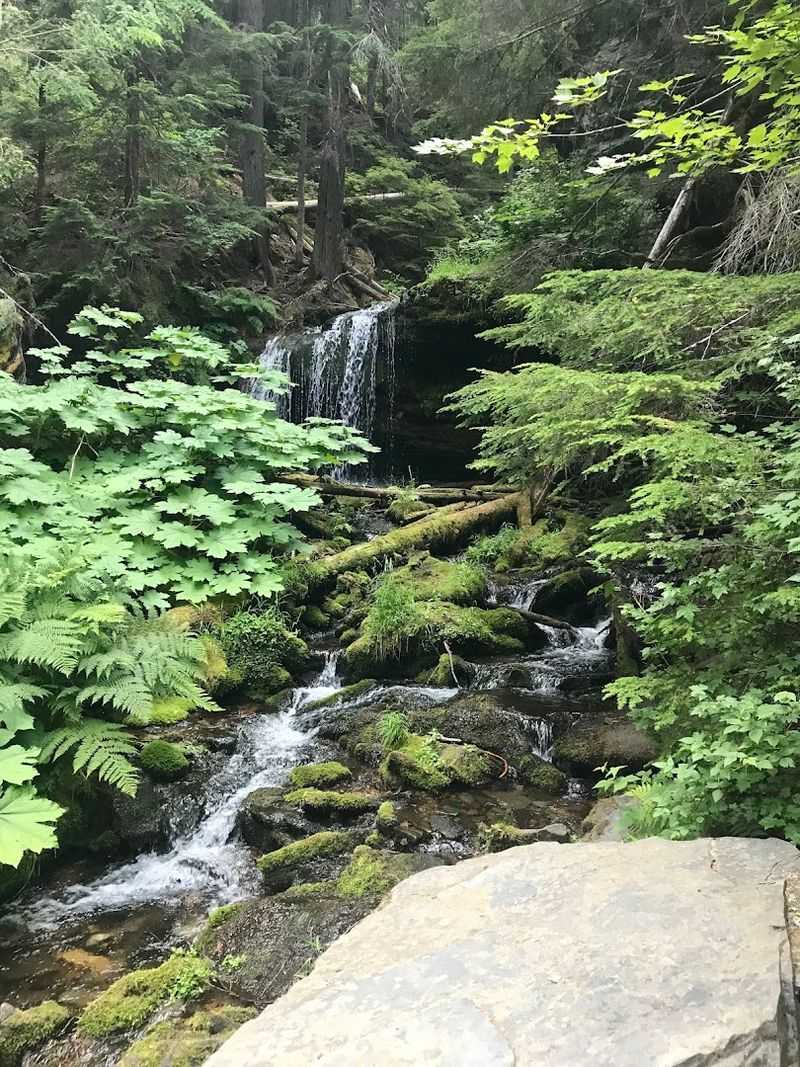
A split log footbridge, a mossy gorge, and a 24-foot cascade that barely appears on most tourist maps: Shadow Falls near Wallace has the kind of understated appeal that tends to inspire genuine loyalty among the hikers who find it. The falls flow along Yellow Dog Creek in the Coeur d’Alene Mountains, part of the Idaho Panhandle National Forest.
Shadow Falls is usually visited alongside the smaller Fern Falls downstream, and the combined hike is considered easy to moderate and appropriate for families. The footbridge near Shadow Falls gives hikers the option to view the cascade from both below and behind, which changes the perspective considerably. Spring and early summer bring peak flow, with the hiking season running May through November.
Reaching the trailhead from Wallace means heading north over Dobson Pass on Forest Road 456, connecting to Forest Highway 9 and Forest Road 208, then turning onto Forest Road 2367. The final 4.5 miles are bumpy enough to justify high ground clearance. The area has no cell service, which most visitors consider a feature rather than a drawback. Wallace’s historic downtown, a National Register district with mining museums and the Sierra Silver Mine Tour, makes an excellent companion stop.
Share this story