Egypt is so much more than the Pyramids of Giza. Once you have stood at the base of those ancient wonders and taken about a hundred photos, you might start wondering what else this country has to offer.
The answer is a lot. From underground royal tombs in Luxor to a surreal white chalk desert in the middle of nowhere, Egypt has a remarkable range of places that most visitors never make it to.
This list covers 13 destinations worth adding to your Egypt itinerary, whether you have a few extra days or you are planning a longer trip through the country. Some of these stops are ancient, some are modern, and one involves a boat ride to reach it.
All of them offer something genuinely different from what you saw at Giza.
Karnak Temple Complex – Luxor
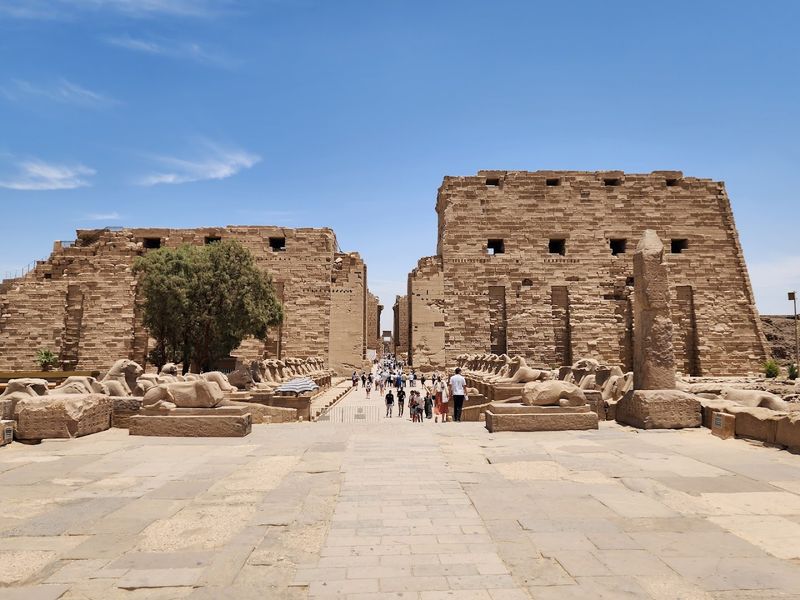
Karnak is not just a temple. It is more like an entire ancient city built from stone, and walking through it feels completely different from anything you experienced at Giza.
Located on the east bank of the Nile in Luxor, it served as one of ancient Thebes’ most important religious centers for over a thousand years.
The complex includes temples, chapels, obelisks, and pylons built by generations of pharaohs who each added their own mark. The Great Temple of Amun sits at its heart, and the famous Hypostyle Hall contains 134 massive columns arranged in 16 rows.
That hall alone covers about 5,000 square meters.
Most visitors need at least two to three hours to explore Karnak properly. Going early in the morning helps you avoid the midday heat and the largest tour groups.
The scale of the place tends to catch even well-traveled visitors off guard.
Valley of the Kings – Luxor
From the outside, the Valley of the Kings looks like a quiet, sunbaked stretch of desert cliffs. Then you step inside one of the tombs, and the experience shifts completely.
The walls are covered in painted corridors, royal symbols, and detailed scenes meant to guide pharaohs through the afterlife.
This is where rulers of Egypt’s New Kingdom were buried, including pharaohs from the Eighteenth, Nineteenth, and Twentieth Dynasties. More than 60 tombs have been discovered here, though not all are open to visitors at the same time.
The site sits on the west bank of the Nile, across the river from modern Luxor.
A standard ticket covers entry to three tombs, and the tomb of Tutankhamun requires a separate ticket. Bringing water is essential because the valley gets intensely hot.
Visiting in the early morning gives you the best light and the cooler part of the day.
Luxor Temple – Luxor
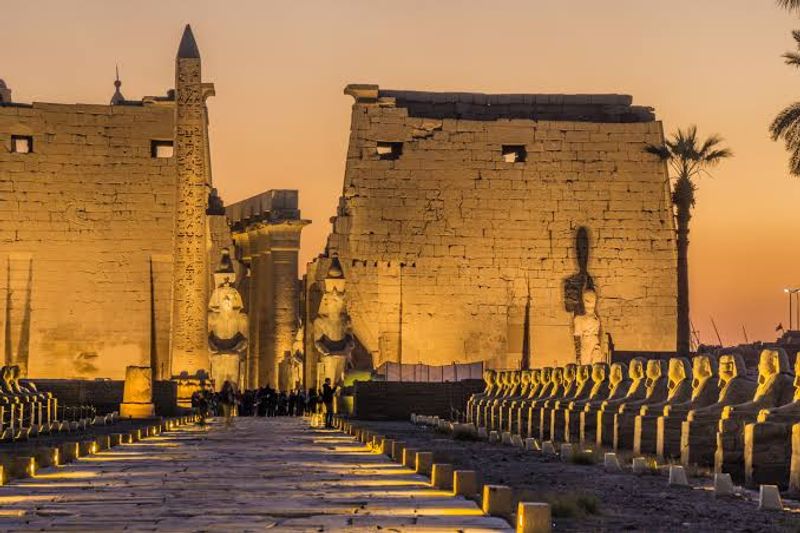
Most ancient Egyptian sites close at dusk, but Luxor Temple stays lit into the evening, which makes it one of the most atmospheric stops in the country. The temple sits right in the middle of the modern city, and the contrast between the ancient columns and the surrounding streets is genuinely striking.
Built primarily by Amenhotep III and later expanded by Ramesses II, the temple was dedicated to the rejuvenation of kingship. It was connected to Karnak by a long processional avenue lined with sphinxes, much of which has been excavated and is visible today.
Because it is so central, Luxor Temple works well as an evening stop after spending the day at Karnak or the west bank sites. The ticket price is reasonable, the walk along the Nile to reach it is pleasant, and the nighttime lighting makes it one of Egypt’s most photogenic ancient monuments.
Temple of Hatshepsut – Deir el-Bahari, Luxor
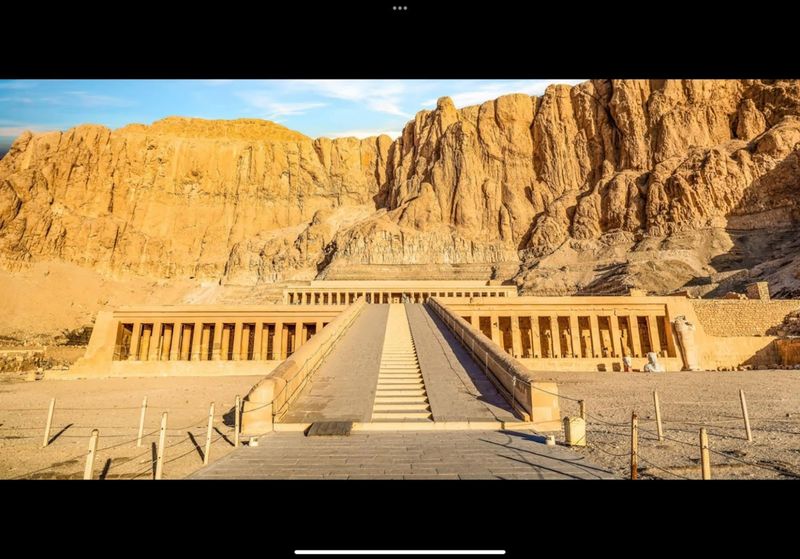
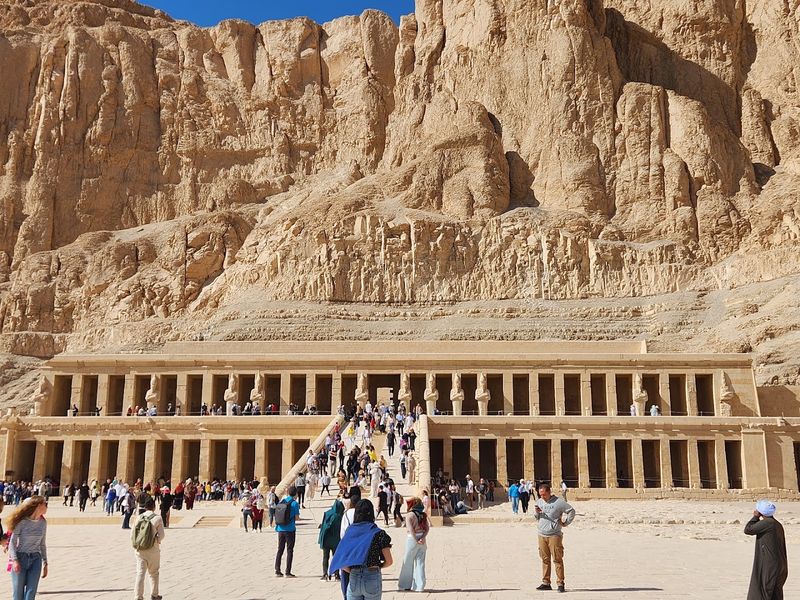
The Temple of Hatshepsut has a look unlike any other ancient Egyptian monument. Built into the cliffs at Deir el-Bahari on Luxor’s west bank, it rises in three clean terraces that almost seem to grow out of the rock behind it.
The visual effect is striking and feels surprisingly modern for a structure that is over 3,000 years old.
Hatshepsut was one of ancient Egypt’s most powerful rulers, a queen who took on the full role of pharaoh and commissioned some of the era’s most ambitious building projects. This mortuary temple was designed to honor her legacy and serve her funerary cult after her passing.
The site sits near the Valley of the Kings, so combining both in one west bank day makes practical sense. Colonnaded halls, painted reliefs, and the dramatic cliff backdrop give this temple a personality that stays with visitors long after they leave Luxor.
Abu Simbel Temples – Near Egypt’s Southern Border
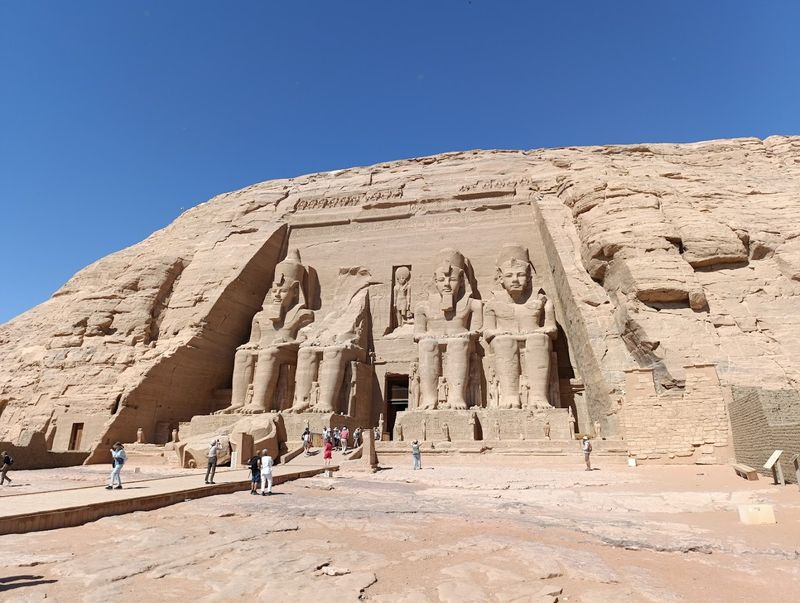
Few places in Egypt require as much planning as Abu Simbel, and few deliver as dramatically. Located in Nubia near Egypt’s southern border, the Great Temple was carved directly into living rock by Ramesses II around 1264 BC.
The four colossal seated statues on its facade are among the most recognized images in ancient history.
One of those statues collapsed in antiquity, and the fragments remain in place today, which somehow makes the site feel even more powerful. A smaller temple nearby was dedicated to Ramesses’ queen Nefertari and the goddess Hathor.
Most travelers reach Abu Simbel by flying from Aswan or joining an early morning overland convoy. The trip takes effort, but the payoff is a site that feels genuinely remote, theatrical, and unlike anything else in the country.
Two times a year, sunlight aligns perfectly to illuminate the inner sanctuary, drawing visitors from around the world for that specific event.
Philae Temple – Aswan
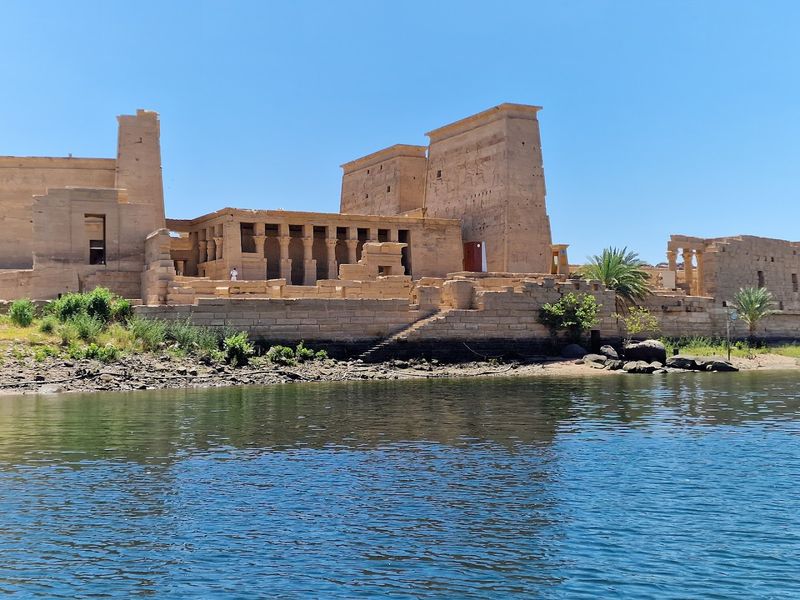
Reaching Philae Temple requires a short boat ride from the Aswan shore, and that approach across the water sets a tone that most land-based sites cannot match. The temple complex sits on Agilkia Island, and the surrounding water gives the ruins a peaceful, almost isolated quality that feels very different from Luxor’s busy west bank.
The main temple was dedicated to Isis, the goddess of magic and motherhood, and dates largely to the Ptolemaic Period. What many visitors do not realize is that the entire complex was relocated in the 1970s to save it from rising waters caused by the Aswan High Dam, a massive international preservation effort.
The carvings inside are well preserved, and the colonnaded courtyards give a strong sense of how the space was designed for ritual processions. Aswan is a natural base for visiting Philae, and the temple pairs well with a stop at the Aswan High Dam or the unfinished obelisk nearby.
Edfu Temple – Aswan Governorate
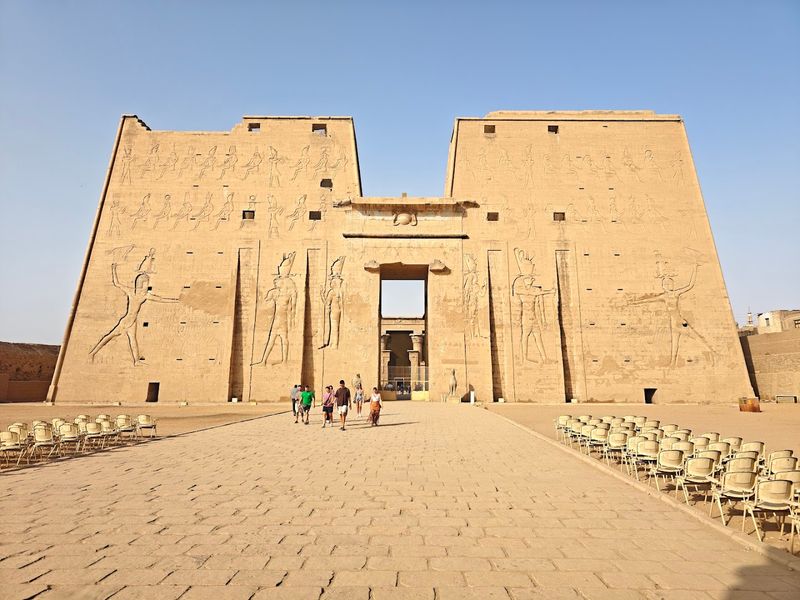
Edfu Temple is the kind of place that makes ancient Egyptian architecture suddenly click. Because so much of the structure survived intact, you can actually trace the layout from the outer gateway through successive halls all the way to the inner sanctuary, which is rare for a site this old.
Dedicated to Horus, the falcon-headed god, construction began under Ptolemy III in 237 BC and was completed under Ptolemy XII in 57 BC, taking about 180 years to finish. Two large granite statues of Horus in falcon form stand guard at the entrance, and they remain in excellent condition.
Edfu sits roughly halfway between Luxor and Aswan, making it a natural stop on a Nile cruise or a road trip between the two cities. The scale of the pylon gateway, the height of the outer walls, and the depth of the sanctuary all combine to give visitors a clear sense of how a working temple complex actually functioned in ancient Egypt.
Kom Ombo Temple – Kom Ombo
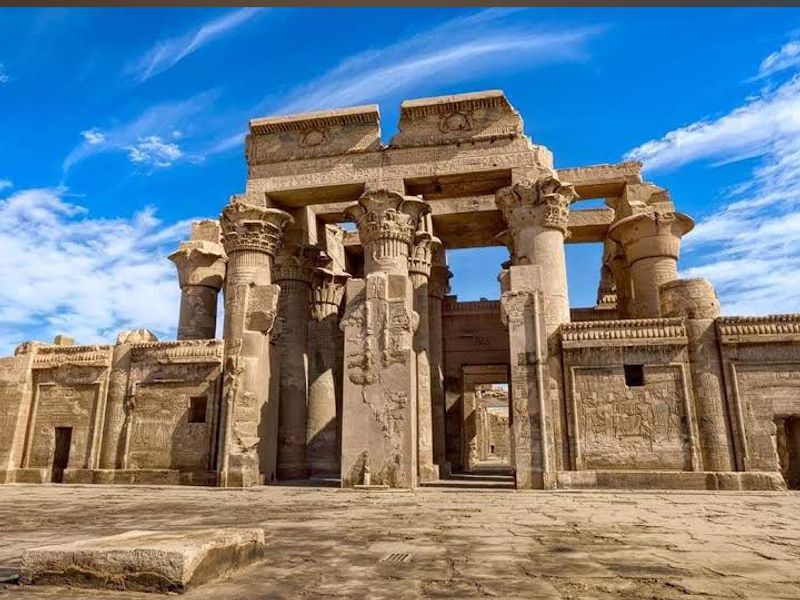
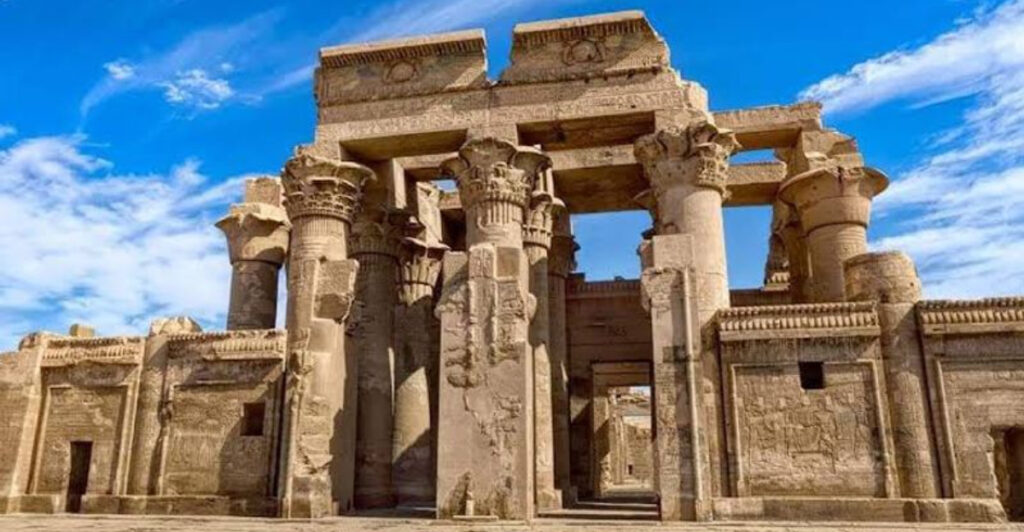
Kom Ombo has a built-in conversation starter: it was dedicated to two gods at the same time. The left side of the temple honored Sobek, the crocodile god, while the right side was devoted to Harwer, or Horus the Elder.
Everything about the layout is essentially mirrored, which gives the building a symmetry you notice as soon as you step inside.
The temple dates primarily to the Ptolemaic Period and sits directly on the Nile, making it a visually appealing stop, especially in the late afternoon when the light over the water is at its best. Many Nile cruise itineraries include a brief stop here between Luxor and Aswan.
An on-site Crocodile Museum displays actual mummified crocodiles recovered from the area, which adds a tangible connection to the Sobek cult that once centered here. The museum is small but genuinely interesting, and it gives the temple complex a bit more depth for visitors who want context beyond the carvings.
The Egyptian Museum – Cairo
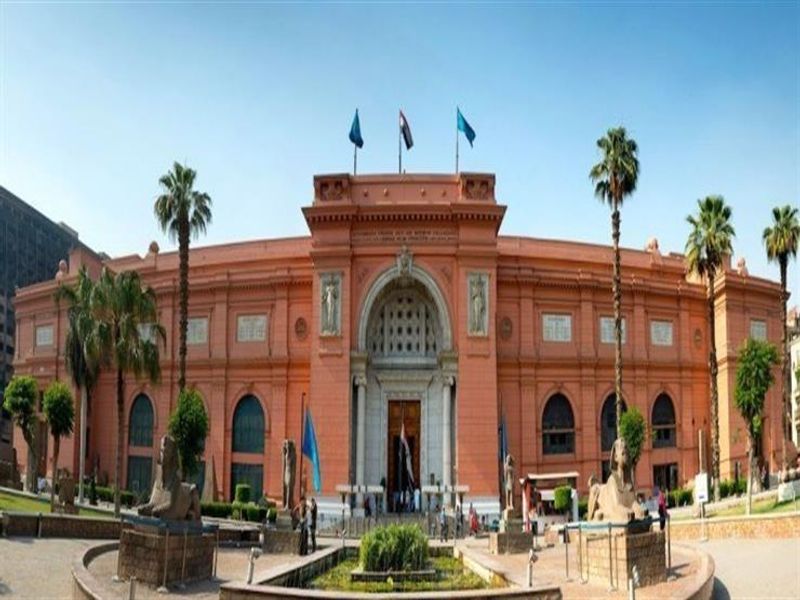
The Egyptian Museum in downtown Cairo opened in 1902, and the building itself carries as much history as some of the objects inside. Its pink neoclassical facade on Tahrir Square has been a landmark for over a century, and the collection inside spans from the Predynastic Period all the way to the Greco-Roman Era.
The museum houses tens of thousands of artifacts, including the treasures of Tutankhamun’s tomb, royal mummies, massive sarcophagi, and everyday objects from ancient Egyptian life. It is one of the oldest and largest archaeological museums in the Middle East, and a single visit rarely covers everything worth seeing.
Even with the Grand Egyptian Museum now drawing attention near Giza, this downtown location remains worth a visit for the building’s character and its central Cairo location. Pairing it with a walk through the surrounding neighborhood or a trip to the nearby Islamic Cairo area makes for a full and rewarding day.
Grand Egyptian Museum – Giza/Cairo
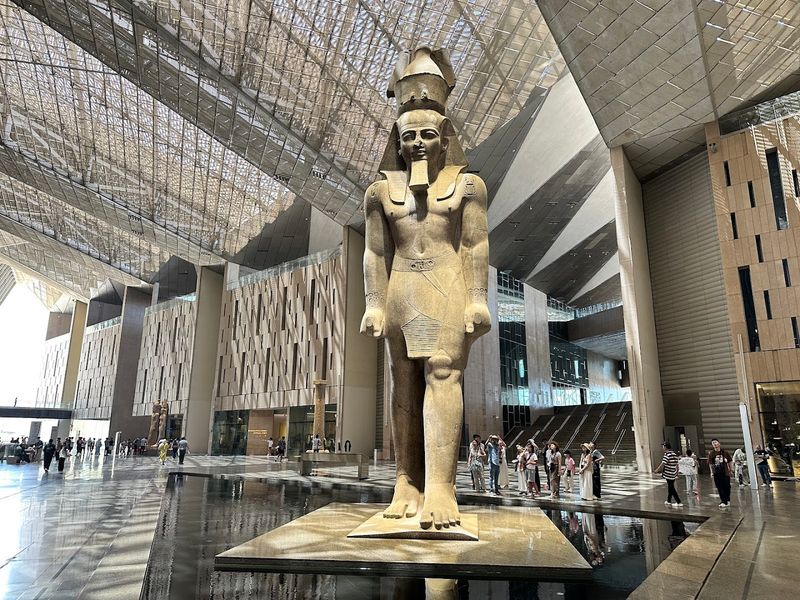
The Grand Egyptian Museum sits just a few kilometers from the Giza pyramids, which means you can genuinely see the ancient wonders from near the museum entrance. That geographic connection between the modern building and the monuments it was built to honor makes the location feel intentional and well chosen.
The museum is designed to house more than 50,000 artifacts, many of which were previously in storage or scattered across smaller institutions. The full collection of Tutankhamun’s treasures, including objects never before displayed publicly, is one of the major draws here.
For travelers who want a more contemporary museum experience after spending time at outdoor archaeological sites, the Grand Egyptian Museum delivers on scale and presentation. The building’s architecture is striking on its own, and the exhibits are organized in a way that helps visitors build context as they move through the space.
Booking tickets in advance is strongly recommended.
Cairo Citadel – Cairo
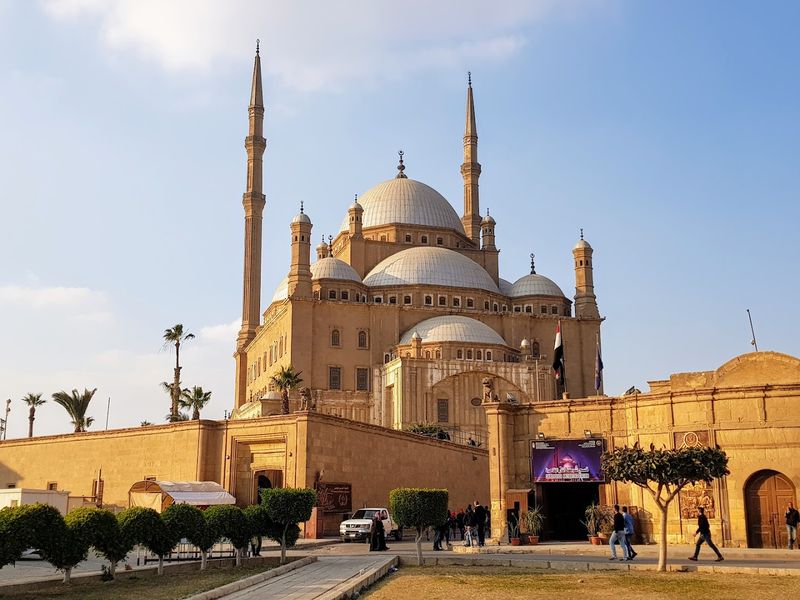
The Citadel of Salah al-Din gives you one of the best elevated views over Cairo and a completely different chapter of Egypt’s history at the same time. Built on the Muqattam Hills in the twelfth century, it served as the seat of Egyptian government for nearly 700 years and still commands the skyline today.
Inside the complex, the Mosque of Muhammad Ali is the centerpiece. Known as the Alabaster Mosque for the stone used extensively in its interior, it features twin minarets and an Ottoman-style dome that make it one of the most recognizable structures in the city.
The Citadel also contains smaller museums covering military history and other aspects of Cairo’s past, so there is more to explore beyond the mosque. The surrounding neighborhood of Islamic Cairo, with its medieval architecture, historic markets, and old mosques, makes the Citadel a natural starting point for a full day in that part of the city.
Bibliotheca Alexandrina – Alexandria
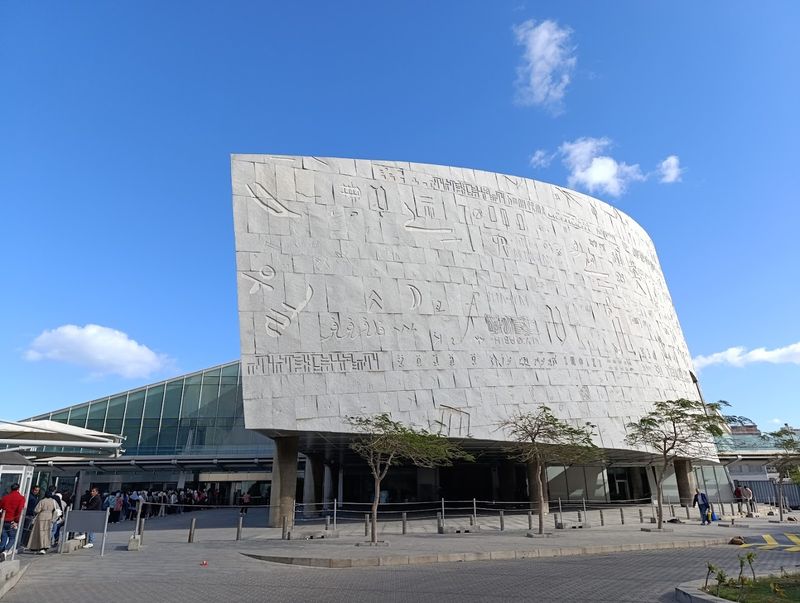
Alexandria already feels like a different country compared to Cairo or Luxor. The Mediterranean air, the coastal layout, and the European architectural influences give the city its own personality, and the Bibliotheca Alexandrina fits right into that character.
Built as a tribute to the ancient Library of Alexandria, the modern building opened in 2002 and was designed by a Norwegian architectural firm. Its tilted circular roof, etched with letters from scripts around the world, is one of the most distinctive pieces of contemporary architecture in the entire region.
The complex includes a main reading room, multiple museums, a planetarium, art galleries, and regular exhibitions.
For travelers who want to add a coastal, culturally layered stop to an Egypt itinerary that has been heavy on ancient sites, Alexandria delivers something genuinely refreshing. The library sits right along the seafront, and the surrounding Corniche area is worth exploring before or after your visit.
White Desert National Park – Western Desert
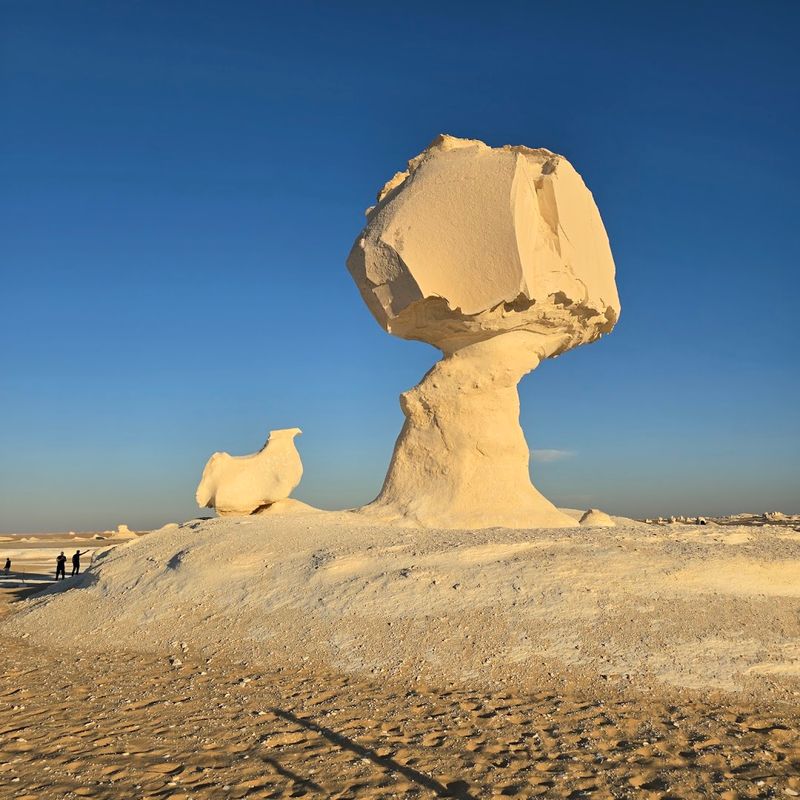
Nothing in Egypt quite prepares you for the White Desert. Located in the Western Desert southwest of Cairo, this national park is filled with wind-eroded chalk formations that rise from the sandy floor in shapes that look almost architectural.
Some resemble animals, others look like abstract sculptures, and the overall effect is genuinely surreal.
The area is protected as a national park, and most visitors explore it on a guided desert tour that includes an overnight camp. Stargazing here is exceptional because the sky is almost entirely free of light pollution, and the silence is the kind you rarely experience near populated areas.
This is not a casual afternoon stop. It takes planning, the right gear, and ideally a licensed guide who knows the terrain.
The nearest town is Farafra, which serves as a base for many tours. For travelers willing to put in the effort, the White Desert offers a side of Egypt that feels completely separate from everything else on this list.
Share this story