San Francisco is the kind of city that makes you feel like you packed three vacations into one trip. In just a few days, you can stand on top of a windy hill with views stretching to the Pacific Ocean, wander through the oldest Chinatown in North America, and ride a wooden cable car that has been hauling passengers up steep streets since the 1800s.
The city is compact but endlessly layered, with history, culture, and personality packed into every neighborhood. This guide covers 13 stops that capture what makes San Francisco one of the most visited cities in the United States, from legendary landmarks to hidden corners that most tourists rush past.
Read on, because a few of these stops might completely change the order of your plans.
1. Golden Gate Bridge
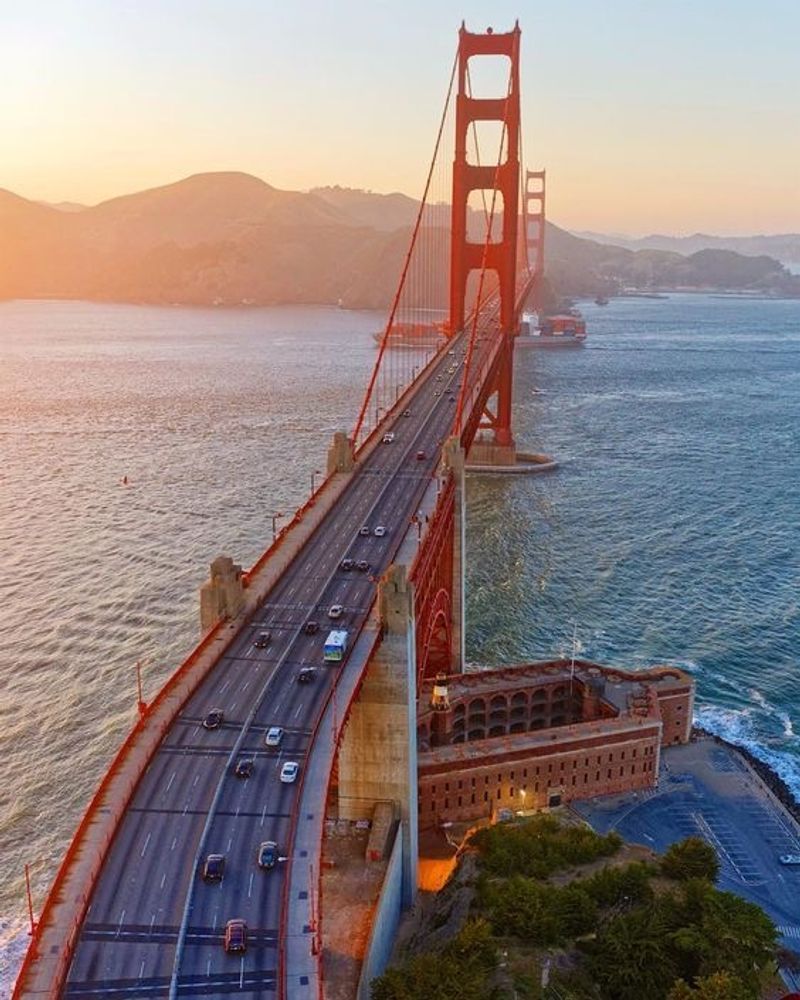
The numbers alone are staggering: 1.7 miles long, 746 feet tall, and held together by enough steel wire to wrap around the Earth three times. When the Golden Gate Bridge opened in 1937, it was the longest suspension bridge on the planet, and it held that record for nearly three decades.
Visitors have a few options for experiencing it. Driving across is quick and easy, but walking or biking the span gives you time to stop, look out over the bay, and take in Alcatraz, the Marin Headlands, and the city skyline all at once.
The bridge has two pedestrian walkways, and the east side is open to walkers daily. Bring a jacket because the wind on the bridge is serious and consistent regardless of the season.
The south parking area at the Welcome Center is a good starting point for first-timers and offers maps, exhibits, and a clear view of the full span.
2. Alcatraz Island
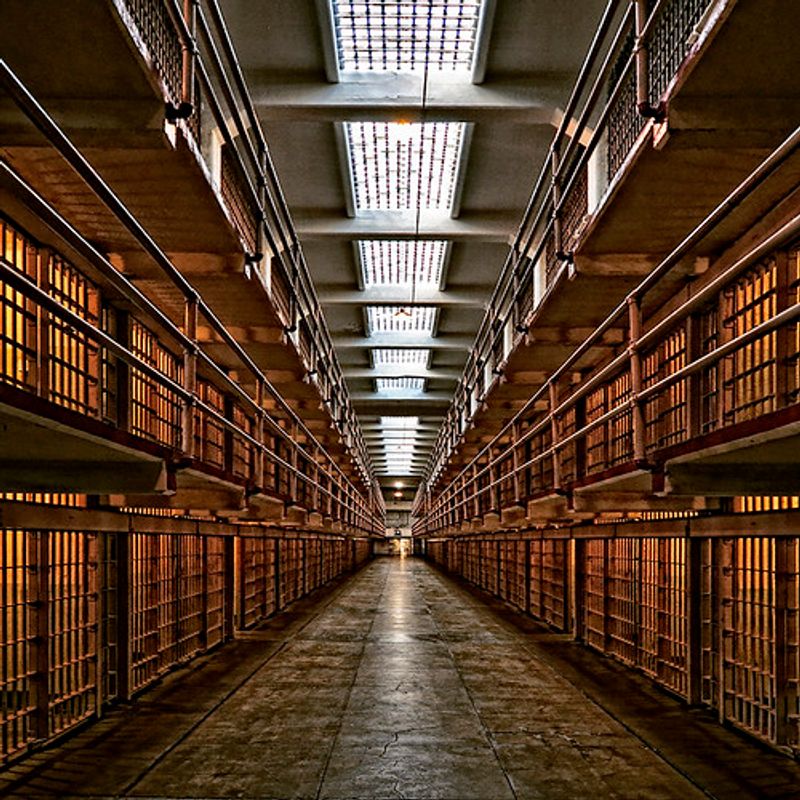
From 1934 to 1963, this rocky island in the middle of San Francisco Bay held some of the most notorious criminals in American history, including Al Capone and George “Machine Gun” Kelly. Today it operates as a national park, and the ferry ride out there is already worth the ticket price.
The self-guided audio tour inside the cell blocks is consistently rated one of the best museum experiences in the country. Former guards and inmates recorded the narration themselves, which gives the whole thing an authenticity that no script could replicate.
Plan at least three hours for the full visit, including the ferry, the tour, and time to walk the grounds. Tickets sell out weeks in advance during peak season, so booking early is not optional.
The island also has gardens that were maintained by prisoners during the facility’s operational years, which adds a surprisingly peaceful layer to an otherwise intense visit.
3. Fisherman’s Wharf
Yes, it is touristy. Yes, the souvenir shops sell the same things you have seen at every other waterfront in America.
And yes, you should still go, because Fisherman’s Wharf delivers on its core promise every single time.
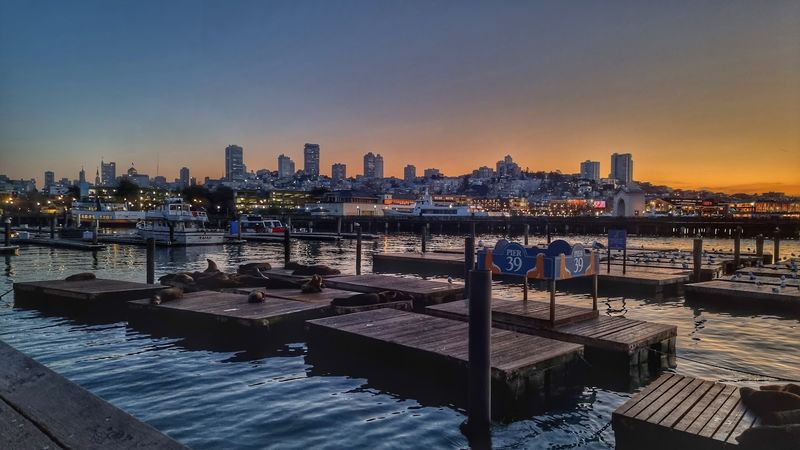
The wharf has been a working fishing port since the 1800s, and the commercial fishing boats still dock here in the early morning hours. By mid-morning, the seafood stands are open and the clam chowder bread bowls are being handed out at a pace that would impress any assembly line.
The bread bowls are made from San Francisco sourdough, which has a distinctly tangy flavor tied to the local wild yeast strains that bakers have been using for over 150 years. Beyond food, the area has street performers, bay cruise departure points, and waterfront views that make it easy to spend a full afternoon without running out of things to do.
4. Pier 39
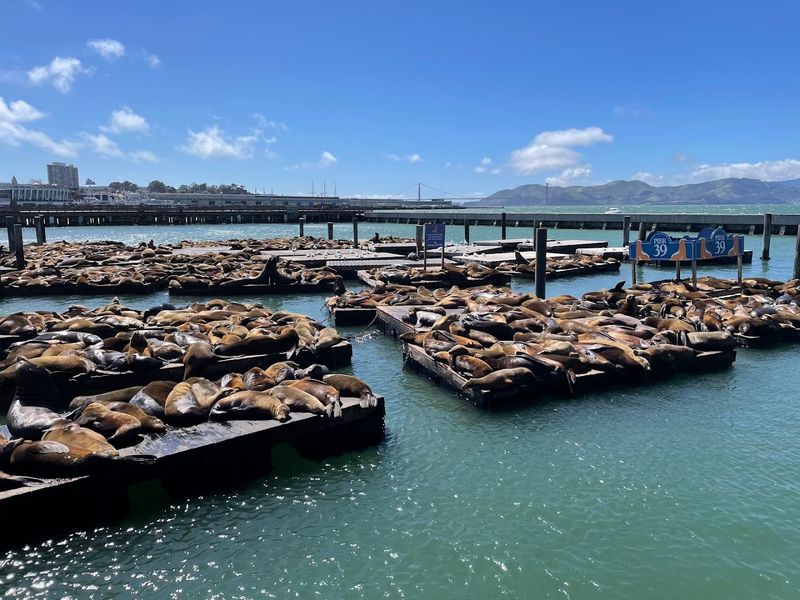
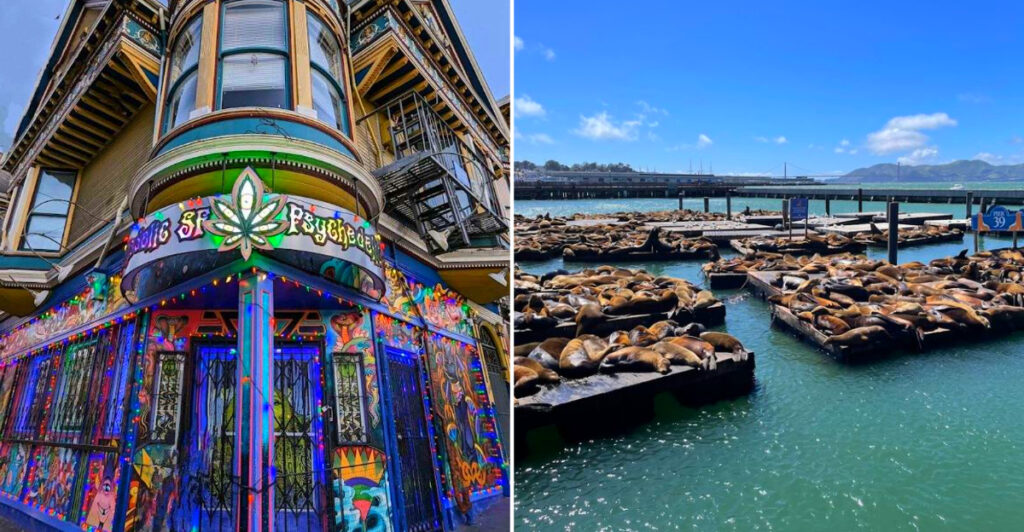
Back in 1989, a small group of California sea lions showed up at the docks of Pier 39 shortly after the Loma Prieta earthquake. Nobody invited them, but nobody could make them leave either, and within a few months the colony had grown to over 300 animals.
Today the sea lions are one of the biggest free attractions in the city. The Marine Mammal Center has an information station nearby explaining the biology and habits of the colony, which fluctuates in size depending on the season.
Beyond the sea lions, Pier 39 has two levels of shops and restaurants, an aquarium, and bay views that stretch toward the bridge on clear days. The pier is also a departure point for bay cruises that pass under the Golden Gate Bridge.
It connects directly to Fisherman’s Wharf, so most visitors cover both in the same outing without much extra walking. Arrive early on weekdays to avoid the biggest crowds.
5. Lombard Street
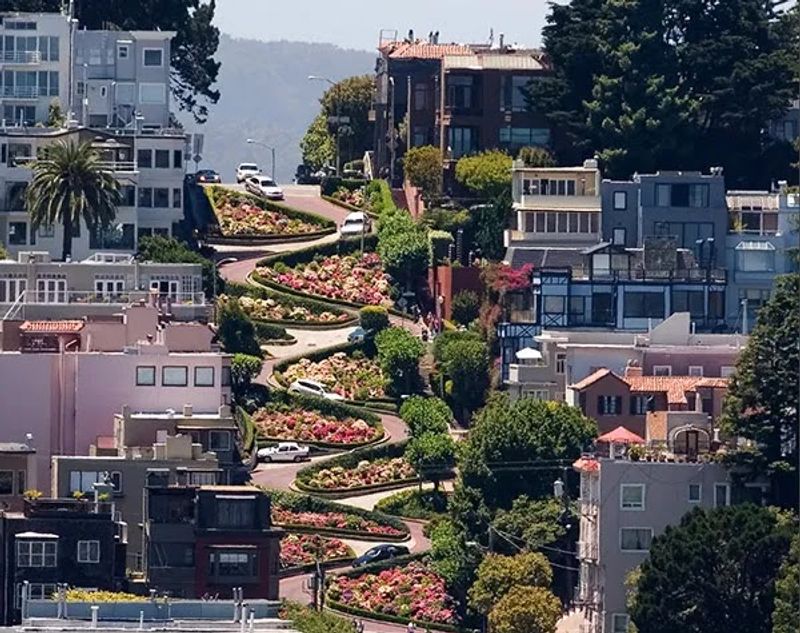
Eight hairpin turns packed into one single block on a 27-degree slope made this street famous, and the title “crookedest street in the world” has stuck ever since, even though a street in Vermont technically holds that record. San Francisco’s version is far more photogenic, so the city wins on points.
The block runs downhill on the 1000 block of Lombard Street in the Russian Hill neighborhood. Cars navigate it slowly from top to bottom, and the line of vehicles waiting to drive down can stretch around the block on busy weekends.
Walking down the pedestrian staircase alongside the road is a better option for most visitors. The flower beds are maintained by the city and change with the seasons, with hydrangeas being the most common bloom.
The view from the top of the block looking down toward Coit Tower and the bay is one of those photos that actually looks better in person than in any guidebook.
6. Chinatown
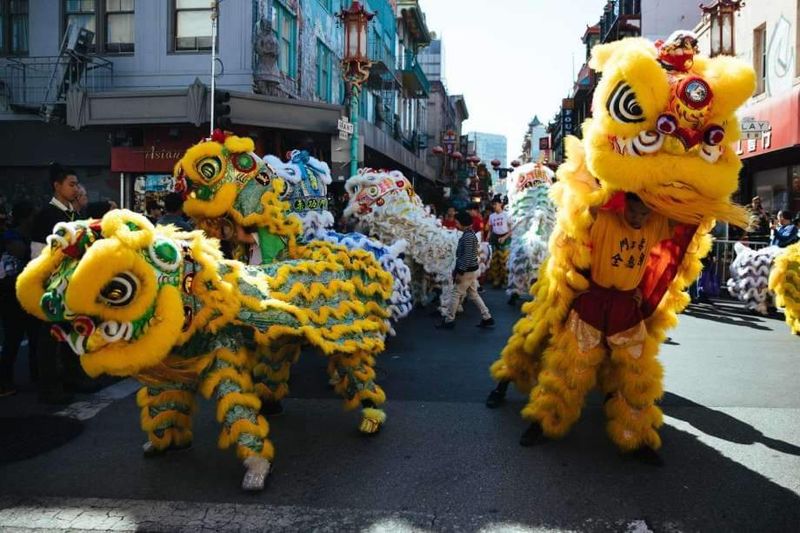
Founded in 1848, San Francisco’s Chinatown is the oldest in North America and one of the most densely populated urban neighborhoods in the entire country. The Dragon Gate at Grant Avenue and Bush Street marks the main entrance and has welcomed visitors since 1970.
Grant Avenue is the main commercial strip, lined with restaurants, herbal medicine shops, jewelry stores, and bakeries. One block over, Stockton Street is where locals actually do their grocery shopping, and the markets there carry produce, seafood, and specialty ingredients that you won’t find anywhere else in the city.
The Golden Gate Fortune Cookie Factory on Ross Alley has been folding cookies by hand since 1962 and charges a small fee to watch the process. Dim sum is available at several restaurants throughout the neighborhood, with the best options typically found on the upper floors of older buildings rather than at street level.
Plan at least two hours to explore properly.
7. Painted Ladies
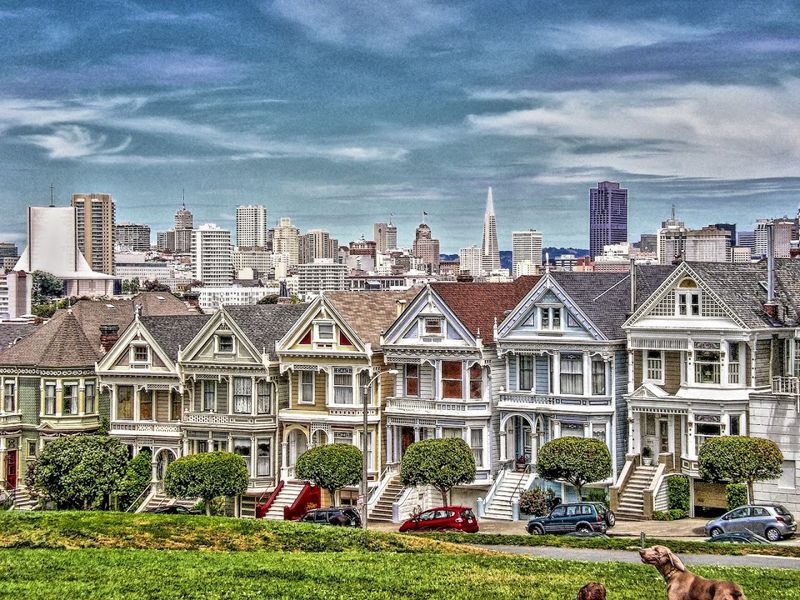
These seven Victorian homes on Steiner Street became internationally recognized after appearing in the opening credits of the television show Full House, which aired from 1987 to 1995. The combination of ornate 19th-century architecture set against a backdrop of modern skyscrapers is genuinely unlike anything else in American urban design.
The houses were built between 1892 and 1896 and have been repainted multiple times over the decades. The term “Painted Ladies” refers to Victorian and Edwardian homes painted in three or more colors to highlight their architectural details, and San Francisco has thousands of them spread across various neighborhoods.
Alamo Square Park sits directly across from the homes and provides the classic viewing angle. The park has benches, open lawn space, and a slightly elevated hill that gives you a clear line of sight to the full row of houses with the downtown skyline rising behind them.
Weekend mornings are the least crowded time to visit.
8. Golden Gate Park
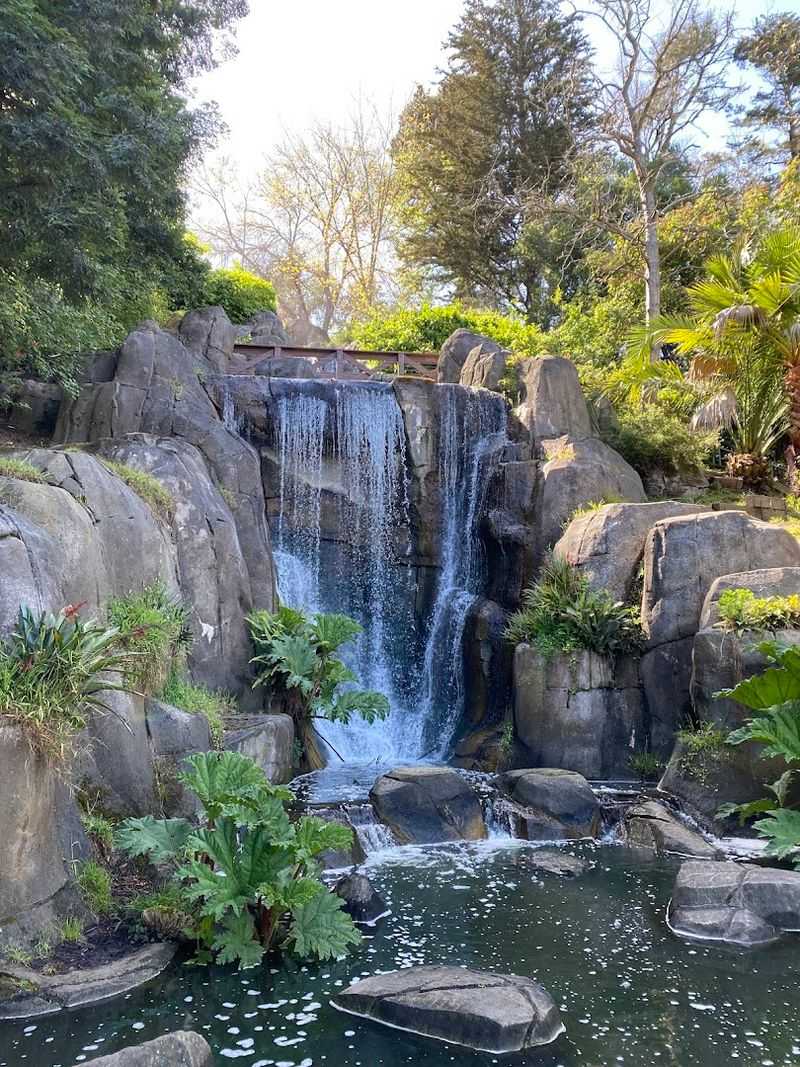
At 1,017 acres, Golden Gate Park is larger than Central Park in New York City, and it was built almost entirely on sand dunes in the 1870s through a massive landscaping project that took decades to complete. That context makes the current park, with its dense tree cover and manicured gardens, feel like a genuine engineering achievement.
The park contains the de Young Museum, the California Academy of Sciences, the Japanese Tea Garden, and the Conservatory of Flowers, all within walking distance of each other. The Japanese Tea Garden is the oldest public Japanese garden in the United States, established in 1894 for the California Midwinter International Exposition.
Bike rentals are available near the park’s main entrance, which is a practical choice given the size of the grounds. On Sundays, a large section of the main road through the park is closed to cars, making it popular with cyclists and pedestrians.
The buffalo paddock near the western end of the park is a surprising and often overlooked feature.
9. Cable Cars
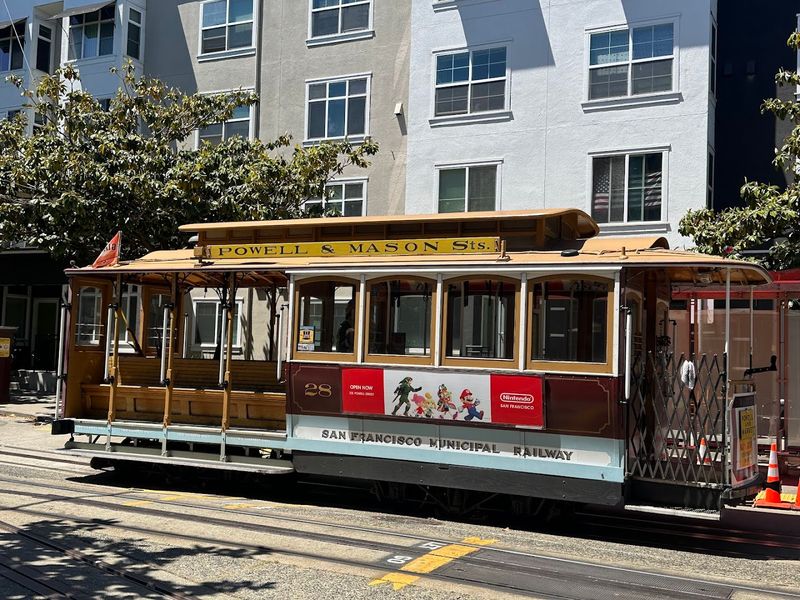
San Francisco’s cable cars have been running continuously since 1873, making them the oldest operating mechanical public transit system in the world. They were declared a National Historic Landmark in 1964, which means the city cannot simply retire them even if it wanted to, and most residents would strongly prefer that it doesn’t.
Three lines are currently in operation. The Powell-Hyde line is the most scenic, running from Union Square up and over Nob Hill before descending toward Fisherman’s Wharf.
The California Street line is the least crowded and gives a cleaner look at how the system works without the tourist traffic of the other routes.
Tickets can be purchased at the cable car turnaround stops or loaded onto a Clipper card. The fare is the same as a standard Muni ride.
Lines at the Powell Street turnaround can be long on weekends, so boarding at a mid-route stop is a smarter strategy that most guidebooks don’t mention prominently enough.
10. Coit Tower
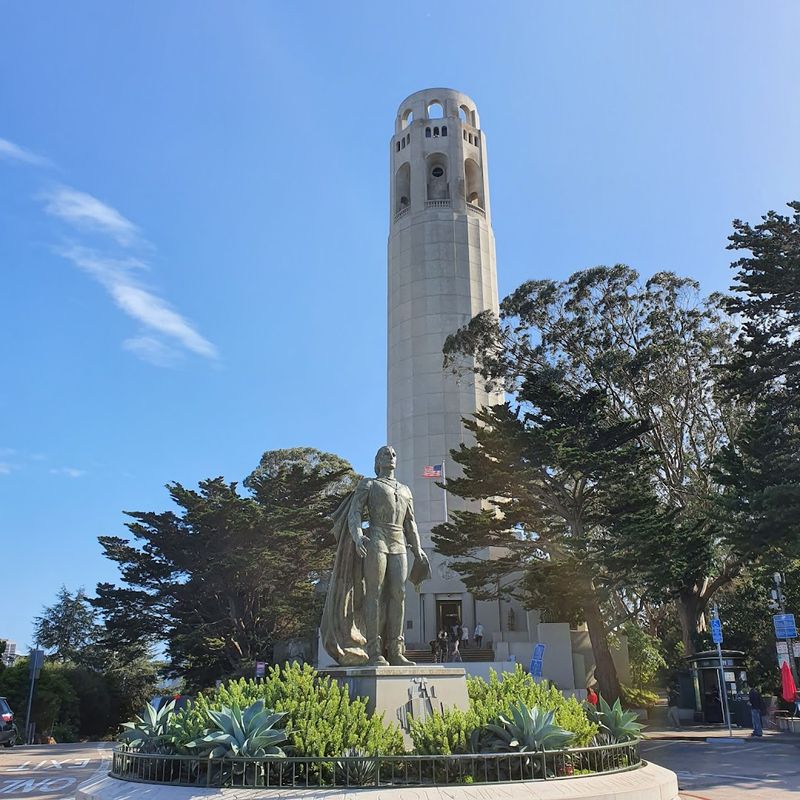
The story behind Coit Tower is genuinely unusual. Lillie Hitchcock Coit, a wealthy San Francisco socialite, left a third of her estate to the city upon her passing in 1929 with instructions to use it to beautify San Francisco.
The result was this 210-foot concrete tower, completed in 1933 on the top of Telegraph Hill.
The interior of the base level contains murals painted by 26 artists during the New Deal era under the Public Works of Art Project. The murals depict California workers, farmers, and industrial scenes and were controversial at the time due to their political themes.
They are now considered historically significant works of American art.
An elevator inside the tower takes visitors to the top observation deck, where the views cover the Golden Gate Bridge, Alcatraz, the Bay Bridge, and the city’s neighborhoods in every direction. The surrounding area on Telegraph Hill is also home to a colony of wild parrots that nest in the trees along the hillside paths.
11. The Ferry Building Marketplace
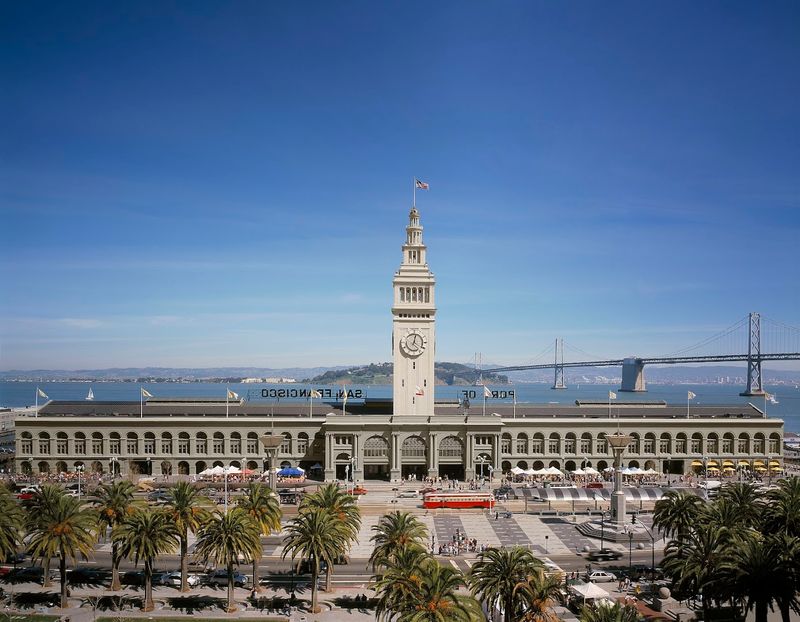
Built in 1898, the Ferry Building served as the main gateway into San Francisco for decades before the Bay Bridge opened in 1936 and car traffic became the dominant mode of arrival. At its peak, the building processed 50,000 commuters per day.
Today it still functions as a working ferry terminal while doubling as one of the best food markets in the country.
Inside, more than 30 vendors occupy the ground floor, including artisan cheese shops, specialty coffee roasters, oyster bars, and a butcher that sources from local farms. The building layout is long and open, making it easy to walk the full length and sample before committing to anything.
On Tuesday, Thursday, and Saturday mornings, a farmers market sets up outside along the Embarcadero. The Saturday market is the largest and draws both locals and visitors for fresh produce, prepared foods, and specialty products from Northern California farms.
The bay views from the outdoor terrace are a worthwhile bonus on clear days.
12. Haight-Ashbury
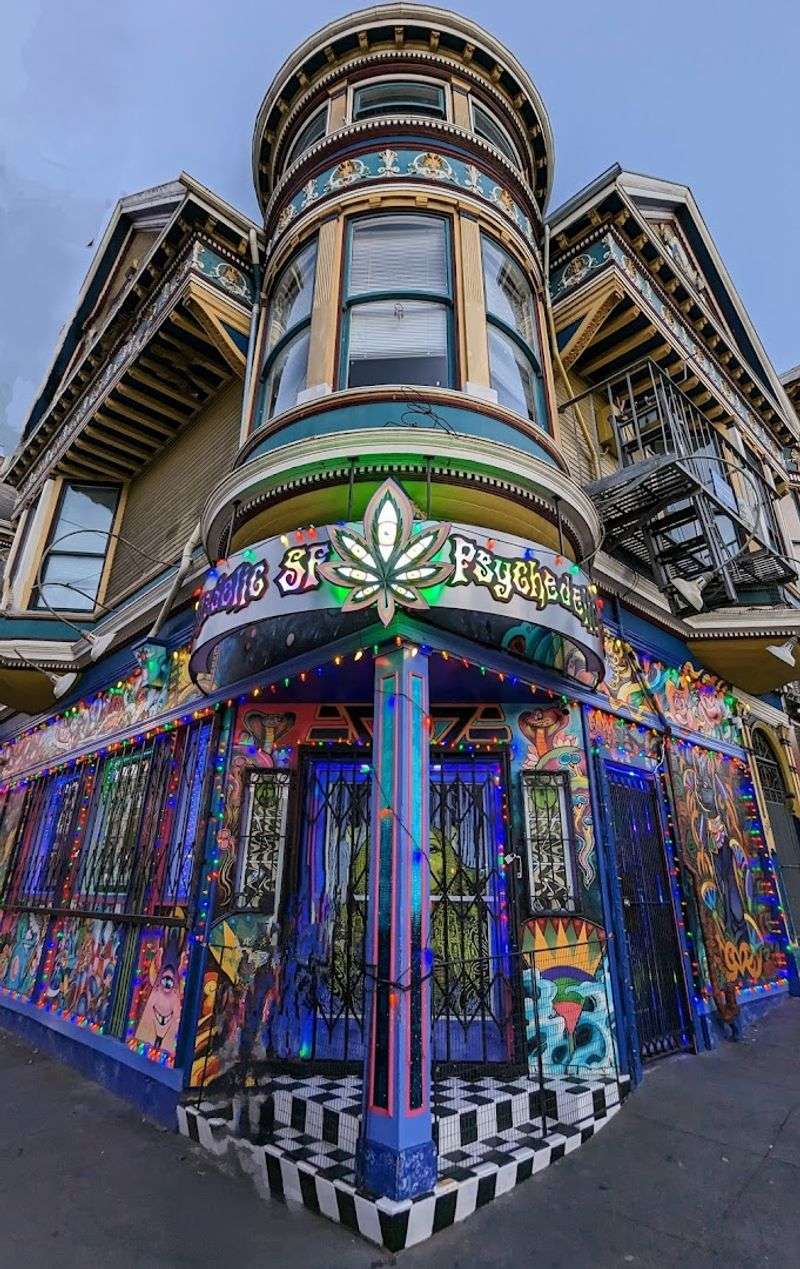
In the summer of 1967, an estimated 100,000 young people descended on this neighborhood for what became known as the Summer of Love. Haight-Ashbury was already the center of San Francisco’s counterculture movement, and that summer cemented its place in American cultural history in a way that still draws visitors from around the world.
The neighborhood has held onto its identity more stubbornly than most. The main commercial stretch along Haight Street still has an unusually high concentration of vintage clothing stores, independent record shops, and used bookstores for a city of San Francisco’s size and cost.
Several homes along the surrounding streets were occupied by famous musicians and artists during the 1960s, and self-guided walking tour maps are available at local shops. The Ben and Jerry’s on the corner of Haight and Ashbury was the first franchise location to close on Jerry Garcia’s passing in 1995 as a mark of respect.
That kind of detail is what makes this neighborhood feel different from a regular shopping district.
13. Twin Peaks
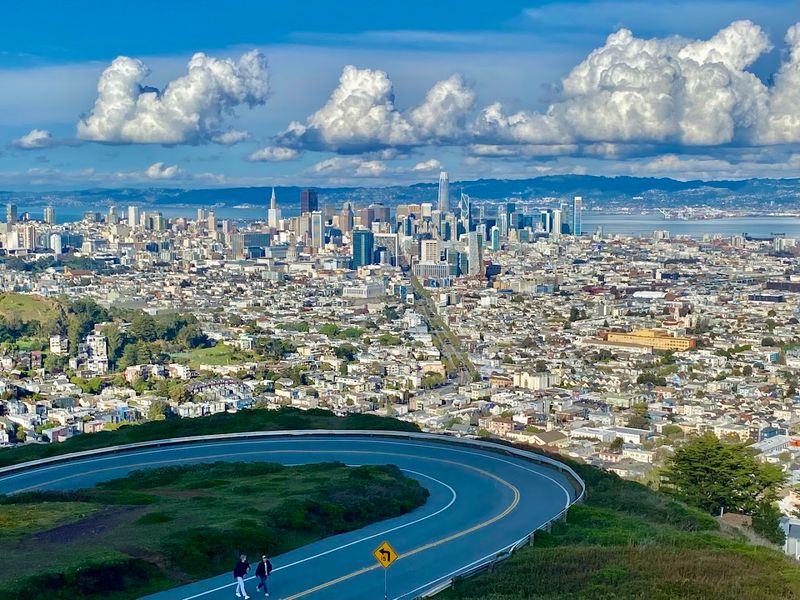
At 922 feet above sea level, Twin Peaks is one of the highest points within city limits, and the views from the top are the most complete you will find anywhere in San Francisco without getting on an airplane. On a clear day, the panorama covers downtown, both bridges, the bay, and the Pacific Ocean simultaneously.
The two hills are named Eureka and Noe, and a road loops around the top with a designated parking and viewing area called Christmas Tree Point. Most visitors drive up, but a hiking trail from the base is available for those who want to earn the view on foot.
Fog is a real factor here. The peaks sit right at the elevation where marine fog tends to settle, so checking the forecast before making the drive is a practical step.
Clear mornings in September and October are statistically the most reliable window for unobstructed views. Sunset visits are popular but tend to draw the largest crowds of the day.
Share this story