Most people visit the Czech Republic and never leave Prague. That’s a shame, because the rest of the country is packed with jaw-dropping castles, fairy-tale towns, and UNESCO sites that rival anything in Western Europe.
I made that mistake on my first trip, and I spent years making up for it. From a village that looks like a film set to a modernist villa that changed architecture forever, here are 13 landmarks that prove Czechia is so much more than one city.
Český Krumlov Castle and Historic Center
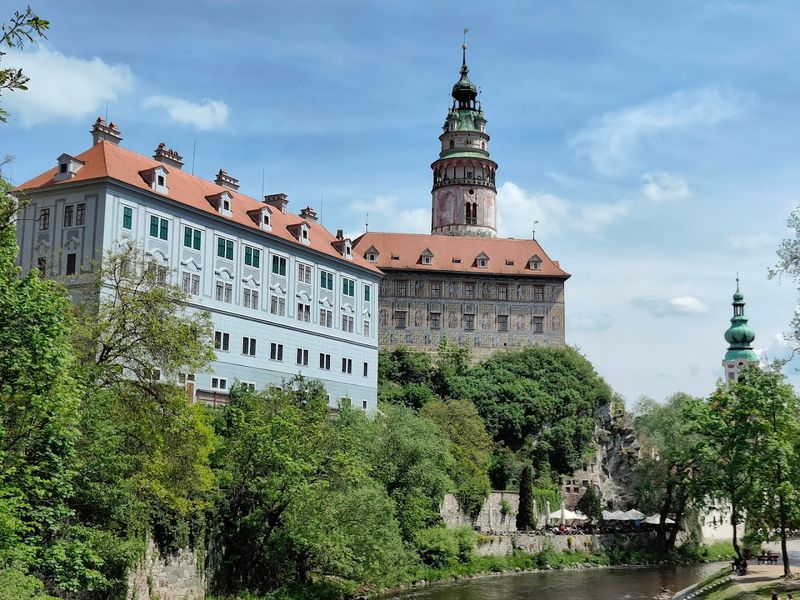
Nobody warned me that Český Krumlov would stop me in my tracks. The castle towers over a horseshoe bend of the Vltava River, and the entire town below it looks like it was frozen sometime in the 15th century.
It is the second largest castle complex in the Czech Republic, and UNESCO agreed it was worth protecting back in 1992.
What makes it truly special is not one single building but the whole package. Medieval streets twist past Renaissance courtyards, and every corner reveals a new angle worth photographing.
The castle also has a working Baroque theater with original stage machinery, which is genuinely rare in Europe.
Skip the peak summer crowds by arriving early morning or visiting in late autumn. The town is compact enough to explore on foot in a day, but it rewards those who stay overnight.
When the day-trippers leave, Český Krumlov gets wonderfully quiet and atmospheric.
Kutná Hora and St. Barbara’s Cathedral
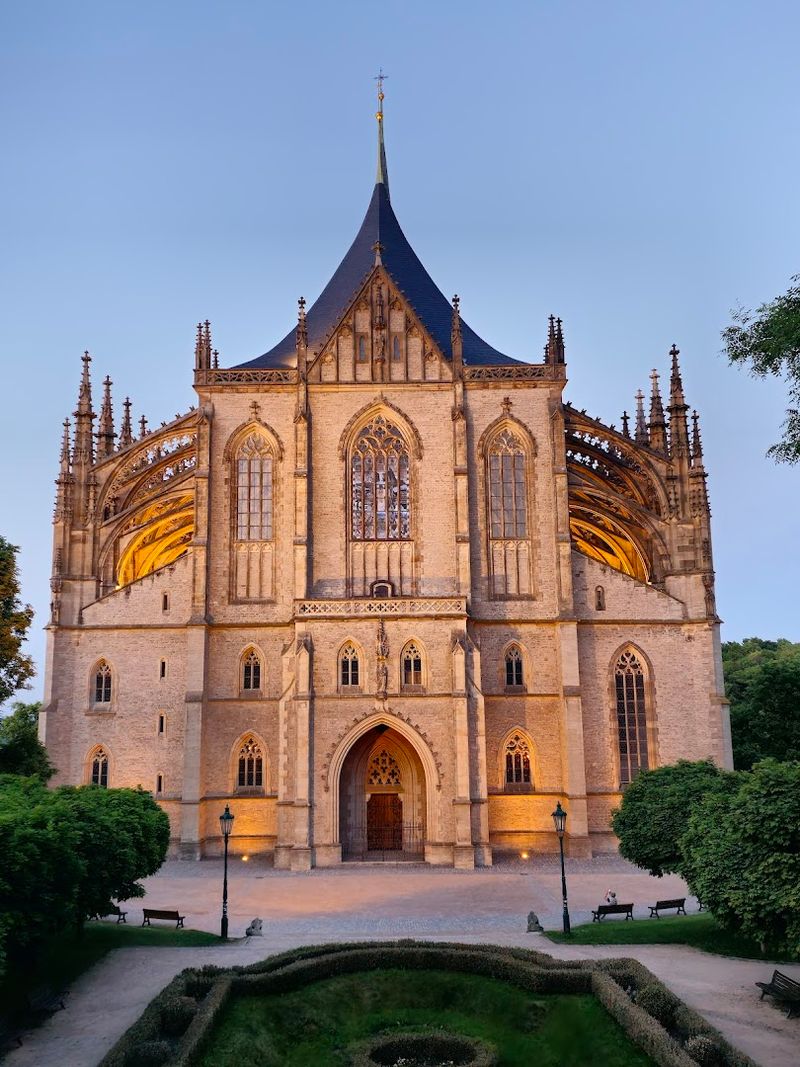
Silver made Kutná Hora one of the richest towns in medieval Central Europe, and the locals spent that wealth on a cathedral that still makes jaws drop today. St. Barbara’s Cathedral was built as a tribute to the patron saint of miners, and its soaring Gothic spires and flying buttresses look almost aggressively ambitious for a mid-sized Bohemian town.
The interior is equally impressive, with frescoed vaulting and stained glass that filters light in all the right ways. The nearby Sedlec district adds a second UNESCO site to the same day trip, including the famous Bone Church, where the bones of around 40,000 people decorate the interior.
Yes, really.
Kutná Hora sits about an hour east of Prague by train, making it one of the easiest and most rewarding day trips in the country. History lovers, architecture fans, and anyone with a taste for the macabre will find something to love here.
Telč Historic Center
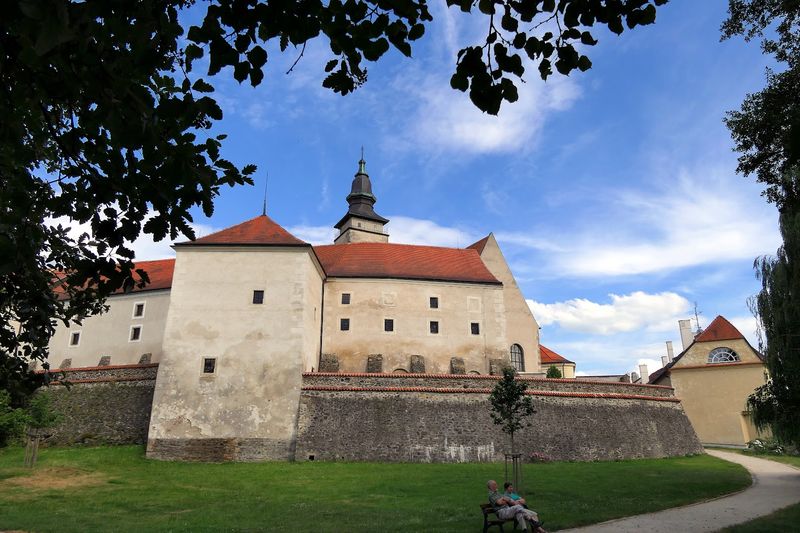
Telč’s main square is the kind of place that makes you check whether you accidentally walked onto a film set. Every building around the square is a different pastel shade, with arcaded ground floors and ornate Renaissance or Baroque facades.
VisitCzechia calls it one of the finest examples of Italian Renaissance style north of the Alps, and that is not an overstatement.
The town got its distinctive look after a fire in the 16th century, when the local lord rebuilt everything in the fashionable Italian style of the time. Lucky fire, honestly.
The chateau at one end of the square adds to the drama, and the surrounding fishponds give the whole ensemble a mirror-like reflection on calm days.
Telč is compact and very walkable, making it a low-effort, high-reward stop. It sits in the South Moravian highlands, so pairing it with Třebíč or Brno makes for an efficient and beautiful road trip through Czechia’s less-visited interior.
Lednice-Valtice Cultural Landscape
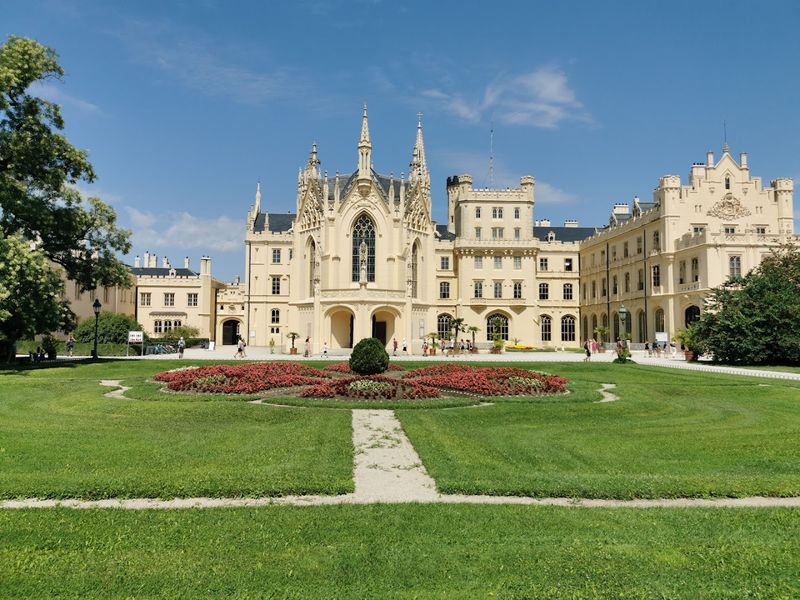
Calling Lednice-Valtice a park feels like calling the Sistine Chapel a ceiling. This UNESCO-listed landscape stretches across nearly 300 square kilometers of southern Moravia and was shaped over centuries by the Liechtenstein family, who apparently had very ambitious hobbies.
Chateaux, colonnades, a minaret, temples, and romantic follies are scattered across rolling parkland and vine-covered hills.
The two main chateaux, Lednice and Valtice, are connected by cycling and walking paths that pass through some genuinely beautiful countryside. Valtice also sits at the heart of Czech wine country, so a detour for a glass of Moravian white is practically mandatory.
I once spent a full afternoon just cycling between garden features and still felt like I had missed half of it.
This is not a quick stop. Plan a full day or even a weekend.
The landscape rewards slow exploration, and the combination of architecture, nature, and wine makes it one of the most enjoyable UNESCO sites in Central Europe.
Holašovice Historic Village
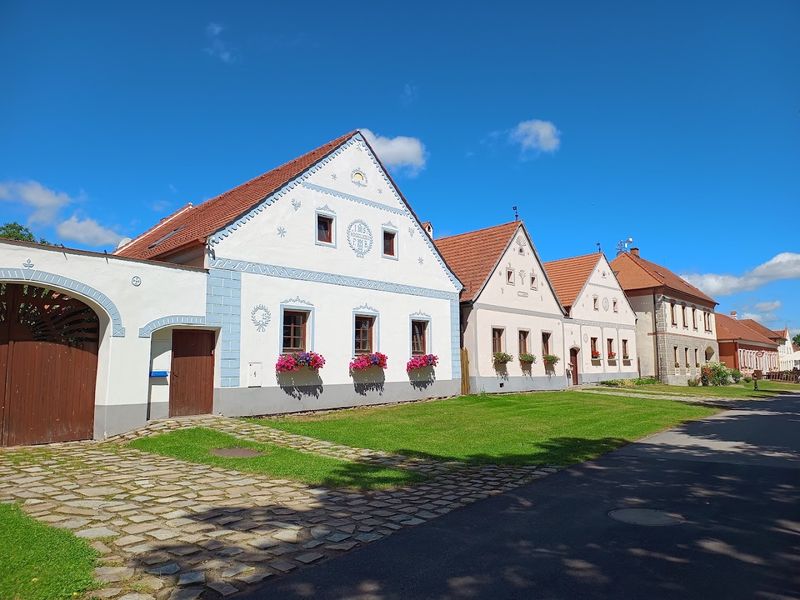
Not every landmark needs to be a castle or a cathedral. Holašovice makes the case that a well-preserved village can be just as remarkable, and UNESCO agreed by listing it in 1998.
The farmhouses here are arranged around a central green and decorated with South Bohemian folk Baroque facades that are genuinely unlike anything else in the country.
The style is called South Bohemian folk Baroque, which sounds academic until you actually see it. The whitewashed walls and ornate gable decorations give the whole village a cheerful, almost theatrical look that feels handmade rather than grand.
It stayed so well preserved partly because it was abandoned after World War II and only slowly resettled, which accidentally saved it from modernization.
Holašovice is small and quiet, best visited as a detour from Český Krumlov or České Budějovice. There is not a huge amount to do beyond walking and looking, but sometimes that is exactly the point.
It is a genuinely peaceful place.
Litomyšl Castle
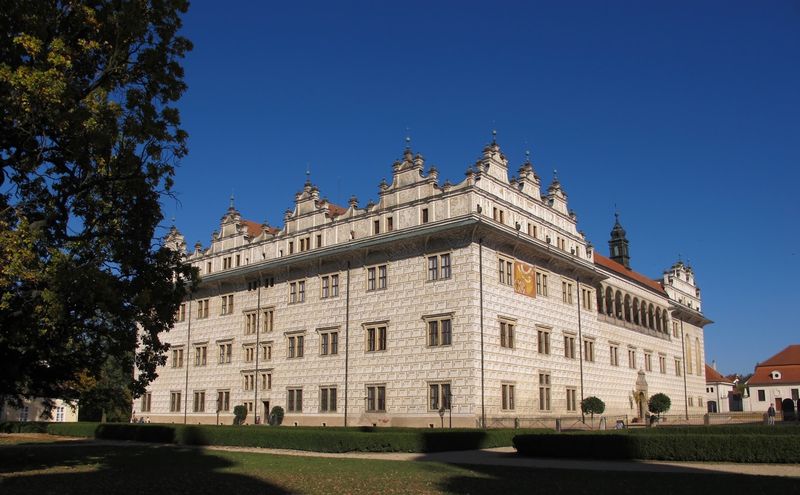
Sgrafitto is the art of scratching patterns into wet plaster to reveal a contrasting layer underneath, and Litomyšl Castle has so much of it that the entire facade looks like an elaborate drawing. The Renaissance arcaded courtyard is one of the most elegant in Bohemia, and the castle was built for the powerful Pernštejn family in the 16th century.
UNESCO recognized it in 1999.
Litomyšl also has a fun musical footnote: composer Bedřich Smetana was born here in 1824, in a brewery attached to the castle grounds. The town celebrates this every summer with an international opera festival held in the castle courtyard, which is about as atmospheric a concert venue as you will find anywhere.
The surrounding town is charming and unhurried, with a long arcaded square that echoes the castle’s Renaissance style. For travelers who want culture, architecture, and a relaxed pace without the crowds of bigger Czech cities, Litomyšl delivers quietly and consistently.
Kroměříž Castle and Gardens
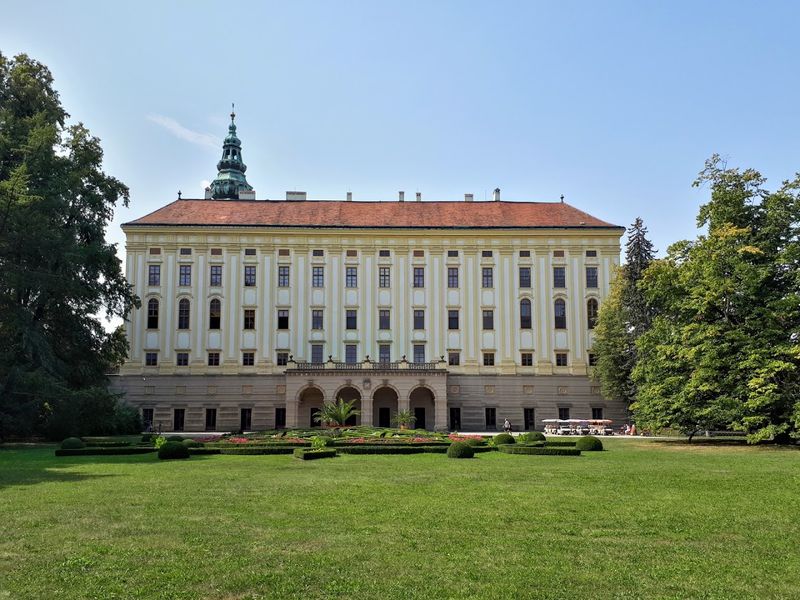
The Archbishop’s Chateau in Kroměříž once hosted the Austrian imperial parliament during the revolutions of 1848, which gives you a sense of just how impressive the place is. The Baroque gardens are the real showstoppers, though.
The Flower Garden is one of the best-preserved Baroque gardens in Central Europe, with symmetrical parterres, fountains, and a colonnaded rotunda that looks like it belongs in Italy.
UNESCO listed both the chateau and its gardens in 1998, recognizing the combination as an exceptional example of European Baroque landscape design. The chateau’s art collection is also worth time, with works by Titian, Cranach, and Veronese tucked inside its painted halls.
Not bad for a town most tourists skip entirely.
Kroměříž sits in the Haná region of Moravia, close to Olomouc, making the two easy to combine. The town itself has a relaxed, lived-in feel that is refreshing after busier tourist destinations.
Baroque beauty, world-class gardens, and zero queues. That is a winning combination.
Holy Trinity Column in Olomouc
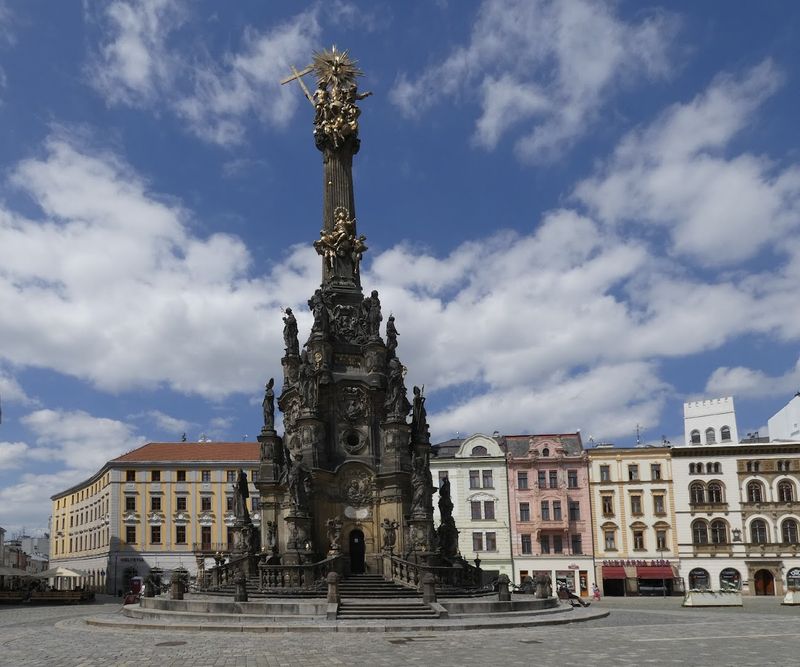
Standing 35 meters tall in the middle of Olomouc’s Upper Square, the Holy Trinity Column is the largest free-standing Baroque sculpture in Central Europe. That is a bold claim, and it holds up.
The column was built between 1716 and 1754, funded partly by the city and partly by a local locksmith who left his entire fortune to the project. Dedication does not even begin to cover it.
UNESCO added it to the World Heritage List in 2000, recognizing its artistic ambition and historical significance. The column is covered in gilded religious figures and topped by a gilded Holy Trinity group that catches the light beautifully on clear days.
It is surrounded by Baroque fountains that are also worth a look.
Olomouc itself is seriously underrated. The city has a lively student population, excellent coffee shops, and a historic center full of churches and fountains.
It is often called the Baroque jewel of Moravia, and after spending a day there, it is hard to argue with that.
Villa Tugendhat in Brno
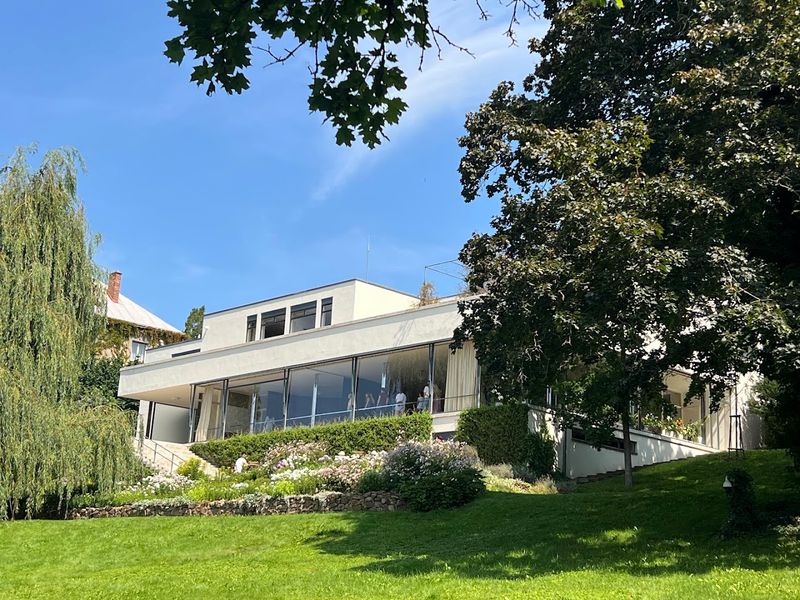
Most Czech landmarks involve knights, bishops, or aristocrats. Villa Tugendhat is about none of that.
Designed by Ludwig Mies van der Rohe and completed in 1930, it is one of the most important works of modern architecture anywhere in the world, and it sits quietly in a residential neighborhood of Brno. UNESCO listed it in 2001.
The house was built for the Tugendhat family and pioneered the open-plan living concept that architects still argue about today. Its floor-to-ceiling glass walls, onyx room divider, and chrome columns were radical ideas at the time.
The family fled Nazi occupation in 1938, and the villa had a complicated 20th century before being carefully restored.
Visiting requires a booked tour, which is worth planning ahead for. The interior is genuinely moving in a way that is hard to explain until you are standing inside it.
For anyone interested in design, architecture, or 20th-century history, Villa Tugendhat is a non-negotiable stop in Brno.
Třebíč Jewish Quarter and St. Procopius Basilica
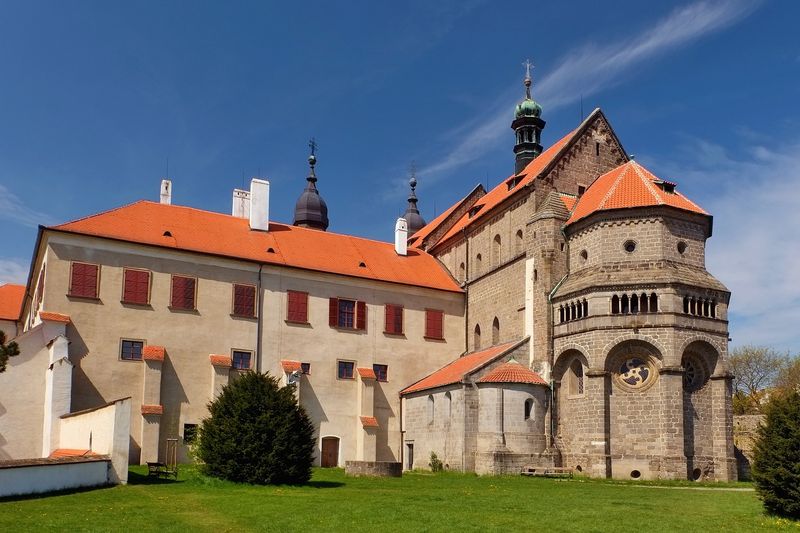
Třebíč holds a distinction that no other site on the UNESCO World Heritage List shares: it is the only Jewish heritage site outside Israel to be listed independently of a wider historic center. The Jewish Quarter here is one of the best-preserved in Europe, with synagogues, a historic cemetery, and narrow lanes that have barely changed since the 18th century.
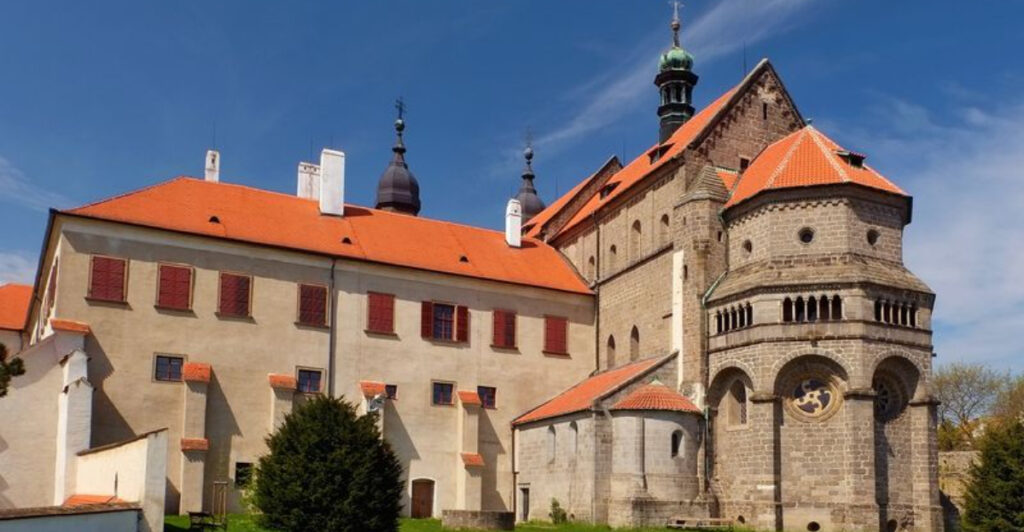
Right next to it stands St. Procopius Basilica, a 13th-century Romanesque and Gothic church that was once part of a Benedictine monastery. The juxtaposition of Jewish and Christian heritage in such a compact area is what made UNESCO take notice in 2003.
Both communities shaped the town for centuries, and both left remarkable architecture behind.
Třebíč is an easy drive from Brno or Telč and is rarely crowded, which makes exploring the Jewish Quarter feel genuinely unhurried. The cemetery alone is worth the trip, with thousands of gravestones covering a hillside in a way that is quietly and unexpectedly beautiful.
Zelená Hora Pilgrimage Church
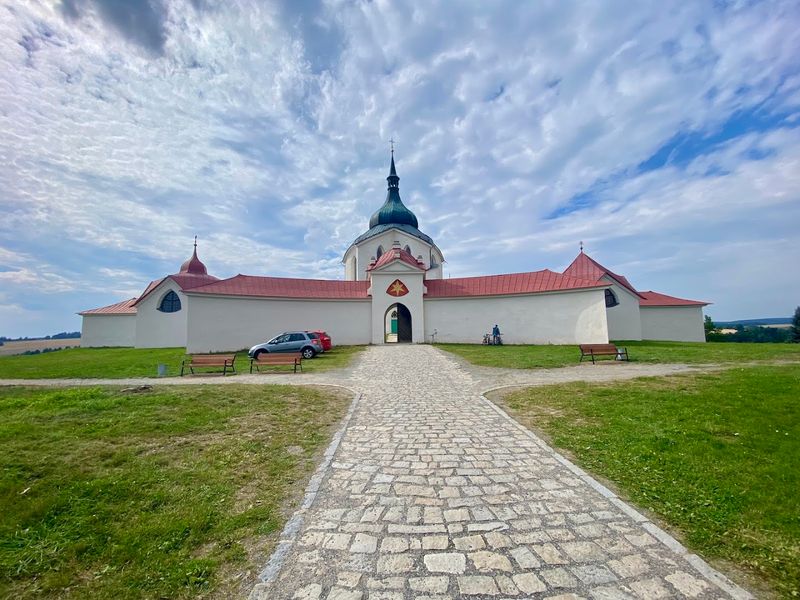
Jan Blažej Santini Aichel was an architect who clearly did not believe in doing things simply. The Pilgrimage Church of St. John of Nepomuk at Zelená Hora, completed in 1727, is built around the symbolic number five: five gates, five chapels, five altars, five stars on the ceiling vaulting.
St. John of Nepomuk had five stars associated with his martyrdom legend, and Santini worked that symbolism into every corner of the design.
Seen from above, the church forms a perfect star shape surrounded by a cloister, which is unusual enough to make architects do a double take. The style blends Gothic forms with Baroque decoration in a way that Santini practically invented himself, often called Baroque Gothic or Czech Baroque Gothic.
UNESCO listed it in 1994.
The church sits on a gentle hill near Žďár nad Sázavou in the Bohemian-Moravian Highlands. It is not the easiest site to reach without a car, but the combination of architectural weirdness and peaceful hilltop setting makes it one of the most memorable UNESCO visits in the country.
Karlštejn Castle
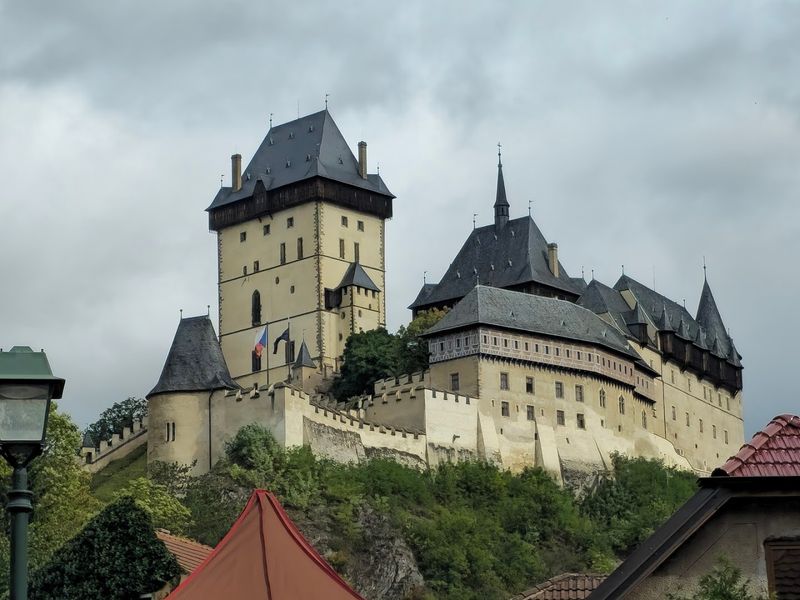
Charles IV built Karlštejn in the 14th century with a very specific purpose: keeping his most valuable stuff safe. Crown jewels, holy relics, and royal treasures were stored here, and the castle’s layout reflects that priority, with the most sacred spaces placed highest and most heavily fortified.
It was completed in 1365 and has been one of Bohemia’s most recognizable landmarks ever since.
The castle rises dramatically from a forested ridge above the Berounka River valley, and the approach on foot through the village below gives you a classic Czech castle experience. The towers and walls look exactly as a Gothic fortress should look, which is probably why Karlštejn appears on more Czech postcards than almost any other site outside Prague.
It is popular, and the busier tours sell out fast, so booking ahead in summer is genuinely necessary. The Chapel of the Holy Cross, which houses replica crown jewels, is only accessible on a special tour, but it is worth the extra planning.
Karlštejn earns its fame.
Hluboká Castle
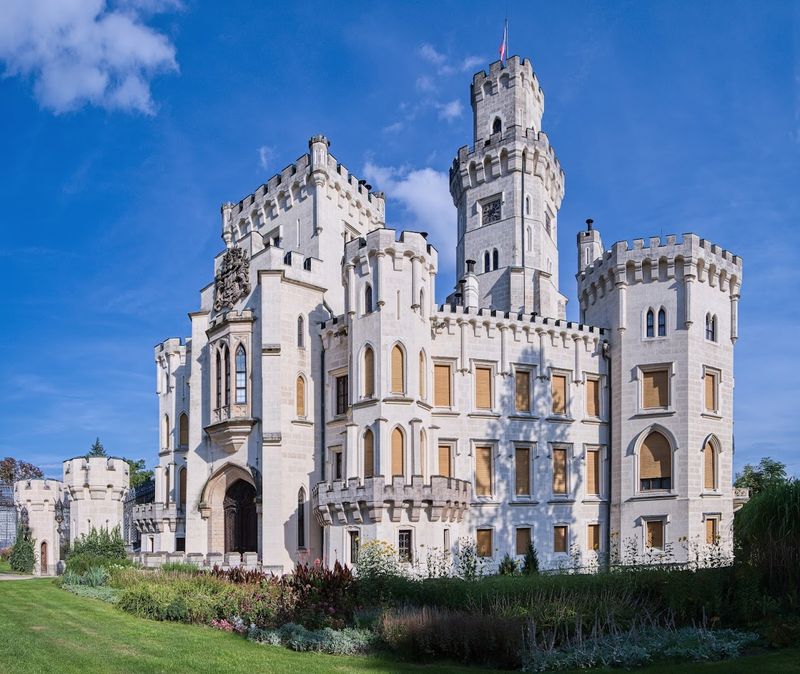
Hluboká Castle looks so perfectly romantic that it almost seems unfair to real castles. The white Neo-Gothic towers, crenellated walls, and immaculate parkland were inspired by Windsor Castle in England, redesigned in the mid-19th century for the Schwarzenberg family who apparently wanted something suitably fairy-tale for their South Bohemian estate.
The official castle site calls Hluboká one of the most significant Romantic monuments in the European and world context, which is either very Czech understatement or very accurate, depending on your expectations. The furnished interiors are among the best in the country, with hunting trophies, tapestries, and painted ceilings that reflect the Schwarzenbergs’ considerable taste and budget.
The surrounding English-style park is free to walk through and lovely in any season. Hluboká sits just north of České Budějovice, home of the original Budweiser brewery, so combining both in one day is both culturally enriching and potentially very well-hydrated.
Plan accordingly.
Share this story