Missouri has a way of surprising people who think they already know what the state has to offer. Tucked between the Mississippi River and the Kansas border is a collection of state parks that range from ancient granite boulder fields to underground cave systems, from the state’s highest peak to a converted railroad trail stretching across hundreds of miles of countryside. You can spend a weekend fishing a spring-fed trout stream, hiking through sandstone canyons, or standing at the top of the Ozarks with the whole horizon in front of you. These parks are not just nice places to visit on a sunny afternoon.
They are the kind of destinations that make you look up directions on a Monday morning and start planning your next trip before you have even unpacked from the last one. Read on to find the park that matches your idea of the perfect weekend.
1. Ha Ha Tonka State Park, Camdenton, Missouri
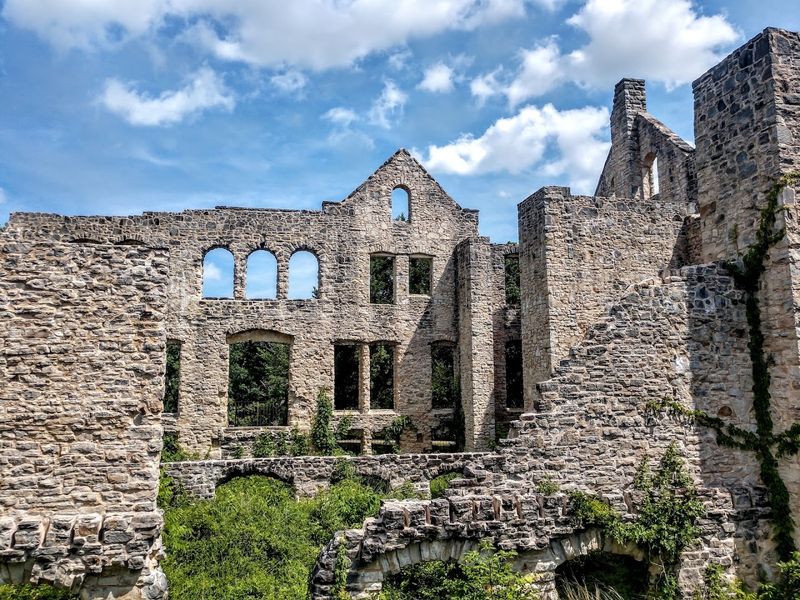
Castle ruins and a natural bridge sitting above a massive Ozark lake is not something most people expect to find at a Missouri state park, yet that is exactly what Ha Ha Tonka delivers.
The stone castle was originally built in the early 1900s by a Kansas City businessman, and after a fire destroyed it decades later, the walls were left standing as a dramatic open-air landmark.
Visitors can walk boardwalks and hiking trails that lead to overlooks above the Lake of the Ozarks, pass through a natural bridge spanning 60 feet, and peer into sinkholes that drop into the cave system below.
The park also sits above the state’s 12th largest spring, which pours into the lake from beneath the bluffs.
Photography enthusiasts consistently rate this as one of Missouri’s most rewarding spots, and it is easy to see why once you are standing at the castle overlook with the lake spread out below you.
2. Johnson’s Shut-Ins State Park, Middle Brook, Missouri
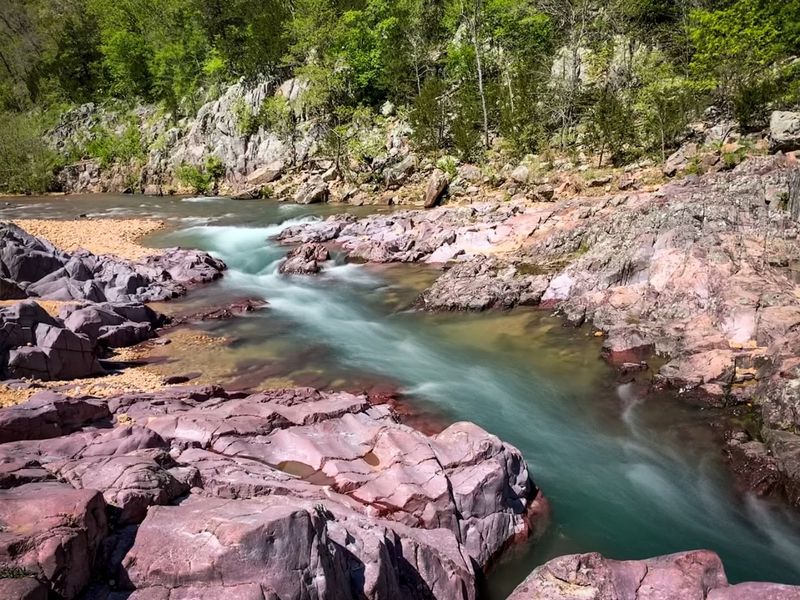
Ancient volcanic rock and a river that has been carving its own path for over a billion years combine to create one of Missouri’s most unusual outdoor experiences.
The East Fork Black River flows through narrow gorges and smooth rock channels called shut-ins, creating a series of natural pools and small waterfalls that draw crowds every summer weekend.
Beyond the water, the park covers more than 8,700 acres in the St. Francois Mountains, with trails for hikers, backpackers, and mountain bikers who want to explore terrain that looks unlike anything else in the Midwest.
Campgrounds and picnic areas make an overnight stay easy to plan, and the park’s size means you can find quieter corners away from the busiest swimming areas.
The geology here is genuinely remarkable. The volcanic rhyolite formations are among the oldest exposed rock in North America, giving this park a kind of deep-time credibility that few destinations can match.
3. Elephant Rocks State Park, Belleview, Missouri
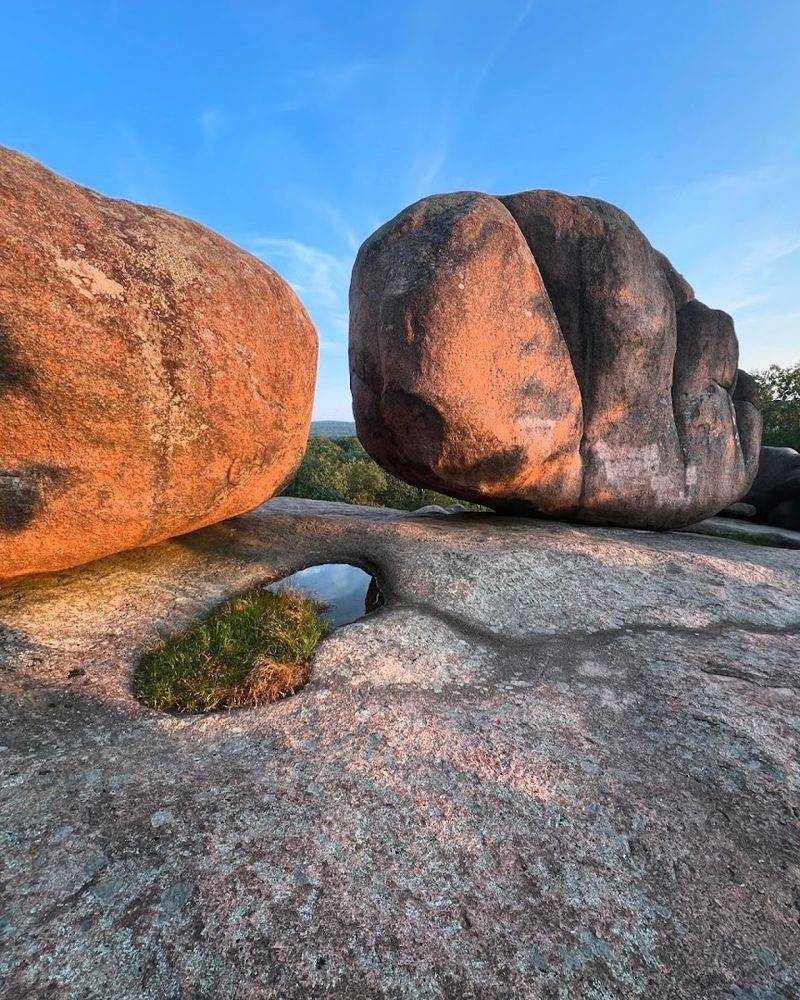
About 1.5 billion years ago, a mass of granite pushed up through the earth’s surface in what is now southeastern Missouri, and the result is one of the most photogenic collections of boulders in the entire country.
The rocks at Elephant Rocks State Park are enormous, some weighing over 680 tons, and they are lined up in a way that genuinely resembles a train of circus elephants when viewed from above.
The paved Braille Trail loops through the formation and was designed to be accessible for visitors of all abilities, making it one of the more inclusive natural landmarks in the state park system.
Side paths weave through narrow passages between boulders and pass through a former granite quarry that was active in the 1800s, adding a layer of industrial history to the geological story.
4. Onondaga Cave State Park, Leasburg, Missouri
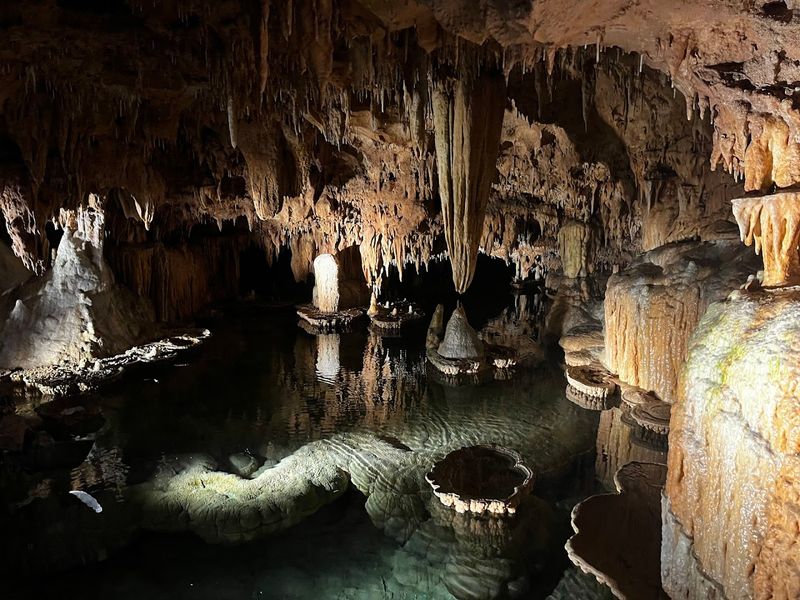
Most parks ask you to look up at their best features. Onondaga Cave State Park asks you to go underground.
Guided tours take visitors through cave chambers filled with stalactites, stalagmites, and formations called soda straws that have been slowly building for thousands of years.
The cave was designated a National Natural Landmark in 1970, which tells you something about how seriously the geology community takes this place.
Above ground, the Meramec River runs along the park boundary, offering floating, fishing, and wooded hiking trails that follow the riverbank through classic Ozark scenery.
The combination of two very different environments in one park makes Onondaga a smart choice for groups with mixed interests. One person can be knee-deep in the river while another is marveling at a cave formation that took longer to grow than most civilizations have existed.
Camping is available, and the park stays open year-round for both cave tours and surface recreation.
5. Bennett Spring State Park, Lebanon, Missouri
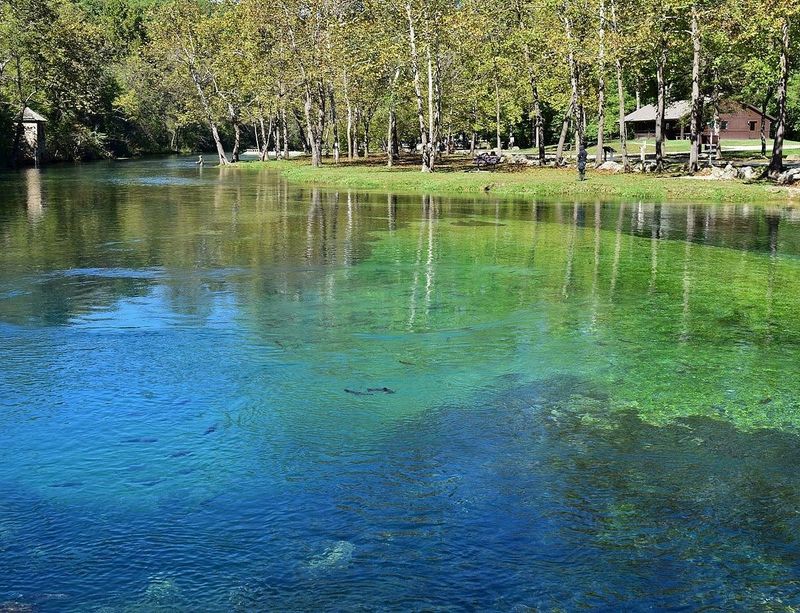
Bennett Spring has been drawing trout fishermen to the Lebanon area for generations, and the spring itself is the reason for all the enthusiasm.
More than 100 million gallons of cold, clear water pour out of the ground each day, keeping the stream at a consistent temperature that rainbow trout find ideal year-round.
Fishing season at Bennett Spring runs from March through October, and the park stocks the stream regularly, giving anglers of all skill levels a realistic shot at a good catch.
Non-fishermen are well covered too. The park has several hiking trails, a butterfly garden, a nature center, and picnic areas that make a full day easy to fill without ever picking up a rod.
Lodging options include yurts, cabins, and traditional campsites, plus a dining lodge that means you do not have to pack every meal.
The Ozark scenery surrounding the spring valley shifts noticeably with each season, making Bennett Spring worth visiting more than once throughout the year.
6. Table Rock State Park, Branson, Missouri
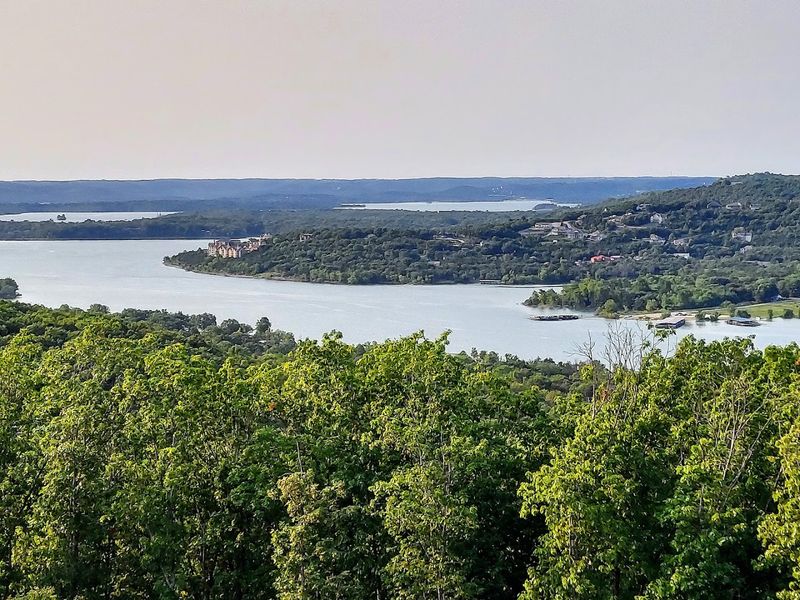
Branson gets a lot of attention for its theaters and entertainment strips, but just outside town there is a state park that operates at a completely different speed.
Table Rock State Park sits along the shore of Table Rock Lake, one of the clearest and most popular lakes in the Ozarks, with a marina that rents ski boats, kayaks, paddleboards, and jet skis.
Hikers can choose between paved trails and mountain biking routes, and the park also provides access to two caves, Fischer Cave and Stone Barn Cave, which are open for viewing.
Yurts, cabins, and multiple campsite options make it straightforward to stay overnight, and the proximity to Branson means restaurants, shows, and shopping are only a short drive away if the outdoor options are not enough.
The lake sunsets here are consistently spectacular, and watching one from a kayak or a lakeside picnic table is the kind of low-effort, high-reward experience that makes Table Rock easy to recommend to almost anyone.
7. Meramec State Park, Sullivan, Missouri
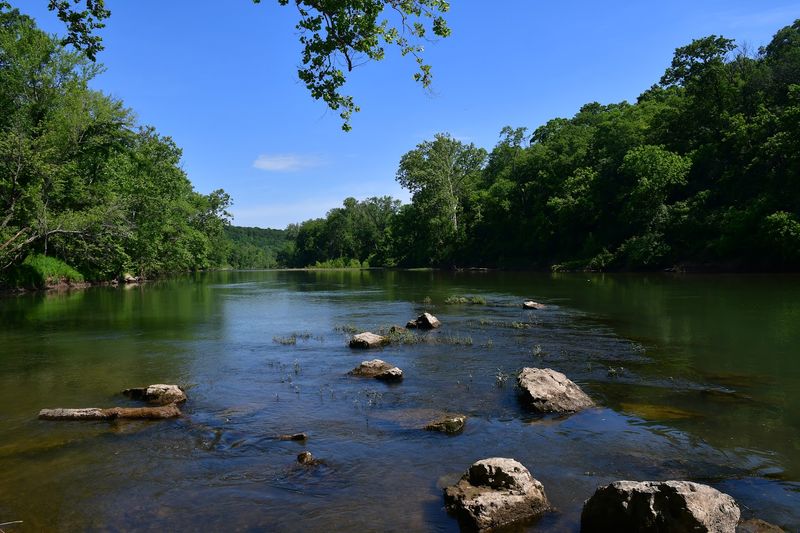
There is something timeless about the Meramec River corridor, and this park has been welcoming visitors who feel the same way for well over a century.
Canoeing and floating remain the most popular activities, with the Meramec River running directly through the park and providing easy access for paddlers of all experience levels.
More than 13 miles of hiking trails wind through rolling hills, past limestone bluffs, and into areas where the Ozark geology tells its story through exposed rock layers and cave openings.
Fisher Cave is available for guided tours, adding an underground element to a park that already has plenty going on at ground level.
Lodging ranges from primitive campsites to small and large cabins to a motel, giving the park unusual flexibility for groups with different comfort preferences.
Sullivan’s location along Interstate 44 makes Meramec State Park one of the more convenient Ozark escapes for visitors coming from St. Louis, which is roughly an hour to the east.
8. Roaring River State Park, Cassville, Missouri
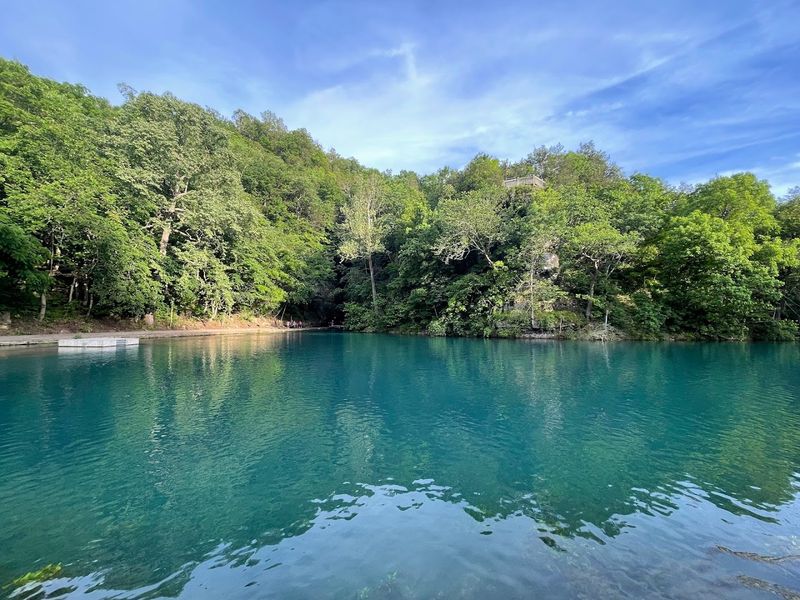
Tucked into a deep, narrow valley in the southwest Ozark hills, Roaring River State Park has built a loyal following that returns season after season, and the famous trout stream is the main reason.
The park is one of only three Missouri state parks stocked with rainbow trout, and the spring-fed river keeps conditions right for fishing throughout the season.
Seven hiking trails branch out from the valley floor and climb steep hillsides, offering views of the surrounding landscape that reward the extra effort.
A fish hatchery on site gives visitors a behind-the-scenes look at how the stream gets restocked, which turns out to be genuinely interesting even for people who have no intention of fishing.
Lodging options include rustic cabins, modern duplex cabins, campsites, and rooms at either the historic CCC Lodge or the Emory Melton Inn, which has a full-service restaurant on site.
9. Hawn State Park, Ste. Genevieve County, Missouri
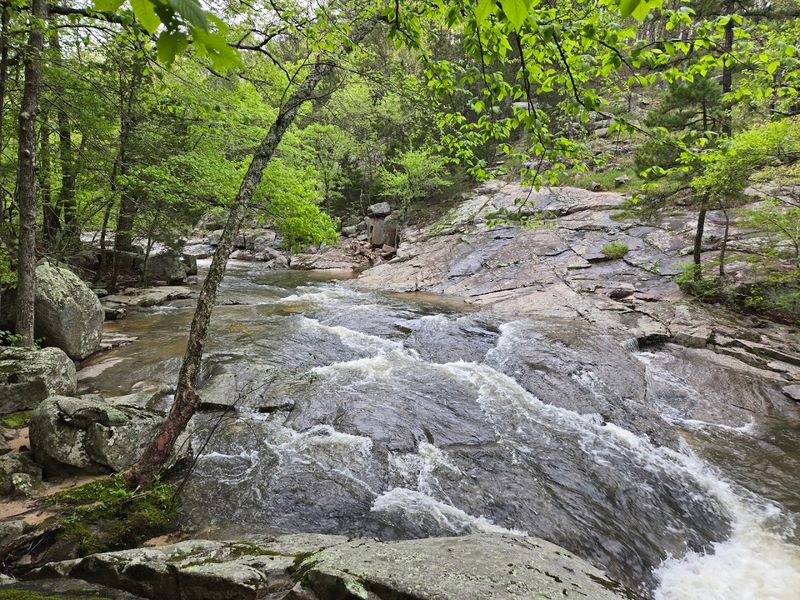
Hawn State Park does not look like the rest of Missouri, and that is a big part of its appeal.
Pine forests, sandstone canyons, and the crystal-clear waters of Pickle Creek create a landscape that feels more like the Pacific Northwest than the American Midwest, which is a pleasant surprise for first-time visitors.
The Whispering Pine Trail is widely regarded as one of the finest hikes in the entire state park system, covering about 10 miles through terrain that shifts between open glades, dense forest, and rocky creek crossings.
A shorter loop called the Pickle Creek Trail offers a two-mile option for those who want the scenery without the full commitment.
The park sits in Ste. Genevieve County, not far from one of Missouri’s oldest European-settled towns, which makes it easy to combine a nature-focused weekend with some history and local character.
10. Lake of the Ozarks State Park, Kaiser, Missouri
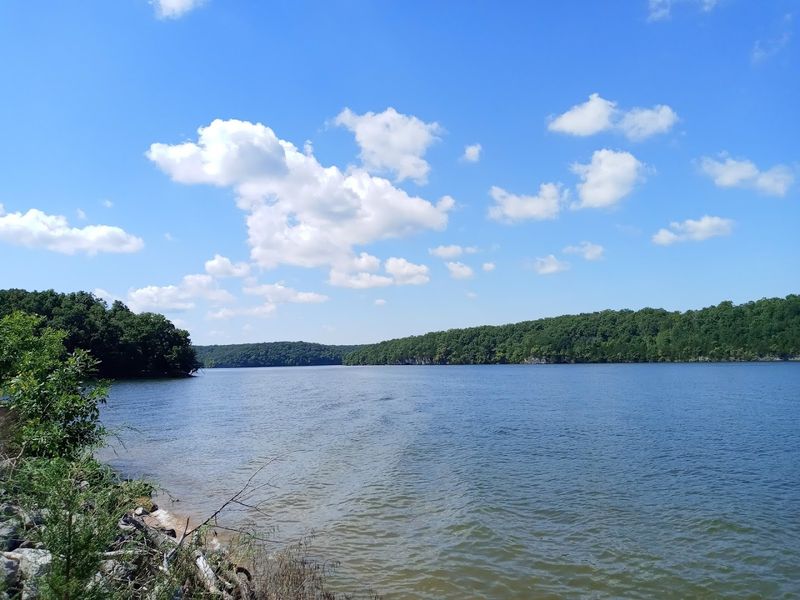
Missouri’s largest state park covers more than 17,000 acres, and the sheer scale of it means you could visit a dozen times and still find trails or coves you have never explored before.
The park wraps around part of the Lake of the Ozarks, offering 85 to 90 miles of shoreline for boating, fishing, and paddling, plus two designated swimming beaches that get busy on summer weekends.
Two caves are accessible within the park. Ozark Caverns offers guided tours, while a second cave system adds to the underground options that seem to pop up everywhere in Ozark country.
Hiking, backpacking, equestrian, and mountain biking trails cover a wide range of difficulty levels, and the park’s varied terrain includes forests, glades, and quiet coves that feel miles away from the busier parts of the lake.
11. Taum Sauk Mountain State Park, Middle Brook, Missouri
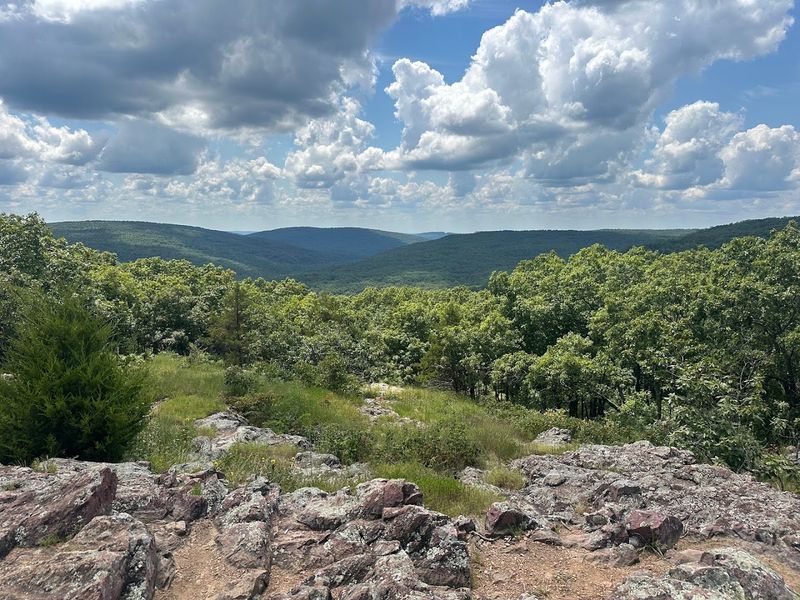
Standing at 1,772 feet above sea level, Taum Sauk Mountain holds the title of Missouri’s highest natural point, and the park built around it gives visitors a genuine Ozark summit experience.
The summit itself is accessible by a short, easy walk from the parking area, making the state’s highest elevation reachable for visitors of all fitness levels without requiring a serious hike.
For those who want more of a challenge, the trail to Mina Sauk Falls is the main draw after periods of rainfall, when water cascades down a series of rhyolite rock steps in what is officially Missouri’s tallest waterfall.
Rocky glades near the summit support plant and animal communities rarely found elsewhere in the state, adding a natural history dimension to what might otherwise seem like a straightforward peak-bagging trip.
Camping is available and park entrance is free, which makes Taum Sauk one of the better deals in the entire Missouri state park system for a weekend with big scenery and minimal cost.
12. Castlewood State Park, Ballwin, Missouri
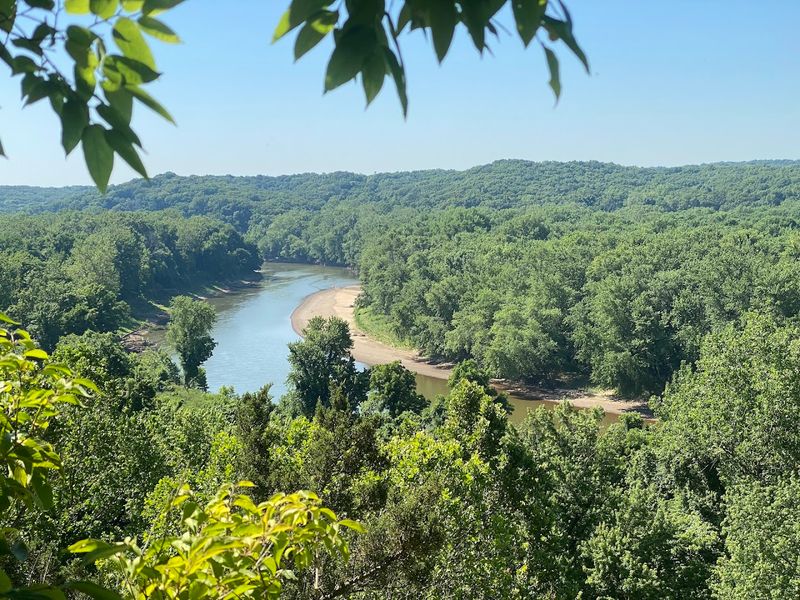
Not every great state park requires a three-hour drive, and Castlewood is proof that rewarding outdoor experiences can exist right on the edge of a major metro area.
Located just outside St. Louis in Ballwin, this park sits above the Meramec River with bluff-top hiking trails that deliver surprisingly dramatic views for a park most people can reach in under an hour from the city.
Mountain bikers have claimed a set of popular routes through the park, and the trail network is well-maintained enough to attract riders who take the sport seriously.
Wide open picnic areas make Castlewood a favorite gathering spot for families and friend groups on weekend afternoons, and the park stays busy throughout the year because the trail scenery holds up in every season.
The Meramec River access at the base of the bluffs adds a water element that gives the park more variety than its relatively compact size might suggest.
13. Katy Trail State Park, St. Charles to Clinton, Missouri
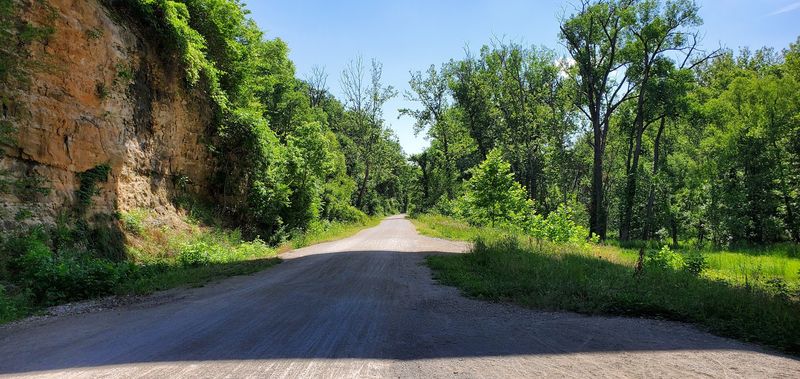
At roughly 240 miles long, the Katy Trail is the longest developed rail-trail in the United States, and it crosses Missouri like a slow, scenic bookmark through the state’s history and landscape.
The trail follows the route of a former Missouri-Kansas-Texas Railroad line, passing limestone river bluffs, working farms, historic depots, and small towns that have been around since the 1800s.
Cyclists are the most common users, but walkers and runners are equally welcome, and the crushed limestone surface keeps the trail accessible for most fitness levels.
One of the smartest ways to tackle a Katy Trail weekend is to pick a section rather than attempting the whole thing. The stretch between St. Charles and Rocheport along the Missouri River offers some of the most scenic riding, with bluffs rising directly above the trail.
Share this story