Montana is famous for its mountains and wide-open landscapes, but it also hides a collection of fascinating attractions that many travelers overlook. From unusual natural wonders and historic landmarks to unexpected cultural sites, these destinations reveal a side of the state that goes far beyond the typical postcard views.
Whether you’re planning a road trip or simply enjoy discovering offbeat places, these 13 hidden gems offer memorable experiences and surprising stories. They prove that some of Montana’s most rewarding destinations are the ones least expected.
1. Garden of One Thousand Buddhas, Arlee, Montana
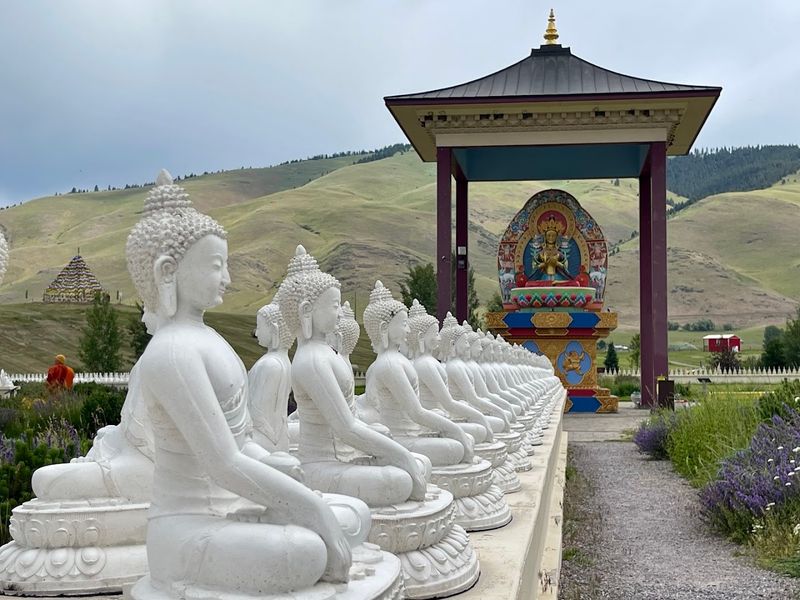
A childhood vision from a Tibetan Buddhist master became one of Montana’s most extraordinary landmarks. Gochen Tulku Sang-ngag Rinpoche recognized the Jocko Valley landscape during a teaching trip and saw a resemblance to his Himalayan homeland, which inspired the creation of this remarkable peace garden in 2000.
The layout forms an eight-spoked dharma wheel, with one thousand hand-cast white Buddha statues lining its spokes. At the center stands a 24-foot statue of Yum Chenmo, representing the perfection of wisdom. The outer rim features one thousand stupas, each housing an image of the female deity Tara.
The garden is open year-round as a pilgrimage site and hosts an annual Festival of Peace. Native plants and trees fill the grounds, and visitors are welcome to walk the paths, reflect, and learn about Tibetan Buddhist tradition in a setting that feels genuinely unlike anywhere else in the American West.
2. Miracle of America Museum, Polson, Montana
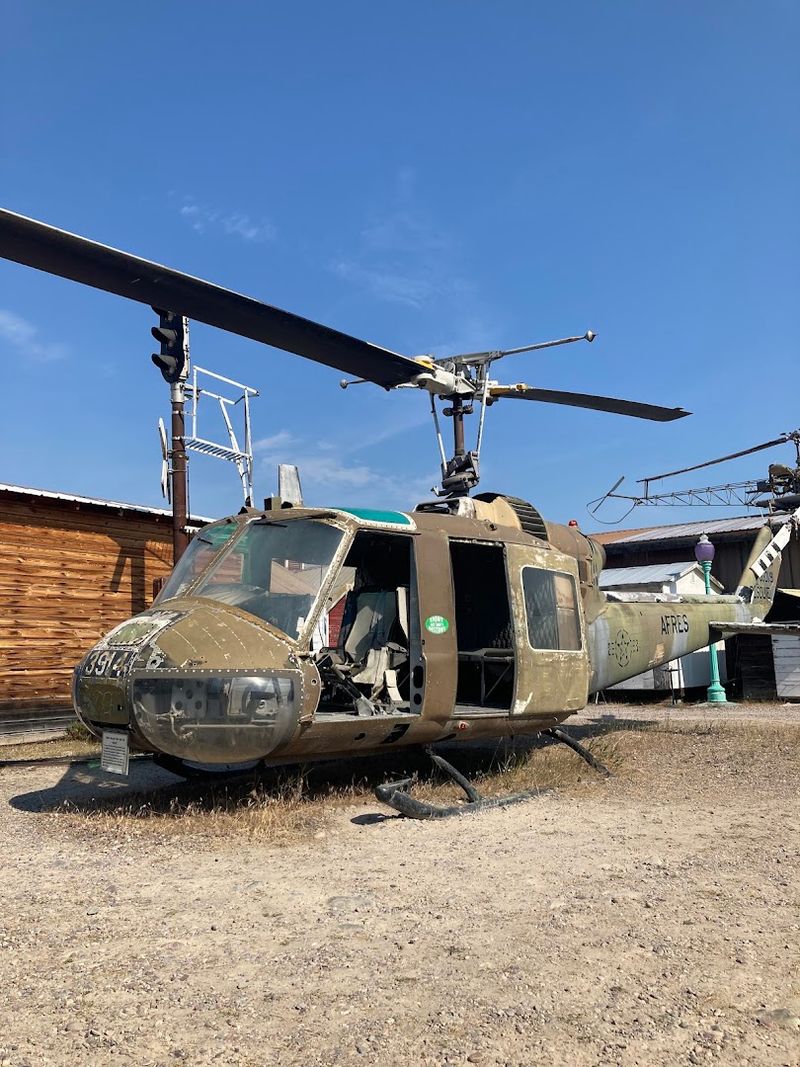
Harvard scientist Edward O. Wilson once called this place the best museum in the world, inch for inch, and after spending an hour wandering its five acres and 40-plus buildings, most visitors would have a hard time arguing otherwise.
Founded in 1981 by Gil and Joanne Mangels, the Miracle of America Museum houses over 300,000 artifacts celebrating everyday American life from the late 1800s through the 1960s. Collections include 70 antique motorcycles, vintage military vehicles, a 1939 gas station, a fully stocked general store, and recreated businesses like a one-room schoolhouse and an old dentist’s office.
Kids can climb into an Army Jeep or a Huey helicopter, which makes this stop a genuine hit for families. The museum is open year-round from 9 a.m. to 5 p.m. daily, and the sheer volume of discoveries guarantees that no two visits feel exactly the same.
3. Berkeley Pit Viewing Stand, Butte, Montana
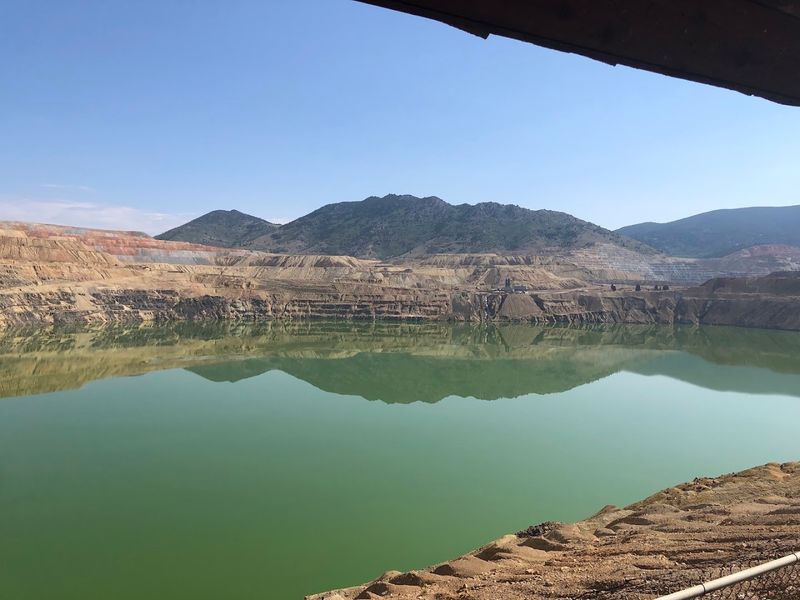
Few tourist stops in America come with a chemistry lesson quite like this one. The Berkeley Pit is a former open-pit copper mine stretching 7,000 feet long, 5,600 feet wide, and nearly 1,000 feet deep, and it has been slowly filling with water since mining operations ceased in 1982.
That water is no ordinary lake. With a pH of around 4.1 to 4.5 and high concentrations of heavy metals including copper, arsenic, and zinc, the pit’s vivid coloring is a direct result of acid-rock drainage. An observation platform managed by the Butte Chamber of Commerce gives visitors a safe and striking vantage point.
Interpretive signs explain the mining history and the ongoing environmental management at the site, which now treats approximately 10 million gallons of water per day. The viewing stand is typically open from mid-May through mid-September, and the surreal appearance of the pit makes it one of Montana’s most photographed landmarks.
4. American Computer & Robotics Museum, Bozeman, Montana
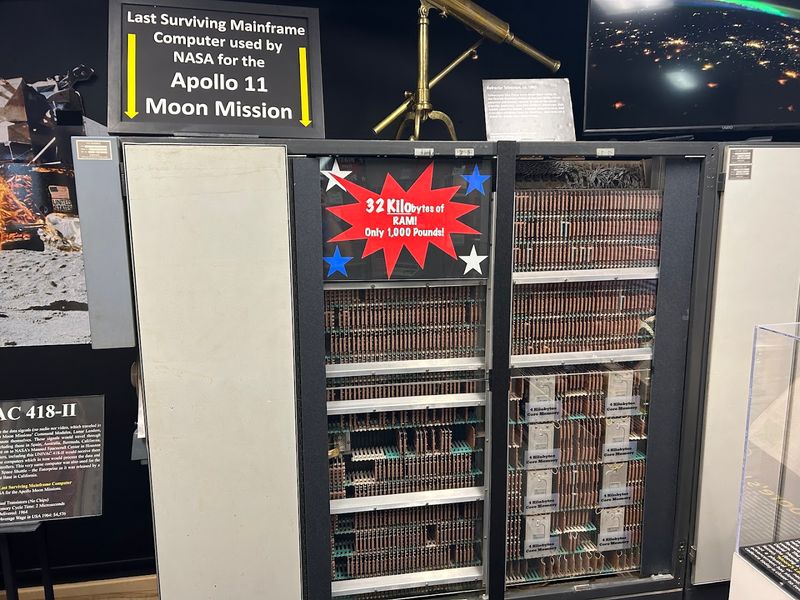
Most people do not expect to find the oldest continuously operating computing museum in the world tucked inside Bozeman, Montana, but that is exactly what George Keremedjiev built when he opened this institution in May 1990.
The collection spans 4,000 years of human history, starting with original cuneiform tablets and running all the way through quantum computing and artificial intelligence. Highlights include an Apple I signed by Steve Wozniak, an Apollo Guidance Computer, a watch worn on the Moon by Apollo 15 Commander David Scott, and the last surviving mainframe from the Apollo 11 mission.
Early personal computers like the Altair 8800, Commodore PET, and original Apple Macintosh fill the display cases alongside exhibits on the Enigma Code and the Space Race. Admission is free, with donations welcomed. Harvard scientist Edward O. Wilson famously called it the best museum in the world, and that kind of endorsement is hard to ignore.
5. Ringing Rocks, Whitehall, Montana
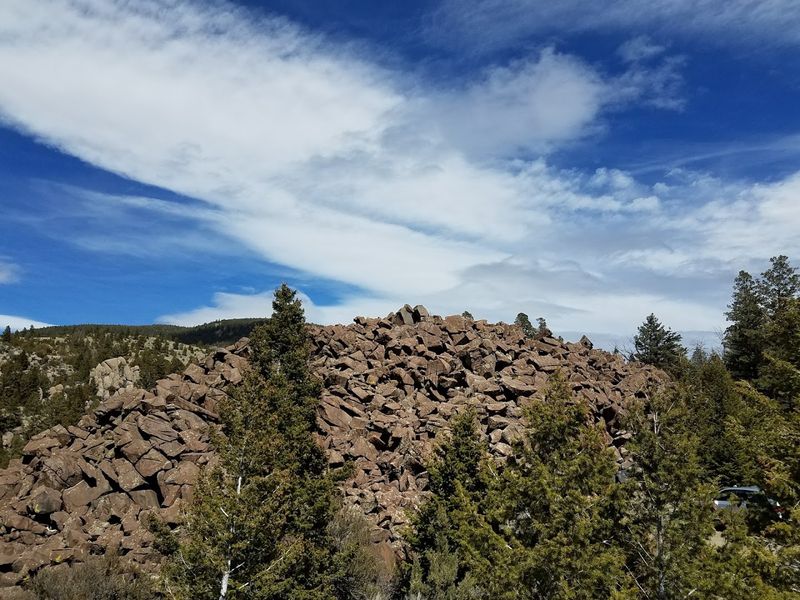
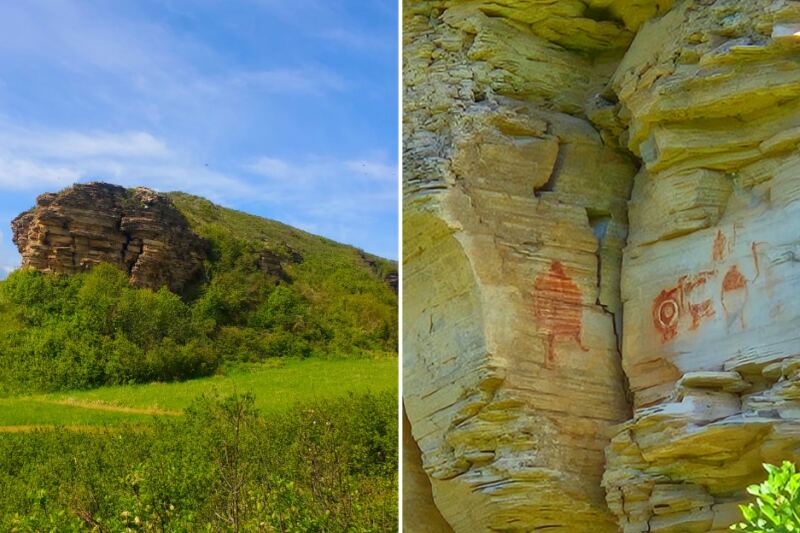
Bring a hammer. That is advice you rarely receive before visiting a natural landmark, but the Ringing Rocks near Whitehall are not your typical scenic overlook. Strike many of these boulders and they produce clear, bell-like tones that have baffled scientists and entertained visitors for decades.
The rocks belong to the Ringing Rocks Pluton, an igneous formation created 76 million years ago when magma mixed between olivine basalt and granitic material. Researchers believe the ringing quality depends on the rock’s mineral composition, its internal stress, and critically, the airspace between the boulders. Remove a rock from the pile and it typically loses its tone entirely.
This is one of only two such formations in the entire United States, which makes it a genuinely rare natural wonder. Visitors are encouraged to test the rocks with a small hammer while being mindful not to disturb the boulders from their natural positions in the field.
6. Sip ‘n Dip Lounge, Great Falls, Montana
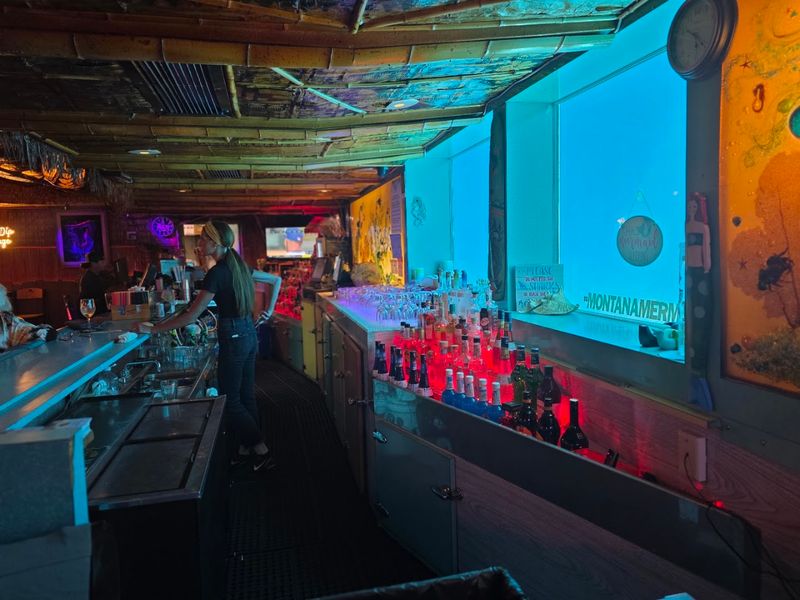
GQ Magazine named this place the number one bar on Earth in 2003, and the residents of Great Falls have been absolutely fine with that ever since. The Sip ‘n Dip Lounge opened in 1962 as part of the O’Haire Motor Inn and has maintained its vintage tiki aesthetic, complete with bamboo ceilings and netted decor, ever since.
The main attraction is a glass wall behind the bar that looks directly into the motel’s swimming pool. Since 1997, live performers dressed as mermaids have been swimming through that underwater window for delighted guests, typically five nights a week. It is the kind of experience that is genuinely difficult to explain to someone who has not seen it.
Adding to the atmosphere is “Piano Pat” Spoonheim, a local icon who has performed classic tunes at the lounge for over fifty years. She typically plays Wednesday through Saturday evenings, making her as much a landmark as the building itself.
7. Havre Beneath the Streets, Havre, Montana
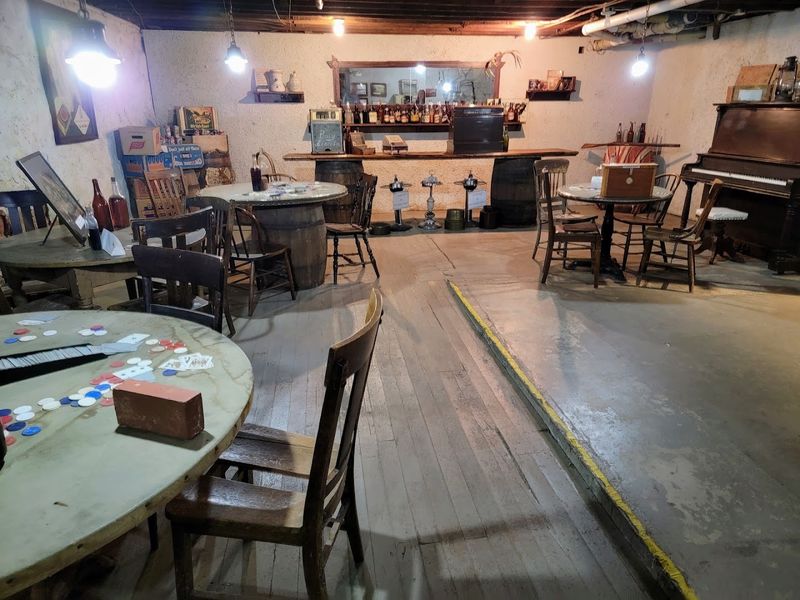
After a catastrophic fire in January 1904 destroyed four city blocks and nearly 60 businesses, the people of Havre did something remarkably practical: they moved underground. Entrepreneurs relocated their operations into existing cellars and steam tunnels beneath the sidewalks, creating what some historians describe as one of America’s first underground shopping districts.
Guided tours began in 1994 and have since welcomed over 230,000 visitors through the preserved storefronts below modern Havre. The recreated establishments include a Chinese laundry, a saloon, an ethnic restaurant, and other businesses that reflect the diverse and unfiltered reality of frontier life in the early 1900s.
The tunnels also served as a refuge for Chinese railway workers who faced racial harassment above ground, adding a meaningful layer of social history to the tour. Each guided session lasts approximately one hour. While some sections have sustained water damage, preservation efforts are ongoing to keep this underground city accessible for future visitors.
8. Our Lady of the Rockies, Butte, Montana
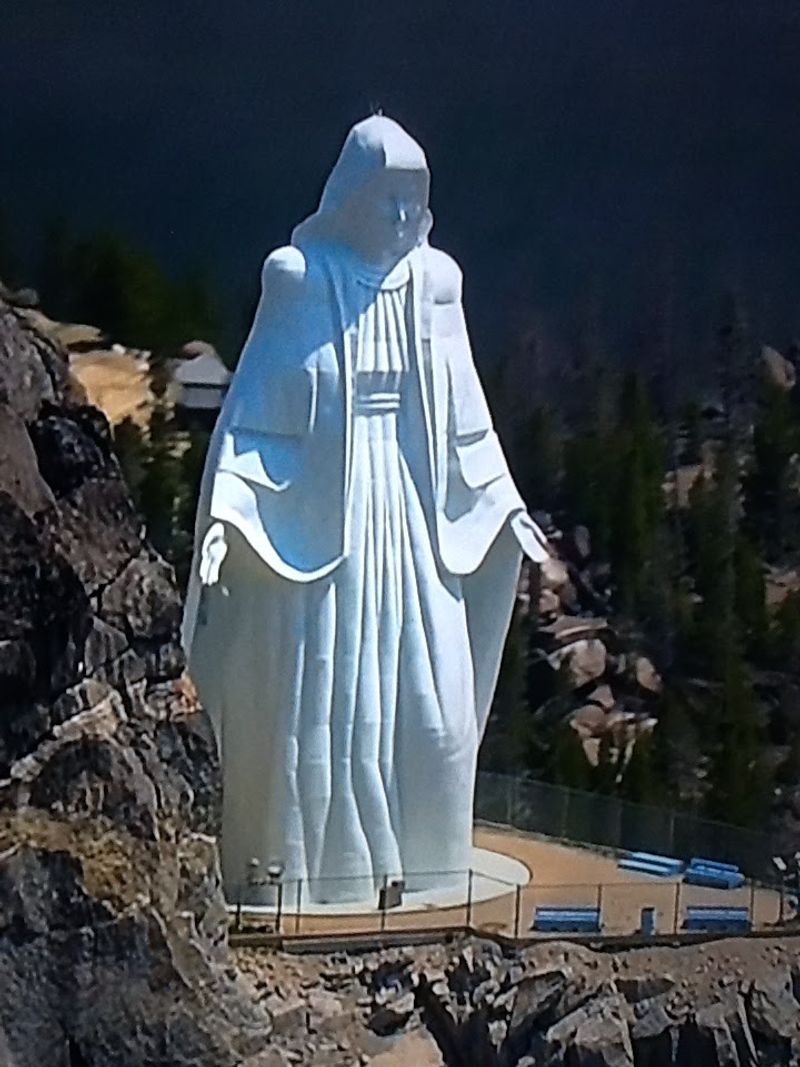
Getting a 90-foot statue to the top of a mountain required the Nevada Army National Guard, a CH-54 Tarhe helicopter, and an enormous amount of community determination. The project began in 1979 when Butte resident Bob O’Bill made a promise that if his wife recovered from a severe illness, he would build a monument in her honor. She recovered, and what started as a six-foot statue concept eventually became a community-wide endeavor.
Designed by local mining engineer Laurien Eugene Riehl and fabricated by welder LeRoy Lee, the statue was airlifted to its location on the Continental Divide in four sections in December 1985. Its base sits at 8,510 feet above sea level, roughly 3,000 feet above the city below. Though originally conceived as a tribute to the Virgin Mary, it was later dedicated to all women, especially mothers.
Access is exclusively by guided bus tour during summer months. The panoramic views from the site include Butte and the Berkeley Pit, offering a sweeping perspective of the region’s human and industrial history.
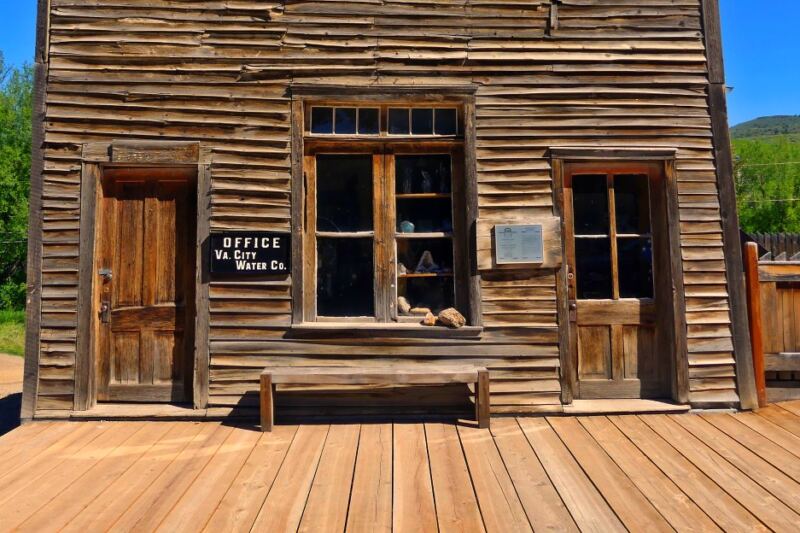
9. Garnet Ghost Town, Drummond, Montana
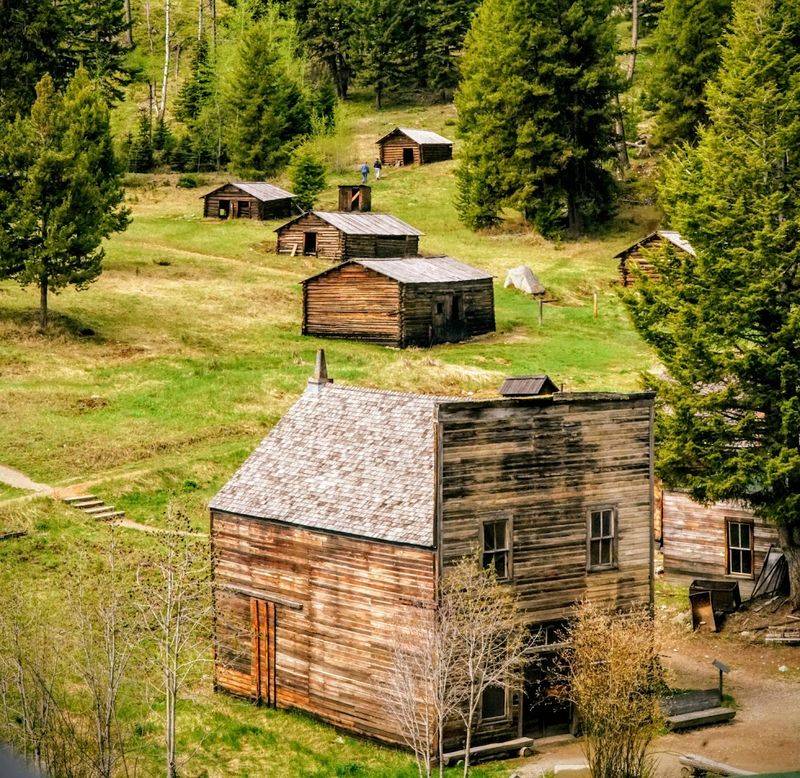
Gold was discovered near Garnet in 1865, but the town itself did not really boom until around 1895 when rich quartz veins were found in the area. By January 1898, nearly 1,000 people called it home, supporting four hotels, four stores, a candy shop, a butcher, and thirteen saloons, which says a great deal about frontier priorities.
Today, approximately 30 authentic historic buildings remain, some with furnishings still inside, as though residents simply stepped away one afternoon and never returned. The Bureau of Land Management oversees the site, and a visitor center operates from late May through September.
For a more immersive experience, two rental cabins are available during winter months, accessible only by snowmobile, snowshoes, or cross-country skis. The surrounding Garnet Mountain Range adds to the photogenic quality of the site throughout all seasons. It is one of Montana’s most genuinely well-preserved ghost towns, with very little staging required to make history feel immediate.
10. Montana Vortex and House of Mystery, Columbia Falls, Montana
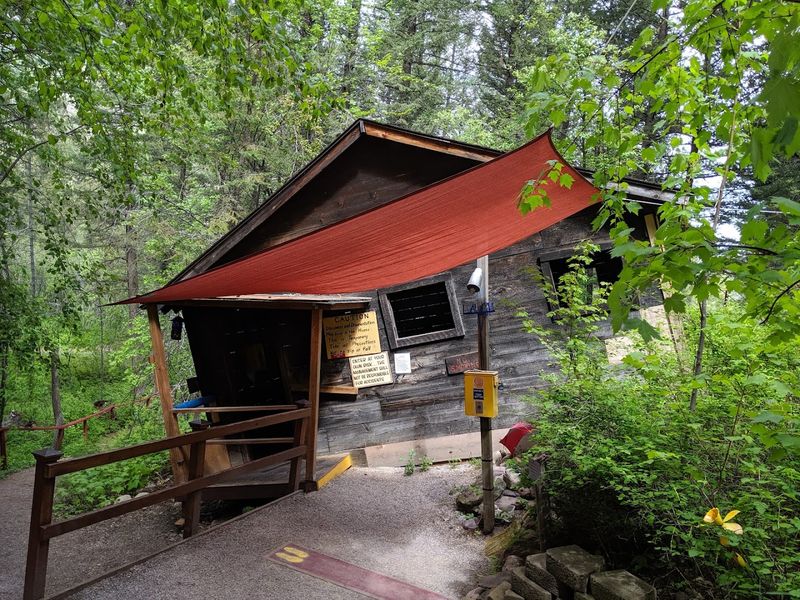
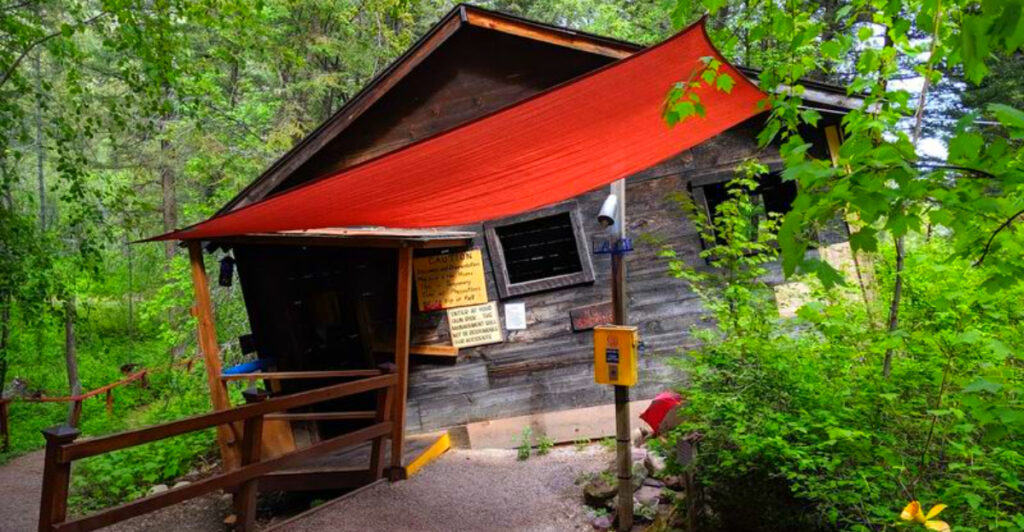
Just 13 miles from Glacier National Park, there is a crooked shack where people appear to grow taller, objects roll uphill, and your sense of balance becomes genuinely unreliable. The Montana Vortex and House of Mystery has been pulling off these tricks on visitors for generations, and the explanations are either fascinating or completely unconvincing depending on your perspective.
Yahoo Travel Guide gave it five stars, the History Channel featured it as the home of “The Golden Vortex,” and families keep returning to document the optical illusions with their cameras. Guided tours last about 45 minutes and lead groups through exhibits including the Aura Spot, the Hexagon, and the Platform, each designed to amplify the disorienting effects of the slanted architecture.
Newer self-guided options are now available alongside the traditional tours. The attraction operates seasonally from 10 a.m. to 5 p.m. and is notably dog-friendly. A gift shop selling unique rocks rounds out the visit with a fittingly offbeat souvenir opportunity.
11. The Big Stack, Anaconda, Montana
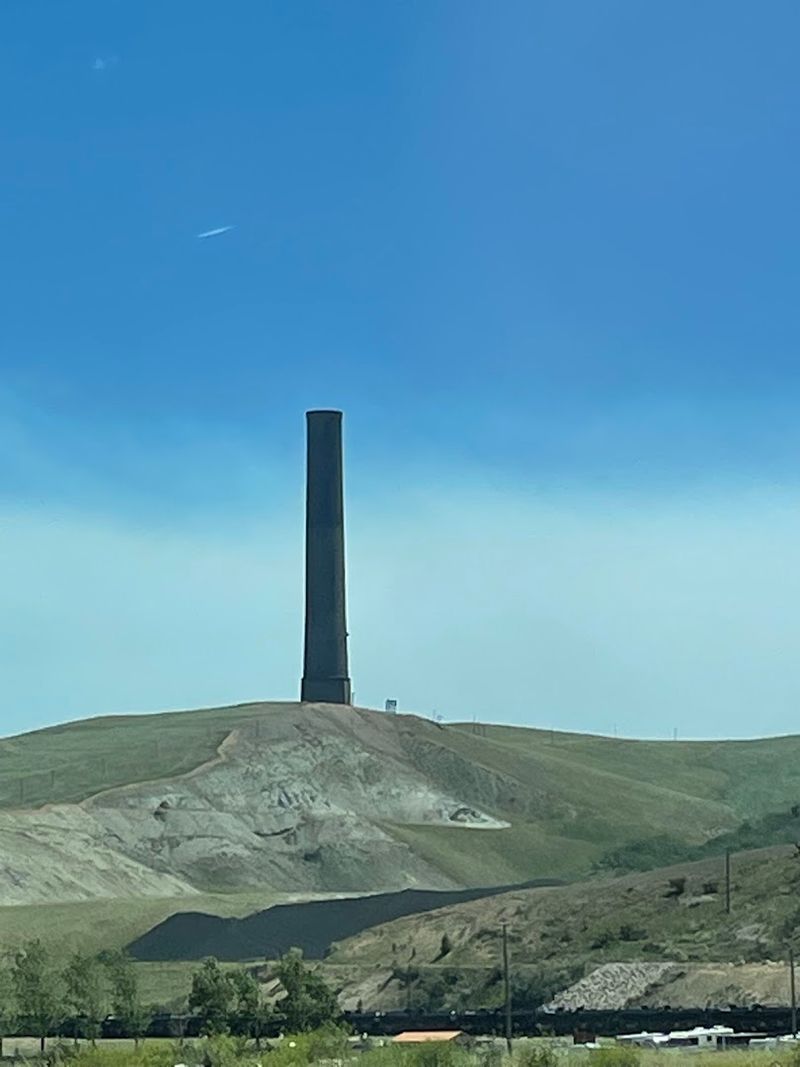
At 585 feet tall, the Anaconda Smelter Stack is the tallest surviving freestanding masonry structure in the world, which means the Washington Monument would fit comfortably inside its diameter with room to spare. That is not a fact that comes up often in Montana travel conversations, but it absolutely should.
Completed in 1919 as part of the Washoe Smelter of the Anaconda Copper Mining Company, the stack was built in just 142 working days using 2,464,652 specially made radial bricks, each 2.7 times larger than a standard brick. It was designed to handle three to four million cubic feet of gas per minute from the smelting furnaces below.
The Washoe Smelter closed in 1981, and a community campaign saved the stack from demolition. Today, the Anaconda Smoke Stack State Park provides a viewing area near Goodman Park with interpretive signage explaining its history. Its scale is remarkable from any distance, and the story behind its preservation is worth knowing before you arrive.
12. 50,000 Silver Dollar Bar, Haugan, Montana
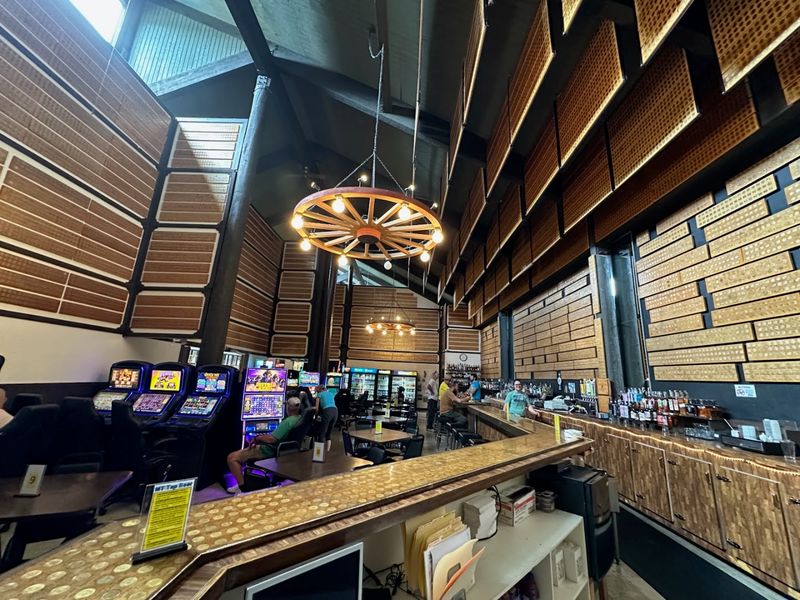
The whole thing started in October 1952 when bar owner Gerry Lincoln cut a hole in his bar top, hammered in a silver dollar, and wrote his and his wife Marie’s names beneath it. By December 1953, over 2,000 customers had followed his lead, and the collection has been growing ever since.
Today, the 50,000 Silver Dollar Bar in Haugan displays over 50,000 coins embedded into the bar top, walls, and ceiling, with approximately 1,500 new silver dollars donated each year. Among the collection, between 10,623 and 12,623 are genuine Morgan or Peace silver dollars, which have real numismatic value beyond their novelty.
The bar relocated from Alberton to Haugan in 1956 when Interstate 90 construction began, and it has been a classic road trip stop ever since. Now in its fourth generation of Lincoln family ownership, the establishment combines a restaurant, gift shop, casino, motel, and gas station into one comprehensive and memorably eccentric destination along I-90.
13. Elkhorn Ghost Town State Park, Boulder, Montana
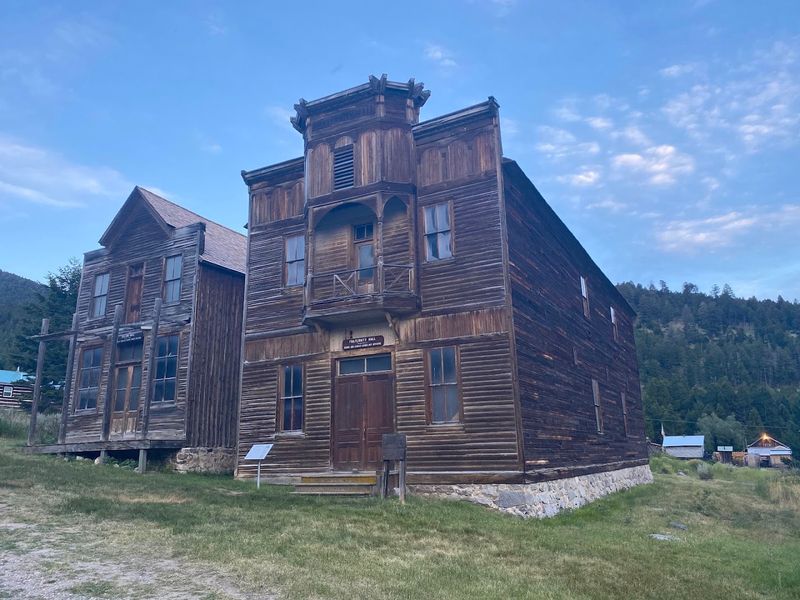
Swiss miner Peter Wys discovered silver in these mountains in 1868, and what followed was a boom that turned a remote Montana hillside into a town of 2,500 people by the 1890s. Unlike many mining camps, Elkhorn was a family-oriented community, with a school serving up to 200 students across three buildings and a main street full of hotels, general stores, and a post office.
The Elkhorn Mine produced approximately $14 million in silver before the Silver Panic of 1893 caused the population to drop by 75 percent in just two months. A diphtheria epidemic between 1884 and 1889 also left a visible mark, with evidence remaining in the town’s cemetery.
Today, the state park protects two iconic structures: Fraternity Hall, built in 1893 as the town’s social hub, and Gillian Hall, likely a store or saloon with an upstairs dance hall. Both buildings are open to visitors and stand as outstanding examples of frontier architecture.
Share this story