 Unearth The Voyage
America’s highways are full of surprises, and some of the best ones have nothing to do with the destination. Scattered across the country are roadside attractions so gloriously weird that people plan entire road trips just to see them.
From a six-story elephant in New Jersey to a Cadillac graveyard in Texas, these stops prove that the journey really is the best part. Buckle up, because this list is about to make your road trip wish list a whole lot longer.
Lucy the Elephant, Margate, New Jersey
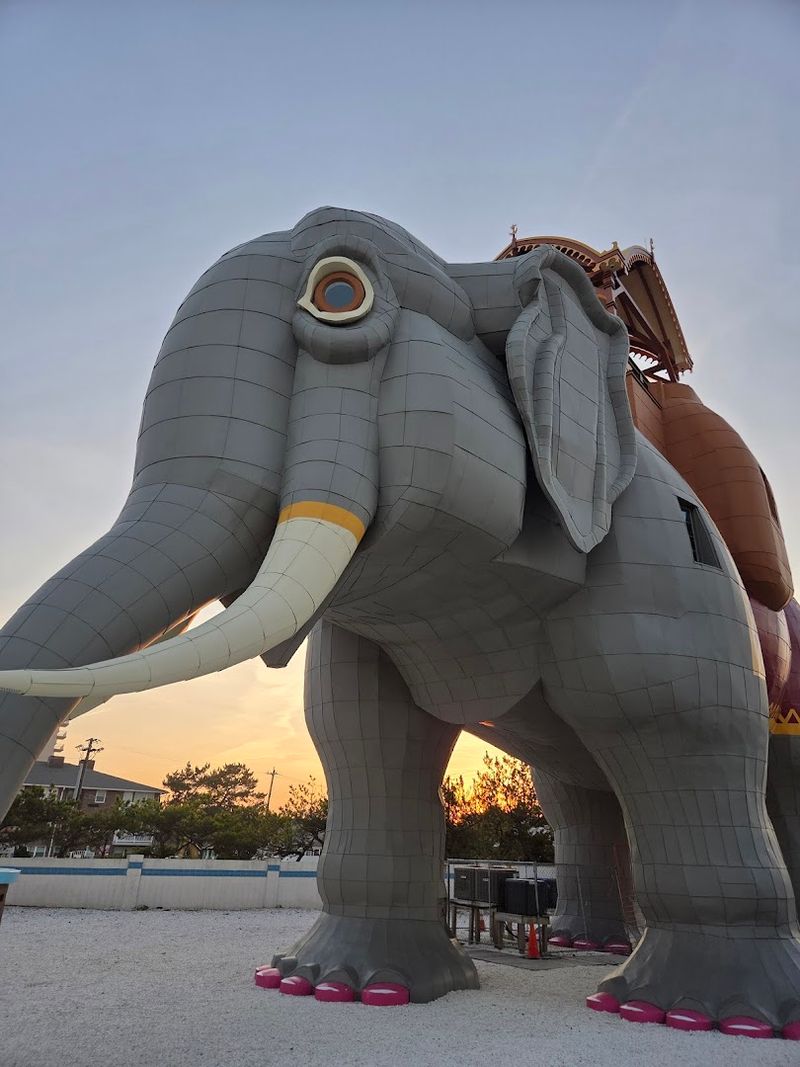
Built in 1881, Lucy the Elephant is a six-story wooden structure shaped exactly like an elephant, and yes, you can actually walk inside her. She was originally used as a real estate office to attract buyers to the New Jersey shore.
Over the years, she served as a tavern and a summer cottage before falling into disrepair.
Locals rallied to save her in the 1970s, moving her 100 feet from the shoreline and restoring her to her former glory. Today she is a National Historic Landmark and one of the oldest roadside attractions in the country.
Tours take you up through her legs and into her belly.
Standing 65 feet tall, Lucy is hard to miss from the Atlantic City Expressway. She wears a howdah on her back like a proper Victorian-era elephant should.
Visiting her feels like stepping into a fever dream from the Gilded Age, and honestly, that is the whole point.
Carhenge, Alliance, Nebraska
Stonehenge is impressive, sure, but has it ever been built out of vintage American cars? Carhenge in Alliance, Nebraska answers a question nobody asked and absolutely nails it.
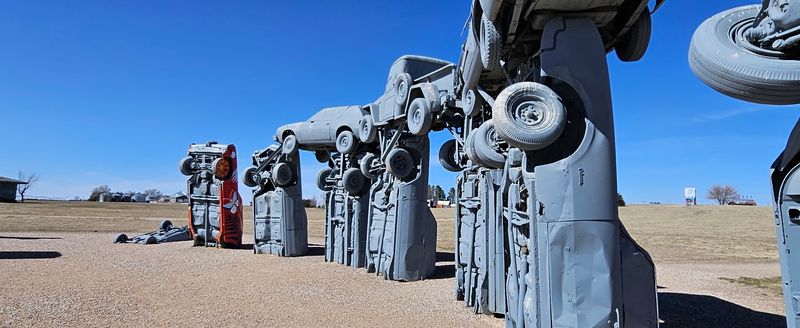
Artist Jim Reinders created this automotive homage in 1987 as a tribute to his late father, arranging 38 cars to mirror the original Stonehenge layout.
Every car is painted battleship gray to match the ancient stones. Some are buried trunk-first in the ground, while others are balanced horizontally on top.
The whole thing sits on the flat Nebraska plains with nothing else around it, which somehow makes it even more surreal.
I drove two hours out of my way to see Carhenge on a solo road trip, and I have zero regrets. There is a small gift shop on-site, and admission is free.
The Carhenge Car Art Reserve nearby features additional sculptures made from car parts, so the weird does not stop at the main circle.
The Corn Palace, Mitchell, South Dakota
Every year, workers completely redecorate the outside of an entire building using corn. Not paint.
Not tile. Corn.
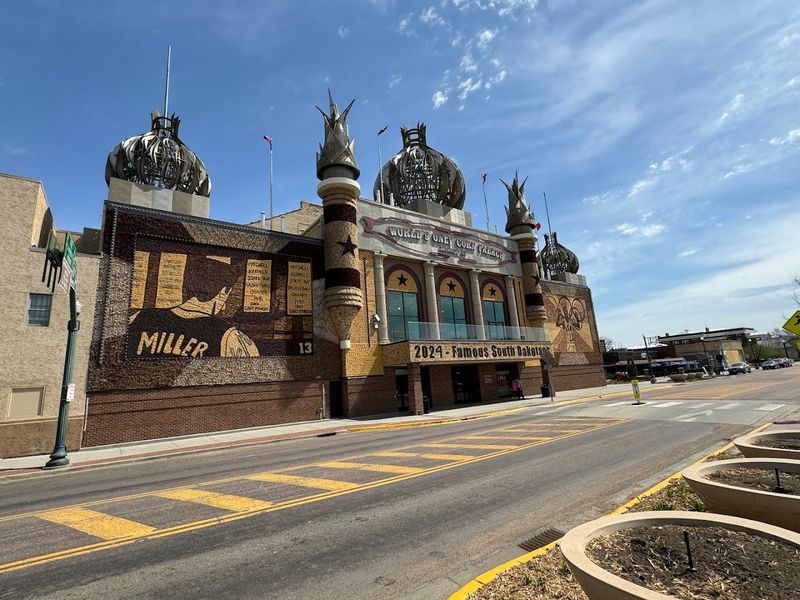
The Corn Palace in Mitchell, South Dakota has been doing this since 1892, and it still draws over 500,000 visitors annually.
The murals are made from different colored corn cobs, grasses, and grains, all nailed directly to the exterior walls. Each year features a new theme, so the building literally never looks the same twice.
Past themes have included everything from state history to pop culture references.
Inside, the Corn Palace functions as a multipurpose arena hosting concerts, basketball games, and community events. The gift shop sells corn-related souvenirs that range from charming to completely unhinged.
Mitchell is not exactly a major tourist hub, but this building alone pulls in traffic from every direction on Interstate 90.
It is bizarre, colorful, and genuinely impressive as a feat of agricultural art. Midwest creativity at its finest.
Cadillac Ranch, Amarillo, Texas
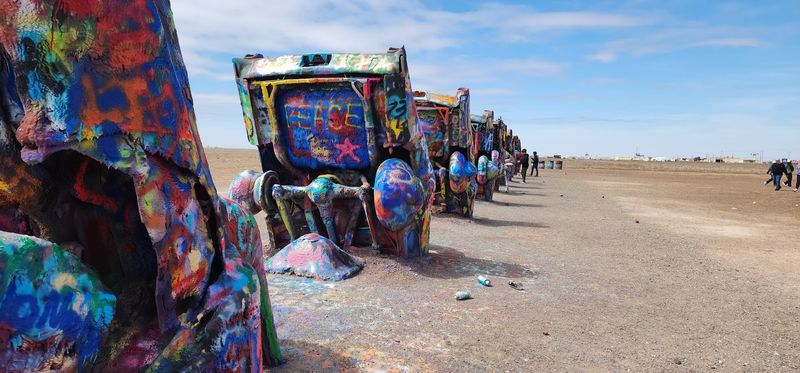
Ten Cadillacs are buried nose-first in a Texas wheat field, half-submerged and coated in decades of spray paint. Cadillac Ranch has been a Route 66 staple since 1974, when a group of artists called the Ant Farm planted them there as a commentary on American car culture and the rise and fall of the tail fin.
Visitors are actively encouraged to bring spray paint and add their own layer to the cars. The paint builds up so thick that the original colors are long gone under a crust of collective creativity.
People propose, scatter ashes, and take graduation photos here.
The cars are arranged to match the angle of the Great Pyramid of Giza, which is either a profound artistic statement or a great piece of trivia for long car rides. Either way, it works.
Admission is free, the field is always open, and the nearest Walmart sells spray paint if you forget yours at home.
Enchanted Highway, Regent, North Dakota
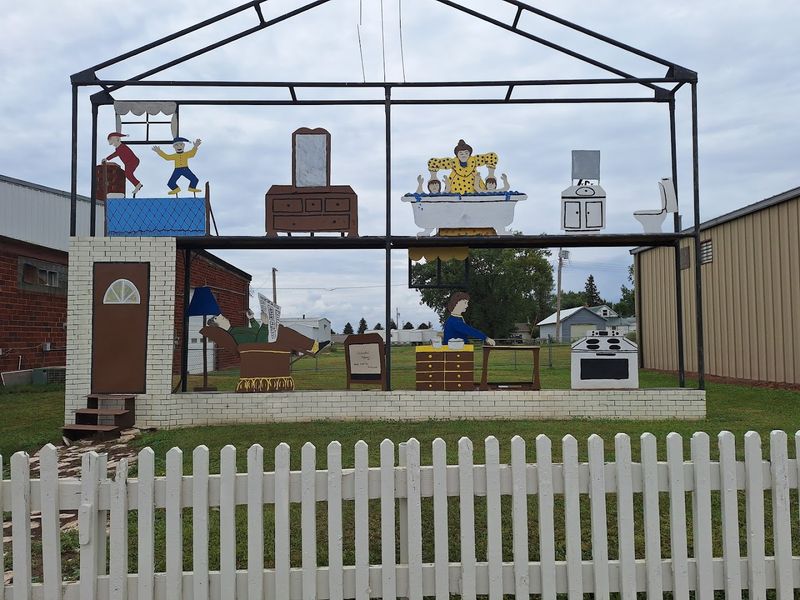
Stretching 32 miles across the North Dakota plains, the Enchanted Highway is home to the world’s largest collection of scrap metal sculptures. Artist Gary Greff built all seven massive sculptures by hand, starting in 1989, hoping to bring tourists to his dying hometown of Regent.
The sculptures include a 110-foot-tall set of geese in flight, a family of grasshoppers the size of school buses, and a massive pair of pheasants. Each one rises dramatically from the flat prairie with nothing else around it, making the scale feel genuinely unreal.
Greff welded every piece himself without any formal art training.
The highway runs from Interstate 94 all the way to Regent, where a small motel and gift shop keep the town alive. It worked.
Tourists now detour specifically to drive the route. Gary Greff turned scrap metal and stubbornness into something genuinely magnificent, and North Dakota has never been cooler for it.
World’s Largest Ball of Twine, Cawker City, Kansas
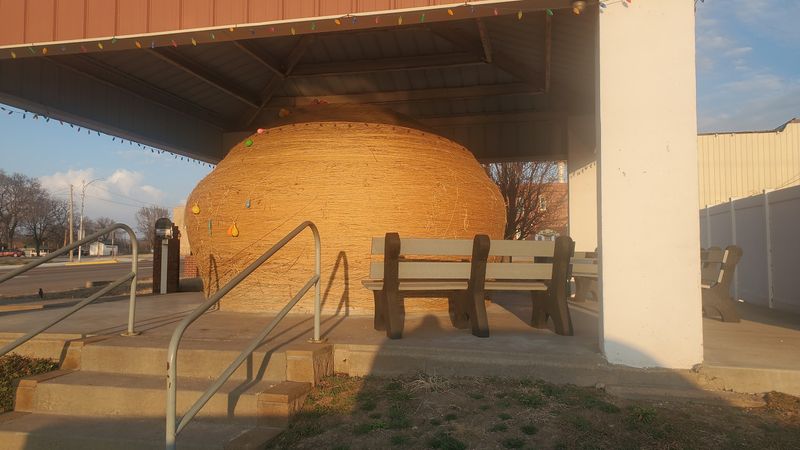
Frank Stoeber started rolling a ball of twine in 1953 and just never stopped. By the time he donated it to the town of Cawker City in 1961, it already weighed over 5,000 pounds.
The town took over and kept adding to it, and today the ball measures over 11 feet in diameter and contains more than 1,600 miles of twine.
An annual Twine-a-Thon festival lets visitors add their own contribution to the ball, which is genuinely one of the most democratic art projects in America. The ball sits under a permanent open-air shelter on the main street, next to a mural celebrating its history.
Kansas actually has a competing ball of twine in Darwin, Minnesota, which sparked a genuine rivalry between towns over which is the true record holder. Cawker City will tell you theirs is the biggest.
Darwin will disagree. The real winner is anyone who gets to say they drove across Kansas for a ball of string.
The Thing, Dragoon, Arizona
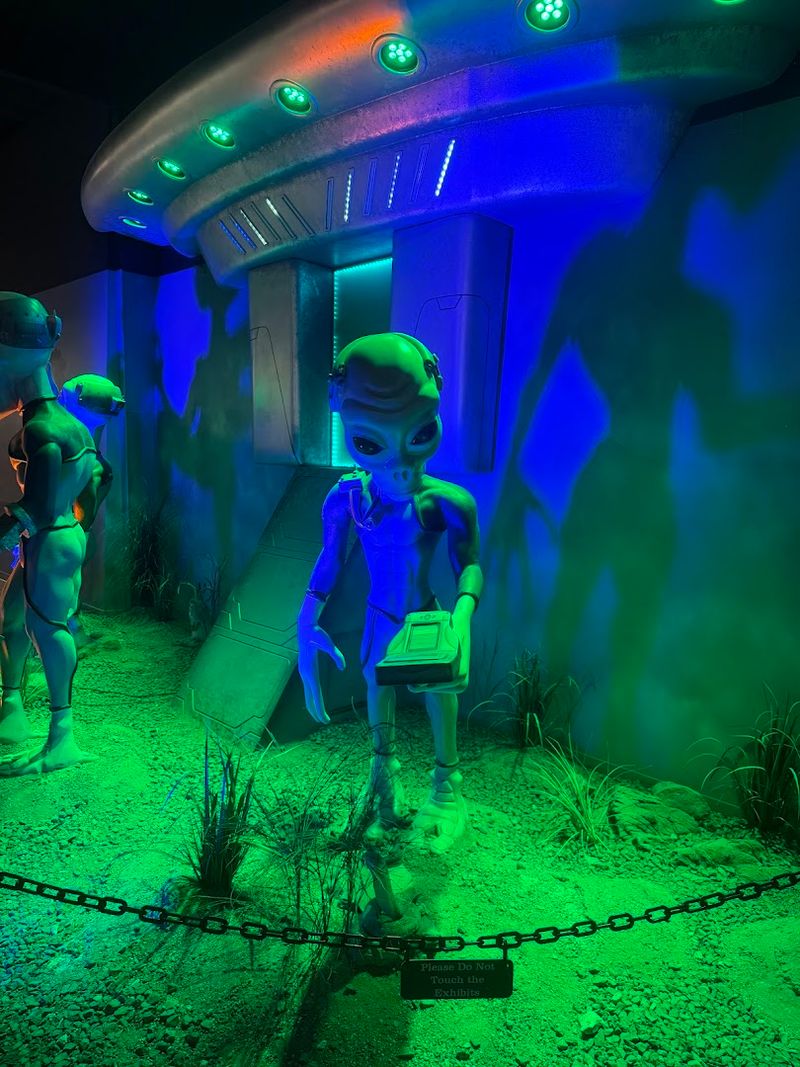
For about 200 miles in each direction, billboards along I-10 in Arizona ask the same question: “What is The Thing?” The suspense builds the whole drive. You pay one dollar to enter a series of yellow adobe buildings in Dragoon, and then you finally see it.
The Thing is a mummified figure displayed in a glass case, allegedly a mother and child, though its actual origins remain genuinely mysterious. Some say it is a hoax.
Others believe it is real. Nobody can fully agree, and the attraction has been smart enough never to officially answer the question.
Surrounding The Thing are vintage cars, old torture devices, a stuffed two-headed calf, and assorted oddities that make the whole experience feel like a carnival sideshow from another era. The gift shop is excellent.
The mystery is the point. Whatever The Thing actually is, it has been pulling drivers off the highway since 1950, and that track record speaks for itself.
The Mystery Spot, Santa Cruz, California
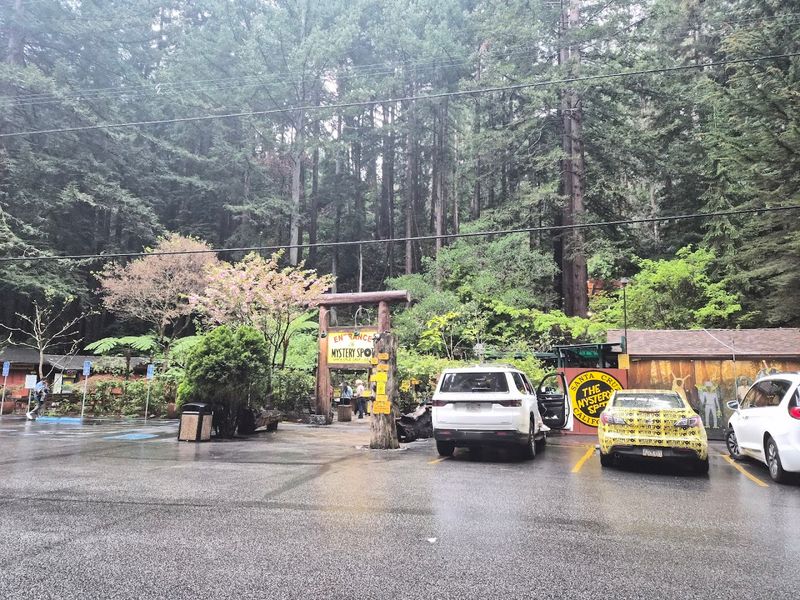
At The Mystery Spot in Santa Cruz, balls roll uphill, people appear to grow taller or shorter depending on where they stand, and compasses reportedly go haywire. Discovered in 1939, this small circle of redwood forest has been baffling visitors ever since with effects that feel genuinely impossible to explain.
The official story involves a gravitational anomaly caused by mysterious forces beneath the earth. The scientific explanation involves a tilted cabin on a sloped hillside that tricks your brain into misreading vertical and horizontal cues.
Both stories are fun, but honestly the optical illusions hold up either way.
Tours run every 20 minutes, and the guides are entertainingly committed to keeping the mystery alive. The spot itself is only about 150 feet in diameter, but the demonstrations inside the tilted cabin are legitimately disorienting.
It is a genuinely fun stop, especially with kids who will absolutely lose their minds over the ball-rolling-uphill trick.
Salvation Mountain, Niland, California
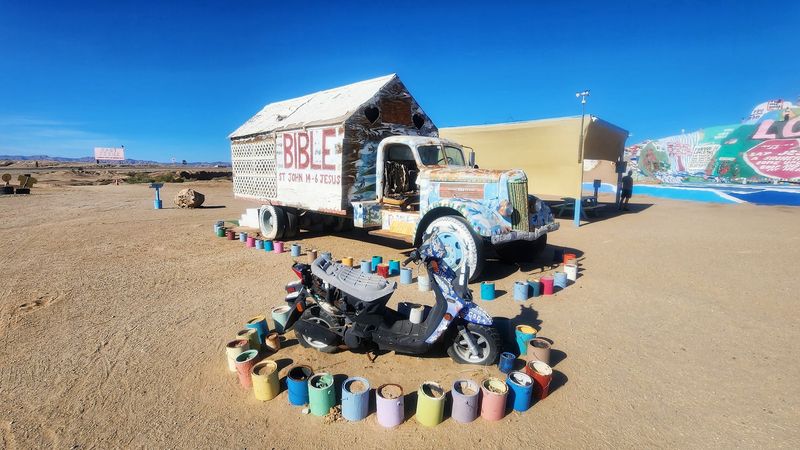
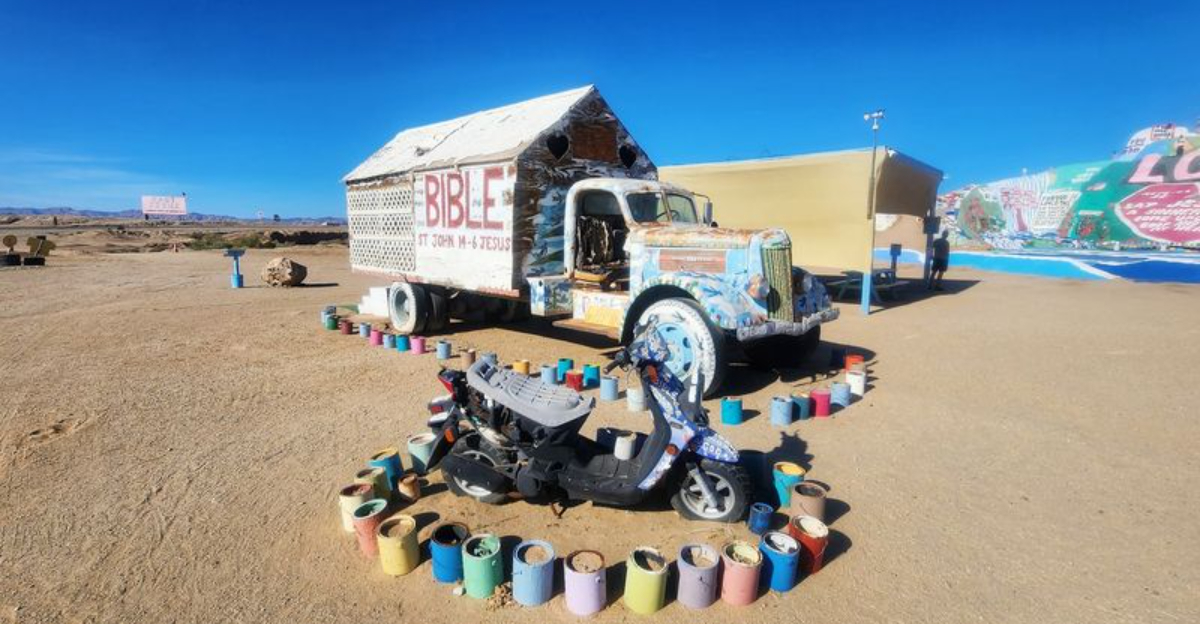
Leonard Knight spent 28 years in the California desert building a mountain out of adobe, straw, and thousands of gallons of paint. Salvation Mountain is a folk art monument covered in flowers, trees, Bible verses, and the words “God is Love” in letters big enough to read from a distance.
It was his life’s work.
Knight started in 1984 after a hot air balloon project failed and he decided to stay in the desert permanently. He lived in a truck on-site and worked on the mountain almost every single day until he was too ill to continue.
He passed away in 2014, but the mountain remains.
The Bureau of Land Management declared it a national treasure in 2000. Visitors climb up the painted paths, explore painted caves, and wander through the surrounding folk art village Leonard built around the base.
It is part outsider art, part devotion, and completely unlike anything else in the country.
National Mustard Museum, Middleton, Wisconsin
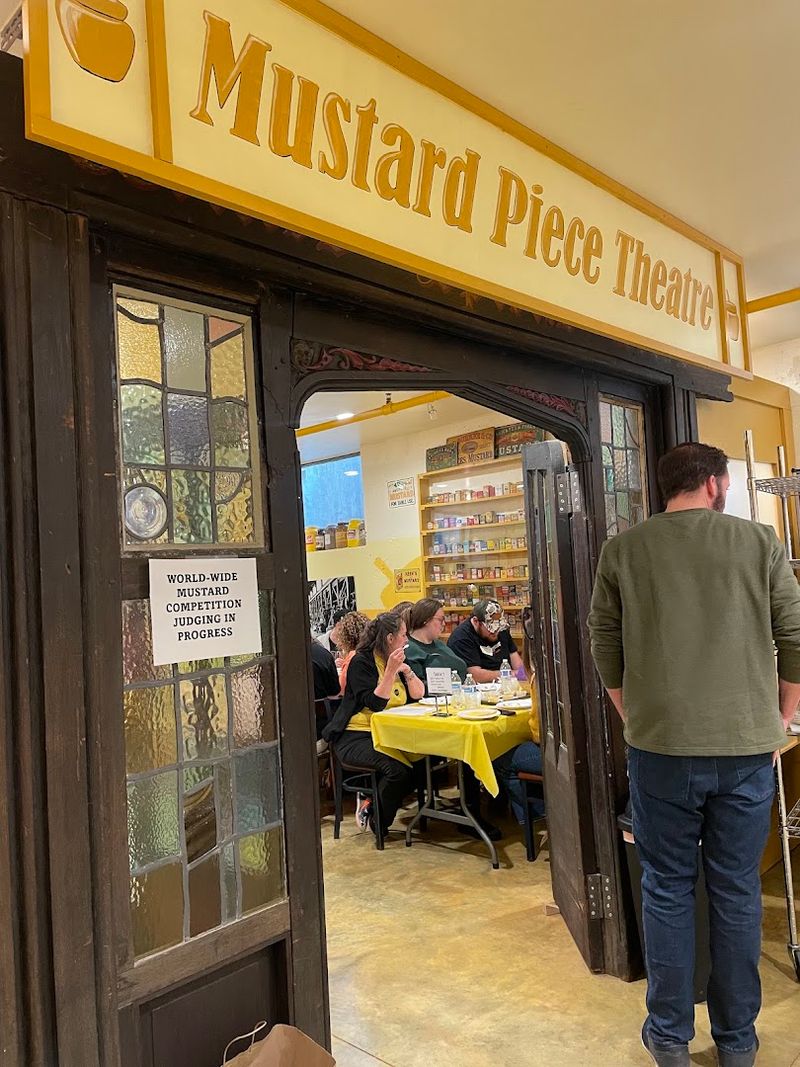
Over 6,700 mustards from more than 70 countries live under one roof in Middleton, Wisconsin. The National Mustard Museum is the brainchild of Barry Levenson, a former Wisconsin assistant attorney general who claims a jar of Grey Poupon spoke to him in a grocery store at 2 a.m. after his baseball team lost the World Series.
That is the actual founding story, and it only gets better from there. The museum features mustard history, mustard art, a mustard hall of fame, and free samples of dozens of varieties.
The gift shop is stocked with mustards you absolutely cannot find anywhere else.
Admission is free, which means there is zero reason not to stop in if you are anywhere near Madison. The museum hosts an annual event called Mustard Day every August, complete with mustard games and mustard-themed competitions.
It is absurd, joyful, and surprisingly educational. Cutting the mustard has never felt so prestigious.
Hole N” The Rock, Moab, Utah
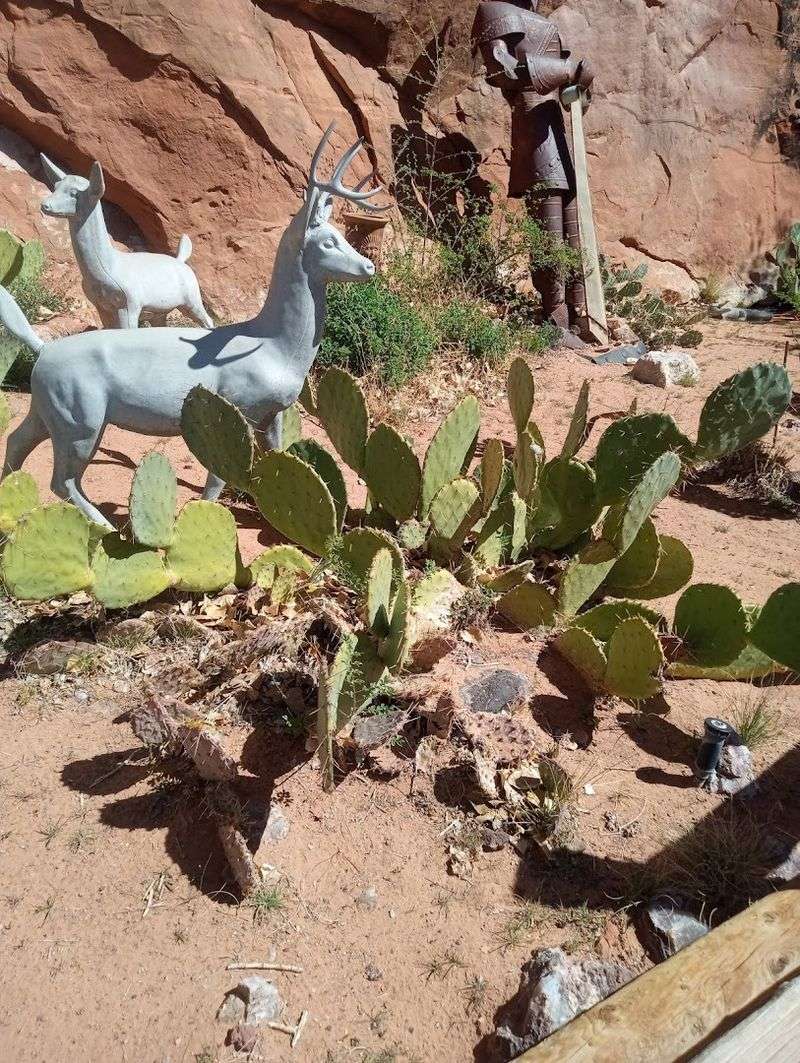
Albert Christensen spent 12 years chiseling a 5,000-square-foot home directly into a sandstone rock face near Moab, Utah. He finished in 1952, and his wife Gladys lived there until she passed away in 1974.
The home has 14 rooms, a fireplace with a chimney drilled straight through the rock, and a bathtub carved from the stone itself.
Tours take you through the entire home, which is still furnished with the original belongings. It feels like walking through a time capsule that happens to be inside a boulder.
Outside, there is a small petting zoo and a gift shop that has been operating since the Christensens first opened the property to tourists.
The location on Highway 191 just south of Moab means most visitors stumble upon it while heading to Arches National Park. It is the kind of stop that takes 45 minutes but sticks with you for years.
Albert Christensen was either a visionary or a very determined man with a very big chisel. Probably both.
Paul Bunyan and Babe the Blue Ox, Bemidji, Minnesota
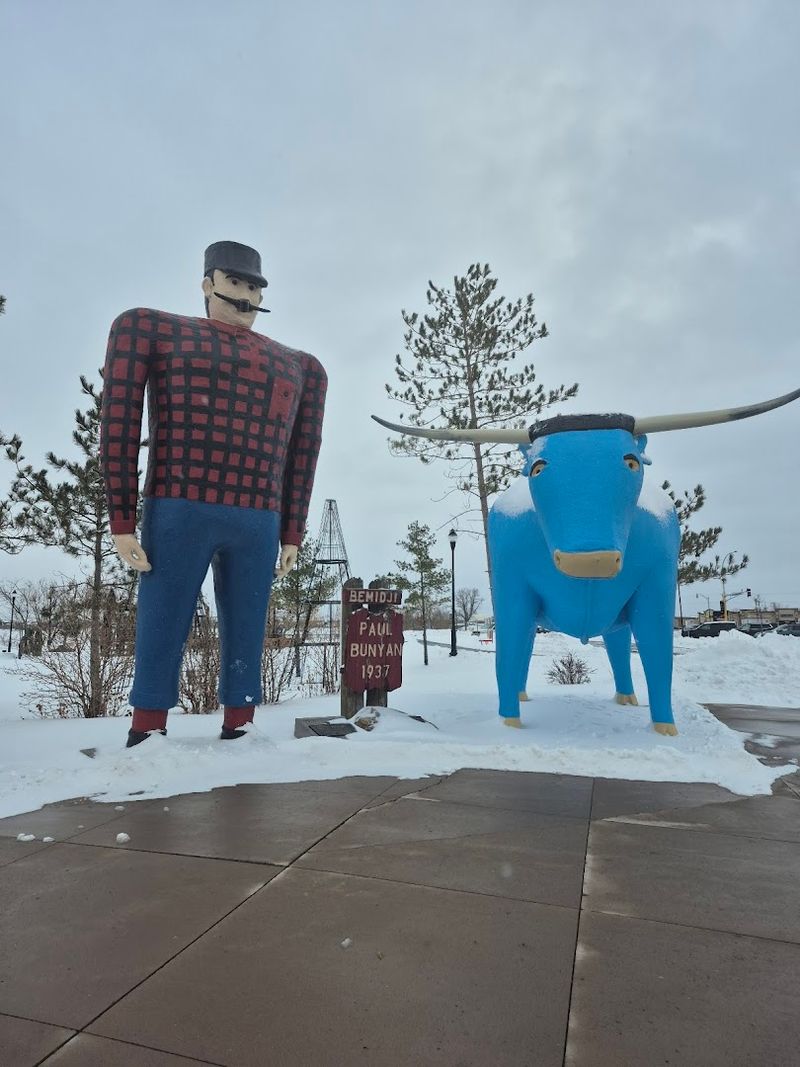
Standing on the shore of Lake Bemidji since 1937, Paul Bunyan and his giant blue ox Babe are two of the most photographed statues in Minnesota. Paul stands 18 feet tall in full lumberjack gear, and Babe is painted the most committed shade of blue you have ever seen on a fiberglass animal.
Bemidji claims to be the first city in the world to have a Paul Bunyan statue, which makes this the original in a long line of giant lumberjack figures scattered across the upper Midwest. The statues are free to visit and sit right on the lakefront, making for a genuinely scenic photo backdrop.
Paul has his own Social Security card, a driver’s license, and even a library card issued by the city of Bemidji. The town takes its folk hero status seriously.
A small information center nearby shares the legend of Paul Bunyan for anyone who needs a refresher on American tall tale mythology.
World’s Largest Catsup Bottle, Collinsville, Illinois
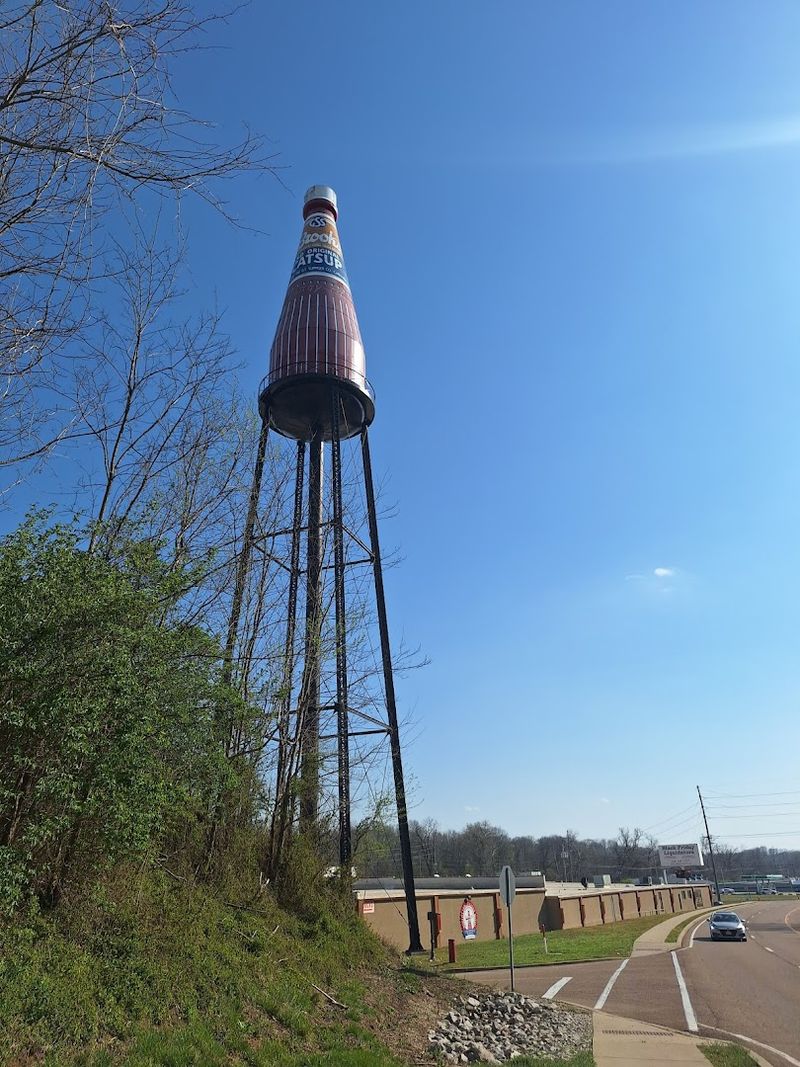
A 170-foot-tall water tower shaped like a ketchup bottle has been standing in Collinsville, Illinois since 1949, and it is exactly as magnificent as it sounds. Built for the Brooks Foods plant, it held actual water used in production and wore the Brooks Catsup label in full branded glory.
Yes, they spelled it catsup.
When the plant closed, locals fought hard to preserve the bottle, raising funds and restoring it in 1995. It was placed on the National Register of Historic Places, proving that America will landmark absolutely anything if enough people love it enough.
The Friends of the Catsup Bottle still hold an annual festival in its honor.
Collinsville is just east of St. Louis, making this an easy detour off Interstate 55. The bottle is best viewed from the road below, where the full scale hits you all at once.
It is a completely useless piece of infrastructure that has outlived its original purpose and somehow became a beloved civic icon. Respect.



