 Unearth The Voyage
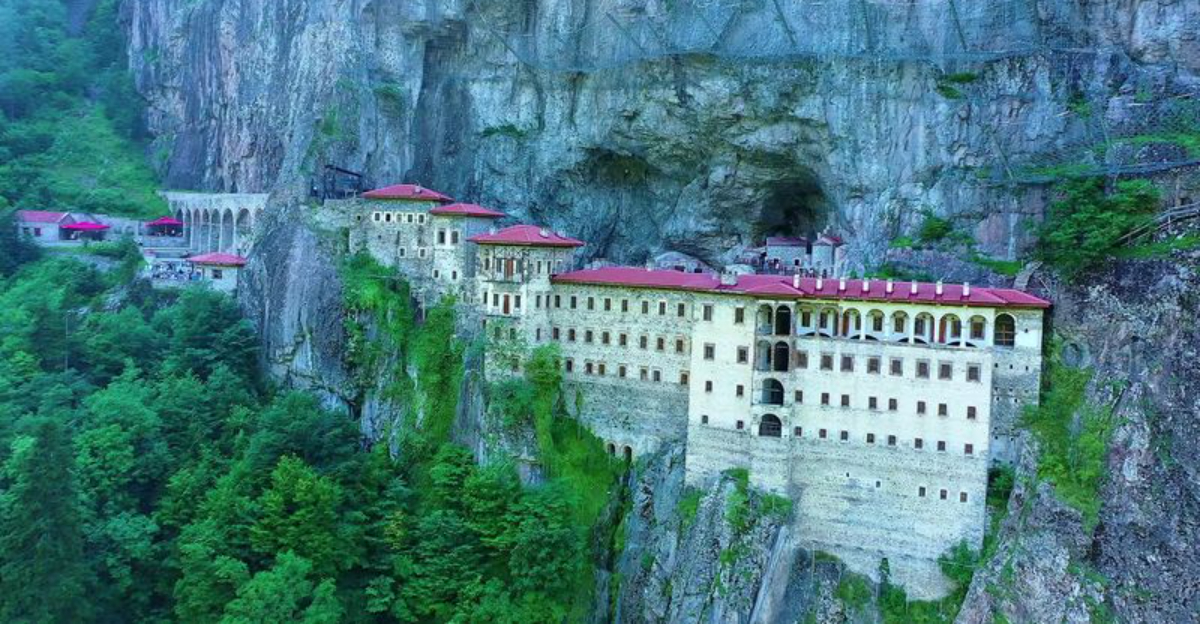
Some sacred places seem to defy gravity, logic, and sometimes common sense. You look up, squint at a cliff or a lonely ridge, and wonder how anyone hauled stones up there, let alone built full sanctuaries.
That combination of audacity and devotion is magnetic, the kind of thing you feel in your chest as much as you see with your eyes. Come wander through these almost impossible temples and feel that pulse of human grit and wonder for yourself.
Hanging Temple — Shanxi, China
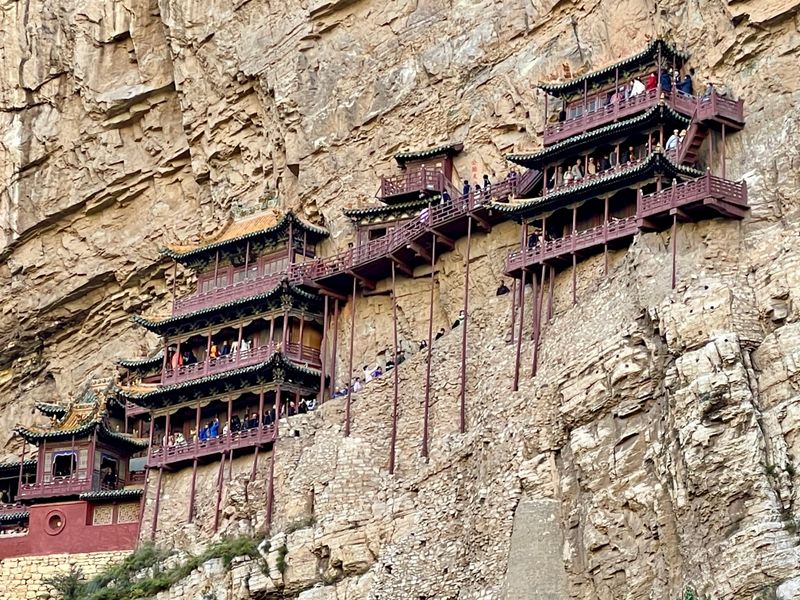
You round a bend and there it is, pinned to the cliff like a wooden dragonfly: the Hanging Temple. Timber galleries cling to the rock, their lacquered railings hovering over open air while wind brushes prayer flags.
Look closely and you spot the oak beams wedged into the stone, hidden supports that make the whole structure feel both impossible and utterly grounded.
Climbing the steps, you hear your breath bounce off basalt, each landing revealing a new angle on the valley far below. The halls mix Buddhist, Taoist, and Confucian icons in quiet company, a rare under-one-roof blend that somehow feels natural up here.
The cliff keeps the sun at a slant, cool shade wrapped around incense and murmur.
Engineers today still marvel at the old builders who mapped the mountain’s pulse before tapping in those crossbeams. The location spared the temple from floods and gave seekers a refuge shaped by gravity and grit.
When you rest your palm on the rail, you feel a tremor of height, yes, but mostly a calm that comes from trust.
There is a moment near the upper walkway when the floor narrows to the width of your shoulders. That thinness is part of the lesson, a reminder that faith sometimes means stepping lightly yet surely.
Step after step, the cliff cradles you, the valley inhales, and the temple keeps hanging on.
Preah Vihear Temple — Cambodia
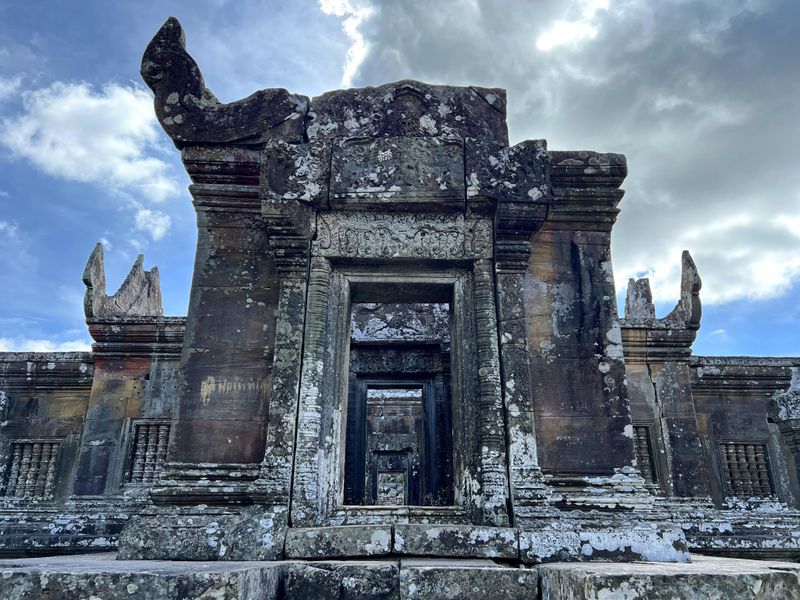
Preah Vihear sits like a stone ship on the Dângrêk escarpment, prow aimed at the Cambodian plains. The climb up is a slow unfurling of sky and wind, each terrace stepping you closer to that rare feeling of being both above and within the land.
You walk the long axis and suddenly the world falls away at the cliff’s edge.
Dedicated to Shiva, the temple’s processional layout runs along the ridge rather than forming a traditional rectangle. Doorways frame views that seem curated for breath catches and quiet nods.
Carved lintels hold their stories with a stubborn grace, even as lichen makes its own silver script.
Up here, the air feels thinner, not from altitude so much as exposure and scale. You move slower, count stones almost like beads, and notice how each platform aligns your body to horizon.
The past is not gone, it is simply patient, tapping your shoulder with every threshold.
UNESCO status acknowledges the obvious brilliance, but the cliff does the real convincing. You feel why builders wanted a mountaintop sanctuary, where devotion brushes the sky and weather writes the daily liturgy.
Come at dawn if you can, when the plains glow and the temple seems to hover.
Palitana Temples — Gujarat, India
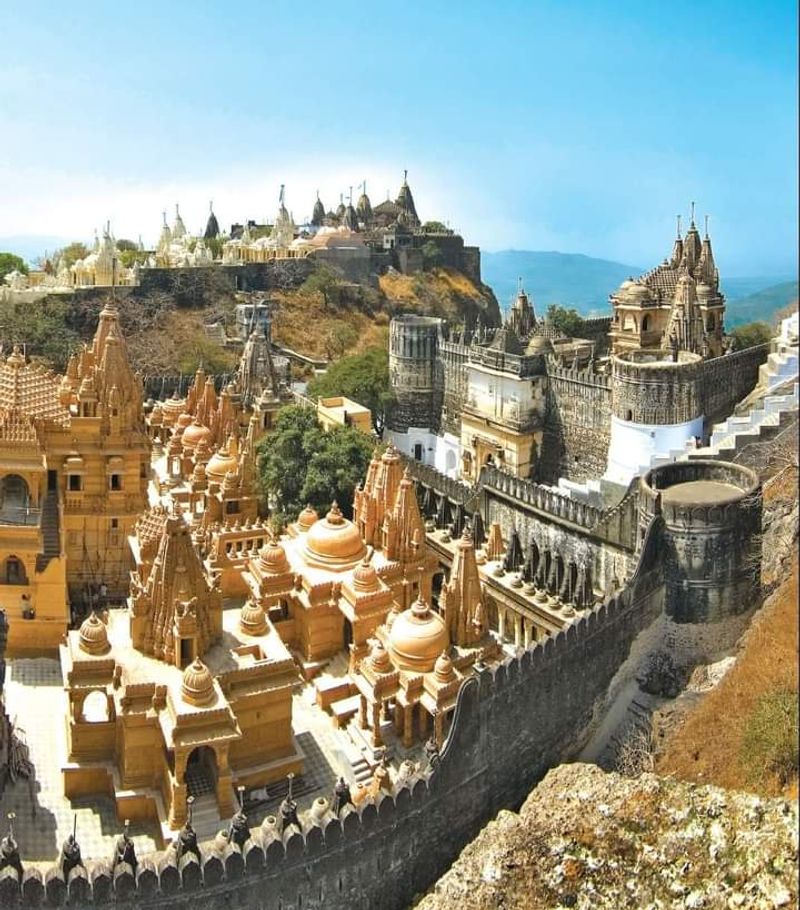
Shatrunjaya rises in pale limestone folds, and the steps begin almost before you are ready. There are thousands of them, a steady litany underfoot, with white marble gleaming above like a mirage that decided to stay.
Every time you think you have reached the top, another crown of spires appears, delicate and stubborn.
Palitana is a city of shrines, more than 3,000 by local count, each one trimmed with carvings that catch morning light. Pilgrims climb not to race but to listen, letting breath and stone keep time together.
The slope is steep enough to seem unreasonable, which is partly the point, because devotion often asks for effort you can feel tomorrow.
From a terrace, the plains shrink to quiet patterns, fields stitched with river thread. The temples, dedicated to Rishabhanatha and other Tirthankaras, hold a hush that settles deep in the ribs.
Even chatter softens up here, pebbles clicking like beads on a string.
Coming down, knees wobble but the mind steadies. You carry the steps with you, their rhythm tucked in your stride, proof that ascent can be a kind of prayer.
The hill keeps its distance, generous and slightly amused, waiting for your next climb.
Kailasa Temple — Ellora Caves, India
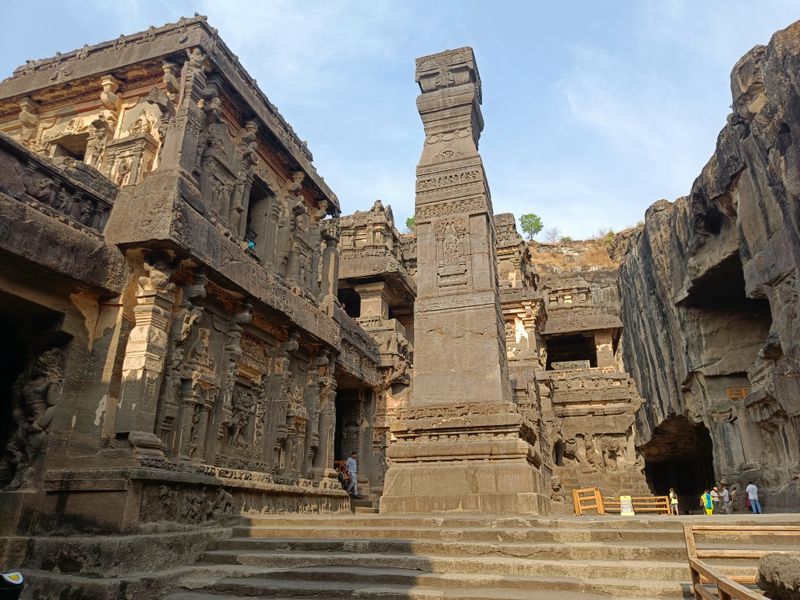
Kailasa does not look built so much as revealed, as if someone pulled a stone curtain and the temple was always there. Carved top-down from basalt, it is a negative sculpture turned living space, a courtyard that still remembers the mountain.
Walk in and you feel the scale tug at you, playful and a bit overwhelming.
Artisans removed thousands of tons of rock just to say yes to empty space, then filled that space with pillars, friezes, and stories in stone. Elephants shoulder the weight visually, while shadows do the rest, draping columns in moving cloth.
It is audacity made quiet, because the craft refuses to shout.
Stand by a pillar and you can trace chisel paths with your fingertip, tiny decisions stacked into vast certainty. The shrine pulls you inward, not with force but gravity of intention.
Even the air seems shaped, cooler and still, as if the cavity were breathing.
People call it impossible, but your feet on the floor say otherwise. Human hands did this, a chorus of them, tuned to rock and time.
You leave with grit on your palms and a new respect for subtractive courage.
Abu Simbel Temples — Aswan, Egypt
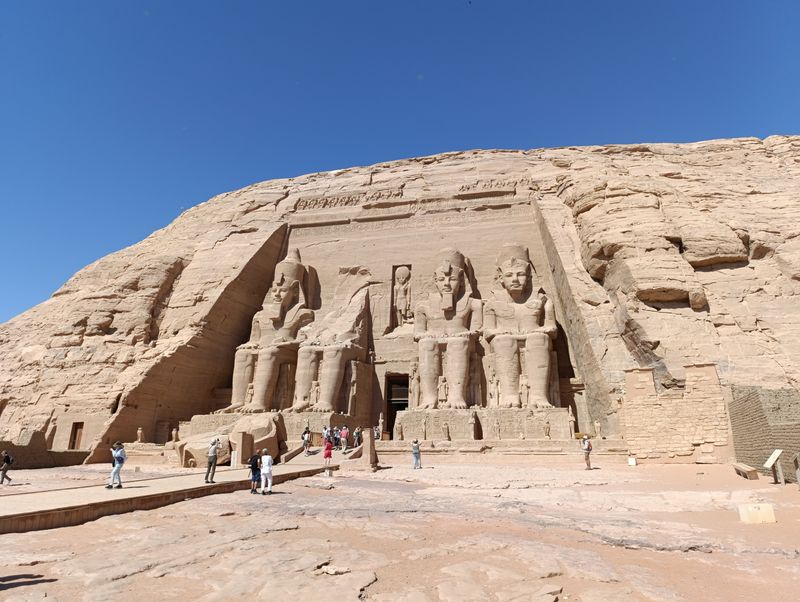
Abu Simbel greets you with four stone faces that look past you, beyond you, toward a solar appointment they still keep. The facade is both welcome and warning, the desert’s straight-backed host.
Inside, halls inhale coolness, and reliefs ripple in lamplight like oars through calm water.
Carved in the reign of Ramesses II, the temples were once set directly into the cliff above the Nile’s old waters. Then the river rose behind the new dam, and the world did a rescue that felt like surgery, moving the mountainside block by block to higher ground.
That relocation is its own legend, proof of how far people go to save a sacred heartbeat.
The great temple honors the pharaoh, the smaller honors Nefertari, and both hum with engineered light. Twice a year, sunlight threads the sanctuary at dawn, touching statues with deliberate accuracy.
You stand there, slightly skeptical, until the beam lands and quiet wins.
Out by Lake Nasser, wind lifts sand in soft eddies around your ankles. The colossi sit unbothered, reading horizons, keeping count of seasons better than any calendar in your phone.
You walk away smaller in size and larger in time.
Tiger’s Nest (Paro Taktsang) — Bhutan
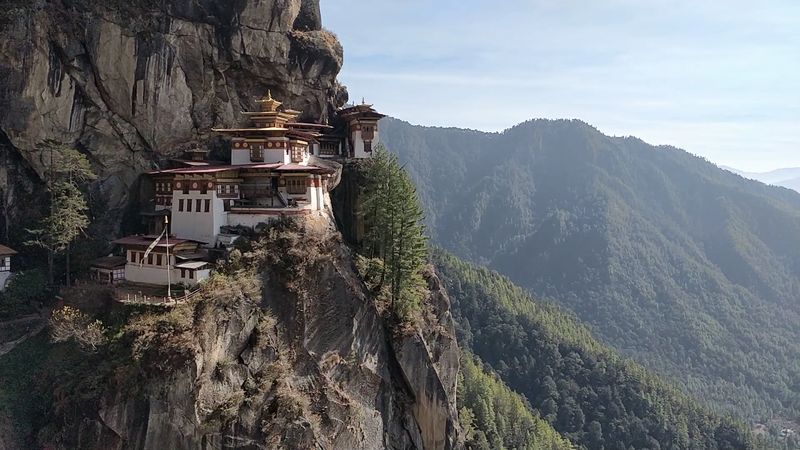
The trail to Tiger’s Nest tilts upward and does not apologize. Pines lean in, prayer flags tick the breeze, and then the monastery appears, pasted to the cliff like a stubborn idea.
Far below, the valley flattens into quilts while the rock here grows its own gravity.
Built around caves where Guru Padmasambhava meditated, the complex hangs at the edge of breath and legend. Steps are cut into stone, and a small waterfall threads the ravine with silver noise.
You move carefully, not because the path is cruel, but because the view keeps trying to steal your balance.
Inside, butter lamps grip the air with warm perfume. Monks pass with soft footfall, and the rooms seem wider than their walls, as if borrowed from the sky.
Up here, faith feels like focus, steady and kind, with just enough edge to keep you awake.
On the return, legs shake and spirits rise, a fair trade. Someone hands you sweet tea and you laugh, surprised by your own voice.
The cliff stays quiet, and the monastery keeps holding on.
Machu Picchu Temples — Peru
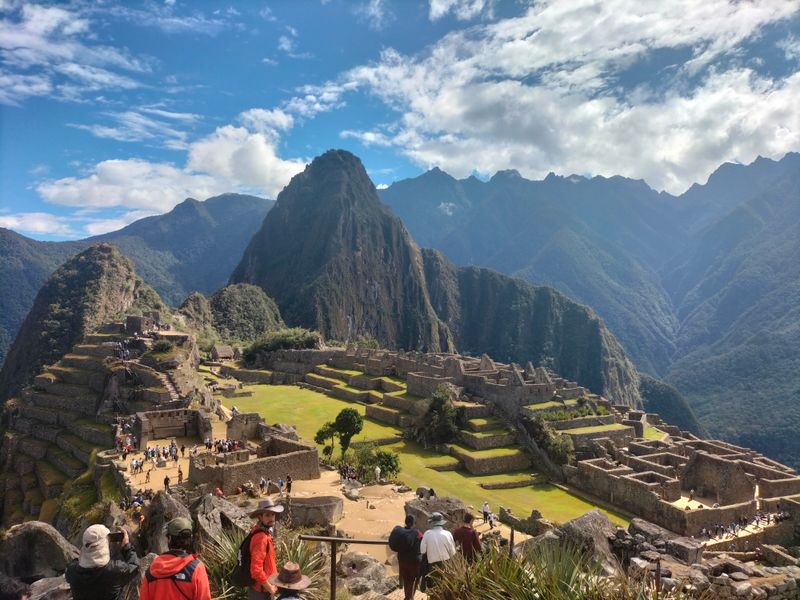
Machu Picchu sits where ridgelines braid and the river pulls a tight loop, a city arranged like a thought you can walk. Temples are tucked into the terrain, the Temple of the Sun curving to meet the stone it crowns.
Terraces stitch the slope, green stairs holding the mountain in place.
Stonework here is a quiet flex, joints so tight you slide a fingertip rather than a blade between them. The Intihuatana reaches for the sun without fuss, a carved intention that still finds light.
You move from doorway to doorway as clouds skim your hat, the Andes humming in low blue chords.
For all the photos you have seen, the scale still startles. Llamas graze like living punctuation, unconcerned with your awe, and every turn writes another horizon.
It is both perch and shelter, a balance lesson taught in granite.
Late afternoon is best, when tourist heat cools and shadows lace the terraces. You sit, let silence gather, and realize the impossible here was not the height, but the harmony.
The city fits the ridge like a well-worn glove.
Mesa Verde Sun Temple — Colorado, USA
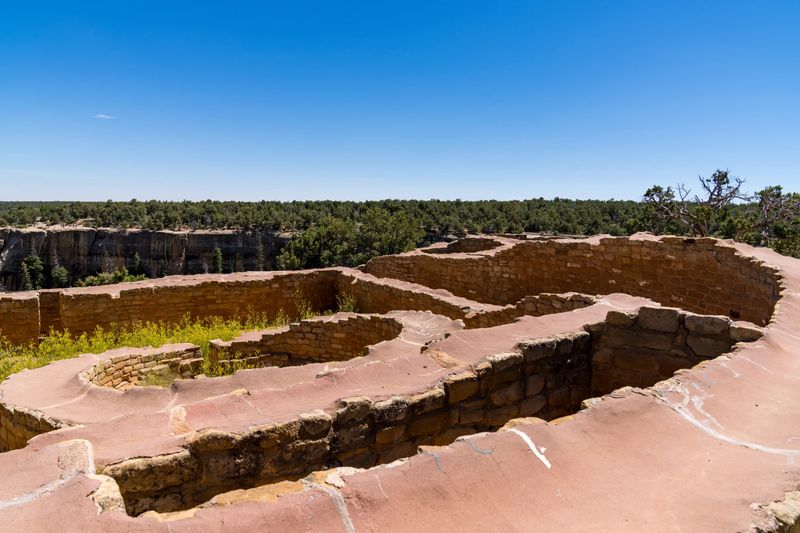
On Mesa Verde, the Sun Temple sits close to the rim, square stones keeping calm watch over a folded canyon. The air is thin and honest, the kind that dries sweat almost as soon as it forms.
You can feel the geometry underfoot, alignments that nod to solstice and season.
The structure is roofless now, but its intent feels intact, a ceremonial space more than a home. Built around 1000 to 1200 CE, it shows planning that still reads clearly in the walls.
Stand at a corner and your sightline clicks into place like a compass finding north.
Wind does most of the talking, flicking through sage and across sandstone seams. The mesa edge makes everything more immediate, as if distance had been shortened by lifted ground.
You look out and imagine fires lit, people gathered, the sky taking notes.
Trails bring you here gently, but the cliff underscores the choice: to worship at the boundary between shelter and exposure. It is not a grand height, yet the placement feels daring and exact.
The sun arrives right on schedule, and the stones answer.
Angkor Wat — Cambodia
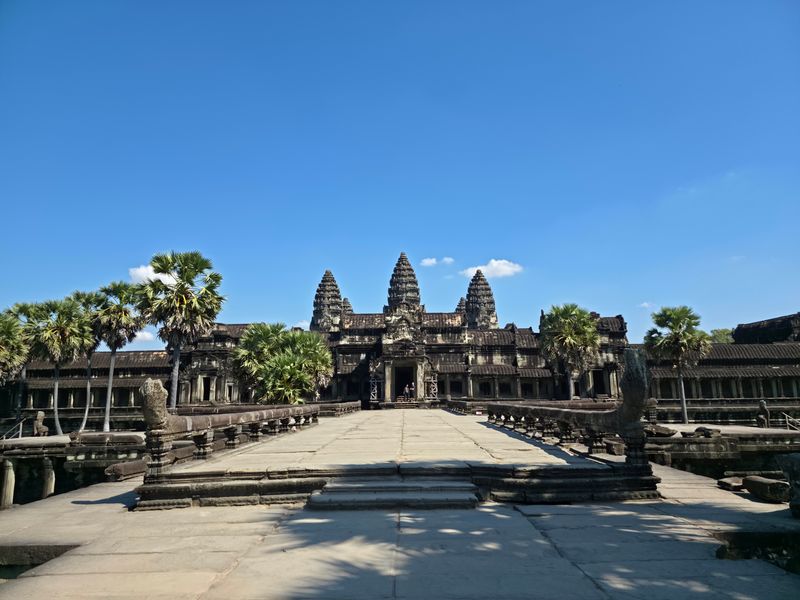
Angkor Wat does not cling to a cliff, but it rises like a mountain built from intention. The moat behaves like a horizon, the causeway a measured pilgrimage across water to stone.
Towers bloom in tiers, a man made Meru that turns mythology into floor plan.
Walk the galleries and the bas reliefs start to move, armies marching quietly along your peripheral vision. Light takes its time here, sliding across carvings and pooling under lintels, and every doorway frames a smaller temple within the larger dream.
You keep thinking it should feel heavy, and yet it lifts.
The scale messes with your sense of what is reasonable. Reflection doubles the towers at dawn, and the whole complex feels airborne even while your sandals scuff the causeway.
It is not altitude that makes it impossible, but ambition and symmetry executed without flinch.
By late morning, heat presses down and the shade becomes its own sanctuary. You sit by a lotus pond, watch ripples reedit the sky, and understand why builders aimed for heaven by way of stone.
The path back feels shorter, but only because the idea followed you.
Sumela Monastery — Turkey’s Cliff-Hanging Sanctuary
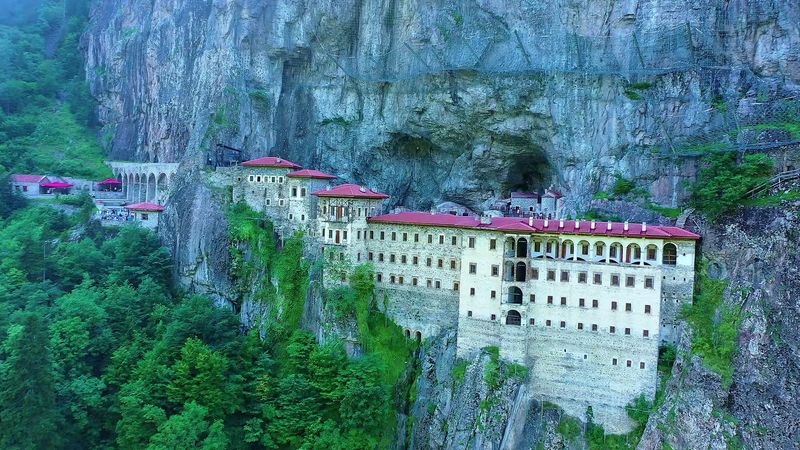
Sumela looks like it exhaled from the cliff, stone to stone, story to story. The approach winds through the Pontic forest, damp leaves whispering, then the monastery appears, stapled to limestone high above the valley.
It is both precarious and oddly at ease, like a cat asleep on a narrow ledge.
Founded in the 4th century, rebuilt and tended across centuries, the complex threads chapels and cells along the rock. Frescoes bloom in color that refuses to fade, saints holding their ground against weather’s slow hand.
Walkways hug the cliff, and you learn to place your feet where others did.
The drop is real, but so is the shelter, a pocket carved where prayer could keep steady. You feel the monastery’s confidence in the way doors open to sudden views, and then close back to stone’s hush.
It is a rhythm that calms while it chills, a steadying contrast.
By the time you descend, the valley looks broader, the river louder. You carry a quiet with you that is not easily shaken.
The cliff keeps its secret of balance, and you have borrowed it briefly.
Panch Kedar Temples (Rudranath) — India’s Himalayan Highland Shrines
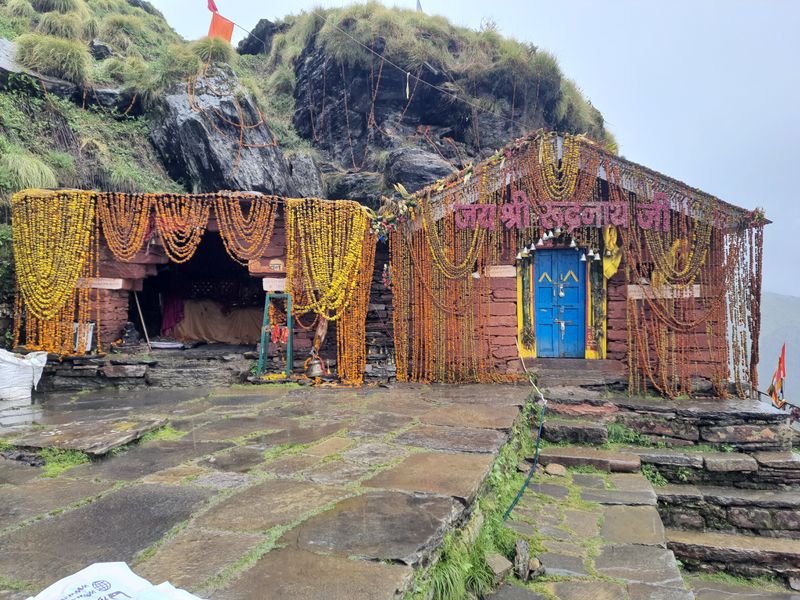
The trail to Rudranath is a long conversation with altitude. Forest gives way to meadow, meadows to rock, and then the small stone temple appears with glaciers leaning over its shoulder.
The air is thin but kind, edged with pine and cold sunlight.
Part of the Panch Kedar, Rudranath sits at more than 3,600 meters, where devotion arrives on foot. Pilgrims move slowly, not from reluctance but respect, counting breaths and switchbacks like mantras.
Stone flags clatter softly, and bells carry farther than seems possible.
Up here, the architecture is modest and exactly right, a snug holdfast facing weather in all its moods. You warm your hands over tea, watch clouds write and erase routes across the peaks, and understand why the climb is the ceremony.
The temple is the punctuation, not the whole sentence.
On the return, knees protest and hearts agree. The path feels different when it is behind you, friendlier somehow.
The mountains do not notice, but you do, which is enough.
Meteora Monasteries — Greece’s Sky-High Pillars of Faith
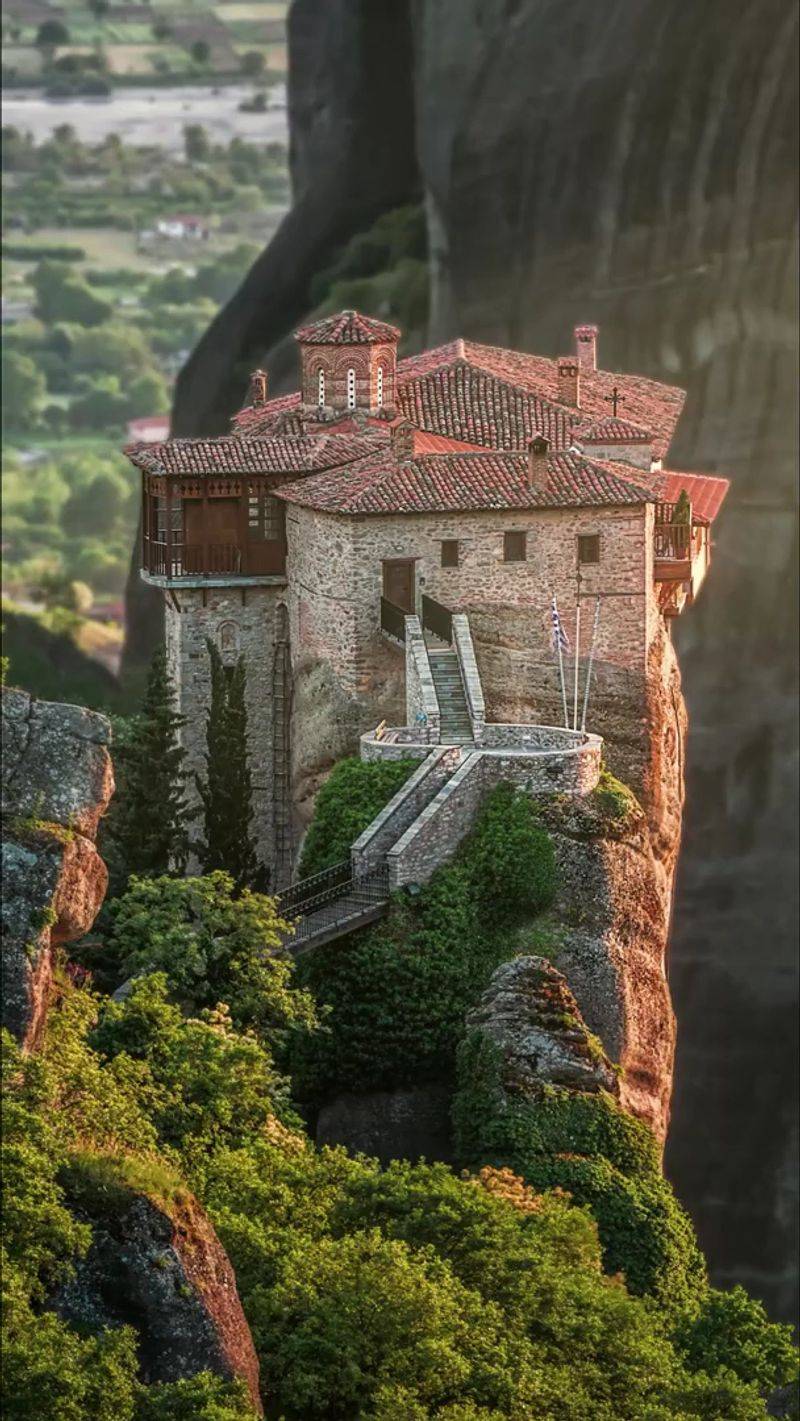
Meteora looks like the earth decided to practice levitation, raising sandstone columns and setting monasteries on top like patient birds. The first monks came for solitude and found altitude, pulling themselves up by rope and nerve.
Today there are stairs, but the height still edits your stride.
From a balcony, the plain spreads like a quiet sea, towns floating in a soft grid. Chapels are intimate, frescoes breathing softly in cool rooms where voices know to hush.
You feel the stone’s age in your calves and in the way the wind threads your sleeves.
These are monasteries, yes, but they scratch the same itch as cliff temples, turning isolation into clarity. The pillars hold both structure and story, stacked faith over time.
Even the parking lot views hit harder than expected, which is a funny truth you will admit later.
Evening lands beautifully, rock warming to amber, bells sounding like thoughtful punctuation. You take one last look and try to memorize the silhouette for later.
The pillars do not care, but they let you try.
Borobudur’s Astronomical Temple — Indonesia’s Volcano-Framed Wonder
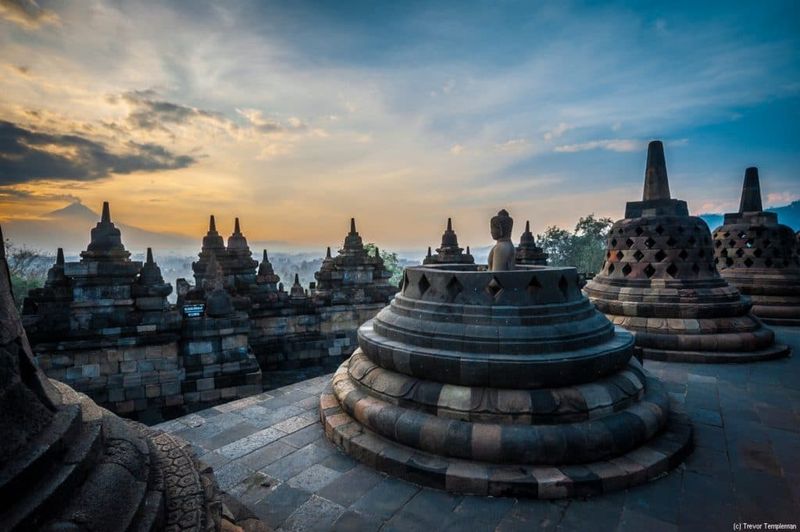
Borobudur rises like a mandala you can climb, levels stacking until your legs learn the pattern. At dawn, mist sighs across the Kedu Plain, and volcano silhouettes stand guard at the horizon.
Stone reliefs tell long stories in short panels, and you read them with your feet.
The temple is both mountain and map, a cosmic diagram translated into stairs and corridors. Stupas on the top terraces look like bells set to ring light, each one cradling a serene figure.
You circle clockwise with everyone else, a quiet current pulled by gravity and intention.
From certain angles, the monument seems to grow directly out of the earth, which feels exactly right. The alignment with sun and sightlines makes the whole place hum, subtle and persistent.
It is not precarious in a cliff sense, but it bends the landscape to a spiritual incline.
As morning warms, the stone releases the night and your shoulders relax. You take a last lap, tuck a lesson into your pocket, and head down through trees that know the way.
The volcanoes linger in your rearview, old and watchful.



