 Unearth The Voyage
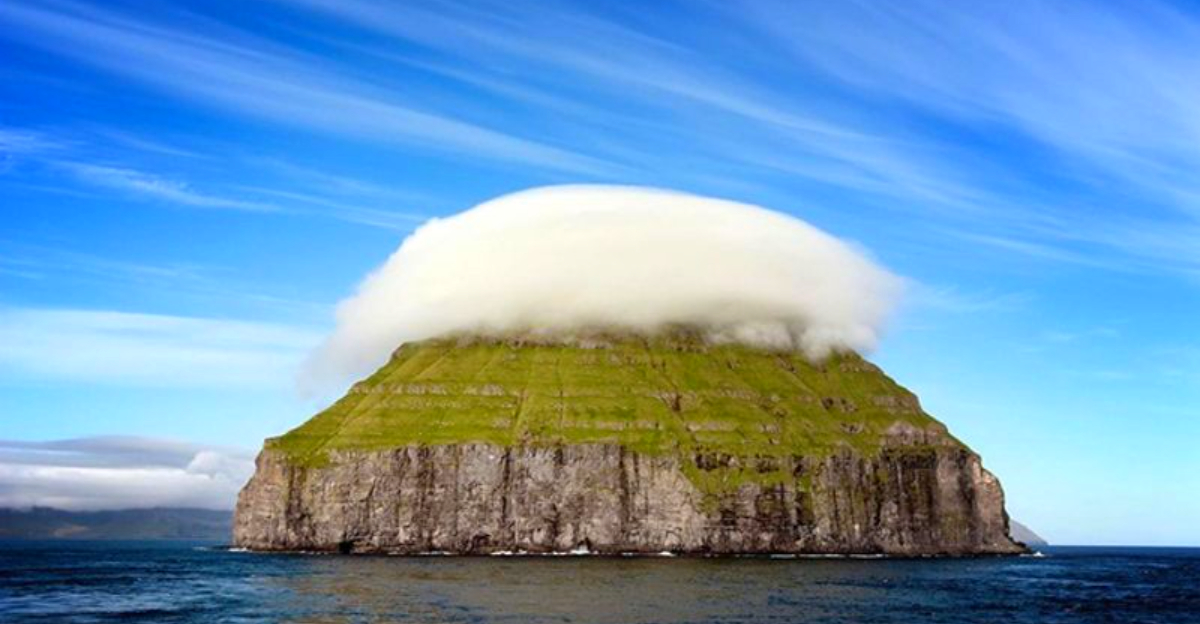
Small islands can carry oversized stories, and I have chased them from spray-soaked cliffs to misty horizons. These places feel pocket-sized on a map yet sound thunderous in legend, especially when giants start throwing rocks.
You will meet caves that sing, stacks that stride, and peaks that look sharpened by enormous hands. Pack curiosity and a steady footing, because the tales here stomp loudly.
1. Staffa (Scotland)
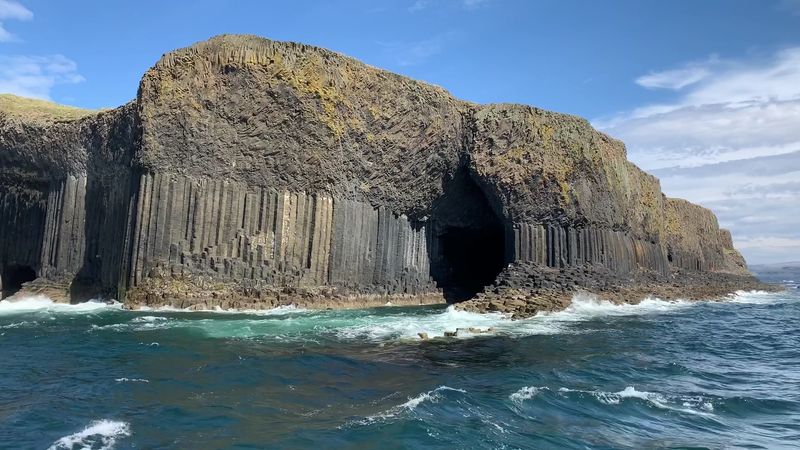
The cave hums like a cathedral with a salt-water choir, and you feel it in your ribs. Staffa’s hexagonal steps look tailor-cut, as if a giant stonemason liked neat edges.
Locals point to Fingal’s Cave and say Fionn mac Cumhaill shaped a pathway for colossal strides, leaving organ pipes of basalt to echo his tread.
I arrived on a jittery boat and timed each wave like a metronome. Inside the cavern, sound bounced off stone in layered notes, making whispers feel oversized.
You hear the legend before anyone tells it, like the island is retelling a memory that refuses to shrink.
Practical tip: watch the swell and wear shoes with bite. Guides keep a careful eye, since the walkway can transform from firm stage to slippery rumor.
If you want the legend to land, stand quiet as spray mists your face, and imagine Fingal pause mid-stride, carving acoustics that carry footfalls across the sea.
2. Isle of Man (Irish Sea)
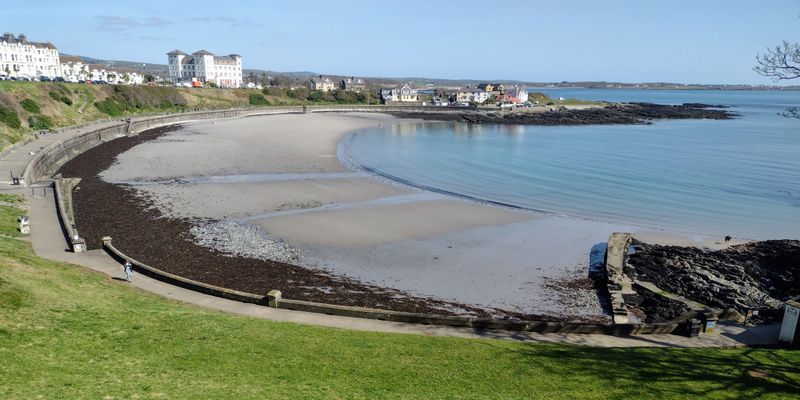
A good story starts with a missing scoop of earth, and the Isle of Man wears that punchline proudly. Legend says Fionn mac Cumhaill dug a chunk from Ireland and flung it here, leaving Lough Neagh behind like a spoon mark.
Stand on a bluff and the shoreline curves as if shaped by a giant’s impatient thumb.
Locals tell it with a grin, because it explains everything while demanding nothing. I took a bus that clung to winding lanes, then walked through heather that whispered sea-salt gossip.
Looking toward Ireland, you can imagine the arc of that throw, the air briefly heavier with turf and bravado.
Come hungry for kippers and anecdotes. The island loves a yarn almost as much as a motorcycle, and both roar past every year.
Find a vantage point above Peel or Maughold and let the myth set the frame, because when the light tilts just right, the landscape looks freshly placed by an enormous hand.
3. Rockall (North Atlantic)
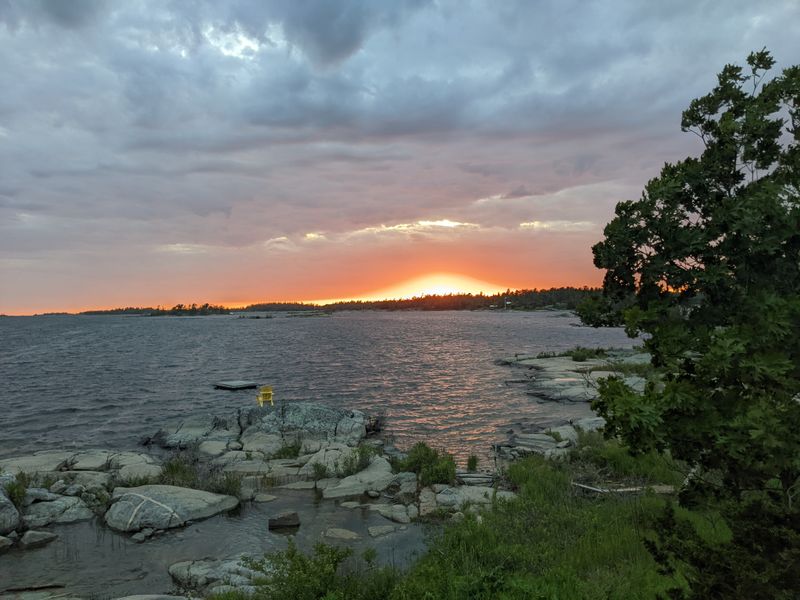
This is the loneliest brag in the ocean, a rock with more legend than square footage. Rockall pops from the Atlantic like a fist, and folklore says a giant tossed it as casually as a skipping stone.
Some swear Fionn did the throwing, probably after an argument with geography.
I watched it from a research vessel once, tiny and theatrical, with gannets stitching white arcs overhead. You do not land casually here, unless you prefer wrestling waves.
Even from a distance, the rock wears a mythic scowl, daring charts to define it.
Navigators measure, poets embellish, and the sea grumbles agreement. The best viewpoint is a safe one, with binoculars and realistic expectations.
If you let the legend lead, Rockall becomes an exclamation point at the end of a giant sentence, hanging in ocean air where punctuation usually fears to tread.
4. Ailsa Craig (Scotland)
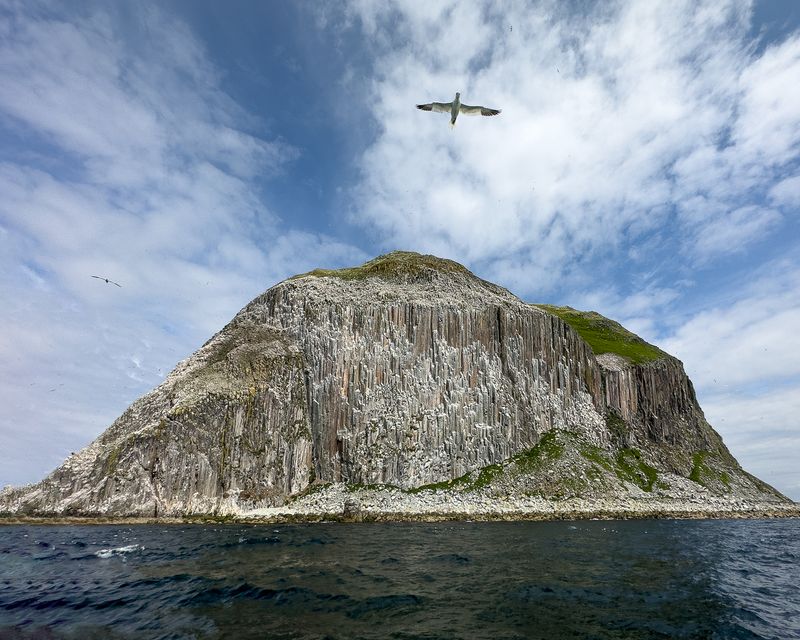
Ailsa Craig looks like a smooth knuckle punched through the Firth of Clyde. The story says a giant threw it mid-feud, which explains both the distance and the drama.
Curling stones quarried here end up polished and refined, like the island learned manners after its hot-headed arrival.
I ferried past on a quiet morning when the haze softened its outline. It still felt heavy, a stubborn punctuation hovering between coasts.
Puffins bobbed nearby, unbothered by warfare from older centuries and creatures with longer stride lengths.
If you catch a tour, bring a lens and patience for birds. The cliffs ring with sound, and guano adds frank commentary.
Legends cling to Ailsa Craig the way salt does, and when the sun hits the rock’s flanks, you can almost see the thrower’s grip imprinted in the stone.
5. Risin og Kellingin (Faroe Islands)
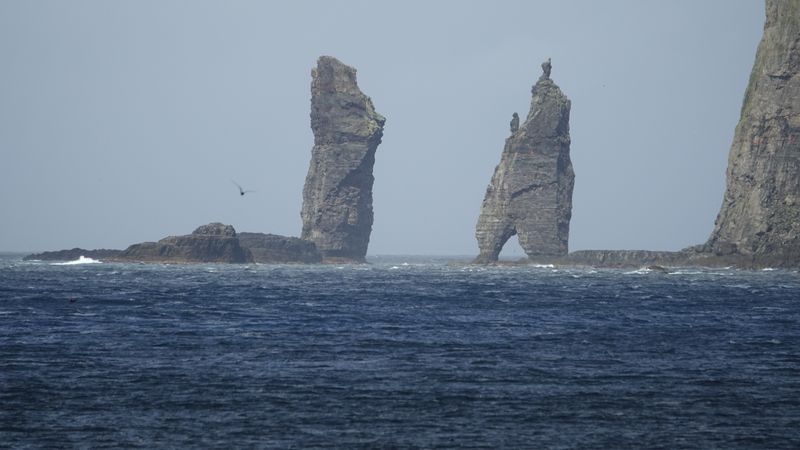
Two silhouettes stand like a quarrel paused mid-sentence. Risin and Kellingin, the Giant and the Witch, tried dragging the Faroe Islands to Iceland, then froze at sunrise.
Their outlines look guilty about it, caught by morning light with wet feet and ambitious plans.
I drove Eysturoy’s winding roads and felt the stacks appear and vanish between turns. Locals say storms rearrange their moods, though not their stony stubbornness.
When the sea roars, the pair seem to whisper over the noise, still plotting a tug-of-war that never quite restarts.
Best view: from Tjørnuvík’s black-sand beach with warm layers and hot coffee stashed in your bag. Watch swells fold like fabric and gulls write scribbles across the air.
The myth works without persuasion, because those shapes make motion feel suspended, like sunrise never finished turning them to stone.
6. Giant’s Causeway Islets (Northern Ireland)
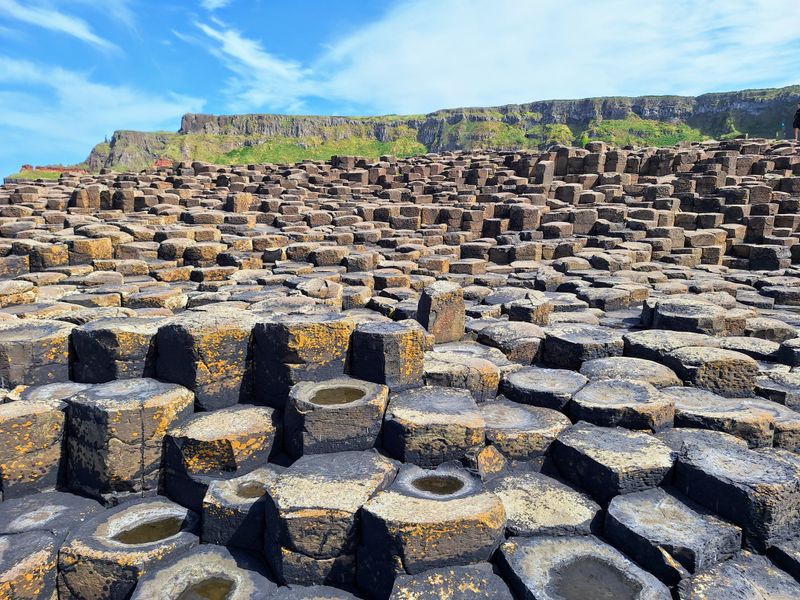
The shoreline clicks like a box of basalt Lego, and the offshore nubs look like leftover pieces. Fionn and Benandonner allegedly built a causeway for an ill-advised visit, and these islets feel like the trail’s breadcrumbs.
Waves work overtime, yet the geometry still wins.
I hopped along the landward columns and watched the sea test each edge. Families played counting games with hexagons, which is how numbers started sounding epic.
Out beyond, the low islets keep their heads above spray, like stubborn punctuation in a giant correspondence.
Arrive early and the columns warm quickly underfoot. Guides fold myth and geology into a tidy bundle you can carry home without spilling.
When the sun drops, the stones shine with quiet pride, and you might believe any giant would build a walkway here just for the views.
7. Stac an Armin (St Kilda, Scotland)
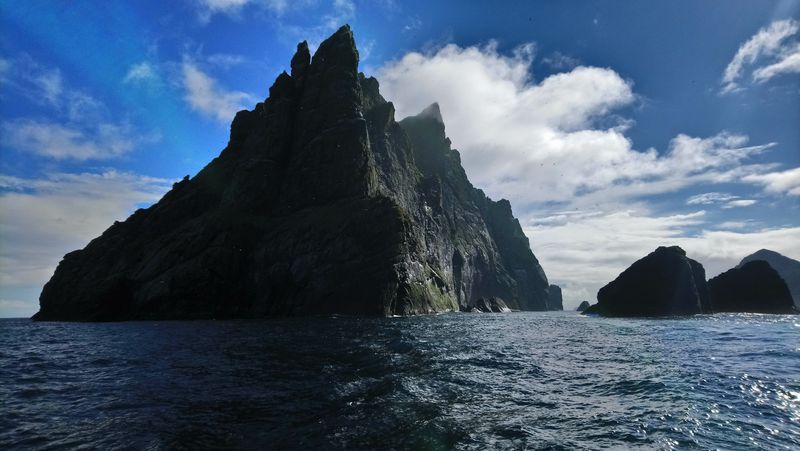
This stack wears a crown of birds and a dare. Stac an Armin rises like a spear, and stories say giants leapt between stacks the way climbers hop boulders.
Standing in a boat beneath it, you understand why humans invented outsized footsteps.
The St Kilda archipelago feels borrowed from another timeline, where wind built rules and people adapted. I listened to tales of fowling ladders and impossible climbs, then stared up until my neck complained.
The rock gazed back, indifferent and perfectly balanced.
Conditions rule everything here, so pray to the forecast. If you get close, watch for sudden swells and birds devising chaos from above.
The legend improves the scale, like a measuring tape only giants could read, while your boat hums a nervous baseline under the cliffs.
8. Stac Lee (St Kilda, Scotland)
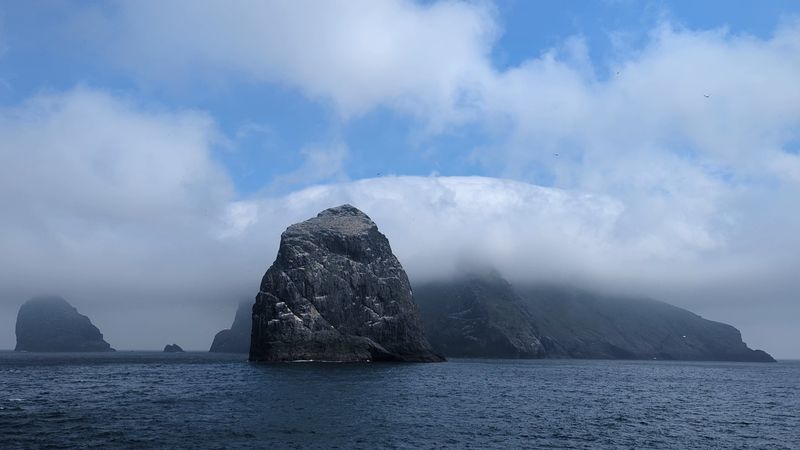
Stac Lee looks like Stac an Armin’s stern sibling, all business and birds. Folklore pairs them in feats of strength, with giant strides defining impossible commutes.
The cliffs feel too vertical for human errands, which is probably the point.
I circled by boat and heard the colony before I saw it, a raucous stadium powered by fish. Feathers flashed like confetti with sharp intentions.
The stack rises so abruptly that even clouds seem to dodge it.
Bring binoculars and a steady stomach. Swell wraps the base in restless loops, and the scale expands with each wave.
Together with its partner, Stac Lee completes a stone duet where legends jump the gap, and you measure courage in seconds spent beneath those walls.
9. Muckle Flugga (Shetland Islands)
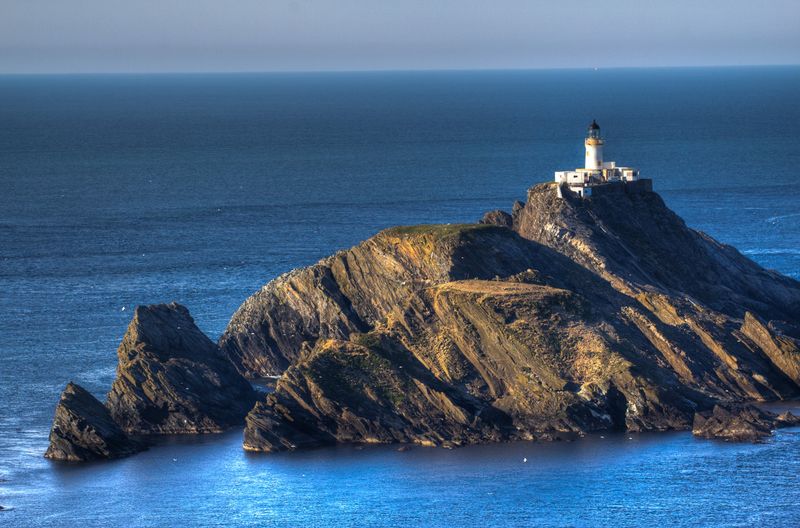
The name already swings for the fences, and the lighthouse nails the landing. Muckle Flugga sits like a stubborn thought at the top of Shetland, born of giant skirmishes if you trust the tales.
Rocks scatter around it as if flung mid-argument.
I stood on Unst watching waves chop toward the horizon while fulmars stitched the air. The lighthouse clung to its perch with practiced defiance.
You feel small here, which makes giant stories feel perfectly sized.
Walk the trails on Hermaness and let the wind perform a free facial. Keep layers handy and your camera tucked between gusts.
When the sky clears, the islet glows crisp and hard, a reminder that some arguments end with stones flying and a beacon lighting the conclusion.
10. Out Stack (Shetland Islands)
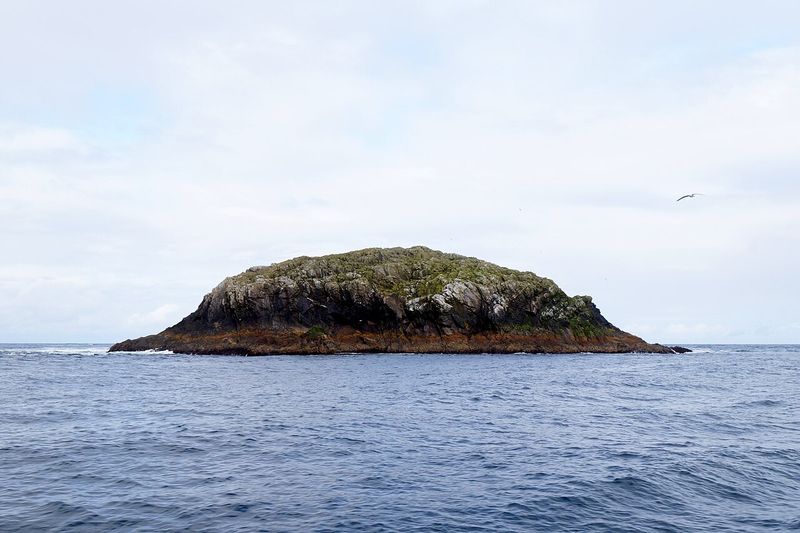
If Britain had a period at the top, Out Stack would dot it. This bare islet rides the swell like a shrug and shares the giant-throwing lore of its neighbor.
The story fits a place that feels both final and unfinished.
I gazed from Hermaness until the horizon started inventing shapes. Out Stack remained a quiet knuckle, neither inviting nor refusing.
Waves wrote temporary signatures along its base and erased them just as quickly.
There is no landing party here, only respectful distance. Let the legend add scale as the wind edits your thoughts to essentials.
When the cloud ceiling lifts, the rock stands like a closing statement to the world’s northbound sentence.
11. Skellig Michael (Ireland)
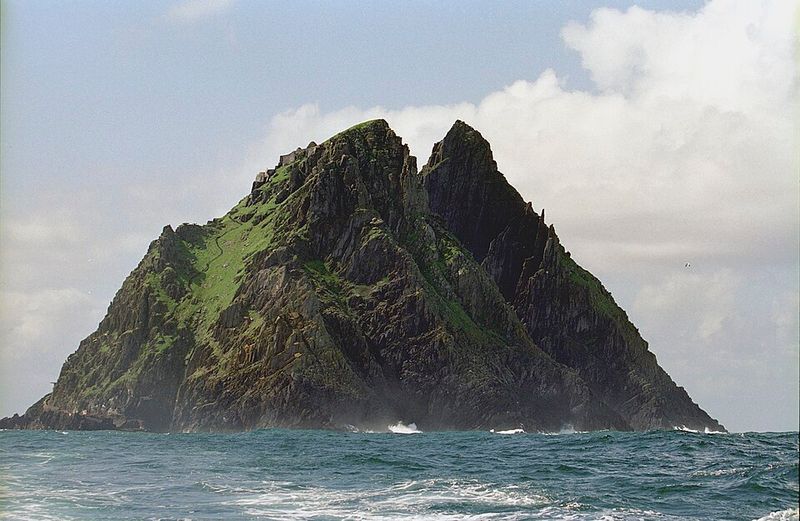
The stairway clings to cliffs like a promise you must keep. Before monks carved prayers into the wind, giants allegedly roamed these rocks, shaping space with their steps.
The island’s spines look engineered for big feet and whispered vows.
I climbed the ancient steps counting each breath, then stopped when puffins demanded attention. The beehive huts feel impossibly placed, like determination learned to defy gravity.
Legends settle into the stonework, sharing room with faith and guano.
Book ahead and respect the weather’s veto power. Guides shepherd visitors along narrow paths where focus is mandatory.
At the summit, the Atlantic stretches forever, and the old stories rise with the waves, making the past feel tall enough to touch.
12. Tindhólmur (Faroe Islands)
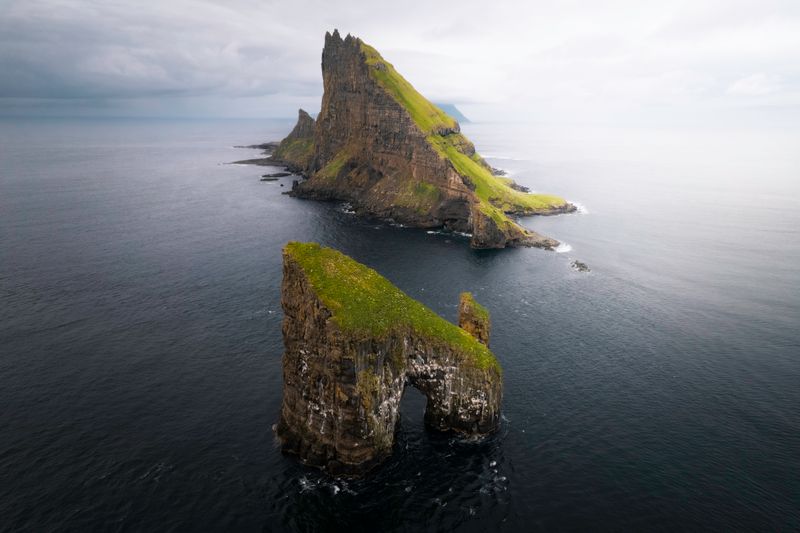
Five peaks jab the sky like a serrated signature. Tindhólmur’s profile screams legend, and Faroese tales oblige with giants and trolls arguing over chisels.
The ridges look freshly sharpened, as if someone huge practiced mountain calligraphy.
I watched from Gásadalur as light skittered across the water and caught on each tooth. Boats passed small and brave beneath the skyline.
The island keeps its distance, which only makes the stories lean in closer.
Photographers should chase late light and bring patience for weather mood swings. The sea rewrites color palettes on a whim.
In that shifting theater, the legend locks the composition, explaining the brutal elegance without softening a single edge.
13. Lítla Dímun (Faroe Islands)
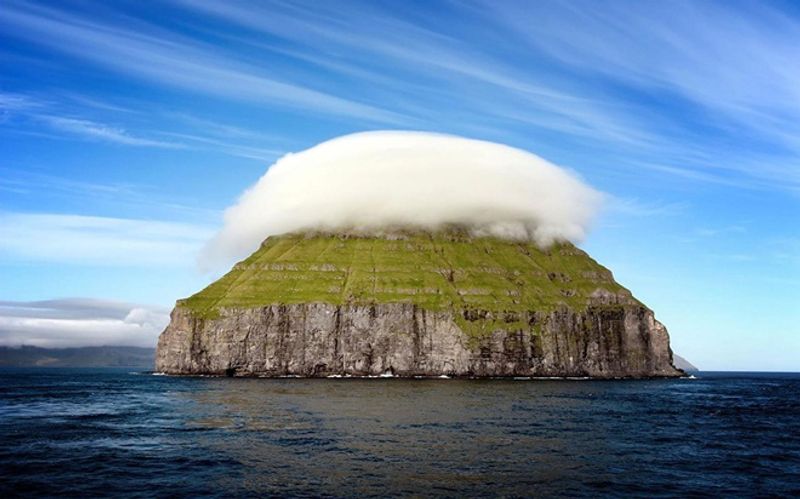
This island wears its own weather like a hat stolen from a cloud. Stories say giants hid livestock here, which explains the sheep that browse like they own the place.
The cone rises steep and tidy, a storage solution with scenic views.
I watched fog cling to the summit as if it had rent control. When the cap lifted, the slopes flashed green, then vanished again behind vapor curtains.
Boats drifted nearby, respecting a coast that looks innocent until it decides otherwise.
Landings are rare and merit bragging rights. Most of us settle for admiring angles from neighboring shores.
Let the legend tether the floating cloud to the animals below, and the whole scene clicks: a giant pantry stocked with wool and weather.



