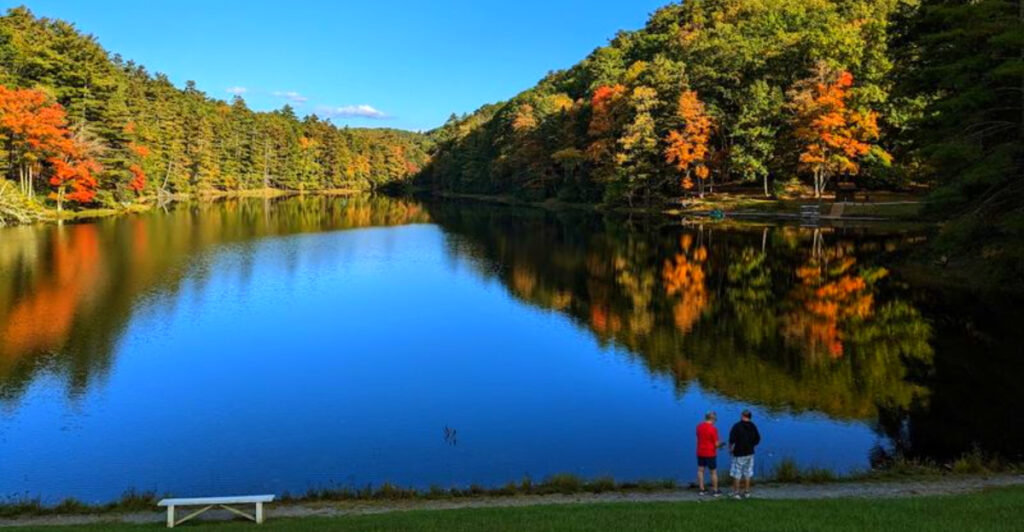
West Virginia’s state parks showcase some of the most beautiful landscapes in the Appalachian Mountains. From waterfalls and forested gorges to scenic overlooks and peaceful lakes, these parks offer countless opportunities for hiking, paddling, wildlife watching, and simply enjoying the outdoors.
Whether you’re planning a weekend getaway or a day trip, these 13 state parks highlight the Mountain State’s remarkable natural beauty. Each offers its own unique scenery and outdoor experiences, making them well worth exploring.
1. Blackwater Falls State Park, Davis, West Virginia
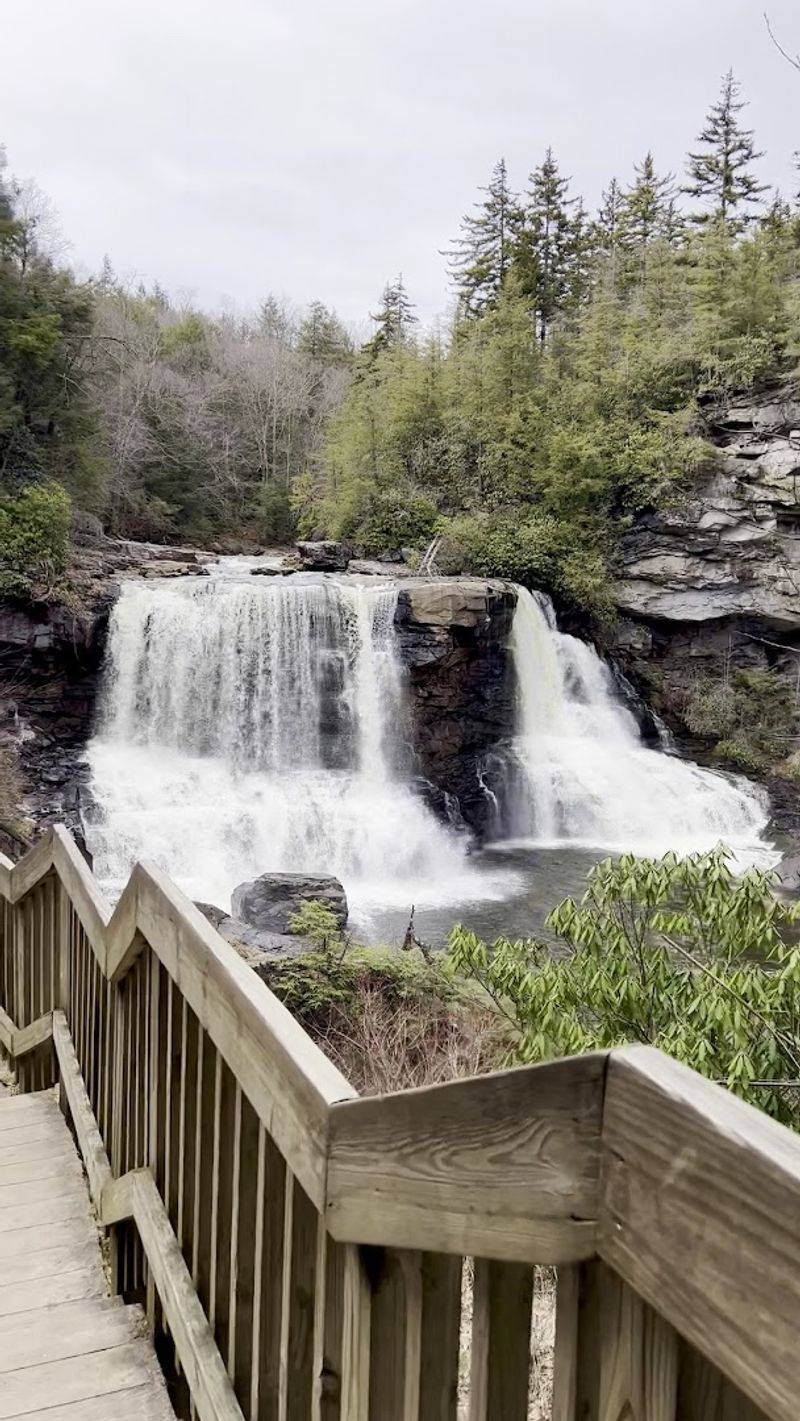
The waterfall here does not look like most waterfalls. Thanks to tannic acid released by fallen hemlock and red spruce needles, the water runs a rich amber color as it plunges nearly 60 feet into the rugged Blackwater Canyon, creating one of the most distinctive natural sights in the entire state.
More than 20 miles of trails wind through the park’s 2,358 acres of dense forest. Boardwalks and overlooks make the main falls accessible to nearly everyone, while side trails lead to Elakala Falls, Pendleton Falls, and the sweeping panorama at Lindy Point, which sits at 3,000 feet elevation.
Winter brings cross-country skiing and the East Coast’s longest sled run. Summer means fishing, kayaking, and paddleboarding on Pendleton Lake. The park offers a lodge, 39 cabins, and a 65-site campground, so there is no shortage of ways to stay and explore longer.
2. Babcock State Park, Clifftop, West Virginia
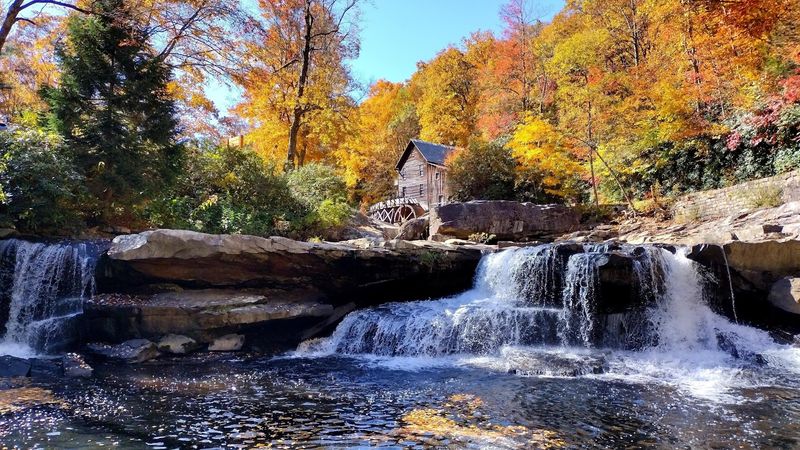
Few images in West Virginia are more recognized than the Glade Creek Grist Mill, a working replica assembled in 1976 from parts salvaged from three historic mills across the state. It produces freshly ground cornmeal available for purchase, which means visitors can take a little piece of the park home with them.
Babcock covers 4,127 acres in Fayette County, with over 20 miles of hiking trails threading through forested hills, along mountain streams, and past a natural rock arch. The park sits near the New River Gorge, and several overlooks reward hikers with impressive canyon views.
Boley Lake supports fishing for bass, bluegill, and trout, plus paddleboat and canoe rentals during summer. With 28 cabins and a 52-site campground, Babcock handles overnight visitors well. Autumn is peak season here, when fall foliage frames the historic mill in a blaze of red and gold.
3. Canaan Valley Resort State Park, Davis, West Virginia
Sitting at roughly 3,400 feet in the Allegheny Mountains, Canaan Valley holds the second-largest inland wetland area in the United States, a fact that surprises most first-time visitors who expect only ski slopes and mountain views.
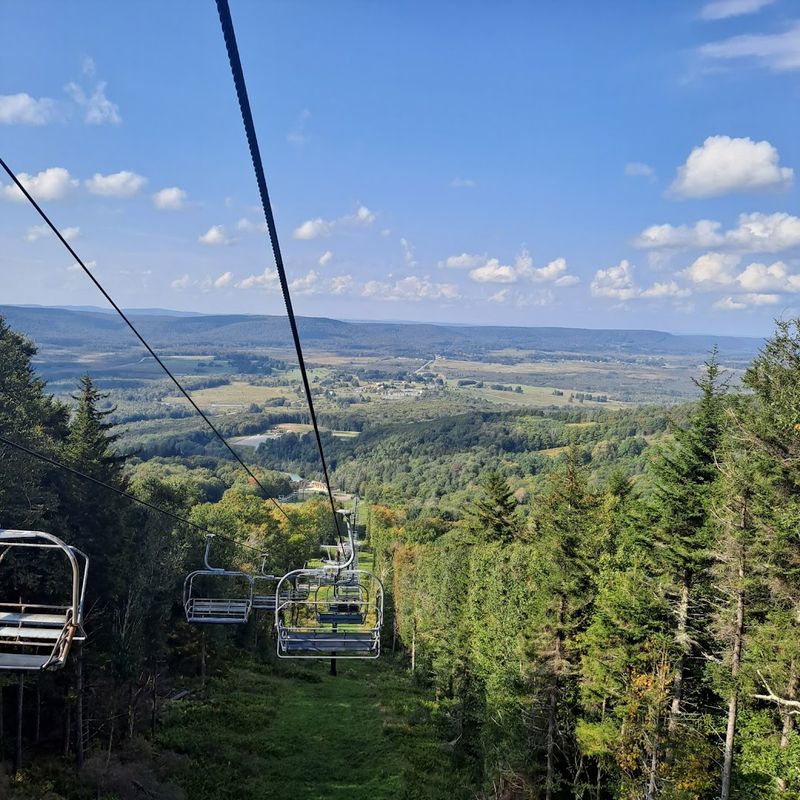
Winter delivers 26 to 47 ski and snowboard trails, a snow tubing park, a covered ice rink, and average annual snowfall of 160 to 180 inches. Once the snow melts, the valley switches gears completely, offering an 18-hole golf course, 16 to 18 miles of hiking and biking trails, and scenic chairlift rides to Bald Knob at 4,308 feet.
Wildlife here is genuinely impressive, with over 170 bird species recorded, plus beavers, mink, and occasional black bears. The park’s 160-room lodge, 23 cabins, and 34 campsites keep it accessible year-round. In 2021, two protected natural areas were established within the park to safeguard its rare plant and animal communities.
4. Hawks Nest State Park, Ansted, West Virginia
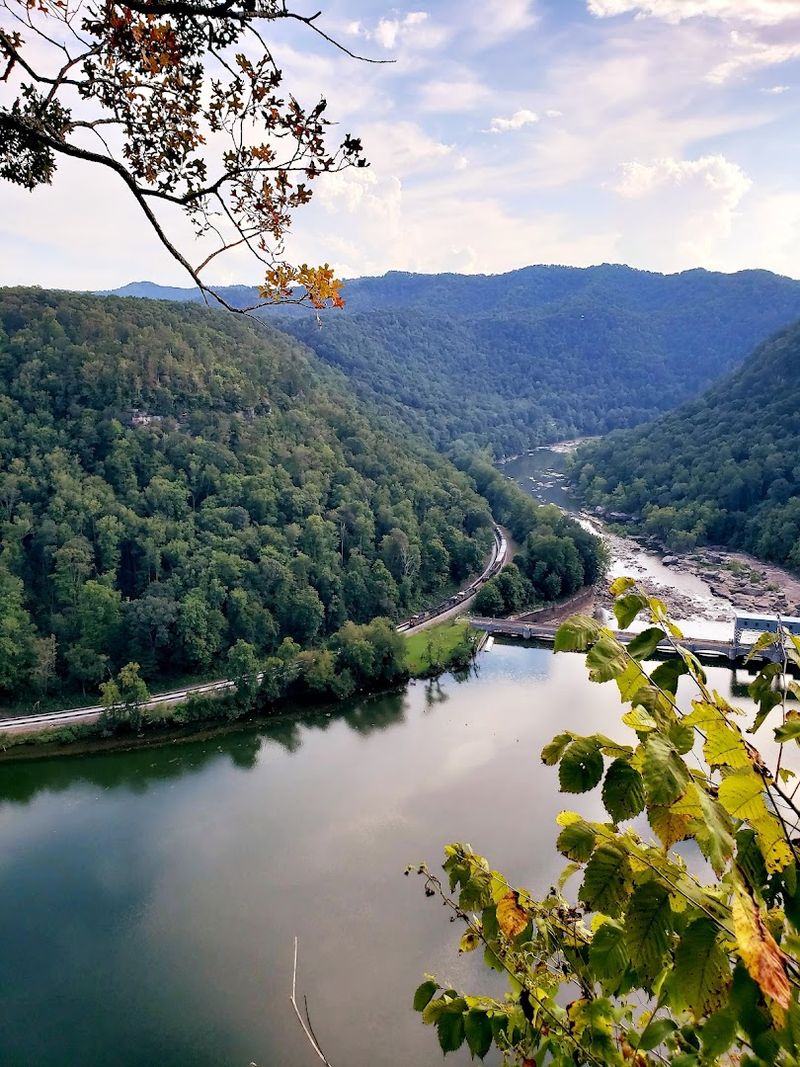
Seven hundred and fifty feet below the main overlook, the New River curves through one of the oldest river gorges on the continent. The Civilian Conservation Corps built the sandstone Hawks Nest Overlook in the 1930s, and it remains one of the most photographed vantage points in the state.
A seasonal aerial tramway carries visitors from the lodge down to Hawks Nest Lake at the gorge floor, where jet boat rides navigate beneath the iconic New River Gorge Bridge. That combination of cliff-top views and river-level perspective gives the park a range that few others can match.
About eight miles of hiking trails offer options for different fitness levels, from the challenging Cliffside Trail with canyon panoramas to the easier Fisherman’s Trail along the lakeshore. The 31-room lodge includes a restaurant and outdoor pool, with many rooms featuring balconies that look directly over the gorge.
5. Pipestem Resort State Park, Pipestem, West Virginia
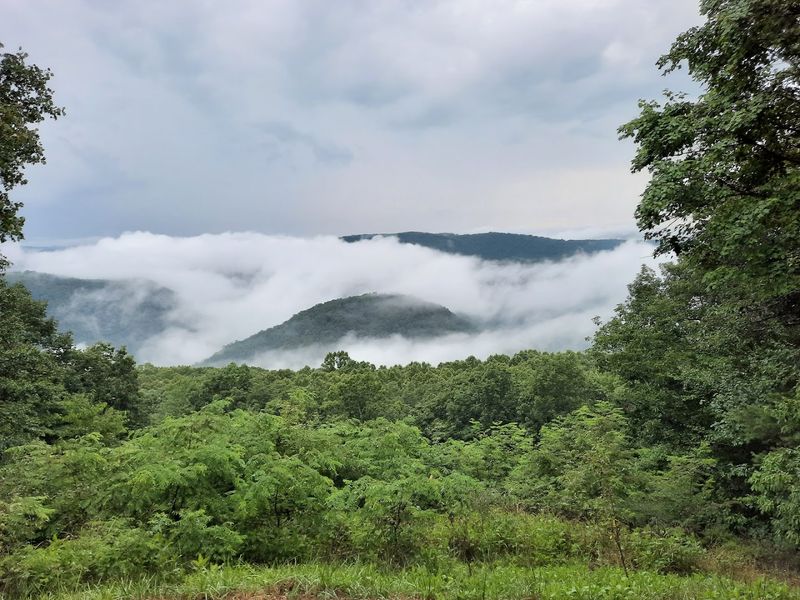
Named after a native plant historically used for pipe stems, this 4,050-acre park sits on the rim of the Bluestone River Gorge and features a flagship aerial tramway that descends 1,200 feet into the valley below. The new ADA-accessible gondolas make the ride available to more visitors than ever.
Seventeen to 20 hiking trails range from easy walks to the 8.5-mile Bluestone Turnpike Trail that connects to neighboring Bluestone State Park. Two golf courses, horseback riding, and a splash pad round out the activity lineup, while Long Branch Lake offers trout and smallmouth bass fishing alongside kayak and paddleboard rentals.
The Pipestem Adventure Zone adds axe throwing, laser tag, 3D archery, drone flying, and disc golf for visitors who want something beyond traditional outdoor recreation. Two lodges, 26 cabins, and 82 campsites provide plenty of overnight options, making this one of West Virginia’s most comprehensive resort-style parks.
6. Watoga State Park, Marlinton, West Virginia
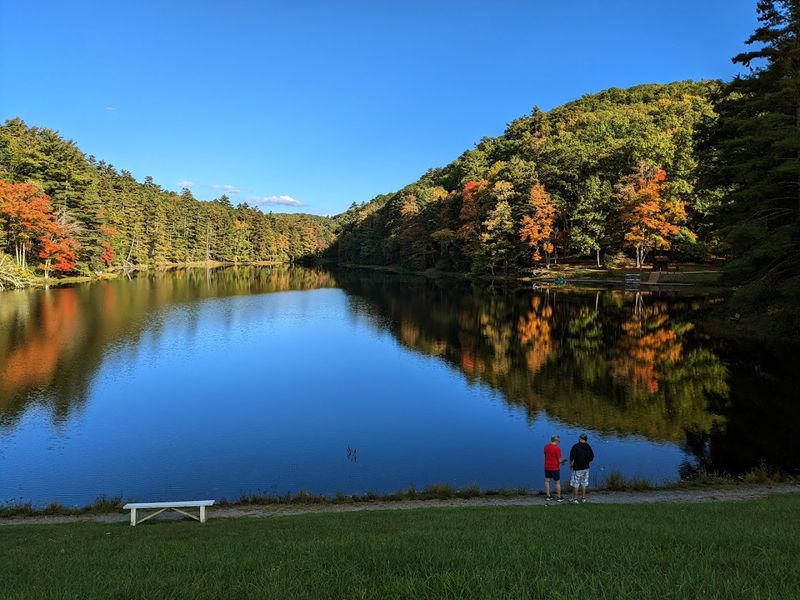
West Virginia’s largest state park carries a Cherokee-derived name meaning “starry waters,” and in 2021 that name became even more fitting. Watoga, alongside Droop Mountain Battlefield State Park and Calvin W. Price State Forest, earned designation as West Virginia’s first International Dark Sky Park, confirming what local stargazers already knew about its exceptional night skies.
Spread across 10,100 acres in Pocahontas County, the park offers 35 to 40 miles of hiking trails, including sections of the statewide Allegheny Trail and the Ann Bailey Trail, which climbs to a lookout tower with views across the Greenbrier River Valley. The 11-acre Watoga Lake supports fishing, paddleboats, and canoe rentals.
A confirmed population of synchronous fireflies puts on a natural light display each summer that draws dedicated visitors from across the region. With 34 cabins, two campgrounds, an outdoor pool, and easy access to the 78-mile Greenbrier River Trail, Watoga rewards every type of outdoor visitor.
7. Valley Falls State Park, Fairmont, West Virginia
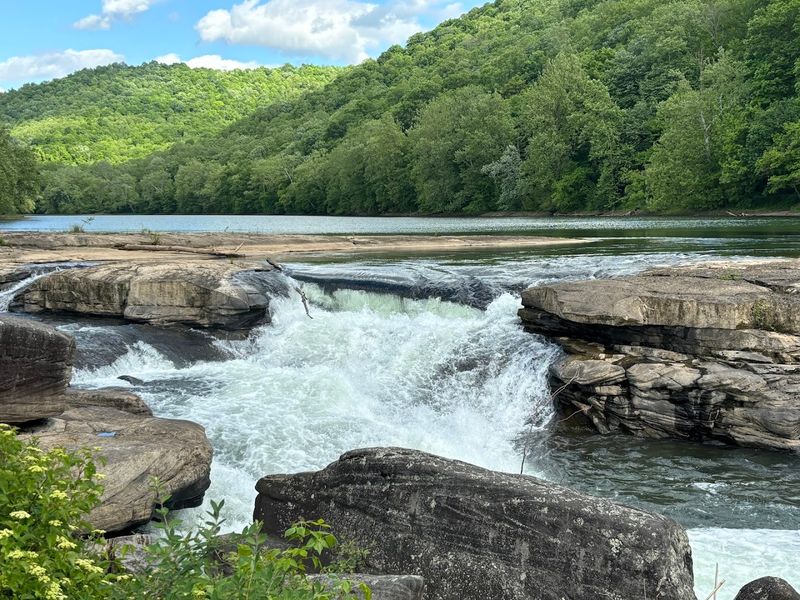
Four waterfalls cascade across broad ledges of Connoquenessing Sandstone along a half-mile stretch of the Tygart Valley River, making Valley Falls one of northern West Virginia’s most dramatic natural showcases. Stone ruins of 19th-century grist and lumber mills still stand nearby, a reminder that this valley once hummed with industrial activity before fire and floods ended that era.
Nine to 18 miles of hiking and mountain biking trails cross the park’s 1,145 acres, with routes ranging from gentle riverside walks to more challenging loops. The Tygart Valley Trail runs closest to the falls and offers the best photographic angles throughout the year. The park is also part of the official West Virginia Waterfall Trail.
Anglers target largemouth bass, walleye, carp, and catfish along the Tygart River, while Mill Creek holds stocked trout. Kayakers can register at the superintendent’s office for access to challenging class II-IV rapids. Shaded picnic areas and a playground make this a solid family day-trip destination.
8. Cathedral State Park, Aurora, West Virginia
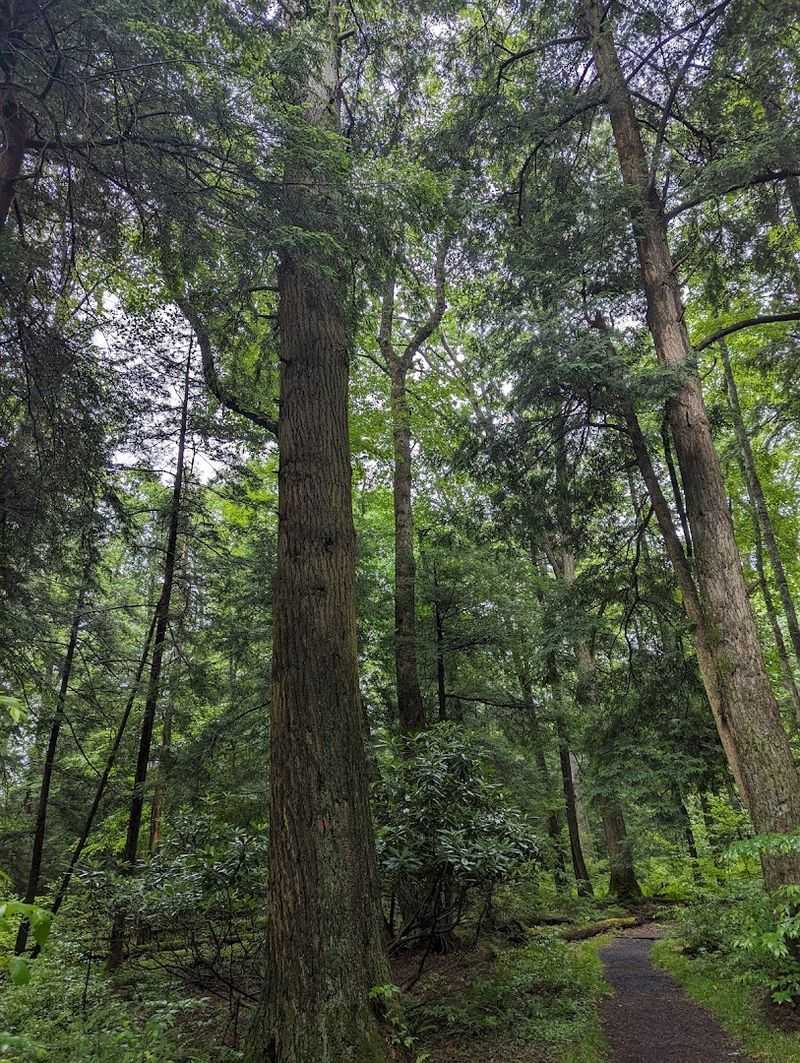
Some of the trees here are over 500 years old. Cathedral State Park in Preston County protects one of the last remaining stands of virgin hemlock forest in West Virginia, a 133-acre preserve designated as a National Natural Landmark. The eastern hemlocks reach up to 90 feet tall with circumferences of 21 feet, creating a canopy so dense the trails beneath stay cool even on the warmest summer days.
Rhine Creek meanders through the woodland, crossed by small footbridges along three to six miles of trails. The Giant Hemlock Trail showcases the park’s most monumental specimens, while the Cathedral Trail at 1.1 miles takes visitors through a mixed hemlock and hardwood forest carpeted with rhododendrons and ferns. Deer, squirrels, Scarlet Tanagers, and multiple Warbler species live here year-round.
The state acquired this land in 1942 with a strict condition that the old-growth forest remain untouched. Cathedral is a day-use park, open year-round, with picnic shelters and a playground for families.
9. Cacapon Resort State Park, Berkeley Springs, West Virginia
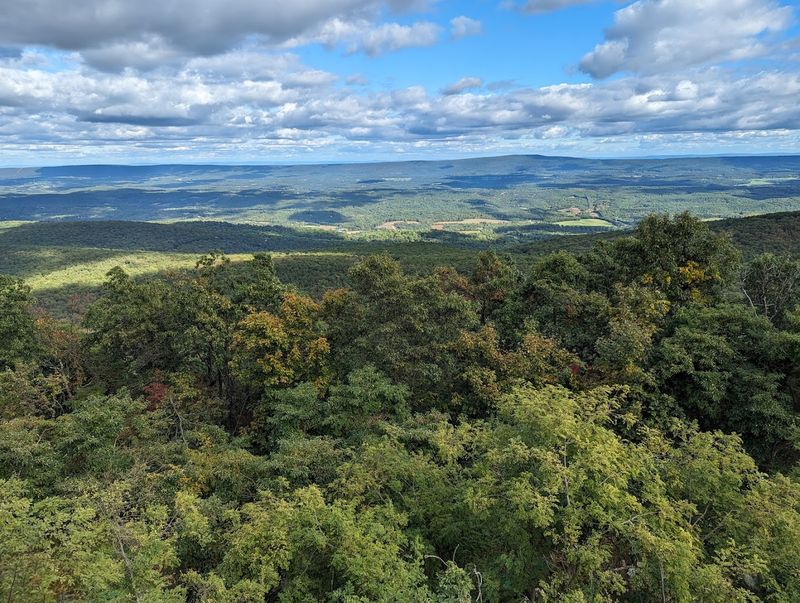
The park’s name traces back to a Shawnee word meaning “medicine waters,” a nod to the natural springs found near Berkeley Springs just down the road. Cacapon covers more than 6,000 acres along the eastern slopes of Cacapon Mountain in West Virginia’s Eastern Panhandle, with its Panorama Overlook offering clear-day views stretching into Maryland and Pennsylvania.
The Robert Trent Jones Sr.-designed 18-hole championship golf course, opened in 1974, remains a major draw. Over 20 miles of hiking trails wind through ridges and dense forest, and an expanding mountain biking network with professionally built trails and a pump track is steadily growing the park’s reputation among cyclists.
Cacapon Lake provides swimming, fishing for trout, bass, and bluegill, and kayak rentals. A recently renovated 120-room lodge, the historic 12-room Old Inn with hand-hewn log beams, and up to 48 cabins cover every lodging preference. A full-service spa, disc golf, horseback riding, and guided nature programs round out the experience.
10. North Bend State Park, Cairo, West Virginia
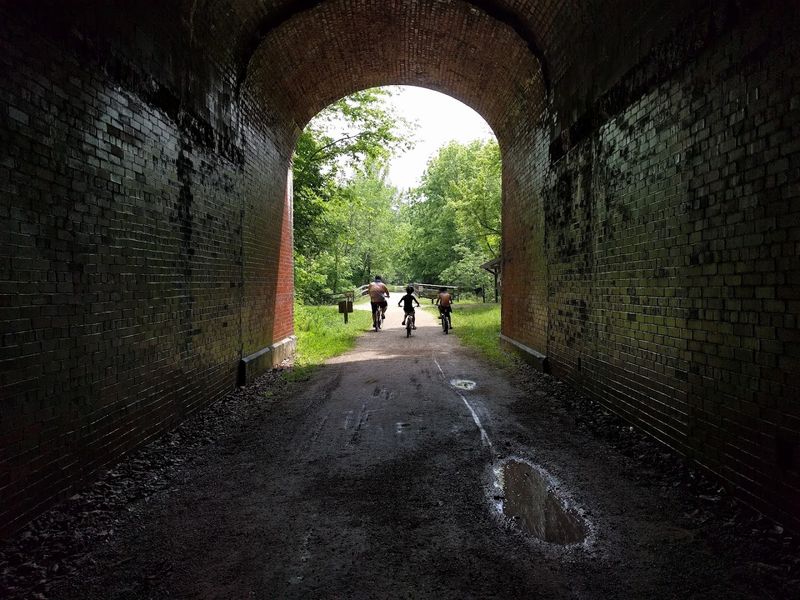
The 72-mile North Bend Rail Trail is the centerpiece of this park, following a historic Baltimore and Ohio Railroad corridor through 10 to 13 tunnels and across 36 bridges. The trail’s gentle grade makes it accessible to hikers, cyclists, and horseback riders of nearly all fitness levels, and it connects to the larger American Discovery Trail network.
North Bend Lake covers 305 acres on the North Fork of the Hughes River and supports excellent fishing for bass, crappie, catfish, and musky. Canoe, kayak, Jon boat, and pontoon rentals are available, and a dedicated 14 to 19 miles of hiking trails plus over 20 miles of mountain biking singletrack keep active visitors busy beyond the rail trail.
The park’s 29-room ridge-top lodge overlooks the river valley, and nine cedar cabins plus 77 campsites across two campgrounds handle overnight stays. Wildlife in the area includes river otters, hellbenders, summer tanagers, and indigo buntings, making this a genuinely rewarding destination for wildlife watchers.
11. Holly River State Park, Hacker Valley, West Virginia
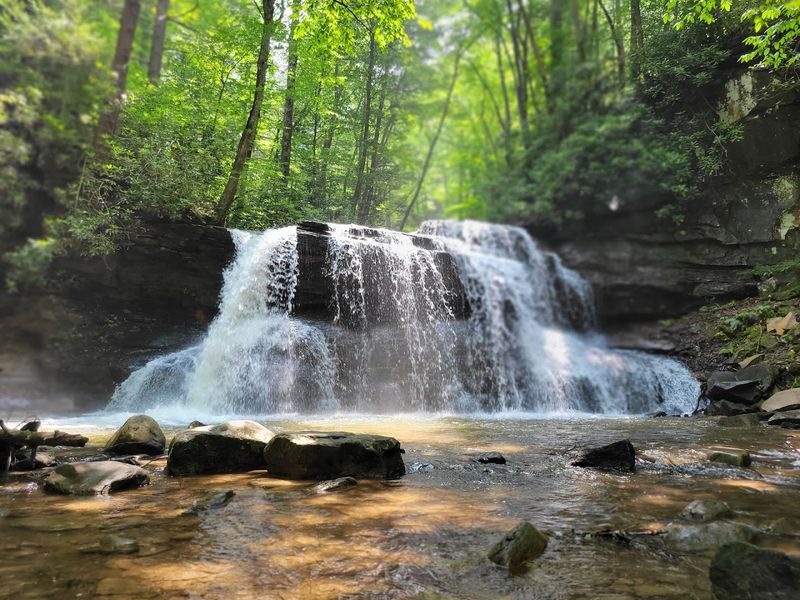
West Virginia’s second-largest state park hides in Webster County at the end of roads that most GPS systems would rather not mention. Holly River’s 8,100-plus acres cover heavily forested mountains, secluded valleys, and streams that feed a series of waterfalls including Tecumseh Falls, Tenskwatawa Falls, and Shupe’s Chute, the last of which funnels into a popular natural swimming hole.
Over 42 miles of trails cross the park, ranging from easy riverside walks to summit climbs like Potato Knob at 2,480 feet. Spring brings flame azaleas and trilliums across the forest floor, and autumn turns the old-growth oaks and tulip trees into a vivid seasonal display. The park was reforested starting in 1937, transforming previously logged land into the thriving woodland visitors enjoy today.
Ten stone-and-log cabins, an 88-site campground with electric hookups, a seasonal outdoor pool, and equestrian trails make Holly River a well-rounded destination. Limited cell service is part of the appeal for visitors deliberately seeking a genuine digital detox.
12. Audra State Park, Buckhannon, West Virginia
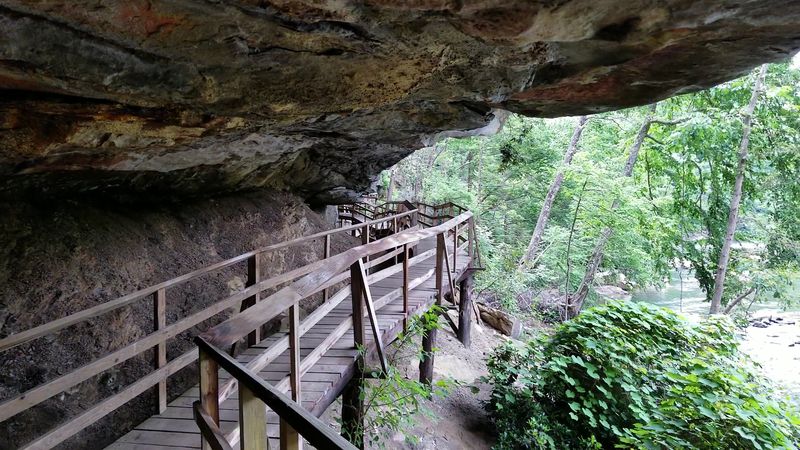
Generations of West Virginia families have spent summer afternoons at Audra’s natural swimming area, where the Middle Fork River flows clear and cold over flat rocks and into deep pools. The river’s spring-fed clarity sets it apart from most swimming spots in the region, and the surrounding forest keeps temperatures comfortable even in July and August.
Alum Cave, a striking rock overhang explored via a maintained boardwalk, is the park’s most photogenic feature. The boardwalk runs directly beneath the cliff face and along the riverbank, offering photographers excellent angles without any strenuous hiking required. The Alum Cave Trail loop covers 2.7 to 3 miles, while the shorter Rock Cliff Trail winds through rhododendron thickets and mixed forest.
Whitewater kayakers can access a challenging class III-IV run on the Middle Fork River from the park bridge. The campground offers 65 to 67 sites, many positioned along the riverbank, with 39 electric hookups plus bathhouses, laundry, and a camp store. Audra was established in 1950 around the ruins of a 19th-century gristmill.
13. Beartown State Park, Hillsboro, West Virginia
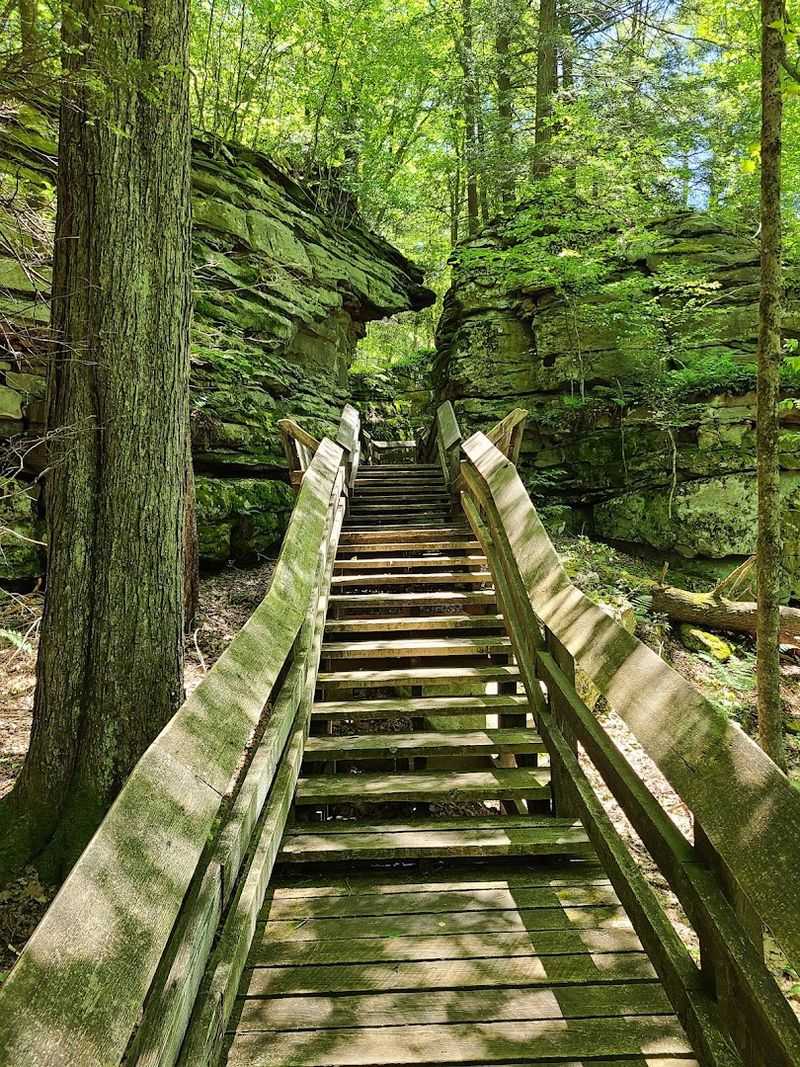
Nothing else in West Virginia looks quite like Beartown. This 107-acre natural area on the eastern summit of Droop Mountain near Hillsboro contains a maze of massive Pottsville Sandstone boulders, narrow passageways, overhanging cliffs, and deep crevices carved over 300 million years of natural erosion along ancient rock fractures.
A half-mile wooden boardwalk threads through the entire formation, protecting the fragile ecosystem while allowing visitors to explore every passage at close range. Interpretive signs explain the geological history and the unique microclimate that supports mosses, ferns, and lichens not commonly found elsewhere in the region. Ice and snow sometimes linger in the deepest crevices until midsummer, which gives the park an unexpectedly cool atmosphere even on warm days.
Local folklore suggests the name “Beartown” comes from cave-like openings that residents believed served as winter dens for black bears. The park operates as a day-use facility, typically open April through October, and pairs well with nearby Droop Mountain Battlefield State Park and the Greenbrier River Trail for a full day of exploration.
Share this story