The United States has a habit of hiding its weirdest architectural surprises in plain sight, and few are better than its unofficial castles. Some rise from city parks, some sit on islands, some appear in the desert like a very confident design choice, and one even turns a roadside cheese stop into full medieval theater.
Keep reading and you will get the fun part and the useful part together: real locations, quick historical context, standout design details, and the kinds of visitor notes that help you decide which ones deserve a spot on your list. These places are not fantasy sets or imported palaces with a secret passport stamp – they are thoroughly American, gloriously overcommitted, and often a little eccentric.
That is exactly why they are so enjoyable. By the end, you will have fourteen castle-like destinations that prove the U.S. can do turrets, towers, stone walls, and dramatic silhouettes just fine, thank you very much.
1. Biltmore Estate (Asheville, North Carolina)
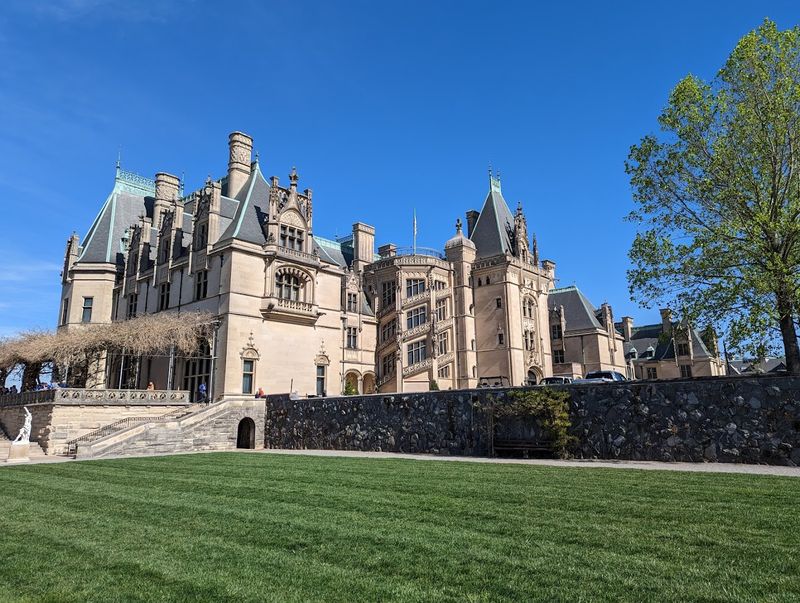
Size wins the opening argument here. Biltmore Estate is so large that calling it a house feels like a very generous understatement, because this French Renaissance-style mansion covers roughly 175,000 square feet and includes around 250 rooms.
George Vanderbilt built it in the late nineteenth century as a private retreat, and the result looks every bit like an American version of a grand European château.
The exterior delivers steep roofs, sculpted stonework, towers, and a long façade that seems determined to keep going. Inside, visitors move through banquet halls, libraries, guest rooms, and service areas that reveal how carefully the estate functioned as both residence and operation.
The surrounding landscape matters too, with designed gardens and mountain views that make the place feel even more expansive.
What keeps Biltmore interesting is not just the scale but the planning behind it. You are seeing ambition turned into architecture, with plenty of detail and very little modesty.
In castle terms, it does not whisper. It politely takes over the conversation.
2. Gillette Castle (East Haddam, Connecticut)
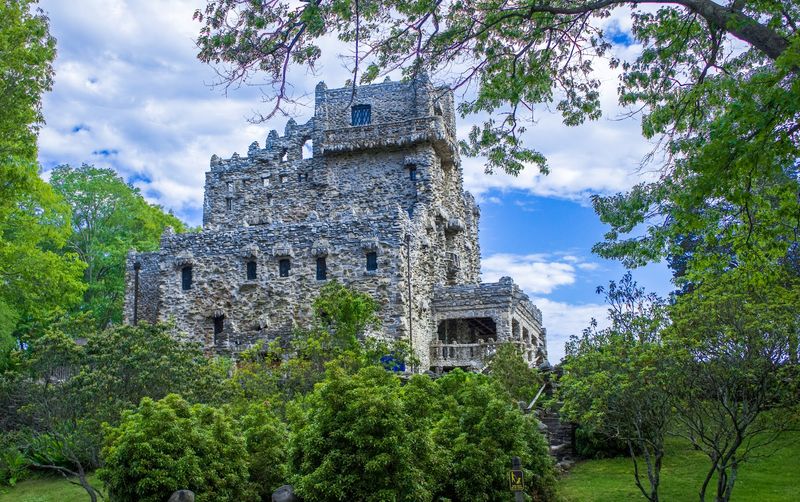
Nothing about this castle believes in being boring. Gillette Castle was built by actor William Gillette, famous for playing Sherlock Holmes, and the place reflects a wonderfully independent mind.
Perched above the Connecticut River, it looks medieval at first glance, then quickly starts revealing details that are more inventive than strictly historical.
The stone exterior, fortress-like profile, and hilltop setting give it obvious castle credentials. Then come the unusual flourishes: intricately designed wooden door latches, built-in furniture, odd room shapes, and passageways that feel tailored to a theatrical personality.
Gillette wanted the house to function exactly as he liked, so the result is less imitation and more personal manifesto in stone.
That is what makes visiting so fun. You get the battlements, the views, and the dramatic silhouette, but you also get a home full of practical eccentricity.
It feels curated by one person with strong opinions and excellent follow-through. In other words, it is a castle with character, not just costume.
3. Berkeley Castle (Berkeley Springs, West Virginia)
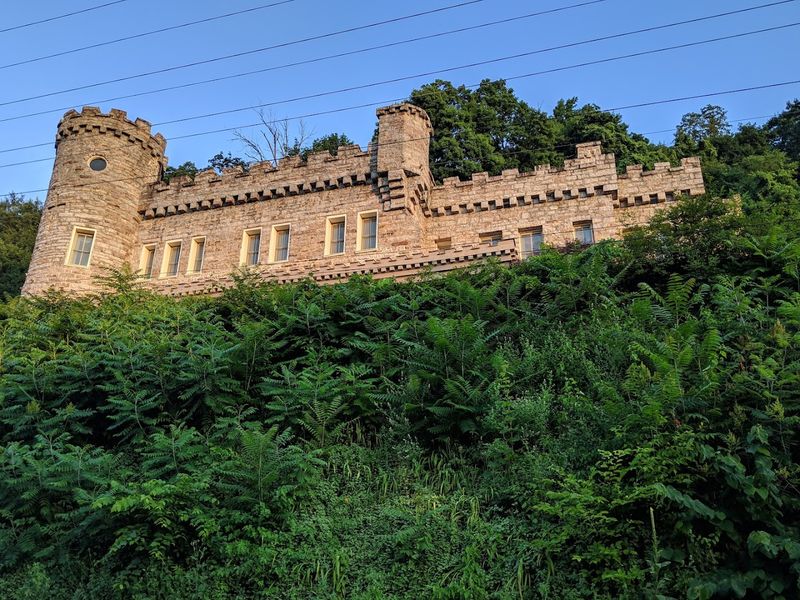
This hillside surprise looks ready for a period drama, but it is firmly rooted in West Virginia. Berkeley Castle rises above Berkeley Springs with stone walls, crenellations, and turrets that push it well beyond ordinary villa territory.
Built in the late nineteenth century, it was designed to make a statement, and understatement was clearly not invited.
The architecture borrows heavily from medieval revival ideas, yet the setting keeps it distinctly American. From a distance, the silhouette does most of the work, with towers and battlements creating that classic castle outline.
Up close, the layout reads as a grand private residence rather than a defensive stronghold, which makes sense because comfort, status, and scenery were the actual priorities.
Part of the appeal is how unexpected it feels in a town already known for its historic springs. You can pair a visit with the surrounding area and still keep the castle as the headliner.
It is elegant, a little theatrical, and exactly the kind of building that makes you do a double take.
4. Boldt Castle (Alexandria Bay, New York)
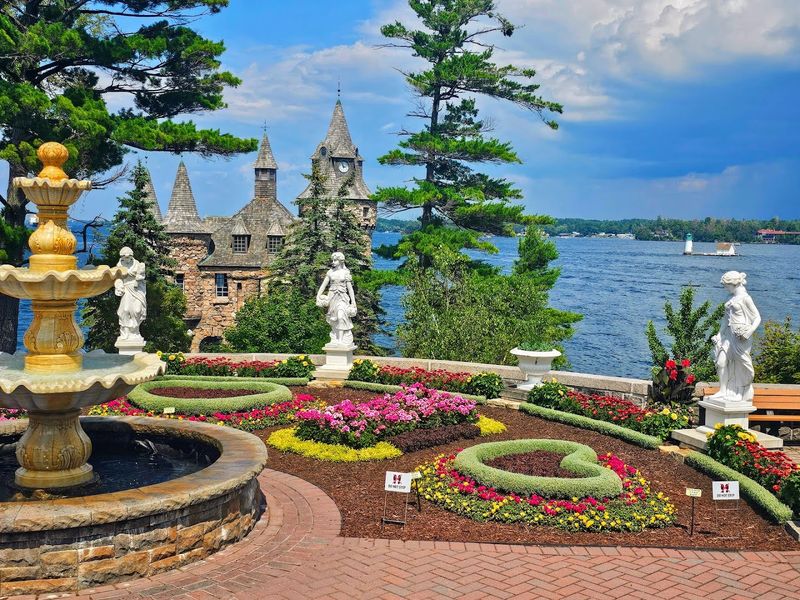
Fair warning: this castle arrives with serious main-character energy. Boldt Castle sits on Heart Island in the Thousand Islands and looks like somebody dropped a Rhine fortress into upstate New York just to make every passing boat slow down and stare.
George C. Boldt began it as an enormous private residence, and the scale still surprises people.
The complex was planned with about 120 rooms, formal grounds, and multiple auxiliary buildings spread across the island. Construction stopped suddenly before completion, which left the place with an unusual mix of grandeur and interruption.
That unfinished history is part of the appeal, because you can spot polished spaces alongside details that still suggest the original ambition.
Visitors usually arrive by boat, which gives the whole experience an automatic sense of occasion. Once you are there, the fun is in noticing how theatrical the layout feels without losing its American setting.
It is romantic, oversized, slightly dramatic, and absolutely impossible to forget.
5. Belvedere Castle (New York City, New York)
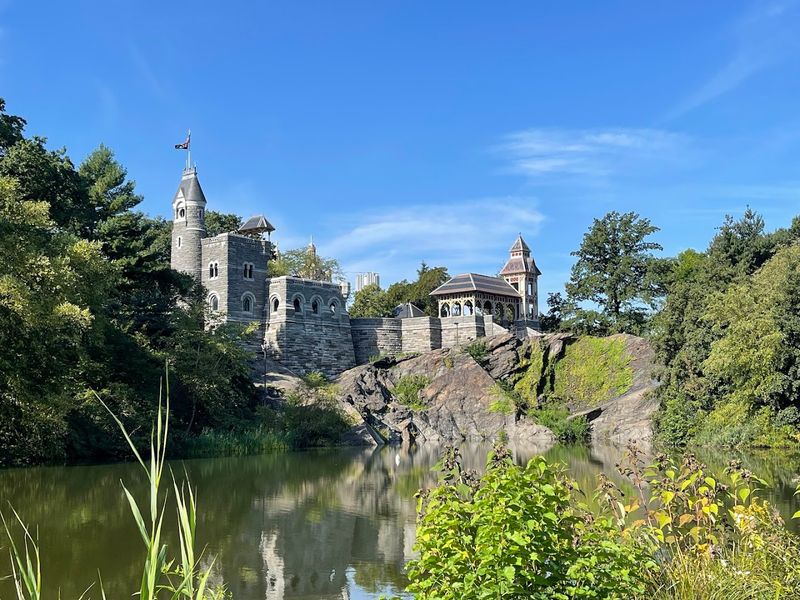
Right in the middle of Manhattan, a tiny castle casually claims a rocky perch and somehow makes perfect sense. Belvedere Castle was built in Central Park in the nineteenth century as a Victorian folly, but do not let the word folly fool you.
With its stone walls, turret, and elevated position, it absolutely reads as a castle.
Its size is part of the charm. Instead of sprawling across acres, it uses a compact footprint and strategic placement to create maximum effect.
The lookout terraces offer broad park views, and the building has also served practical purposes over the years, including weather observation, so it has done more than simply look picturesque for generations of camera rolls.
What makes Belvedere memorable is the contrast. One minute you are in one of the busiest cities on the planet, and the next you are staring at battlements above trees and open lawns.
It is theatrical without being oversized, historic without being fussy, and proof that even a small castle can be a big scene-stealer.
6. Loveland Castle (Loveland, Ohio)
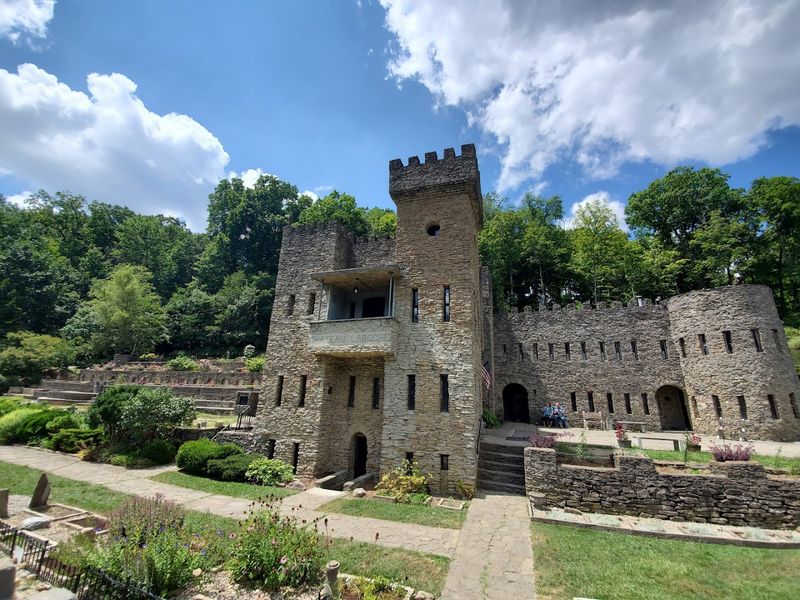
Here is your reminder that one determined person can achieve astonishingly castle-shaped results. Loveland Castle, also called Château Laroche, was built over decades by Harry D.
Andrews using local materials and relentless commitment. The result is a compact stone fortress in Ohio with towers, thick walls, and enough medieval flair to make visitors grin on arrival.
Its appeal comes from both the architecture and the story behind it. Andrews started the project in the 1920s, and much of the construction was done by hand, which gives the castle a handmade honesty that larger estates cannot imitate.
There is a drawbridge-style entrance, a reflecting pool that reads like a moat, and interior spaces filled with artifacts that support the knightly theme.
Because it is smaller than many entries on this list, the place feels approachable rather than overwhelming. You are not touring endless halls; you are exploring a personal vision that became stone reality.
It is earnest, imaginative, and wonderfully specific. Ohio does not always promise castles, which makes this one even more satisfying.
7. Glen Eyrie Castle (Colorado Springs, Colorado)
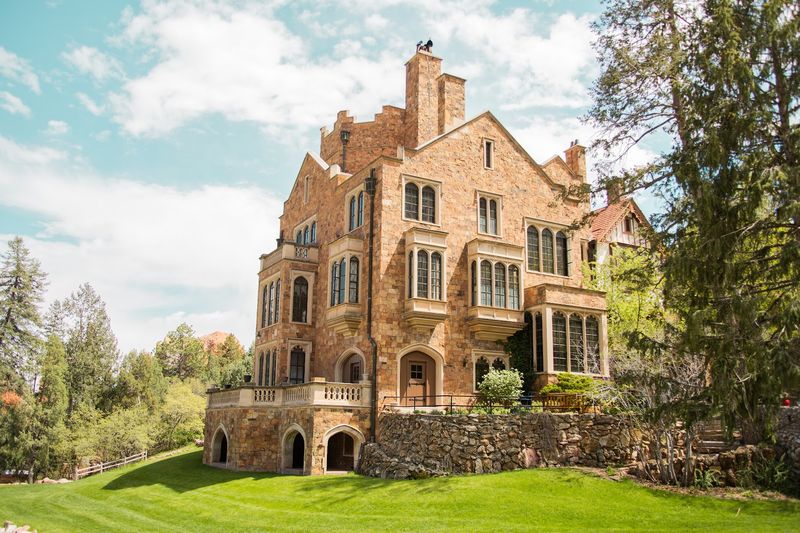
Red rock country is not where most people expect a Scottish-style castle to show up, yet Glen Eyrie makes a convincing case for the pairing. Built in the 1870s for General William Jackson Palmer, the stone residence sits in a dramatic Colorado setting that gives the whole property an extra layer of presence.
It feels formal, substantial, and slightly surprising in the best way.
The architecture leans into turrets, battlement-like details, and the asymmetry common to romantic revival design. Grounds around the castle add to the effect, with a planned estate layout that gives the building room to command attention.
The nearby rock formations make the site distinctive without competing with the structure itself, which is no small achievement in Colorado scenery.
Visitors often remember the combination of old-world styling and western geography. That contrast is the headline, but the craftsmanship and scale keep the castle from being just a novelty.
It has the kind of profile that photographs well, tours well, and lingers in memory. Some places overpromise grandeur.
Glen Eyrie simply shows up and handles it.
8. Bacon’s Castle (Surry County, Virginia)
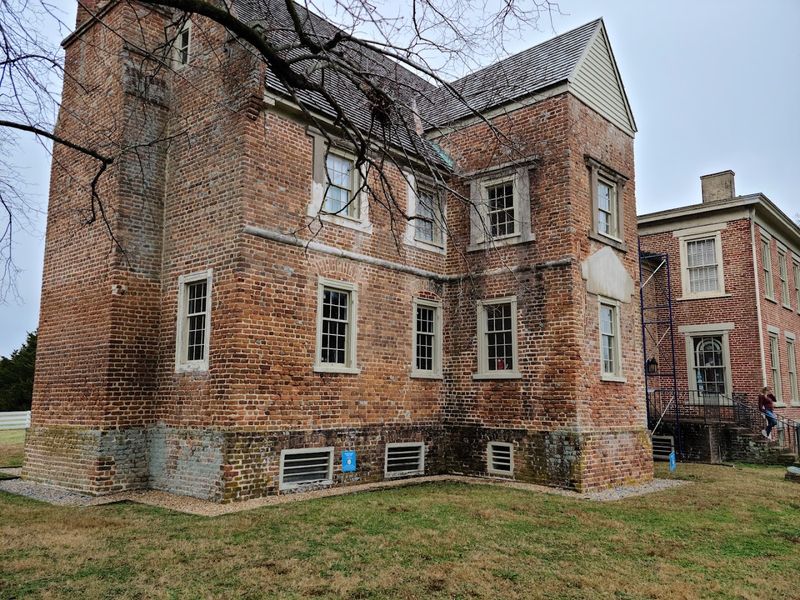
The oldest entry on this list does not need giant towers to make its point. Bacon’s Castle dates to 1665 and stands out as one of the oldest brick houses in the United States, yet its shaped gables, fortified look, and symmetrical design still give it a distinctly castle-like identity.
That combination makes it both historically important and visually unusual.
The house is an example of Jacobean architecture, which already sets it apart in America. Its layout and exterior details create the impression of a compact manor with defensive confidence, even though it was built as a plantation house rather than a true fortress.
Visitors come for the architecture, but the preserved interiors and grounds also help explain how rare this building is in the broader American story.
Part of the fun here is adjusting your expectations. This is not a storybook castle with giant halls and dramatic gates.
It is smarter than that, older than most people realize, and quietly distinctive. Bacon’s Castle proves castle energy can arrive in brick, symmetry, and historical persistence instead of sheer scale.
9. Bancroft Tower (Worcester, Massachusetts)
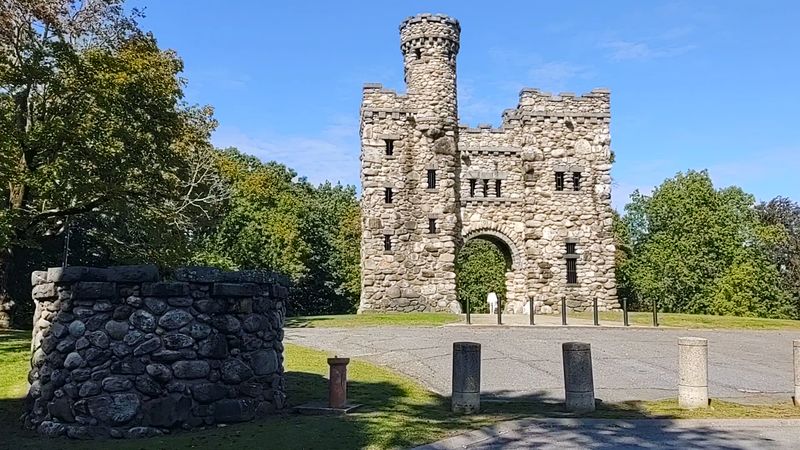
Sometimes one tower is enough to sell the entire fantasy. Bancroft Tower rises above Worcester like a medieval watchtower that somehow found excellent New England real estate and decided to stay.
Built in 1900 as a memorial to historian George Bancroft, it is only 56 feet tall, but it uses that height efficiently.
The structure features rough stone walls, crenellations, and arched openings that make the medieval inspiration unmistakable. Its hilltop setting helps tremendously, because a tower always benefits from a little elevation and a good view.
Surrounded by parkland, it feels removed from city routines without requiring an epic journey, which makes it an easy architectural detour.
Bancroft Tower works because it does not overcomplicate things. It is compact, photogenic, and direct about its purpose as an eye-catching monument.
You are not touring a huge estate here; you are appreciating how a single structure can create instant castle atmosphere. For travelers who enjoy quick stops with strong visual payoff, this one absolutely earns its keep.
10. Scotty’s Castle (Death Valley, California)
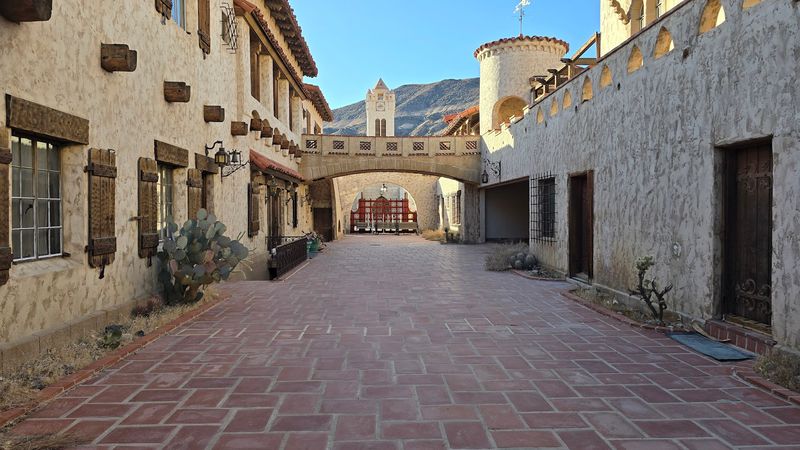
A castle in Death Valley sounds like a punchline, which is exactly why Scotty’s Castle is so fascinating. Rising from the desert with Spanish Revival architecture, arcades, towers, and a central courtyard, it looks wonderfully out of place.
That contrast is the main attraction before you even get to the stories behind the property.
The estate was developed in the 1920s by Albert Johnson, while Walter Scott, known as Scotty, became the colorful personality most associated with it. The building mixes practical engineering with decorative flair, showing how determined planning can create a remarkably comfortable desert residence.
Courtyards, shaded passages, and detailed interiors gave the place real sophistication rather than mere novelty.
Even with periods of limited access and restoration, Scotty’s Castle remains one of the most memorable architectural sights in the American West. It combines biography, landscape, and design in a way few properties can match.
Desert scenery already knows how to make an entrance. Add a castle, and suddenly the whole setting starts showing off.
11. Coral Castle (Homestead, Florida)
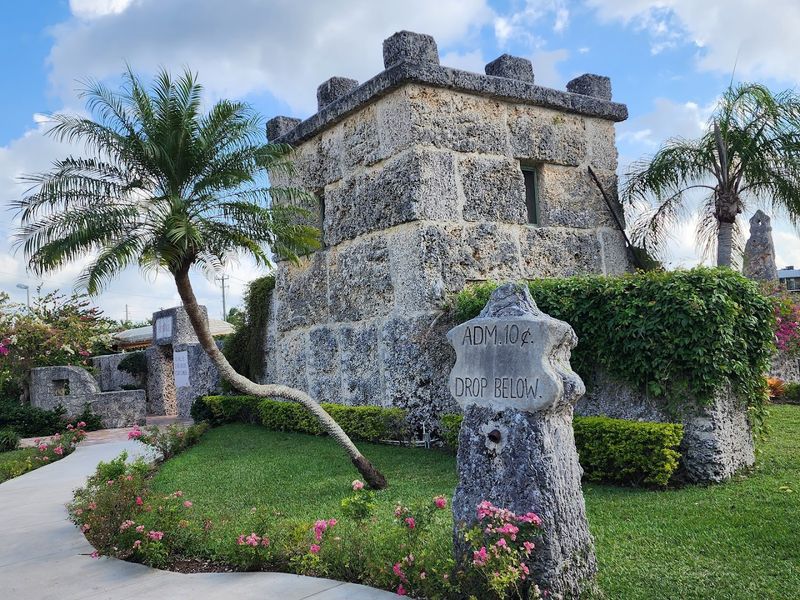
Logic takes a brief coffee break at Coral Castle. Built by Edward Leedskalnin from massive blocks of coral rock, this Homestead landmark looks less like a conventional castle and more like a hand-carved fortress puzzle.
Gates, walls, towers, tables, chairs, and sculptural forms all emerge from the same stony material, creating a place that feels equal parts architecture and obsession.
Leedskalnin worked largely alone over many years, which helped create the site’s enduring reputation for mystery. Visitors are often most impressed by the scale of the carved pieces and the precision of the moving elements, including the famously balanced gate.
Rather than imitating one exact European model, the site invents its own language through arrangement, craftsmanship, and stubborn consistency.
That originality is why Coral Castle sticks in your memory. It does not depend on lavish interiors or sprawling grounds to make its case.
Instead, it offers a completely personal vision built in stone and arranged with unusual confidence. Florida has plenty of attention-grabbing stops.
Few of them are this strange, disciplined, and genuinely unforgettable.
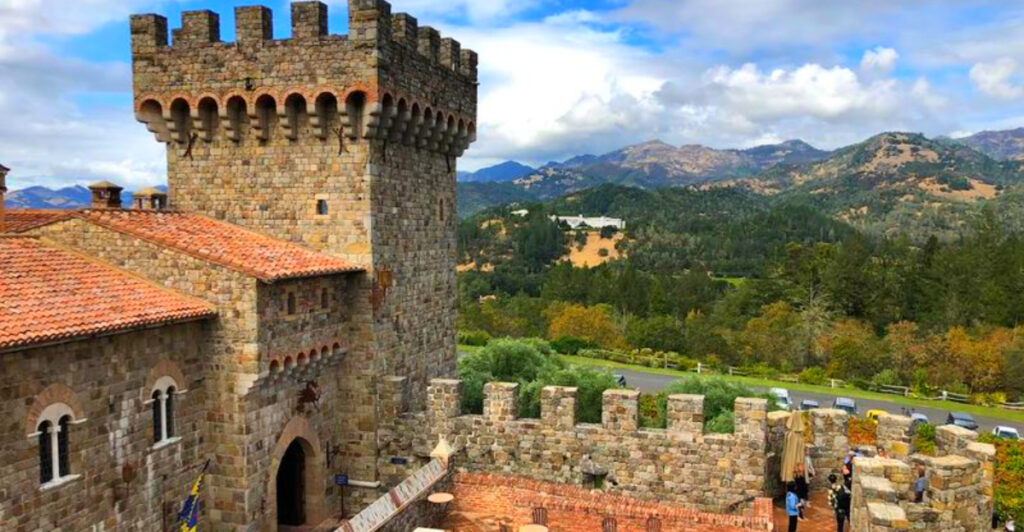
12. Castello di Amorosa (Napa Valley, California)
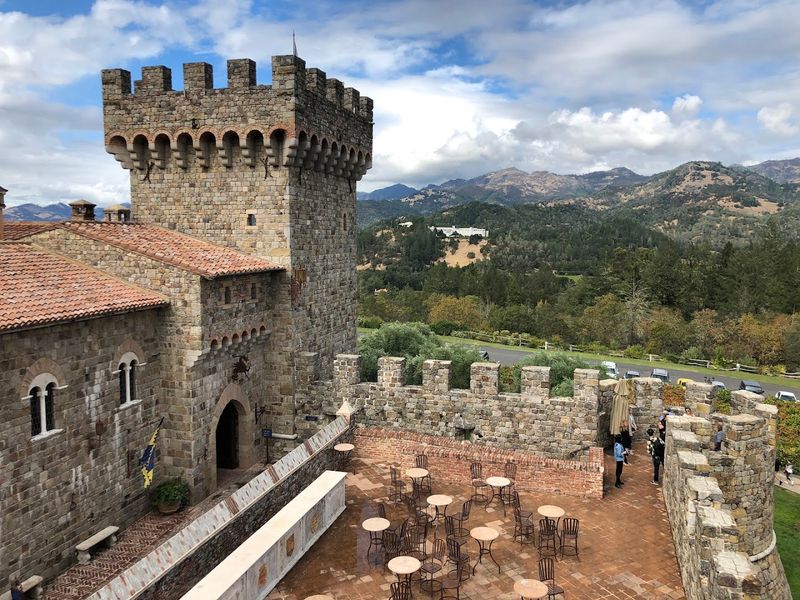
This place does not dabble in castle design – it commits fully. Castello di Amorosa was built to resemble a thirteenth-century Italian fortress, complete with a moat, drawbridge, crenellated walls, courtyards, and towers that look determined to pass a historical inspection.
The materials and construction methods were chosen with unusual seriousness, which is why the illusion works so well.
Unlike many castle-inspired American buildings, this one was created recently, making its accuracy even more striking. The structure includes defensive-style features, vaulted spaces, and layered stonework that echo medieval precedents rather than merely borrowing a few decorative flourishes.
As a visitor, you are not just seeing a themed façade. You are moving through a carefully planned architectural project that treats old-world design as a blueprint.
That level of commitment gives Castello di Amorosa real presence. It is polished, theatrical, and impressively detailed without slipping into parody.
In a region full of attractive properties, this fortress stands apart by refusing to be subtle. If you came for castle drama, the building understands the assignment completely.
13. Lookout Mountain Castle (Chattanooga, Tennessee)
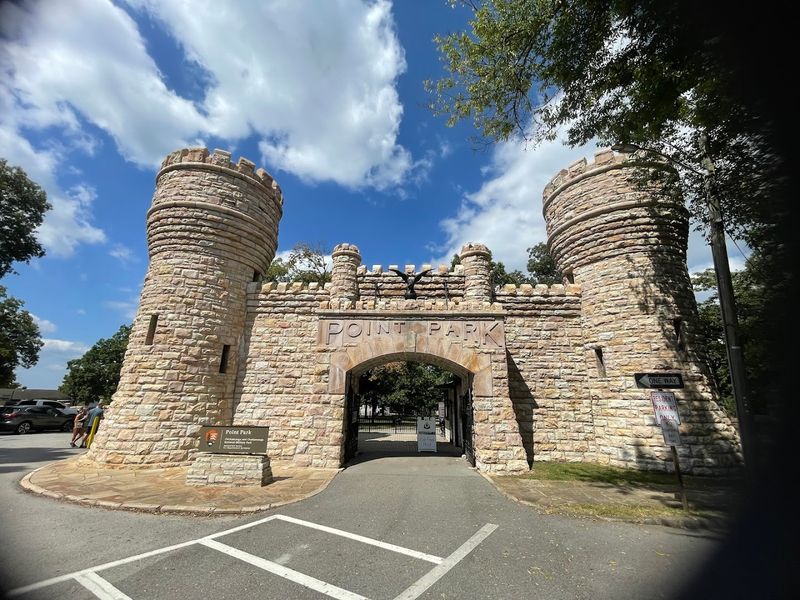
Plenty of attractions have a gift shop. Far fewer have a castle-like entrance building perched above a famous underground waterfall.
Lookout Mountain Castle, tied to the Ruby Falls complex in Chattanooga, brings together 1920s ambition, stone construction, and a silhouette that borrows from medieval forms without pretending to be ancient. It is a playful hybrid, and that works in its favor.
The structure combines rugged masonry with details that reflect both romantic revival trends and touches of period styling from the early twentieth century. Because it serves as part of a destination built around exploration, the castle effect functions as an invitation as much as an architectural statement.
Visitors notice towers and fortress cues immediately, then realize the building is part of a larger attraction story.
That layered identity makes it memorable. You are getting a castle-like landmark, a mountain setting, and a classic American tourist experience wrapped together in one location.
It feels designed for curiosity, which is exactly right. Some castles guard treasure.
This one points you toward one of Tennessee’s most unusual underground sights.
14. Iolani Palace (Honolulu, Hawaii)
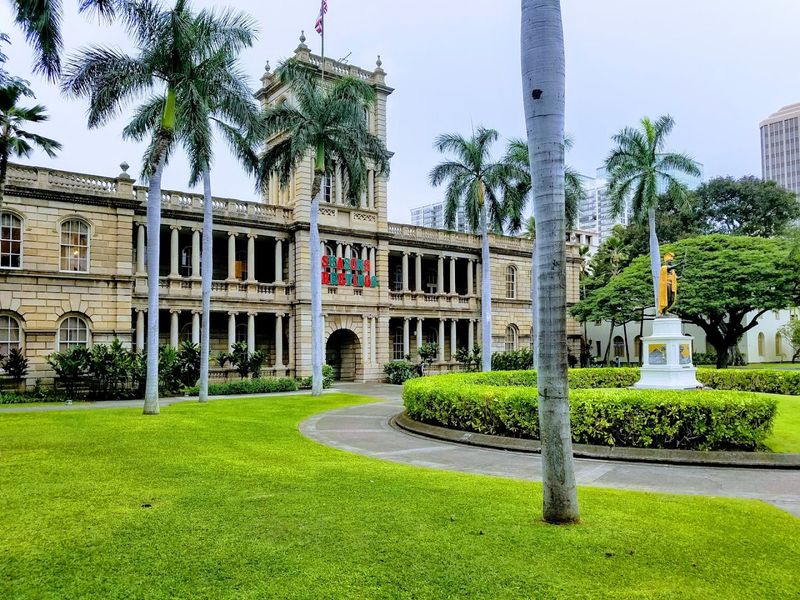
Royalty changes the tone immediately. Iolani Palace in Honolulu was the official residence of Hawaii’s monarchs, and its elegant profile gives it a castle-like presence unlike anywhere else in the United States.
Rather than mimicking a heavy stone fortress, it presents terraces, decorative details, and corner towers that create a refined, almost storybook silhouette with very real historical importance.
Completed in 1882, the palace blended several architectural influences into a highly distinctive design that reflected both international taste and local context. It also contained modern innovations for its time, including electricity and other advanced amenities that made it more technologically current than many contemporary residences.
Visitors today can appreciate both the ceremonial grandeur and the practical sophistication built into the structure.
What makes Iolani Palace so compelling is that the building’s beauty never overshadows its significance. This is not just a picturesque landmark with turrets.
It is a royal residence tied directly to Hawaiian history and governance. In a country full of castle imitators, Iolani stands apart by carrying actual sovereign credentials along with its elegant architecture.
Share this story