 Unearth The Voyage
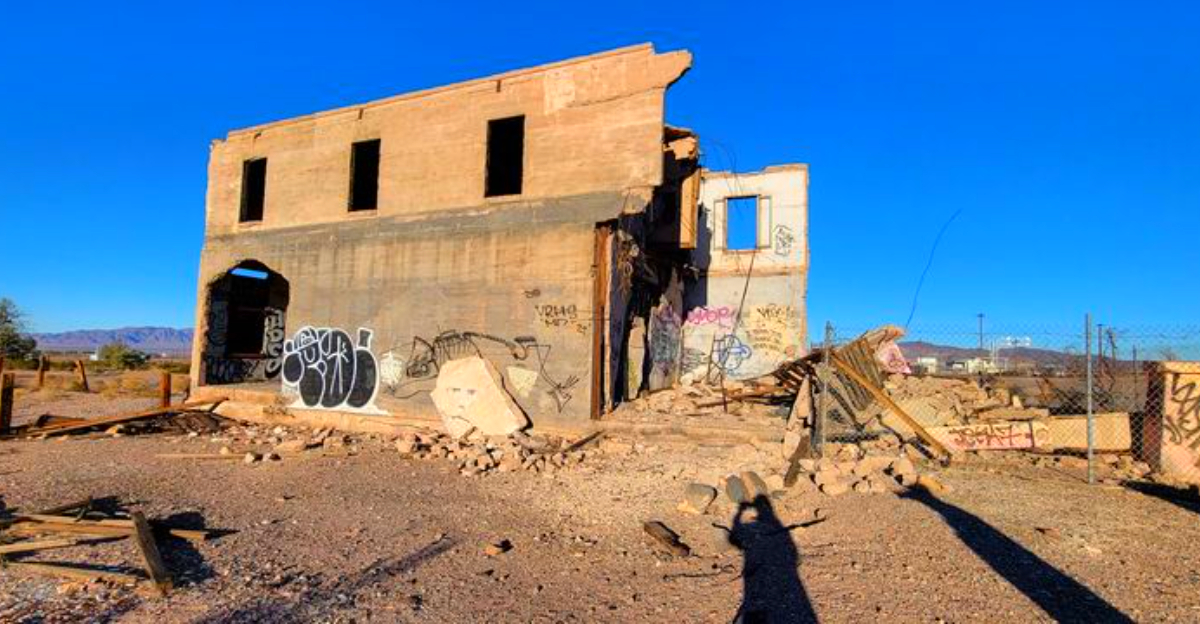
A railroad line could make a town look permanent, then turn it into a footnote after one corporate decision. In the late 1800s and early 1900s, depots, roundhouses, and freight schedules acted like local stock markets, deciding where hotels opened, where stores ordered inventory, and where families planted roots.
When those tracks shifted, some communities were left with brick buildings, fading signs, and very little reason for new business to stay. These fourteen places show how transportation maps quietly rewrote American history, one bypassed platform at a time.
1. Thurmond, West Virginia
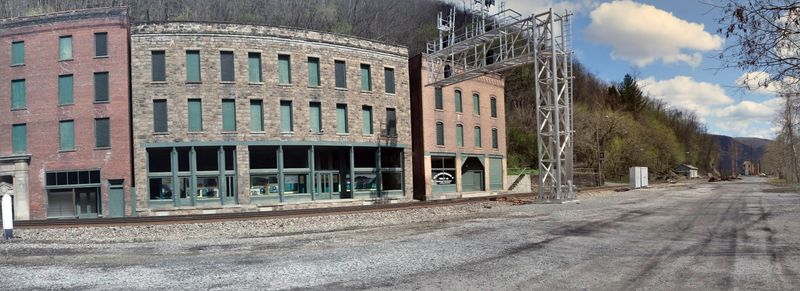
One timetable change can humble a town faster than a bad mayor. Thurmond became a serious rail center on the Chesapeake and Ohio Railway because southern West Virginia coal needed an efficient outlet, and the town delivered exactly that.
By the early 1900s, banks, hotels, stores, and rail offices clustered along a narrow strip beside the tracks.
Its geography helped business but limited growth. The steep valley left little room for expansion, so Thurmond depended heavily on rail traffic, coal shipments, and passengers who treated the depot as the town square.
When coal production changed, roads improved, and rail operations became less labor intensive, Thurmond lost the steady flow that had supported everything.
The numbers tell the story without much drama. Population and commerce slipped for decades, businesses closed, and the once important depot became more famous as a historic image than a transportation engine.
Today, Thurmond survives largely through preservation and park visitors rather than the industry that built it.
2. Cairo, Illinois
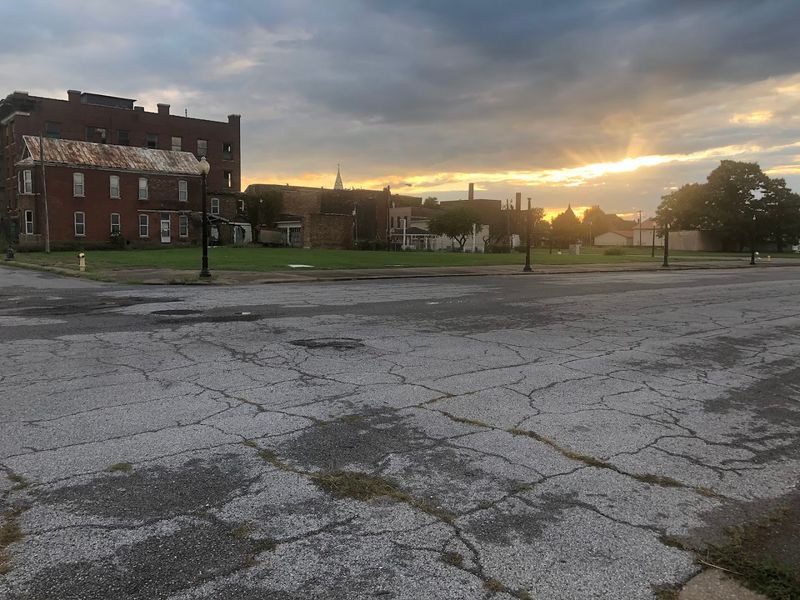
Few towns had a better transportation resume on paper than Cairo. Perched at the meeting of the Mississippi and Ohio Rivers, it grew into a strategic shipping and railroad hub where geography seemed to promise endless relevance.
For decades, that promise looked solid, with rail depots, warehouses, hotels, and wholesalers feeding off both river traffic and inland connections.
But transportation systems do not reward history, only current efficiency. As bridges, highways, and newer distribution patterns redirected commerce, Cairo’s central advantage weakened, and rail activity no longer guaranteed a healthy downtown.
Businesses thinned out, jobs followed, and the population dropped sharply across the twentieth century.
Cairo’s decline also reflected broader regional economic changes, including industrial restructuring and suburban migration. Still, rerouted traffic mattered because fewer travelers and fewer freight transfers meant less daily cash moving through local hands.
The result is a city remembered for what should have kept it thriving, not for what replaced that vanished role.
3. Centralia, Pennsylvania
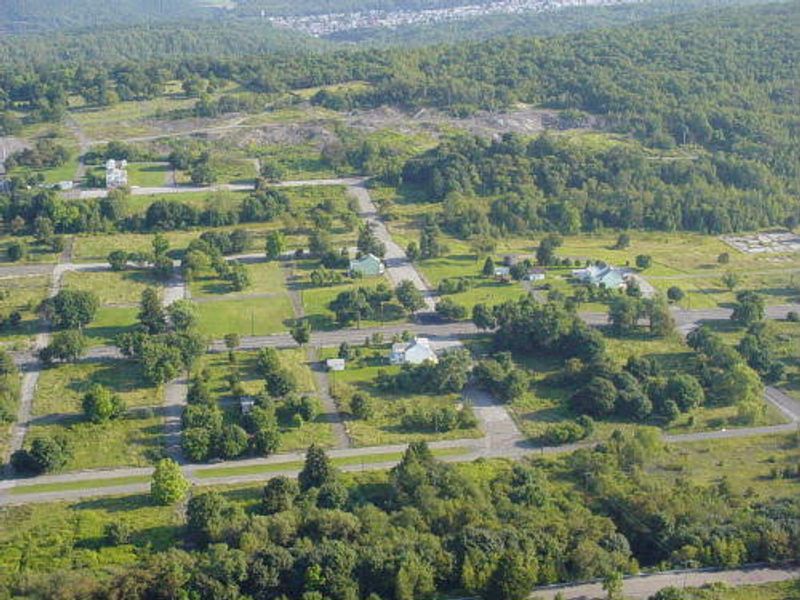
Centralia is usually remembered for one disaster, but its economy had already been tied tightly to the rail-and-coal equation. Anthracite mining gave the town purpose, and railroad connections moved that coal to regional and national markets with impressive efficiency.
As long as the mines stayed productive and the shipments stayed useful, Centralia had a clear reason to exist.
That foundation weakened over time as mining changed and rail importance shifted. Reduced dependence on local coal fields limited the town’s commercial resilience, and fewer strong transportation advantages meant fewer buffers when larger problems arrived.
By the mid twentieth century, Centralia was not the kind of place with many alternate industries waiting in line.
The underground fire beginning in 1962 became the overwhelming turning point, but rail decline belongs in the background story. Centralia had grown because extraction and transportation worked together, and it struggled when that partnership frayed.
Today, it stands as a stark example of how one-industry towns rarely get a generous second act.
4. Glenrio, Texas/New Mexico
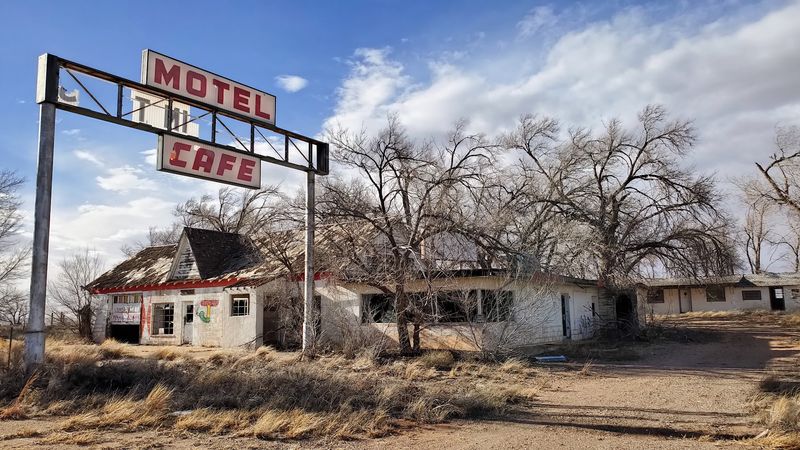
Glenrio had the kind of location that looks clever until the map changes. Sitting on the Texas-New Mexico line, it benefited from both rail movement and later Route 66 traffic, giving it a steady stream of customers who needed fuel, food, lodging, and basic services.
For a while, pass-through business was enough to keep the place lively.
The problem with pass-through economies is right there in the phrase. When Interstate 40 drew motorists away and rail patterns evolved, Glenrio lost the very audience that had kept its businesses upright.
A town built around movement discovered that movement no longer needed to stop there.
That shift happened with remarkable speed. Motels, cafes, and stations became shells of a transportation era that had little use for old alignments, and local opportunity dried up alongside the traffic.
Glenrio now reads like a textbook case in American rerouting, where highways and railroads agreed on one brutal point: keep going.
5. Cisco, Utah
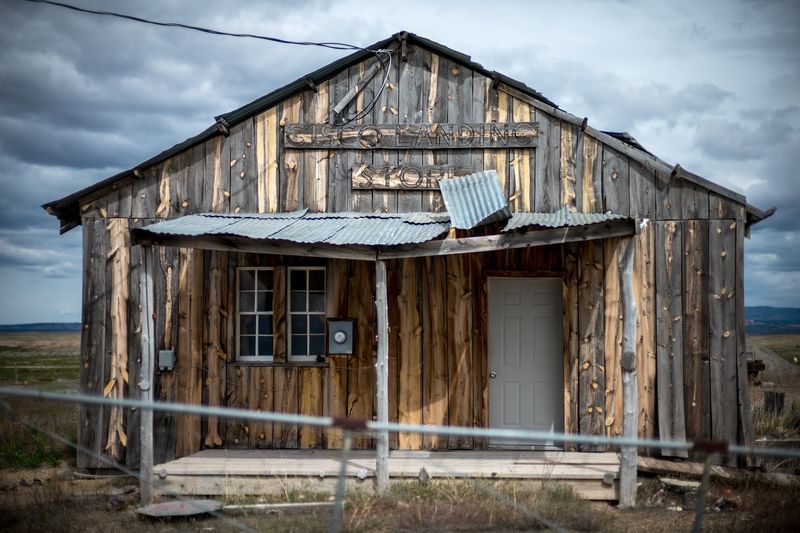
Some towns were born with a job description, and Cisco’s was written by the railroad. In eastern Utah, it developed as a service stop where steam locomotives could take on water and crews could handle the practical business of long-distance rail travel.
That kind of purpose created stores, homes, and enough routine to make the settlement feel stable.
Then the technology changed the script. As diesel locomotives replaced steam and rail operations required fewer service points, Cisco’s reason for being narrowed quickly, and the population followed the logic.
Without a diversified economy or large surrounding market, the town had little protection once railroad needs shifted elsewhere.
Nearby highway traffic offered only limited help, and even that did not guarantee a durable future. By the late twentieth century, Cisco had become one of those places people know mainly through photographs, film crews, and ghost-town curiosity.
Its decline was not mysterious at all. The railroad simply stopped needing what Cisco was built to provide.
6. Thurber, Texas
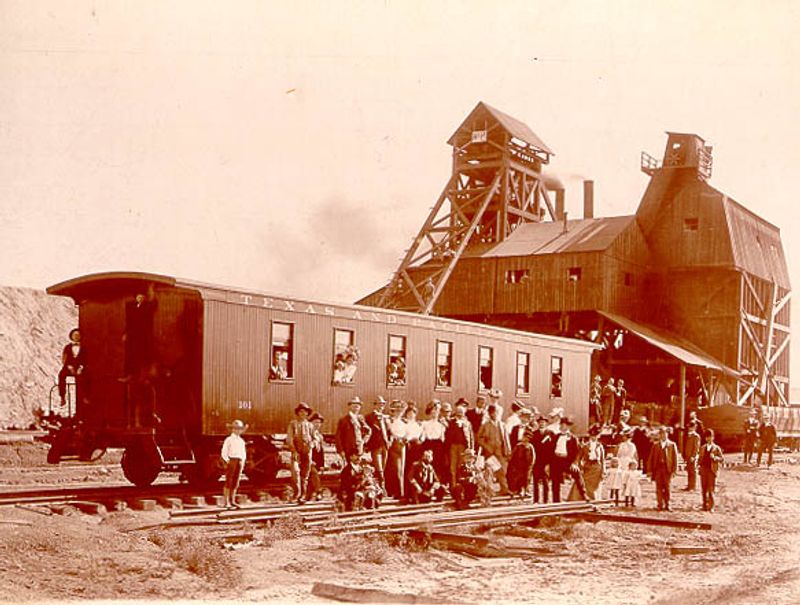
Thurber ran on company logic, and for a while that logic printed money. Built around coal mining and brick production, the town depended on the Texas and Pacific Railway to move fuel and manufactured goods across the region.
It was a rare Texas company town with substantial infrastructure, a hotel, stores, schools, and a remarkably organized business model.
Its strength, however, was also its trap. Thurber relied on coal at the moment oil was changing industry and transportation, and rail distribution no longer guaranteed the same returns once energy markets shifted.
When demand softened and the mines became less competitive, the surrounding town lost its commercial center almost immediately.
Thurber did not slowly reinvent itself into something trendy and unexpected. Most residents left after operations wound down in the 1920s and 1930s, leaving behind a scattering of structures and a powerful historical record.
Today, it remains a useful reminder that rail access helps enormously, but only if the underlying product keeps mattering.
7. Lamy Bypass Towns, New Mexico
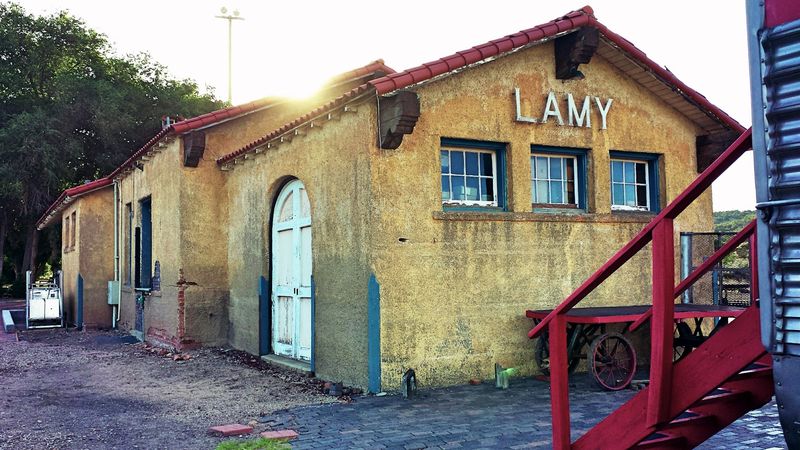
Railroad maps can create winners with a pencil stroke and sideline neighbors just as fast. In northern New Mexico, communities near Santa Fe expected to benefit directly from transcontinental rail development, yet the main Atchison, Topeka and Santa Fe alignment favored Lamy instead.
That decision redirected passengers, freight, and investment toward a new rail junction while nearby settlements watched opportunity transfer down the line.
Santa Fe eventually regained connection through a spur, but a spur is not the same as being the main event. Smaller communities that had counted on through traffic or regional prominence discovered that fewer travelers meant fewer merchants, fewer service jobs, and less incentive for outside capital to arrive.
Railroads were practical institutions, not sentimental civic partners.
The long-term result was uneven regional development rather than one single ghost town. Places bypassed by the principal route often kept cultural significance but lost commercial momentum in measurable ways.
It is a classic New Mexico story: history, geography, and corporate planning meeting at one station, with only one town holding the ticket.
8. Bodie, California
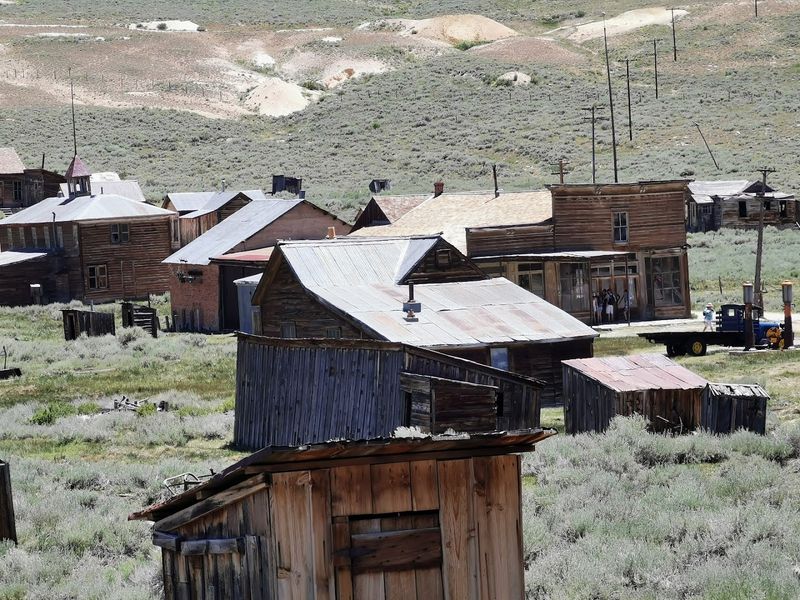
Bodie looked unstoppable for about five minutes in western history terms. After gold discoveries in the late 1870s, the town expanded rapidly, drawing miners, merchants, investors, and the kind of speculation that fills a main street in record time.
Rail connections and freight links helped support that surge by moving supplies in and bullion-related business out.
Mining towns rarely decline for just one reason, and Bodie is a perfect example. Ore quality changed, extraction became less profitable, and transportation priorities followed the money rather than the memories.
Once the mining economy softened, rail links could no longer rescue the town’s larger commercial structure.
Fires and depopulation further reduced what remained, but the key point is economic dependence. Bodie needed productive mines and reliable transport working together, and when one weakened, the other stopped mattering as much.
What survives now is a remarkably preserved state historic park, where visitors can see how quickly boomtown confidence turns into boarded windows and official preservation rules.
9. Rhyolite, Nevada
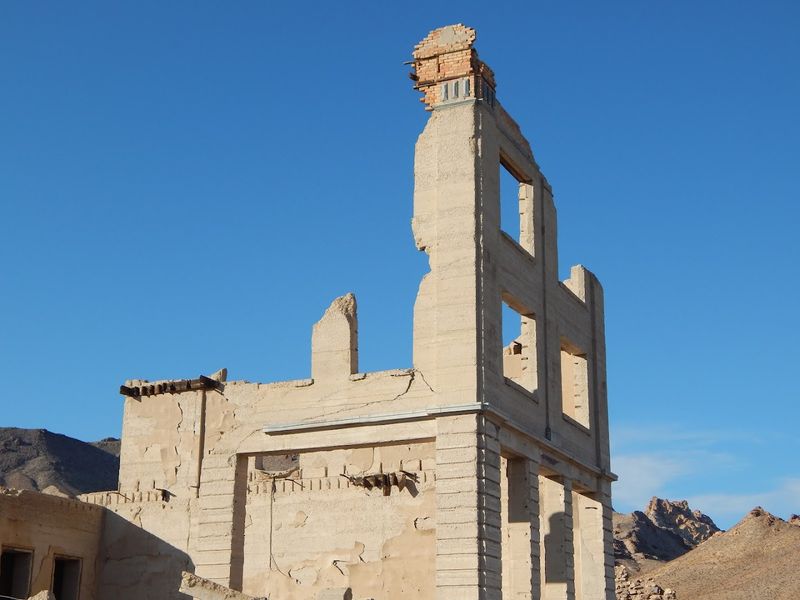
Rhyolite moved from headline sensation to near-empty map label with unusual efficiency. Founded during the Bullfrog mining boom in the early 1900s, it attracted investors, newspapers, electric service, substantial buildings, and rail connections that made the town seem far more secure than many short-lived camps.
For a moment, Rhyolite looked less like a gamble and more like an urban plan.
That confidence depended on mining profits staying impressive and transportation networks continuing to serve them. When ore values disappointed, speculation cooled, and the financial panic of 1907 squeezed investment, rail access could not maintain a local economy that was already losing its strongest argument.
A busy depot is not enough when the cargo stops justifying the schedule.
Population dropped sharply within only a few years, and major buildings quickly outlasted the people who financed them. Rhyolite’s ruins remain famous partly because they still look oversized for such a short chapter.
The town embodies a blunt western lesson: even solid masonry and rail service cannot outvote a failing business model.
10. Ludlow, California
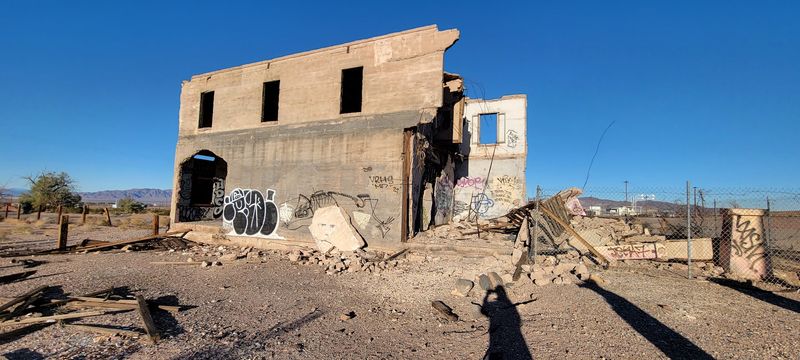
Ludlow survived on location, which is a risky business plan in the desert. Along the Santa Fe Railway in California’s Mojave region, it developed as a service point and supply stop connected to mining activity, freight movement, and later highway travelers.
That combination gave the town enough commercial life to support businesses well beyond what the local population alone would justify.
As mining activity fluctuated and transportation patterns evolved, Ludlow’s strategic value weakened. Railroads reduced the need for certain stops, and highway travel increasingly favored faster, more consolidated services elsewhere.
A place built to catch people in transit discovered that modern transit had become less interested in stopping.
Today Ludlow is remembered less as a functioning community than as a roadside historical trace. Its remaining structures suggest how many western settlements depended on infrastructure decisions made far from town limits.
Once the rail and road economy moved to new priorities, Ludlow was left with the classic symptoms of bypass history: less commerce, fewer residents, and a name people mostly read on old maps.
11. Texola, Oklahoma
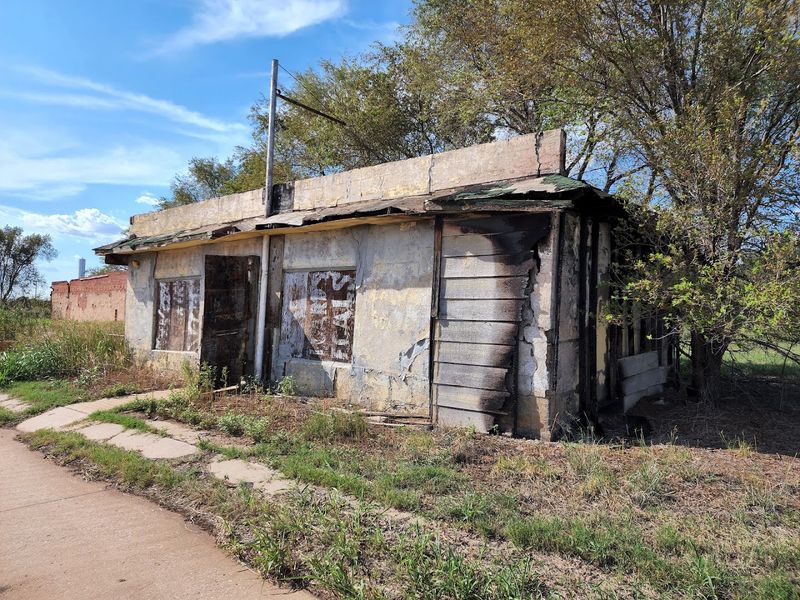
Texola had the sort of resume that once looked future-proof. Near the Oklahoma-Texas border, it benefited from railroad activity and later from U.S.
Highway 66, making it a practical stop for travelers, local trade, and agricultural shipment. Those overlapping networks gave the town a respectable run as a service center with stores, lodging, and everyday commerce.
The trouble came when both systems became less loyal. Railroad changes reduced the old freight advantage, and interstate development pulled motorists away from Route 66 businesses that depended on constant circulation.
Small towns can manage one transportation disappointment, but two at once usually settle the matter.
Texola never fully disappeared, yet its population and business base fell hard enough to give it ghost-town status in popular memory. That half-present, half-absent condition says a lot about twentieth-century rural America.
The buildings may linger, the post office may have had brief returns, but the economic center that justified the town’s existence moved on without leaving much behind.
12. Trinidad’s Rail District (Colorado)
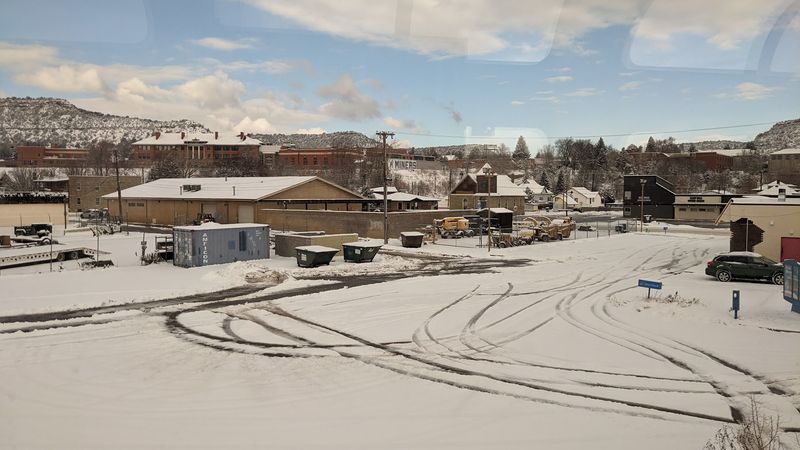
A rail district can fade even when the city around it keeps its name on the map. In Trinidad, Colorado, railroad development once supported jobs, warehouses, hotels, and neighborhoods tied closely to freight handling, passenger service, and nearby coal activity.
The district mattered because the tracks organized local work, property values, and patterns of daily movement.
When rail importance declined and related industries changed, those specialized blocks lost their original economic purpose. That did not erase Trinidad, but it did weaken sections of the city that had depended on rail-centered commerce more than the broader public often realizes.
Neighborhoods built around yards, depots, and loading activity rarely transition seamlessly into new uses.
Trinidad’s story is useful because it avoids the all-or-nothing ghost town stereotype. Some places do not vanish outright; instead, particular districts absorb the hardest consequences of rerouting, consolidation, and industrial modernization.
In that sense, the rail district became a local archive of changing transportation priorities, with aging buildings showing where the city’s old commercial engine once worked hardest.
13. Helper, Utah
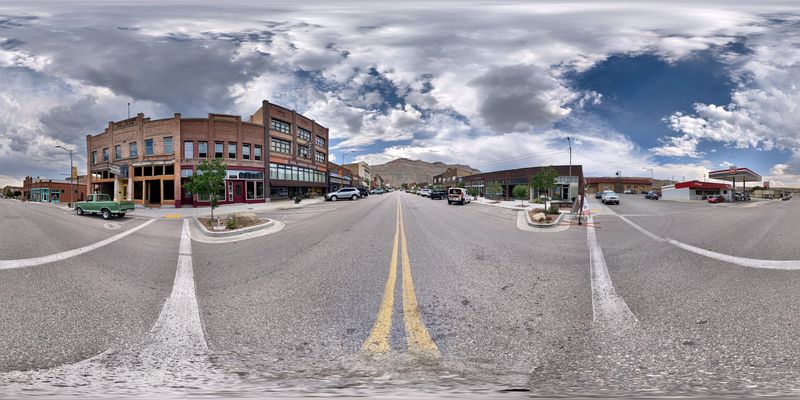
Helper sounds temporary, but for decades it was essential. Named for the helper engines used to push trains over the steep grades of Price Canyon, the Utah town became a key railroad and coal community with a depot, rail jobs, boarding houses, and a business district shaped by constant industrial traffic.
Its identity was baked right into railroad operations.
That closeness brought prosperity and vulnerability in equal measure. As technology improved, labor needs changed, and coal shipping patterns fluctuated, Helper faced the same problem that haunted many specialized towns: fewer railroad jobs meant fewer customers for everyone else.
Economic contraction spread from the yards to Main Street with painful efficiency.
Unlike some towns on this list, Helper retained enough population and regional function to avoid total abandonment. Even so, its major hit was unmistakable, and the town spent years adjusting to a much smaller version of itself.
Today, preservation efforts and arts activity have added new chapters, but the old railroad scale is still the benchmark people remember.
14. Caliente, Nevada
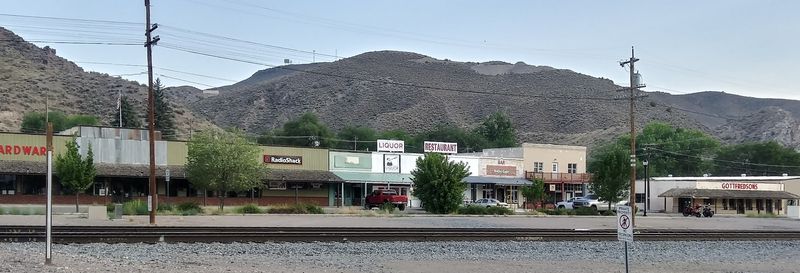
Caliente was built with railroad confidence and dressed accordingly. In southeastern Nevada, the town grew around the San Pedro, Los Angeles and Salt Lake Railroad, later part of the Union Pacific system, and its handsome Mission Revival depot announced that this was no accidental whistle stop.
Rail employment, maintenance work, and regional shipping gave Caliente a strong early identity.
When rail traffic declined and operations consolidated, that foundation weakened in ways familiar across the West. Fewer railroad jobs meant less support for local merchants, fewer families settling long term, and less reason for the town to expand its earlier ambitions.
The depot remained impressive, but architecture cannot substitute for payroll.
Caliente never became a fully empty ghost town, yet its influence and growth clearly shrank as the railroad era receded. That makes it especially interesting historically.
It shows how rerouting and reduced rail importance could limit a town’s future even without erasing it entirely, leaving behind a place that still stands but no longer controls the regional conversation it once expected.



