 Unearth The Voyage
Most hikers have a short list of famous trails they keep meaning to visit, but the best-kept secrets in American hiking are often the ones nobody posts about. I stumbled onto one of these hidden gems by accident last summer, and it completely changed how I think about trail hunting.
The trails on this list sit inside well-known national parks yet somehow dodge the crowds and the hype. Pack your boots and get ready, because these 13 overlooked trails deserve a spot on every hiker’s radar.
Cedar Run–Whiteoak Circuit, Shenandoah National Park, Virginia
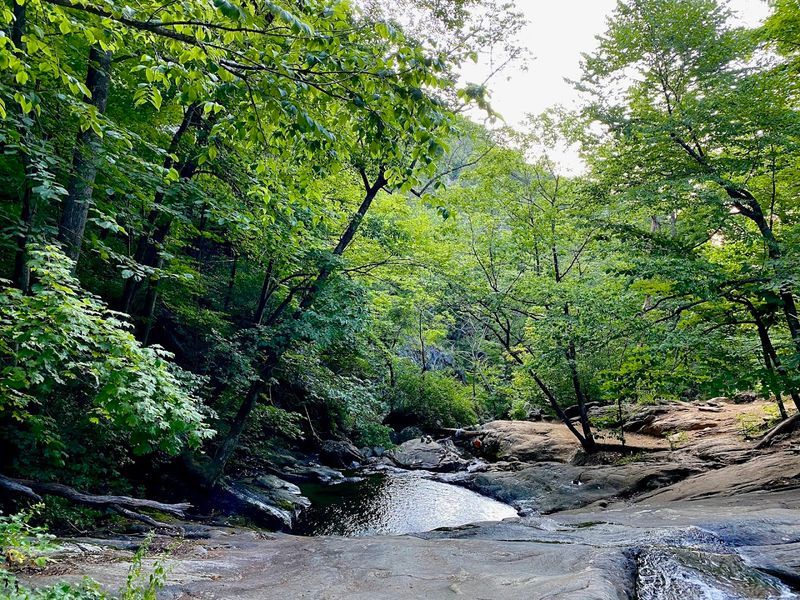
Two canyon trails, six waterfalls, and a loop that most Shenandoah visitors have never heard of. The Cedar Run-Whiteoak Circuit covers about 8 miles and links two of the park’s most dramatic stream gorges.
Whiteoak Canyon gets a little attention, but combining it with Cedar Run turns a good hike into a genuinely great one.
Cedar Run is the wilder side of the loop. The trail scrambles over boulders and crosses the creek multiple times, so waterproof boots are not optional.
Whiteoak Canyon offers a smoother return route with its own series of falls dropping through a narrow gorge.
I did this loop on a gray November morning and barely saw another soul after the first mile. The waterfalls keep flowing well into autumn, and the lack of crowds makes every viewpoint feel like a private discovery.
Budget at least five hours and bring more snacks than you think you need.
North Vista Trail, Black Canyon of the Gunnison National Park, Colorado
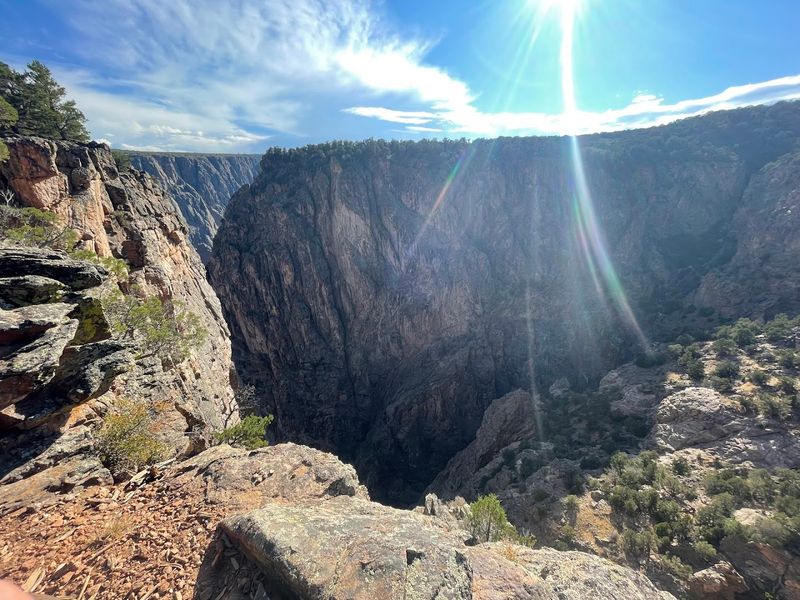
Black Canyon of the Gunnison is already one of Colorado’s most underrated parks, and North Vista Trail takes the underrated factor up another notch. Starting from the North Rim, this 7.4-mile out-and-back reaches Exclamation Point, a promontory that earns its dramatic name with a sheer 2,700-foot drop into the canyon below.
The North Rim itself sees far fewer visitors than the South Rim, which means the trailhead parking lot is often half-empty even on summer weekends. The terrain rolls through sagebrush and pinyon-juniper woodland before the canyon views open up in spectacular fashion.
Wildlife sightings, including mule deer and golden eagles, are genuinely common up here.
The trail is rated moderate, but the altitude sits around 8,000 feet, so pace yourself if you are coming from lower elevations. Bring a windbreaker because the North Rim gets breezy.
The payoff at Exclamation Point is one of Colorado’s most jaw-dropping panoramas, shared with almost nobody.
Rim Rock Trail, Black Canyon of the Gunnison National Park, Colorado
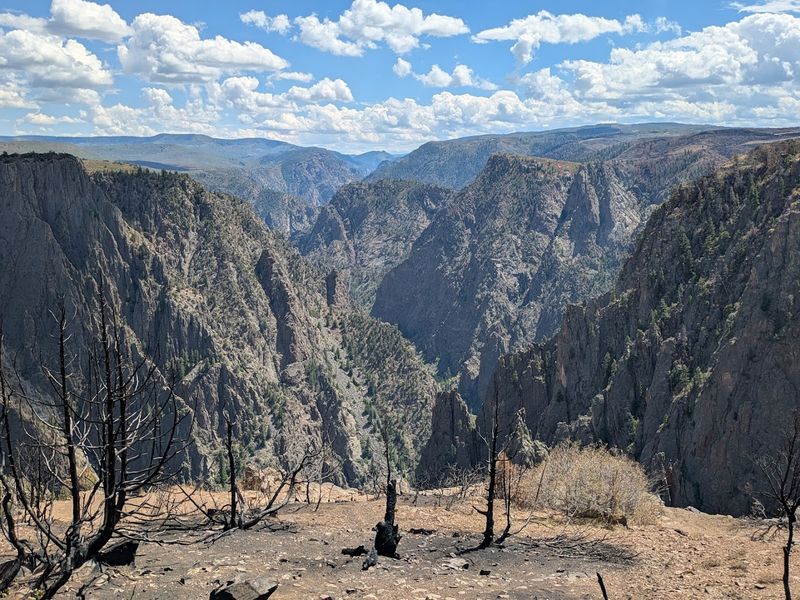
Short trails can be just as spectacular as long ones, and Rim Rock Trail at Black Canyon of the Gunnison is the proof. This 1-mile loop on the South Rim is easy enough for most fitness levels yet delivers views that would make a mountain goat nervous.
The canyon walls plunge over 2,000 feet straight down from the trail’s edge.
Most South Rim visitors stick to the main overlooks along the scenic drive and never bother with the actual trails. That leaves Rim Rock Trail surprisingly quiet for a path that offers some of the best canyon perspectives in the park.
The dark Precambrian rock, striped with pink pegmatite, looks almost otherworldly in afternoon light.
Geology fans will have a field day here. The Gunnison River carved this canyon through some of the oldest exposed rock in North America, roughly 1.7 billion years old.
That fun fact alone makes the short walk feel like a trip through deep time.
Jones Run Falls, Shenandoah National Park, Virginia
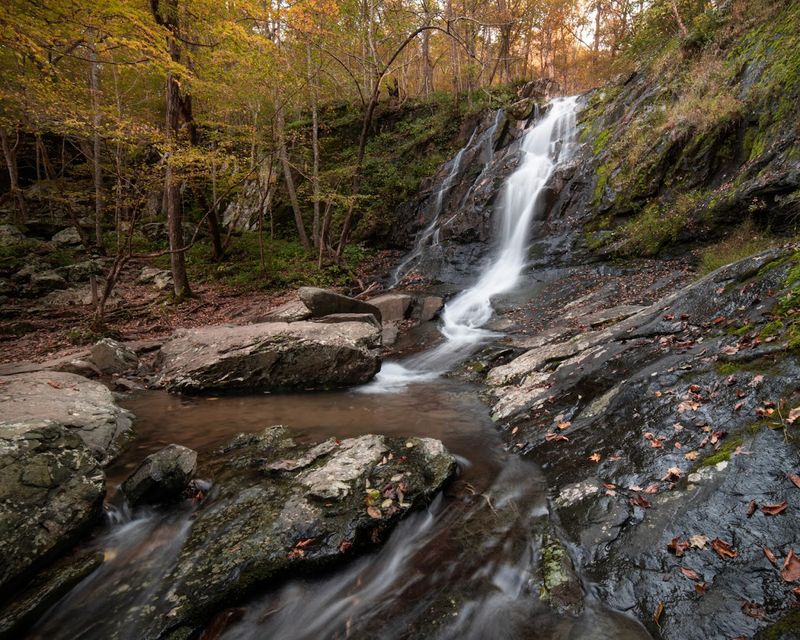
Waterfalls and solitude rarely come as a package deal, but Jones Run Falls somehow delivers both. Tucked inside Shenandoah National Park, this 3.4-mile out-and-back trail leads to a 42-foot cascade that most visitors completely skip.
The trailhead sits along Skyline Drive near milepost 84, which is far enough south to keep the weekend crowds thin.
The path winds through dense hardwood forest before dropping steeply toward the falls. That descent is real, so trekking poles are a smart call on the way back up.
The reward is a wide, powerful waterfall that lands in a rocky pool perfect for a quick break.
Fall foliage season turns this trail into something almost unfairly beautiful. Go on a weekday in October and you might have the whole waterfall to yourself.
Jones Run is proof that the best spots in popular parks are often hiding in plain sight at the southern end of the map.
Sperati Point via South Achenbach Trail, Theodore Roosevelt National Park, North Dakota
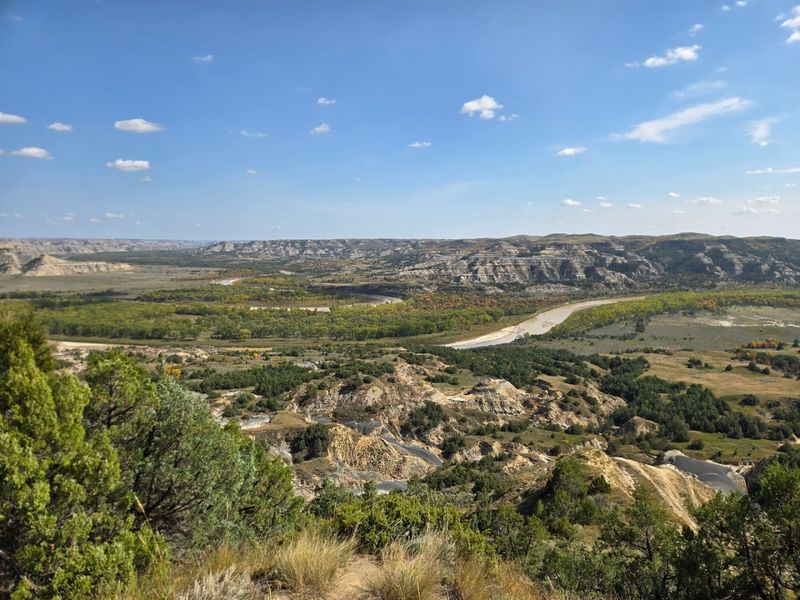
North Dakota does not get nearly enough credit as a hiking destination, and Theodore Roosevelt National Park is the state’s best-kept secret. The South Achenbach Trail to Sperati Point covers about 18 miles round trip through the South Unit’s wildest backcountry.
Almost nobody does it, which is honestly baffling given the scenery.
The trail crosses the Little Missouri River, which means you will get your feet wet. Water levels vary by season, so check conditions before heading out.
Once across, the route climbs through eroded badlands formations to Sperati Point, where the river bends dramatically far below.
Bison roam freely throughout the South Unit, and running into a herd on the trail is entirely possible. Keep a respectful distance and remember that bison are faster than they look.
I found this trail through an old hiking forum post with exactly three replies, which felt like finding buried treasure. Pack enough water for the full day.
Harding Icefield Trail, Kenai Fjords National Park, Alaska
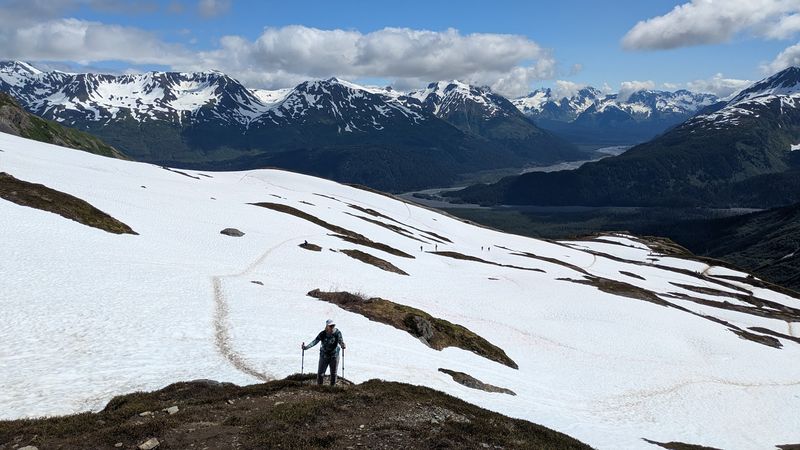
Alaska has a way of making every other hike feel slightly ordinary by comparison, and the Harding Icefield Trail is a prime example. Starting near Exit Glacier, this 8.2-mile out-and-back climbs nearly 3,500 feet to reach the edge of one of the largest icefields in North America.
The views at the top are the kind that reset your perspective on the world.
The trail is physically demanding and can have snow year-round above the treeline. Gaiters, trekking poles, and layers are essential even in July.
Weather changes fast up here, so an early start is strongly recommended to avoid afternoon clouds rolling in.
Despite being inside a national park, this trail sees a fraction of the visitors that comparable hikes in the lower 48 receive. The approach through spruce forest gives way to wildflower meadows, then bare rock, then ice.
Each zone feels like a completely different world. Few hikes in the country offer this kind of dramatic elevation storytelling in a single day.
Fairyland Loop, Bryce Canyon National Park, Utah
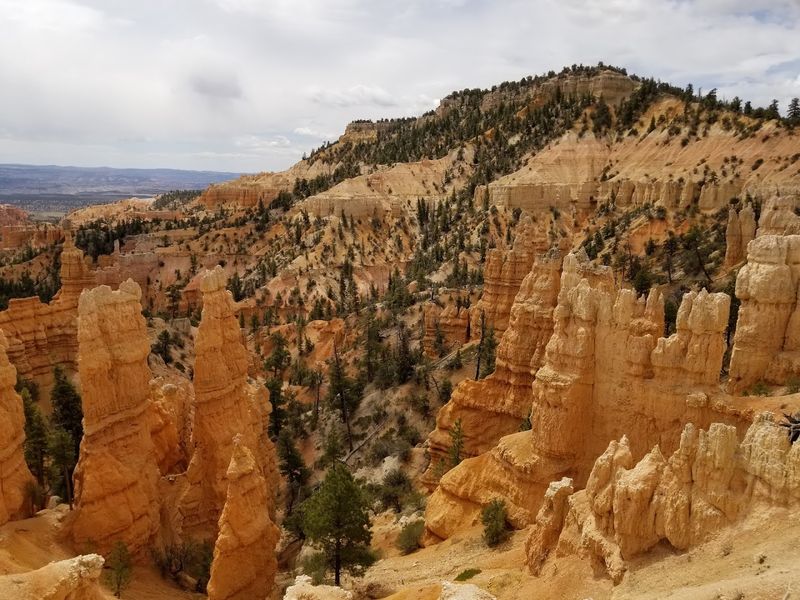
Bryce Canyon is famous for its hoodoos, but the Fairyland Loop is the trail that most visitors skip because it does not appear on the main amphitheater map. That oversight works in your favor.
This 8-mile loop starts at Fairyland Point, a separate trailhead north of the main visitor area, and winds through some of the park’s most densely packed hoodoo formations.
The trail drops into the canyon and weaves around towers, fins, and arches that feel genuinely alien. Tower Bridge, a natural arch about 2 miles in, is a highlight that rivals anything on the more popular Navajo Loop.
The loop climbs back out through forested ridges with sweeping views across the Paria Valley.
Plan for a full day and bring more water than you expect to need. The canyon traps heat in summer, and the elevation change of roughly 2,300 feet adds up.
Fairyland Loop rewards hikers who are willing to do a little extra research and drive 200 extra feet past the main entrance.
Druid Arch Trail, Canyonlands National Park, Utah
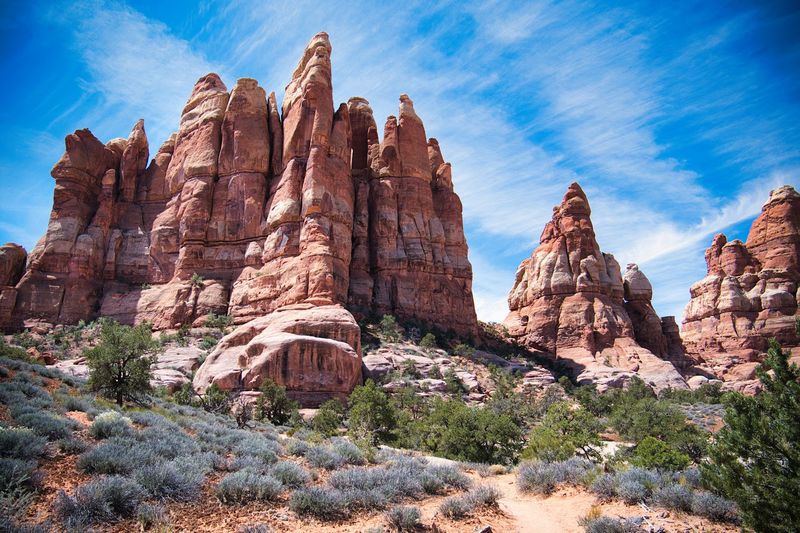
There is an arch in Canyonlands that looks like it was designed by a fantasy novelist, and almost nobody talks about it. Druid Arch sits in the Needles District, the quieter, more remote corner of Canyonlands that most tourists never reach.
The 11-mile round trip hike earns its reward with a massive twin-towered sandstone arch that frames the sky in an almost theatrical way.
The Needles District itself requires a longer drive from the park’s main entrance near Moab, which filters out casual visitors. That extra effort translates to solitude on the trail and a genuine sense of remote desert adventure.
The route passes through colorful canyon corridors and open slickrock before a short scramble to the arch itself.
Start early to beat the desert heat, and carry at least three liters of water per person. The scramble near the end involves some hand-and-foot climbing, so confident footing matters.
Druid Arch is the kind of destination that makes hikers wonder why everyone is still talking about Delicate Arch instead.
Dune Succession Trail, Indiana Dunes National Park, Indiana
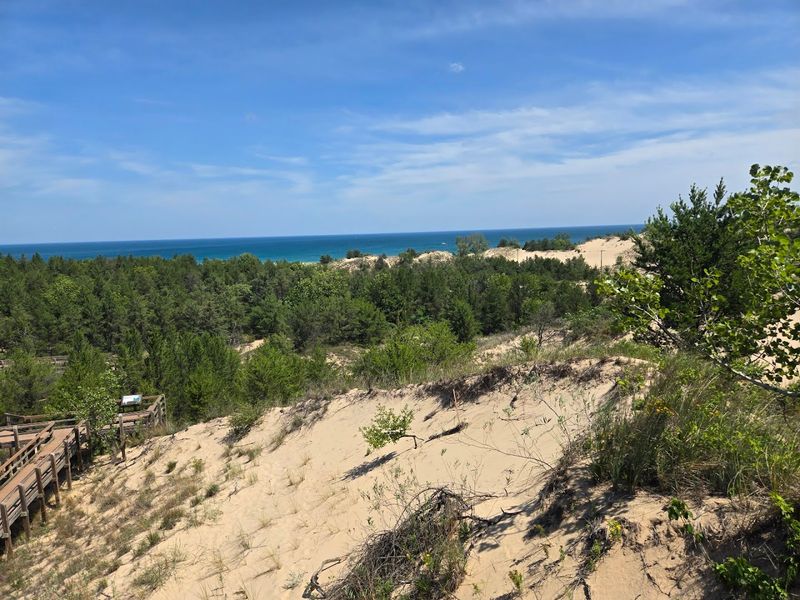
Indiana is not a state most people associate with epic hiking, but Indiana Dunes National Park quietly offers one of the most ecologically fascinating short trails in the Midwest. The Dune Succession Trail covers just 0.6 miles but walks visitors through thousands of years of ecological history in a single loop.
The trail demonstrates how bare sand slowly transforms into mature forest, one plant community at a time.
It sounds like a school field trip, and honestly it kind of is, but in the best possible way. Interpretive signs along the route explain how marram grass stabilizes sand, which then allows shrubs, then cottonwoods, then oaks to take root.
The science is genuinely cool once you understand what you are looking at.
The park sits along Lake Michigan’s southern shore, so pairing this trail with a beach walk makes for a full afternoon. Weekdays in late spring offer the sweet spot of mild weather without summer crowds.
This trail proves that big drama does not always require big mileage.
Box Canyon Trail, Dinosaur National Monument, Utah/Colorado
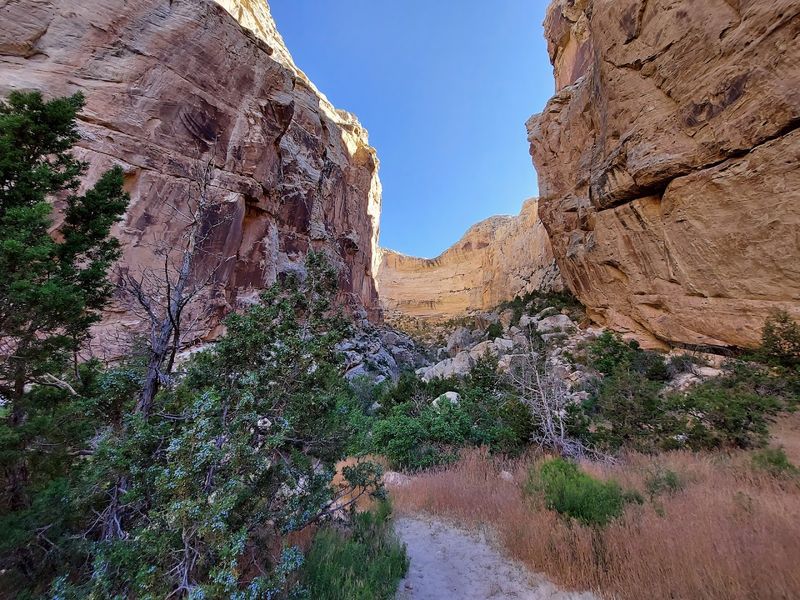
Dinosaur National Monument is famous for its fossil quarry, but the hiking trails here are criminally underappreciated. Box Canyon Trail follows the Yampa River through a narrow canyon with walls that rise several hundred feet on both sides.
The 2-mile round trip is short but delivers big canyon drama for minimal effort.
The Yampa is one of the last undammed rivers in the Colorado River system, and the canyon it carved feels genuinely wild and untouched. River otters have been spotted along this stretch, and the cottonwood trees along the banks turn brilliant gold in October.
The trail itself is flat and easy, making it accessible for almost anyone.
Getting to Dinosaur requires a drive through some pretty remote country on the Utah-Colorado border, which keeps visitor numbers low. That remoteness is exactly the point.
The monument straddles two states and two ecosystems, giving the landscape a layered character that rewards slow, attentive hiking. This one belongs on more bucket lists.
Alkali Flat Trail, White Sands National Park, New Mexico
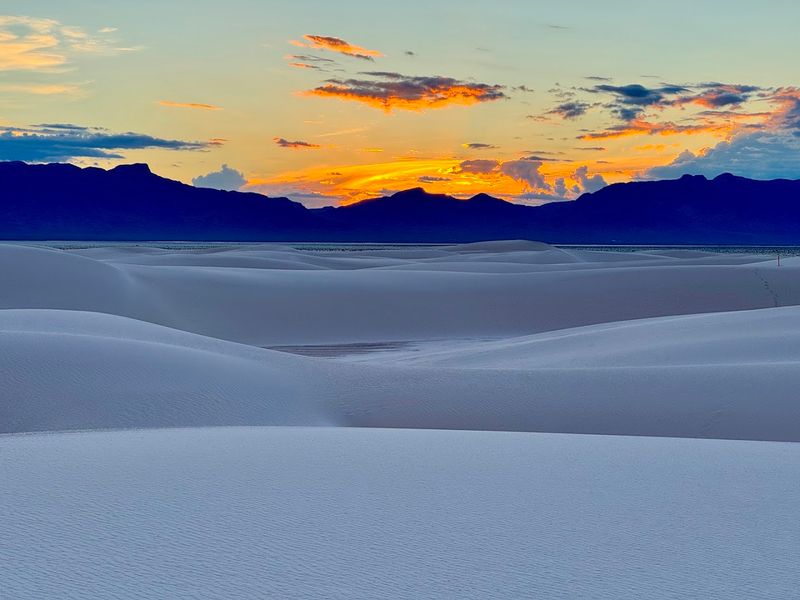
White Sands National Park looks like the surface of another planet, and the Alkali Flat Trail leans all the way into that otherworldly feeling. This 4.6-mile loop ventures deeper into the dune field than any other trail in the park, reaching the flat alkali basin at the heart of the formation.
Out here, the white gypsum stretches to every horizon and the silence is total.
Navigation is genuinely tricky because the trail markers are widely spaced and the landscape lacks obvious landmarks. Staying on route requires attention, especially in windy conditions when drifting sand covers the path.
Going with a GPS track downloaded in advance is a genuinely smart move.
Sunrise and sunset are the magic hours at White Sands. The low angle light turns the white gypsum pink and gold in ways that feel almost theatrical.
Temperatures swing dramatically between day and night, so layers are useful even in summer. Alkali Flat is the trail for visitors who want the full, unfiltered White Sands experience.
Mastodon Peak Loop, Joshua Tree National Park, California
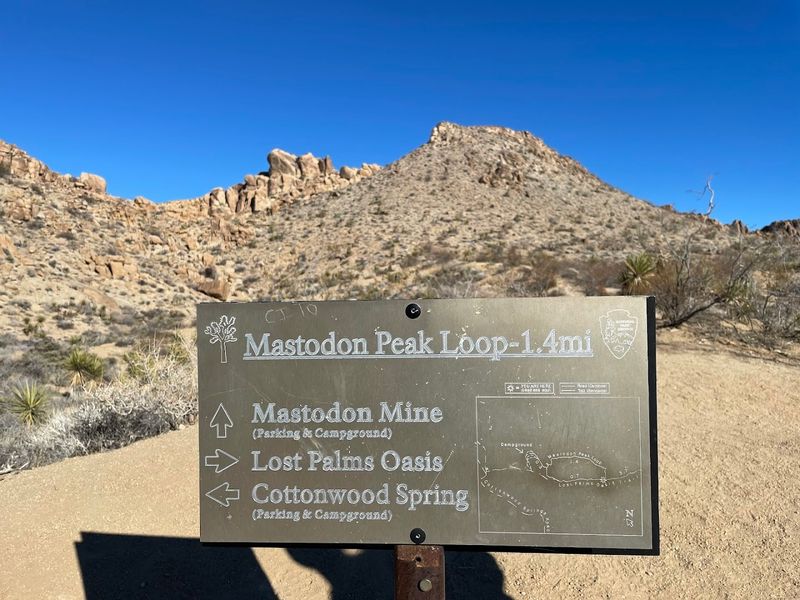
Joshua Tree’s northern half gets all the Instagram attention, but the Cottonwood area in the south is where the serious hikers quietly disappear. Mastodon Peak Loop is a 2.5-mile circuit that climbs to a rocky granite summit with a surprisingly wide panoramic view, including the Salton Sea glinting in the distance on clear days.
The peak is named after a mastodon-shaped rock formation near the top.
The route also passes the ruins of the Mastodon Mine, an early 20th-century gold mining operation that adds a layer of desert history to the hike. Interpretive signs explain the mine’s short but productive life, which makes the stop genuinely worth a few minutes.
The Cottonwood Spring oasis nearby attracts migrating birds and makes a great add-on.
The Cottonwood trailhead is about an hour from the park’s main visitor center, so most day-trippers never make it this far. That distance is your friend.
Pack snacks, fill your water bottles, and enjoy having one of Joshua Tree’s best viewpoints essentially to yourself.
Glacier Trail, Great Basin National Park, Nevada
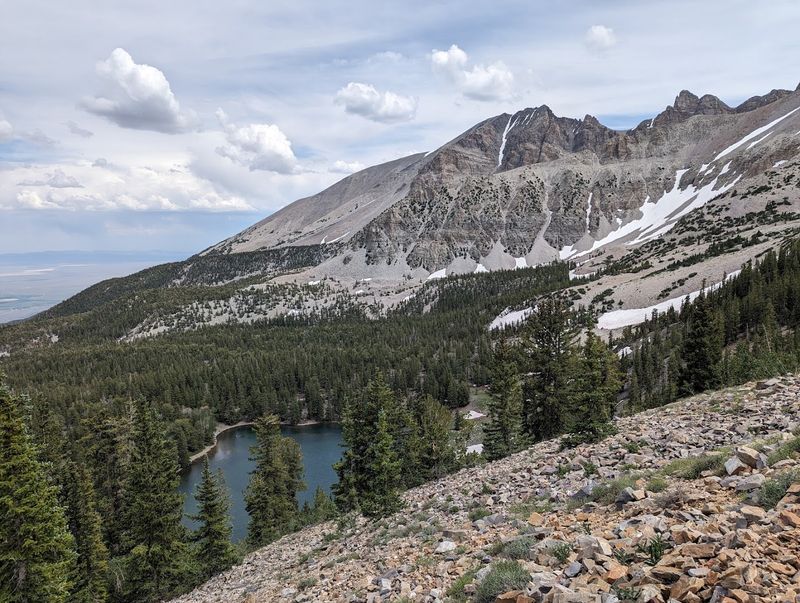
Nevada is not a state most people associate with glaciers, which makes the Glacier Trail at Great Basin National Park one of the country’s most surprising hikes. The 10-mile out-and-back climbs to the base of a permanent ice mass on Wheeler Peak, one of only a handful of glaciers remaining in the Great Basin region.
The trail gains about 2,900 feet in elevation, so it earns its moderate-to-strenuous rating.
Great Basin is consistently ranked among the least-visited national parks in the country, which means the trailhead parking lot is almost always available. The alpine scenery above 10,000 feet includes bristlecone pine trees that are among the oldest living organisms on Earth, some exceeding 4,000 years.
That context makes every step feel a bit more significant.
The park sits about 300 miles from Las Vegas, and that distance keeps the crowds away. Late July through September offers the best weather window for this trail.
Great Basin rewards the curious traveler willing to drive past the obvious destinations and find something genuinely rare.



