 Unearth The Voyage
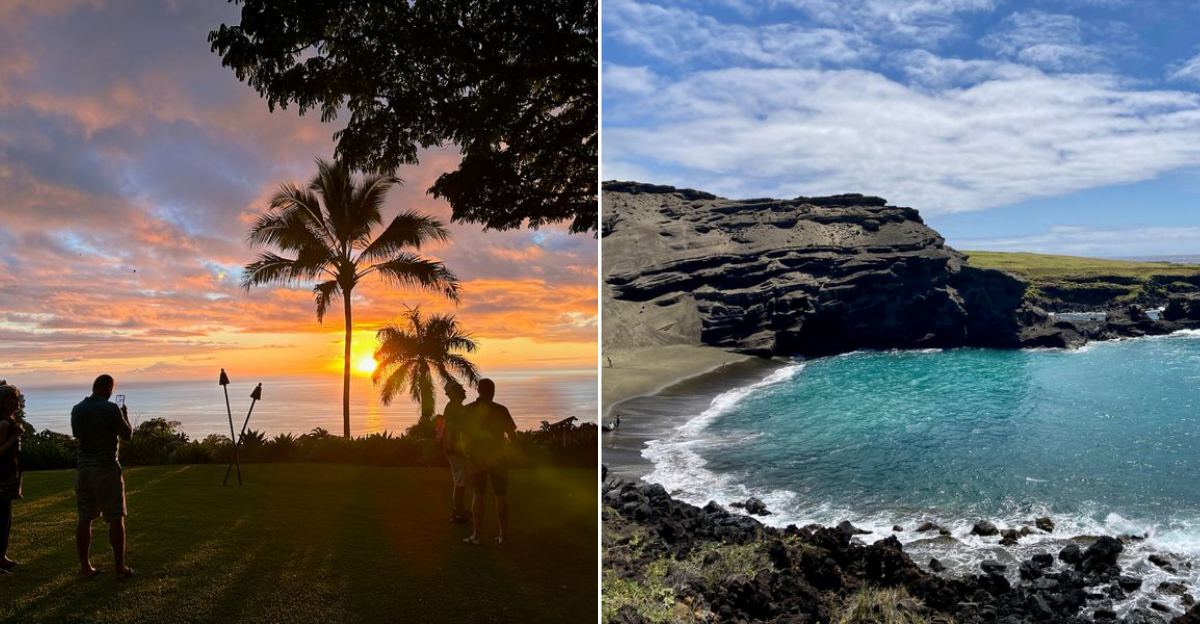
The first thing you notice is the contrast. Warm air on your skin, a faint bite of volcanic stone under your shoes.
You round a bend and the world shifts again. Dark sand.
Misty rain. A ridgeline that looks like it belongs to another season entirely.
That’s the spell of the Big Island of Hawaii. It doesn’t unfold in a neat, postcard way.
It surprises you in small, specific moments. A beach that crunches underfoot.
A trail that smells like wet fern. A heat shimmer in the distance that makes you realize the ground is still alive.
You can start the day by the ocean, then drive into a landscape that feels almost alpine. Along the way, you’ll pass places that hold old stories without putting them on display.
And once you notice that, you start looking closer. You start wondering what else is tucked just out of sight.
1. Explore Hawaiʻi Volcanoes National Park (even if you only have half a day)
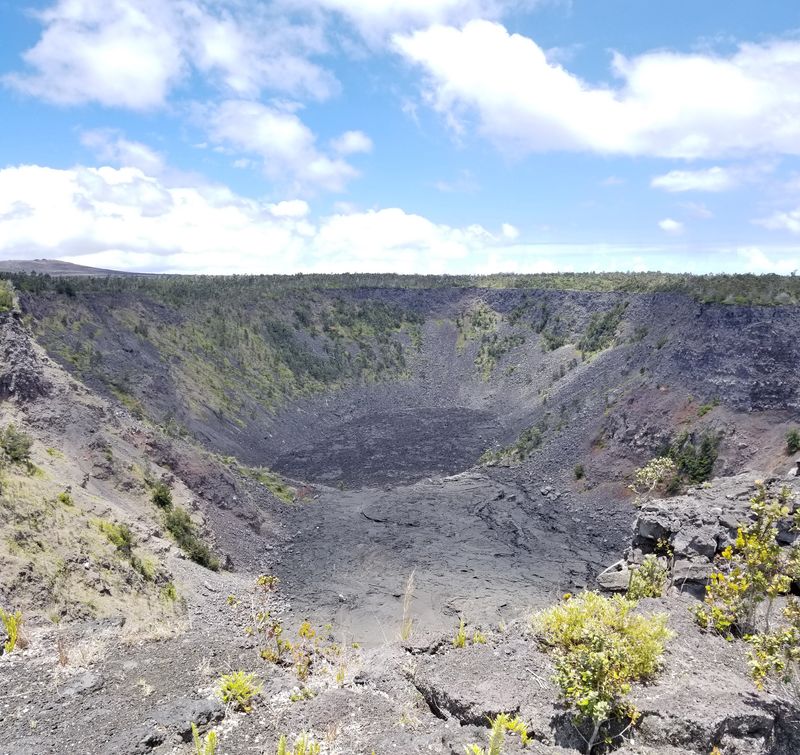
Standing at the edge of a volcanic crater feels like peeking into Earth’s kitchen. Steam hisses from cracks in the ground.
The air smells faintly sulfuric. Everything around you looks like it was delivered fresh from the planet’s core.
Kīlauea is the star attraction here, and conditions shift faster than your vacation plans. One day the crater glows orange at night.
The next, fog rolls in and hides everything. Check the park’s website before you leave your hotel.
I made the mistake of showing up without checking closure updates once. Half the roads I wanted to explore were blocked.
Don’t be me. Plan smart.
The park isn’t just craters, though. You’ll find lava tubes, ancient petroglyphs, and trails through landscapes that look borrowed from Mars.
Even a quick half-day visit gives you enough weird geology to fuel dinner conversation for weeks.
Pair this with stops in Kaʻū on the same day. Black sand beaches and South Point are close enough to make it a full adventure without backtracking.
Pack water, sunscreen, and a sense of wonder. You’ll need all three.
2. Chase the best crater views (but stay flexible)
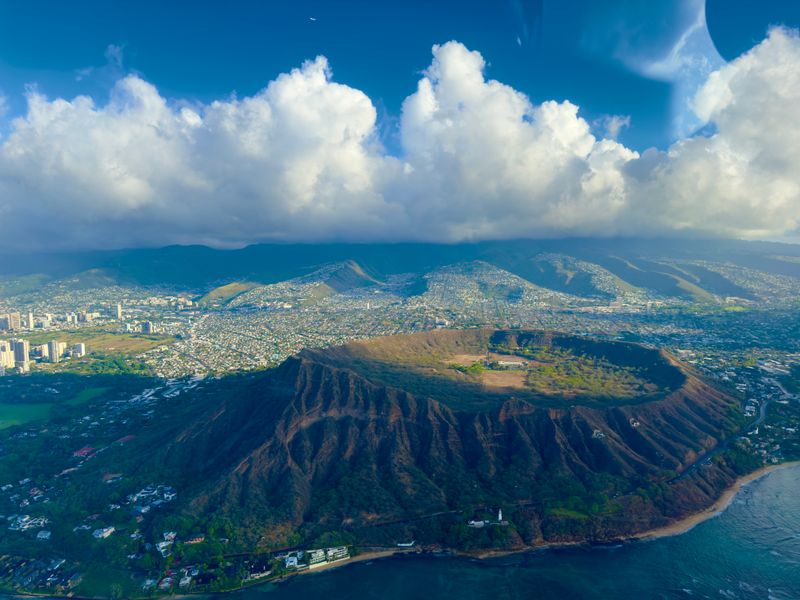
The best view in the park is whichever one isn’t closed today. Seriously.
Volcanic activity, vog, and weather conspire to keep things unpredictable. What’s spectacular on Monday might be invisible by Wednesday.
Vog is volcanic smog, and it’s not just annoying. It can obscure views completely.
If you’re visiting during active periods, check air quality reports. Some days you’ll see everything.
Other days you’ll squint through a gray haze and wonder if you’re looking at a crater or just really thick fog.
Flexibility is your friend here. Build your day around multiple viewpoints instead of pinning everything on one famous spot.
That way, if your top choice is closed or foggy, you’ve got backup plans.
Rangers at the visitor center know what’s accessible and what’s worth the drive. Ask them.
They’ve seen every possible condition and can steer you toward the clearest views available that day.
Bring layers, too. The summit area sits over 4,000 feet high.
Temperatures drop fast. One minute you’re sweating in the parking lot.
The next, you’re wishing you’d grabbed that jacket from the car.
3. Visit Punaluʻu Black Sand Beach (for the scenery and turtle-spotting)
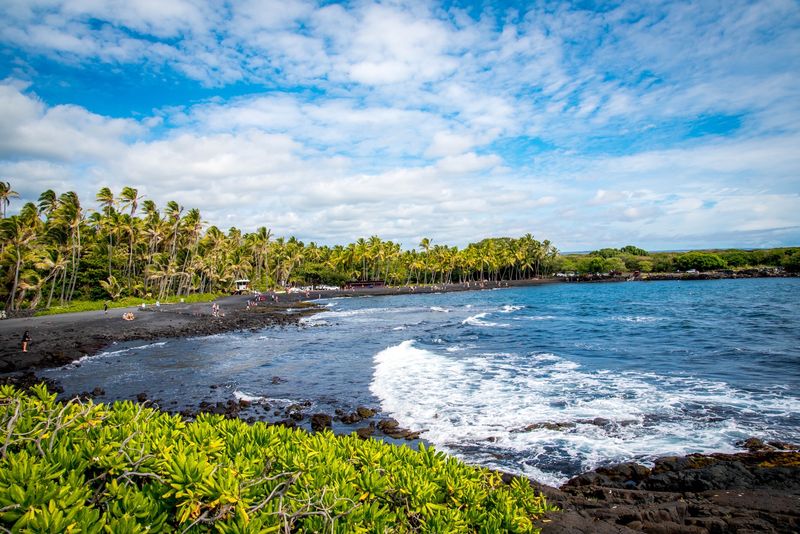
Black sand beaches sound like something from a fantasy novel. Then you arrive at Punaluʻu and realize they’re absolutely real.
The sand is dark, fine, and striking against the turquoise water. It’s one of those places where your phone camera actually does it justice.
Sea turtles love this beach. They haul themselves onto the sand to rest, looking like ancient, sleepy boulders.
People crowd around them, phones out, trying to get the perfect shot. Please don’t be that person who gets too close.
Hawaiian green sea turtles are protected. There’s a legal distance you must maintain.
Rangers and volunteers will remind you if you forget. Respect the wildlife.
These turtles didn’t show up to be your Instagram prop.
The beach sits conveniently between Volcanoes National Park and Kona-side destinations. It’s a natural stopping point if you’re making the drive.
Spend twenty minutes. Take photos.
Watch the waves. Let the kids run around.
Facilities are basic but functional. There are restrooms and picnic tables.
Bring your own snacks and drinks, though. This isn’t a resort beach with vendors and umbrellas.
It’s raw, beautiful, and worth the detour.
4. Hike to Papakōlea Green Sand Beach (only if you’re up for the commitment)
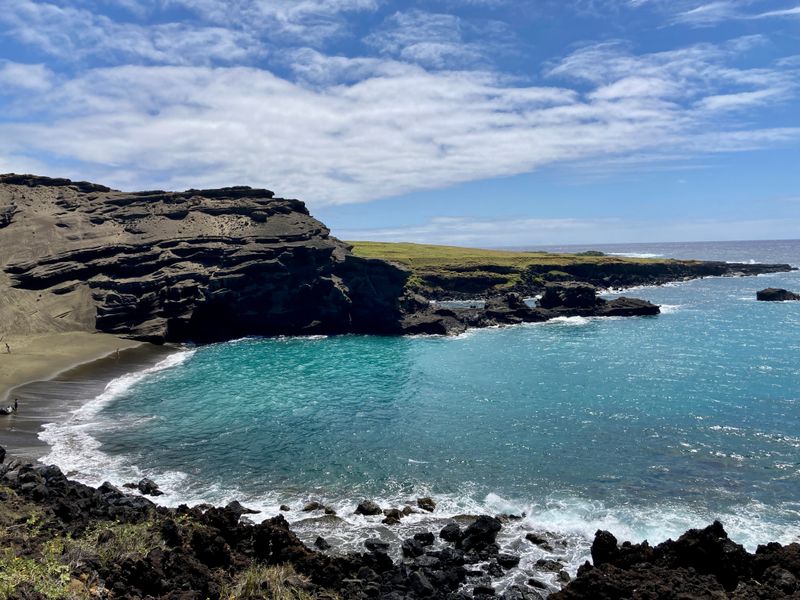
Green sand sounds like a marketing gimmick until you see it in person. The sand at Papakōlea really is green, thanks to olivine crystals weathered from volcanic rock.
It’s rare, striking, and absolutely not easy to reach.
The hike is roughly six miles round trip. The trail is exposed, windy, and offers almost no shade.
Sun beats down relentlessly. Wind tries to knock you sideways.
If you’re imagining a pleasant beach stroll, recalibrate your expectations.
Bring more water than seems reasonable. Then bring more.
Dehydration sneaks up fast on this trail. Sunscreen, a hat, and sturdy shoes are non-negotiable.
Flip-flops are a terrible idea.
Some locals offer rides in their trucks for a fee. It’s not official, and conditions vary.
If you take a ride, agree on price beforehand. If you hike, pace yourself.
There’s no shame in turning back if conditions feel unsafe.
The beach itself is stunning. The green tint is subtle but unmistakable.
Waves crash into the cove. Cliffs rise steeply around you.
It feels remote and wild. Just remember: getting there is half the adventure, and not the easy half.
5. Snorkel Kealakekua Bay (clear water plus history in one place)
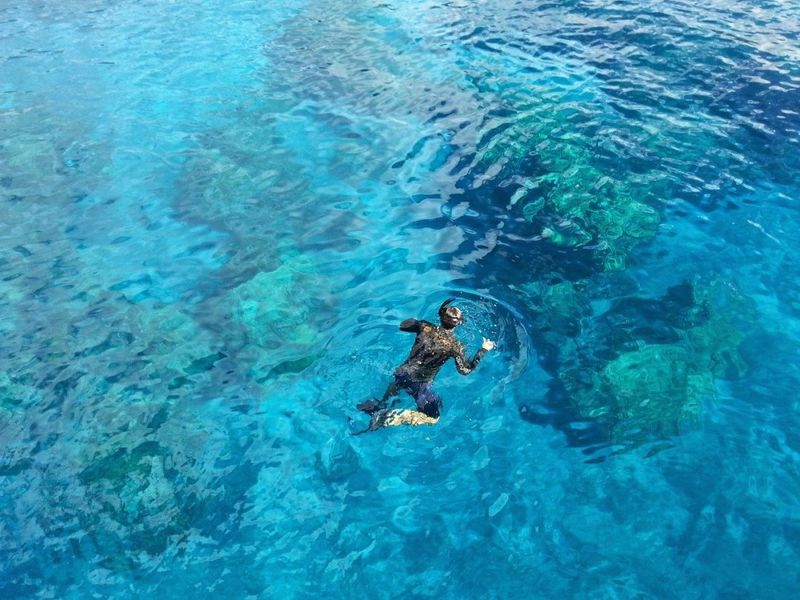
Kealakekua Bay is famous for two things: ridiculously clear water and a piece of Hawaiian history. Captain Cook met his end here in 1779.
Today, a monument marks the spot, and the bay thrives as a protected marine sanctuary.
The water clarity is unreal. You can see thirty feet down without squinting.
Fish swarm in rainbow colors. Coral formations spread across the seafloor like underwater gardens.
It’s consistently ranked among the best snorkel spots on the island.
Most people visit by boat or kayak. The bay is protected, so conditions stay calm most days.
Tour operators know the best spots and handle logistics. If you’re kayaking independently, know that it’s a decent paddle.
Don’t underestimate the distance.
Plan this for a Kona-side day. Driving across the island at dawn just to snorkel here makes no sense.
Schedule it when you’re already on the west coast. Morning trips often have the clearest water and fewest crowds.
Bring an underwater camera. You’ll want proof of what you saw.
The fish here are bold and curious. They’ll swim right up to your mask.
It’s magical in a way that’s hard to describe but easy to remember.
6. Do the manta ray night snorkel off the Kona coast
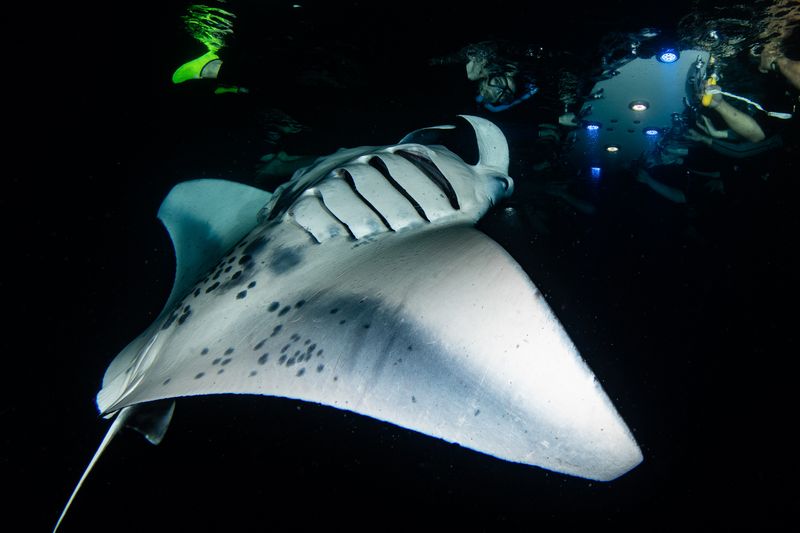
Floating in dark ocean water while giant manta rays glide beneath you sounds terrifying. Then you try it and realize it’s one of the most beautiful things you’ll ever witness.
These creatures are graceful, curious, and utterly mesmerizing.
Tour operators anchor near the coast and shine lights into the water. Plankton swarm toward the light.
Manta rays follow the plankton, swooping and barrel-rolling just inches below snorkelers. Their wingspans can reach twelve feet.
They’re massive but completely harmless.
If you’re nervous in open water, choose an operator known for strong guidance. Good crews keep groups together and help anxious swimmers stay calm.
The experience is worth pushing through the nerves.
Water temperatures are comfortable year-round. You’ll wear a wetsuit for warmth and buoyancy.
Guides provide flotation devices too. You don’t need to be a strong swimmer.
You just need to float and watch.
I was skeptical before my first manta night. By the end, I was speechless.
Watching these animals move through the water is hypnotic. It’s a bucket-list experience that actually lives up to the hype.
Book early. These tours fill up fast.
7. Take a sunset or stargazing trip to Maunakea (safely)
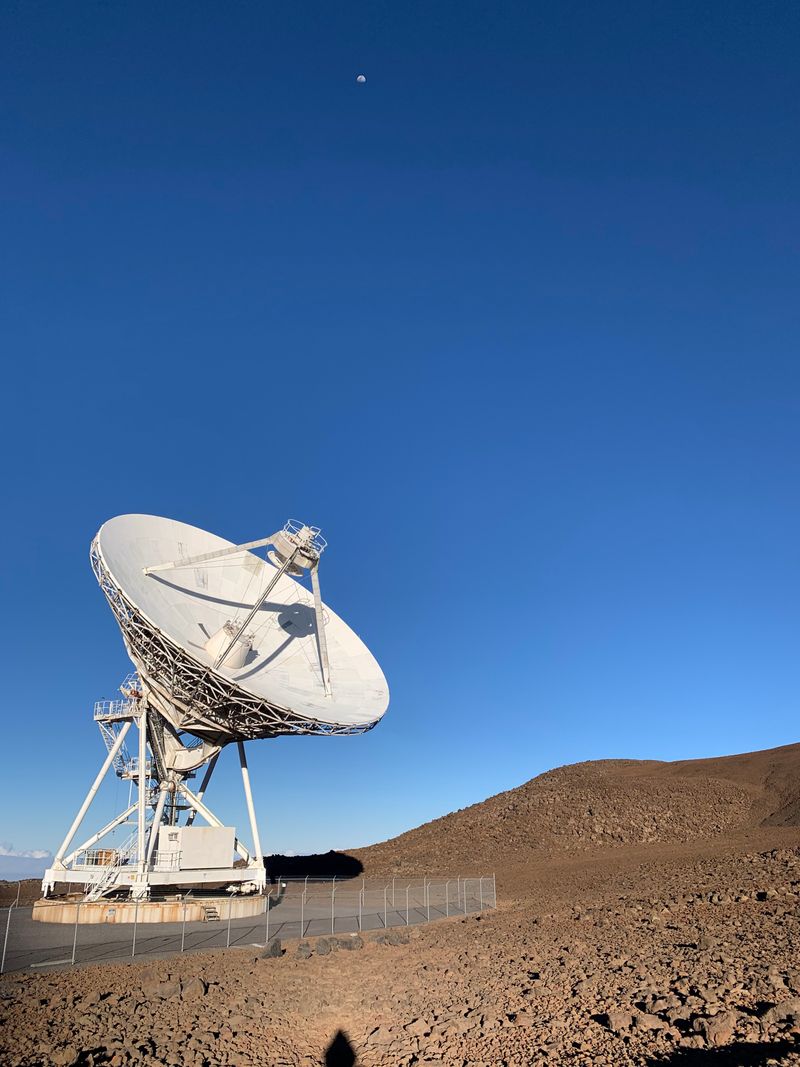
Maunakea is one of the best stargazing spots on Earth. The summit sits nearly 14,000 feet high, above most of the atmosphere.
Observatories cluster at the top for good reason. The sky here is ridiculously clear.
Altitude is serious business, though. The Visitor Information Station sits at 9,200 feet.
That’s where most tours stop for sunset and stargazing. Going higher requires 4WD and acclimatization.
Some people get altitude sickness. Pregnant women and people with heart conditions shouldn’t go.
Sunset from the mountain is otherworldly. Clouds spread below you like an ocean.
The sun drops through layers of color. Then darkness falls and the stars come out in numbers you’ve never seen.
Tour operators provide warm jackets and hot drinks. Temperatures drop fast after sunset.
Dress in layers. Bring closed-toe shoes.
The ground is rocky and uneven.
Schedule this on a day when you’re not already exhausted. The altitude and late night make it a big energy commitment.
Don’t pack your day full of activities and then try to summit Maunakea. You’ll regret it.
Give yourself space to rest and acclimate.
8. Slow down in Holualoa (Kona’s artsy side quest)
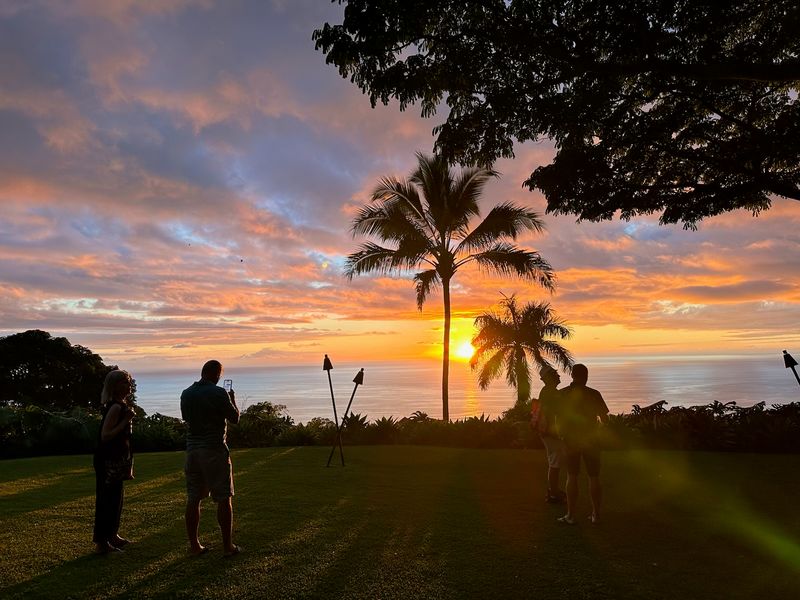
Holualoa is tiny, artsy, and easy to miss if you’re not paying attention. It sits in the hills above Kona, tucked into coffee country.
The main street is maybe two blocks long. But those two blocks pack in galleries, studios, and charm.
Artists live and work here. You can walk into studios and watch painters, woodworkers, and jewelers doing their thing.
It’s not a tourist trap. It’s a real community that happens to welcome visitors.
Coffee farms surround the town. The smell of roasting beans drifts through the air.
Several farms offer tastings and tours. It’s a nice way to spend an hour or two.
Visit in the late afternoon after you’ve finished snorkeling or beach time. The town has a sleepy, golden-hour vibe.
Shops stay open late on some evenings. Check the schedule if you’re hoping to browse galleries.
There’s no pressure here. No crowds.
No rush. Just small-town Hawaii doing its thing.
It’s a palate cleanser after the busier tourist areas. Sometimes you need a break from the big attractions.
Holualoa is that break.
9. Go coffee tasting in Kona (but pick a farm-style experience)
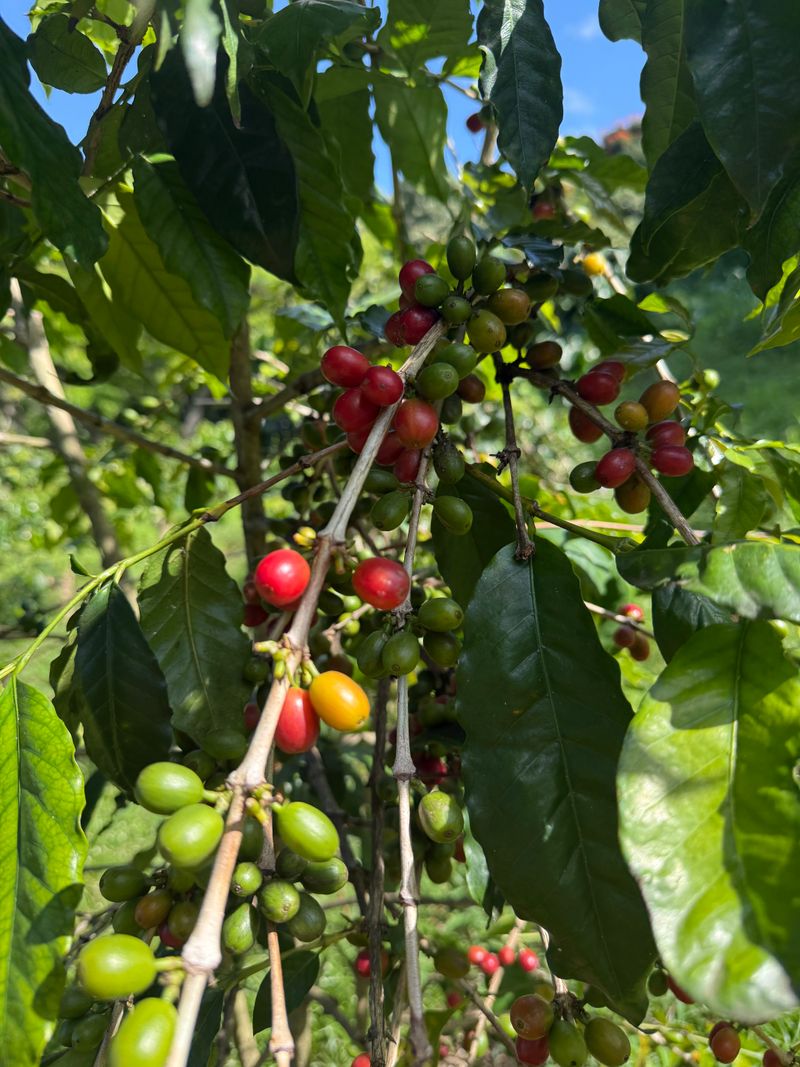
Kona coffee is world-famous, and you’re standing in the place where it grows. Don’t settle for a quick sample at a gift shop.
Visit a real farm. Walk through the rows of coffee plants.
See how beans are processed. Then taste the difference.
Good farm tours don’t take long. Thirty minutes to an hour covers the basics.
You’ll learn about growing conditions, harvesting, and roasting. Then you’ll taste several varieties side by side.
The differences are surprising.
Coffee cherries grow red and glossy on the bushes. Farms sit on hillsides with ocean views.
The setting alone makes the visit worthwhile. Add in fresh coffee, and you’ve got a perfect morning activity.
Many farms offer free tours with optional purchases. Others charge a small fee.
Either way, it’s a bargain for the experience and the education. You’ll never look at your morning cup the same way.
I’m not even a huge coffee person, but I loved this. Watching the process from plant to cup is fascinating.
Plus, you can buy beans directly from the farm. They make great gifts or souvenirs.
Just remember to pack them carefully in your luggage.
10. Step into ancient Hawaiian history at Puʻuhonua o Hōnaunau National Historical Park
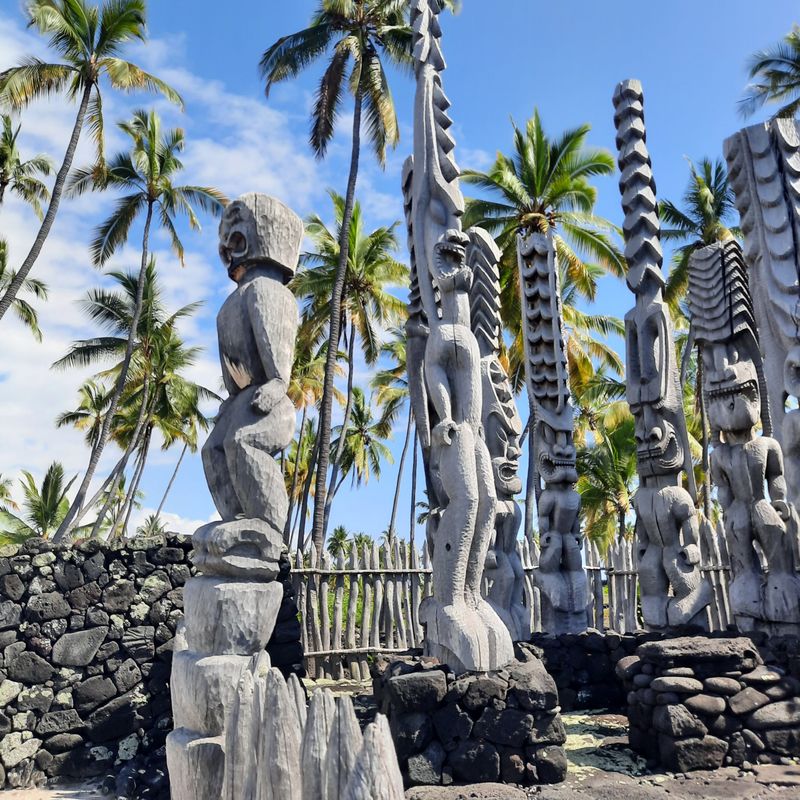
Puʻuhonua o Hōnaunau is more than a pretty coastal park. It’s a place of deep cultural significance.
In ancient Hawaii, this was a place of refuge. Lawbreakers and defeated warriors could find safety here if they reached it before being caught.
Stone walls separate the sacred ground from the royal area. Wooden carved figures stand watch.
Reconstructed structures give you a sense of how the site looked centuries ago. It’s powerful and peaceful at the same time.
Don’t rush through for photos. Walk slowly.
Read the interpretive signs. Let the history sink in.
This place matters to Hawaiian culture. Treat it with respect.
The coastal setting is beautiful. Black lava rock meets blue water.
Palm trees sway overhead. But the scenery is secondary to the story.
Focus on what this place meant and still means.
Rangers sometimes offer talks and demonstrations. Check the schedule when you arrive.
Hearing the history from someone who knows it deeply adds layers you’d miss otherwise. Budget at least an hour here.
More if you want to sit and absorb the atmosphere. It’s worth the time.
11. Walk the ʻAkaka Falls Loop Trail near Hilo (easy, lush, and ridiculously pretty)
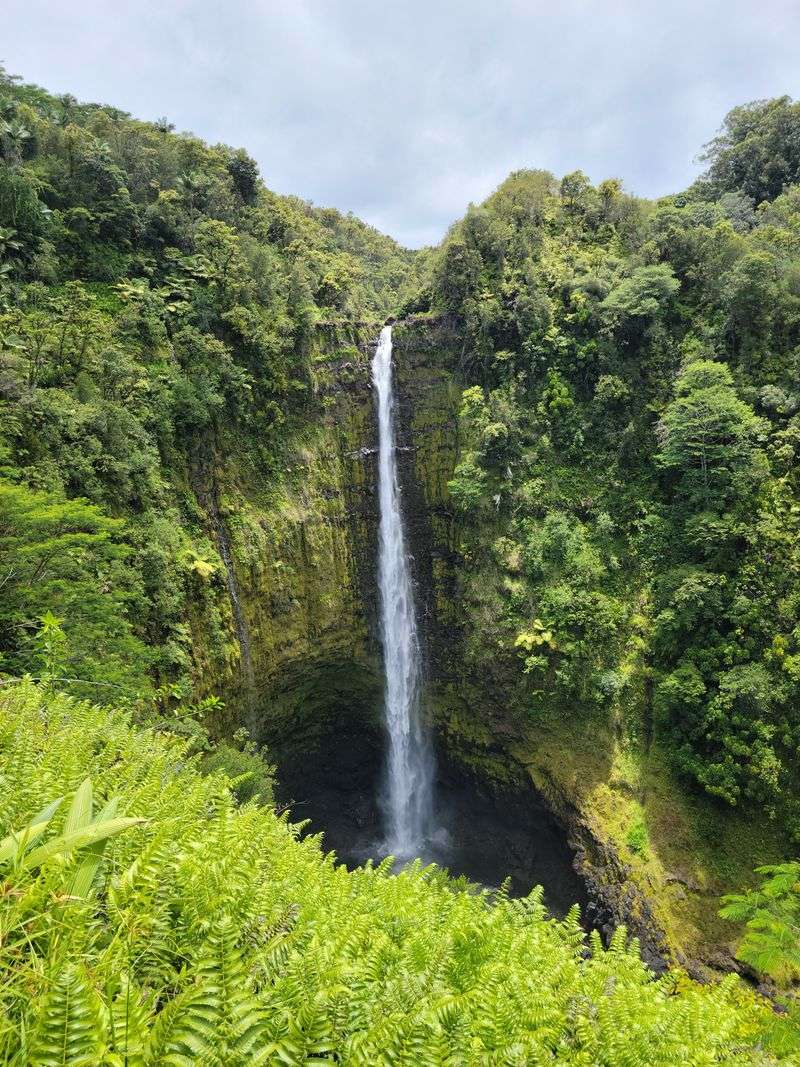
Instant rainforest in less than half a mile. That’s the ʻAkaka Falls Loop Trail in a nutshell.
The trail is paved, short, and absolutely gorgeous. Ferns crowd the path.
Bamboo groves tower overhead. Everything drips with green.
The main waterfall drops 442 feet in a single plunge. You’ll hear it before you see it.
Then you round a corner and there it is, framed by jungle. It’s the kind of view that makes you stop and stare.
A second waterfall, Kahuna Falls, appears earlier on the loop. It’s smaller but still impressive.
The whole trail takes maybe thirty minutes at a leisurely pace. Families with small kids manage it easily.
Bring bug spray. The rainforest is humid and buggy.
Also, wear shoes with good traction. The pavement can be slick when wet, which is often.
This is one of those rare places where the payoff matches the effort. You get maximum beauty for minimum hiking.
It’s perfect if you’re short on time or not up for a strenuous trek. Don’t skip it just because it’s easy.
Easy doesn’t mean less spectacular.
12. Give Hilo a full rainy-side day (waterfalls, gardens, cozy food stops)
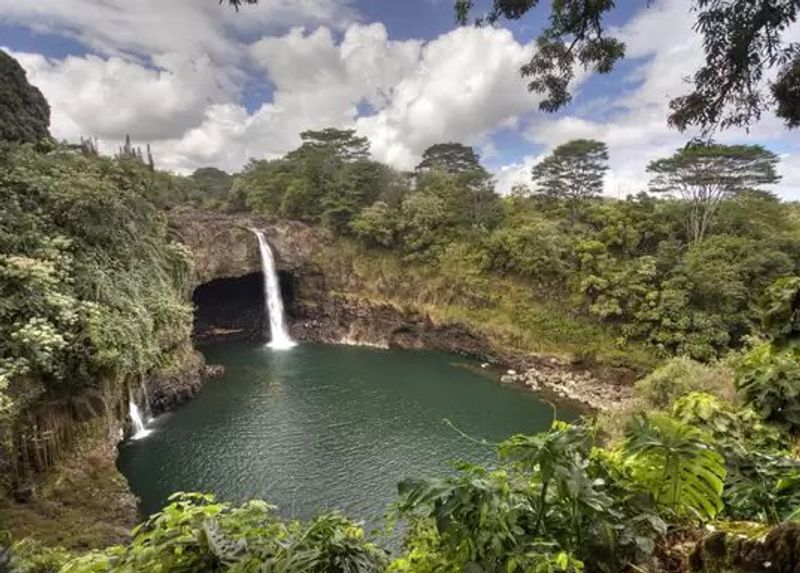
Hilo is wetter, greener, and moodier than Kona. Rain falls often.
Clouds hang low. Everything feels lush and alive.
Instead of fighting the weather, lean into it. Build a day around waterfalls, gardens, and warm food.
Rainbow Falls sits right in town. You can drive up, park, and walk a few steps to the viewpoint.
If it’s been raining, the falls roar. Mist rises from the pool below.
It’s dramatic and accessible.
Liliuokalani Gardens offers a peaceful stroll through Japanese-style landscaping. Ponds, bridges, and stone lanterns create a serene atmosphere.
Even in the rain, it’s beautiful. Maybe especially in the rain.
Downtown Hilo has cafes and restaurants perfect for rainy afternoons. Grab coffee and pastries.
Sit by a window. Watch the rain.
It’s cozy in a way beach days never are.
The Hilo Farmers Market runs Wednesday and Saturday mornings. Local vendors sell everything from tropical fruit to handmade crafts.
It’s crowded but fun. Bring cash and an appetite.
Don’t expect Hilo to feel like Kona. It’s a different vibe entirely.
Embrace the rain. Enjoy the green.
Hilo rewards visitors who accept it on its own terms.
13. Explore Kaumana Caves (a quick lava-tube adventure close to town)
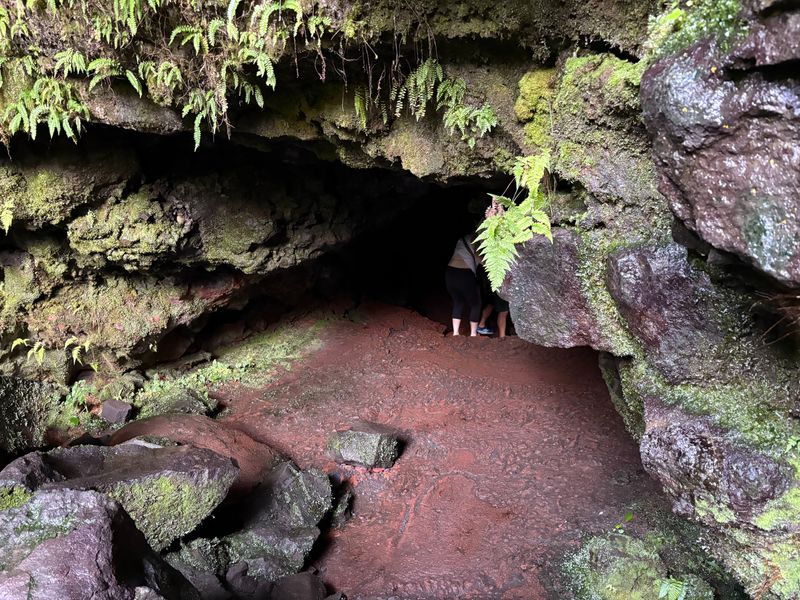
Kaumana Caves offer a quick, weird, and memorable look at volcanic geology. These lava tubes formed in 1881 during a Mauna Loa eruption.
Molten lava flowed through, leaving behind hollow tunnels. Now you can walk inside them.
This isn’t a polished tourist attraction. There are no lights, no railings, no guided tours.
You bring your own flashlight and explore carefully. The ground is uneven.
Rocks are sharp. Watch your head and your footing.
The caves split into two sections. One side is short and easy.
The other extends deeper and requires more caution. Go as far as you’re comfortable.
There’s no pressure to explore the whole thing.
Bring a real flashlight, not just your phone. You’ll want both hands free.
Wear closed-toe shoes with good grip. The rocks are slippery in places.
Long pants aren’t a bad idea either.
The caves sit just outside Hilo, making them an easy add-on to a rainy-side day. Budget thirty minutes to an hour depending on how far you venture.
It’s a fun, off-the-beaten-path experience that adds variety to your trip. Just respect the environment and move carefully.
14. See Waipiʻo Valley from the lookout (and respect access rules)
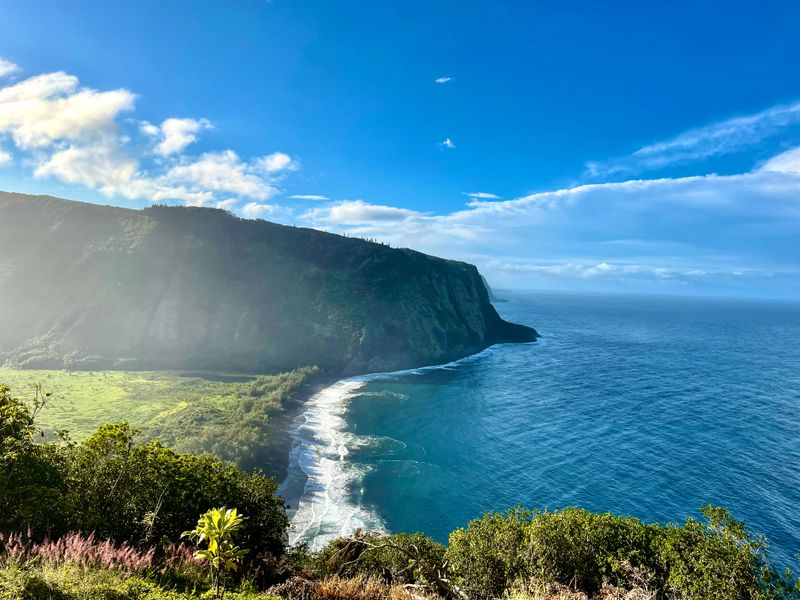
Waipiʻo Valley is legendary. Steep cliffs drop nearly 2,000 feet.
Waterfalls thread down green walls. The valley floor spreads wide and lush.
It’s one of those views that stops you mid-sentence.
The lookout is easily accessible and free. You can drive right up, park, and walk to the viewpoint.
Even if you never go down into the valley, the lookout alone is worth the trip. Bring a camera.
You’ll want to remember this.
Access to the valley floor is restricted now. The road down is incredibly steep and only certain tours are allowed.
Non-residents face limitations. Check current rules before you go.
Don’t assume you can just drive or hike down.
The lookout gets crowded midday. Early morning or late afternoon visits offer better light and fewer people.
The valley faces east, so morning light is especially beautiful.
Respect the restrictions. Waipiʻo holds cultural significance.
It’s not just a scenic spot. It’s a living valley with residents and history.
Enjoy the view from above. If you want to explore further, book a legitimate tour.
Following the rules protects this special place for everyone.



